* ESC - close the search window
Erasure of Word
10 methods of silencing Ukrainian authors
26.09.2025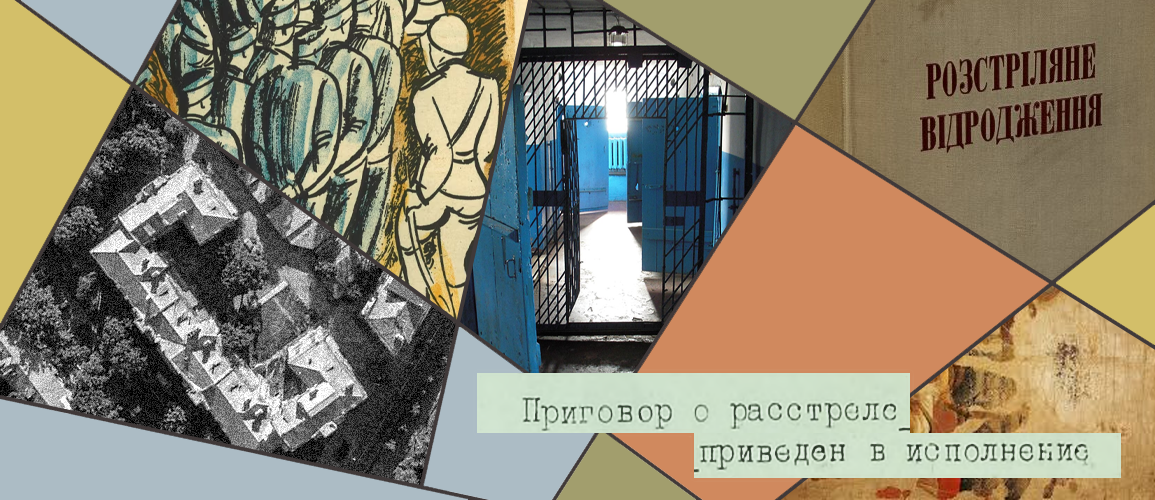

You see an error in the text - select the fragment and press Ctrl + Enter
Russia has a long tradition of colonial erasure of Ukrainian literature – from the colonisation in the 17th century till the genocidal war of these years. From the imperial period to the present day, Russian regimes have consistently attempted to erase Ukrainian voices, targeting not only writers but also the entire infrastructure of writing, publishing, and disseminating critical thought. The destruction was never accidental: it involved institutions, laws, surveillance, public punishments, forced silence, and a wide circle of those who benefited or complied. Behind every censored text or silenced voice stood a persistent system, first the tsarist empire, then the Soviet regime, and eventually the Russian Federation.
The project “Erasure of Word“, created in support of the exhibition “Antitext,” proposes to continue the conversation about interrupted continuity of Ukrainian culture, the tools of suppression, and the resistance that never allowed Ukrainian literature to disappear completely. This article outlines ten key methods used to silence Ukrainian authors, which aimed not just to erase individual voices, but to destroy the very possibility of a Ukrainian intellectual future.
Murders
The Soviet regime’s brutal targeting of Ukrainian writers from the 1930s to the Great Purge exemplifies a calculated cultural genocide, marked by sham trials, secret executions, and forced labor camps like Solovki. The 1934 Kyiv trial executed 11 prominent literary figures without due process, while the 1937 Politburo decree accelerated mass killings such as the Sandarmokh massacre, where dozens of Ukrainian writers were shot. Post-war repression continued with psychiatric torture and imprisonments, culminating in the death of poet Vasyl Stus in 1985. This systematic eradication silenced 223 writers between 1930 and 1938 alone, a tragedy now echoed by the 114 Ukrainian literary figures killed by Russian forces since 2022.
RELATED: Hit List: The Executions of Ukrainian Writers
Punitive medicine
Punitive psychiatry, a phenomenon of the 1960s-80s, was a form of fighting against dissidents and political opponents by sending them to psychiatric institutions and subjecting them to strong treatments that damaged their physical and mental health. This made it possible not only to get rid of the person but also to discredit their activities and undermine trust in their judgment.
By labeling dissidents with fabricated diagnoses like “sluggish schizophrenia,” a symptomless and ideologically constructed disorder, the regime effectively erased political opposition under the guise of psychiatric care. This manipulation stripped dissidents of legal rights, discredited their activism, and enabled indefinite confinement without due process. The Serbsky Center in Moscow, under KGB control, orchestrated this system, operating alongside specialised psychiatric hospitals like the Dnipropetrovs’k facility, located near prisons and guarded with machine guns, where political prisoners endured harsh repression masked as psychiatric care.
Treatment was torture disguised as medicine: drugs such as haloperidol induced agonising akathisia and apathy, insulin shock therapy risked comas, and sulphur injections caused severe pain and fever as punishment.
Conditions were overcrowded, humiliating, and violent—patients, including writers like Leonid Plyushch, experienced physical abuse, sexual violence, and psychological terror. Nurses and orderlies sometimes were criminals, abusing their authority. Intellectual activity was crushed under heavy sedation, isolating prisoners from their own minds.
The punitive psychiatric system enforced conformity by “curing” dissent through medicalisation of political opposition. Dissidents’ “mental illnesses” included politically coded diagnoses like “reformist delusions” and “nationalism,” exposing the system’s ideological manipulation rather than genuine medical concern. This mechanism created widespread fear, as reflected in Hrytsko Chubai’s poetry, where medication names evoke terror, underscoring psychiatry’s role as a tool of repression.
Before punitive psychiatry, some Ukrainian writers feigned insanity to escape harsher punishments, reflecting the surreal inversion where psychiatric wards were both prisons and refuges. Literature of the period, such as Mykola Kulish’s work, already portrayed society where freedom of thought equalled madness, foretelling the use of psychiatry as a political weapon.
RELATED: Punitive medicine
Exile and imprisonment
Ukrainian poets spent plenty of time in Russian prisons. Starting from the one classic – Taras Shevchenko, imprisoned in the 19th century, to another – Vasyl Stus, who died in prison in 1985.
The Soviet regime, like the empire before it, treated literature as a political threat, fabricating trials like the SVU case and executing entire generations of writers to silence dissent. Even after Stalin’s death, waves of arrests continued: poets such as Ivan Svitlychnyi, Vasyl Ruban, and Mykhailo Osadchyi faced sentences simply for speaking or writing freely.
How Russia tortures writers nowadays, you can read in the memories of Oleg Sentsov (kidnapped in 2014, released in 2019) and Stanislav Aseyev (kidnapped in 2017, released in 2019).
RELATED: A Brief History of Literary Arrests in Ukraine
Using museums for propaganda
In Soviet Ukraine, the number of museums dedicated to Russian writers was almost as high as those devoted to Ukrainian authors — a stark indicator of the imperial focus within cultural policy. Dozens of memorial museums were opened across Ukraine to honour Russian writers and figures tied to the “shared Soviet past”, even if their connection to the region was minimal. Pushkin, Gorky, Tolstoy, Suvorov, and other Russian luminaries were granted permanent cultural addresses in Ukrainian cities and towns.
By contrast, Ukrainian cultural figures were commemorated selectively, often only when their legacies could be folded into the Soviet narrative. Museums of Taras Shevchenko, Ivan Franko, and Lesia Ukrainka were permitted, but framed strictly within an imperial discourse: as “brotherly” voices of a subordinate culture, loyal to the larger Soviet project.
The subversive, anti-colonial dimensions of their work were systematically erased.
In the temporarily occupied Ukrainian cities, museums dedicated to figures of Ukrainian culture are being closed. The occupiers are building propaganda institutions: the Museum of Crimea and Novorossia in Sevastopol, the Victory Museum in Mariupol, and the History Park in Melitopol, which glorify Russian war criminals.
RELATED: Museums and ideology: How cultural institutions become instruments for authorities
Privileges and status
Artists in the Soviet Union had two options – they could accept all the benefits in exchange for their “loyalty” or withdraw, possibly being unemployed or killed. “The loyalty package” included not only prestigious prizes and high circulation of books, but also a broad system of material rewards and privileges: improved medical care at special Litfund clinics, access to free or subsidized housing (including dachas in writers’ villages), preferential vouchers to Houses of Creativity, sanatoriums, resorts, and even exclusive access to scarce goods like buckwheat, butter, and canned foods at special outlets.
Writers who aligned with the regime —so-called “engineers of human souls”— were lavished with rewards, such as the Stalin Prize (worth 100,000 rubles), Lenin Prize, and the State Prize, with some figures, like Oleksandr Korniichuk, receiving multiple awards. The price of nonconformity, however, was steep: censorship, erasure, arrest, or a life in poverty and obscurity, as in the case of Volodymyr Svidzinsky or Roman Andriyashyk. Even the homes where writers lived, such as the Slovo building in Kharkiv, were permeated with surveillance and fear, the sound of footsteps at night a possible sign of arrest. During the Soviet time, the choice was not between comfort and struggle; it was between complicity and survival.
RELATED: Privileges and status
Colonisation of libraries
In the Soviet Union, libraries were operated under the control of state agencies responsible for “political education”—a euphemism for ideological indoctrination. From the 1920s onward, methods of colonising Ukrainian libraries included the gradual russification of library documentation and collections, the elimination of Ukrainian-language books, and the systematic removal of literature deemed “hostile” to Soviet ideology. Libraries were forced to prioritise Russian-language publications from Moscow, while Ukrainian works were purged, hidden in special storage, or destroyed.
The collections of prominent institutions and private figures were dispersed, stripped of their integrity as cultural artefacts. Even after independence, the effects of this policy remained visible, with Russian-language books continuing to dominate many collections.
Since 2022, 175 libraries have been completely destroyed, 786 damaged, and 4,163 have stopped working. In newly de-occupied territories, Ukrainian books have been found burned, dumped, or used as fuel, and library buildings left mined, looted, and vandalised.
Damage to printing houses
Russian censorship of Ukrainian books started in 1690. Since then, Ukrainian books were under high control till the independence of Ukraine in 1991.
The Russian aggressor has deliberately targeted Ukrainian printing infrastructure to suppress cultural resistance during the current war. In the early days of the full-scale invasion, the occupiers destroyed major printing houses and warehouses in Kharkiv, including the First Experimental Printing House, Unisoft, Globus, and the Ranok publishing house warehouses. A particularly devastating missile strike in May 2024 hit the Factor Druk printing house — one of Europe’s largest full-cycle printing complexes — killing seven employees and injuring 21. Occupiers also send data on book destruction to the Russian Ministry of Education and label Ukrainian books by prominent contemporary authors like Maria Matios, Oksana Zabuzhko, and Serhiy Bilokon as “extremist literature” to justify removing them from occupied territories.
Socialist Realism and marginalisation of original Ukrainian literature
Since the 17th century, official Russian narratives have portrayed Ukrainian literature as “primitive,” “rustic,” and “secondary.” The rich tradition of Baroque and early Ukrainian literature, spanning the 12th to 17th centuries, was either appropriated by Russian authorities, who republished Ukrainian works as their own, or deliberately marginalised to suppress Ukrainian cultural identity.
During the era of the Russian Empire, strict censorship laws uniquely targeted Ukrainian language and literature. Publications known as the “new Kyiv books” were banned, Ukrainian-language education was prohibited, and Ukrainian texts were forced to conform to Russian linguistic and ideological standards. A notable example of intellectual appropriation is the republishing of spiritual texts from the Kyiv Pechersk Lavra by Moscow printers, which effectively erased Ukrainian authorship. The political repression intensified with crackdowns on Ukrainian intellectuals such as Taras Shevchenko and Mykola Kostomarov during the Brotherhood of Saints Cyril and Methodius affair. Censorship statutes like the 1804 statute and the 1863 Valuev Circular banned Ukrainian-language literature intended for a broad audience. The 1876 Ems Decree went further, outlawing Ukrainian books and performances, severely restricting Ukrainian cultural expression.
With the fall of the Russian Empire and the rise of the Soviet Union, censorship remained pervasive. The “Decree on Printing” and the nationalisation of private publishing houses into state-controlled entities like Vseukrvydav subordinated Ukrainian literature to Soviet party propaganda. The number of Ukrainian-language publications plummeted between 1930 and 1939, reflecting ideological repression and targeted persecution of the intelligentsia. Socialist Realism, a concept formulated by literary critic Ivan Hronsky in the 1930s, became the official artistic style throughout the USSR. Far from true realism, socialist realist art served as a vehicle for Communist Party propaganda, depicting the world as a battleground of class struggle destined to culminate in the triumph of communism.
Writers and publishers faced dismissal, imprisonment, and executions, and many completed works were destroyed. Although brief periods of liberalisation occurred, censorship was soon reinstated, continuing to restrict Ukrainian cultural expression.
In the context of ongoing Russian aggression, repression of Ukrainian literature has intensified further. Printing houses in Kharkiv have been bombed, Ukrainian books labelled as extremist, and Russian books flooded occupied territories to suppress Ukrainian identity.
RELATED: Ukrainian printing against the monster of Russian censorship
Seizure of print runs, wiretapping, informers (sexots)
Under Russian imperial rule, Ukrainian books were heavily censored and often confiscated. After the 1847 scandal involving the Brotherhood of Saints Cyril and Methodius, key Ukrainian literary works such as Taras Shevchenko’s Kobzar, Panteleimon Kulish’s Tale of the Ukrainian People, and Mykola Kostomarov’s Ukrainian Ballads were banned and withdrawn from sale by Minister of Internal Affairs Count Lev Perovsky. The Minister of Public Education Serhiy Uvarov ordered censorship departments to prevent the reprinting of these works. Books like Amvrosii Metlynskyi’s South Russian Folk Songs were censored repeatedly over many years, with large parts of texts removed, including any references to “freedom.”
In Soviet times, Ukrainian publications circulated underground and faced constant surveillance by informers (sexots) who reported on “unaccountable” literature. This system of censorship relied on print run seizures, informers, and strict oversight to suppress Ukrainian language and culture.
Criminalisation of samizdat
In Soviet Ukraine, unofficial Ukrainian publications, or samizdat, were criminalized under harsh censorship laws that punished even minor ideological divergences. For example, when Mykhailo Mohyliansky’s textbook For 25 Years was printed, officials in Kharkiv insisted on removing his name because he was deemed counterrevolutionary; the publication wrapper had to be reprinted to exclude him. Publishers and authors were regularly subjected to dismissal, imprisonment, exile, and even execution — particularly during the Stalinist purges of 1934 and 1937–1939.
Many completed editions were destroyed before printing, as documented by historian Natalia Polonska-Vasylenko, who listed 35 such banned titles. The censorship authority Okrlit, controlled academic publishing strictly, requiring researchers to submit manuscripts for approval to be sent abroad, effectively silencing Ukrainian scholars. This systemic criminalisation of samizdat prevented free intellectual and cultural exchange, suffocating Ukrainian voices.
This publication was prepared as part of the project Cultural Journalism Exchange (Greece Edition), supported by the European Union through the House of Europe programme.

Читомо» — це медіа про книжки й літературу, що підтримувало українське книговидання задовго до того, як це стало трендом. Ставайте частиною історії — доєднуйтеся до Клубу Читомо!