* ESC - close the search window
books about war
Writing under fire: Five must-read Ukrainian non-fiction books already available in French
14.11.2025
You see an error in the text - select the fragment and press Ctrl + Enter
Over the past three years, Ukrainian literature has undergone a profound transformation. Many of its new voices once wrote about ordinary life or did not write at all. Journalists, doctors, volunteers, and parents suddenly found themselves recording what they were living through, turning experience into testimony. For established authors, too, daily subjects gave way to the urgency of survival and memory. These five books, published in French, show how writing became both an ethical and a human necessity. They mark a turning point in modern Ukrainian literature, where language resists erasure, and writing becomes a form of defense.
“Freedom or Death” / “La liberté ou la mort” by Arsène Sabanieiev
Editions Robert Laffont, 2024
(originally written in French)
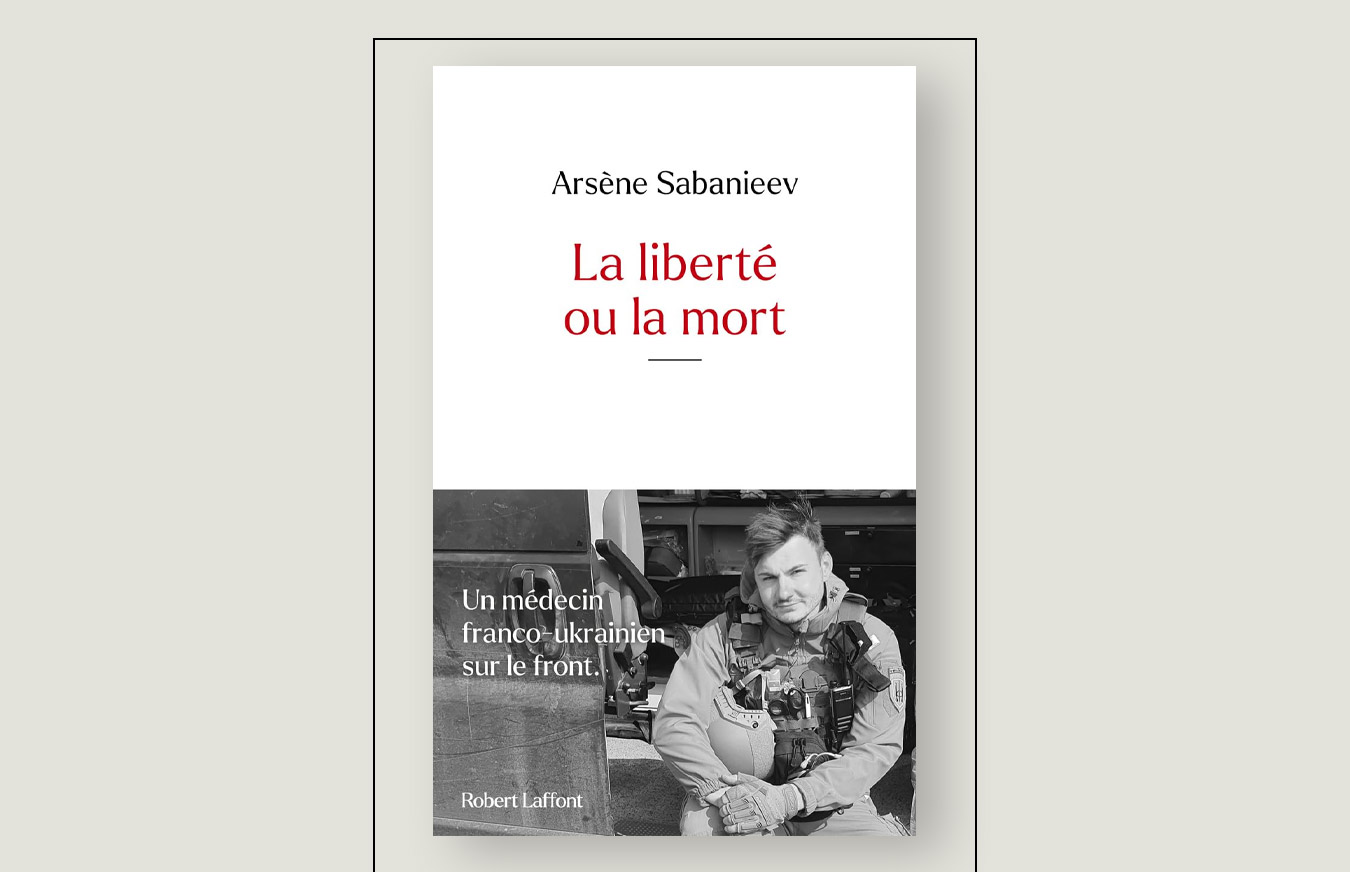
Arsène Sabanieiev writes about the war you have to face with your own hands. The author, a French-Ukrainian doctor, leaves a comfortable life in France and joins the Ukrainian front as a medical evacuation volunteer. He pulls the wounded out from under shelling, sometimes having only seconds to decide who can be saved and who cannot. It is the diary of a man who stops being an observer and becomes a lifeline. This is not a novel and not a historical study. It is a record of someone who refuses to watch from afar and chooses to act.
The book matters to a Western reader who is used to thinking of war as something distant. Sabanieiev shows that distance is an illusion. War does not disappear just because it can’t be seen from a cozy European apartment. He explains that when your country is burning, indifference is also a choice, and it is almost always the wrong one.
“La liberté ou la mort” has the power to wake people up. It gives the war a human face, marked by exhaustion, fear, adrenaline, and the absolute certainty that freedom has a price, and someone is always paying it. This book is a reminder that helping Ukraine is not a gesture of abstract solidarity from afar. It is a responsibility shared by anyone who calls themselves a free person.
RELATED: The endless and innocent birdsong of sky is for you: the newest Ukrainian war poems
“Volia: Volunteer engaged in the Ukrainian resistance” / “Volia: engagée volontaire dans la résistance ukrainienne” by Anastasia Fomitchova
Grasset, 2025
(originally written in French)
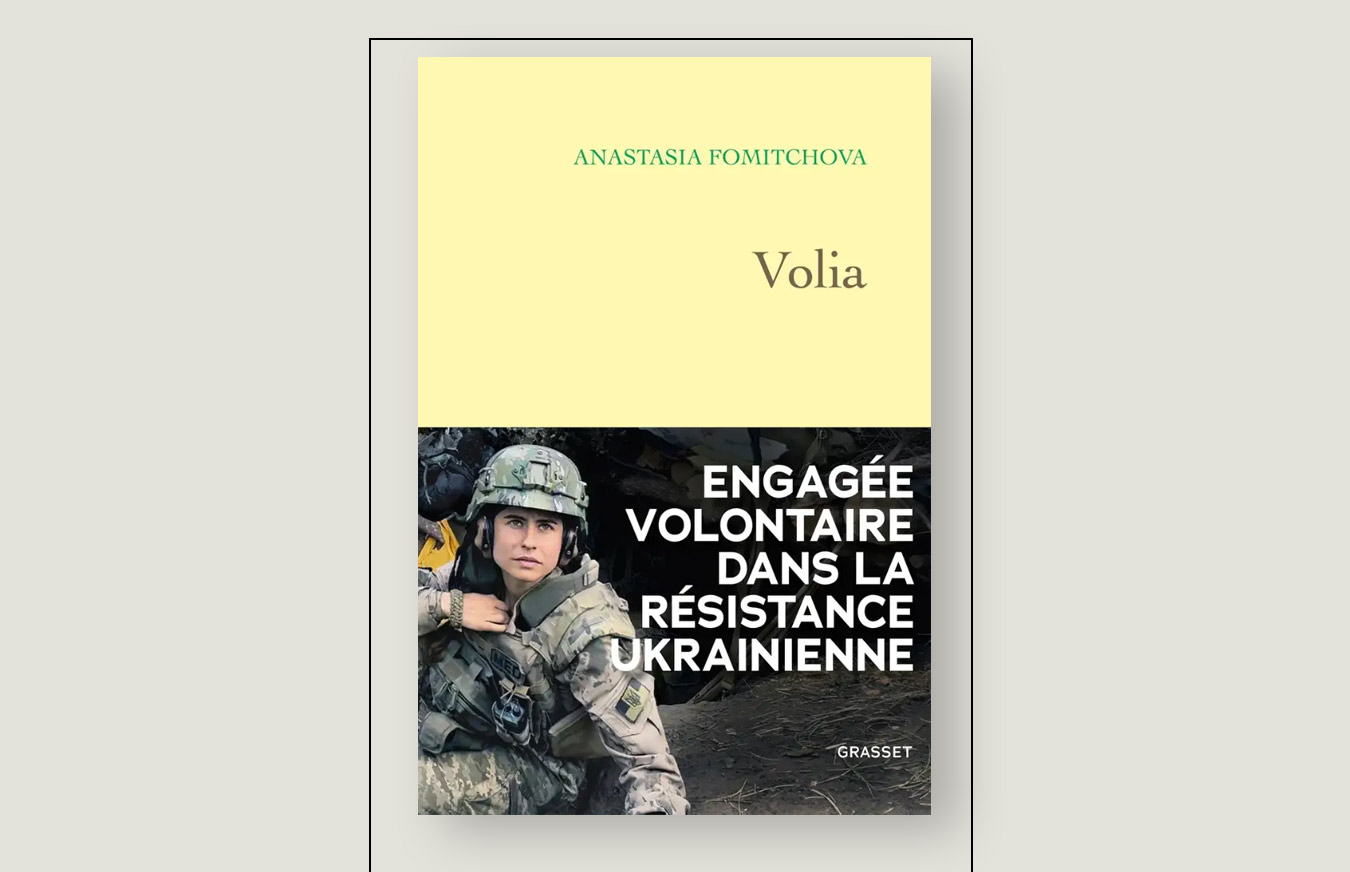
In “Volia”, Anastasia Fomitchova tells the story of a young Ukrainian woman who leaves Paris after the full-scale Russian invasion and returns to Ukraine to serve as a combat medic. It is not her first experience of war. She had already served as a paramedic in the Ukrainian army from 2017 to 2020, then tried to build a peaceful life in France. In 2022, she decides she cannot stay away while others defend the country she comes from.
The Ukrainian word “volia” means more than freedom. It carries the ideas of inner strength, resolve, and the refusal to accept any form of oppression. In this single word one can express the whole force that drives people to fight for independence, even when the price is their own life.
The book is both testimony and personal history. By recalling her family’s past and her own experience on the front line, she connects the current Russian aggression to the unhealed wounds of the Holodomor, Soviet dictatorship, and the Chornobyl disaster.
“Volia” shows the war through the eyes of a woman who never sought violence, yet chooses responsibility when the only alternative is silence. It is a book about resistance and memory, and a reminder that those who fight in Ukraine are defending not only their own freedom, but the very idea of freedom itself.
For this book, Fomichova became a winner of the André Malraux Literary Prize in the category “Socially Conscious Fiction.”
“Ordinary People Don’t Carry Machine Guns” / “Les gens ordinaires ne portent pas de mitraillettes” by Artem Chapeye
Bayard, 2024
(originally written in Ukrainian)
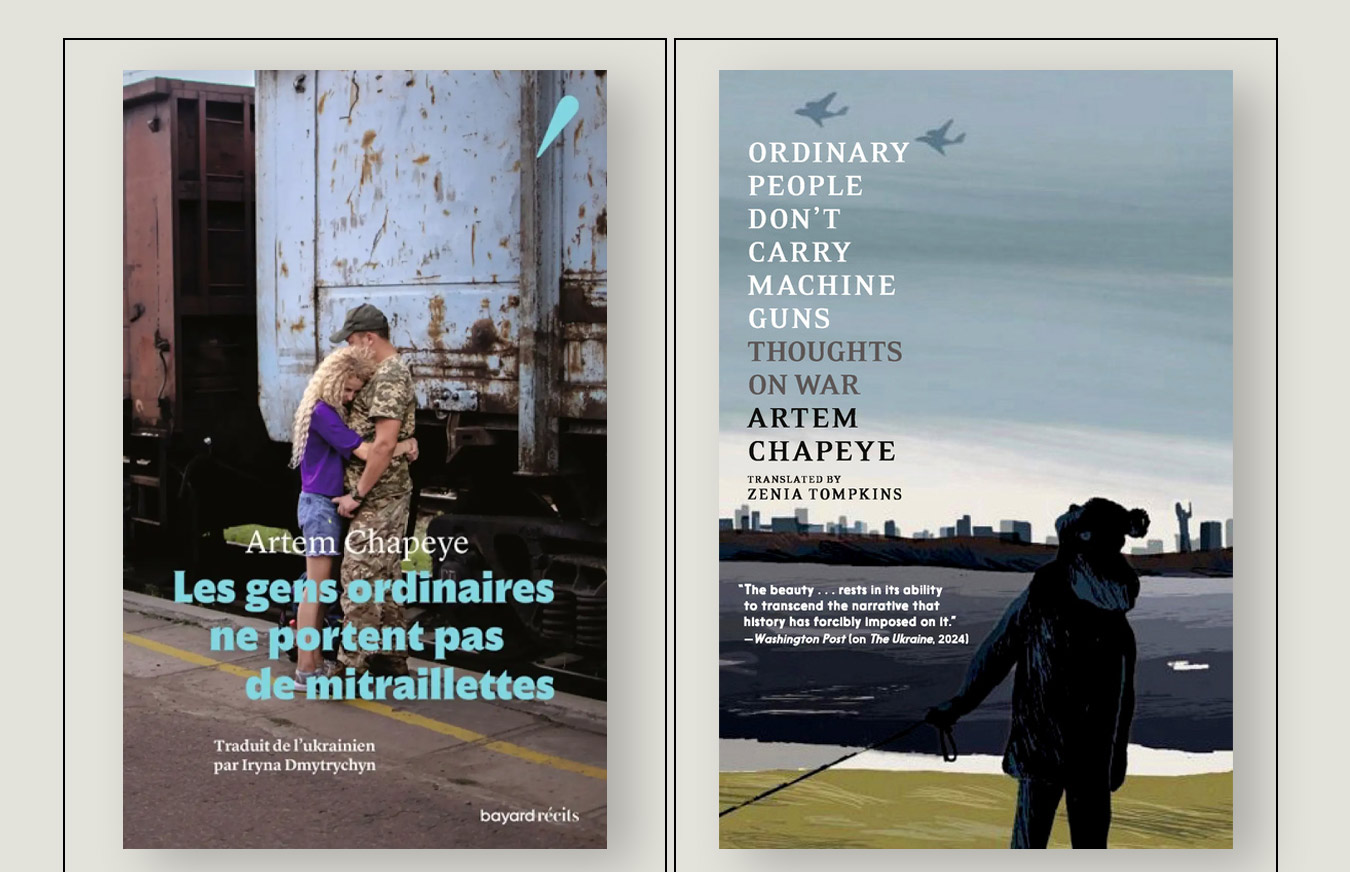
In “Ordinary People Don’t Carry Machine Guns”, Artem Chapeye writes from a position very few people ever imagine themselves in. He is a father, a husband, a writer, a journalist, an activist, and a lifelong pacifist. And yet he is now a soldier. Like thousands of other Ukrainians, he was not born for war. But when the choice is between fighting and losing your children, your family, your language, your home, the choice stops being philosophical. It becomes a matter of survival, responsibility, and love.
RELATED: The Ukraine: country lost in translation
Chapeye’s reflections belong to the same moral landscape as Erich Maria Remarque or George Orwell: people who did not seek war but understood that refusing to act can become another form of violence. His book shows how war turns ordinary lives inside out, how quickly a civilian becomes a defender, and how deeply a pacifist can still believe in the right to protect what matters.
For a Western reader, this book is a reminder that heroism is not something reserved for people who love war. It is what happens when someone who hoped for a quiet life accepts that freedom, family, and dignity sometimes have to be defended with force. Chapeye does not glorify war. He explains what it does to people who never wanted to hold a weapon, and why they do it anyway.
“My women” / “Mes femmes” by Yuliia Iliukha
Éditions des femmes-Antoinette Fouque, 2024
(originally written in Ukrainian)
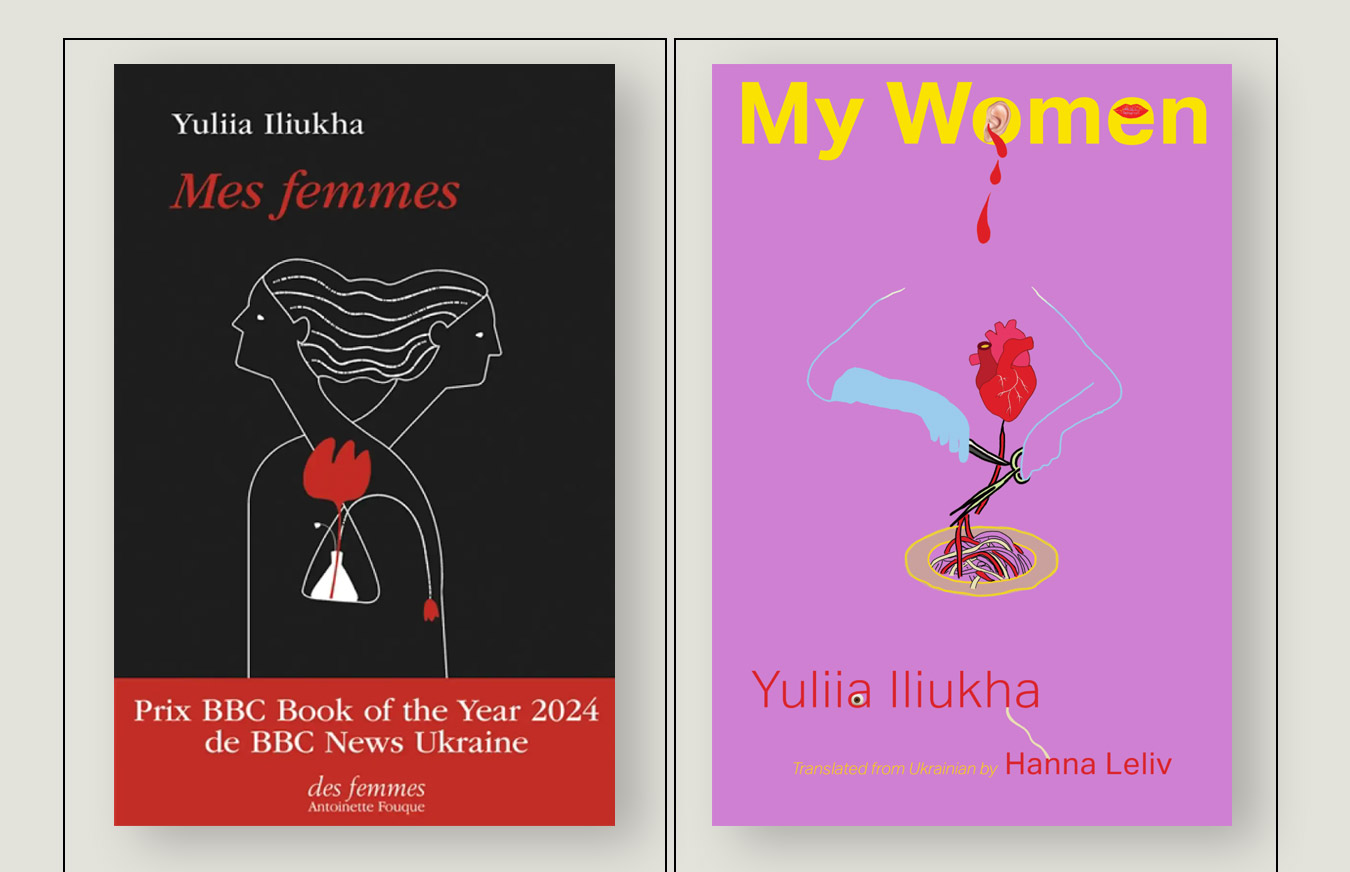
A powerful and intimate book. In “Mes femmes”, Yuliia Iliukha gives voice to Ukrainian women whose lives have been changed or destroyed by Russia’s war. They are mothers, students, teachers, wives, volunteers, refugees, and soldiers. The women in the book have no names, yet each of them is instantly recognizable from news headlines or short social media clips. They could be any one of us.
The book is composed of short, emotionally charged pieces of prose. These are voices that are often unheard or never truly listened to. The voices of women who lost what mattered most, those who held on and fought, and those who could not endure and fell silent. The stories are brief, intense, raw, and at times almost unbearable, because they come from real life in wartime.
“Mes femmes” received the BBC Book of the Year 2024 award from BBC News Ukraine, a sign of how deeply it speaks to millions of readers. The book shows that war is not only what happens at the front with weapons in hand. It is also the life of those who endure, who care, who rebuild, and who refuse to disappear.
“Looking at Women Looking at War” / “Regarder les femmes regarder la guerre” by Victoria Amelina
Flammarion, 2025
(originally written in English)
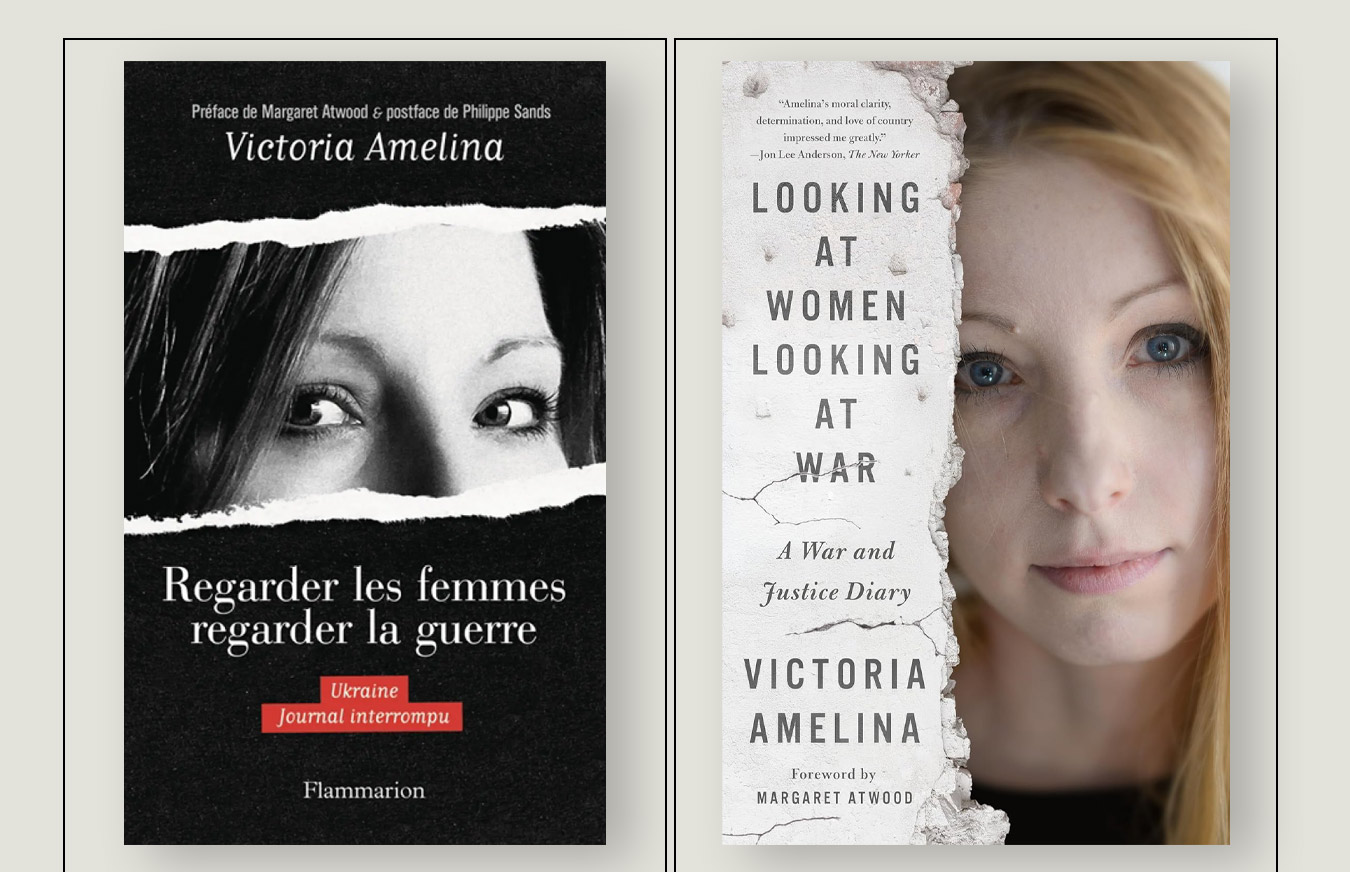
In this “War and Justice Diary”, the late Ukrainian writer Victoria Amelina gathers the voices of women who witnessed and survived the Russian invasion. She does not speak for them. She listens, records, and creates a space where their testimonies become literature, memory, and evidence. The book opens with a foreword by Margaret Atwood, who recognizes its urgency and global relevance.
The result is not a traditional narrative. It is a mosaic of interrupted lives, told through diaries, field notes, conversations, and quiet moments of observation. It reveals the war in the way a woman protects a child, carries a camera, or buries a friend.
RELATED: Review: ‘Nothing Bad Has Ever Happened. A Bouquet for Victoria Amelina’
Russia can destroy buildings, but it cannot destroy voices. Memory stays alive, and so do those who carry it forward. Victoria Amelina was killed in 2023 in a Russian missile strike while documenting war crimes, but the work she began did not end with her. This book is part of her legacy, and it reminds us that Russia’s war in Ukraine is also being recorded and resisted by women who write, witness, and refuse silence.
The publication is a part of the “Chytomo Picks” project. The materials have been prepared with the assistance of the Ukrainian Book Institute at the expense of the state budget. The author’s opinion may not coincide with the official position of the Ukrainian Book Institute.
Authors: Valentyna Vzdulska, Olha Holovko
Copy editing: Joy Tataryn
Читомо» — це медіа про книжки й літературу, що підтримувало українське книговидання задовго до того, як це стало трендом. Ставайте частиною історії — доєднуйтеся до Клубу Читомо!
the more you read, the greater the possibilities