* ESC - close the search window
alternative history of Ukraine
It could have been different: An alternative history of Ukraine in five books
04.12.2025
You see an error in the text - select the fragment and press Ctrl + Enter
The recipe for writing alternative history is simple: choose a point in the past that interests you, change it partially or completely, and see what happens. Add elements from other genres to taste.
The fate of the genre in Ukrainian reality has been somewhat uncertain, because we still have problems with knowledge and understanding of our own history, and it is difficult to play the postmodern game without knowledge of the primary source.

When Philip Dick or Richard Harris in “The Man in the High Castle” and “Fatherland” depict a world where the Nazis have won, readers are horrified. But until recently, a significant part of Ukraine’s population admired the exploits of the “red liberators.” Only now are the Ukrainian people going through the stage of forming a common vision of history. Perhaps that is why authors who did work with alternative history rewrote the past in a comedic vein. We did not need to accumulate alternative horrific tragedies, because there were enough real ones. But saying goodbye to the empire with a smile on our faces is always welcome.
“Parade in Moscow” by Vasyl Kozhelyanko
Lileya NV, 2020
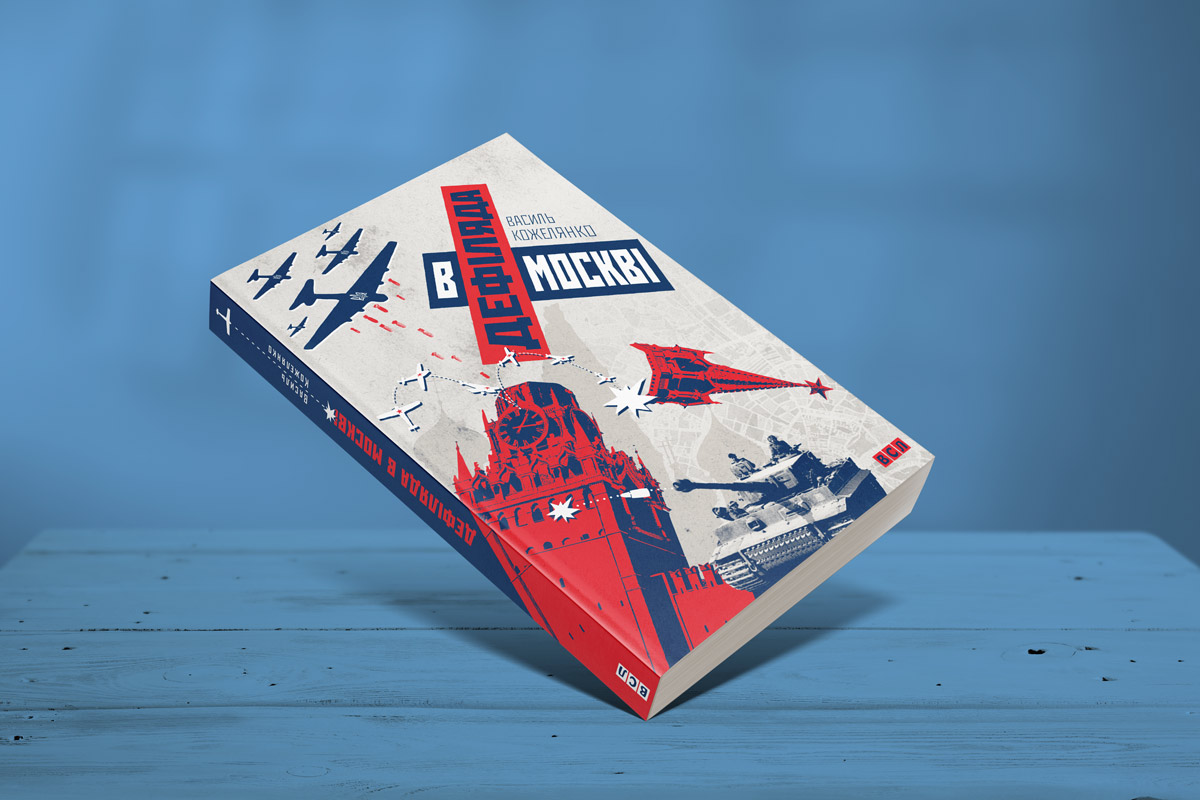
“Parade in Moscow” by Vasyl Kozhelyanko (Ukrainian book cover)
Vasyl Kozhelyanko is considered the father of Ukrainian alternative history. It seems that no one before or after him has approached the subject in such a comprehensive manner, offering readers a wealth of unconventional scenarios for Ukrainian history.
The most famous of his works is the novel “Parade in Moscow,” which depicts a world where Hitler did not neglect the support of the enslaved peoples of the Soviet Union and, together with the UPA (Ukrainian Insurgent Army), carried out a blitzkrieg, capturing Moscow and Stalin. More precisely, Stalin was captured by the main character of the novel, the commander of the reconnaissance company of the first battalion of the Ukrainian Army’s special forces brigade, Ensign Dmytro Levytskyi.
Kozhelyanko particularly values Ukraine’s place in history. All the pomp and circumstance of the preparations for the parade exposes the vile and pitiful essence of totalitarianism, whether Nazi or Communist.
“Rivne/Rovno” (The Wall) by Oleksandr Irvanets
Fact, 2006
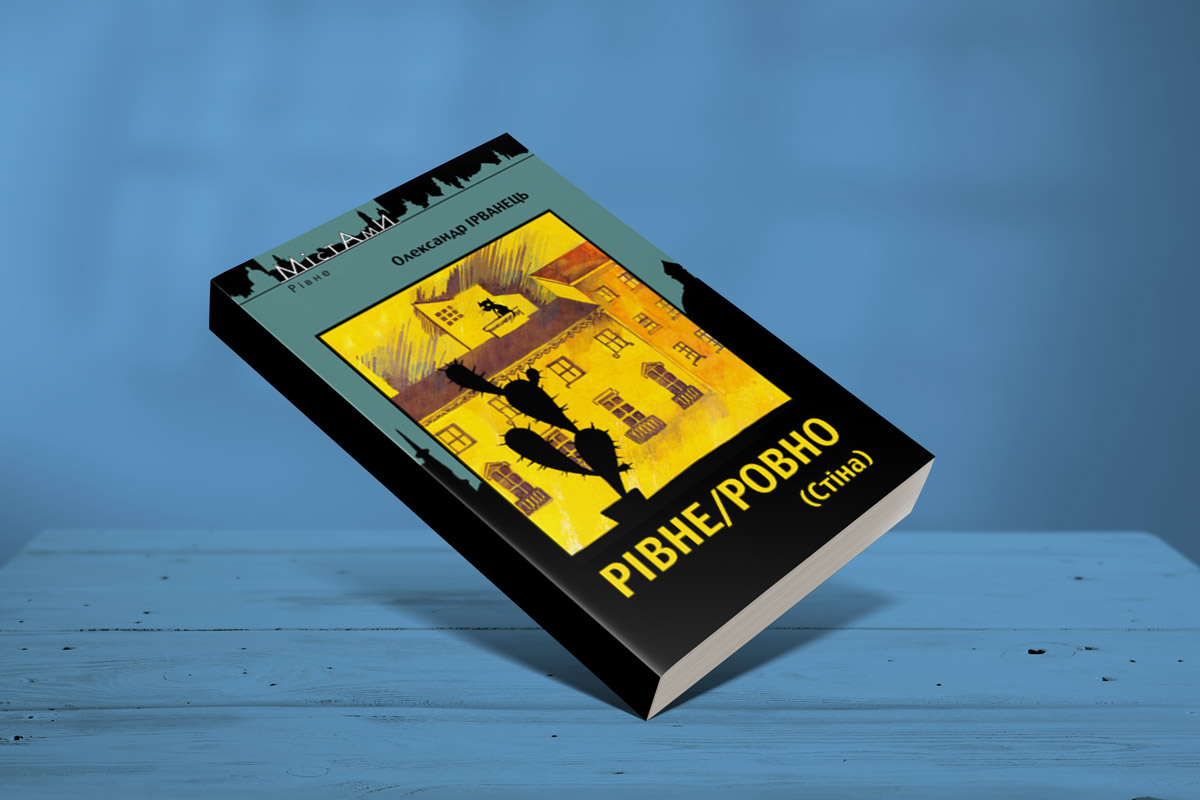
“Rivne/Rovno” (The Wall) by Oleksandr Irvanets (Ukrainian book cover)
This satirical dystopia with elements of alternative history describes the author’s hometown, which has been divided by a wall similar to the Berlin Wall. The western and eastern sectors are diametrically opposed worlds. A progressive European city borders “the Sovok” (soviet) reserve. The main character of the novel is a writer who has received a one-day pass to the other side of the Wall. He desperately wants to meet his relatives, whom he has not seen for several years, but the party nomenclature in Rovno has its own plans for him.
Like Kozhelyanko, Irvanets bids farewell to the empire: also cheerfully, also satirically, but much more literature-centric.
RELATED: ‘A Brief History of a Long War of Ukraine with russia’ to debut in France ahead of Ukrainian edition
“The Ukrainian What-if-ology: Essays on Alternative History” by Dmytro Shurkhalo
Family Leisure Club, 2017
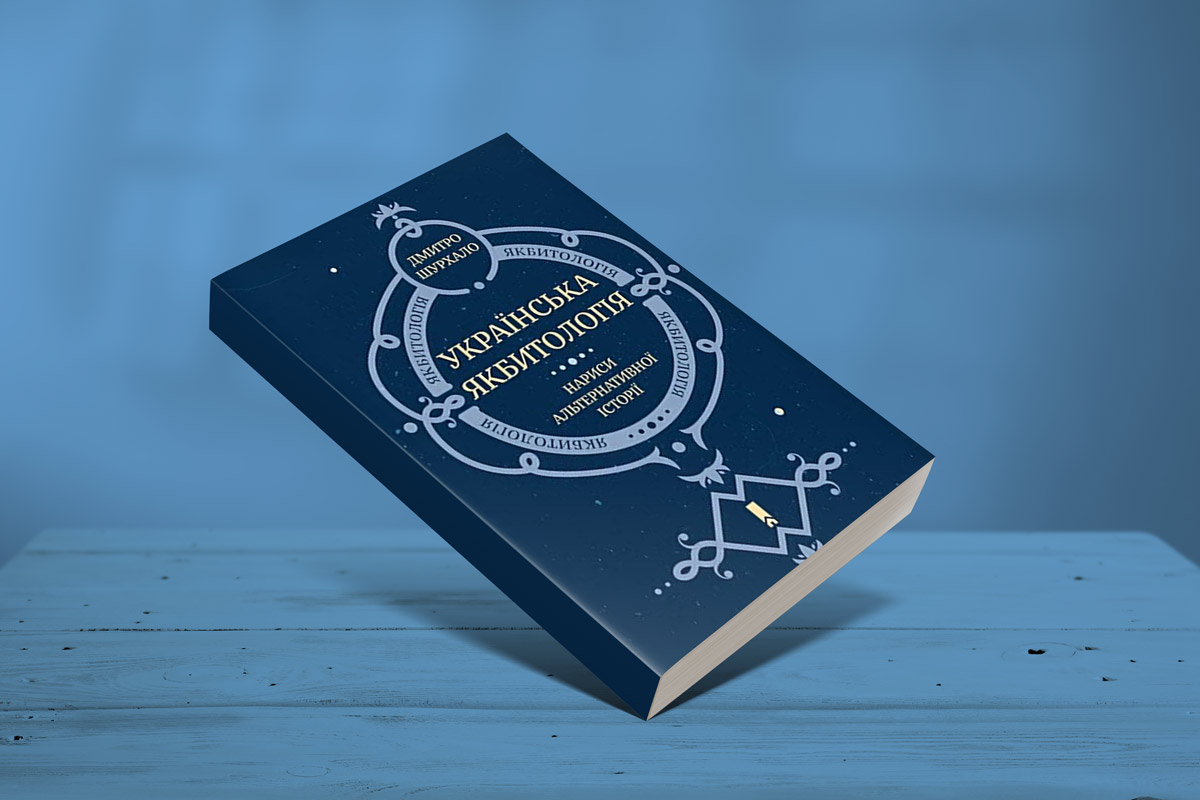
“The Ukrainian What-if-ology: Essays on Alternative History” by Dmytro Shurkhalo (Ukrainian book cover)
This book is a collection of popular science articles about turning points in the development of the Ukrainian state. The author calls them “bifurcation points” — moments when chance could have radically changed the usual course of events.
What would have happened if Volodymyr the Great had chosen Islam instead of Christianity? What would have happened if Bohdan Khmelnytsky’s eldest son Tymish had not been killed by a cannonball? What would have happened if the Swedes had won the Battle of Poltava? Dmytro Shurkhalo`s analysis and reasoning are logical, cautious, and thoughtful; the author does not engage in fortune-telling.
“The Ukrainian What-if-ology” is not so much fiction as a serious work on Ukrainian history, perhaps even a peculiar collection of defeats.
“Kharkiv 1938” by Oleksandr Irvanets
Laurus, 2017
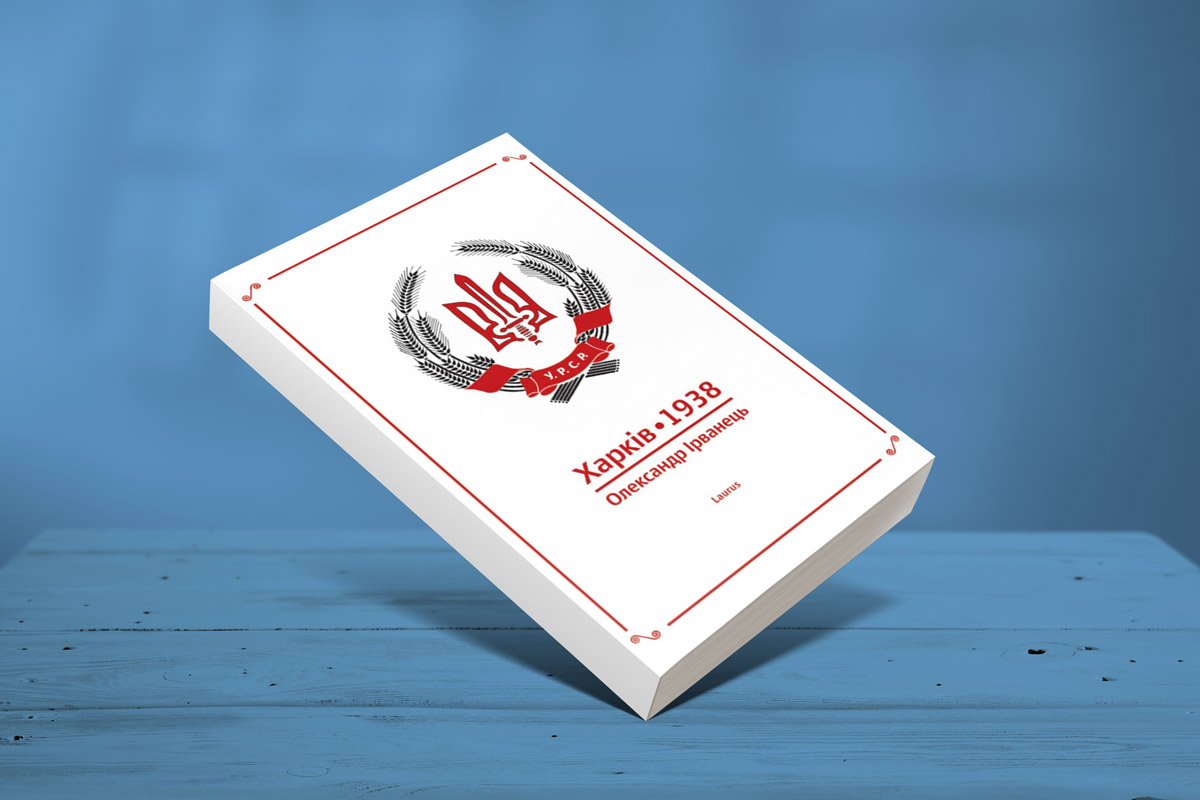
“Kharkiv 1938” by Oleksandr Irvanets (Ukrainian book cover)
The events of the novel unfold in Kharkiv, the capital of the Ukrainian SSR, i.e., the Ukrainian Workers’ and Peasants’ Republic. At that time, the UPR survived, and the battle at Kruty did not turn into a Ukrainian Thermopylae, but rather a “miracle at Kruty” — the beginning of a successful counteroffensive that allowed the Bolsheviks to be expelled from Ukraine. The state is headed by Yevhen Konovalets, Mykola Khvyliovyi did not shoot himself, Olha Kobylianska received the Nobel Prize. SBU Colonel Yuriy Kotsyuba must find and neutralize a mysterious saboteur while the city prepares for the Kharkiv Proletarian Carnival.
“Kharkiv 1938” works better as a crossword puzzle novel than as a dystopian novel.
“Nechuy: A Film Novel” by Petro Yatsenko
Piramida, 2017
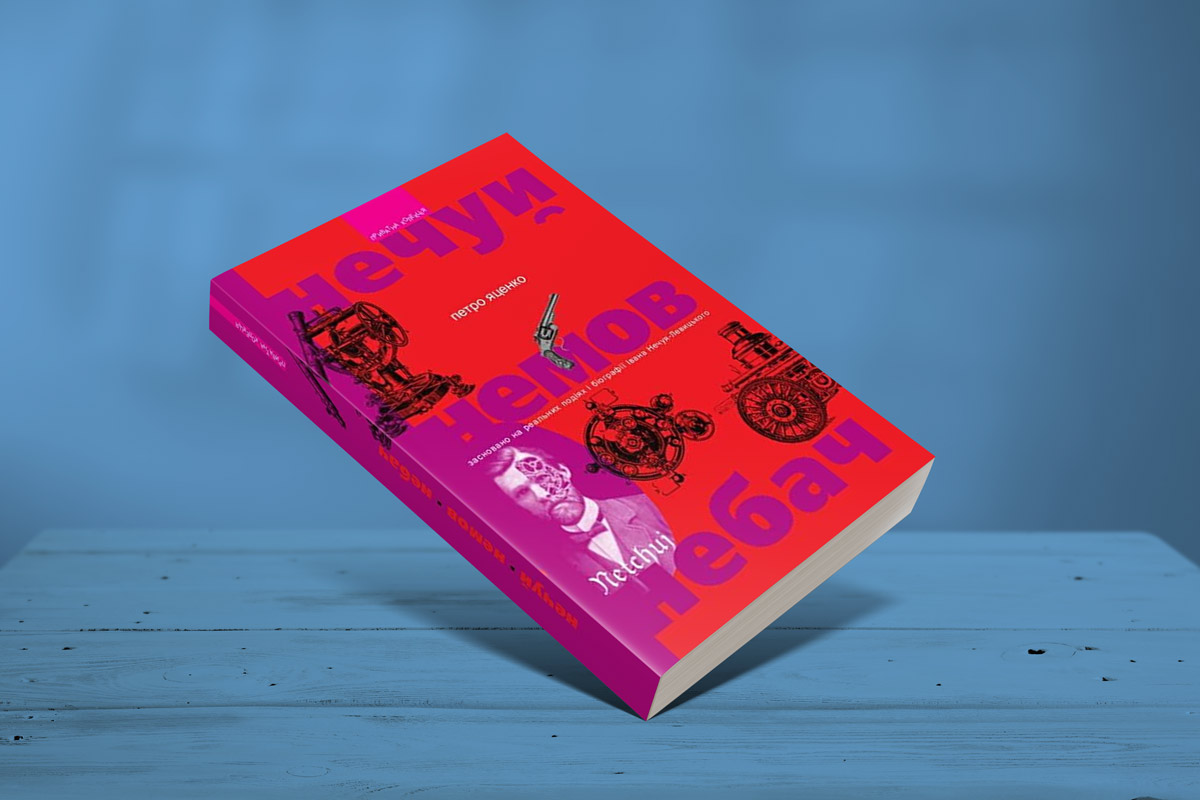
“Nechuy: A Film Novel” by Petro Yatsenko (Ukrainian book cover)
Petro Yatsenko chose Ivan Nechuy-Levytsky, a brilliant and original author who remains in the collective consciousness as a painful memory from school — and therefore as a literary figure considered boring by definition — as the victim, or rather the hero, of his experiments.
Yatsenko adds one element to the biography of the Ukrainian classic: a mechanical heart. Now it ticks in Nechuy-Levytsky’s chest, while Galician vampires settle in his living organ. Where did this technology come from? Well, for his operation, the author had to slightly change the chronotope around his hero.
Yatsenko’s Nechuy-Levytsky lives in a world where steam technology has triumphed, where gears turn in the bodies of oxen, and scientific knowledge is equated with religious doctrine.
And although Yatsenko does not downplay the trials and tribulations that Ukraine has faced, his adventure novel is nonetheless full of dynamism and optimism.
RELATED: Why does a soldier need music? Review of Artem Chekh’s ‘The Dress-Up Game’
This article was created by a mentor of an intensive course in book journalism and literary criticism of Chytomo and Litosvita. The UA/UK Cultural Exchange course is supported by the British Council’s Support for Cultural Activity in Ukraine with UK Involvement programme.
Copy editing: Ben Angel, Joy Tataryn
Читомо» — це медіа про книжки й літературу, що підтримувало українське книговидання задовго до того, як це стало трендом. Ставайте частиною історії — доєднуйтеся до Клубу Читомо!
the more you read, the greater the possibilities
348
top five Ukrainian books for teenagers
Top five new teen books by Ukrainian authors
12.12.2025 - Vitalina Makaryk
242
UK/UA Cultural Journalism Exchange
Suffering hero-victims and alcoholism in the middle of nowhere: 6 stereotypes in writing about Ukraine
12.12.2025 - Chytomo