* ESC - close the search window
Serhiy Zhadan
One-Zhadan theater: When popular literature becomes popular theatrical performance
04.12.2025
You see an error in the text - select the fragment and press Ctrl + Enter
Among readers in the UK, North America, and Germany, Serhiy Zhadan is one of the most widely recognized Ukrainian authors. And this recognition comes not only from his books, but also from concerts and theatrical performances based on adaptations, both in Ukraine and internationally.
We spoke with several directors about the latter – namely, five adaptations and stagings of Zhadan’s texts.
“Depeche Mode”: Back in Kharkiv
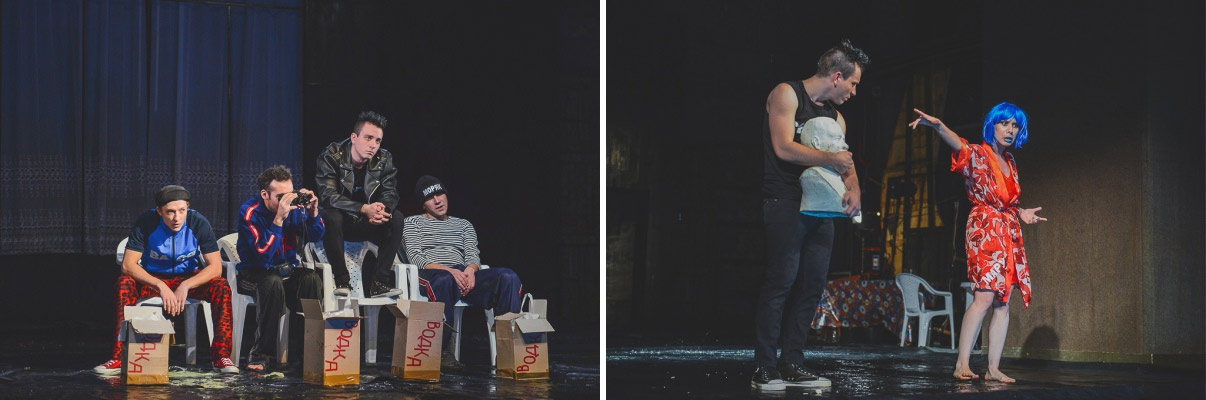
In 2009, impressed by the story of three teenagers set against the backdrop of the collapse of the Soviet Union, German director Markus Bartl and artist Philip Kiefer brought the novel “Depeche Mode” to life on stage at the Landshut Theater in Lower Bavaria. To be able to bring this story to the stage, the German team traveled to Kharkiv, where they visited the train station, the flea market, and other iconic locations featured in Zhadan’s book.
Five years later, “Depeche Mode,” the play, moved to the stage of the Kharkiv Theater for Youth.
“The first meeting between the German and Ukrainian teams took place without an interpreter. The Germans didn’t know Ukrainian, the Ukrainians didn’t know German, and we communicated in ‘theatrical language,’” Andriy Hapanovych, the theater’s director at the time, recalls.
Zhadan adapted the play for Ukrainian audiences, not only translating it but also changing the style of speech.
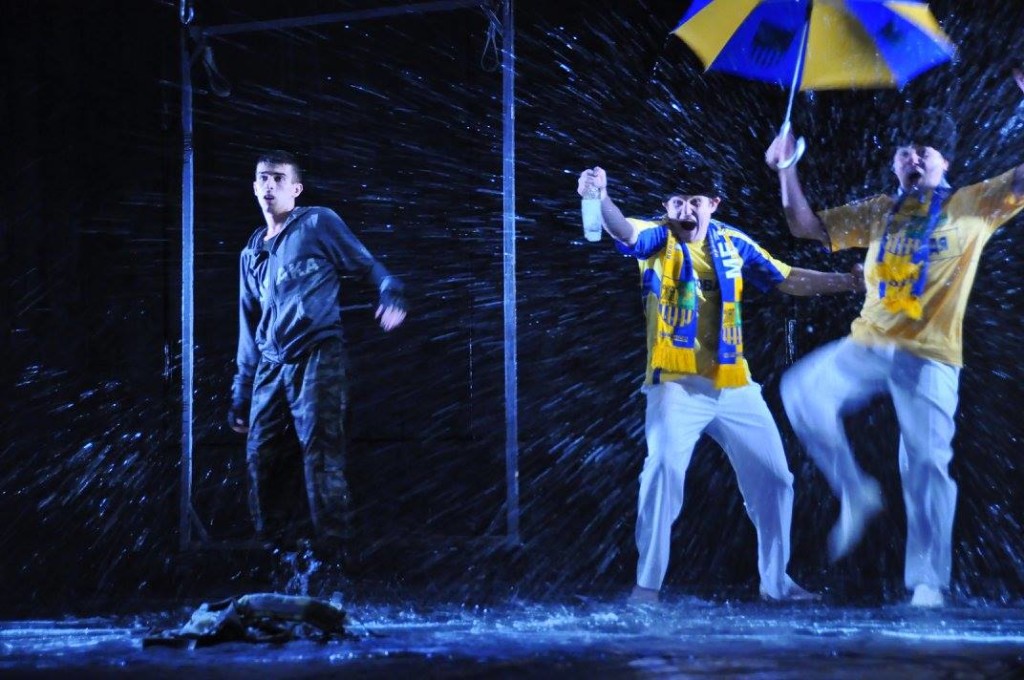
“Bartl set a condition: If there was no rain on stage, there would be no performance. I said that there would be no performance if the play was not adapted for the Kharkiv Theater for Youth,” Hapanovych said.
That’s why the slang typical of the ’90 and the “Depeche Mode” references (to the English synth-pop band, mentioned throughout the novel, that became popular in the 1980s) were toned down. Thus, there was a double interpretation of “Depeche Mode”: the first change took place in Germany, when the novel was transformed into a play, and the second when the existing production was adapted in Ukraine.
“The Dialectic of Silence”: Brecht, Kurbas, “Semaphores”
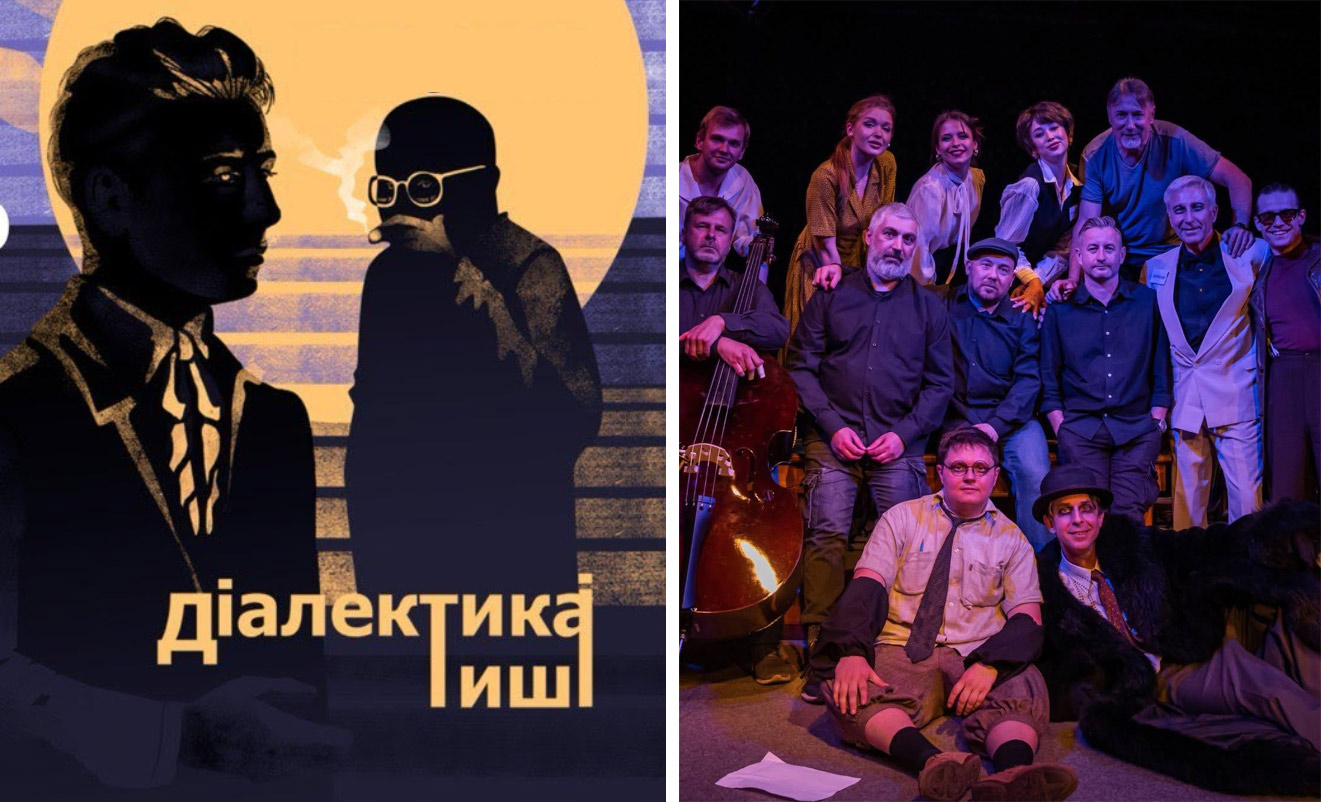
“The Dialectic of Silence” takes audiences a century into the past, uniting Kharkiv and Berlin through the lives of two theater directors: Les Kurbas and Bertolt Brecht. They shared a common era and a spirit of innovation, but their creative paths were divided.
“My own title for the play was ‘How Brecht and Kurbas never met.’ On an artistic level, I see many parallels between the two directors. They were completely independent, but they worked and created at the same time,” Oleksandr Kovshun, the director, explained.
Two dramatic storylines complement Brecht’s poems from the collection “In Praise of Dialectics,” which was published several years ago in a translation by Zhadan. The stories of the two directors are united by songs from the music album “Semaphores” by Zhadan and German-Ukrainian composer Yuriy Hurzhy. It is an album about Ukrainians who left their homes after the war started. It describes their travels, their separation, and the train stations along the way. By using this music, the director introduces another axis connecting the main characters, but this time a temporal one.
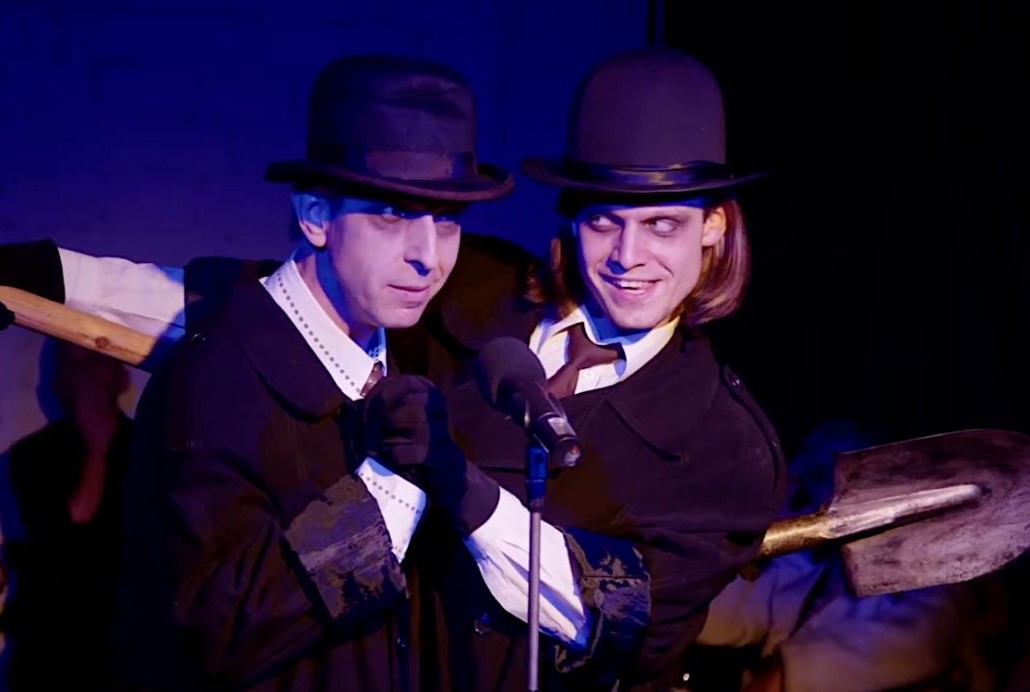
A video recording of the presentation can be viewed on YouTube. The actors remain on stage throughout, live music is played, and Zhadan reads poetry in real time. This creates a single space where song, poetry, and drama alternate. This event is only a prelude to the performance that the team is preparing for 2026, the 100th anniversary of the Berezil Theater’s move to Kharkiv.
“Cease-Fire”: Confessions of actors, confessions of audiences
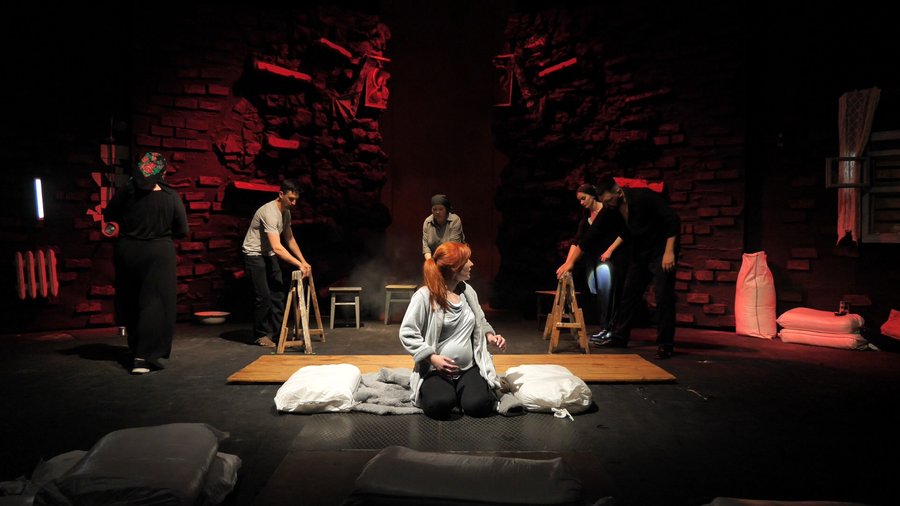
“Cease-Fire” was staged at the Ivan Kocherga Academic Music and Drama Theater in Zhytomyr after the outbreak of the full-scale invasion. The story is set in a city occupied in 2014, where people attempt to negotiate a temporary truce. Yet, the play emphasizes less the historical events and more the essence of war: its language, the erosion of social bonds, and the impossibility of leaving the past behind.
“I wanted the audience to become participants. This play is a parable. I believe it is important to be aware of what we say and do, because one day the past will come and demand answers from us,” director Petro Avramenko explains.
In “Cease-Fire,” there is no clear division between black and white, which is characteristic of Zhadan’s other texts. No emblems or flags are shown, which lets us view the war from the perspective of ordinary people rather than through the lens of politicians, historians, or journalists. However, the events of the full-scale invasion make this ambiguity less relevant. That is why, according to Avramenko, there were difficulties in working with the actors.
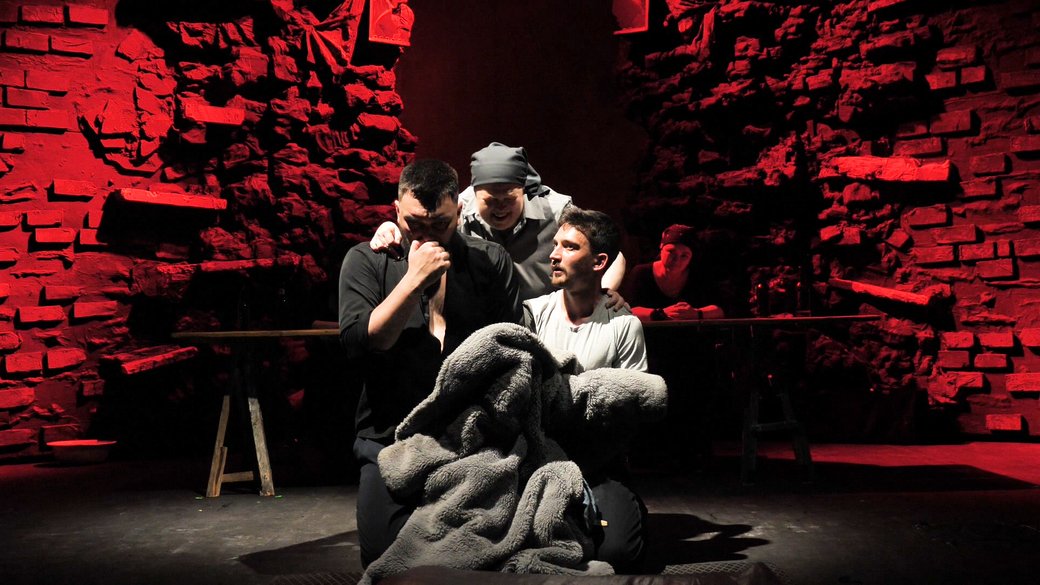
“No actor wanted to play a ‘separatist.’ No one said that directly, but I clearly felt their inner resistance to certain actions or opinions of their characters. Usually, actors do not resist their roles, but this was a case where the war brought changes to the theater.”
RELATED: Serhiy Zhadan’s play ‘Feuerpause’ released in Germany
The Pepsi Generation: The ’90s through the lens of childhood
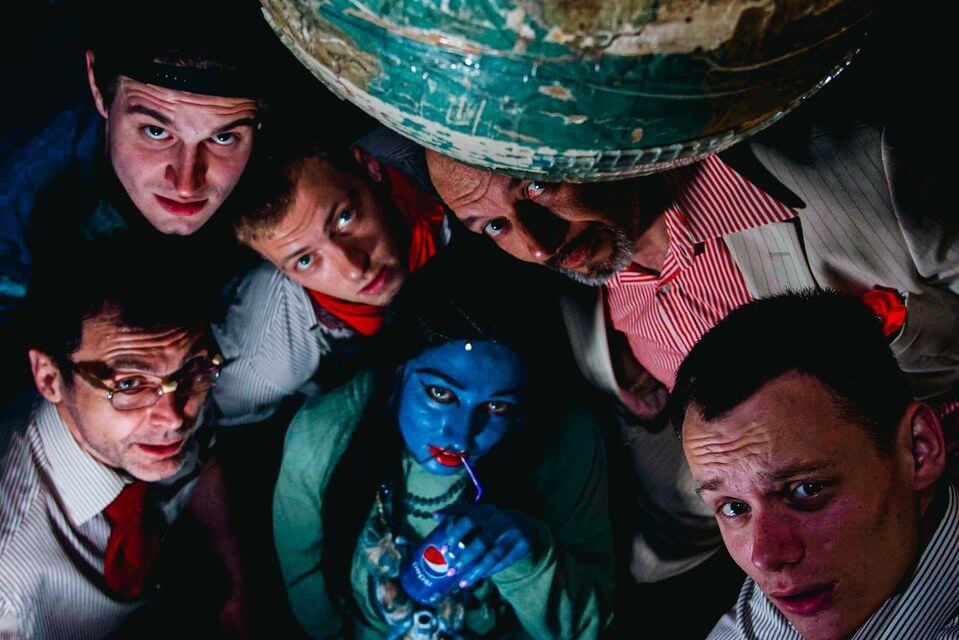
“The Pepsi Generation,” which visitors to the Theater on Pechersk in Kyiv had the opportunity to see, is a mosaic of Zhadan’s texts, which vary in content and form. The performance combines passages from novels, short stories, and poems, all connected by the theme of the 1990s.
“Uncertainty was a very characteristic feature of that time. What was going to happen next? One didn’t understand whether to build a life here or abroad. On the one hand, as a ‘child,’ one didn’t know what to do with oneself, and, on the other hand, the 1990s were filled with tough gangsters who wore crimson jackets and could ‘sort things out,’” Veronika Litkevych, the director of the play, said.
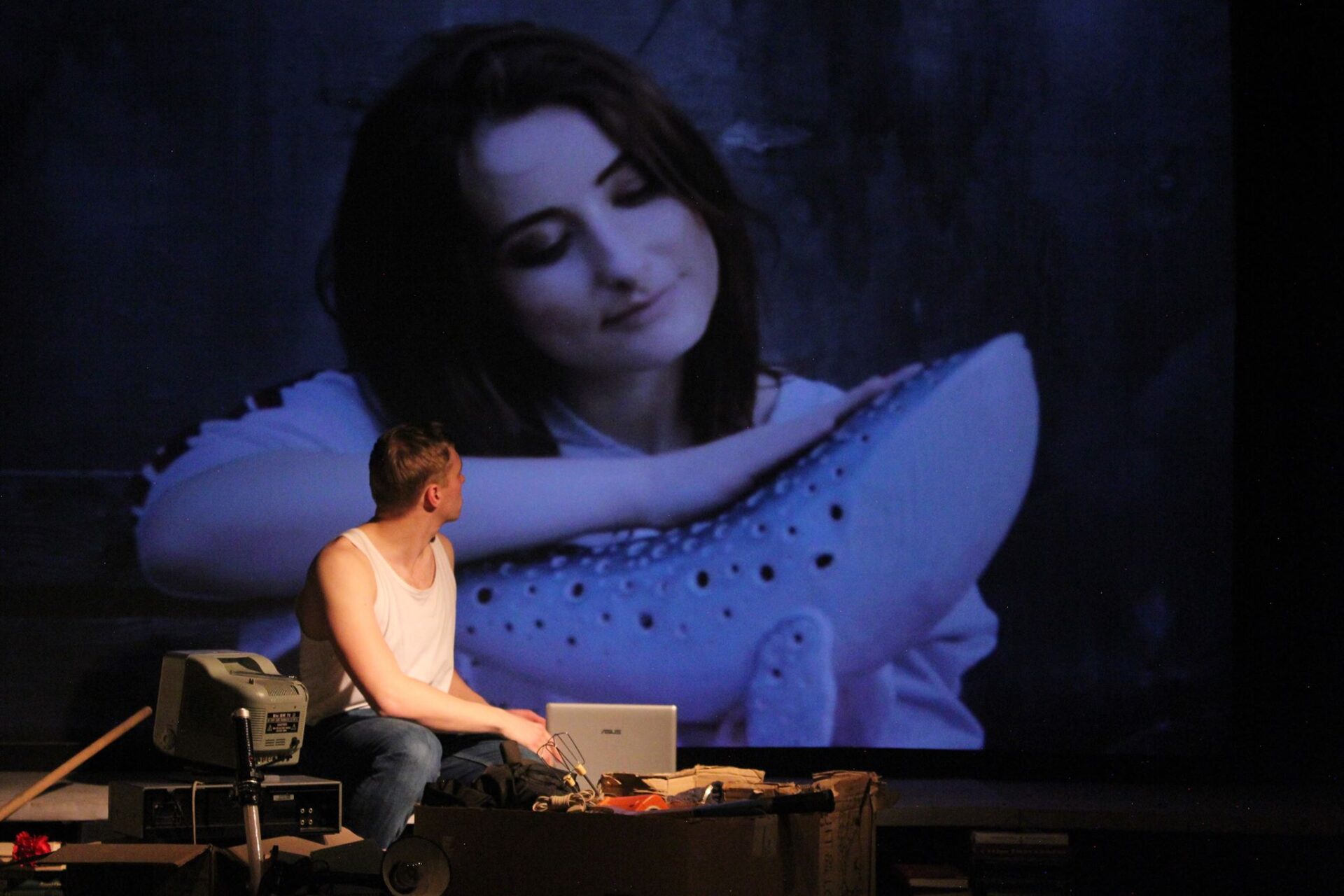
On stage appear unfulfilled artists, unknown alcoholics, migrants, an aquarium theater, and film sets. Humorous and ironic moments alternate with touching stories. Photographs and videos displayed on screens or vintage televisions enrich the performance, while cassette-player music transports the audience back to the 1990s.
“Stay at Home”: German actors read Ukrainian texts
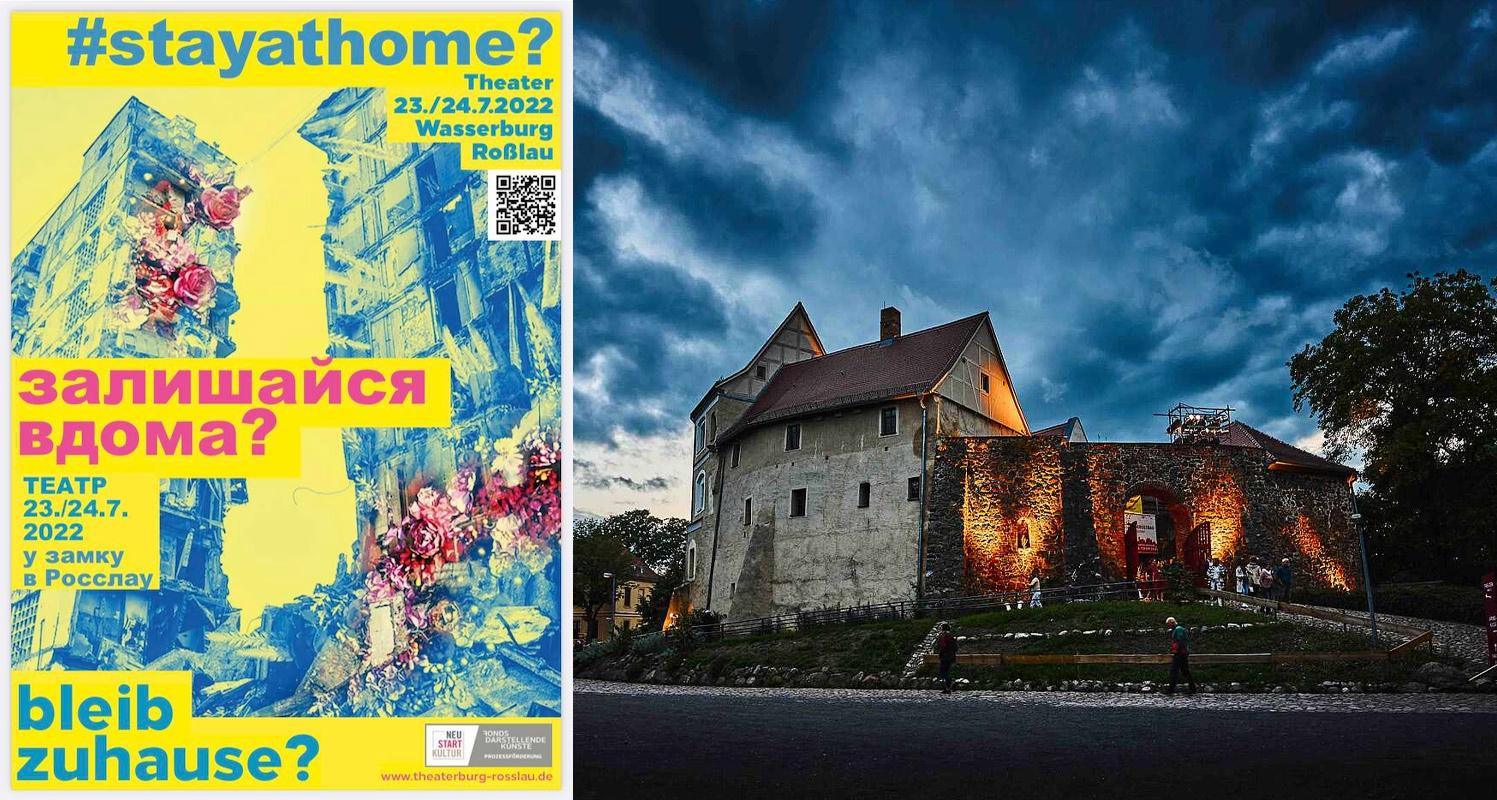
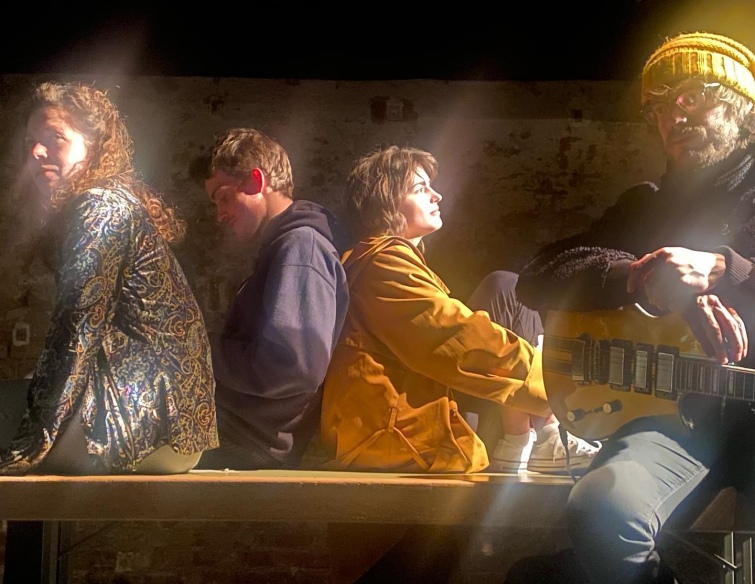
In 2022, Litkevych, in collaboration with a theater ensemble from Rosslau, Germany, staged the play “Stay at Home.” The production later toured Leipzig, Dresden, and Berlin. It was designed as a bilingual project, intended for both German and Ukrainian audiences.
“The trick was to first make the audience fall in love with us, to explain to them who Ukrainians are, that we have traditions, higher education, that we are sensitive and so cool. That is, to first ‘touch their hearts,’ and then tell them about the war,” Litkevych said.
Zhadan’s poetry became the framework for Ukrainian culture. It’s not every day that you see German actors reading from Zhadan. The texts were united by the theme of loss, and this is perhaps the most successful way for German-speaking viewers to experience Ukraine for themselves.
RELATED: Libretto by Serhiy Zhadan about Vasyl Vyshyvany raising funds for Khartiia
This article was created by a participant of an intensive course in book journalism and literary criticism of Chytomo and Litosvita. The UA/UK Cultural Exchange course is supported by the British Council’s Support for Cultural Activity in Ukraine with UK Involvement programme.
Translation: Iryna Savyuk
Copy editing: Ben Angel, Joy Tataryn
Images: teatrarium.com, theatre.com.ua, Khartiia, Suspilne, UP Zhyttia
Читомо» — це медіа про книжки й літературу, що підтримувало українське книговидання задовго до того, як це стало трендом. Ставайте частиною історії — доєднуйтеся до Клубу Читомо!
the more you read, the greater the possibilities