* ESC - close the search window
Chytomo Picks
The best Ukrainian prose: Chytomo Picks 2025
23.12.2025
You see an error in the text - select the fragment and press Ctrl + Enter
On Dec. 22 in Kyiv, literary critics announced the best Ukrainian prose books of 2025, both fiction and autofiction. The event took place at the Readeat bookstore, an official partner of the award. This year the award was presented for the first time. Chytomo Picks is a list of 12 outstanding works of contemporary fiction and auto-documentary prose, compiled through evaluation by eleven Ukrainian literary critics and one creative duo.
Modern Ukrainian literature is characterized by the rise of auto-documentary prose where real-life events often prove to be more vivid and unexpected than those in fiction. Literary prose was inspired by reality while reshaping it, and the aim of the ranking was to evaluate works based on artistic merit and formal aesthetics rather than by genre.
This list brings together books published over the course of 2025. None of these titles has been translated yet; however, we are sharing the selection to highlight works that have already gained critical recognition and attracted strong attention in the literary field. We asked all the literary critics who participated in the evaluation to present these books.
The Chytomo Picks List includes
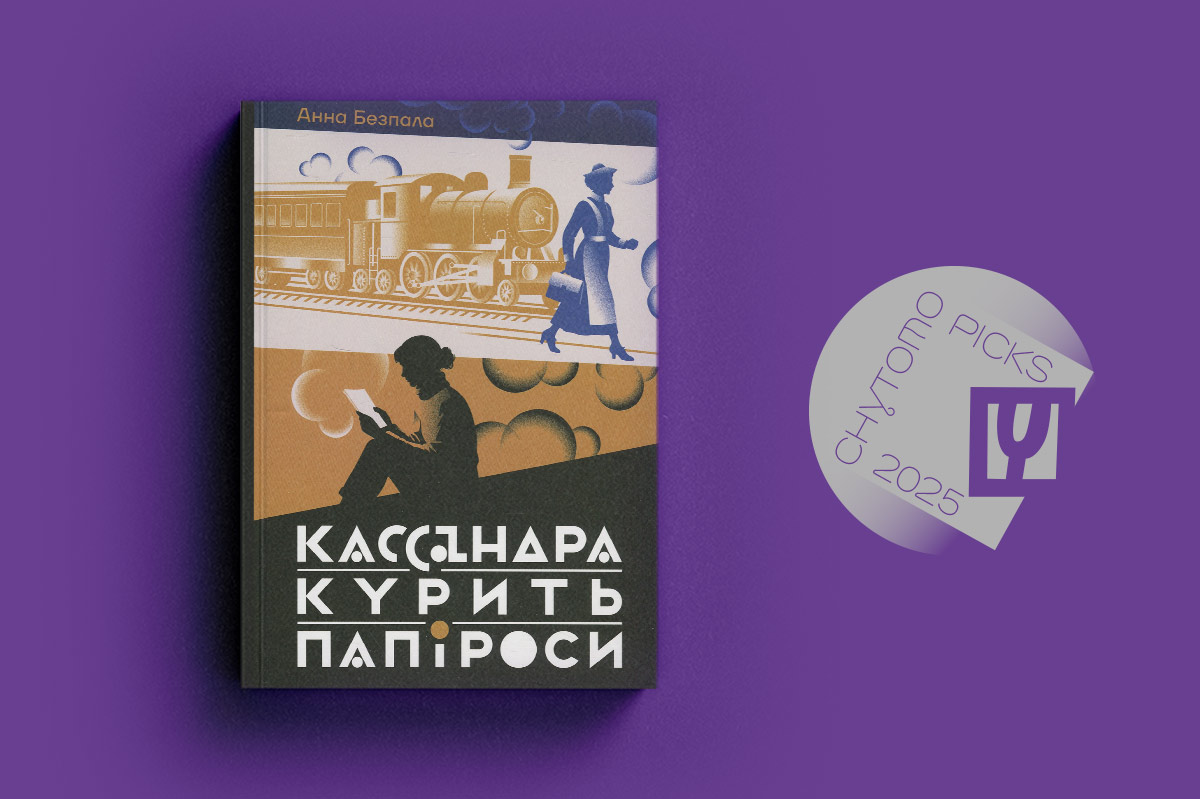
Anna Bezpala. “Cassandra Smokes Cigarettes” (Tempora Publishing House, “Кассандра курить папіроси”)
Literary critic Illia Rudiiko, who was involved in compiling the ranking, considers it not only one of the year’s strongest literary debuts but also one of the most outstanding books published this year overall. “Anna Bezpala’s novel offers a truly unforgettable reading experience: while writing about Cassandra, who supposedly sees the future, the author simultaneously invites readers to see the past in a new way. It is an extraordinary work that synchronizes history and History — Kyiv in 1918 and Kyiv in 2022, Freudianism and feminism, art and war, refined stylization and a richly detailed plot,” Rudiiko notes.
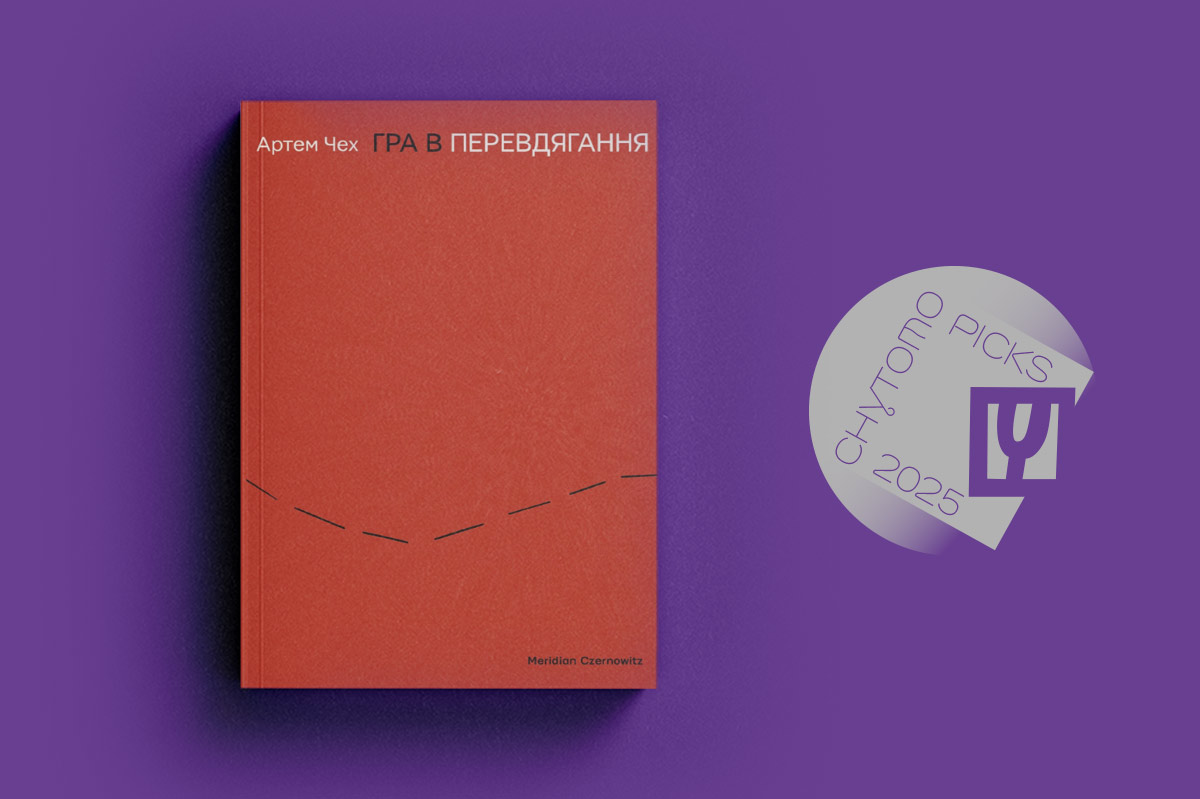
Artem Chekh. “A Game of Dress-Up” (Meridian Czernowitz, “Гра в перевдягання”)
Literary critic Anastasiia Herasymova is convinced that the very title of Artem Chekh’s book captures the full depth of this honest autofiction: “For those unprepared for war, it was necessary to put on a uniform and assume other roles; when camouflage becomes a second skin, being in the rear requires returning to old scripts that no longer work… Since “Zero Point”, the author has not changed in her sincerity, though in this book it often borders on irritation, disappointment, and loneliness. On a personal, vulnerable level, The Dress-Up Game tells of the colorless existence in the military, of a society where ‘everyone has long stopped feeling each other,’ and, most importantly, of a person who, at the center of the storm, tries to remain human.”
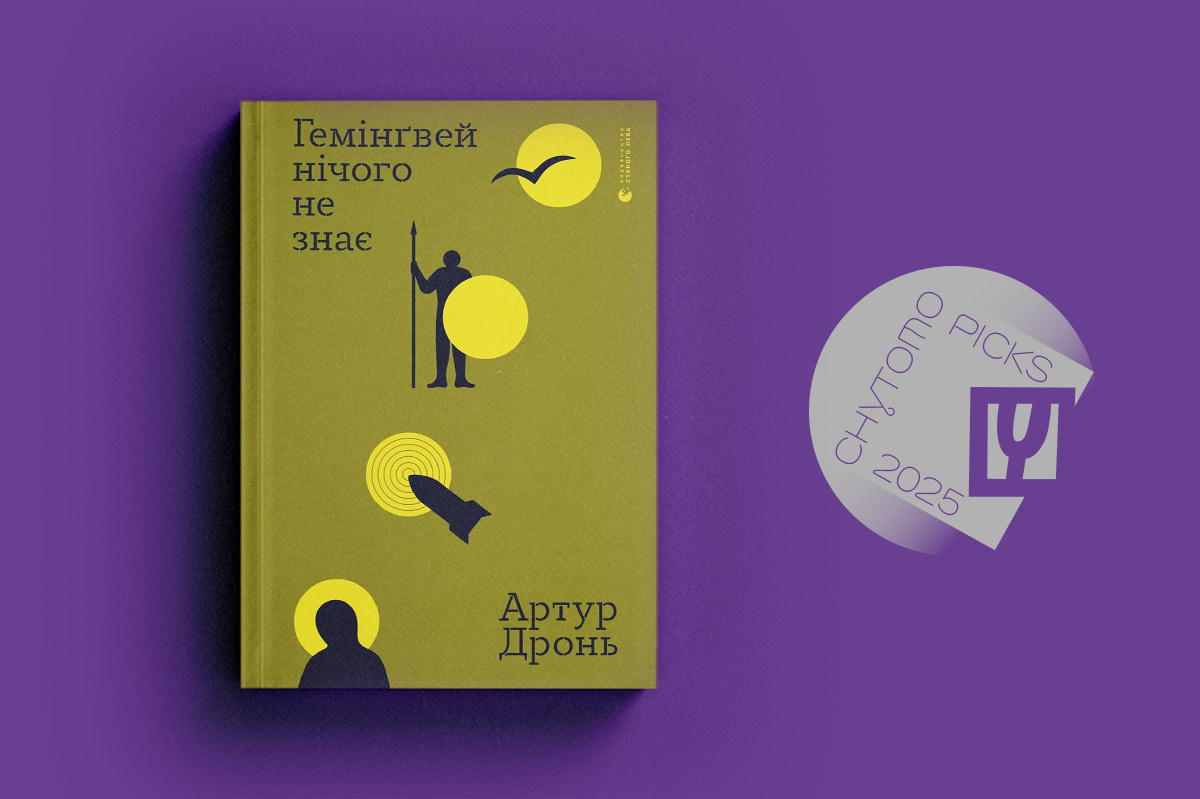
Artur Dron. “Hemingway Knows Nothing” (The Old Lion Publishing House, “Гемінгвей нічого не знає”)
“Hemingway Knows Nothing” by Ukrainian writer and Russo-Ukrainian War veteran Artur Dron became a bestseller within the first three months after its initial release.
“A snapshot of crisis — that is how Artur Dron’s book can be described in two words. And this crisis is not Ukrainian, but global,” explains Tetiana Kalytenko. “Hemingway Knows Nothing is about the widespread misunderstanding of war, soldiers, and ethics — a misunderstanding shaped by unrepresentative voices that distort even the ‘death of God,’ leaving it half-spoken and warped. For if, according to Nietzsche, God is dead, then how exactly and where does He die each time? Dron offers an answer — briefly and clearly — while at the same time overcoming the crisis of not knowing.”
The book consists of 25 parts, each an incidental recollection of particular events, all connected in one way or another to the experience of war. The book was also awarded the Shevelyov Prize.
RELATED: Review of Artur Dron’s book “Hemingway Knows Nothing”
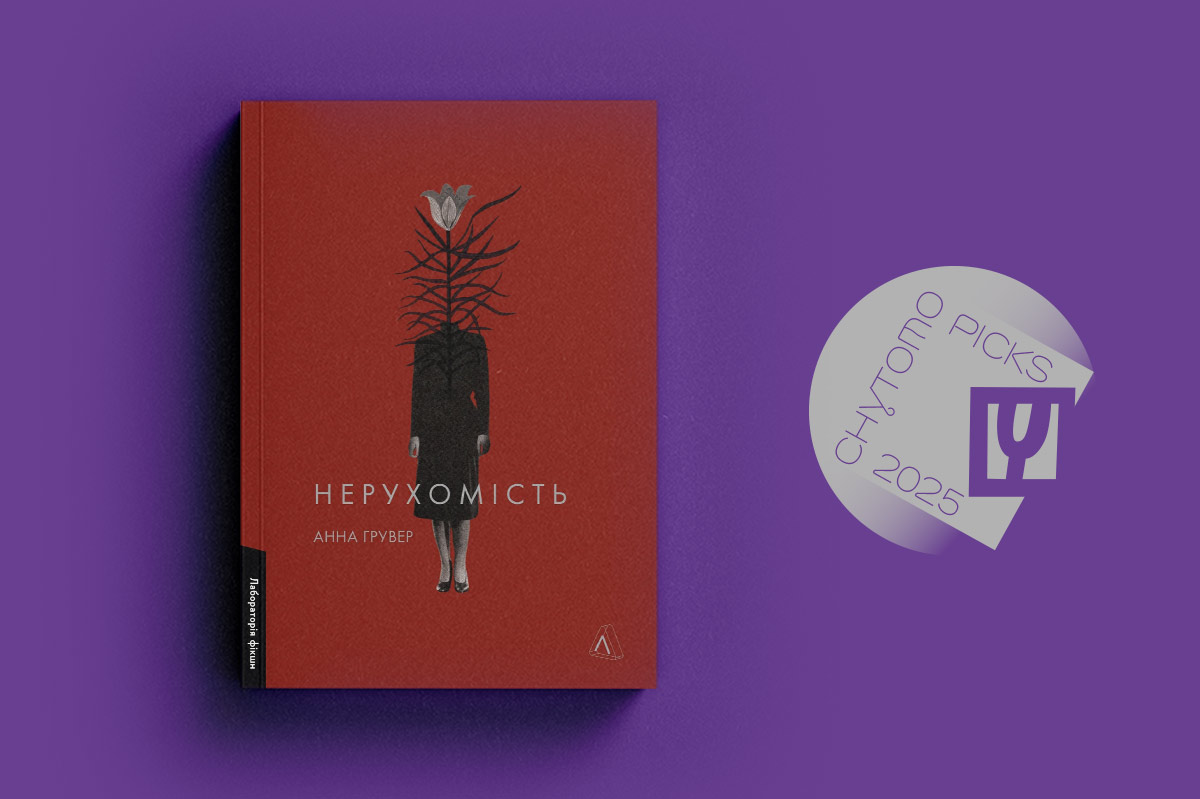
Anna Gruver. “Stillness” (Laboratory Publishing House, “Нерухомість”)
Anna Gruver’s novel “Stillness” presents contemporary life in its newest forms, trends, and existential challenges. Taras Pastukh observes, “It captures the sensitivity of the modern era, when the world ‘falls apart into pieces,’ and through this sensitivity, disparate elements of the world come together; something shared, attentive, and benevolent arises among people. The author shows how a stance of non-intervention in times of war becomes a position that enables evil, how human value is devalued in modern mass media, and how manipulation operates in dominant sociocultural discourses, among other things. Nerukhomist is one of the first substantial manifestations of the metamodernist narrative in contemporary Ukrainian fiction.”
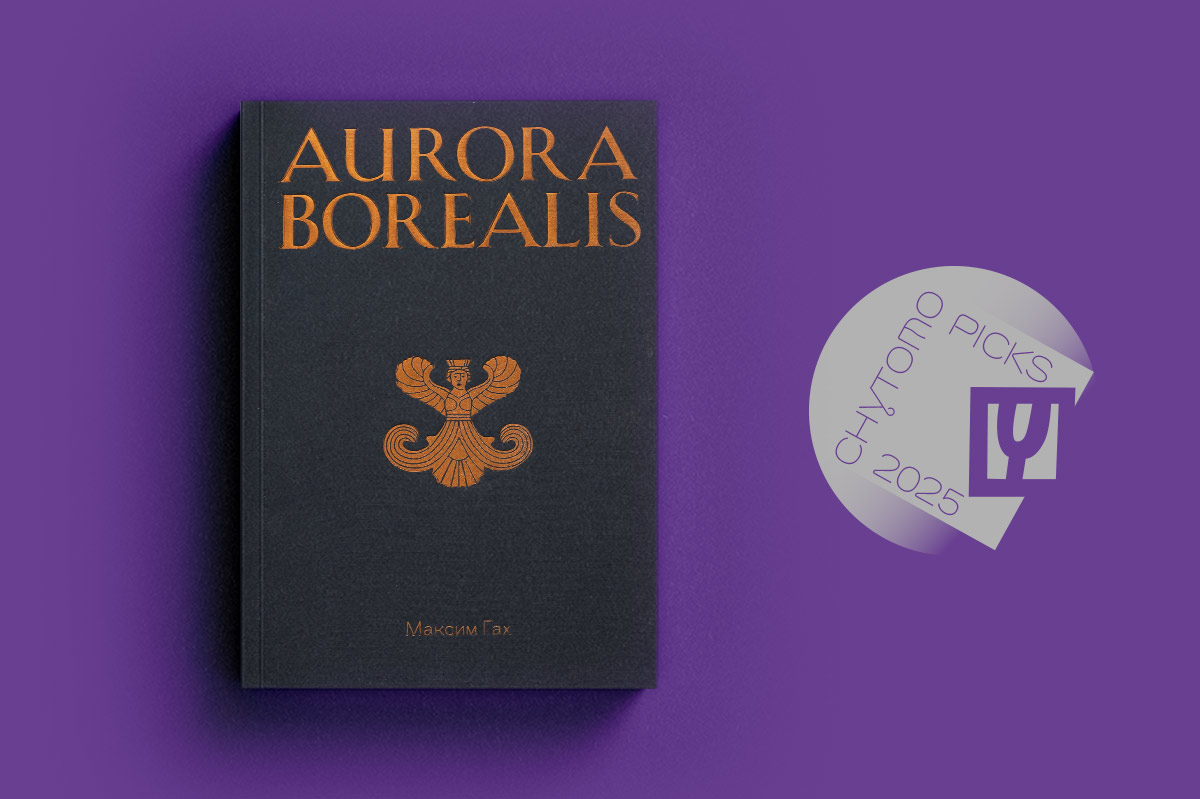
Maksym Hakh. “Aurora Borealis” (Zhupansky Publisher, “Aurora Borealis”)
In the novel “Aurora Borealis,” Maksym Hah combines mythical fantasy, alternative history, cyberpunk, and a spy thriller with exquisite ease. The text flows like a river—deceptively calm, yet unstoppable at the same time. Here, a harsh future intertwines with a painful past, and an eternal conversation unfolds about myth, the hero’s journey, and the person who must walk that path. New Ukrainian speculative fiction seeks and experiments, and it is fascinating to witness this process,” note Kateryna and Anatolii Pityky.
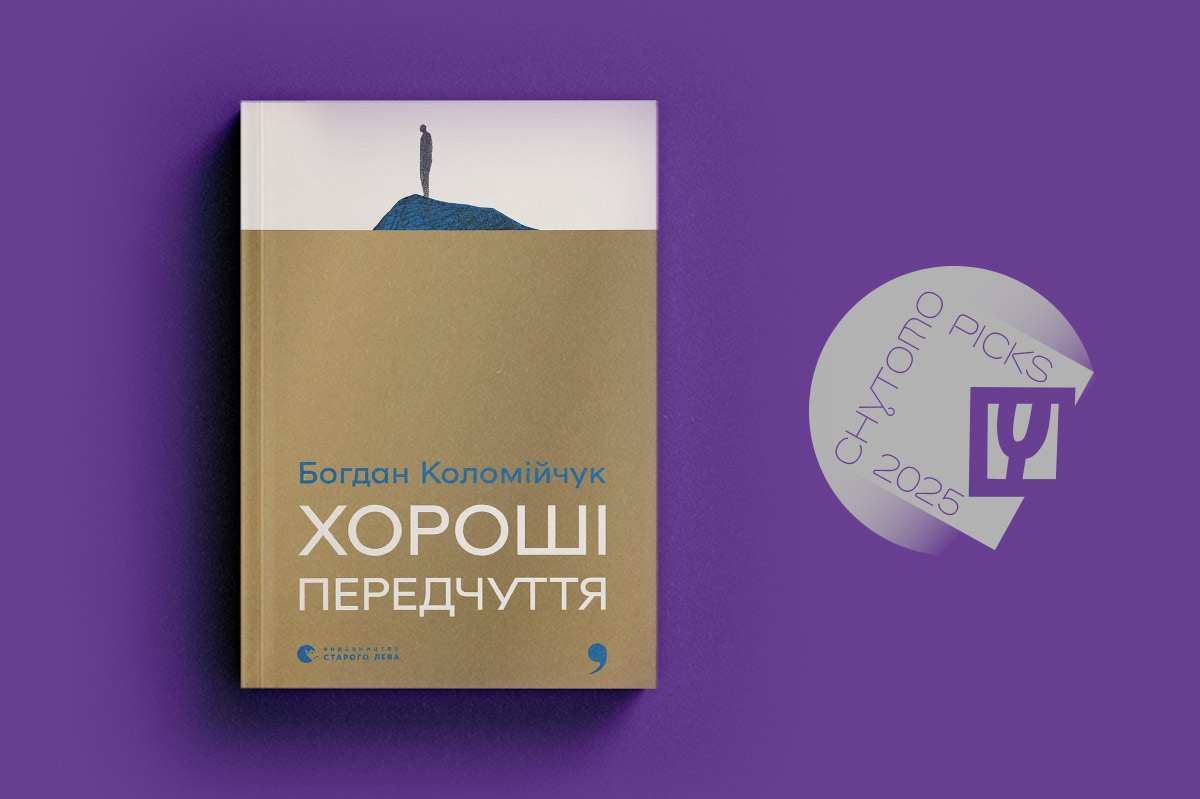
Bohdan Kolomiichuk. “Good Omens” (The Old Lion Publishing House, “Хороші передчуття”)
“Good Omens” is a collection of short prose written by Bohdan Kolomiichuk between 2022 and 2025, during his service in the Armed Forces of Ukraine and his participation in the Russo-Ukrainian war. His texts explore the experience of a civilian — a writer — who was forced to see the war from the inside. Ganna Uliura describes these nine short stories as “literature of personal experience that reflects states of transition.” Each of the stories is about timely rescue.
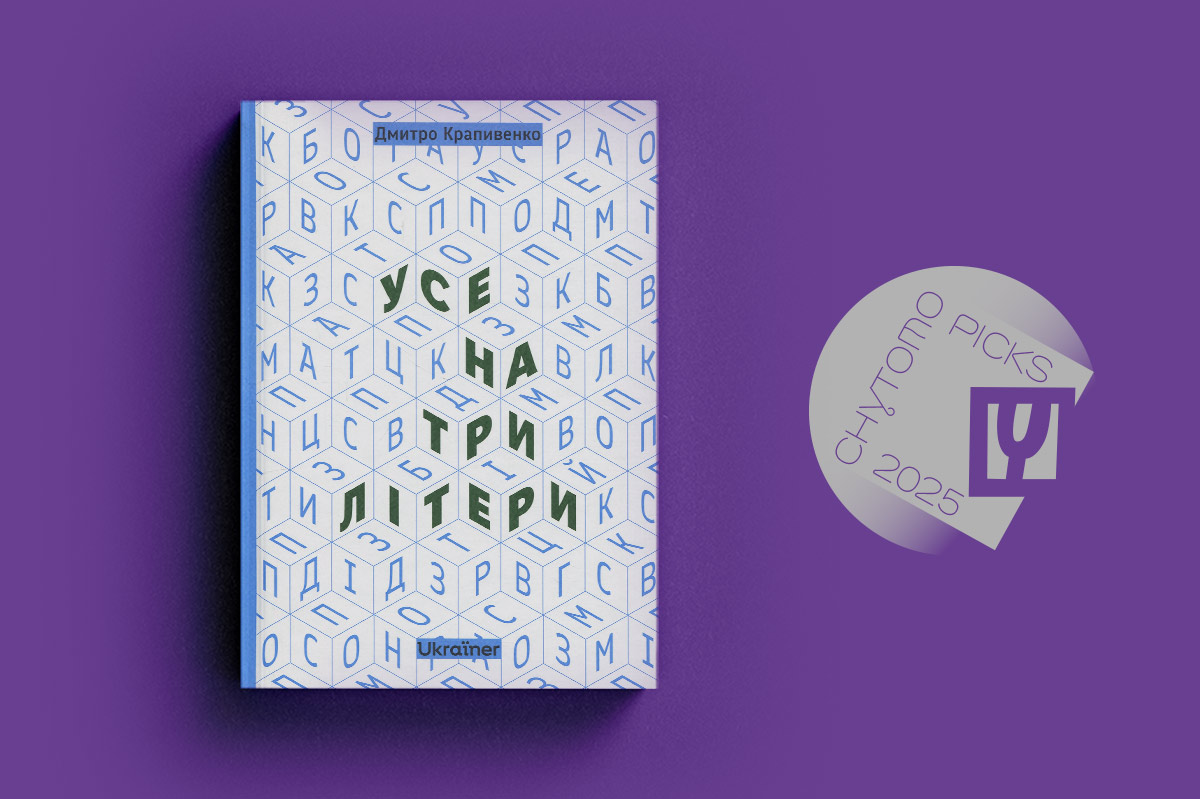
Dmytro Krapyvenko. “Everything in Three Letters” (Ukraїner Publishing House, “Все на три літери”)
The debut collection of short prose by journalist and serviceman Dmytro Krapyvenko. “War changes language: it becomes denser, stripped of excess,” explains literary critic Bohdana Romantsova. “Language turns into a marker of distinction, a code for one’s own. Words matter again; they are no longer signs pointing to abstractions. Now they are a KAB (guided aerial bomb) flying toward a city, air defense that allows me to write these words, the ZSU (Armed Forces of Ukraine) —the three most important letters today. Finally, there is God, whom we do not abbreviate. Dmytro Krapyvenko writes about the world of the army using a simple formal principle—everything in three letters. It is observant, intelligent, and funny autofiction.”
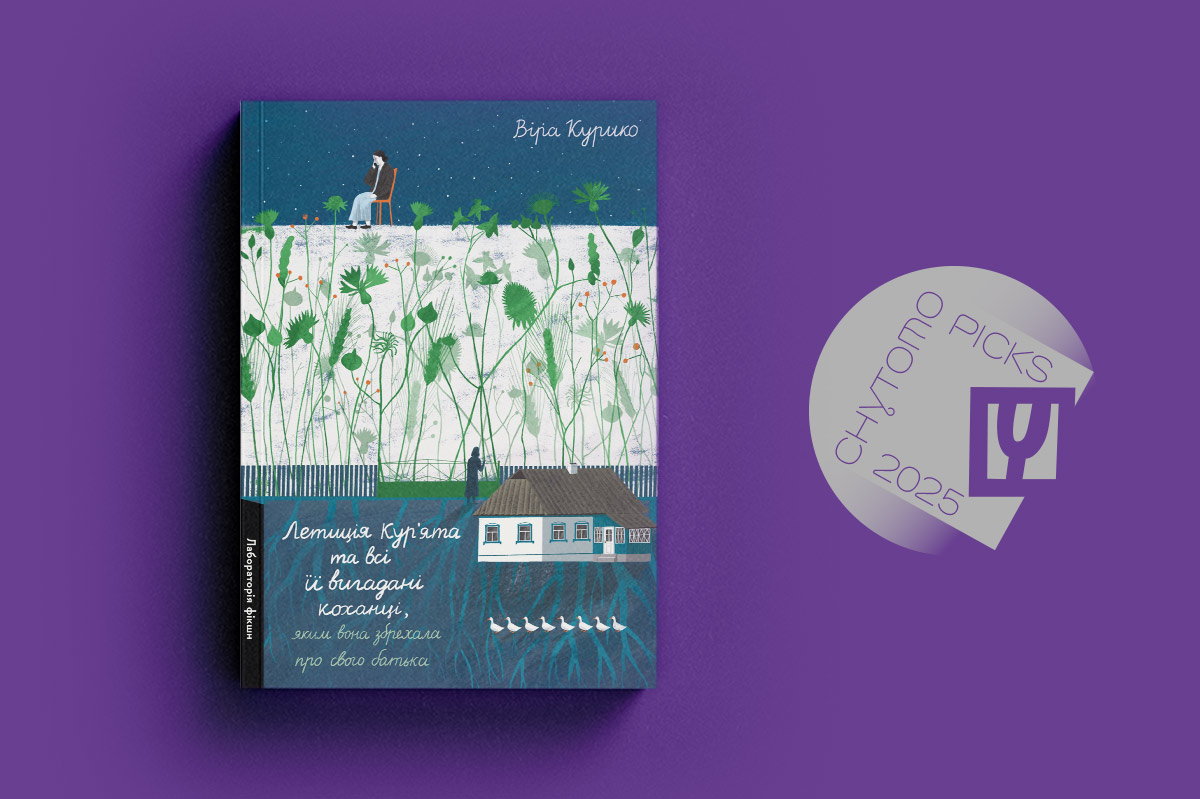
Vira Kuryko. “Letytsia Kuriata and All Her Imaginary Lovers to Whom She Lied About Her Father” (Laboratory Publishing House, “Летиція Кур’ята та всі її вигадані коханці, яким вона збрехала про свого батька”)
“The story of Leticia Kuryata is an odyssey filled with magical realism,” presents the book literary critic Tetiana Petrenko. “The main traveler in Kuriko’s novel is Leticia’s father, who went to war in 2014 and never mentally returned from his own Troy. Like Telemachus in Homer, Leticia searches for her father and tries to understand him. Throughout the book, the heroine-narrator tells all the men she meets on her path whimsical, semi-fictional stories, gradually matures, and approaches a point of acceptance of her Odysseus’s trials. And although Leticia’s search is internal and metaphorical, the heroine invites us to journey with her through the real landscapes of the Chernihiv region,” notes Petrenko.
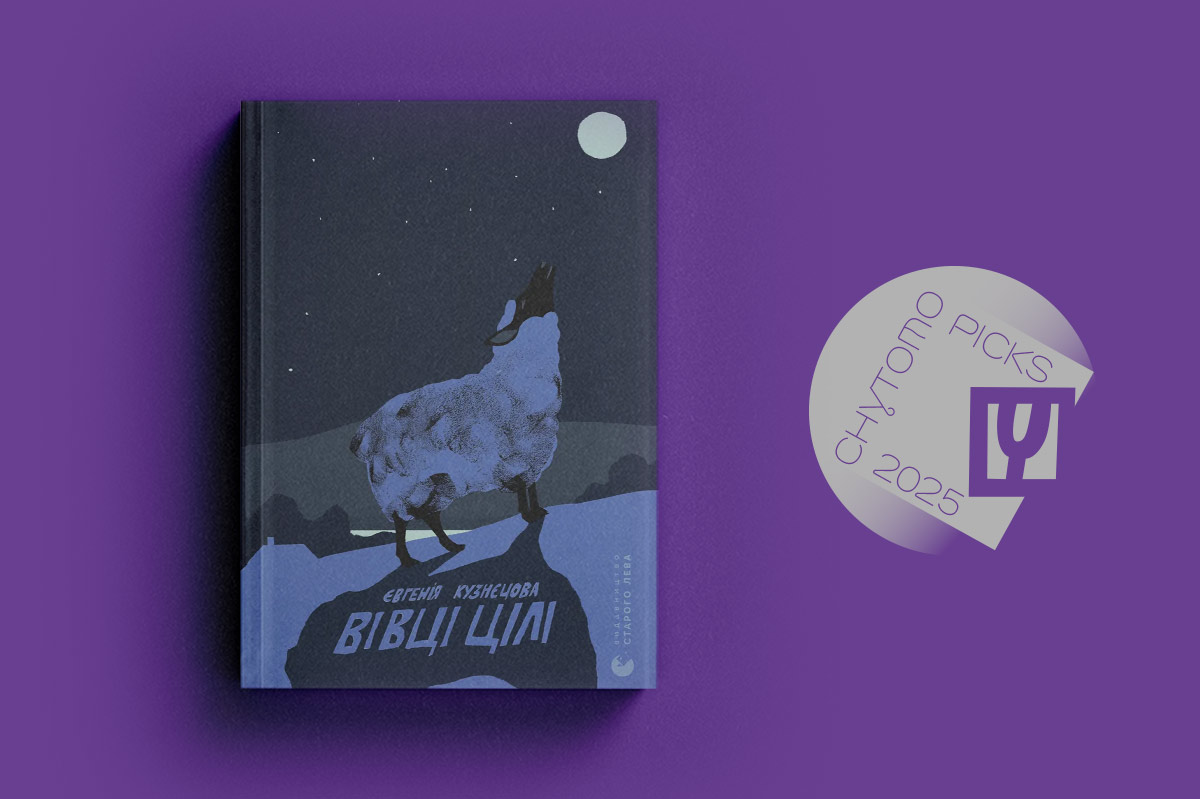
Yevheniia Kuznietsova. “The Sheep Are Safe” (The Old Lion Publishing House, “Вівці цілі”)
“Probably the two words that best characterize Yevheniia Kuznietsova’s novel ‘The Sheep Are Safe’ are slowness and detachment. It feels as if we are watching a bleak arthouse film in which nothing in particular happens — ‘just a gloomy reality.’ There seem to be interesting people, something like art, something like love, yet all events unfold unhurriedly and without brightness. But what else could life be like in the rear, in the third year of a full-scale war, where the strongest emotion is anxiety? The characters continue to search for meaning, though who knows whether it will ever be found. A novel powerful in its truthfulness and bitter irony,” shares critic Rostyslav Semkiv.
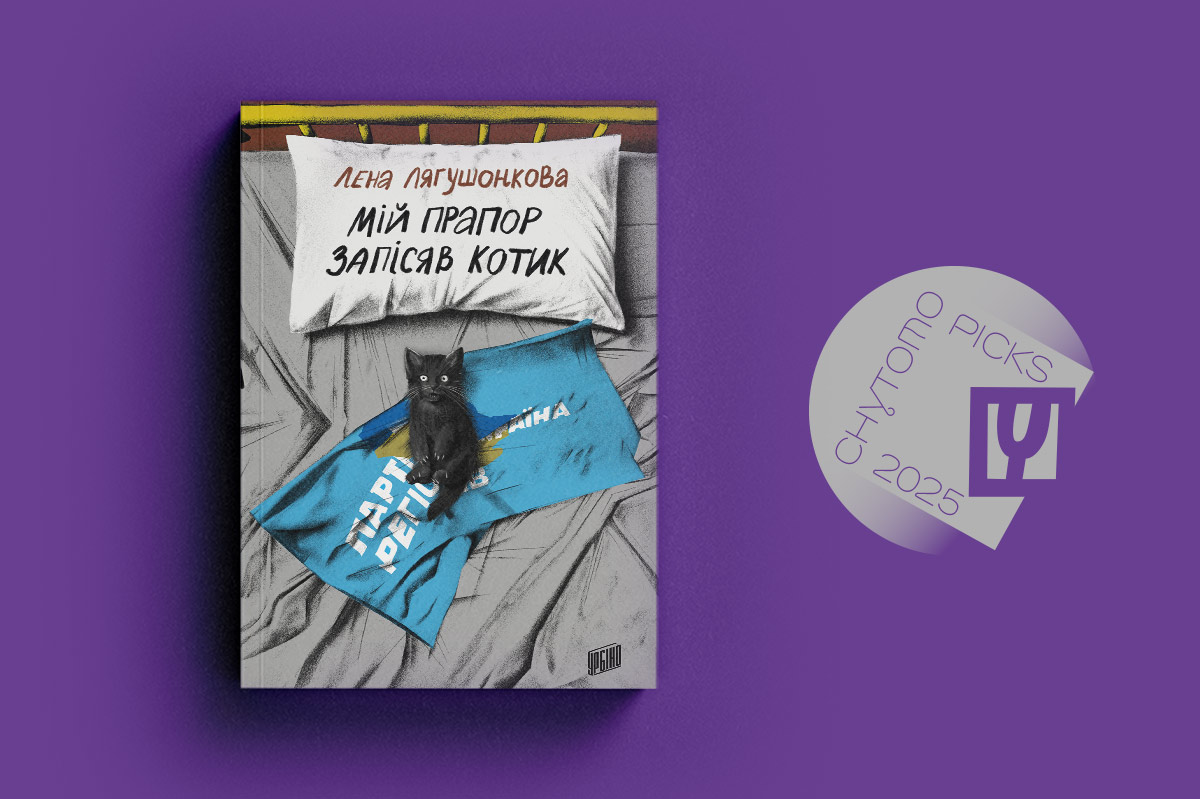
Lena Liagushonkova. “My Cat Peed on My Flag” (Urbino Publishing House, “Мій прапор запісяв котик Лєна Лягушонкова”)
According to literary critic Valeriia Serhieieva, this debut prose novel by the Ukrainian playwright and screenwriter takes the form of a “self-ironic stand-up” or a kind of “diary exhibitionism,” bringing together the private experiences of women who came of age in the 1990s and early 2000s. In the novel, the author tells the story of her life in a small village near Luhansk in the Soviet and post-Soviet reality. “My Cat Peed on My Flag” by Lena Liagushonkova was named BBC Book of the Year. “This book is full of a unique kind of humor, usually described as ‘black.’ But it is precisely through this black humor that we carve a path toward the light,” said Marta Shokalo, the editor of BBC News Ukraine.
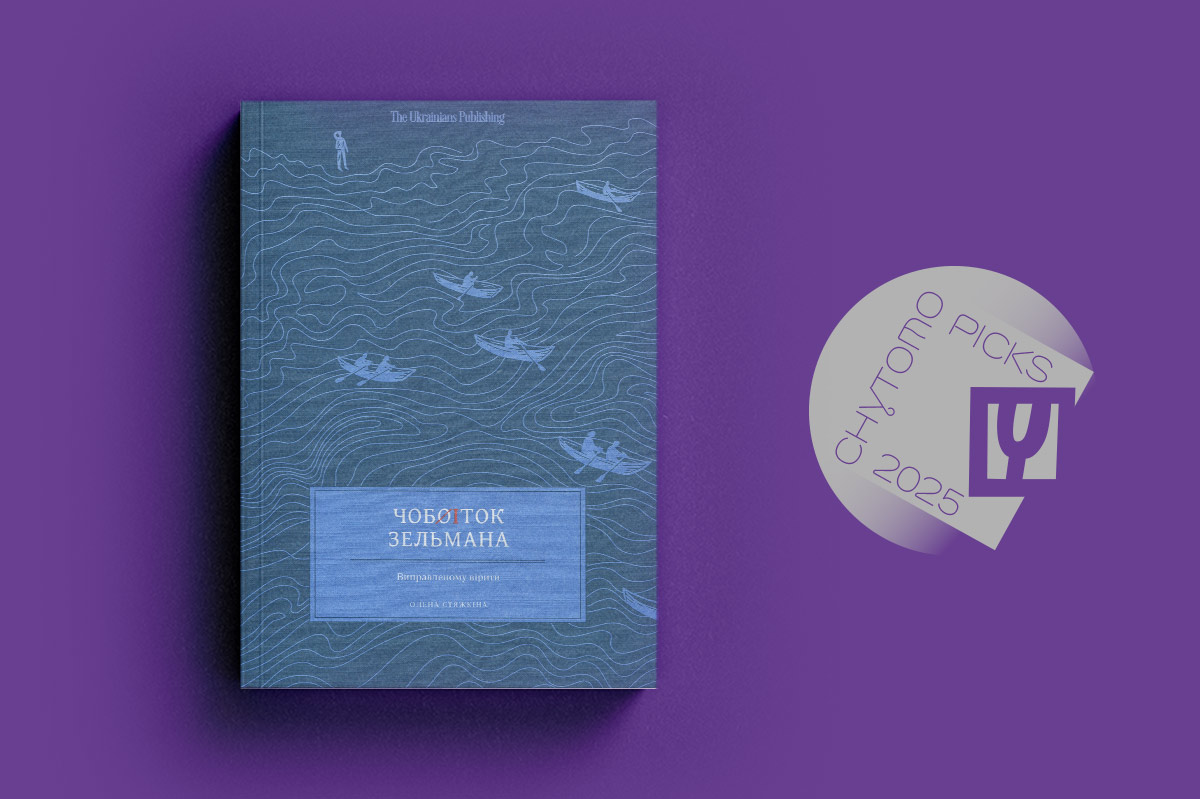
Olena Stiazhkina. “Zelman’s Boot” (The Ukrainians Media, “Чобіток Зельмана”)
Literary critic Arina Kravchenko presents Olena Stiazhkina’s “Zelman’s Little Boot” as a memoir and an “intellectual novel,” “a family saga and a personal confession,” as well as “a story about being-here and life through the memories of others.” “By allowing the reader to peek into the private history of one remarkable family, the author unfolds a panorama of a vast historical whirl — Soviet life, independence, the watershed of war… The immersiveness of this book is hard to resist, and it is difficult not to love or pity the characters. Olena Stiazhkina has returned to us with a strong, ambitious, yet very delicate story,” notes Kravchenko.
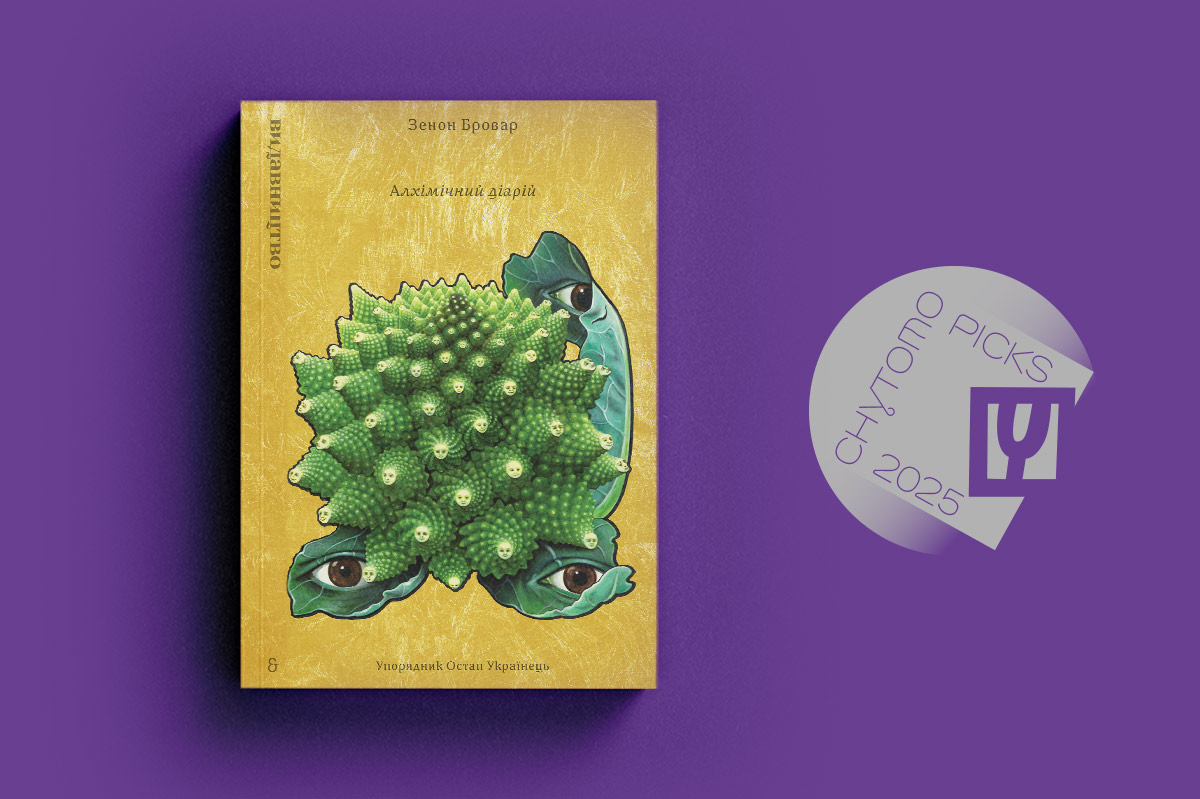
Ostap Ukrayinets. “The Alchemical Diary” (Vydavnytstvo Publishing House, “Алхімічний діарій”)
On the narrative level, “The Alchemical Diary of Zenon Brovary” tells the story of Yosyp Shumlianskyi (1643–1708), his armed struggle for the episcopal see in Lviv, and his transition to the Union, recounted apologetically by his cook. However, Ostap Ukranets frames this simple plot as a cookbook, where the alchemical transformation of ingredients on their way to the table becomes a metaphor for changes in identity and the fusion of Roman and Byzantine traditions. “This Baroque-inspired stylization is the most inventive literary construction in recent Ukrainian literature, nourishing not only the soul but also the body, as it generously shares recipes,” presents Yaroslava Strikha.
The power of fiction prose is seen in the power of the author’s imagination. Autofiction is usually based on real events, but ones that seem more amazing or vivid than even the most capricious flights of fancy. At present, our literature reflects a period in which astonishing and terrifyingly real events unfold daily. Contemporary literature is no longer conceivable without autofiction: witnesses to powerful events must have their say,
Rostyslav Semkiv, jury member, literary scholar and critic, said.
“Fiction and autofiction, which shaped this ranking, emphasized subjective experience as a core element. It was the artistic organization of that experience, through history, plot, and narrative, that revealed the ongoing convergence between traditional art and conventional essay writing,” Ilya Rudiyko, literary scholar, critic, and jury member, said.
“The novel is being renewed in its contact with essayistic forms, focusing on the ‘truth of life’, while essay writing is slowly becoming a global narrative that claims to explain the world. Right before our eyes, our ideas about how to tell stories, which stories should be told, and who has the right to such stories are changing. Between the artistic convention of fiction and the artistic expediency of autofiction, and thus between imagination and experience, is probably where we should look for the greatest potential of these transformational processes,” Ganna Uliura, one of the jury members and literary scholar and critic, said.
The jury included:
Anastasia Herasymova, literary critic and communications specialist, has been writing for Chytomo since 2016. Her professional interests include contemporary literature of the United States and Asian countries, and prose by Ukrainian authors.
Arina Kravchenko, literary critic and editor. Kravchenko is the author of critical texts, reviews, and analytics for numerous Ukrainian media.
Bohdana Romantsova, literary critic, editor at the Tempora publishing house, lecturer at Litosvita and other platforms, member of the Ukrainian PEN Club.
Valeria Serheeva, literary critic and scholar.
Ganna Uliura, literary critic and scholar, PhD in philology, author of literary essays.
Ilya Rudiyko, literary scholar and critic, editor-in-chief of the media outlet Kult Krytyky. Author and host of the project “Circle of Criticism.”
Kateryna Pityk, a freelance translator from English and French, editor, literary critic, and lecturer at Taras Shevchenko National University of Kyiv. Together with Anatoliy Pityk, she has translated works by S. King, F. Herbert, R. Bradbury and others.
Anatoliy Pityk, a freelance translator, editor, literary and film critic. Together with Kateryna Pityk, he has translated works by J. H. Chase, R. Zelazny, P. Watts, G. Soros. and others.
Rostyslav Semkiv, a lecturer at the National University of Kyiv-Mohyla Academy, director of the Smoloskyp publishing house, author of the books “How the Classics Wrote” and “How to Read Ukrainian Classics,” and co-author of the YouTube channel “Crazy Authors.”
Taras Pastukh, a literary scholar, critic, author of the books “The Novels of Ivan Franko” (1998), “The Kyiv School of Poets and Its Environment (Modern Stylistic Trends in Ukrainian Poetry of the 1960s-90s)” (2010), “The Bridges of Oleg Lysheha” (2019).
Tetyana Kalytenko, literary scholar, writer, editor, postdoctoral fellow at the Helsinki Collegium for Advanced Studies.
Tetyana Petrenko, a literary critic, cultural manager, and member of the Tereni cultural agency team. Former co-curator of Ukrainian literary programs at international book fairs in Frankfurt and Warsaw.
Yaroslava Strikha, a translator of works by Julian Barnes, A.S. Byatt, Don DeLillo, Kate Atkinson, Art Spiegelman, Paul Auster, Henry Thoreau, and many other British and American authors. She defended her dissertation and taught at the Department of Slavic Languages and Literatures at Harvard University.
Literary critics and authors participated in the event, which was hosted by the actor Dmytro Oliinyk.
Readeat bookstore created a special bookshelf to showcase the winning books.
Читомо» — це медіа про книжки й літературу, що підтримувало українське книговидання задовго до того, як це стало трендом. Ставайте частиною історії — доєднуйтеся до Клубу Читомо!