* ESC - close the search window
Poland
Tygodnik Powszechny names two Ukrainian books among the best of 2025
26.12.2025
Yuri Andrukhovych’s “Letters to Ukraine” and Serhiy Zhadan’s “Arabesques” were included in the list of the 60 best books of 2025 according to the Polish weekly Tygodnik Powszechny. The list covers fiction, poetry, essays, reportage, and biographies published in Poland during the year.
Andrukhovych’s “Letters to Ukraine,” translated into Polish by Tomasz Różycki, was published by Wydawnictwo a5, while Zhadan’s “Arabesques,” translated by Michał Petryk, was published by Wydawnictwo Czarne.
The editorial team of Tygodnik Powszechny notes that the list is not a ranking, as the books are ordered by the publication dates of reviews and critical pieces in the magazine. All articles about the selected books are available in a separate section.
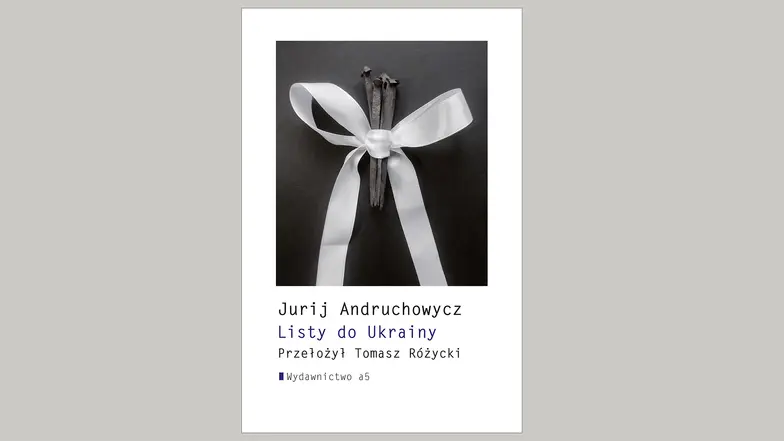
In its commentary on “Letters to Ukraine,” the editorial team emphasizes that the texts, written in peacetime, have taken on additional resonance during the full-scale war and now ‘sound particularly powerful, somewhat prophetic, but at the same time convey hope with their energy and sense of inner strength.’ Those texts are read even in bomb shelters.
“Letters to Ukraine” is a collection of selected poems by Andrukhovych from the Ukrainian poetry anthology series published by A-BA-BA-HA-LA-MA-HA. The poems in the cycle were written in the early 1990s, when Andrukhovych was in Moscow (in the poet’s words, “mourning and howling like an owl”). The cycle consists of 20 letter poems.
RELATED: One-Zhadan theater: When popular literature becomes popular theatrical performance
In his commentary on the book, Polish translator and poet Różycki calls these poems ‘sparkling lyricism, social and political satire, penetrating, rebellious ballads.’ He also emphasizes that they represent ‘a gesture of creative freedom’ and ‘a testimony of love for the homeland,’ adding that the book provides a ‘sober diagnosis of the state of the Russian spirit.’
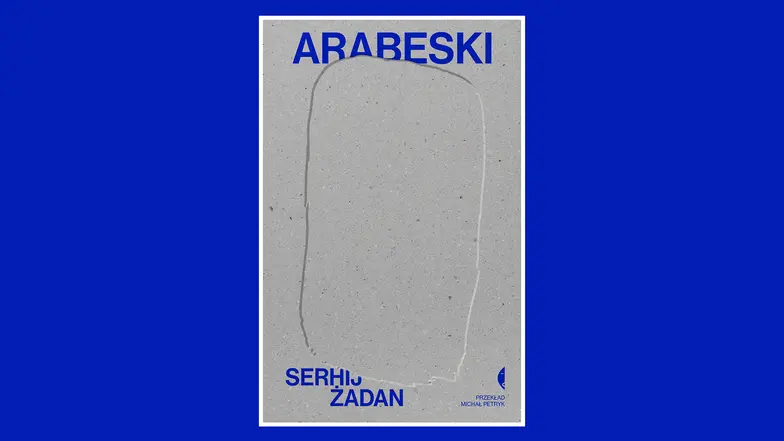
Commenting on Zhadan’s collection of short prose, publisher and journalist Jacek Taran drew attention to the author’s characteristic restrained writing style and that Zhadan ‘has accustomed readers to prose written in economical language, with no room for pathos or spectacular images.’
The review separately emphasizes the opening sentence of one of the stories: “On March 2, the seventh day of the war, Kolya called and asked to take away the corpse…,” which immediately sets the tone for the entire book. According to the critic, the rest of the story becomes “a collision with reality, where the grotesque coexists with death, and everyday life is irrevocably infected with the absurdity of war.”
In Ukraine, the book was published by Meridian Czernowitz in 2024.
Main image: Jure Divich / Shutterstock
Читомо» — це медіа про книжки й літературу, що підтримувало українське книговидання задовго до того, як це стало трендом. Ставайте частиною історії — доєднуйтеся до Клубу Читомо!
the more you read, the greater the possibilities