* ESC - close the search window
anti-war literature
Dmytro Krapyvenko on the end of anti-war literature
27.10.2025
You see an error in the text - select the fragment and press Ctrl + Enter
In art created after World War II, pacifism and poking fun of militarism are considered quite natural. But the war of liberation that Ukraine is currently waging and the literature it has inspired are set to change this paradigm.
When presenting her collection “Nobody’s Saffron,” Ukrainian poet Yaryna Chornohuz, who has been serving in the Marine Corps for six years, mentioned that an English-language edition of her poems was in the works and that the publishers planned to package them as anti-war. Yaryna and I then briefly discussed whether or not war can be romanticized, and we soon agreed that it can indeed, and that this is nothing new: The Baroque and Modern eras had their own take on the esthetics of the grotesque, which is reflected in many works, not least of which Baudelaire’s “Flowers of Evil.”
The “convenient” pacifism of anti-war literature
In our country, we actively use the term “war literature,” and everyone understands that we are talking about books written about today’s Russo-Ukrainian war by its witnesses and direct participants. It would probably be somewhat misleading to call it wartime literature. Because these days, battles and bombings are not the only things being written about: We have no shortage of books on non-war topics, and the demand for them is quite tangible.
As for the “export version” of our art that depicts our struggle with the aggressor, the most popular works are those related to the suffering and desperation of hapless civilians. “Show people that war is terrible so that they would never take up arms themselves”—I don’t know about you, but to me this naïve and simple-minded morality sounds as hackneyed as it is incompatible with real life. We live in an age when war can be live streamed without the need for special effects, editing or enhancements, but this, unfortunately, will not lead to disarmament or far-reaching peace initiatives. It’s probably time we change our “default mindset,” meaning that in the current context, war literature is more relevant than anti-war literature.
Westerners today have formed their pacifist worldviews from books in which war is condemned as an act of mass murder for the sake of chimeras devised by the most powerful figures in the world. This is precisely the idea that Erich Maria Remarque, Ernest Hemingway, Francis Scott Fitzgerald, Richard Aldington and others projected into the intellectual space of their time when they wrote about the horrors of the First World War.
The narrative of the Second World War was different, essentially boiling down to the notion that taking up arms is a worthy cause for the sake of putting a halt to the bloody and inhumane madness, and shame on those who fail to do so. Servitude or death in a concentration camp awaits them. Then came the period of highly “unpopular” wars, such as the French colonial campaign in Algeria or the American intervention in Vietnam, the literature about which definitively formed the modern canon. Apocalypse now…
It is difficult to find a more telling description of the torching of Indochinese jungles with napalm or the Madagascar massacre, where local rebels with spears fought against the French Foreign Legion, which was armed with the latest weapons and equipment available in 1947. The genocides in Rwanda and the former Yugoslavia marked a rupture in this sense: Literature and art in general must be anti-war, otherwise they begin to resonate like Rwanda’s RTLM Radio [Translator’s note: radio station known for inciting anti-Tutsi hatred and propaganda during the 1994 genocide in that country].
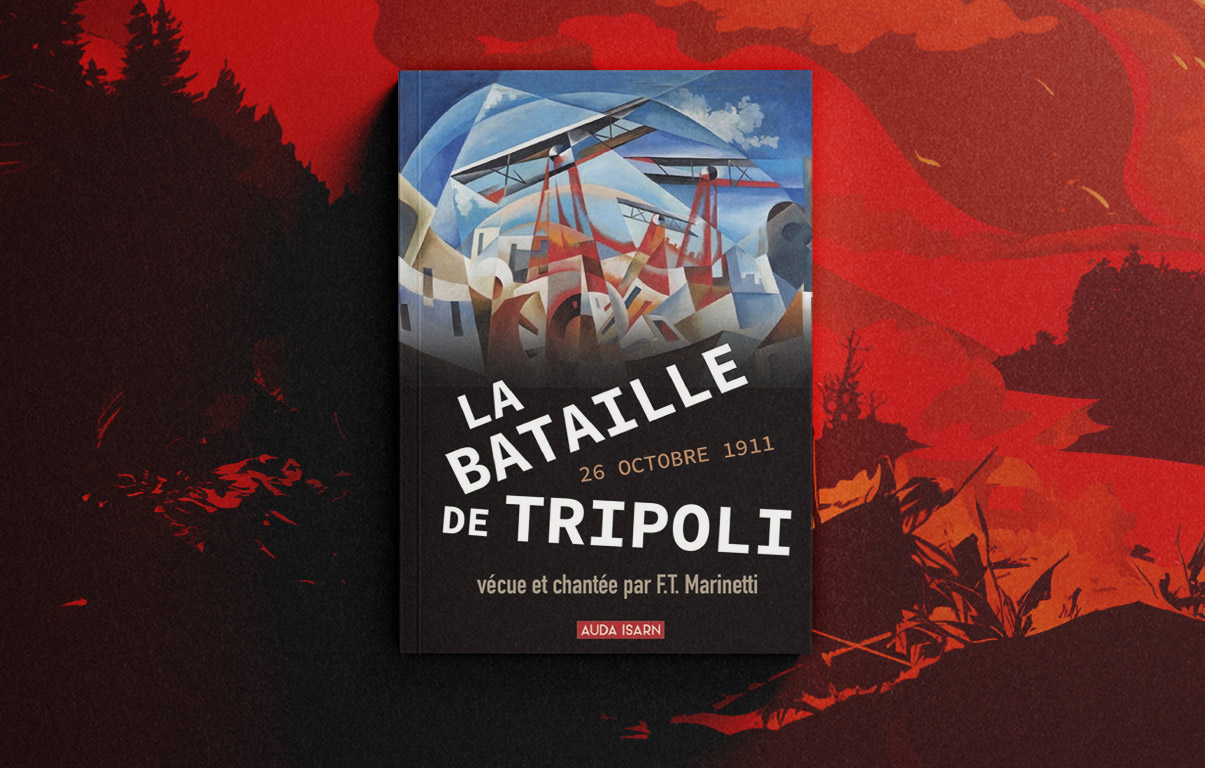
The cult of an abstract war of aggression as a means of “renewal” once blinded writers who collaborated with the Nazis and fascists. Filippo Tommaso Marinetti, known as the founder of the European futurist movement, openly collaborated with the Mussolini government. In his manifestos and artistic texts, he praised the cult of force and called war “the world’s only hygiene.” Ukrainians are now able to read Marinetti’s “The Battle of Tripoli,” dedicated to the Italian army’s campaign in Africa. In terms of pathos and over-sentimentality, this writing even rivals the most excessive works of Stalinist socialist realism. Not to mention Nazi heroic realism, the ideology of which it parroted unerringly.
“It’s time to stop this madness,” Donald Trump posted today with regard to the Russo-Ukrainian war in an appeal for humanity that speaks to many. When the war is thousands of miles from your home, it’s easy to think that the path to peace should consist of concessions from both sides, like two tussling school boys who should shake hands, smile for the cameras, and go on playing and sharing their toys peacefully. That’s even more naïve than hoping that people around the world will simply lay down their arms, isn’t it?
RELATED: Three writers in the war zone: ‘Three and a half years later, we are still here’
In Soviet times, the USSR, which after World War II belonged to the victor’s camp, actively promoted the “struggle for peace” and “friendship of peoples” narratives. Without so much as a hint of totalitarianism, these pollyannish phrases fascinated many Western intellectuals. In the 1950s, when a debate arose over whether or not Germany should develop its own nuclear arsenal, the country’s leftists called for nuclear disarmament for everyone except the USSR, which “poses a threat to no one.”
In the post-war USSR, the International Stalin Prize for Strengthening Peace Among Peoples was introduced as the Soviet Union’s answer to the Nobel Prize (primarily in literature). During its 5 years of existence, the aforementioned prize was awarded to such outstanding writers as German playwright Bertolt Brecht, Burmese poet Thakin Kodaw Hmaing, and Brazilian novelist Jorge Amado, who in his homeland is second only to Paulo Coelho in terms of readership.
Soviet ideologists understood the post-war cultural discourse quite well and manipulated the topic of pacifism with great success. They were able to idolize the American non-conformist romantic Dean Reed (an actor and singer known for his pro-Soviet sympathies), who condemned the war in Vietnam, or the eccentric professor Charles Latif Hyder, who went on a hunger strike outside the White House in Washington, D.C. to protest nuclear testing. At the same time, this did not prevent the repression of Soviet (including Ukrainian) dissidents who spoke out against the USSR’s military invasion of Czechoslovakia in 1968.
After all, according to official Soviet propaganda, the aggression in Hungary in 1956, the war in Afghanistan in 1979-1989, and the de facto occupation of the whole of Eastern Europe were nothing more than a struggle for peace and a means of “containing imperialist aggression.” Modern Russia uses the same methods. The country labeled its attack on Georgia in 2008 as a “peace-enforcing operation” and presents the invasion of Ukraine as preventive measures or “protection of the Russian-speaking population.” Meanwhile, Putin claims to be ready to enter into peace negotiations only “after eliminating the root causes” [of the conflict], which would be tantamount to stripping Ukraine of its statehood.
In Russian information and psychological operations, the pacifist card is still being played today: Through various means of influence (mainly social media), the Kremlin attempts to convince Ukrainians that “War is politics, and that the West has artificially pitted two brotherly nations against each other.” Behind this peace-loving rhetoric lies an attempt to discourage Ukrainians from resistance, though the consequences of this are obvious.
The importance of counterpoint
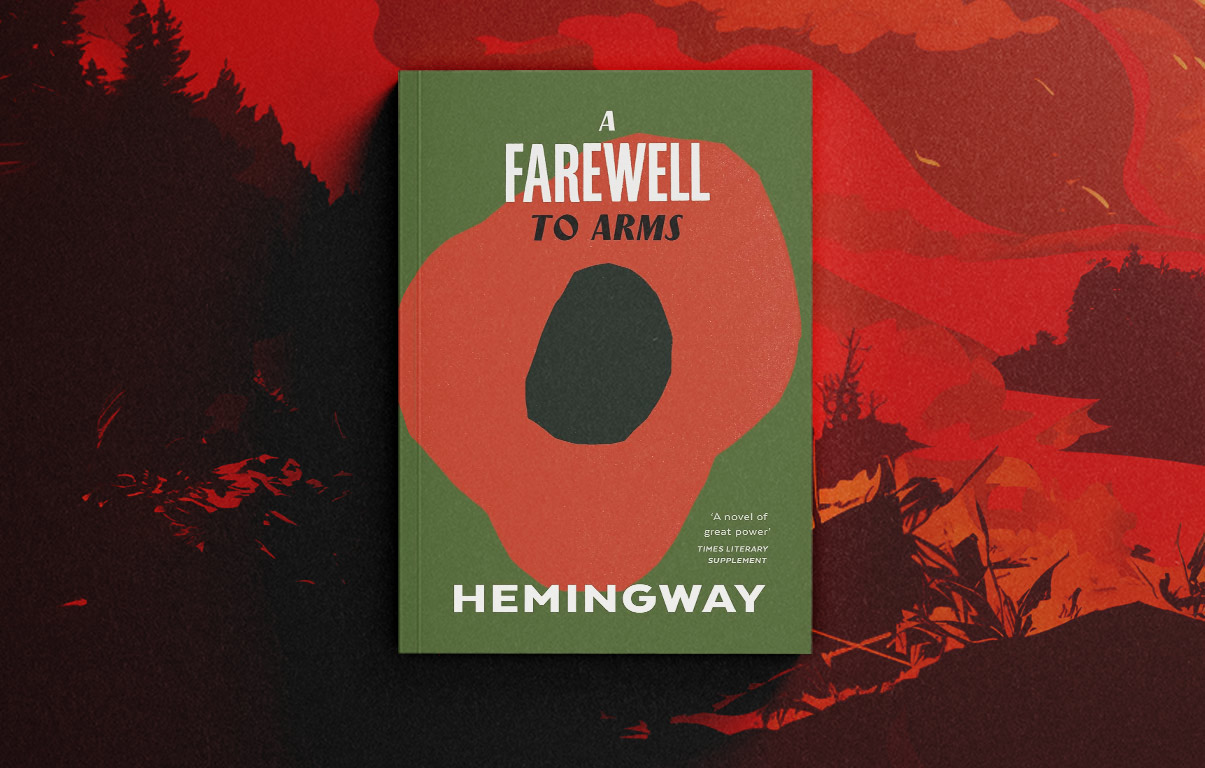
To demand that today’s Ukrainian literature be anti-war means that its slogan should be “A farewell to arms!” and its hero should be a deserter who has opted for personal happiness rather than “sacrificing his life for someone else’s interests.” Such literature need not glorify camaraderie and mutual assistance in the trenches, but rather draft-dodging schemes or the soldiers of two warring parties who become friends on the front (though this is the exclusive domain of science fiction writers). But we do not wish for our country to lose the war, because we are fighting for our freedom, not some imaginary imperial malaise.
We have nothing to be ashamed of for having abandoned our civilian professions to kill the enemy and protect ourselves and our families from destruction or assimilation. No, I am not exaggerating at all. When the Russians say that Ukrainians and Russians are “one people,” in practice this means: Become Russian or die. It is no wonder that Russian soldiers so zealously destroy Ukrainian books in the cities and villages they have come to occupy.
In books and films about the Vietnam War, the focus is usually on a white veteran who has volunteered or was drafted to join this hellish conflict, barely survived and suffers from PTSD and severe addictions for the rest of his life. Well, here the canvas for artistic interpretation is sufficiently vast to keep us busy for decades to come. By the way, the Russian writer Zakhar Prilepin, who until recently was a welcome guest at literary festivals across Europe, also described the Chechen War from a similar perspective.
Have you ever noticed how the Vietnamese are portrayed in the works of American writers? By and large, they are nameless masses dressed in tattered clothes, shouting in an incomprehensible language. Because those who are subjugated do not have a voice. Have you ever wondered whether any Vietnamese literature exists about these events? Or whether it differs significantly in mood from its American counterpart? This is where the contrapuntal analysis proposed by post-colonial theorist Edward Said becomes relevant.
I have read a few selected works by Vietnamese poets in translation. In the typical poetry of this country, poets are quite fond of local nature and its colors and try to convey the long guerrilla war, and sometimes, like Vuong Chaung, they shift to a fairly accurate description of the work of a front-line cameraman, comparing the workings of a camera shutter to the mechanisms of small arms, which for the 1960s was quite innovative. Indeed, there are no curses there for an abstract war, only for specific occupiers. Isn’t this natural? For Vietnamese poets as well, the enemy is often depersonalized—embodied in bombs, planes and tanks, and in soulless technology behind which they no longer see human beings.
21st century Byronism
For many of today’s youth, waging war and even military service itself seem rudimentary and passé. Militarism is condemned as a manifestation of toxic masculinity. Communities of professional military personnel and veterans live their own separate lives (somewhat akin to a subculture), with their own dress code for civilian life, as well as their own literature, music, and cinema for their own narrow circle. Actually, this is how it was in ancient times, when battle was reserved for a separate privileged caste: chivalry. Minstrels composed poems about the feats of knights, poems that were both read and commissioned by these very members of the medieval army.
But what if we imagine that tomorrow there may be a need to mobilize wider swaths of the population, not for an aggressive invasion across the Seven Seas, but to defend the Motherland, our shared European home? Will the “chivalrous” subculture be enough?
A war of liberation has its own morality, poetics and esthetics; European writers of the Romantic era knew this well. The English classical poet George Gordon Byron met his fate in the ranks of Greek patriots who were rebeling against Turkish rule. For the liberation of Greece, he fought both with weapons and with words:
Sons of the Greeks, arise!
The glorious hour’s gone forth,
And, worthy of such ties,
Display who gave us birth.
CHORUS:
Sons of Greeks! let us go
In arms against the foe,
Till their hated blood shall flow
In a river past our feet.
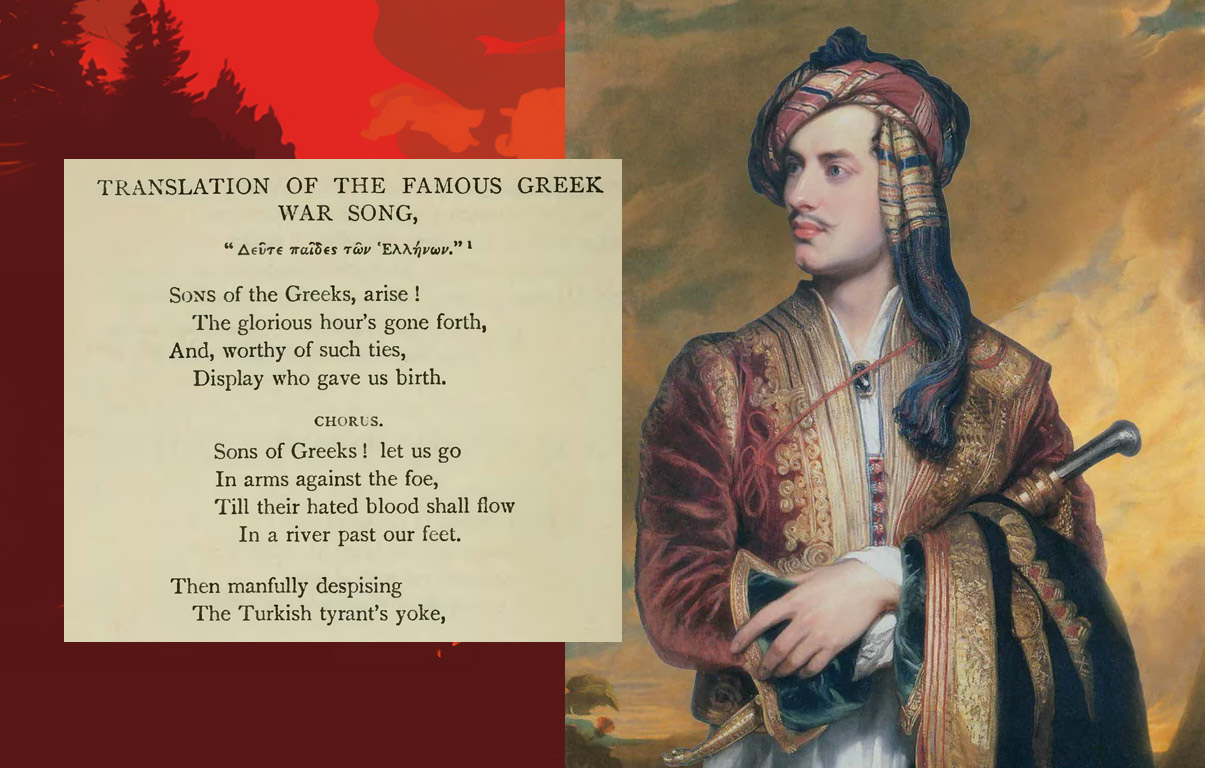
Hardly an anti-war poem; rather, it celebrates the struggle for freedom. Was Lord Byron any less of a humanist than today’s politicians who urge us to “come to terms with Russia,” that is, to capitulate to it? I don’t think so. And Byron has his followers today. By this I mean the romantics of our time, who are currently leaving their well-to-do countries to fight for Ukrainian freedom. And let’s not think of such individuals as soldiers of fortune (sometimes known in Ukraine as “wild geese”), as financial compensation in the Ukrainian army is much more modest than the appetites of professional mercenaries.
I hope that some of them will continue the Byronic tradition in literature by writing books about the war in Ukraine. And yes, it will be war prose. Perhaps this is what is most needed in Western countries today. As recent events in Poland have shown, the Russian threat to Europe is not just a product of our imagination, and if citizens from Lublin to Lisbon are forced to pick up a weapon tomorrow, they will need something more than anti-war literature. Otherwise, they will face slavery and death.
Translation: David Soares
This publication is sponsored by the Chytomo’s Patreon community
the more you read, the greater the possibilities