* ESC - close the search window
russian awards
‘I would like Russian literature to step back from the media space a little’: Writer Mariya Galina declines “Dar” Literary Prize
28.05.2025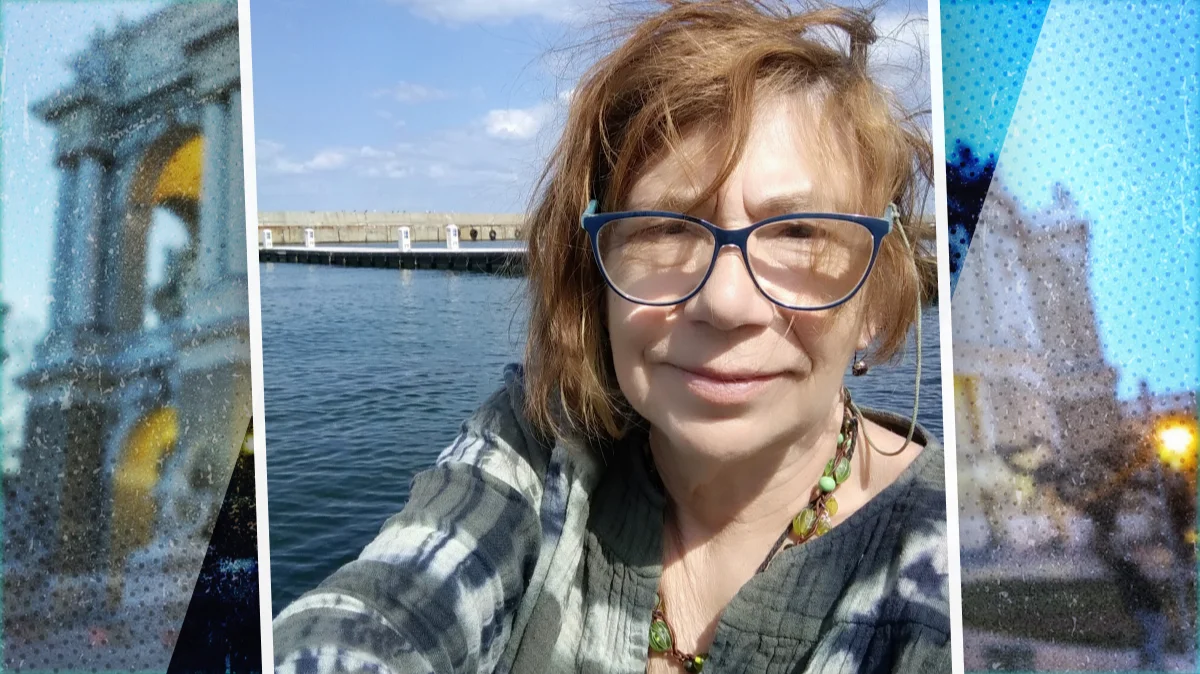
Ukrainian writer Mariya Galina has declined the “Dar” literary prize, established by Russian writer Mikhail Shishkin.
Galina was awarded the prize for her book “Near the War. Odesa. February 2022 – Liutyi 2023”. According to Shishkin, the prize was created to “support Russian-language literature — regardless of the country in which it is produced.”
Mariya Galina, a member of PEN Ukraine, identifies herself as a Russian-speaking writer of Ukrainian origin. She lived in Moscow for a long time but moved away before Russia’s full-scale invasion of Ukraine because she wanted “to face the war at home, with friends and family.”
Galina cited both political circumstances and her fundamental disagreement with the idea of supporting Russian-language culture during wartime as reasons for her refusal.
“To be honest, I don’t like projects in which Russian-speaking authors from Ukraine are included in the broader Russian-speaking space — such projects are aimed at reinforcing the idea that this space exists, and therefore, that Russia can claim its zones of influence. But there should be no such zones of influence,” Galina explains.
“My books, prose, and poetry have been translated into several languages, for which I am sincerely grateful to publishers and translators,” Galina notes. “But there probably won’t be any more books. Because the language I worked in was taken away by Russia itself.”
In an open letter to the jury, she wrote:
“I would like Russian literature, even the ‘good’ kind, to step back from the media space a little. I believe Russian literature as a phenomenon can only exist if tied to the metropole — even in opposition… otherwise, as I’ve said before, it’s not Russian literature but Russian-language literature of other countries. So what are we really supporting? Because I want nothing to do with that metropole. Frankly, I dislike projects that include Russian-speaking authors from Ukraine in the broader Russophone space — such projects imply that such a space exists, and therefore that Russia has the right to assert zones of influence. But those zones should not exist.”
The “Dar” prize was initiated by Mikhail Shishkin. Ukrainian poet and translator Halyna Petrosanyuk noted on Facebook that Shishkin is one of the few Russian writers who, since 2014, publicly condemned Putin’s policies in Europe, spoke out about the illegal annexation of Crimea, and explained that the war in Donbas was not a civil conflict but Russian aggression against Ukraine.
“We owe Mikhail Shishkin a great deal — thanks to him, from 2014 to 2022, the Swiss at least had access to the truth,” she said.
However, according to her, after Russia’s full-scale invasion in 2022, Shishkin, despite his earlier clear stance, chose to “defend” Russian culture and established the “Dar” prize. It was supported by Swiss Slavic studies scholars and cultural foundations, which, Petrosanyuk noted, fail to recognize Russian colonialism — even though colonialism is currently one of the most prominent topics in Western discourse.
“When Ukrainian voices called for a boycott of Russian culture, unfortunately, Mikhail Shishkin decided that he must now defend it. That’s when he launched the ‘Dar’ prize for Russian-language literature, regardless of the country in which it is produced.”
Petrosanyuk also pointed out that several Russian-language authors from Ukraine were among the nominees and thanked Mariya Galina for her decision to refuse the award.
According to the results of the readers’ vote, the novel “Shakti’s Smile” by Sergey Solovyov received the most votes. The award ceremony is scheduled for June.
Mariya Galina is a writer, literary critic, and translator, and a member of PEN Ukraine. She was born in Kalinin (now Tver), lived in Kyiv until 1968, and then in Odesa. In a brief autobiographical note for her novel “Farewell, My Angel,” she wrote that she considers herself an Odesan. Since 1987, she had lived in Moscow. Her books were published by Eksmo (2011) and AST (2016), among others. On Dec. 1, 2013, she signed a collective letter in support of Euromaidan. In January 2022, she moved from Moscow to Odesa.
She wrote mainly in Russian, but since early 2022 has switched to Ukrainian. She now maintains her social media presence in Ukrainian.
RELATED: PEN Ukraine: Our position is to avoid events involving Russians
Main image: novayagazeta.eu
Copy editing: Ben Angel
This publication is sponsored by the Chytomo’s Patreon community
the more you read, the greater the possibilities