* ESC - close the search window
Greece
Krystalli Glyniadakis: In Greek poetry, the political becomes personal
01.10.2025

You see an error in the text - select the fragment and press Ctrl + Enter
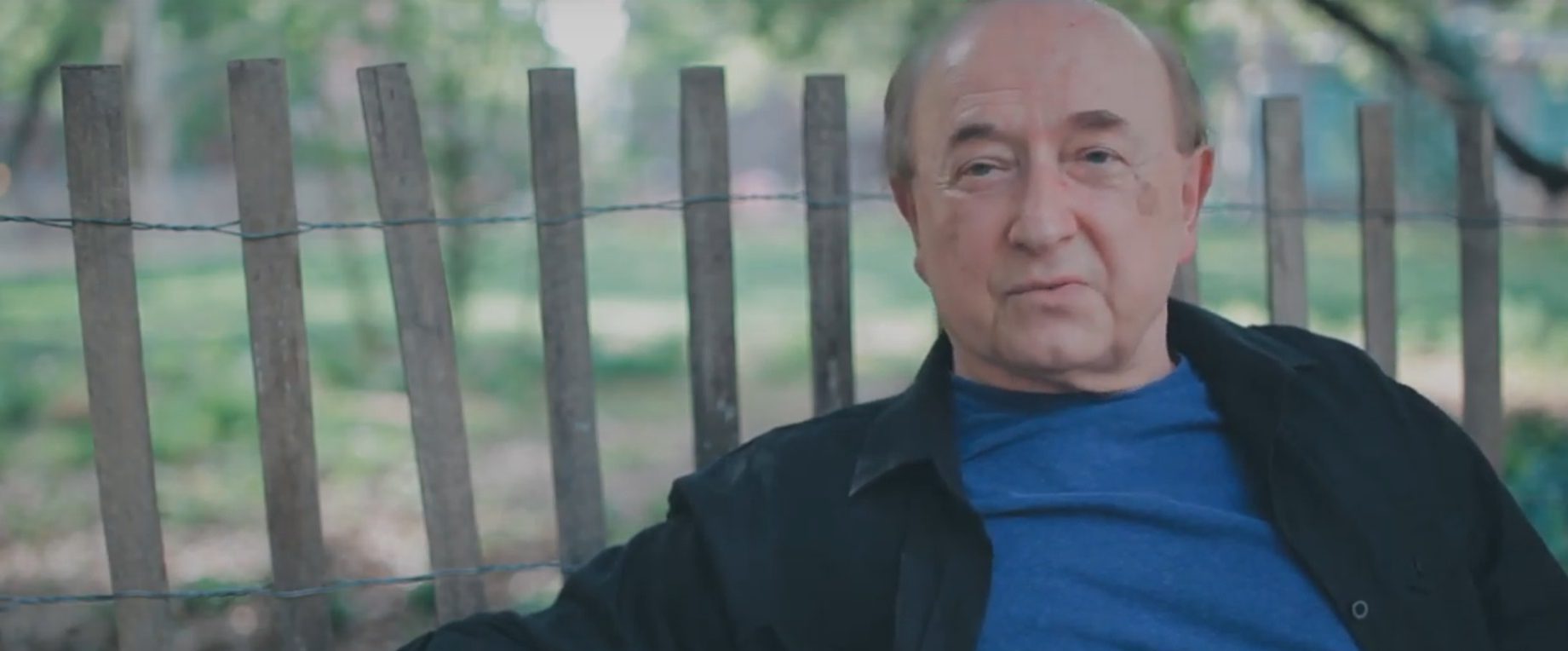
Krystalli Glyniadakis is an award-winning poet, translator, and journalist from Greece. We met in Athens at the Chytomo presentation of the Ukrainian book publishing and literary scene. Krystalli shared her thoughts on the latest trends in contemporary Greek poetry and readership, and commented on the space for Ukrainian topics within them.
Chytomo: The recent report from the Hellenic Foundation (2024) stated that last year in Greece, around 1000 poetry books were published. How do you think that was made possible? What is the landscape for publishing poetry books like in Greece?
Krystalli Glyniadakis: Well, there is obviously an overinflation of publishing, so there are way more titles that anyone can consume. Even the most fanatic readers and book critics cannot consume 1000 titles of poetry per year.
There are three ways to publish poetry in Greece. The traditional way is to take your book to an established publisher, who then publishes it with their own budget.
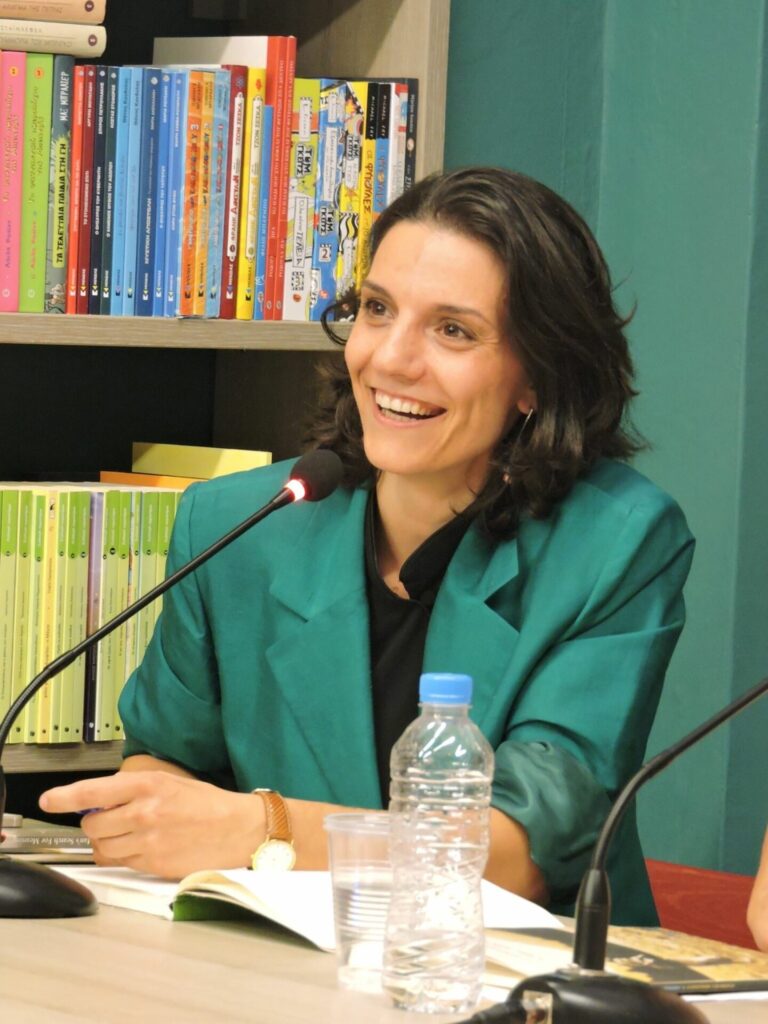
The second, which I think is the most popular way today, is to take your book to an established publisher, who says, “I need you to cover the costs.” So the poet pays. This doesn’t mean that those paying out of pocket are not good poets. The exact opposite is true: The market for poetry is extremely narrow. Good poets need to fish money out of their own pockets.
And then there is a significant portion of self-published poets.
So in each of the three categories, you have a thousand titles out. My guess is that the first, and most traditionally established, category makes up 50-100 of the thousand recently published titles. Around 500, I believe, are poet-funded, and then the rest have been self-publishing.
Chytomo: And what about the first category? Can you say approximately how many publishers are willing to publish poetry out of their own pockets, and how they support writers after that?
Krystalli Glyniadakis: I can think of four, possibly five.
Promotion is a bit of a problem in Greece in general, not just for poetry. Publishers are not very good at marketing. It falls upon the authors themselves to make their work known.
It also depends on how interested the poet is in promoting their own work. For example, I have a good friend, Nikolas Koutsodontis, who is indefatigable in creating opportunities for himself. He finds local poets in little cities — like Corfu, Corinth, and on the island of Crete — and then organises poetry nights with readings from his and the other poets’ works.
So, because of this, he’s knowledgeable about the contemporary, up-and-coming poetry that may not be published yet in Greece.
Chytomo: And what happens to all those new titles after promotion? Do you also establish some infrastructure around poetry collections — like libraries for self-publishing or stores?
Krystalli Glyniadakis: There are no specific libraries designated for self-publishing. A poet has to go to the shop and ask for their books to be displayed.
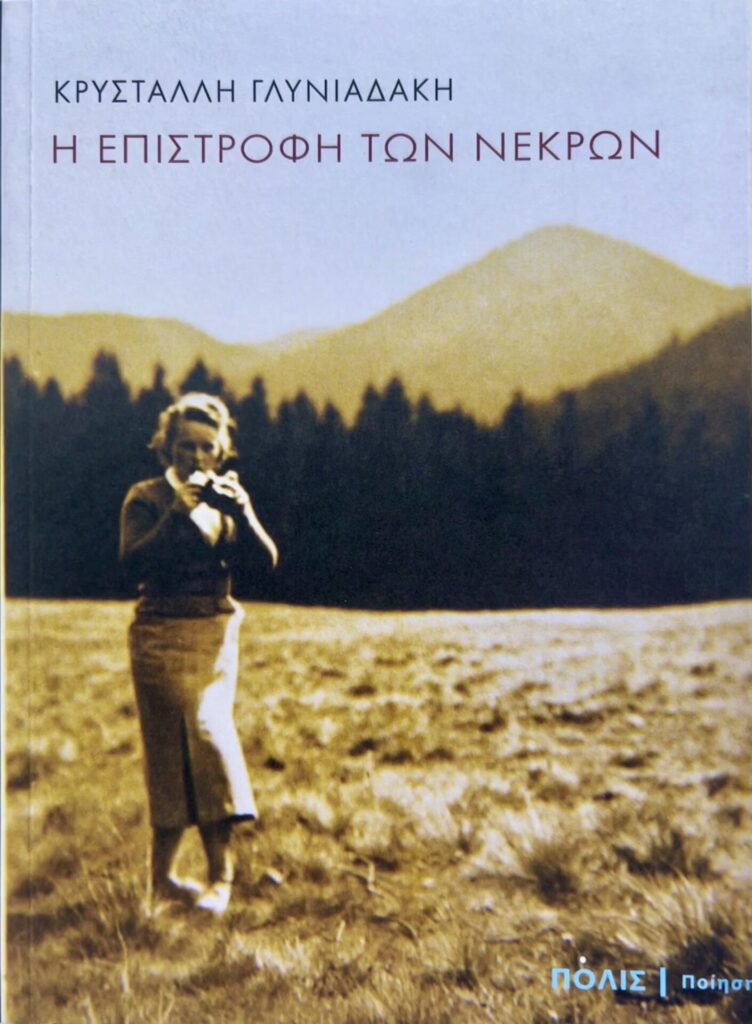
“The Return of the Dead” by Krystalli Glyniadakis (Greek book cover)
Also, libraries are a very sore point in Greece. We have lots of peripheral ones outside of Athens, but people don’t use them.
Greeks don’t go to libraries to read. Even though the librarians are nice and helpful people, we don’t have enough readers. Less than 7% of the Greek population (~10 million) have registered at a public library.
Those who read do so in incredible amounts, while everyone else doesn’t. In general, Greeks don’t read — there’s no established reading culture. Our culture is one that emphasizes public space and socialization, not solo activities like reading. Reading is synonymous with school and being a chore. It is seen as a means to an end: to get good grades and graduate.
Chytomo: For those who read, where do they read? Do they primarily use bookstores or the internet to buy books? Or do they prefer to listen to poetry rather than read it?
Krystalli Glyniadakis: I think people who read a lot will use all sorts of methods to find new material. They will go to their local bookshop to support it, and they also order online. There are both chains and independent bookshops that are very successful online (like Politia and Evripidis).
We don’t have much slam poetry or poetry readings beyond the book launches. Readers would rather read. And that also ties into the fact that poets who are now publishing for the first time, between 17 and 30 years old, are returning to concrete poetry. It focuses on the visual aspects of poetry rather than the melodic-sounding aspects of oral poetry, which were central to my generation. Born in 1979, I’m on the cusp of Gen X and millennials.
Chytomo: Can you expand on this? What is particular to your generation and the newer ones in terms of topic and style?
Krystalli Glyniadakis: Well, the categorization of generations is a trope that has been used a lot in Greek poetry.
The 1930s, or interwar generation, gave birth to our two Nobel laureates, George Seferis and Odysseas Elytis, and also other major yet lesser-known poets, such as Andreas Empeirikos and Yiannis Ritsos.
Every generation is influenced by the historical events of its era. The two postwar generations — writing in the 1950s and 70s — and the generation first published after 2000, especially after the crisis started in 2008, are influenced by war, the junta, the Crisis, and their aftermath. I am part of this latter generation.
For the two postwar generations, the first one spoke about the civil war. After World War II, Greece was plagued by civil war between the USSR-backed communists and the British-backed state forces. It was a massive conflict that lasted around six years and completely cut the country in two.
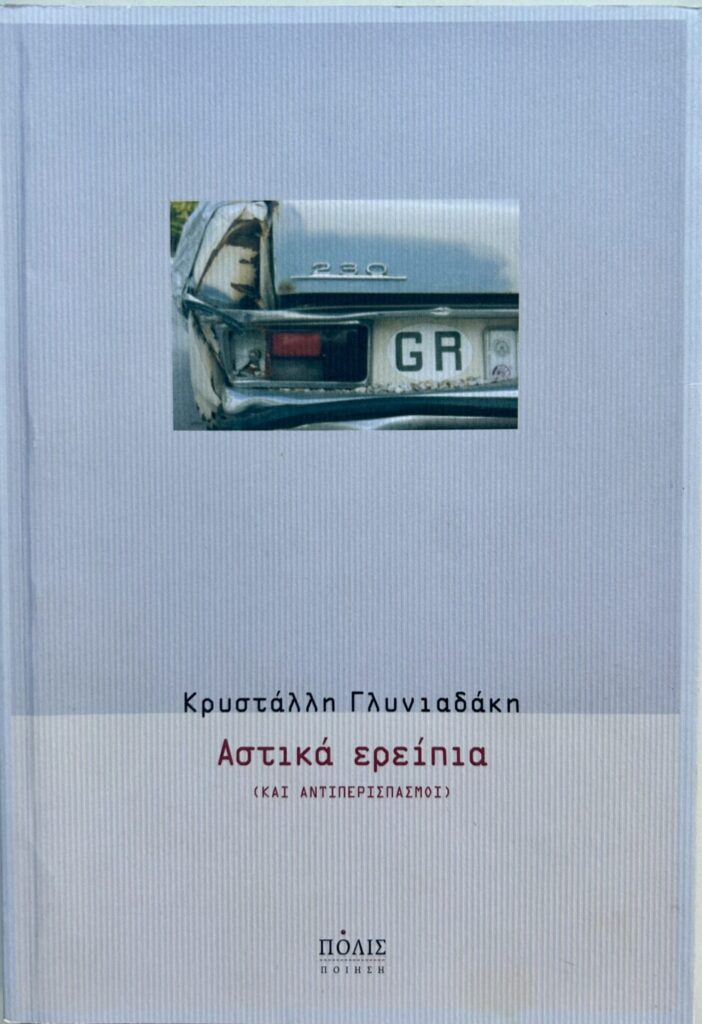
“Athenian Ruins” Krystalli Glyniadakis (Greek book cover)
The second postwar generation was influenced by the military junta, which came to power between 67 and 74, and the occupation of northern Cyprus by Turkey, which was a direct result of the military junta.
A small generation that was tired of all the history completely turned inwards in the 90s and the early 2000s, writing about domestic issues: love, poetry itself, such things. My generation, which came of age during the crisis, is highly politicized. Political poetry is a major theme, though we’re not just political poets.
We have political poetry, polemic poetry, war poetry. We’re very much interested in war and history, but all this is also intermingled with the personal. The political becomes personal, rather than the personal becoming political.
I look at the world and what is happening — not just the Greek crisis, but in general. The crisis of values and the crisis of capitalism and the rise of authoritarianism — all these are part of this generation’s poetry.
It’s a very international poetry; we speak more languages than our parents did, and therefore we read in English, German, Italian, French, etc. So we are influenced by other poets as well, not just Greek ones.
So, that’s my generation.
Chytomo: And what about the next one, the younger poets in Greece?
Krystalli Glyniadakis: All our topics trickle down to the younger generation, like the concern with the personal-political and political-personal historical knowledge.
As for differences, we, the older generation, believe in reading poetry out loud, the rhythm and the sound of it. I think they mostly don’t.
Chytomo: Young poetry in Greece is a very intellectual kind of poetry.
Krystalli Glyniadakis: You’re right. It doesn’t have melodic elements in it — rhyme, alliteration, or things that would give it rhythm. It’s more about conveying ideas and coming across as smart or groundbreaking. But, to me, even though they’re indeed super smart, it doesn’t seem to have dawned on them that poetry also requires emotional impact.
Another thing my generation doesn’t have, but the younger ones do, is a great concern with patriarchal and gender issues.
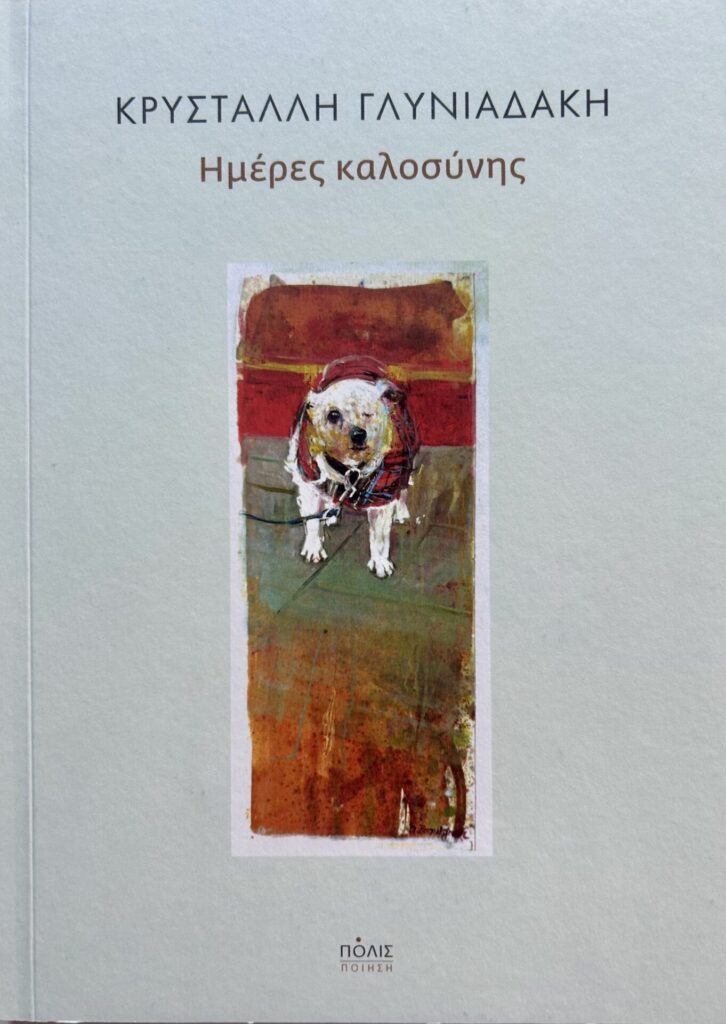
“Days of Kindness” by Krystalli Glyniadakis (Greek book cover)
I mean, of course there has always been feminist poetry. But to have collections of poetry that are only feminist poetry or only gender-related poetry — we didn’t have that.
It’s good because it enriches the entire environment, I think.
Chytomo: Is it close to Eileen Myles’ writing?
Krystalli Glyniadakis: Not really! Eileen Myles’ poetry, even though it is almost a manifesto and political poetry, has a really fierce emotional impact.
Chytomo: Because they use personal experience?
Krystalli Glyniadakis: Exactly. The younger generation does not use lived, personal experience that may touch more than themselves.
I think they’re more concerned with expressing their beliefs and thoughts to others.
But it’s not weird, though, right? We live in the age of Instagram and of TikTok. And the youngest poets have grown up with a smartphone in their hands.
I was a smart ass, too, in my first poetry collection, and then I grew out of it. Because life happens, and when it hits you hard, something opens up inside of you.
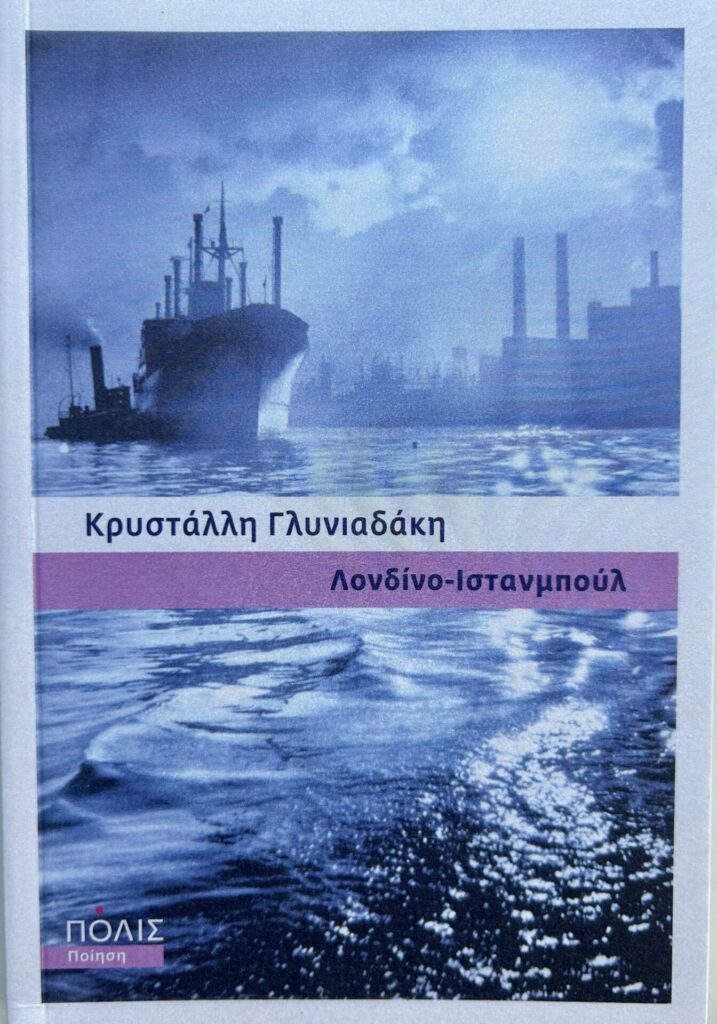
Chytomo: Can you tell me more about your development as a poet? What influenced you, and how have your topics changed through the years?
Krystalli Glyniadakis: My first collection, called “London, Istanbul” (2009), was primarily personal, like a therapy session, even if I did not make it hermetic; I wanted other people to understand what I was talking about.
My second poetry collection, “Athenian Ruins (2013),” was published after the economic crisis had hit, and includes political, personal, and erotic poems. I do best in poetry when I combine love poems with other topics.
And the third, “The Return of the Dead,” and fourth, “Days of Kindness,” are about war, trauma, and historical trauma.
The third collection consists of poetry about war crimes, traumas, and the memory of them, together with love poems. So you get a love poem, then a war poem, then a love poem again. When I was writing this, I was very concerned with the return of extreme right-wing ideologies I saw rising again in Europe; at that time, the neo-Nazis were gaining a lot of strength in Greece. Therefore, I wanted to write about how the ghosts and the dead from the past come back to haunt us.
And my latest poetry collection is a more general treatment of Bad and Good, with a capital B and capital G. For example, we know what evil looks like. We know it looks like genocide, war, invasions, killings, etc. But what would Good look like on a massive scale? So the book tries to answer that question.
Chytomo: I would like to go a step back. How did the crisis influence the poetry scene and Greek literature?
Krystalli Glyniadakis: I think it made us, my generation, way more willing to talk about current political issues. Because it was everywhere, you just saw society crumbling, obviously in a completely different way than Ukraine is experiencing it right now. But you saw how everything you thought was a given was completely disappearing under your feet.
Everyone had to look around and ask, “What is it that we need to save here? What is it that we need to do away with, and what kind of new society do we want?” Even deeper and darker lies the question, “What kind of society are we allowed?” I think the crisis made many feel rebellious, anti-EU, and very passionate in their poetry about it. That made other poets who were more pro-EU, like myself, try to see what could be salvaged and what kind of new society we would want to deal with.
In general, it turned our attention to the present. There is too much around us not to write about it. Some poets, including myself, have written poetry about the war in Ukraine. Right now, lots of Greeks are writing about Gaza, but Ukraine and Gaza are different from the Crisis, because we’re effectively separated from these wars.
Chytomo: Can you expand a little bit more about war poetry? When you write about war in Ukraine, how do you feel it, and how do you work with that distant experience?
Krystalli Glyniadakis: My personal poetry about Ukraine is limited, consisting of maybe a couple of poems. I cannot imagine what it’s like to be in that war. I can only see Polaroid snapshots, and I’m there to describe them.
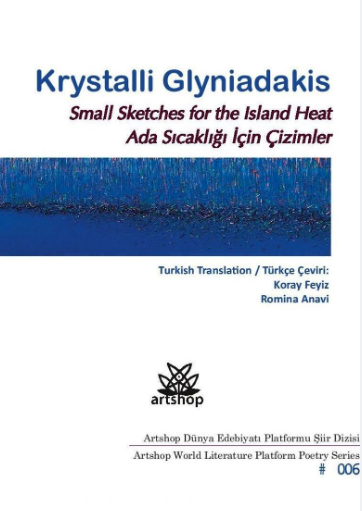
“Small Sketches for the Island Heat” by Krystalli Glyniadakis
For example, I have a poem about a kindergarten being attacked. I don’t even remember what I had seen in the news the previous night, but I remember I was translating a book from Norwegian. It was about World War II, and the northern part of Norway was annihilated. So, in my poem, I combined these two experiences.
I’m trying to find ways to talk about something that I cannot express in any other way (journalistic, academic).
Other Greek poets do that as well. My friend, the poet Yannis Antiochou, has created plenty of poems about the war in Ukraine.
And another celebrated poet, Dimitris Angelis, has written a book called “The City Called Maria” about Mariupol. There, he recreates the city in the shape of a woman, and he talks to the woman; the woman talks back to him, telling him stories.
Chytomo: And how do people identify with these works? Do you have any feedback on your poems?
Krystalli Glyniadakis: I think people react to those poems in the way that they would to any poem, meaning people will not necessarily identify with the poem, but will feel some emotional impact, and they will tell you so.
I’m sorry to say this, but I don’t think that Greeks have, even though there’s undeniable sympathy with Ukraine here, gone out of their way to talk about the war in Ukraine like they’ve gone out of their way to talk about the war in Gaza. Many poets in Greece are self-described leftists, and the Left in Greece has always sided with anti-Israeli sentiment, so they’re more preoccupied with Gaza.
Also, we still have quite a strong Communist Party here in Greece, which never receives below 8% of the total votes, but I’m sure it has more sympathizers around. And this is a party that has been staunchly pro-Russian, even now that Russia is the worst authoritarian country in Europe.
Chytomo: That’s unfortunate and funny at the same time — being on the Left and supporting the empire. To conclude our talk, can you suggest a few names of Greek poets who are interesting to follow and whose voices will resonate with Ukrainian readers?
Krystalli Glyniadakis: From “my” generation, I would like to mention Yiannis Antiochou, Dimitris Angelis, Yiannis Doukas, the poetess Anna Griva, Yiannis Stigas, Stamatis Polenakis, Thomas Tsalapatis, Lena Kallergi, Myrsini Gkana, Niki Chalkiadaki, and Dimitris Petrou.
They are all multiply nominated and awarded — and for a very good reason: they write great poetry.
A little bit younger poets such as Danae Siozou, Nikolas Koutsodontis (who is also the editor of the only queer poetry collection in Greek), Vicky Katsarou, Angeliki Korre are also poets I love a lot.
And from the newest and experimental, queer, intellectual/playful/sarcastic generation: Eva Papadakis, Tonia Tzirita Zaharatou, and Alex Lakakis.
Greek poets are not easy to categorize. We’re very anarchic in general, I’d dare say, both in our politics and in the way we write.
RELATED: Conclusions without optimism: The Ukrainian book market in 2025
Copy editing: Terra Friedman King
This publication was prepared as part of the project Cultural Journalism Exchange (Greece Edition), supported by the European Union through the House of Europe programme.

This publication is sponsored by the Chytomo’s Patreon community
the more you read, the greater the possibilities