* ESC - close the search window
Armenia
Last Night on Earth: War through the eyes of women from Armenia, Georgia, and Ukraine
22.09.2025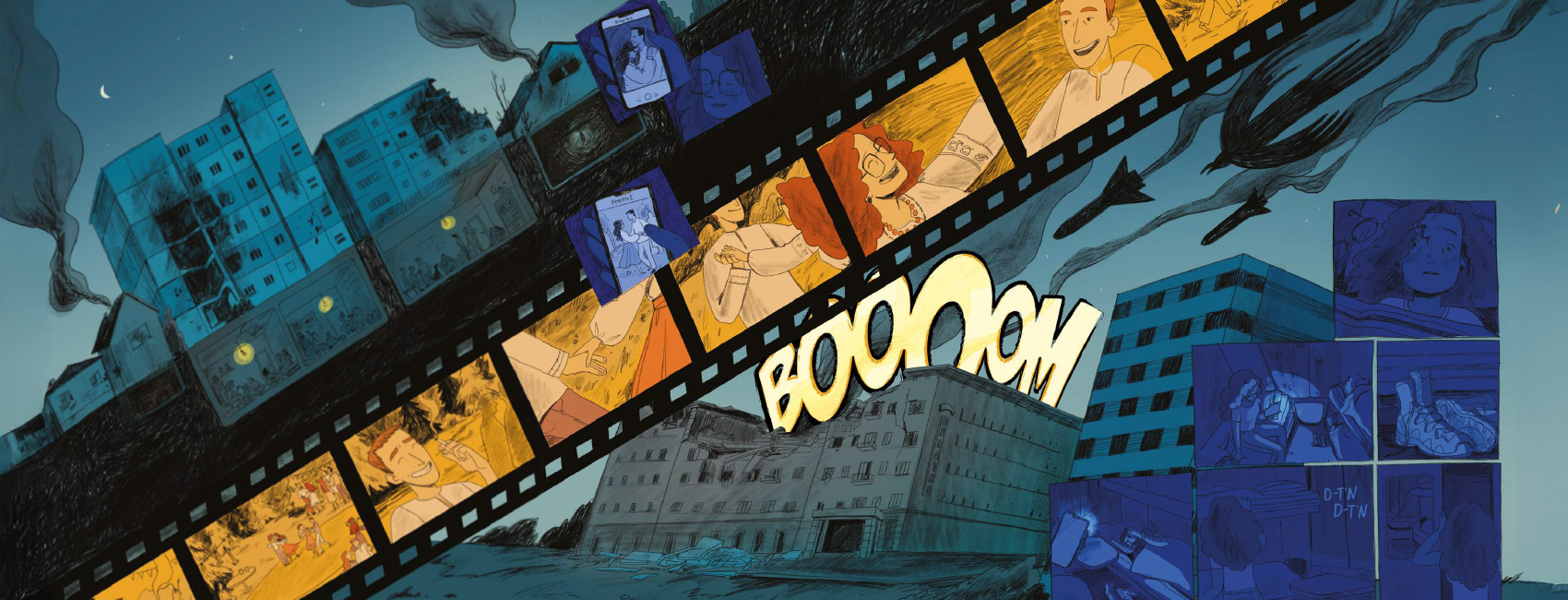

You see an error in the text - select the fragment and press Ctrl + Enter
War recognizes neither boundaries nor pauses. It changes life forever. The trauma of war touches everyone in a different way and never fades without leaving marks. “Visual Stories from Armenia, Georgia, and Ukraine” is an international project with partners from three European nations as part of the EU’s Creative Europe program. The project created an illustrated book by three authors outlining women’s experiences of war.
“Last Night on Earth. War through the eyes of women from Armenia, Georgia, and Ukraine”
by Ekaterine Togonidze, Vira Kuryko, Ani Asatryan
Komora, 2025
Art residencies and teamwork
The three authors – Ani Asatryan (Armenia), Ekaterine Togonidze (Georgia), and Vira Kuryko (Ukraine) – were selected based on their engagement with the subject (war) and the uniqueness of their literary style. The illustrators – Astghik Harutyunyan (Armenia), Luka Lashkhi (Georgia), and Sofia Pokorchak (Ukraine) – were selected through an open competition to give these important stories a visual form. Mikheil Tsikhelashvili, a Georgian writer, translator, and comic book editor, oversaw the creative process and work program as editor-in-chief.
The residencies were organized and coordinated by director Arevik Ashkharoyan, program manager Liana Shiroyan from the ARI Literature Foundation, Ukrainian project coordinator and representative of the Komora publishing house Alla Kostovska, and Eva Gilghost.
Each author’s contribution was built on interviews with war witnesses, refugees, and internally displaced people. The effects of armed conflict on these women, both direct and indirect, echo across generations and have cast shadows over the lives of many communities for decades.
“Human river”: A story of someone born amidst the Black Sea
Text: Ekaterine Togonidze; illustrations: Luka Lashkhi; adaptation: Mikheil Tsikhelashvili and Ekaterine Togonidze; translation: Elizabeth Hayway
In March 2023, Nana starts working in an intensive care unit after Georgian protests begin in response to parliament’s approval of a foreign agents bill. She looks after old man Nakashidze, who reminds her of her godfather before he was killed in the war. Nakashidze shares terrifying stories of the 2008 Russian-Georgian war. As he is dying, his post-traumatic stress disorder is felt, and he screams that he must help the people who are being killed. Nana’s experience with Nakashidze prompts her to join the protests.
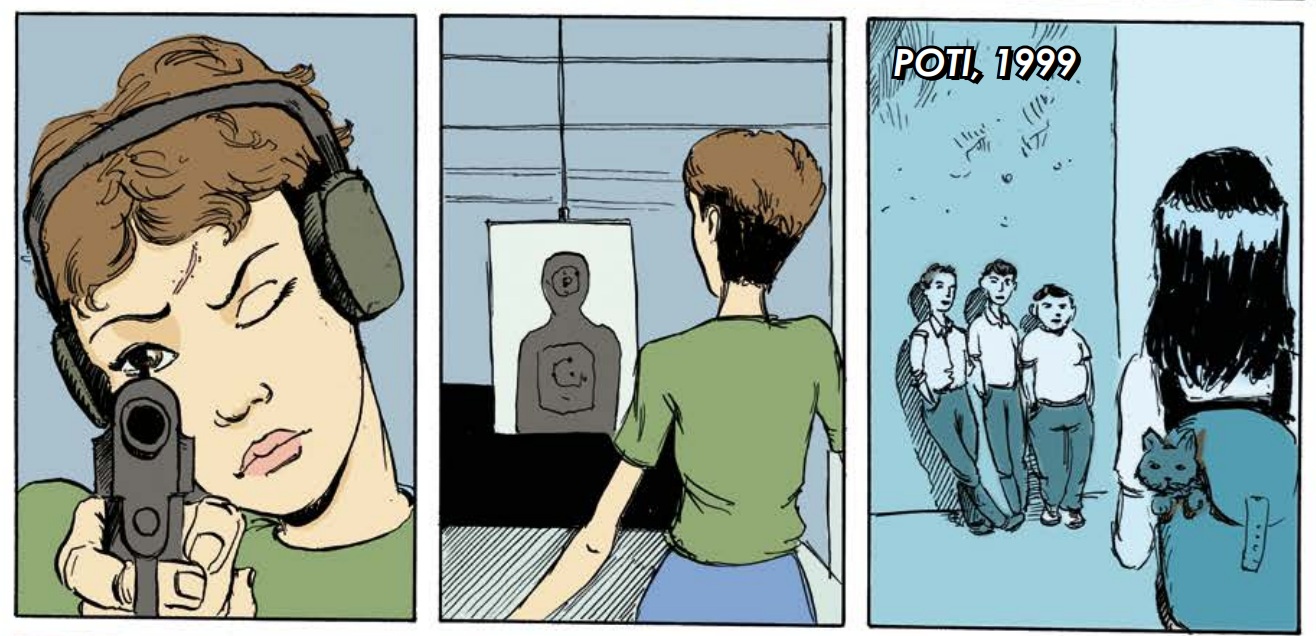
Reprimanded by the chief physician for joining the protests, Nana resigns from her job and, a week later, takes refuge at a shooting range. Bullied for being a refugee in her youth, she channels her childhood rage into every shot.
Nana soon leaves to volunteer in Ukraine as a medic in the Kherson oblast.
The scenes that follow demonstrate a nonstop news feed divided in two: Irma, the daughter of Nana’s godfather, lives a peaceful life in Georgia while Nana is under fire in Ukraine. Irma’s comfortable family evenings watching movies and sharing quiet conversation are intertwined with Nana’s nightly duties with the wounded, the grief of losing a patient, and the respite she takes in a single photograph of her dog.
The comic rapidly moves between past and present like sequences in a film, offering brief glimpses instead of in-depth narratives. Eventually, the attentive reader can piece together and complete the story.
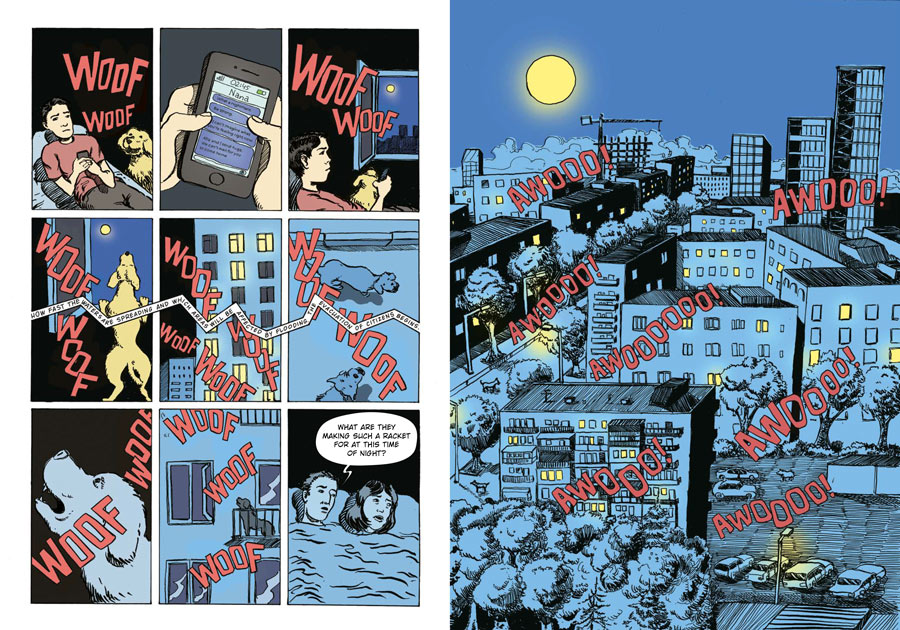
The drawings are somewhat rough, conveying the tension and helplessness people feel when they’re losing the solid ground beneath them. Warm pastel tones contrast with fragments in cold tones – a contrast that is crucial to understanding the narrative. This becomes especially clear in an everyday but tense moment: As Irma develops photographs in a darkroom, a red light seems to bathe everything with blood. Phrases from the news about the explosion of a hydroelectric power plant can be heard from the next room – a room lit only by a TV screen.
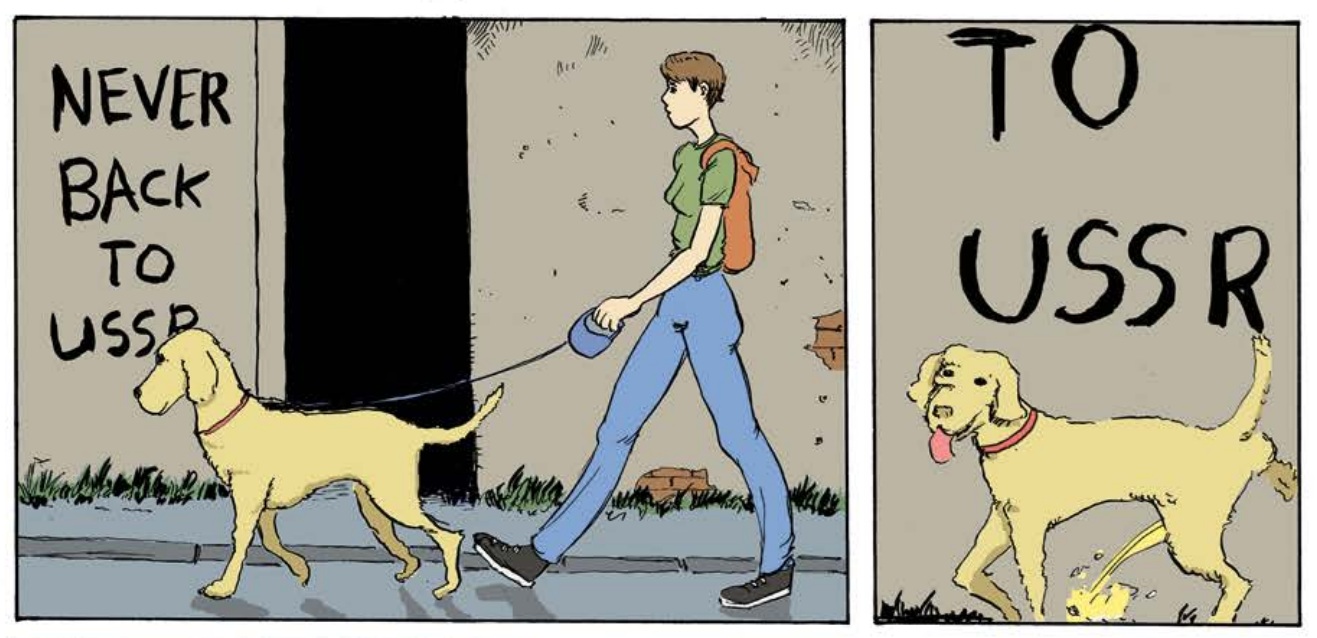
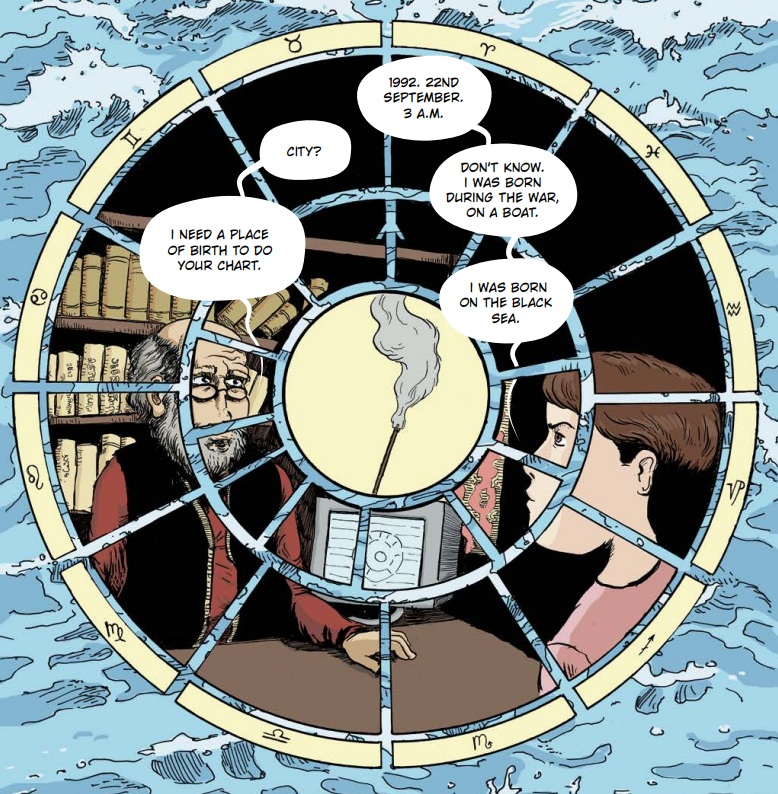
At the very beginning of the comic, an illustration of a woman, born in the middle of the sea, asks an astrologer to tell her the date of her death. Its meaning only becomes clear at the end. The Russo-Ukrainian war rages on, and protests continue in Georgia because the human river from the heart of the country will never cease flowing toward justice.
“Last Night on Earth”: A brief road movie about the journey to the center of the Earth
Text: Vira Kuryko; illustrations: Sofia Pokorchak; adaptation: Mikheil Tsikhelashvili; translation from Ukrainian into English: Alexandra Brunova
Vira set off on a long and dangerous journey to the front line to see her husband, Serhiy, for the first time in three months. Her husband, just like her father in 2014, joined the Armed Forces of Ukraine and fought in the east at the beginning of Russia’s full-scale invasion of Ukraine.
The journey begins on a darkened train to Dnipro during a light screening meant to keep enemy planes from identifying visible landmarks. Memories of Vira’s former life flicker through her mind like bright scenes from a movie, while days of waiting for a message from her husband weave a sticky web of fear lingering at the corners of her consciousness.
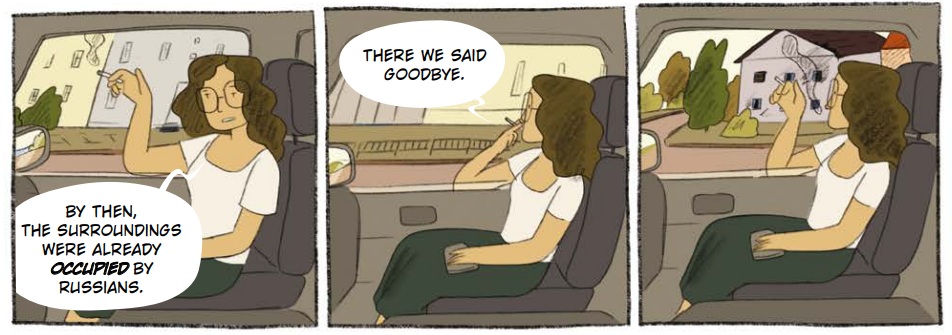
In Dnipro, Vira is greeted by Olya, her colleague journalist, who works on the front lines and has arranged for a driver to take her to Pokrovsk. The accompanying illustration’s warm hues slightly soften the tension, and for a short moment, the two colleagues share casual conversations mixed with jokes about the costly seafood that remains unsold since the beginning of the invasion.
Elements of magical realism permeate the narrative through nearly every character. Humor finds its place, gently easing the harshness of reality and creating space for more casual conversations between people meeting for the first time. Kolya, the driver, expresses a stark truth: War is like a “mistress,” which is why they all feel drawn to it.
Before letting Vira off in Pokrovsk, Kolya criticizes her and his colleague’s reports, calling them lies. Vira leaves the “fake” pumpkin carriage with an unpleasant feeling to transfer to the “real” one and continue her journey. The next driver, who calls himself Father, is much calmer. Vira manages to take a nap and dreams of memories that are bizarrely intertwined.
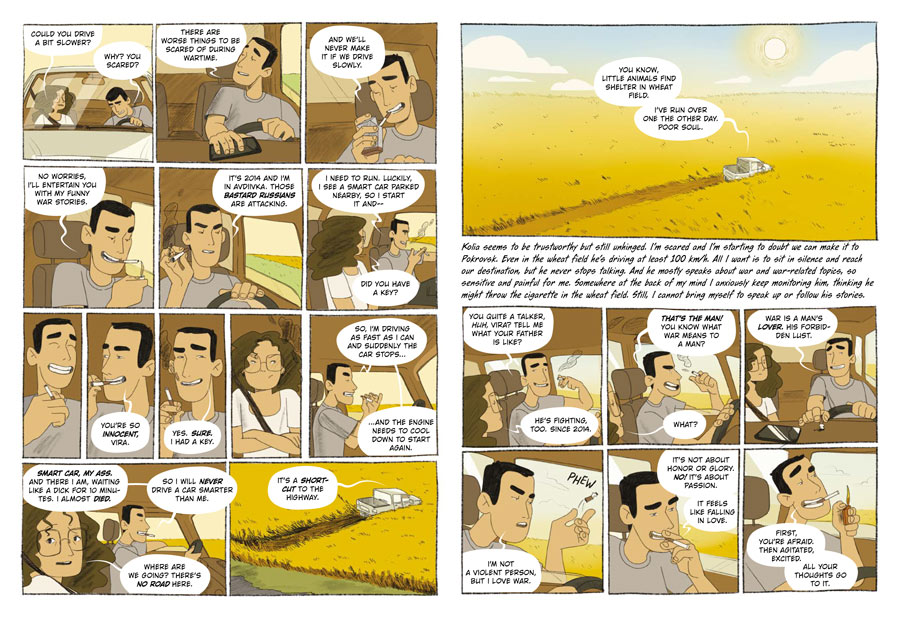
While the journey with this driver is comfortable, he has a certain stream of consciousness that is available only when there is nothing but the road and open ears to listen. Father reveals yet another truth about life: Since he has four children, he has a real war at home. Here, on the road, his everyday life is peaceful.
When Vira finally reunites with her husband, she thinks to herself that the man she sees is much older than the one she remembers. But touches do not lie – the skin remembers everything to the tiniest detail.
In this story, the road is more than just a thruway. It is a journey of pain and hope through encounters with strangers who guide Vira through the darkness and reveal new facets of human experience.
The story both begins and ends with a smooth, single-day trip framed by night. It is like moments of partial loss of consciousness, and therefore moments of entering the unknown.
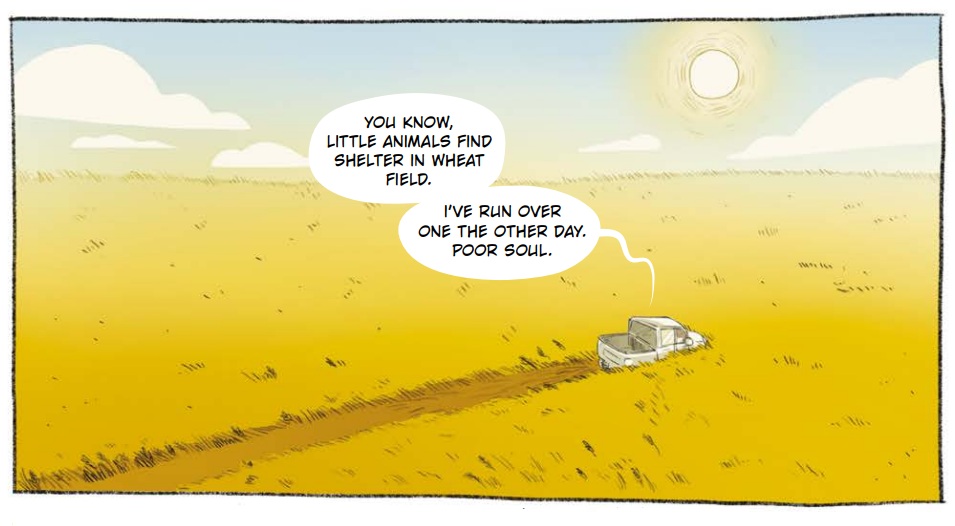
Vira is not on a business trip, but the style of the story is completely that of a reportage: The reporter is the unwitting character. Vira does not delve into the stories of others, but is instead immersed in her own pain and often does not share the same opinion as others. The peculiarities of the characters’ portrayal, the many rounded details, and the pastel colors encourage the reader to perceive the story as somewhat romantic rather than tragic. Despite the background of war, it leaves a warm aftertaste. It is only natural for the reader to long for the couple’s happy future, an extension of sincere concern for the fate of the entire country.
“A meme from before the war”: The unknowns who carry the burden of the innocently murdered
Text: Ani Asatryan; illustrations: Astghik Harutyunyan; adaptation: Mikheil Tsikhelashvili; translation from English into Ukrainian: Olga Kari.
There is a gray zone in this world. It is a place that does not exist on the map, but where three communities coexist: Nobody, Somebody, and the Chosen. Once, faceless and nameless forces from outside, acting only according to scenarios determined by the Screenwriter, opened the way there. Memeoids, as the inhabitants of the grey zone call them, lack the ability to make their own decisions. But when they find out that the Chosen achieve “autonomy” at the age of eighteen, they begin to search for explanations. The Scriptwriter not only bans this term, but also orders the destruction of all Chosen who are not yet “autonomous,” leading to autonomicide.
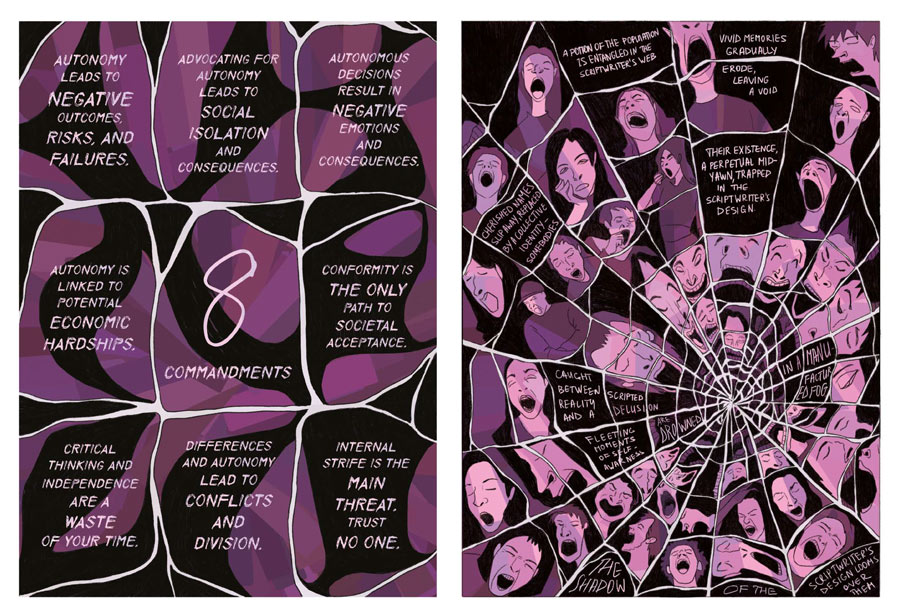
In 2023, the Memeoids impose a harsh blockade against 120,000 people, which lasts 9 months, two weeks, and four days without food, gas, electricity, or medicine. Despite the pressure, there are always those who refuse to give up.
One of the Nobodies, once a writer and now a Ghostwriter, is tasked with revealing the whole truth about the grey zone in a graphic novel. She must meet the protagonist who survived forced displacement and the blockade. After arriving in the grey zone, she is assigned a special code and is now Nobody 070.
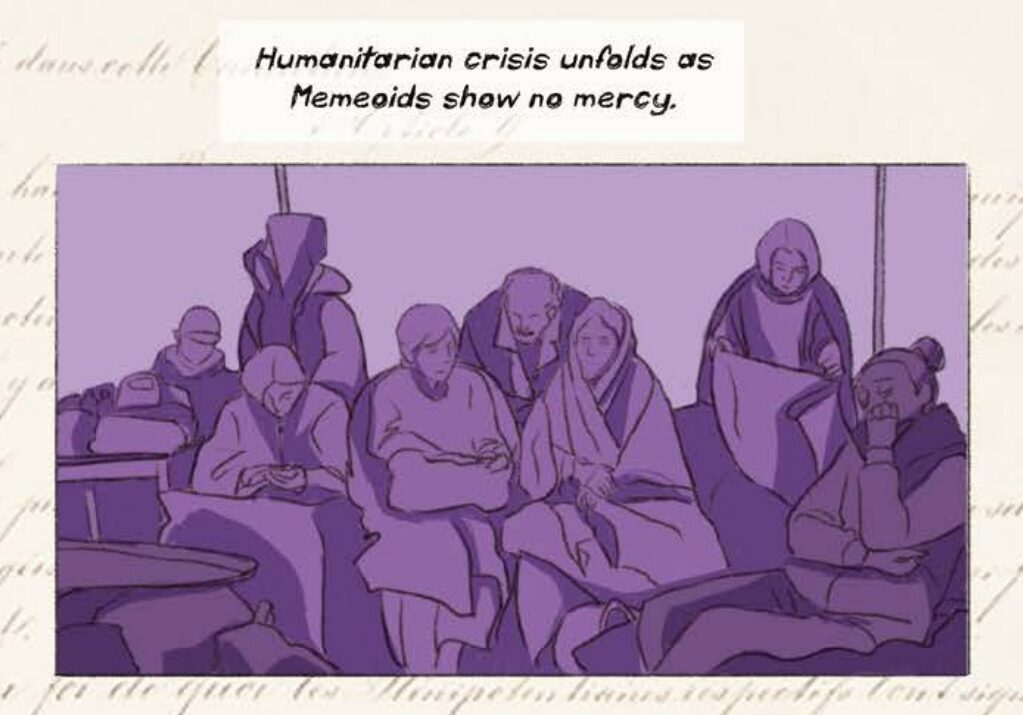
Behind the simple names, the smart reader will easily recognize Azerbaijanis (and possibly Russians), and Nagorno-Karabakh – or Artsakh (as the Armenians say) – behind the grey zone.
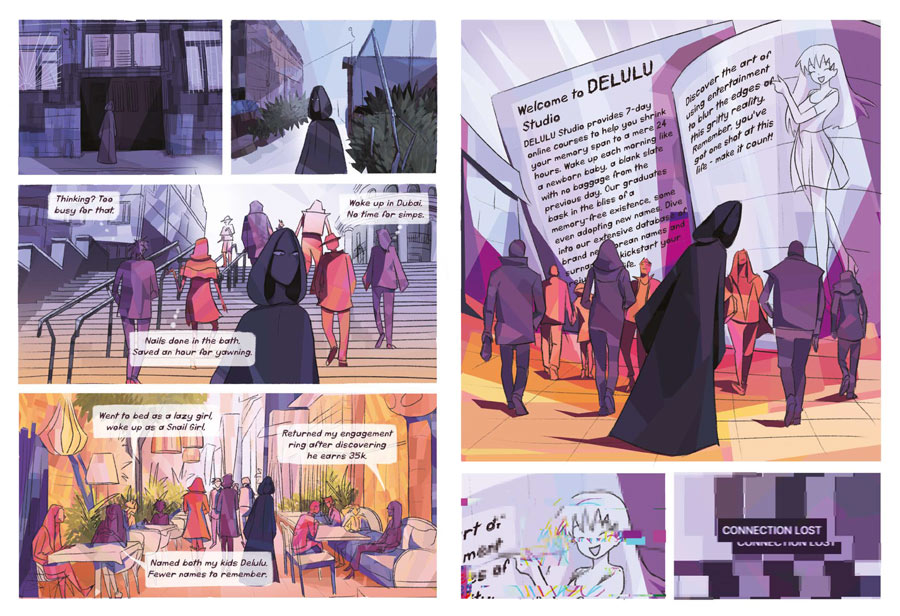
Ghostwriter does not hide, but he does not enjoy going out in public. After meeting Nobody 070, Ghostwriter asks her to share the horrors she has experienced so that he can understand what to include in his graphic novel. She refuses to discuss it because, despite everything she has endured, the weight of death is beyond words, and she doesn’t understand why anyone would want to record such hell. Kafka’s quote about the silence of sirens gained new significance, as did Paul Klee’s painting “The New Angel,” which, according to Benjamin’s concept of the “angel of history,” represents a melancholic perspective on history as an unending cycle of despair.
RELATED: Avoiding Soviet “fragrance” in naming: Georgia, Sakartvelo or Gruzia?
Translation: Iryna Saviuk
Line and copy editing: Terra Friedman King
This publication is sponsored by the Chytomo’s Patreon community
the more you read, the greater the possibilities
342
freedom of speech
In Georgia, a war reporter and award-winning writer has been imprisoned
22.10.2025 - Iryna Baturevych
100
freedom of speech
Georgian poet and translator Zviad Ratiani sentenced to prison
11.10.2025 - Iryna Baturevych