* ESC - close the search window
Greek Books
Study finds 85% of Greek readers turn to books to escape everyday life
14.08.2026
Eighty-five percent of surveyed Greek readers said they read books to relax and escape everyday life, according to a study conducted by Truberries (a market research and marketing company).
The study, titled “Το Βιβλίο και ο Κόσμος της Ανάγνωσης στην Ελλάδα” (“The Book and the World of Reading in Greece”) combined a quantitative survey of 816 people across seven major urban centers in Greece with qualitative research based on readers’ personal stories and group discussions.
Public described the research as the first study of the Greek book market conducted by the country’s retail sector on this scale and in such depth.
The study found that one in four surveyed Greeks read purely for entertainment at least three times a week and considered books a preferred way to disconnect from everyday pressures.
85% viewed books as a way to create personal space in public or private settings without having to explain their desire to be alone. The study therefore identified two seemingly contrasting roles of reading: providing companionship and creating an opportunity for solitude.
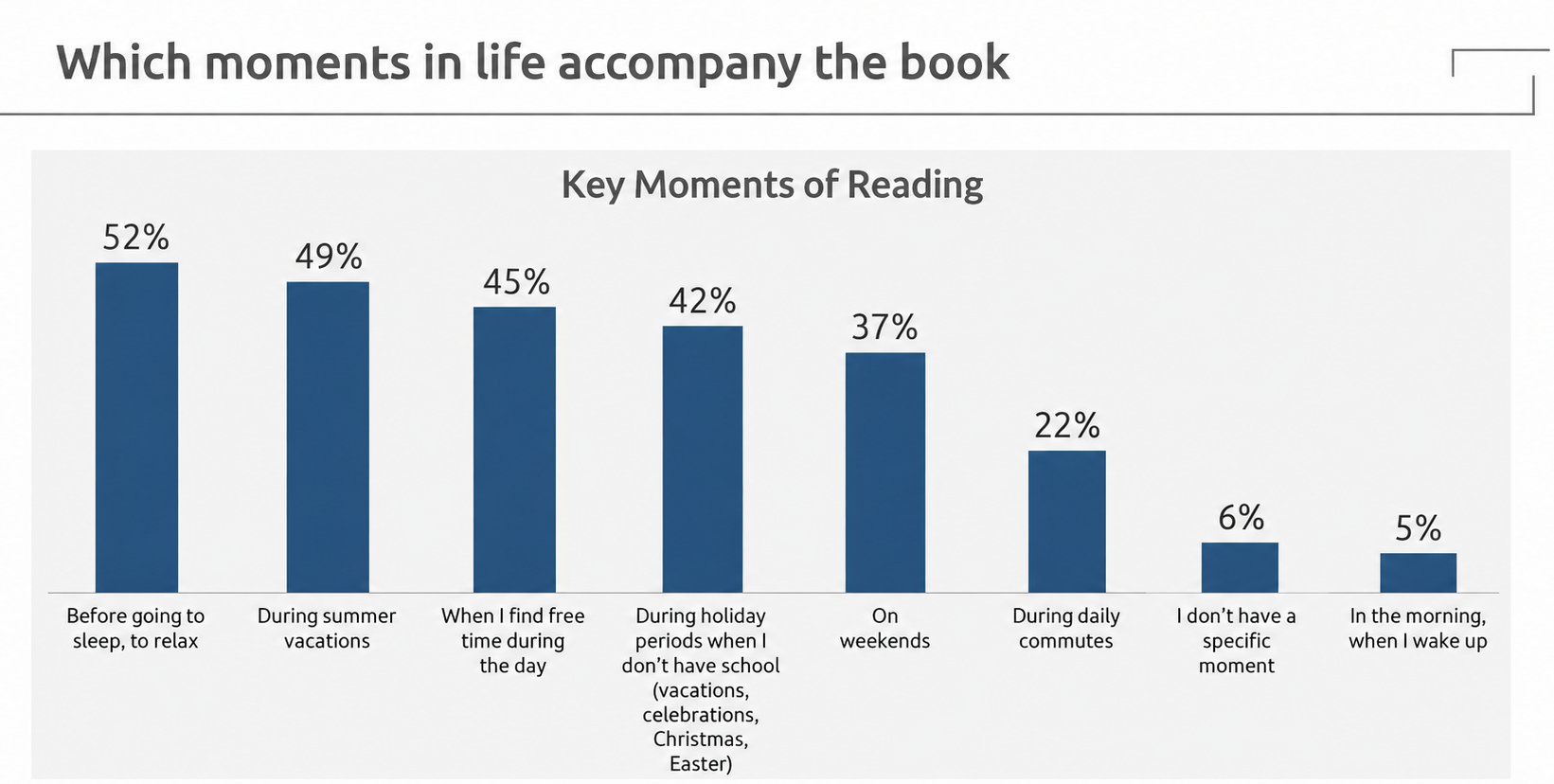
Image: Public Blog
For 57% of parents, books were also among the most meaningful ways to connect with their children. Reading often formed part of readers’ daily and seasonal routines. More than half of respondents — 52% — usually read before going to sleep, while 45% read when they found free time during the day.
Reading was also associated with vacations for 49% of respondents and Christmas or Easter holidays for 42%. Another 37% connected reading with weekends, while 22% read during their daily commute.
The desire to disconnect through books did not necessarily mean that regular readers abandoned digital media. Among the most dedicated readers, 42% spent more than three hours a day on social media, indicating that books and digital platforms continued to coexist in their daily lives.
As reported earlier, a separate study by OSDEL, Greece’s collective management organization for literary works, found that reading habits in the country were closely linked to education, social background, and access to books at home and during childhood.
That research also identified escape from everyday life as one of the reasons people read, alongside obtaining information and appreciating literature. Lack of time remained the most commonly cited barrier to reading.
The findings come as Greece designated 2026 as the Year of Reading Culture under the title DiavaZOUME (“We Read/Live”). The initiative focuses particularly on children, adolescents, and younger readers and includes activities in bookstores, libraries, and public spaces.
Main image: pexels
Читомо» — це медіа про книжки й літературу, що підтримувало українське книговидання задовго до того, як це стало трендом. Ставайте частиною історії — доєднуйтеся до Клубу Читомо!
the more you read, the greater the possibilities