* ESC - close the search window
Greece
Six Greek books from the 2020s worth translating
30.10.2025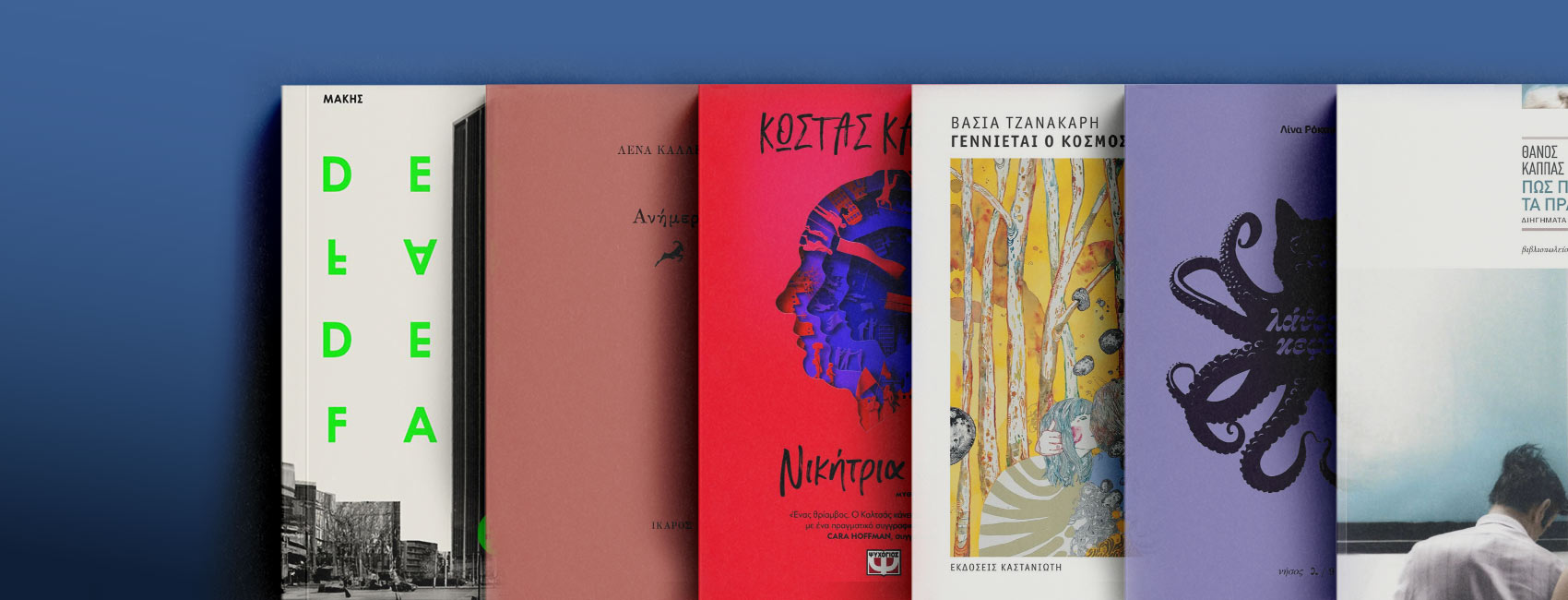

You see an error in the text - select the fragment and press Ctrl + Enter
It is crucial to have an experienced guide when discovering new literature. During a search for noteworthy Greek books, we approached Kostas Kostakos, book reviewer, film critic, and blogger. He recommended six titles for Chytomo that raise challenging questions: Can we free ourselves from the historical burdens of previous generations and our country? Are we ready to accept the “savagery of freedom,” even when it risks wounding us? And more importantly, has the world truly entered an age of perilous alt-right absurdity?
As a reminder, the GreekLit translation support program is once again operating in Greece, opening new opportunities for translating these and many other works of Greek literature.
“ΠΩΣ ΠΑΝΕ ΤΑ ΠΡΑΓΜΑΤΑ” (“How Things Are Going”) by Thanos Kappas
Estia, 2020
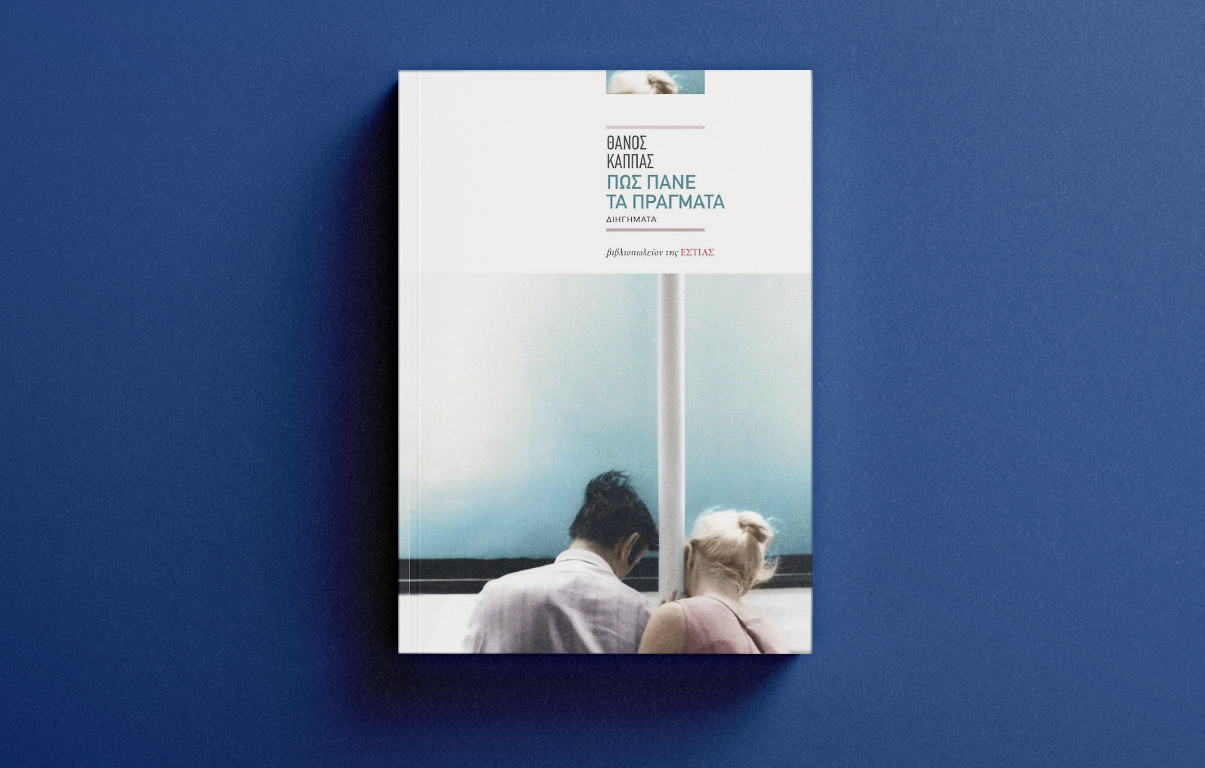
Seven first-person narratives center on characters primarily in long-term relationships or marriages, some with children and some without. As the title suggests, they explore questions such as: How are things going? What stage of life are we at? How did we get here?
For most of the book’s characters, the answers reveal issues that are at times disturbing or uncomfortable. On the bright side, however, everything tended to go the way it should have; no major disaster occurred that forced them to step off their path or lose their way. And yet, as one line from a very famous Greek song says: “I envision one thing, yet another comes true. I’m no longer content with the plan.”
“How Things Are Going” examines the gap between the life we envisioned and the one that actually unfolded — not when everything went wrong, but when everything went according to plan. Why, then, are we not satisfied?
Perhaps an inevitable gap is inherent in human nature itself. But melancholy does not always preclude acceptance of, or even gratitude for, the human condition:
“We intersect with one another, and our lives shape and define other people’s paths. Everyone does what they can in this complex system of dependencies, ruptures, and compromises that make up our lives. None of us are exceptions. None of us stand apart to evaluate our choices — their rightness or their mistakes, our courage and our hesitation. On this sand, soon to be wet again by the waves and dried by the morning sun, new bodies will lie side by side — faces that may long for or despise each other, their happiness and unhappiness hanging by a thread, moment by moment, until the end of life, until the end of time.
“No life is easy. No victory is eternal. No defeat is final. All the kisses we gave, all the bodies we held, those we could not touch, those who withheld their warmth — all the voices that choked us up, and those we managed to utter — everything eventually became silence. Our own silence. There is no one and nothing to blame, because we know, somewhere deep down, we were, even if only slightly, on the side of those who benefited.”
To date, this book has not been translated.
“ΛΑΘΟΣ ΚΕΦΑΛΙ” (The Wrong Head”) by Lina Rokou
Nissos Publishing, 2025
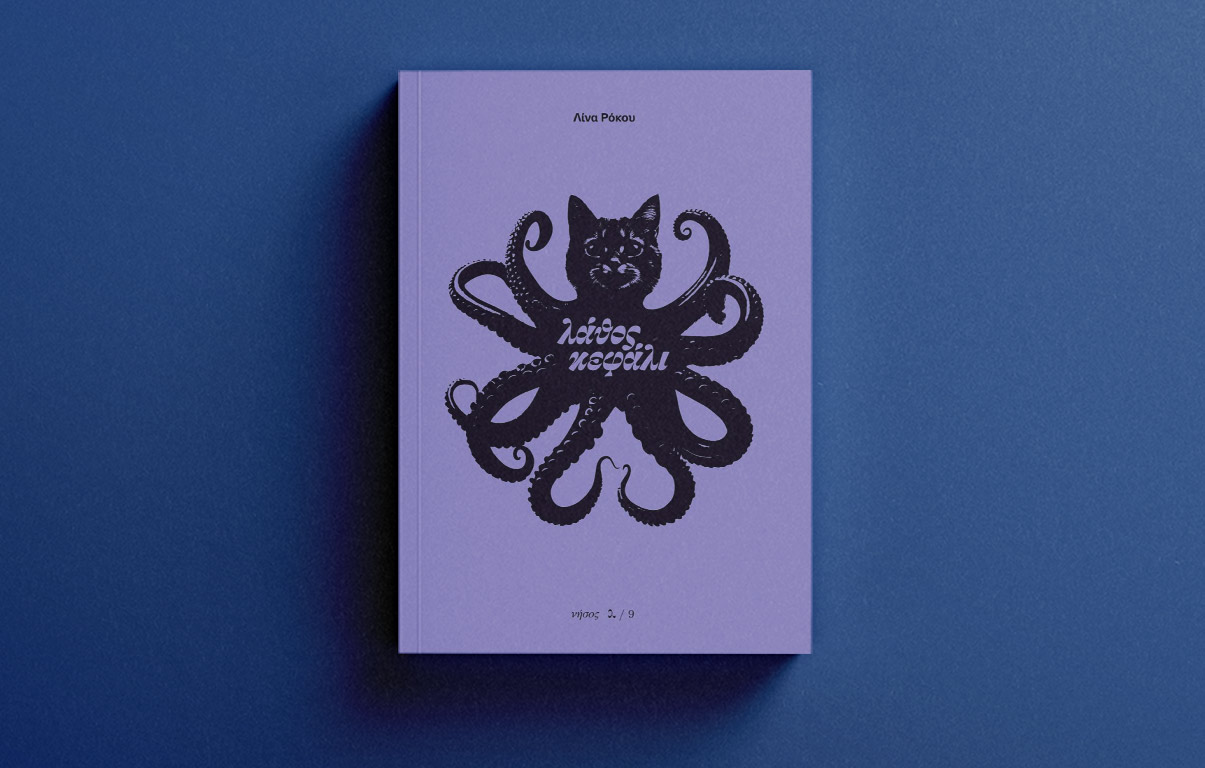
“Eroticism is a way of presenting yourself to others, trembling with truth.”
Protagonist Karina once wrote a book. Her loved ones and colleagues are pressuring her to write a second one, but she can’t. Every time she tries, her hands become red and itchy. She takes antihistamines and licks her skin, as if trying to soothe it. Useless. Her hands can’t do it on their own. Her body can’t do it on its own. She simply can’t do it.
“Every story is a gesture to others, and in this case, someone’s hand reached out to respond to my gesture.”
It is the hand of Pavlos, a leading Greek writer. Without any prior connection or contact, he unexpectedly invites her to stay in his home so she can work on her book. How? By sharing his stories with her, allowing her to internalize and transform them into her own. At the same time, he asks her to begin sharing her own stories with him.
As Karina moves into Pavlos’s house, reality slowly begins to recede. Rules fade into the background, return, and recede again.
This is a space for creation, a space where books are born, where relationships take shape and shift, where aspiration meets deprivation and embodiment. It’s a realm inhabited by paradoxical creatures born of hallucination and contradiction, from the exchange of notes and oral stories; here come the living and the dead, along with those who vanished without a trace, swallowed by the earth itself.
He sees her breasts in his dreams, and when he wakes, milk flows from his lips. She sees his lips in her dreams, and when she wakes, milk flows from her breasts. In this book, the boundaries of bodies, of “I” and self, of stories and narratives, of the real and the dreamlike, are in constant reinterpretation, transformation, and restructuring. Is it possible for two to become one? If so, could a long-desired perfection such as this end up destroying us rather than fulfilling us?
“Just before orgasm, when I no longer cared what creature had caused it, a terrible scream came from Pavlos’s room. At the moment I came, I thought, ‘He’s dead,’ and that caused a few more convulsions.”
This book awaits translation.
“ΓΕΝΝΙΕΤΑΙ Ο ΚΟΣΜΟΣ” (“The World is Born”) by Vasia Tzanakari
Kastaniotis Publications, 2024
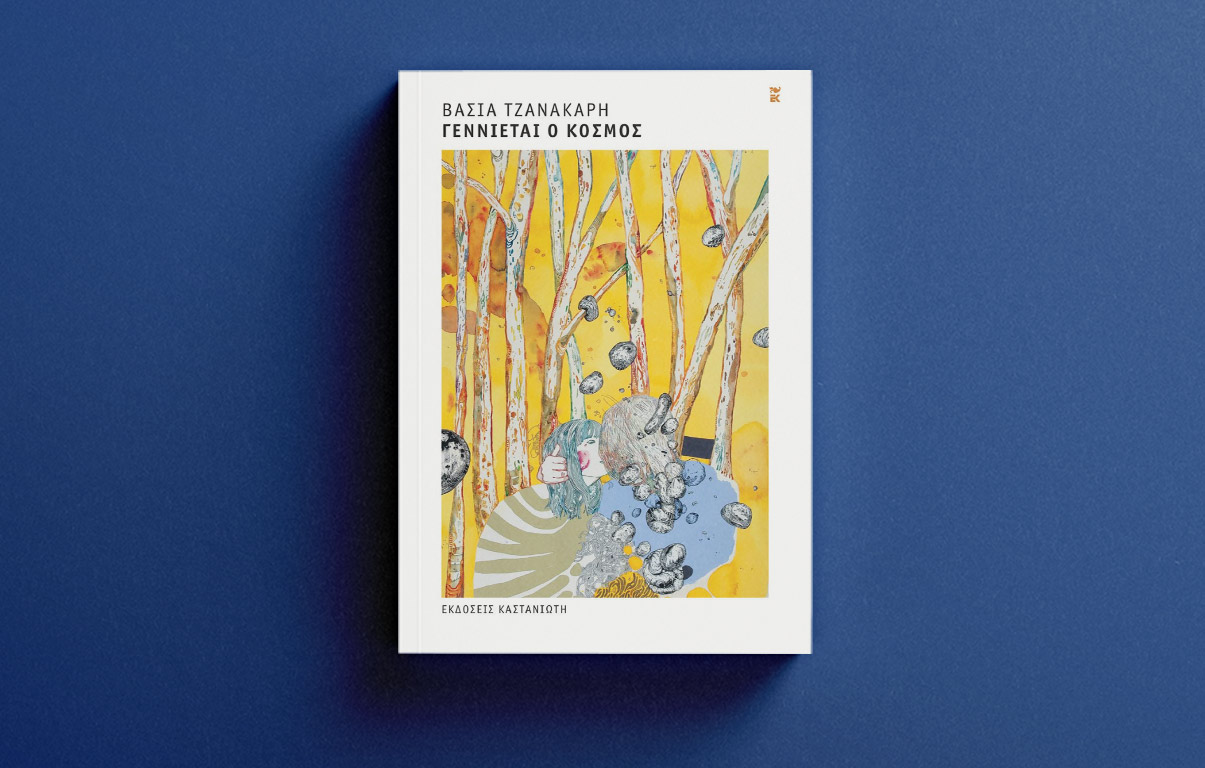
Vasia Tzanakari’s novel does not tell a story. Love, in its fullness, isn’t a story. Love is a space where narrative disappears. Stories exist when love is fulfilled, when there’s something to win or lose, when obstacles, external or external, stand in the way. That’s when we get conflict, suspense and resolution. Stories also arise when love begins to fade, when something is lost. But while love lasts, and is mutual, the narrative goes quiet. It’s as if the interest in plot dissolves.
Moments of true love appear in films, television series, and novels, but never on their own. They’re almost always framed by contrast — as a fleeting paradise, inevitably followed by “what happens next.” Even happy endings in romantic comedies aren’t really about love itself, but about its attainment: “OK, they did it. Now they’ll be together.” As a culture, we’re obsessed with the chase, the ideal, the climax. Once perfection is reached, our interest fades. Leave them be. Don’t look at them.
“The World Is Born” begins where the typical love story ends — in the sustained experience of love itself. This book records the emotional landscape of the first year of love: not through events, but through sensations. The fullness. The intensity. The fear. The surrender.
A loving gaze shapes a loving language, born from — and because of — the presence of another. Erotic connection becomes the root of perception. Nothing here spoils. Nothing fades. Everything is whole, safe, and preserved.
RELATED: Krystalli Glyniadakis: In Greek poetry, the political becomes personal
But when something this powerful exists, so does the fear of losing it. A fear equal to the depth of the love itself:
“That’s the reason I suffer, and why you never invite me to your home, as I won’t know how to stand on my own when you’re +.”
Even that fear is held gently. In this novel, the magic of love’s first year is always protected:
“My ladder is made of paper, and when I wish to reach out and kiss you, I unfold it like a deck of cards with a deft flick of my hand, climbing carefully, card by card, so as not to destroy us.”
No translation of the book has been published so far.
“ΝΙΚΗΤΡΙΑ ΣΚΟΝΗ” (“Victorious Dust”) by Kostas Kaltsas
Psichogios Publications, 2024
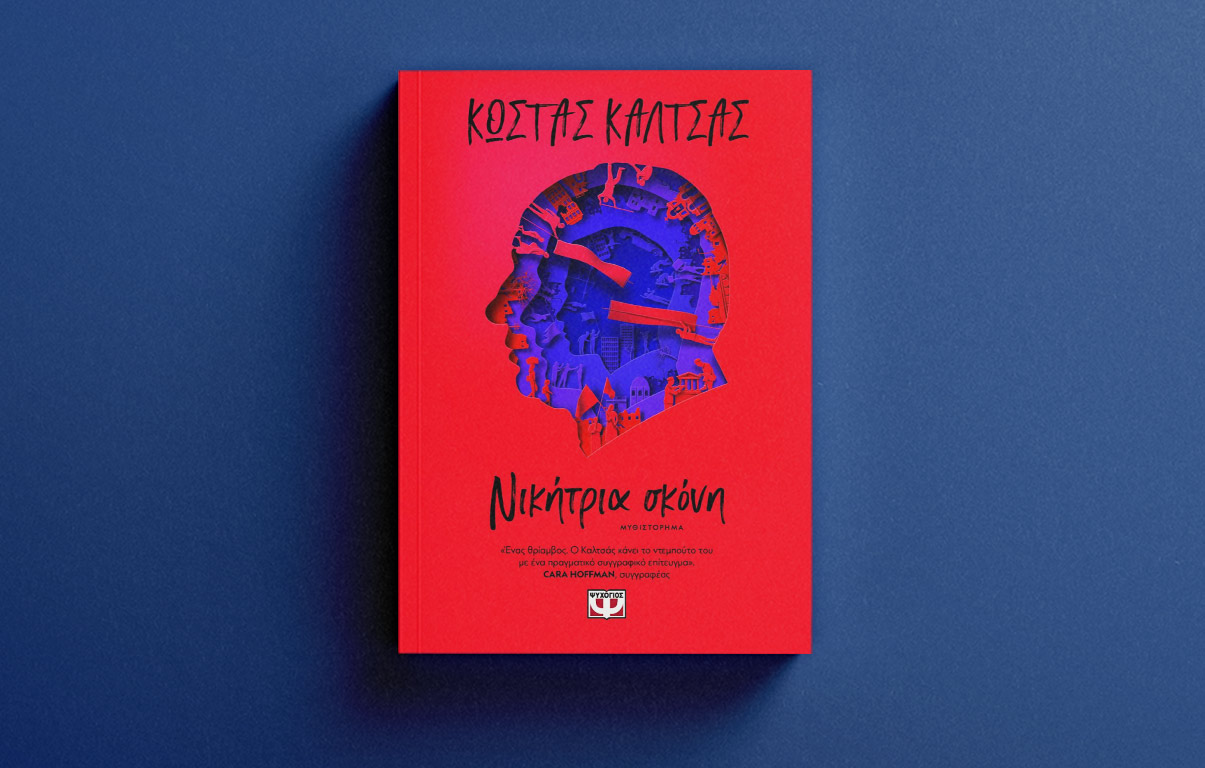
The end of World War II in Greece and the country’s liberation from Nazi occupation were foreshadowed by the violent clashes that erupted in Athens in December 1944. How long does it take to erase the marks left by an ideologically driven civil war? To what extent does history truly progress by silencing or repressing its painful past? How do old fractures and divisions resurface in new forms?
In July 2015, as Greece faced bankruptcy, the harsh conditions imposed on society by five years of economic memoranda from its creditors led to a national referendum. Another civil war did not erupt, but the ideological divide resurfaced, sharper than before.
“Victorious Dust” tells the story of three generations. A grandfather who fought in the civil war and was later imprisoned and exiled. A son determined to document his father’s life and preserve as much archival material as he can. And a grandson, born in the 1970s, who grew up in a Greece where history felt like something irrelevant, disconnected from the present and from him.
The first part of the novel takes place when division is still immediate, when history is alive. The final part circles back to it through the 2015 referendum. Between these points, we arrive in 1995 — a time when Greece seemed to pretend its history had ended, quietly seated at the table like an unspoken guest:
“The family didn’t talk about it much. Even half the things he knew, he couldn’t say how he’d come to know them. Couldn’t point to a single conversation specifically about his grandfather or the war. It was as though he’d woken up one day and simply knew these things, maybe through some passive, osmotic-like procedure.
“There’d been tragedies on both sides, the family agreed, lives ruined and lives wasted on both sides. Good people, patriots, on both sides. Grigoris signalled no agreement with this latter sentiment. Neither did Zoe.
“The Occupation found him discharging this duty as best he could, and if that meant answering to German rather than Greek masters, he would not be made to feel guilty. Greece lost the war, and there was now nothing to do but buckle down, make do as best they could. The patriotic thing to do was to cause as little trouble as possible, keep your head down, provoke no reprisals, ensure there was enough food. Maybe not all the time, but enough of the time to stay alive. The goal had to be to weather the storm and nothing more, for nothing beyond that was possible. So he did what he had to, what he believed would save lives. At the end of the day, Occupation be damned, law and order were law and order. Other people saw it differently, of course.”
The book has been translated into Servian and it is now being translated into English.
“ANHMEΡΟ” (“Untamed”) by Lena Kallergi
Ikaros, 2023
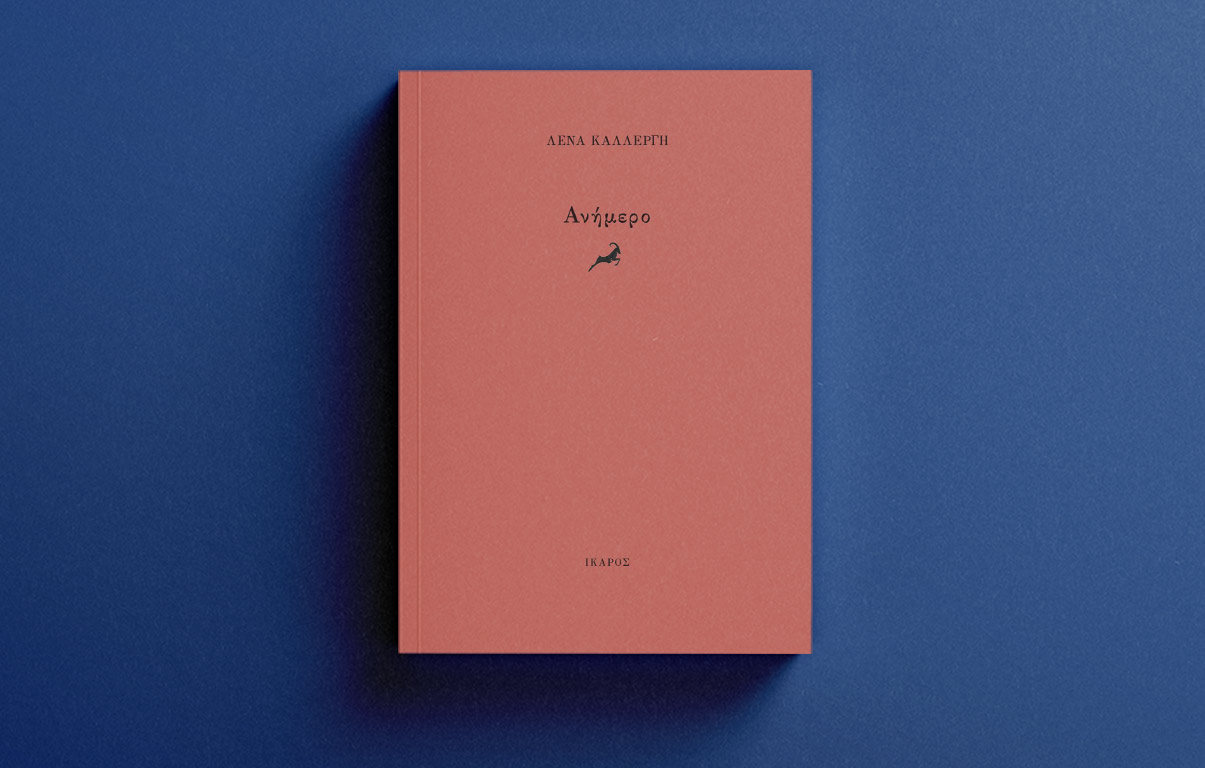
This book’s cover features a wild goat, rear legs extended and front legs bent, caught either mid-leap or climbing a steep incline. The Greek title, “Animero,” means wild, untamed. It’s an adjective typically used to describe animals, but it can also apply to natural landscapes or people.
The poetry is about wild freedom. And really, is there any other way to be free than to be wild? Is a tamed, cultivated, polished freedom not, by definition, something less than what its name implies?
But this poetry doesn’t exalt a particular way of life. It doesn’t claim wildness as superior. Rather, it recognizes wildness in the moment and embraces the possibility of its continued presence, even if it bites. Rejecting it outright doesn’t necessarily mean fear, nor does it prevent the poet from allowing it to move through her. What results is poetry that transmits potent emotion to the reader with dignity and intensity.
The book has been translated into French.
“DEEPFAKE” by Makis Malafekas
Antipodes, 2024

A prosecutor unofficially approaches a writer, urging him to infiltrate a newly formed and already influential alt-right organization in order to gather evidence against its leader:
“Judging by the two books of yours that I have read, the last two, you are not really a writer. You are a depressed detective. One who says less than he knows, racks his brains over the development of the plot, and then loses interest in seeing the case through to the end.”
The alt-right (Alternative Right) is a far-right radical movement linked to American white nationalism. Its supporters typically endorse Donald Trump and oppose illegal immigration, multiculturalism, and political correctness.
The writer agrees to the proposal and is soon caught in the whirlwind of events that make up “Deepfake.”
This is an exhilarating and disorienting neo-noir novel, where events unfold rapidly and intensely, in a linguistic frenzy, a stylistic storm, yet handled with remarkable restraint. Every word is deliberate. Not one is superfluous.
“Dinos had taken me to the office of Argyris, “Archie,” baseball in tow, where he gave me my first “task.” To spread a weird little story around the Greek web that at a university somewhere in Canada they’d forced the first years to declare a MeToo incident when they turned up to enrol in social sciences. To declare they’d been victims of abuse by some guy, some institution, to recall it and denounce their assailant by name, because all of us were by necessity the victim of someone else in this world.
Whoever said they “weren’t a victim” or it “didn’t happen to them” was a liar, and whoever admitted they were a victim but didn’t want to make it public was standing in the way of the collective liberation process, and other stuff along those lines that had never happened in any university in Canada, it was fake news from beginning to end meant to make people freak out and go, dude, look where this MeToo stuff has got us. When I asked him where the hell I was going to “spread” all that, when and how I was going to come into it, he told me not to “stress,” that all I needed to do was to go home and turn on my computer. “We’ll take it from there.”
That wasn’t bothering me right now though. I was back in the reality of Queen Sophia Avenue with the traffic and the noise and the thirty-five degrees, holding the gilet which they told me to keep, it was mine now, and my book with the dedication. I was both hyped that I’d dealt with it all in there, and freaked out for the same reason.”
The book has been translated into Italian and is currently being translated into French and English.
RELATED: Selection of new Ukrainian non-fiction books
Translation from Greek: Diana Romanko
Copy editing: Sheri Liguori
This publication was prepared as part of the project Cultural Journalism Exchange (Greece Edition), supported by the European Union through the House of Europe programme.

Читомо» — це медіа про книжки й літературу, що підтримувало українське книговидання задовго до того, як це стало трендом. Ставайте частиною історії — доєднуйтеся до Клубу Читомо!
the more you read, the greater the possibilities
52
access to books
OSDEL study links reading habits in Greece to education, social background and access to books
24.06.2026 -
326
Translate Ukraine
‘Enchanted Desna,’ ‘Radio Night,’ ‘The Gaze of Medusa’: New English translations in 2026
11.04.2026 -