* ESC - close the search window
DECOLONIZATION
Decolonizing culture in Ukraine: A global norm misunderstood as ‘barbarism’
06.07.2026

You see an error in the text - select the fragment and press Ctrl + Enter
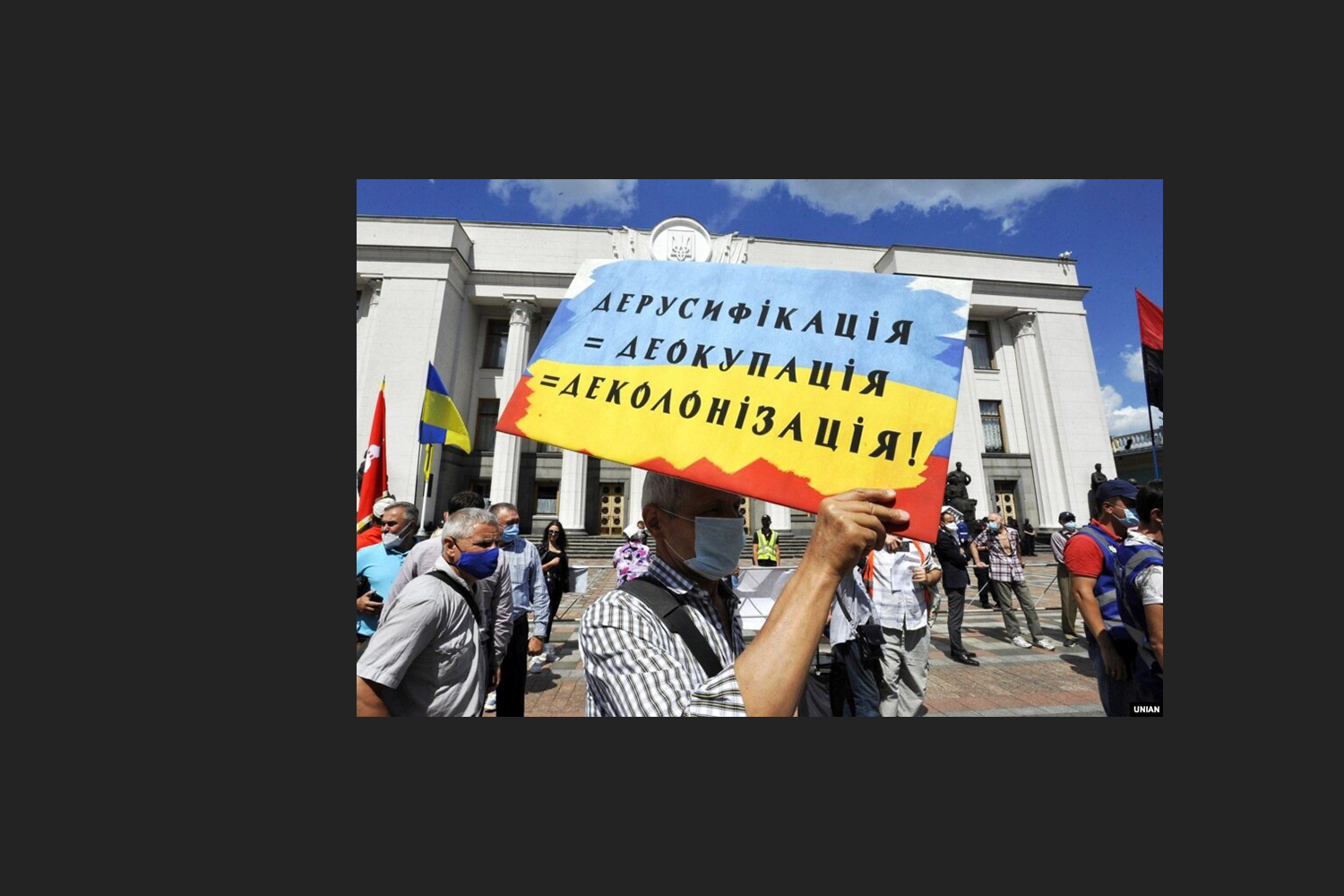
A monument honoring Russian writer Mikhail Bulgakov has been removed in Kyiv. Before that, the National Music Academy of Ukraine dropped the name of Russian composer Pyotr Tchaikovsky from its title. Hundreds of streets, squares, and monuments dedicated to Russian poet Alexander Pushkin and other figures associated with Russian imperial culture have also been removed from Ukraine’s public space.
Russian propaganda calls this “rewriting history” and “acts of barbarism,” but in reality Ukraine is doing exactly what dozens of postcolonial states have done before: reevaluating the place of imperial culture in its public space.
Here are four examples from around the world.
Albert Camus in Algeria: Humanism with a colonial influence
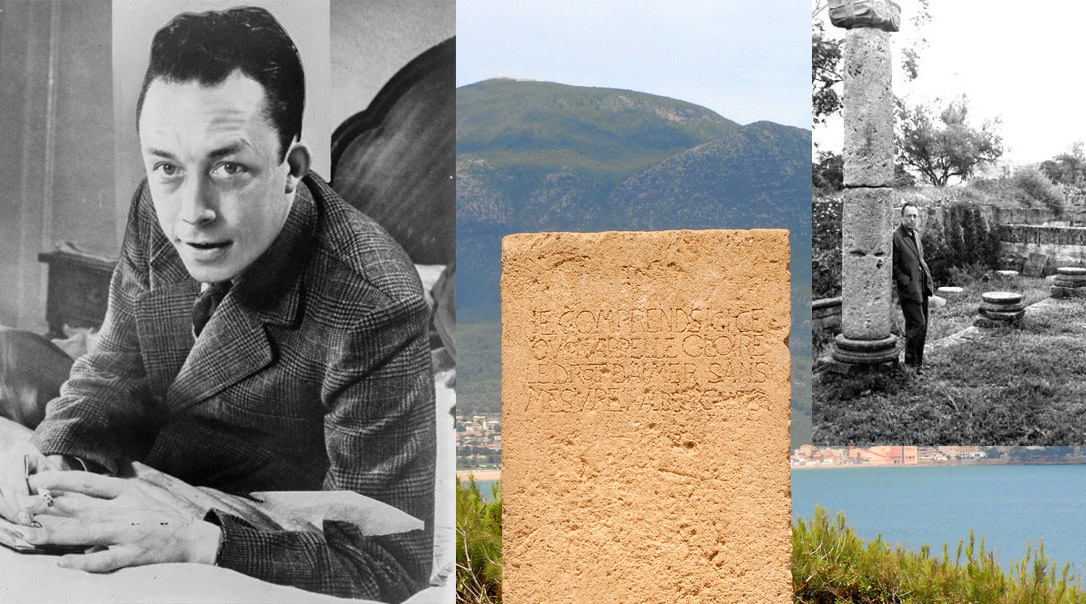
Albert Camus was a French writer, humanist philosopher, and Nobel Prize laureate. Camus was born and raised in Algeria, a French colony at that time. Camus loved Algeria sincerely and passionately. He loved its sea, sun, and Mediterranean culture. His most famous works were dedicated to this land, and he remains widely recognized as one of Algeria’s foremost literary voices.
With the 1954 outbreak of the bloody war for Algeria’s independence from France, Camus found himself in a moral dilemma. Camus condemned terror and violence by both sides and called for a “civil truce,” but he never explicitly endorsed the indigenous population’s right to an independent state. For the Algerians, this meant that Camus had effectively sided with the colonial status quo.
His famous statement from 1957 became a symbol of this rift: “Je crois en la justice, mais je défendrai ma mère avant la justice” (Between justice and my mother, I choose my mother). Camus was referring to his fear for his mother’s safety, who was a poor French-Algerian woman of Spanish origin and lived in an area affected by terrorist attacks. However, to the anti-colonial movement, this sounded like a destructive declaration: the fate of French colonists was more important to him than the freedom of millions of Algerians.
This contradiction is also evident in his literature. In the iconic novella “L’Étranger” (The Stranger), the protagonist, Meursault, kills an “Arab,” but this Arab isn’t even given a name in the text. For postcolonial critics (notably Edward Said), this has become a classic example of the “imperial gaze,” which erases the subjectivity of the colonized. Camus’s European characters are complex, profound, and vivid, while the local inhabitants remain a voiceless, nameless backdrop.
In 1962, after gaining independence, Algeria pursued a decisive policy of Arabization and reoriented its cultural canon toward its own authors. Camus’ work no longer retained the privileged status it had enjoyed during the colonial era. His place on the literary Olympus was taken by authors who restored the voice of Algerians: Kateb Yacine, who used the French language as a “war trophy” in his seminal novel “Nedjma,” the realist Mohammed Dib, Assia Djebar, pseudonym of Algerian writer and filmmaker Fatima-Zohra Imalhayen, as well as the pioneers of purely Arabic prose, Mouloud Feraoun, Abdelhamid ben Hadouga or Abdelhamid Benhedouga, and Tahar Ouettar.
The house in the former Belcourt neighborhood where Camus spent his childhood was never turned into a major state museum or an official memorial. In addition, the Belcourt district, depicted in Camus’s writings as a near-mythic setting of his happy childhood, has been renamed Belouizdad in honor of Mohamed Belouizdad, a leader in the Algerian national liberation movement.
In 2010, efforts by French institutions to organize a large-scale tribute in Algeria for the 50th anniversary of Camus’ death met with strong political opposition. Unlike in France, where Camus’ anniversary was celebrated at the national level, in Algeria he remained a symbol of the colonial past. The few events that a group of Francophone writers attempted to organize were either marred by scandals or canceled. For Algerian society, Camus’ literary genius did not serve as an excuse to ignore his colonial stance.
Rudyard Kipling in India: A stranger who knew our home
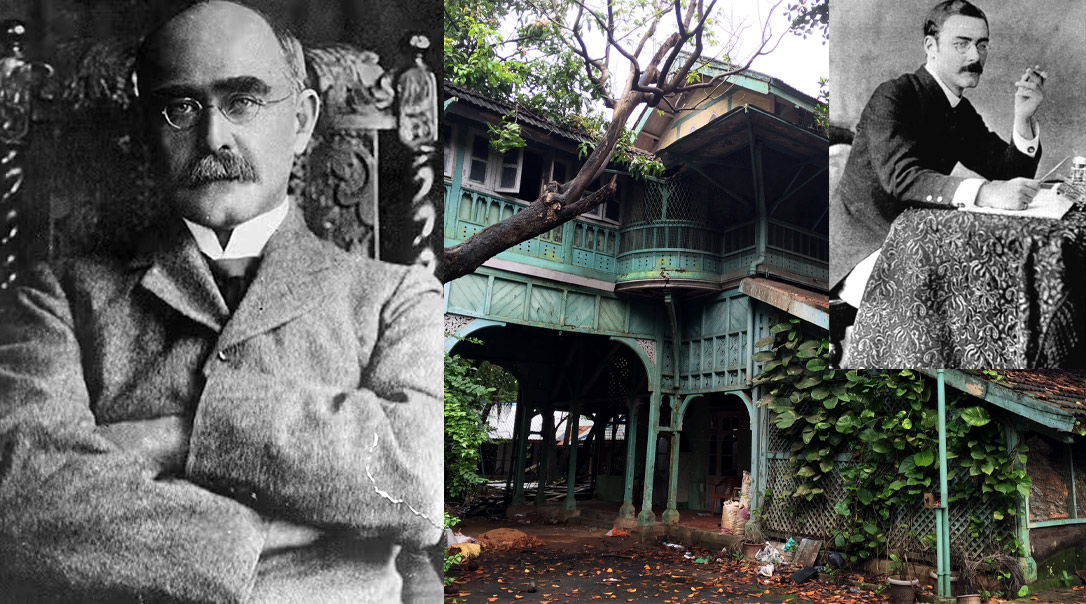
Let’s take a closer look at India and Rudyard Kipling. The author of “The Jungle Book” and the first English-speaking Nobel laureate was born in Mumbai and frequently wrote about his love for India. At the same time, Kipling was the leading poet and ideologue of British imperialism. He wrote a poem, a manifesto “The White Man’s Burden,” which justified colonial violence and land grabs as the West’s supposed “civilizing mission” toward “savage peoples.”
During the colonial era, the British authorities used literature as a tool for fostering loyal subjects in what was called the Macaulay educational system. Macaulayism refers to the policy of introducing the English education system to British colonies. The term is derived from the name of British politician Thomas Babington Macaulay (1800–1859), who served on the Governor-General’s Council and was instrumental in making English the medium of instruction for higher education in India. Kipling, with his romanticization of the “British order,” was ideally suited to shaping the Indian imagination.
After regaining independence in 1947, Indian universities have totally revised their literature curricula. Kipling’s works were not burned or banned, but he was reclassified as a “subject of critical analysis.” Instead of admiring his style, students were encouraged to examine how racism and colonial arrogance were manifested in his works.
Instead, the center of the national canon placed those whom the empire had previously marginalized: Rabindranath Tagore, the national prophet and author of India’s national anthem: Mulk Raj Anand and R. K. Narayan are writers who depicted the lives of Indians without colonial filters, and Munshi Premchand, who is a classic of Hindi and Urdu literature.
To this day, the house where Kipling was born still stands on the campus of Sir J. J. School of Art in Mumbai, and there’s a plaque and a bust. However, in modern India, Kipling is viewed as a talented foreigner who once lived in the country. He is seen as having lost any right to speak for the Indian people or to serve as their moral guide.
Mikhail Bulgakov: The “beloved Kyiv” through the eyes of the metropolis
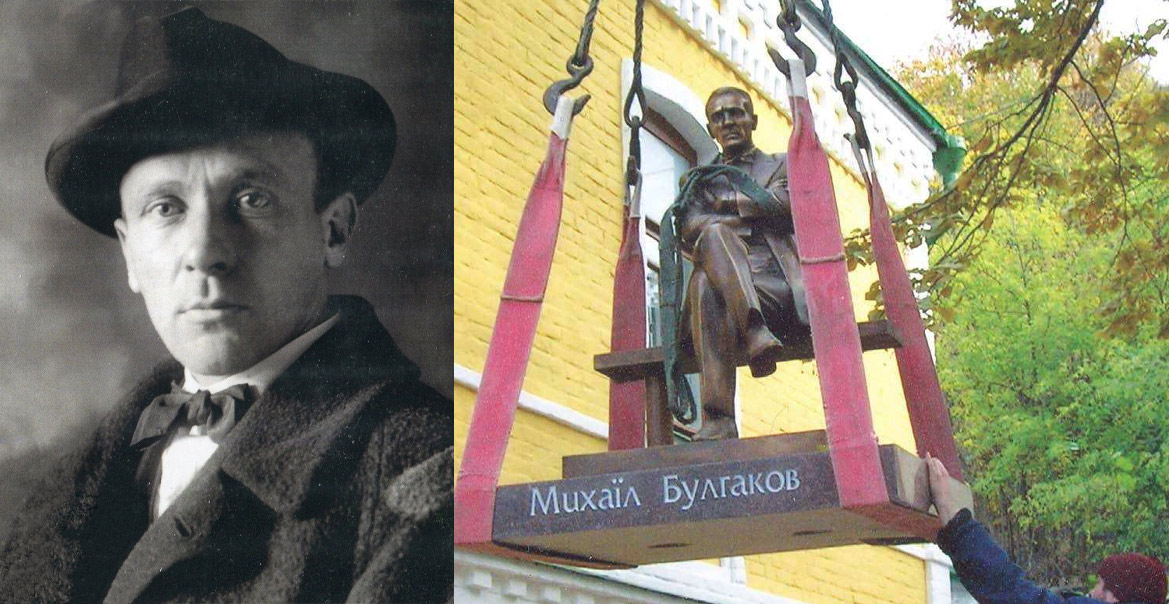
Now, considering Ukraine through these examples, defenders of Russian culture often argue that Mikhail Bulgakov was born in Kyiv and deeply loved the city, asking how Ukrainians could criticize him. In doing so, they, intentionally or unintentionally, overlook an important element of context.
This won’t be a lie if you say that Bulgakov genuinely loved Kyiv, but he viewed it solely as “the city,” a provincial and comfortable part of the Russian Empire. He saw it as a setting for Russian intelligentsia life and denied Kyiv’s status as a Ukrainian city.
For Bulgakov, the emergence of the Ukrainian language, flags, symbols, and an independent government in 1918 was not liberation from tsarist rule, but a personal catastrophe and, in his view, an intrusion by “wild barbarians.”
Bulgakov’s works are often cited as a clear example of an “imperial perspective.” Let’s take a look at some facts that usually go unnoticed by fans of “The Master and Margarita” and “A Dog’s Heart.”
Bulgakov’s major Kyiv-set novel “The White Guard” and his play “The Days of the Turbins” (which, incidentally, Joseph Stalin adored and saw performed at the Moscow Art Theater more than 15 times) depict the period when the Ukrainian People’s Republic was striving to gain independence following the collapse of the empire.
In the novel, the Russian White Guard officers are portrayed as the only carriers of culture, honor, and light, representing a civilized and comfortable world. This world is symbolized by elements such as cream-colored curtains, a shaded lamp, and the sound of a piano. Meanwhile, the savage “outsiders,” Ukrainian soldiers and peasants, are portrayed as a faceless, dark, uneducated, and brutal mob. They speak a “corrupted” language and are prone to pogroms (the organized killing of many helpless people usually because of their race or religion) and senseless violence. In Bulgakov’s work, Symon Petliura, the leader and Supreme Commander of the Ukrainian People’s Army (UNA) who led the Ukrainian People’s Republic during the Ukrainian War of Independence, is not a real political figure, but rather a mythical, sinister “ghost” who has unleashed madness upon a “truly Russian” city.
This reflects a similar narrative technique that is often associated with Camus in “The Stranger,” where the murdered Arab is left unnamed and voiceless. In this framing, Ukrainians are depicted as lacking their own historical agency or perspective and are reduced to an obstacle and an antagonistic backdrop to the story of Russian culture.
In his satirical pieces and essays, Bulgakov openly mocked any attempts at Ukrainization. The mere act of changing signs from Russian to Ukrainian provoked fury and sarcasm. The characters in his novels openly refer to the Ukrainian language as “a vile syrup unlike anything else in the world,” an artificial fabrication, and a “ridiculous peasant dialect.”
To a Western reader, this may appear as harmless humor or a reflection of its time. However, for Ukrainians, whose language was repeatedly oppressed under the Russian Empire and later the Soviet regime through measures such as the Ems Ukaz (Decree) and the Valuev Circular, this type of satire by a prominent writer is not seen as merely artistic expression. It is interpreted as a form of legitimization of linguicide, as Mikhail Bulgakov consistently reinforced the idea that Ukrainian culture is provincial, backward, and inherently incapable of forming its own state.
RELATED: Seven voices: Foreigners embrace Ukrainian language in act of solidarity
Edmund Spencer and Ireland
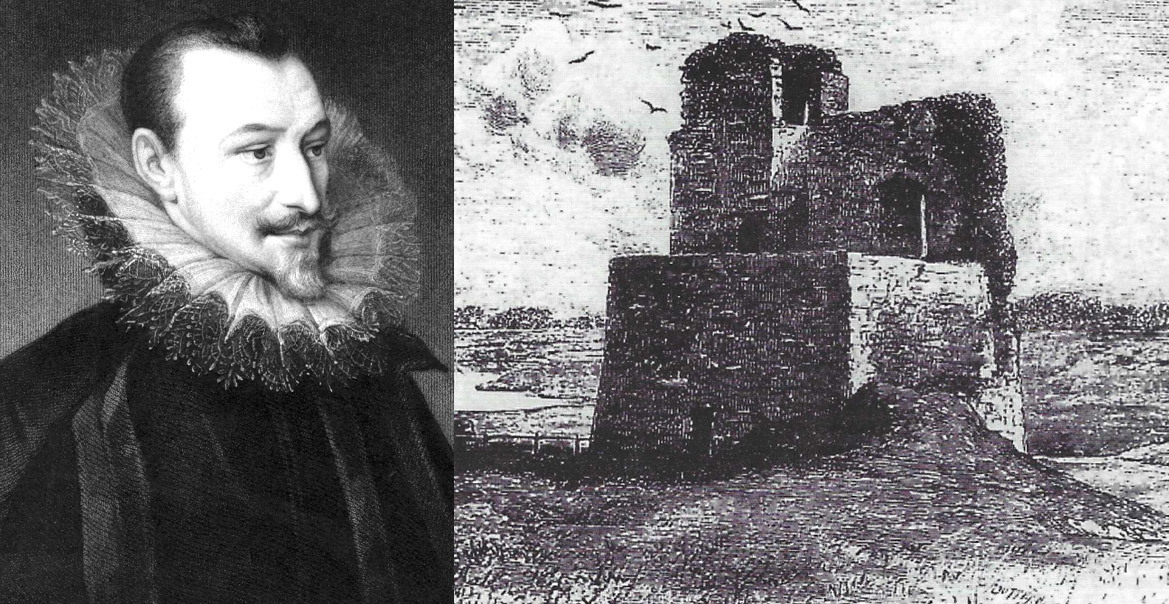
Imagine a renowned British writer living in Dublin during Ireland’s struggle for independence. He is captivated by the city, yet publicly ridicules the Irish independence movement, denies the nation’s right to statehood, and dismisses the Irish language as a form of provincial fanaticism. In such a case, it is unlikely that a modern, independent Dublin would accord this figure any special symbolic status.
In this regard, the analogy with Edmund Spenser, one of the most outstanding poets of the English Renaissance, who was at the same time a staunch ideologue of England’s colonial oppression of Ireland, is telling. Today, the Irish do not erase Spenser from history. His works are studied at universities and researched in academic circles, but he is not honored as a national authority.
It is also telling that Spencer’s residence, Kilcolman Castle in County Cork, which he acquired as part of the English colonization of Ireland, is not a place where he is particularly honored. The castle ruins have been preserved as a historical landmark, and their association with Edmund Spenser is not hidden. However, modern Ireland has not made it a memorial or a symbol of cultural pride.
This is precisely how many Ukrainians view Bulgakov. His novels may remain part of the global literary canon and a subject of academic interest, but this does not oblige the Ukrainian state to maintain his memorials or promote him in school curricula. This is not about banning people from reading his works, but about society’s right to decide for itself whom it chooses to honor using its own taxpayers’ money.
An example of this can be seen in the status of the Bulgakov Museum in Kyiv. The space is currently undergoing a complex transformation: instead of maintaining a traditional memorial approach, efforts are underway to reinterpret the writer’s legacy within the broader context of imperial narratives and Ukraine’s struggle for independence. Public discussion about the museum remains ongoing. Some Ukrainians support this critical reassessment, while others believe that an independent Ukraine should not maintain a museum dedicated to an author linked to anti-Ukrainian views. At the same time, the very existence of this debate is seen as evidence of an effort to find thoughtful and civil responses to complex post-colonial questions.
Today, as modern Russia wages a war of aggression and bombs Ukrainian cities on a daily basis, its state propaganda uses exactly the same arguments that Bulgakov depicted in his fiction in the 1920s:
- “The Ukrainian language is artificial and was invented by Russia’s enemies to divide Ukrainians and Russians.”
- “Kyiv is a city that has always been Russian, the cradle of Russian culture.”
- “Ukrainian statehood is a historical misunderstanding, chaos, and a mistake.”
One can disagree and say that Bulgakov “did not fire cannons or launch missiles” at Ukrainian cities. That’s true, but he cloaked Russian imperial chauvinism in a brilliant literary form, making it romantic and palatable to a wider audience.
That is precisely why the decolonization of Ukrainian public space cannot be separated from the current war. Modern Russia itself consistently presents its culture as an instrument of geopolitical influence, and the presence of the Russian language, literature, and art as proof that certain territories belong to the so-called “Russian World.” In this context, monuments to Russian writers, street names honoring them, and state funding for their museums cease to be neutral cultural spaces.
RELATED: Translation of Tamara Hundorova’s ‘Transit Culture and Postcolonial Trauma’ published in the U.S.
At the same time, Ukraine’s approach to decolonization differs markedly from authoritarian models. Public debates are taking place on monuments, museums, street names, and school curricula, with participation from historians, literary scholars, activists, and ordinary citizens. In addition, decisions to remove monuments or rename locations typically proceed through the full range of local self-government procedures required by law, including public consultations, petitions, votes by local councils, and decisions by relevant authorities. In many cases, officials do not initiate these changes but respond to requests from local communities. Even during a full-scale war, Ukrainian society is not acting through top-down orders but is instead engaged in a complex democratic process of reassessing its collective memory.
Therefore, by removing imperial cultural symbols from public spaces, Ukraine is not rejecting books, sheet music, or poetry, but exercising the right of a free nation to decide whom to honor, which stories to tell about itself, and what values to pass on to future generations.
Translation: Iryna Savyuk
Copyediting: Terra King
Читомо» — це медіа про книжки й літературу, що підтримувало українське книговидання задовго до того, як це стало трендом. Ставайте частиною історії — доєднуйтеся до Клубу Читомо!
the more you read, the greater the possibilities
299
DECOLONIZATION
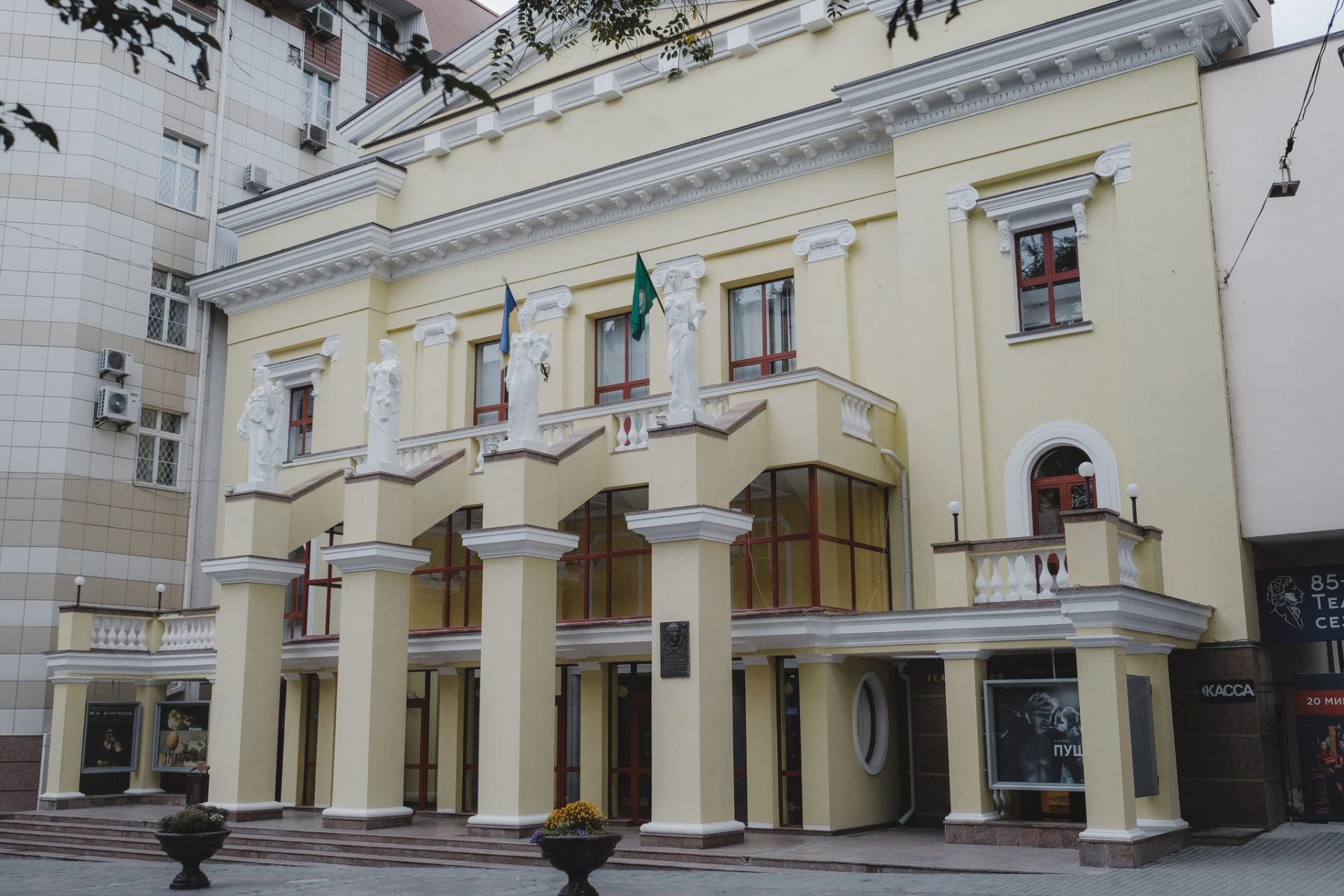
Kharkiv Theater to change name from Pushkin to Ukrainian classic playwright Kvitka-Osnovianenko
03.07.2024 -