* ESC - close the search window
Poland
27% of Poles say they read books in their free time, survey finds
25.08.2026
Twenty-seven percent of adults in Poland say they usually read books in their free time, making reading the most frequently cited leisure activity in a new survey by the Polish Public Opinion Research Center (CBOS).
Watching television and playing sports tied for second place, each cited by 18% of respondents, while 16% said they spent their free time walking. Another 14% said they usually sat, lay down or simply rested, and 13% worked in a garden or on an allotment. Ten percent said they spent their free time with a spouse, children or other family members, while the same share said they spent it online.
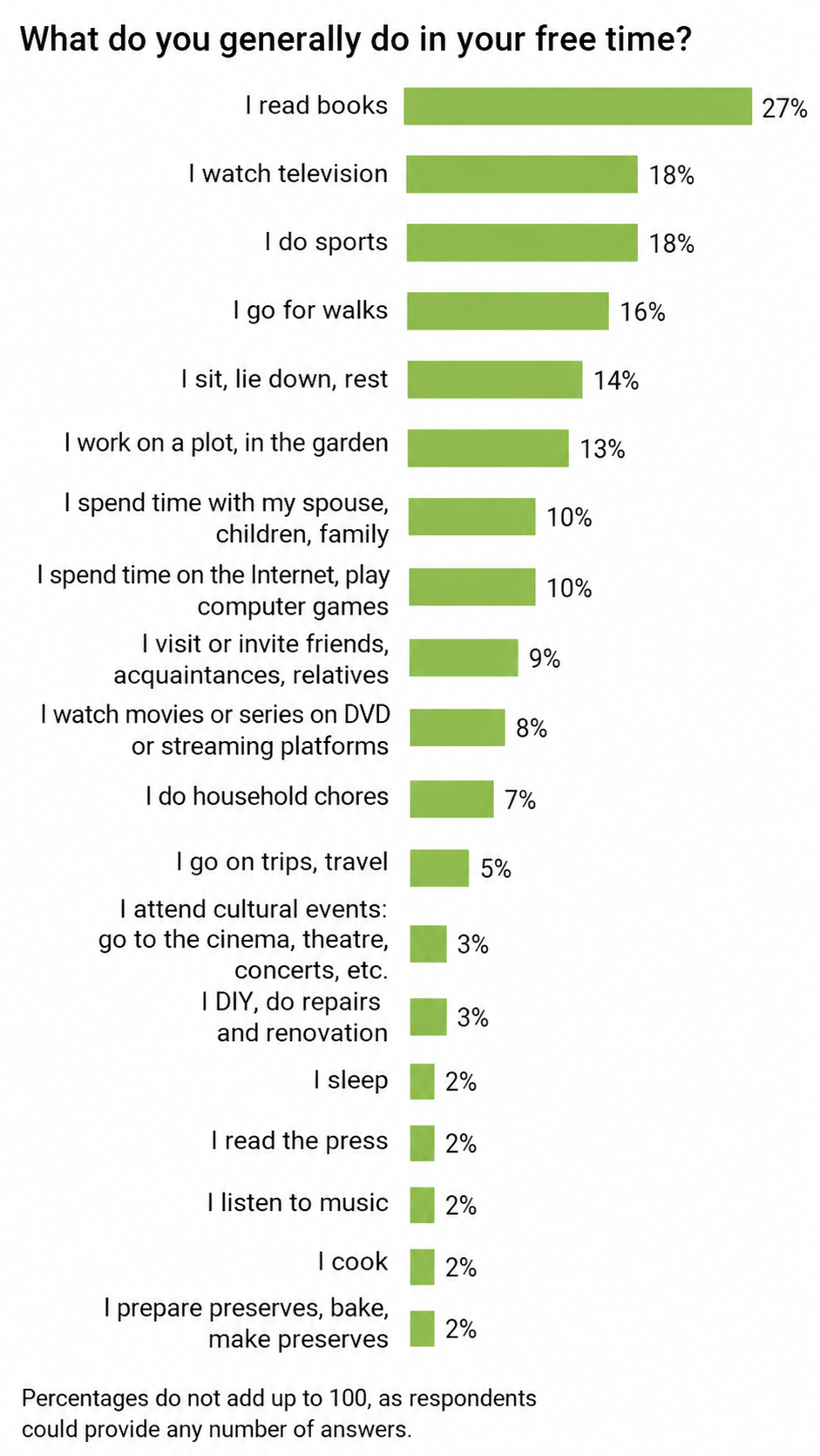
Image: Polish Public Opinion Research Center (CBOS), 2026
Reading showed one of the widest gender gaps among the activities covered by the survey. Thirty-nine percent of women said they read books in their free time, compared with 14% of men. As reported earlier, a gender gap has also been observed in recent library data from neighboring Czechia.
Reading was also more frequently cited by residents of Poland’s largest cities, at 46%, and people with higher education, at 42%. Among managers and administrative and office workers, the figure reached 48% for each group. Forty-six percent of respondents with per capita incomes exceeding 6,000 zlotys (1,405 euros) also reported reading books in their free time.
The survey also examined how much free time Poles have. Twenty-seven percent of respondents reported having between one and 10 hours of free time per week, while 16% had between 11 and 20 hours. Half said they had as much free time as they needed, while 37% said they had too little.
The findings come from CBOS’s “Current Problems and Events” survey, conducted from July 2–12, 2026, among a representative sample of 938 adult residents of Poland selected from the national PESEL population register. The mixed-mode survey combined face-to-face interviews, telephone interviews and online questionnaires.
The 27% figure measures reading as a usual leisure activity rather than the overall share of Poland’s population that reads books.
As reported earlier, a separate 2025 readership study by the National Library of Poland found that 41% of respondents aged 15 and older had read at least one book during the preceding 12 months, unchanged from 2024. Seven percent had read at least seven books. That study also found a gender gap in overall book readership, although it was smaller than the difference recorded by CBOS for reading as a leisure activity. Forty-seven percent of women reported reading at least one book in 2025, compared with 34% of men.
Place of residence was another significant factor. Seventy-one percent of people living in Polish cities with populations above 500,000 had read at least one book in 2025, compared with 34% of rural residents. Students recorded the highest readership rate at 64%, while 54% of university graduates had read at least one book.
The National Library study also showed changes in how Polish readers obtained books. Among those who had read at least one book, 19% said they had obtained one or more titles from a public library, up from 15% in 2024. Meanwhile, the share who bought the books they read fell from 50% to 43%.
As reported earlier, Poland’s public libraries are facing funding pressures. In 2025, 2,052 libraries received nearly 33 million zlotys (7.66 million euros) for printed books and access to digital and audio publications, while planned state funding for new library materials in 2026 was set at 10 million zlotys (2.32 million euros), compared with around 30 million zlotys (6.96 million euros) annually in previous years.
Digital formats provide another perspective on reading habits. As reported earlier, Storytel’s 2026 survey found that among Polish audiobook users, people aged 25–34 had the highest listening rate, at 37%. Forty-three percent of Polish audiobook listeners said they listened while doing household chores, illustrating how audio formats can fit books into activities that might not otherwise be counted as dedicated reading time.
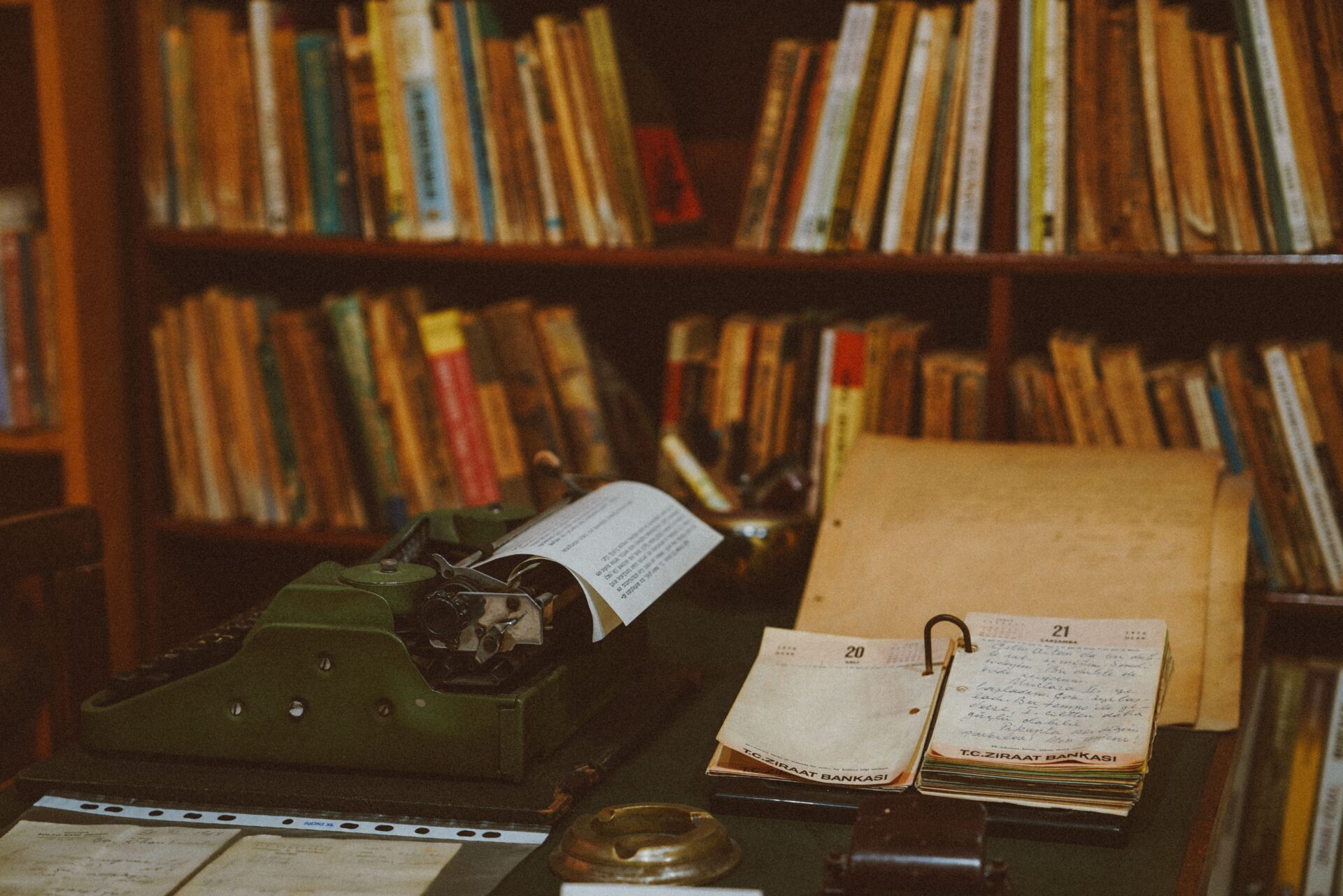
Main image: pexels
Читомо» — це медіа про книжки й літературу, що підтримувало українське книговидання задовго до того, як це стало трендом. Ставайте частиною історії — доєднуйтеся до Клубу Читомо!