* ESC - close the search window
art books
Five art books about Kyiv’s suburbs, the empathy of others, and imagined love
01.08.2025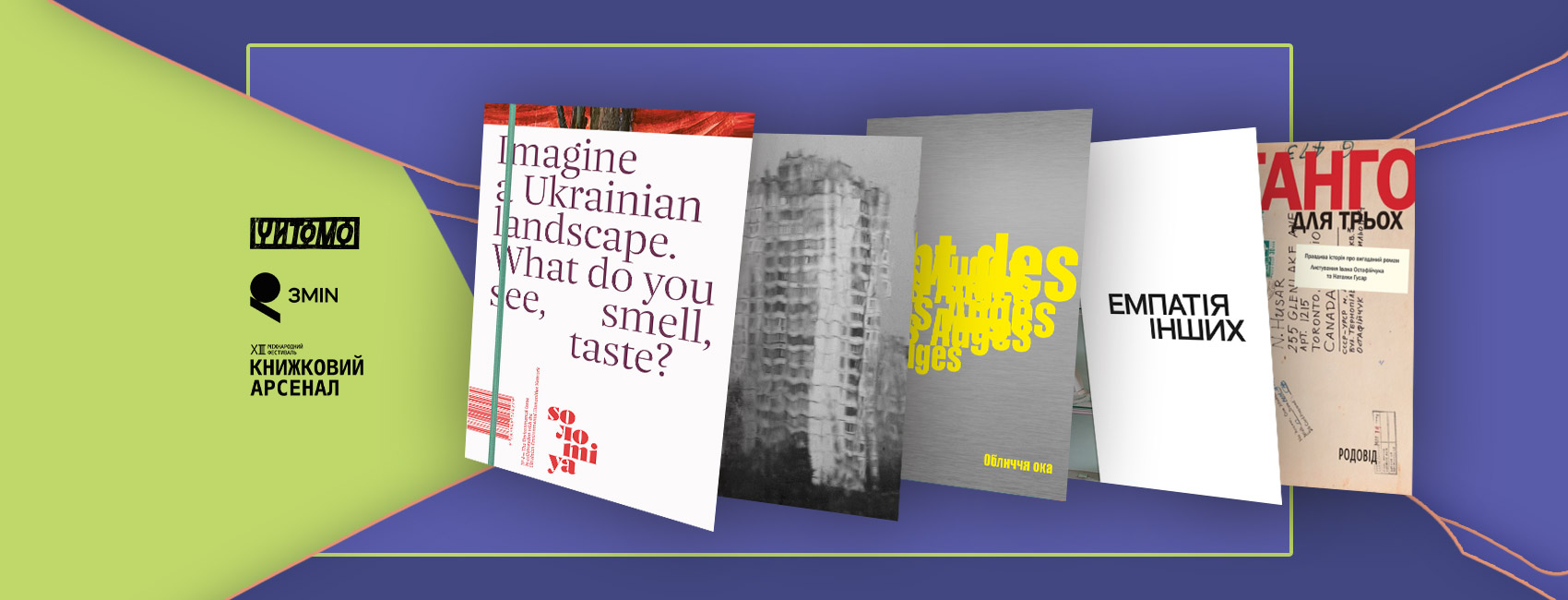

You see an error in the text - select the fragment and press Ctrl + Enter
Can a book be a continuation of an artistic practice? Not just a means of representation and documentation, but also a way of thinking, a kind of montage, a practice of creating visual rhythm? New Ukrainian art books prove it to be possible. Not only do artists and photographers present their works on the pages — they use the book format as a full-fledged medium, engaging thoughtfully with all of its components.
Our selection features five new and diverse publications that push the limits of what an art book can be, ranging from documentary explorations of urban spaces to zine-making and visual art journaling.
This article is part of the 2025 New Releases Showcase special project, created with the support of the ЗMIN Foundation in partnership with the International Book Arsenal Festival.
“District” by Vladyslav Andriyevsky
Syntax, 2024
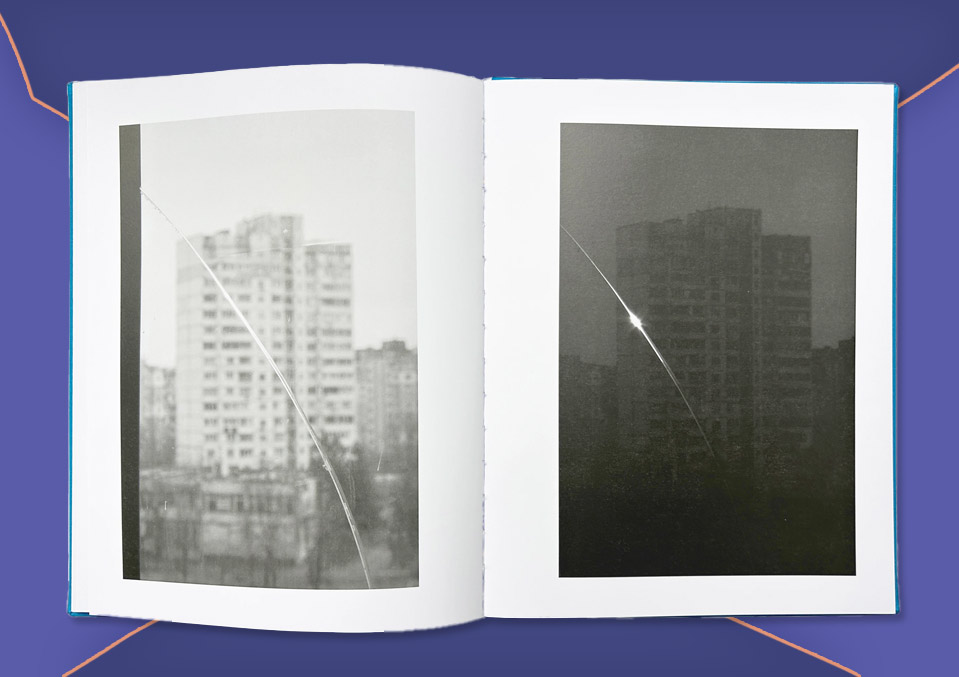
This book, the first in Syntax publishing house’s catalog, immediately defined its main focus, which is working with visual projects.
“District” is a photobook that is a portrait of a Kyiv suburb. It is not seen through the lens of an urban planner; rather, it’s a metaphorical depiction of a space charged with tension, where reality and dreams start to clash. Andriyevsky describes the story as an exploration of youth shaped by the virtual environment, with the physical world appearing to be at odds with the faith and hope that are intrinsic to being young.
Andriyevsky both documents and structures the emotional experience of life on the periphery. His images capture an uneasy calm, fragments of a concrete landscape that seem on the verge of change, yet still caught in a state of slumber.
Solomiya №4: The Environmental Issue
Solomiya Magazine, 2025
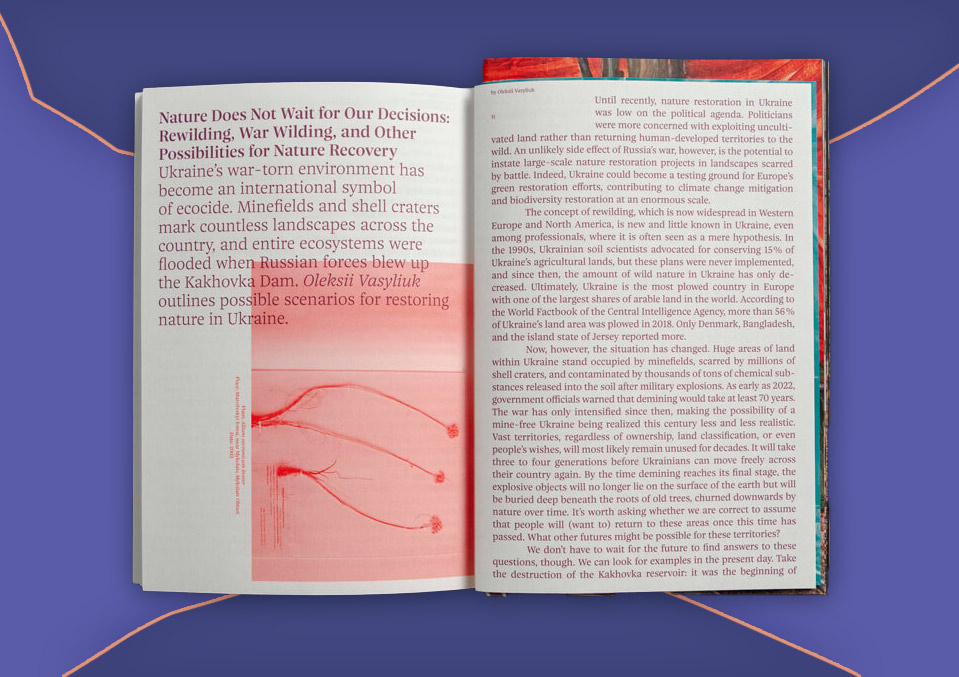
Solomiya is a return to the freedom of samvydav in the form of a contemporary publication. Established in April 2022 by photographers Sebastian Wells and Vsevolod Kazarin in response to Russia’s full-scale invasion of Ukraine, this English-language magazine has already released four issues. The fourth, The Environmental Issue, published in January 2025, was created in collaboration with the Ukrainian Environmental Humanities Network (UEHN).
A collage, a damaged grid, the combination of poetic text with painting, and pages that are seemingly “manually assembled.” And yet the magazine’s creators highlight the text-focused nature of this latest issue. The fourth issue of “Solomiya” has an unusual structure. That is not a coincidence. It begins with texts, while the visual section is placed in the middle, starting with Kateryna Aliinyk’s work that encourages imagining the Ukrainian landscape. The issue reflects on imagination as a tool of power and freedom.
RELATED: Five feminist zines and artbooks about war
“Das Gesicht des Auges” by Vlada Ralko
ArtHuss, 2025
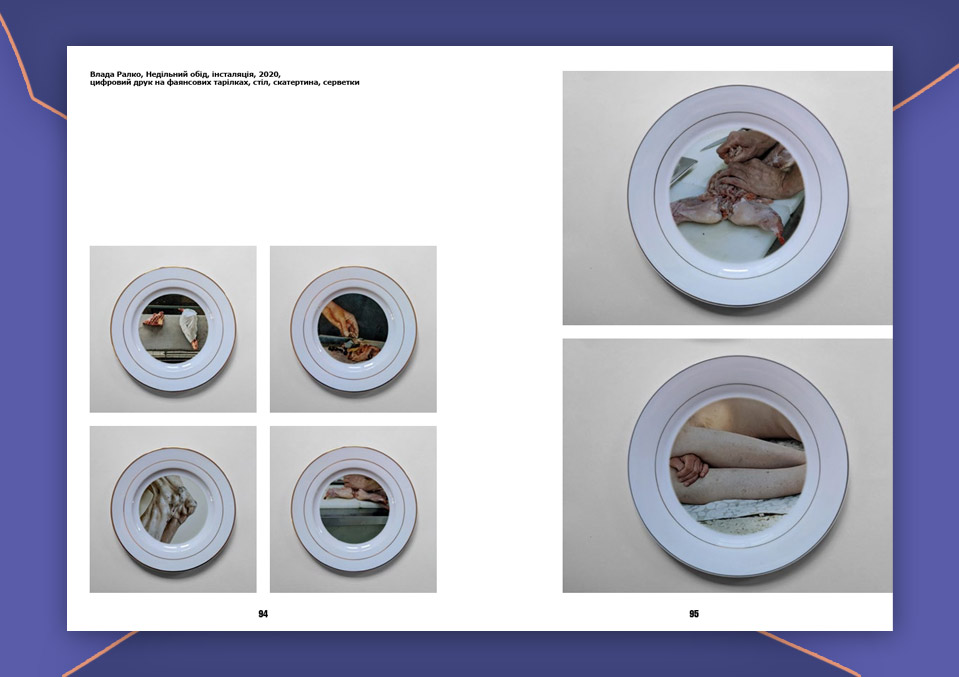
“Das Gesicht des Auges” (The Face of the Eye) is a book that offers an intimate connection starting with its cover: a mirrored surface and yellow letters of the title in German. This is the title of Vlada Ralko’s first curated exhibition in Berlin and, at the same time, a metaphor for a vision that moves beyond direct focus.
Not only does Ralko document the exhibition, she also creates an architectural framework for a shared space of understanding. Rather than presenting a classical catalog, she offers a carefully curated collection of ideas and visuals as a counterpoint to rapid communication. “We enter the book,” Ralko says. Ralko insists that a book can structure not only knowledge but also attitudes towards art, time, and oneself.
“Das Gesicht des Auges” continues Ralko’s ongoing practice of thinking through the book as an independent form. Since 2014, Ralko has been shaping publications as cohesive statements about the moment in which they were created.
The Berlin exhibition, which shaped the basis for the book, brought together works by five artists: Yuri Leiderman, Dieter Ruckhaberle, Volodymyr Budnikov, Bernhard Vogt, and Ralko. These works don’t directly respond to specific events; they rather communicate through layered contexts and resonances.
The book includes texts that unfold this experience across different registers: curatorial reflections by Ralko, the analytical essay “Gazing as Protest” by art historians Tanya Stas and Valeria Pliehotko, “The Eyes of the World,” an essay by Kostiantyn Doroshenko about the global nature of vision, and a conversation with Yulia Manukyan called “Gazing into the Darkness.”
The book has a limited print run of only 200 copies, and a copy can be purchased at Zbirka bookstore in Kyiv. The online version is available in both Ukrainian and German.
Texts by Marita Landgraf, Alona Karavai, Lisa Korneichuk, Annika Dorau and Bettina Klein. Photos and collages by Sasha Kurmaz
ilostmylibrary, 2025
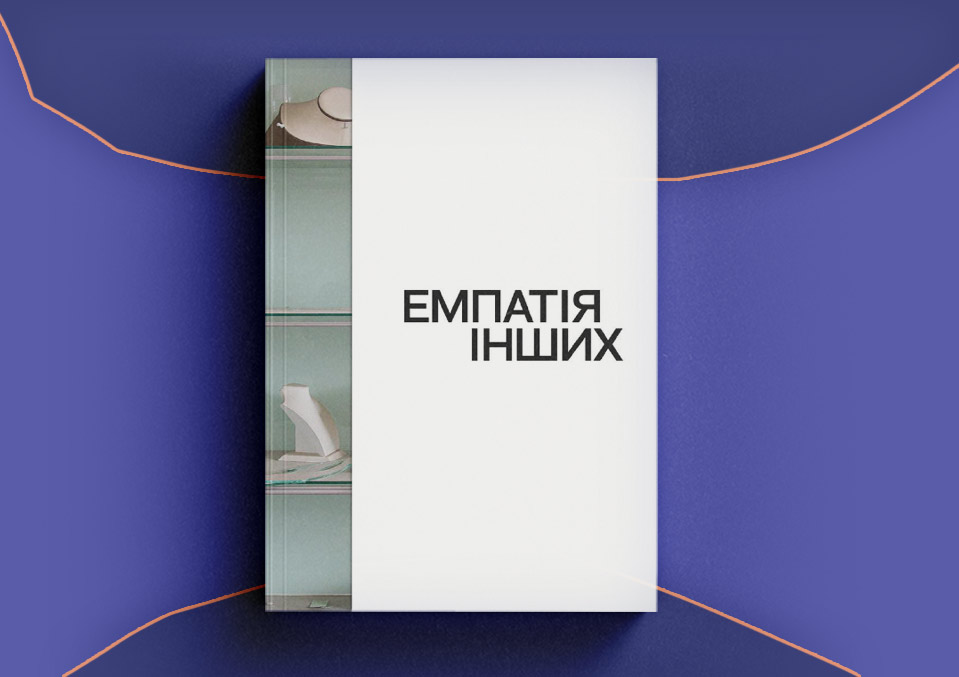
This is a project by an “Assortment room” that releases books in small runs at the intersection of form and meaning — e.g. non-fiction on art and education, zines, and art books. The focus is placed on voices that are not in the mainstream and on topics that remain unspoken or are pushed to mental, geographic, or political peripheries.
“The Empathy of Others” is a new publication released in June. It is a study of how (and if) empathy functions in intercultural artistic exchange. Two series by Sasha Kurmaz, presented in Germany, are at its core. Texts by Ukrainian and German authors examine how art either becomes — or fails to become — a bridge between the experience of war and an audience that has not lived through it. The visual component of the book features reproductions of collages by Kurmaz.
“It Takes Three to Tango: The true story of a fictitious romance. The Correspondence of Ivan Ostafiychuk and Natalka Husar” by Natalia Khanenko-Friesen
Rodovid, 2025
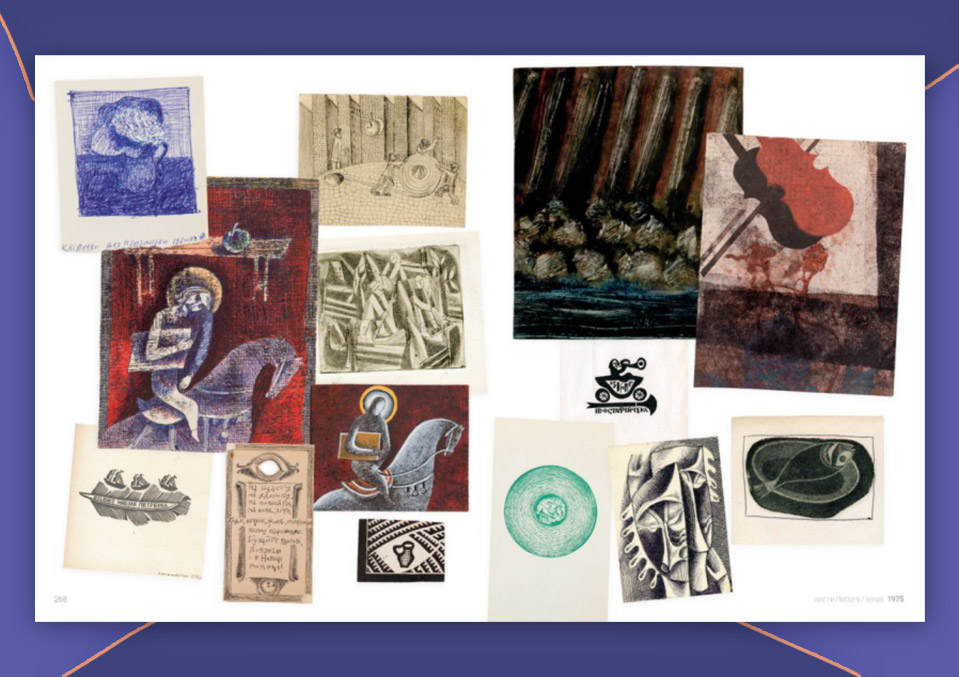
This book is an exception in our selection. Even though it was compiled by a researcher, the strength of the individual voices it carries makes it a full-fledged art project situated at the crossroads of letter, diary, collage, and document of its time.
The correspondence between Ivan Ostafiychuk, an emerging graphic artist from Lviv, and Natalka Husar, a young artist from the Canadian diaspora visiting the land of her ancestors for the first time, makes the heart of the story. They met in 1969 by accident, but ended up exchanging letters for many years. The “script” was originally meant to be a fictional romance, a way to “escape to the West” by marrying a foreign woman. But over time, the staged story gradually turned into an imagined reality.
In her introductory article, Natalia Khanenko-Friesen unpacks the central mystery of whether these hundreds of letters were merely a performance for the eyes of censors, or did something real emerge between the two protagonists, even if only within the realm of imagination? Ivan longed for freedom, Natalka sought a connection to Ukraine. Their correspondence became an act of community-building in the space between two worlds.
Beyond the personal story, the correspondence also paints a portrait of the era. The book compiles Ivan’s letters (about 550) preserved by Natalka. They are scanned in facsimile format, complete with his original drawings, decorative fonts, colors, and embellishments. The letters are accompanied by photographs, postcards, envelopes, and even Lviv tram tickets saved by Natalka. It’s a correspondence about imagined love, but even more so, about the power of creative imagination. A romance that unfolded on paper in letters that, though read by censors, crossed both borders and time.
RELATED: Crafting identity: A Ukrainian designer’s quest for visual authenticity in a post-colonial landscape
Translation: Iryna Savyuk
Copy editing: Joy Tataryn
This publication is sponsored by the Chytomo’s Patreon community
the more you read, the greater the possibilities