* ESC - close the search window
books about war
Review of Artur Dron’s book ‘Hemingway Knows Nothing’
07.11.2025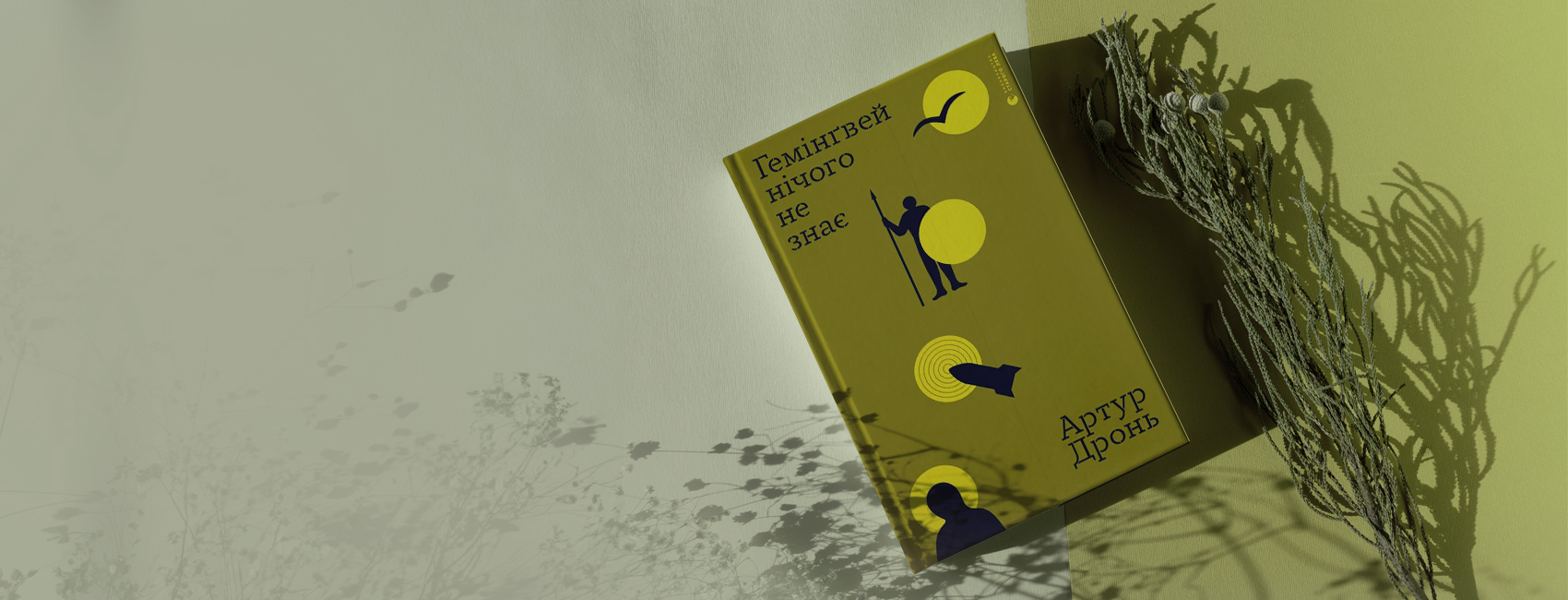

You see an error in the text - select the fragment and press Ctrl + Enter
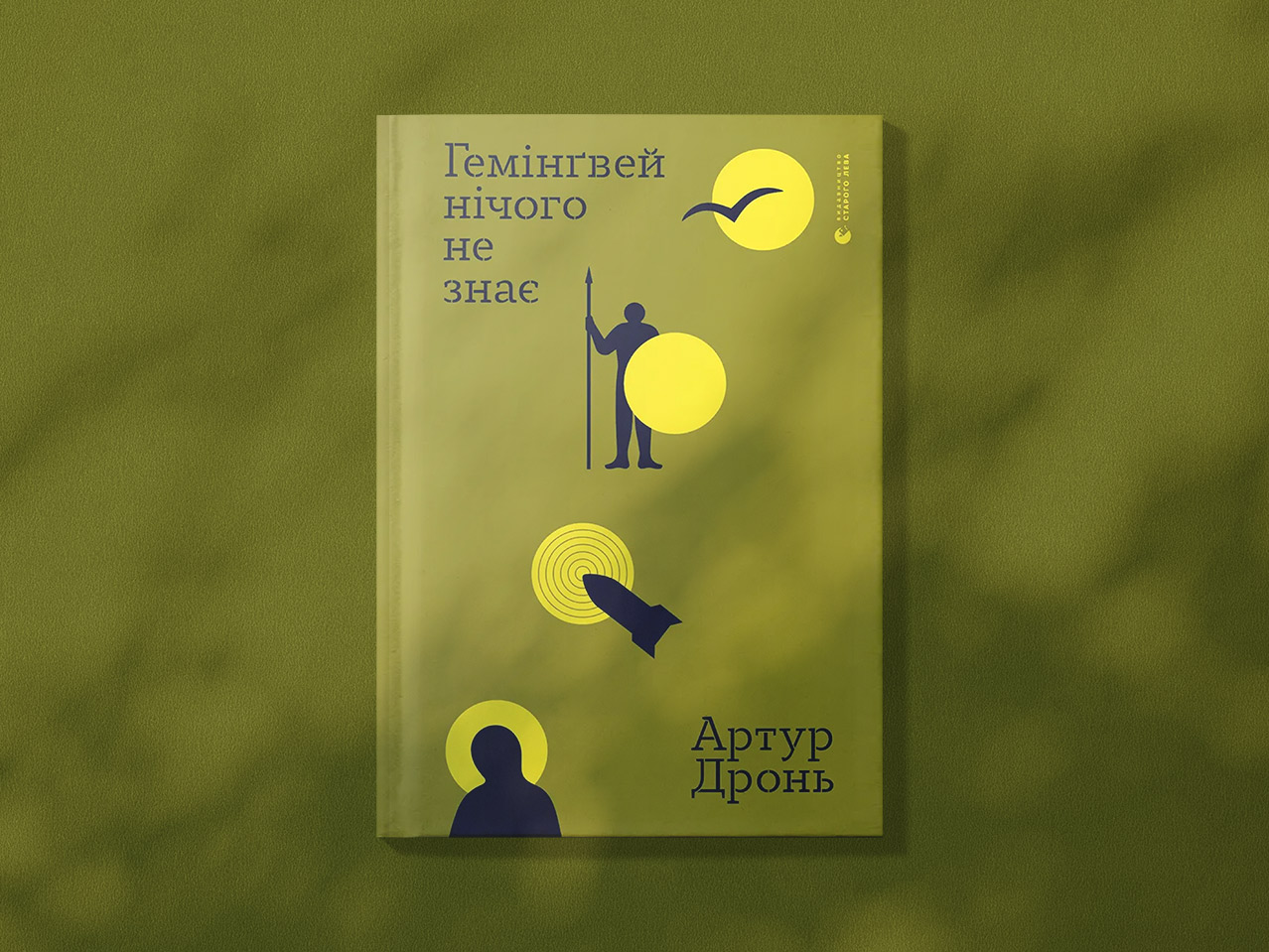
“Hemingway Knows Nothing” by Ukrainian writer and Russo-Ukrainian War veteran Artur Dron has become a bestseller. Published in mid-August 2025 with a print run of three thousand, the first edition sold out in less than two months, and now the book cannot be found in bookstores or online. On Oct. 16, the Old Lion Publishing House announced a new print run. I have heard and read enthusiastic reviews about this book in private conversations and on Facebook. What makes this book so special and what does the author talk about in “Hemingway Knows Nothing”?
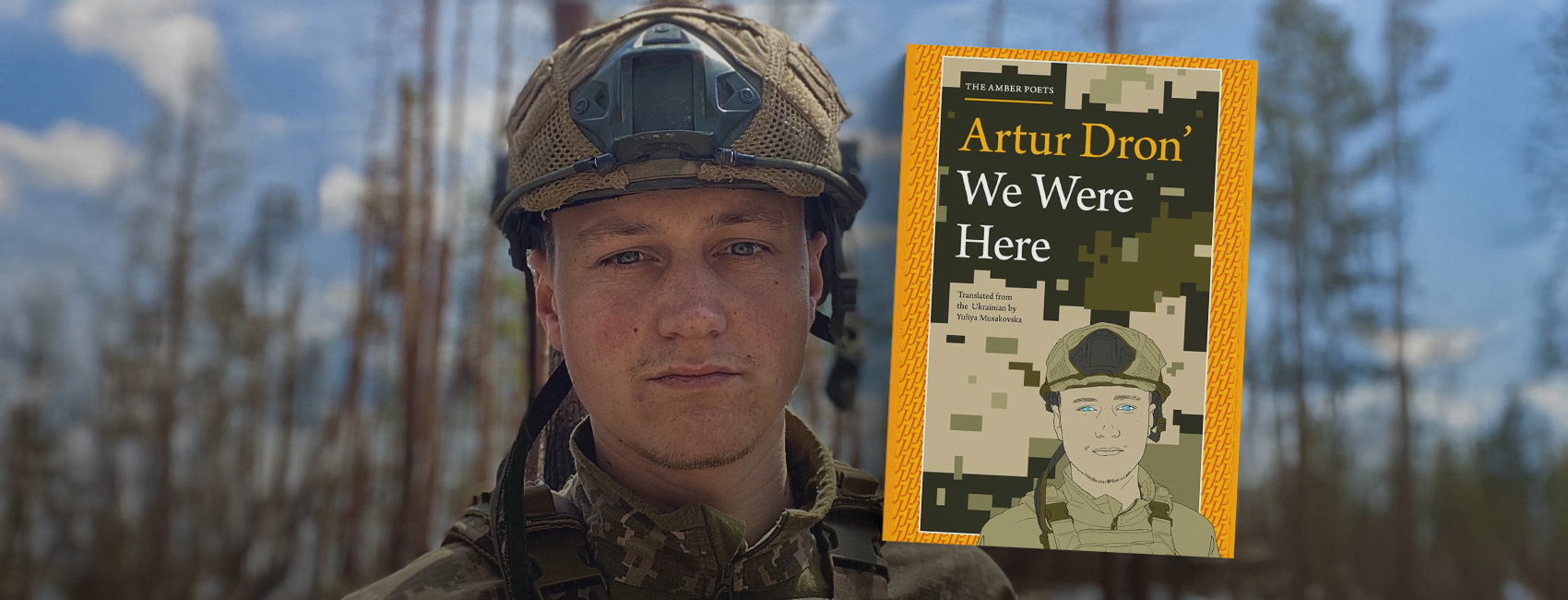
For context, it should be pointed out that Artur Dron was born in Ivano-Frankivsk Oblast, graduated from the Department of Journalism at Ivan Franko National University of Lviv, and worked as a manager at The Old Lion Publishing House. After Russia’s full-scale invasion of Ukraine, he volunteered for the 125th Brigade of the AFU’s Territorial Defence Forces, was wounded and underwent a lengthy rehabilitation, during which he wrote this book. Its title testifies to the author’s critical attitude toward Ernest Hemingway, who is well known in Ukraine as an author of war novels “A Farewell to Arms,” “For Whom the Bell Tolls” and “Islands in the Stream.”
Going off to war as an enthusiastic admirer of the American writer’s works, Dron eventually becomes deeply disenchanted with his beloved author and subjects him to fundamental criticism (Read what other Ukrainian writers-turned soldiers have to say about this here – Ed.). Occasionally, he also reveals a critical attitude toward other well-known authors who wrote about war, including Erich Maria Remarque, Ernst Jünger, Evelyn Waugh, Thomas Kinnear, and Kurt Vonnegut.
For Dron, these authors embody in one way or another the anti-war narrative (ignoring the question of how much Jünger’s work fits into this narrative) that spread in European culture after the two world wars and that reached Ukraine after the latter achieved its independence. This narrative emphasized individual and mass murders, mutilations, and the destruction of human destinies that occur during war. In the post-war period, it labeled veterans as a “lost generation” that could not return to a normal civilian life and that came across as “disoriented” in their new environment. In general, it all came down to the fact that war is bad and the militaristic spirit that leads to its occurrence must be avoided at all costs. Moreover, one should shun anything that is connected to war in any way (except, of course, its condemnation).
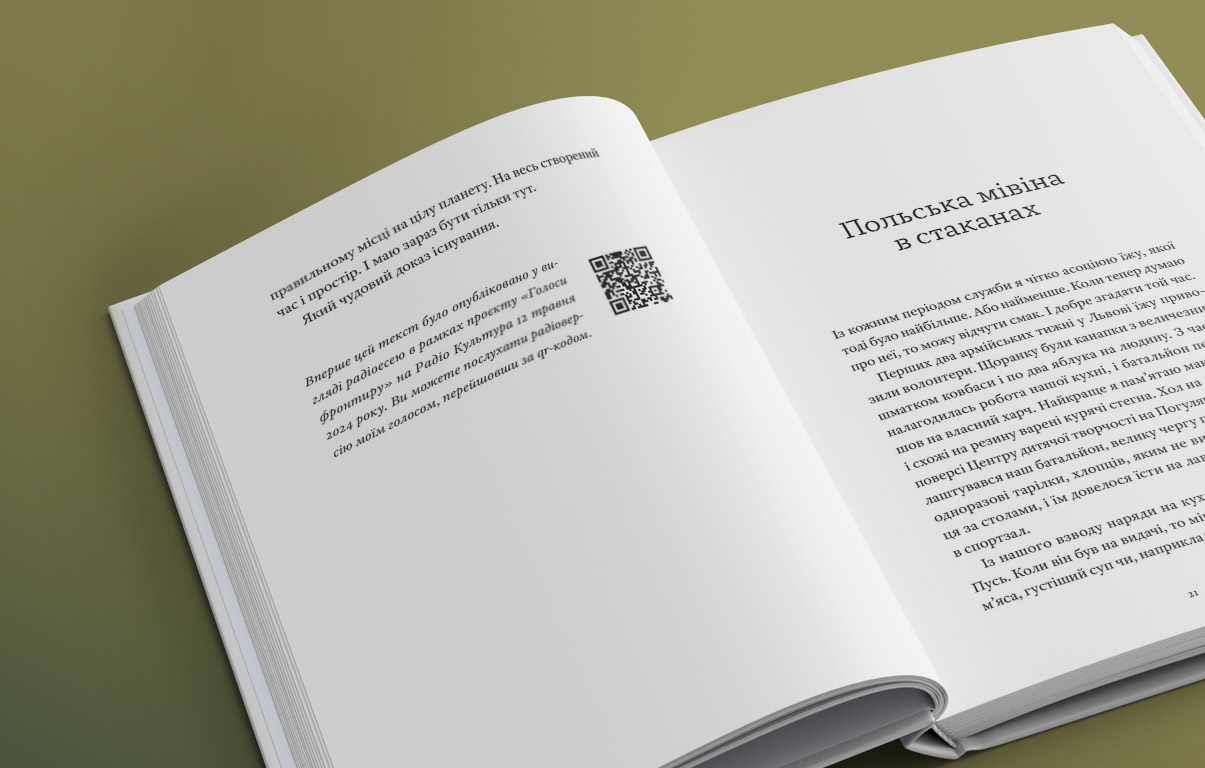
In fact, Ernest Hemingway becomes the symbolic representative of such a narrative for Dron. In Hemingway, Dron sees someone who went “overseas” to join a war as “an adventure” because he wanted “to be a hero”, and with time came to condemn war. Conversely, Dron himself was forced to go to war to fight an enemy that invaded his Ukrainian homeland. And here, under such circumstances, the idea of avoiding war is completely inappropriate, because “This is a war for our very existence, where to flee or surrender means that an entire nation perishes.” The starting positions are not the same: a distant war as an adventure and a war in one’s backyard that represents an existential challenge ultimately lead to different perceptions of war. If an American writer might condemn such war, his Ukrainian counterpart will emphasize the need to take up arms and defend one’s native land. The country’s northern neighbor, which has yet to put an end to its imperial encroachments, does not afford Ukrainians the luxury of professing pacifism.
Dron quotes Ukrainian writer Hryhir Tiutiunnyk, who wrote: “After war, there is respite until children grow into soldiers. After this respite, there is war.” Dron does not emphasize the somewhat Nietzschean view of war as a recurrent explosion of collective, destructive energies, as implied in the aforementioned quote. However, he does formulate the idea of a new narrative about war: “We need a new body of literature that will be anti-war, but not anti-militaristic. Literature is accustomed to condemning weapons. Instead, it should distinguish those who attack with weapons from those who defend themselves with weapons. We will never give up our right to shoot back, as this is a matter of our own national security. And our literature will always condemn the aggressor, but will never speak out against weapons.” This change in worldview—from admiration to a critical attitude toward anti-war literature and the defense of the military spirit in the cultural narrative—is conditioned by a change in the perception of war, from an indirect source (literature) to something experienced firsthand.
But the critical view of the corresponding literary canon is not only triggered by the anti-military narrative presented therein. Dron mentions that “High literature about war is truly unable to tell us anything about that war in which we ourselves live and die. The war that they (i.e. the authors of high literature – T.P.) have never witnessed themselves.” He recalls a scene from Remarque’s novel “All Quiet on the Western Front,” in which the main character, a German soldier named Paul, finds himself in the same trench as the enemy, kills him, looks at the dead soldier’s ID card and a photo of his wife, and comes to the conclusion that he and the man he just killed have much in common: both young and devastated by a senseless war in which politicians “play games carving up the map.”
Dron is deeply convinced that the image of war portrayed by Remarque (with the appropriate background) does not at all correspond to Russia’s current war against Ukraine, in which the Russians “from the very first hours committed crimes against humanity, […] killed and continue to kill civilians every day. Numerous cases have been documented in which they raped and then murdered mothers right in front of their children, or raped the children themselves, even infants. They set up torture chambers in schools. They execute prisoners or cut off their heads, limbs, and genitals while they are still alive, and simply post the videos on the Internet. Their wives say they “permit” their husbands to “have fun” with Ukrainian women. Some directly encourage this and joke that they need to show “what it means to be a Russian man.”
Dron emphasizes the extraordinary cruelty of the Russians, which gives the war a particularly inhuman dimension and makes it impossible to view the two belligerents as equals. Moreover, the Ukrainian author says that the idea of “poor deceived (by politicians) soldiers” postulated by Remarque will be used by the Russians in the future to “whitewash” themselves, arguing that a supposedly “good people by nature was obfuscated, duped, and sent to the slaughter by the cruel Putin and company.”
Thus, the Russians are given the chance to eschew their collective responsibility for their crimes against humanity. And if there is no collective sense of guilt and corresponding remorse, then history will repeat itself. And that history will be one of war, which has particularly cruel manifestations.
The current Russo-Ukrainian war has its own specifics, which are determined both by the methods by which military operations are being conducted and by the modern cultural landscape. As French journalist David di Nota points out in Dron’s book, in another reference to one of Hemingway’s novels: “People at war don’t talk like that!” The gender rules, literary conventions, and stylistics of expression that characterized the post-war periods of the two world wars have clearly changed. The modern cultural context calls for a more spontaneous, lively, direct, and individualistic view of events, especially when they relate to war. This results in minimal exposure, rapid immersion into the essence of the situation, fragmentary and impulsive presentation, and acute expressiveness. In general, the literary narrative about war is currently trending toward non-fiction. In this context, on the one hand, the authenticity of what is said and the personal involvement of the author or character in the events is emphasized. On the other hand, a number of requirements of literary and artistic nature that are currently perceived as artificial and superfluous are rejected.
RELATED: The collective experience of pain: A review of Artur Dron’s book of poems “We Were Here”
In contemporary war literature, we can generally talk about the blurring of fiction and non-fiction. This fusion results in a text that represents real life stories, situations and characters while at the same time revealing features of typification, expressive and semantic generalization, symbolism and vivid expression. The author of such text has a fundamental distrust of literary and artistic narratives and “big stories” with their narrative schemes; in other words, of literature as such. Instead, he writes about himself and what he has seen and experienced personally. Therefore, personal experience is what ensures the reliability and authority of what is being written about. So, in “Hemingway Knows Nothing,” the story comes from Artur Dron, who describes his real war experience (shelling, injuries, transporting the fallen off the battlefield), rehab, etc.
Dron writes about some of his own comrades, in particular the death of Oleksandr Kobernyk (call sign “Doc”), who worked as a teacher in Lviv. The author focuses on real events that are part of his personal life story and the war itself. However, they acquire existential significance and symbolic expressiveness. One particularly powerful moment in Dron’s narrative is where the author writes about a street in Lviv named Mechnikova, on one side of which there is a maternity hospital, and on the other, the so-called “Field of Mars,” where soldiers who perished in the Russo-Ukrainian War are buried. This specific cityscape becomes highly symbolic in the writer’s view:
“Those who enter life and those who leave it are separated by the two lanes of Mechnikova Street. In war, the distance between life and death is remarkably short: Here is life, and two lanes away is death. Two measly lanes.” In the author’s story, this merging of non-fictional concreteness and symbolization with a certain typification of fiction is characteristic.
The book comprises 25 parts, each of which is an incidental recollection of certain events, all of which are connected with the war in one way or another. Dron writes in a rather arbitrary manner, occasionally recording fragments of memories or reflections on certain topics. In some parts, he discusses external events, while in others, he focuses his attention on his own memories and reflections. In general, its parts can most often be categorized as a sketch: a freely executed drawing that captures and conveys the characteristic features of a given situation. These sketches can be used to create a larger visual canvas, but they are also significant in themselves.
Dron sees the meaning of literature in the fact that it is a way to record one’s significant existential experience, prevent oneself from slipping into oblivion and say to death, “You cannot take everything away from me.” Literature takes on the important function of memory. After all, as the author notes: “Remembering all of this is a terrible thing. The only thing worse is forgetting it.”
RELATED: The war is already speaking: books about war, published after Feb. 24
The publication is a part of the “Chytomo Picks” project. The materials have been prepared with the assistance of the Ukrainian Book Institute at the expense of the state budget. The author’s opinion may not coincide with the official position of the Ukrainian Book Institute.
Authors: Nataliia Kushnirchuk, Taras Pastukh
Translation: David Soares
This publication is sponsored by the Chytomo’s Patreon community
the more you read, the greater the possibilities