* ESC - close the search window
Tanja Maljartschuk
Tanja Maljarschuk: ‘Homeland is the place where your wounds come from’
17.11.2025
You see an error in the text - select the fragment and press Ctrl + Enter
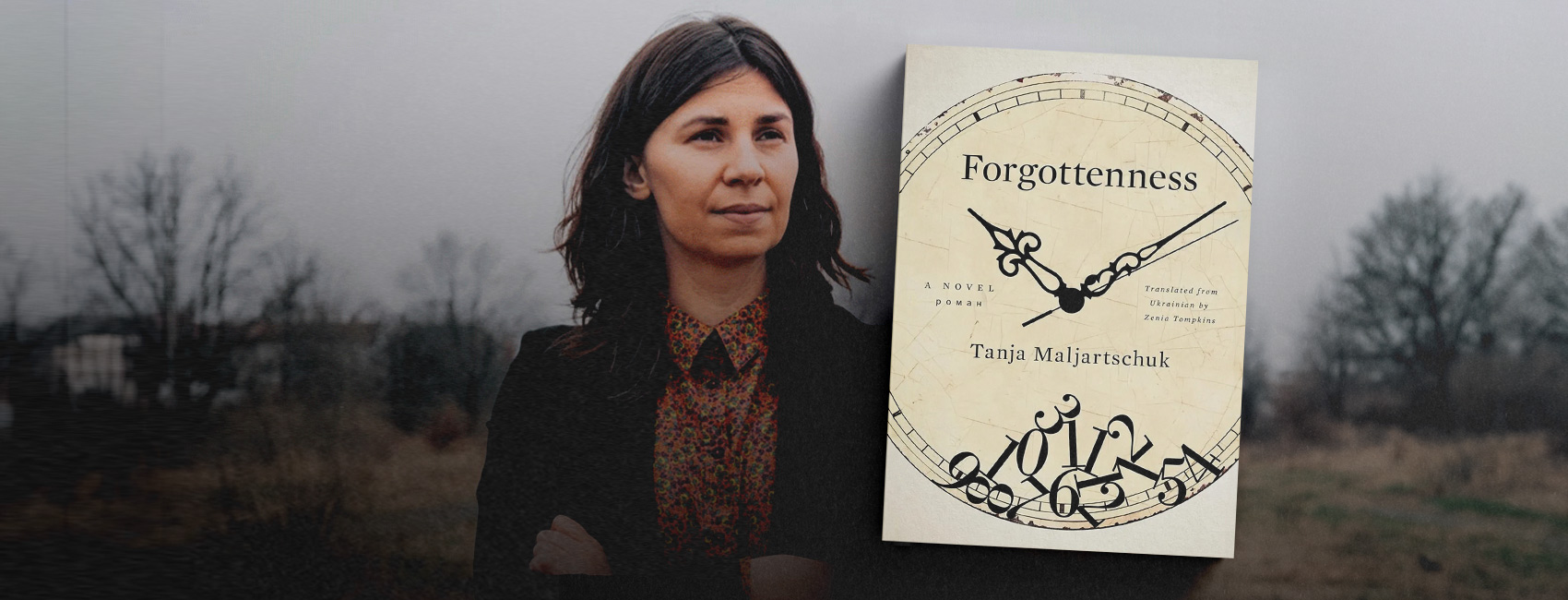
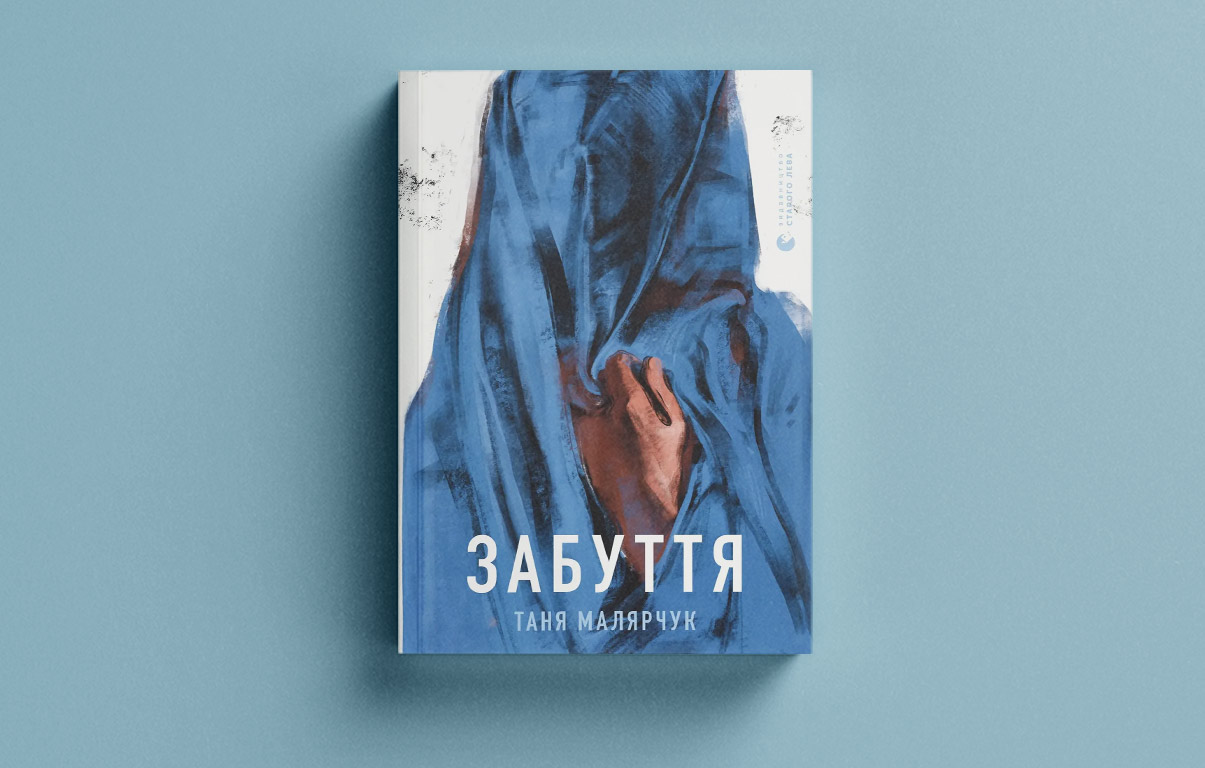
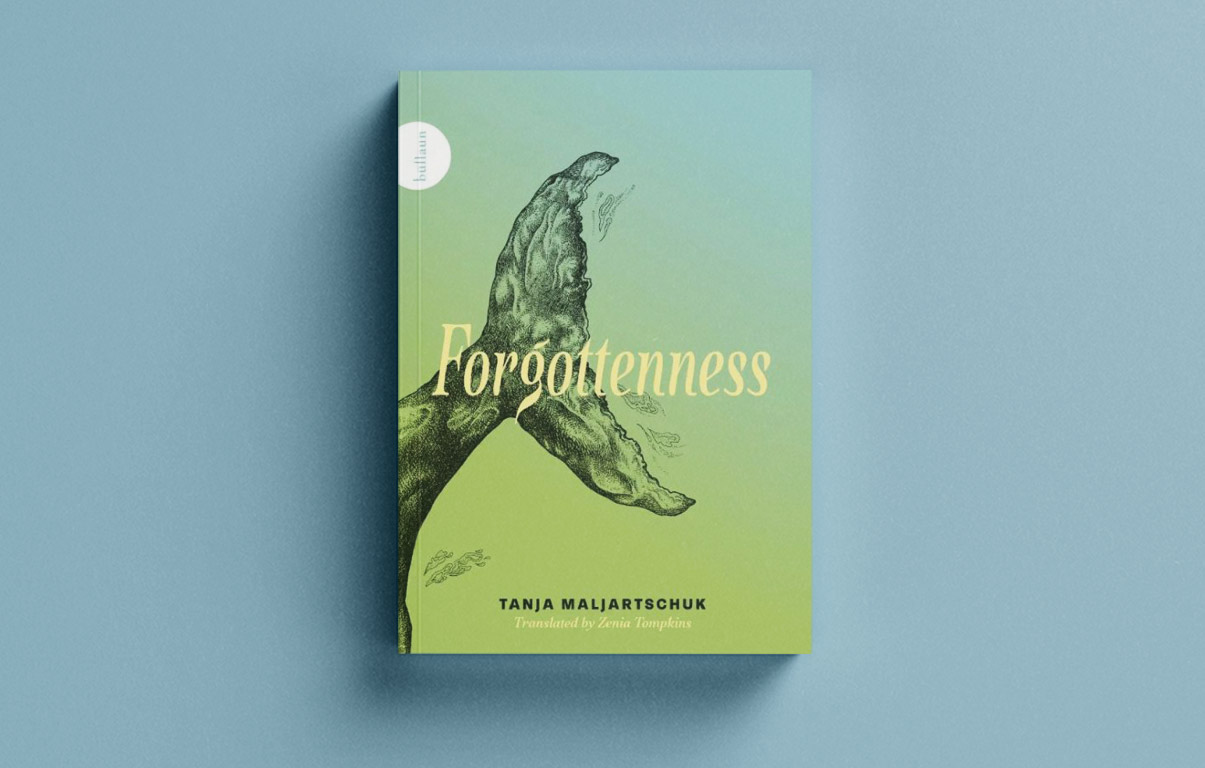
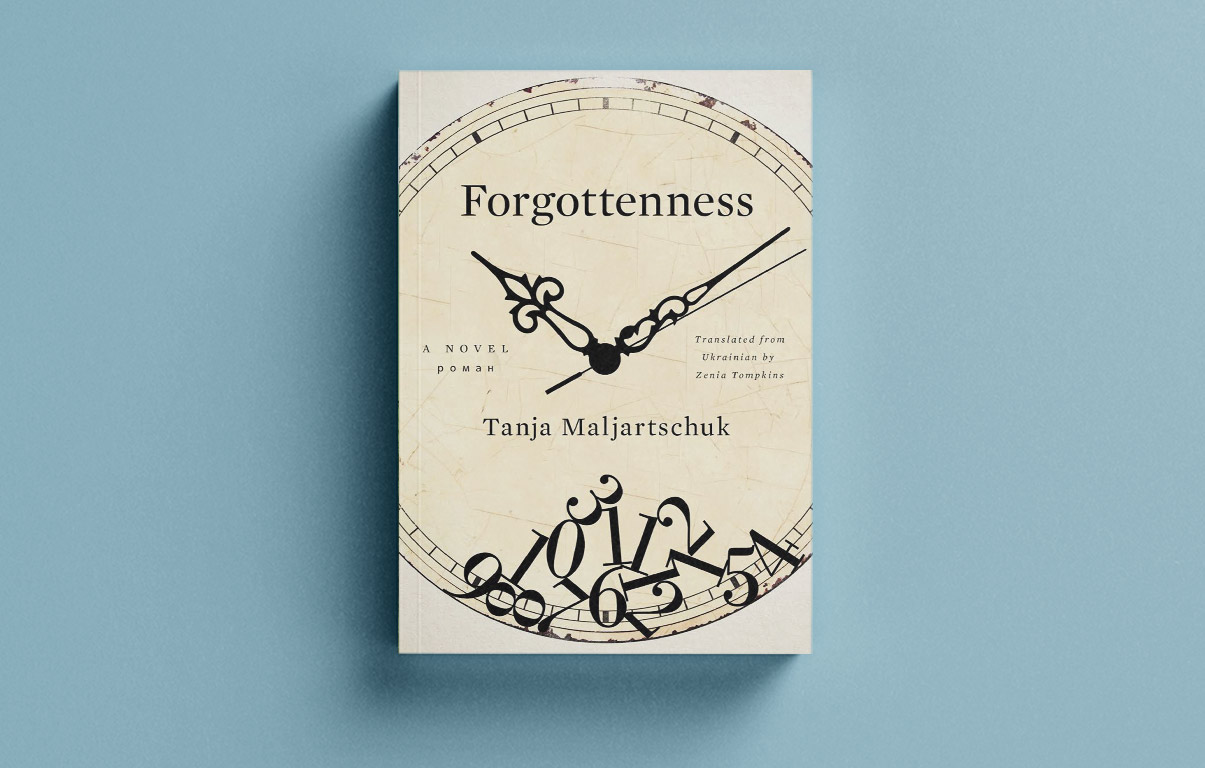
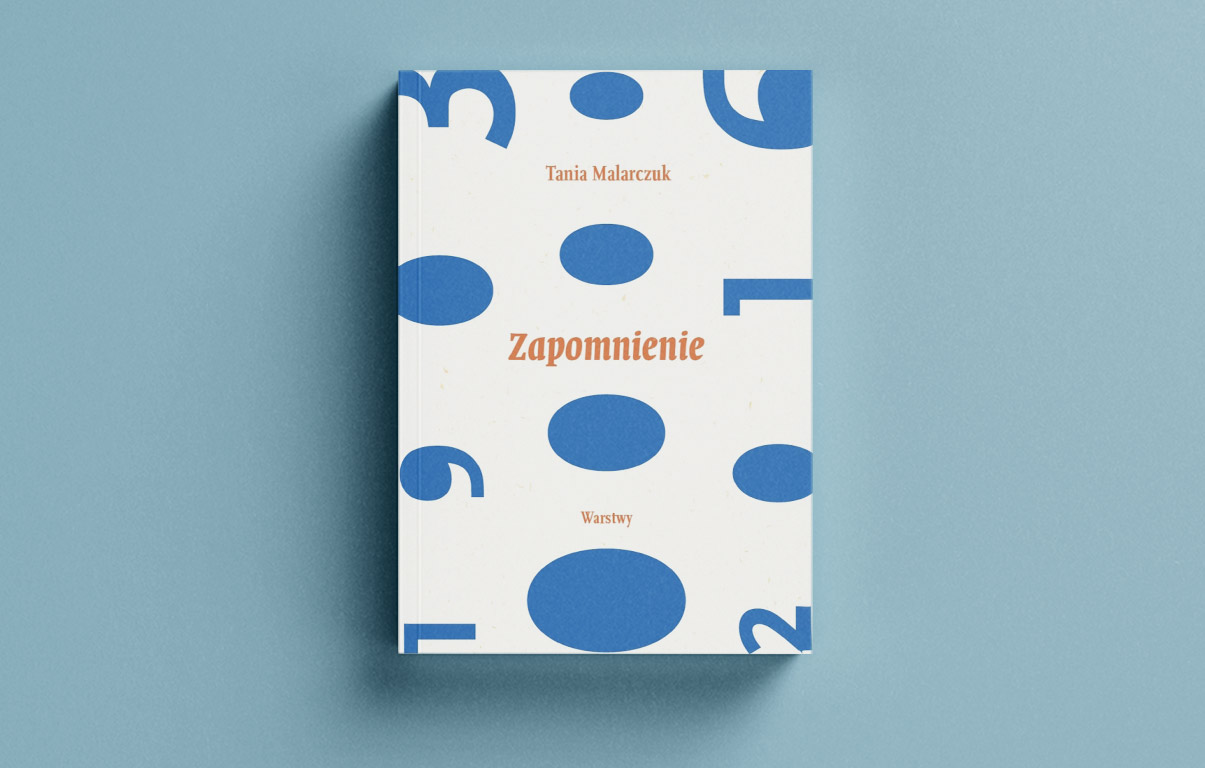
Tanja Maljartschuk, one of the most significant voices in contemporary Ukrainian literature, has woven her writing around memory, trauma, and the identity of a nation learning to survive within history. Born in Ivano-Frankivsk and based in Vienna since 2011, she received the Ingeborg Bachmann Prize in 2018—the most prestigious award in German-language literature. Her latest book, “Forgottenness” (Liveright Publishing, 2024), has been translated into many languages. Furthermore, at the recent Frankfurt Book Fair, she, along with Claudia Dathe, presented a new series of Ukrainian classical literature in German (Wallstein Verlag), combining works and editing by renowned Ukrainian authors with those of classical Ukrainian writers. In this interview, she speaks about living between two homelands, about a Ukraine that fights and writes, about memory as a battlefield, and about literature as a way to remain human amid the absurdity of war.
Lucas Velidakis: How has the experience of emigration influenced your authorial voice and the themes of your work?
Tanja Maljartschuk: Emigration is always a shock. And although I, unlike millions of Ukrainian women today, did not flee from war but left voluntarily in 2011, my life was still divided into “before” and “after.” It’s a kind of caesura—a sharp break—after which a person faces the fear of losing their roots, language, and identity. And Ukrainian identity is complicated enough as it is. The history of Ukraine is a history of prolonged statelessness, wars, genocides, political repressions, and mass deportations.
Moving to Vienna, which became my second home, turned my gaze toward the past—above all, to Ukraine’s 20th century. That is where many of my personal and collective traumas lie. Someone once said that homeland is where your dead are buried. I would say: homeland is the place where your wounds come from.
Lucas Velidakis: What does Ukrainian identity mean to you today, and how do you express it in literature?
Tanja Maljartschuk: Before Russia’s full-scale invasion in 2022, I would not have been able to answer that question briefly. Ukrainian identity has always been complex. I was born in Ivano-Frankivsk, a city that, before World War II, was predominantly Jewish and Polish. The Jews were annihilated, the Poles were resettled, and the city was effectively reborn as Ukrainian. But does nationality alone define who I am? Centuries of coexistence among Jews, Ukrainians, and Poles—just as in other regions of Ukraine among Germans, Greeks, and Bulgarians—have become part of our DNA. Ukraine is a borderland, and diversity has always been at the core of its identity.
After the Revolution of Dignity in 2014—and especially since 2022—these “patchwork” identities began to merge into a shared political Ukrainian identity. It is not limited to ethnic origin; it’s a matter of choice, worldview, democratic values, and vision for the future. It is a form of resistance to Russian aggression. People consciously choose freedom over the prison and violence that Russia brings—and they are ready to die for that choice. For more than three and a half years, Ukraine has resisted the world’s second-largest army, and each time it feels like a miracle. Ukrainian philosopher Volodymyr Yermolenko put it perfectly: to be Ukrainian today is to be capable of the impossible.
Lucas Velidakis: In your writing, the notion of memory often appears. How do you understand the role of collective memory in Ukraine?
Tanja Maljartschuk: Collective memory is unreliable—but essential. It unites a community and shapes a shared space of values. Its historical component is important, though not primary. It is not a history textbook but rather a form of collective myth-making. We usually remember tragedies, defeats, or glorious victories. In Ukraine, victories have been rare—they only began with independence in 1991. Over the past three decades, generations have grown up for whom dignity and human rights are real values. The revolutions of 2004 and 2014 were steps toward civic responsibility for one’s own country—and thus for one’s own memory.
Previous generations lived under the totalitarian USSR and were afraid to remember. You could lose your job, your freedom, or your life for remembering. Soviet power systematically destroyed memory: it built housing over cemeteries, renamed cities, demolished monuments, and physically eliminated or broke the cultural elite. Ukrainian collective memory resembles a mass grave, where events are buried that can no longer be reconstructed—because those who remembered the dead were also killed. Crimes such as the 1933 Holodomor have gone unpunished.
I have no illusions that literature can restore memory or deliver justice. But it can draw attention—to events and figures that must not be forgotten. We can choose what to remember, and at the same time deconstruct memory where it is toxic or false.
Memory is always a battlefield. What we remember determines our future. That is why autocrats seek to deform it—to steal it, reduce it to a few pseudo-truths, impose their version. Because whoever controls memory, controls the future.
Lucas Velidakis: How do you find balance between literary storytelling and the political reality Ukraine is living through?
Tanja Maljartschuk: I haven’t found that balance, and I’m not sure it even exists. I can’t write fiction—I write essays, articles, and speeches instead. I write every day, but not the novels I once dreamed of. Many of my colleagues, including women from the cultural sphere, are now serving in the army. Some have already been killed. The list of murdered Ukrainian writers now exceeds a hundred names. Neighbors, friends, young men are dying. In Ukraine, reality has triumphed over literature.
What is being written in Ukrainian today is mostly poetry—it captures emotions most precisely and requires little time to write—as well as reportage, essays, and testimonies. Literature has become a way to document crimes and reflect on the human condition in a state of existential horror. Perhaps that is now its main mission.
At the same time, books in Ukraine have never been as important as they are today. Despite the war, bookstores are filled with new titles and translations, new publishers are emerging, people buy books, attend festivals and literary events. Last month, after one such meeting, some students came up to thank me for a book I had written before they were even born. That gives a fragile sense of normality—one that even war cannot destroy.
Lucas Velidakis: What is the hardest part about writing about Ukraine from afar?
Tanja Maljartschuk: The hardest part is granting yourself permission to do so—to free yourself from guilt. There’s something known as “survivor’s syndrome.” After World War II, many Jews who survived the genocide later took their own lives. I couldn’t fully understand that psychology before—but now I can. The feeling of guilt deeply permeates Ukrainians abroad, myself included. Ukrainians living in the west of the country feel guilt toward those in the east whose cities have been destroyed. Civilians feel guilt toward the soldiers, and soldiers feel guilt toward their fallen comrades. It’s a devastating cycle of guilt, and each person must face it alone. For a writer, it adds another question: do I have the right to write—and if I do, about what? What are the ethical boundaries of my writing?
Lucas Velidakis: What emotions do you hope to evoke in your readers?
Tanja Maljartschuk: Ideally, the same emotions I felt while writing. Otherwise, it doesn’t work. A writer is an antenna transmitting stories and the feelings bound to them into the world. That’s why it’s so hard for me to write fiction during the full-scale war: the emotions I experience are so strong and terrifying that sharing them with the world would feel unfair. And so far, I haven’t found another, more bearable form for those emotions.
Lucas Velidakis: Which writers or artists have influenced you the most?
Tanja Maljartschuk: The city where I grew up—Ivano-Frankivsk—became, in the 1990s after the collapse of the USSR, a center of Ukrainian literary life. It was a phenomenon. The leading Ukrainian writers lived and worked there, and literary events happened almost every evening. It was a time of poverty and rock’n’roll—former political prisoners had just been released and were celebrating life. As a student, I couldn’t help but take part in that scene. I can confidently call Taras Prokhasko and Yurii Andrukhovych my literary mentors. Through their texts and public conversations, I embraced literature as an inseparable part of myself—and writing as a legitimate and dignified profession (what an illusion!).
From world literature, authors important to me include Joseph Roth, Jorge Luis Borges, Albert Camus, and Olga Tokarczuk. No, Russian literature is not on this list. Though I studied it and knew it well, it never impressed me much—because I know too well the repetitive reality it has learned to disguise so skillfully.
Lucas Velidakis: How do you assess the place of Ukrainian literature on the contemporary European stage?
Tanja Maljartschuk: Ukrainian literature has never truly been present on the European stage. Only now is it getting a chance to claim its rightful place. In the past, Ukrainian authors were translated sporadically—mainly during moments of political upheaval: after the Orange Revolution in 2004, after the Maidan events in 2014, and much more actively after Russia’s full-scale invasion. Suddenly it became clear that most Europeans knew almost nothing about a 40-million-strong country right next door.
Classical Ukrainian literature, dating back to the 18th century, remains almost unknown in Europe. In Germany, for instance—a country that traditionally translates a great deal—no Ukrainian classic had ever been published by a major press. Slavic studies there were long equated with Russian studies. The marginalization of Ukrainian (as well as Belarusian, Georgian, Moldovan, and other) cultures was part of Russian foreign policy, and Ukrainians previously lacked the resources to counter it.
Today, the decolonization of Ukrainian literature is part of a broader process of decolonizing the entire region—and that opens fundamentally new horizons.
Lucas Velidakis: What is your personal motivation to keep writing during wartime?
Tanja Maljartschuk: I’ve lost my idealistic belief that literature can make the world a better place. War is older and greater than any literature. It destroys the human being and everything human; it erases privacy—and privacy is the space of literature, where the small individual gains the right to life and feeling.
And yet, to stop writing would mean to stop being myself. So my motivation to sit at my desk every morning is quite selfish: I don’t want to let myself be erased as a human being.
Lucas Velidakis: What themes would you like to explore in the future?
Tanja Maljartschuk: I’m afraid that for the rest of my life—whether it turns out short or long—the only theme that will preoccupy me as a Ukrainian writer will be Russian war crimes and the struggle against the Russian imperial narrative. The suffering and trauma inflicted on Ukraine exceed one lifetime. Future generations are condemned to deal with them, whether they wish to or not.
Still, I hope to leave room for pleasure and mischief—to remain, despite all responsibility, inwardly free and unpredictable.
The publication is a part of the “Chytomo Picks” project. The materials have been prepared with the assistance of the Ukrainian Book Institute at the expense of the state budget. The author’s opinion may not coincide with the official position of the Ukrainian Book Institute.
Authors: Nataliia Kushnirchuk, Lucas Velidakis
This publication is sponsored by the Chytomo’s Patreon community
the more you read, the greater the possibilities