* ESC - close the search window
The Dress-Up Game
Why does a soldier need music? Review of Artem Chekh’s ‘The Dress-Up Game’
04.11.2025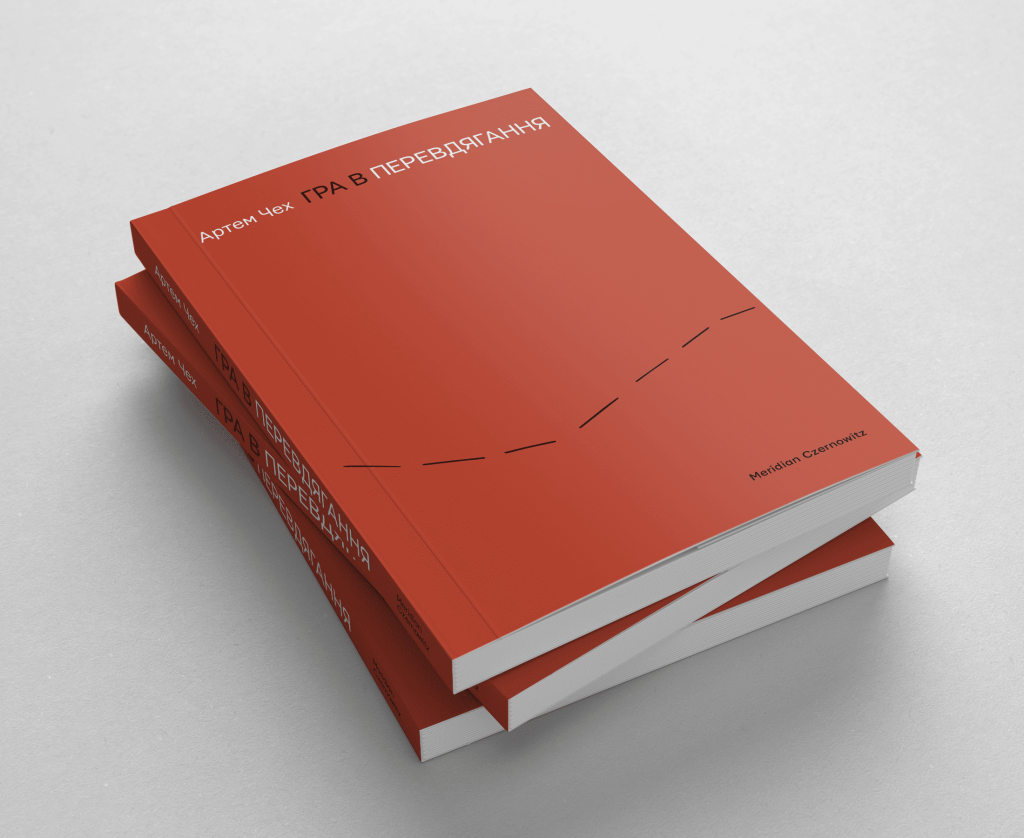

You see an error in the text - select the fragment and press Ctrl + Enter
Artem Chekh is a Ukrainian writer and soldier, known to English-speaking readers in particular thanks to the translation of his book “Absolute Zero,” 2020. His new book — “The Dress-Up Game” — thematically continues the previous one, and was recently published in Ukraine.
“The Dress-Up Game” is a collection of short documentary prose from the front lines, answering the question of what happens to a person who hates war but puts on a military uniform and joins the ranks.
Two books by Chekh — one war
In “Absolute Zero,” the reader is presented with the candid story of the transformation of an ordinary person, “not born for war,” who had to dress up in camouflage and learn to coexist with a new part of their identity that cannot be “taken off” and hidden away in a closet. “The Dress-Up Game” continues this theme, but a different, “new” person continues their transformation under the influence of another, “new” war. And they seek answers to the question: Who am I? How can I live with this experience now? And most importantly, where can I find solid support when everything around me is collapsing, exploding, and falling apart at the seams?
Chekh’s new book retains the format of frontline diaries and memoirs, but it is darker and more depressing.
Point of no return
For Chekh, mobilization is not just a biographical fact, but a metaphor for irreversible changes in personality and consciousness. In these texts, he is almost constantly searching for answers to questions about himself and the war, and for a new language to voice those answers. He recalls his service in the ATO (anti-terrorist operation), the first days before the full-scale invasion, and all that followed, most of which he spent on the front lines: the author wrote “The Dress-Up Game” from 2022 to 2025. And each time it was a different Chekh, changing under the influence of circumstances and acquiring new layers of his own identity, which he reflects on extensively in the collection.
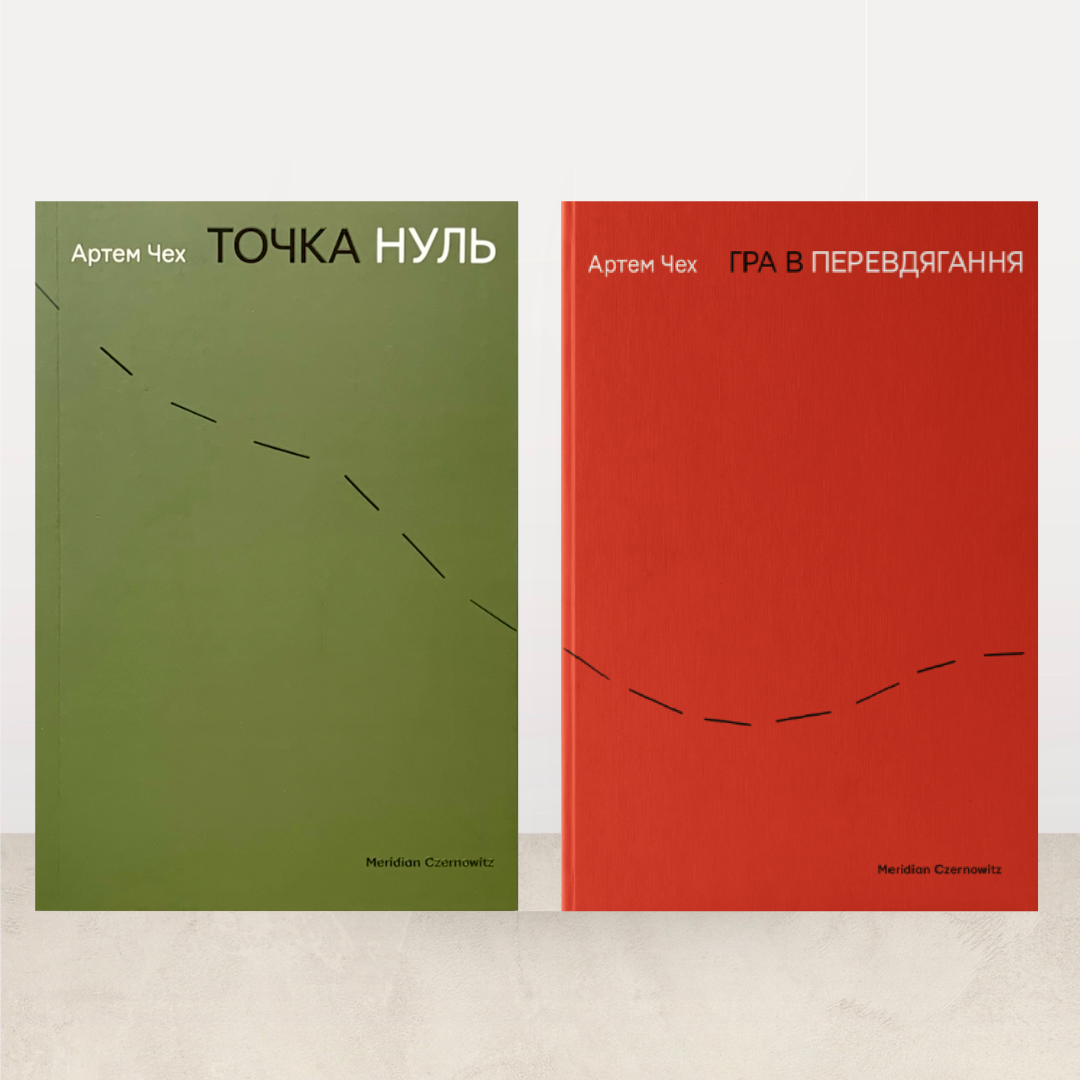
“Absolute Zero” and “The Dress-Up Game” by Artem Chekh (Ukrainian book covers)
Adapting to a new team in Chekh’s pixels is not easy, either in 2015 or in 2022. War forces him to seek a common language with those whom, under other circumstances, he would not even have noticed in his life. However, the great difference in worldviews gives way to the scale of the common enemy, which unites such diverse people against it. But, as the author notes, after the end of hostilities, these people will go their separate ways and build their own realities within their social bubbles. Chekh’s ability to look truth in the eye is one of his strongest traits.
Final destination
The text records impressions of frontline cities, which in the current reality will never be felt in the same way again, because the objects of these impressions have been destroyed and devastated: in one of the texts, the writer recalls Pokrovsk, now destroyed, as once a “rear, almost peaceful city,” and “safe” Sloviansk, from which people are now being evacuated.
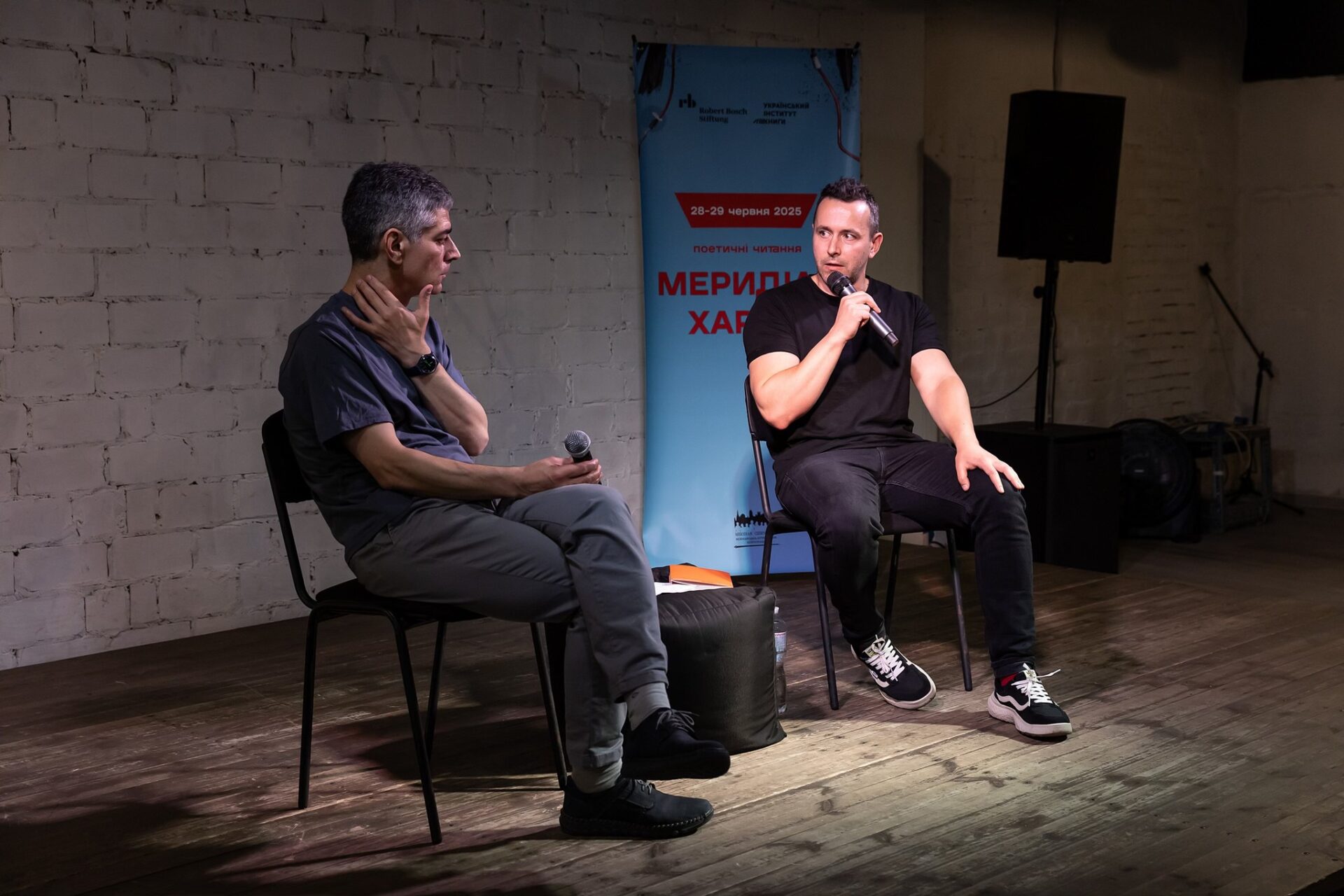
Presentation of the book in Kharkiv
And then there is Bakhmut. A place where animal fear, the desire to live, and the presence of death are concentrated, watching closely from the trenches as Chekh records video diaries in which he talks about the meager amount of food and water he has consumed, the impossibility of going to the toilet normally for five days in the trench, and the possibility of getting to a safer place. Recalling the video diaries recorded in Bakhmut, he notes that he watches them with some unhealthy frequency, because it turned out to be important to see himself as he had never been before. “Who am I?” — the question sounds again.
And immediately there is a contrast: A few days earlier, Chekh traveled to New York for the PEN America World Voices Festival as part of a Ukrainian delegation that refused to share the stage with Russians. There, he breathed air that did not contain the slightest hint of war, but there was a lot of marijuana and loud laughter from Americans. In Bakhmut, however, the air is filled with the smell of dead bodies, burnt mattresses, and wet bricks. Later, the Honduran cigars brought back from that trip to New York are successfully evacuated from the trench, which reminds Chekh of a grave.
And finally, about music
In that trench, Chekh thinks a lot about his unfinished (now completed and published) novel about identity, freedom, the path, and war, like the Civil War in America, but if you dig deeper, you can see that it is also about our own Russian-Ukrainian war. It is called “The Song of the Open Road.”
From time to time, music plays amid these macabre scenes in “The Dress-Up Game.” Sometimes louder, sometimes quieter — but it accompanies the hero throughout his journey, from one point of no return to another. For a man “not born for war” who has experienced all its effects, music becomes a salvation, helping to reduce the distance between military uniform and skin. Leonard Cohen, Nick Drake, The Beatles, The Cranberries, Morcheeba, Lana Del Rey, Fleetwood Mac, music of the ’80s, the ’70s, the ’60s, Frédéric Chopin, Claude-Achille Debussy, Franz Liszt — like a teleport to a carefree past and to a future when the protagonist will return and become a “new person.”
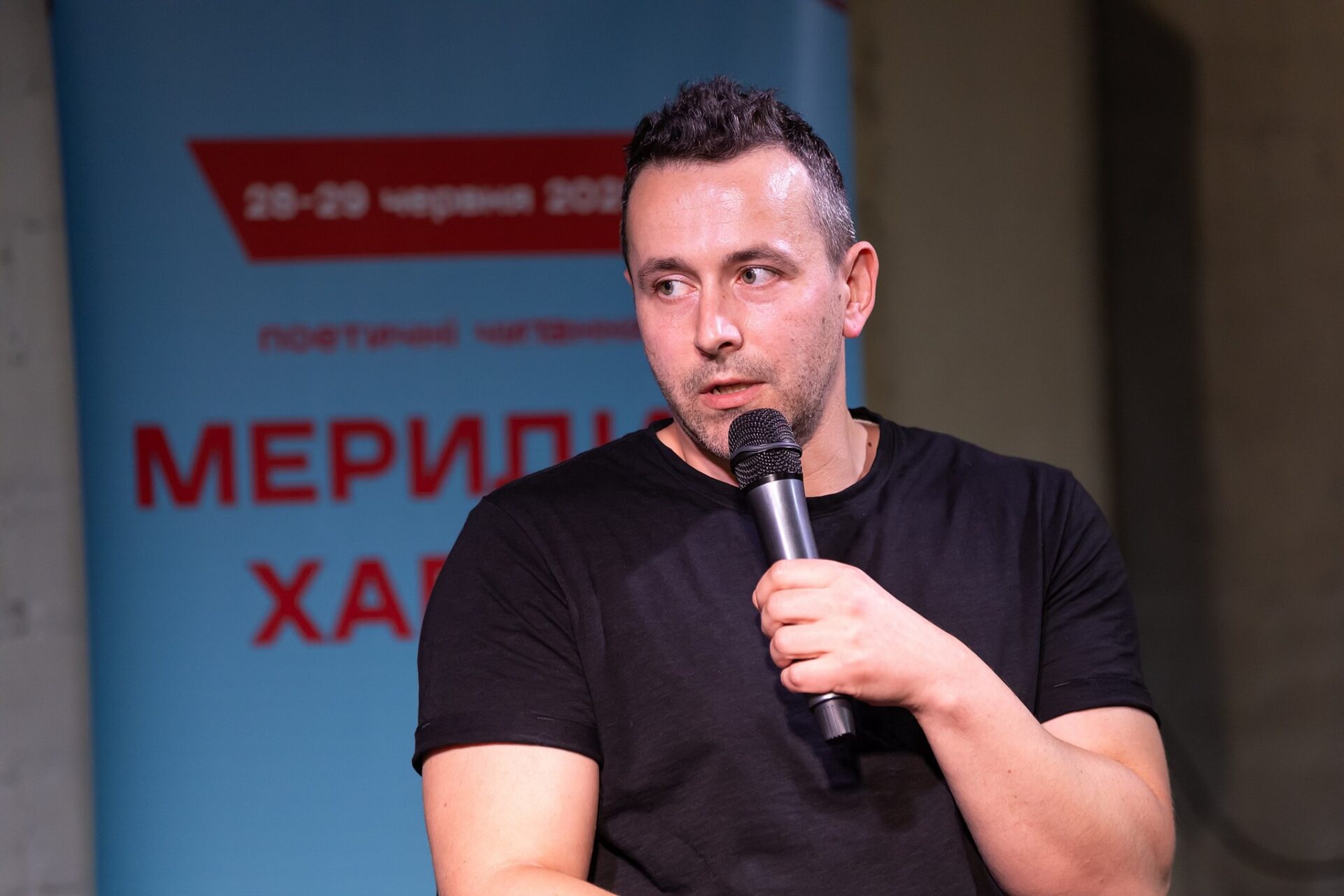
Presentation of the book in Kharkiv
It turns out that in such a masculine sphere, Chekh has a surprisingly acute need to hear women — their music becomes the most intimate and exclusively private for him. Lana Del Rey, Florence Welch, and Lola Marsh resound, and the book makes us think about how differently we talk about masculinity and the military in general.
The new language of contemporary reality contains many questions, and one of the most important ones is posed at the end of the collection: Is it possible to understand another person’s experience without having lived it yourself? Is there any point in trying to understand at all? “The Dress-Up Game” does not provide answers; it is a tool for formulating the right questions that force us to reflect, think, and become aware of the true reality and ourselves in it.
RELATED: Escaping reality: Books Ukrainian military turn to
This article was created by a participant of an intensive course in book journalism and literary criticism of Chytomo and Litosvita. The UA/UK Cultural Exchange course is supported by the British Council’s Support for Cultural Activity in Ukraine with UK Involvement programme.
Copy editing: Joy Tataryn
This publication is sponsored by the Chytomo’s Patreon community
the more you read, the greater the possibilities
55
top five Ukrainian books for teenagers
Top five new teen books by Ukrainian authors
12.12.2025 - Vitalina Makaryk
33
UK/UA Cultural Journalism Exchange
Suffering hero-victims and alcoholism in the middle of nowhere: 6 stereotypes in writing about Ukraine
12.12.2025 - Chytomo