* ESC - close the search window
museums
Russian attack damages writers’ homes, schools, and museums
24.05.2026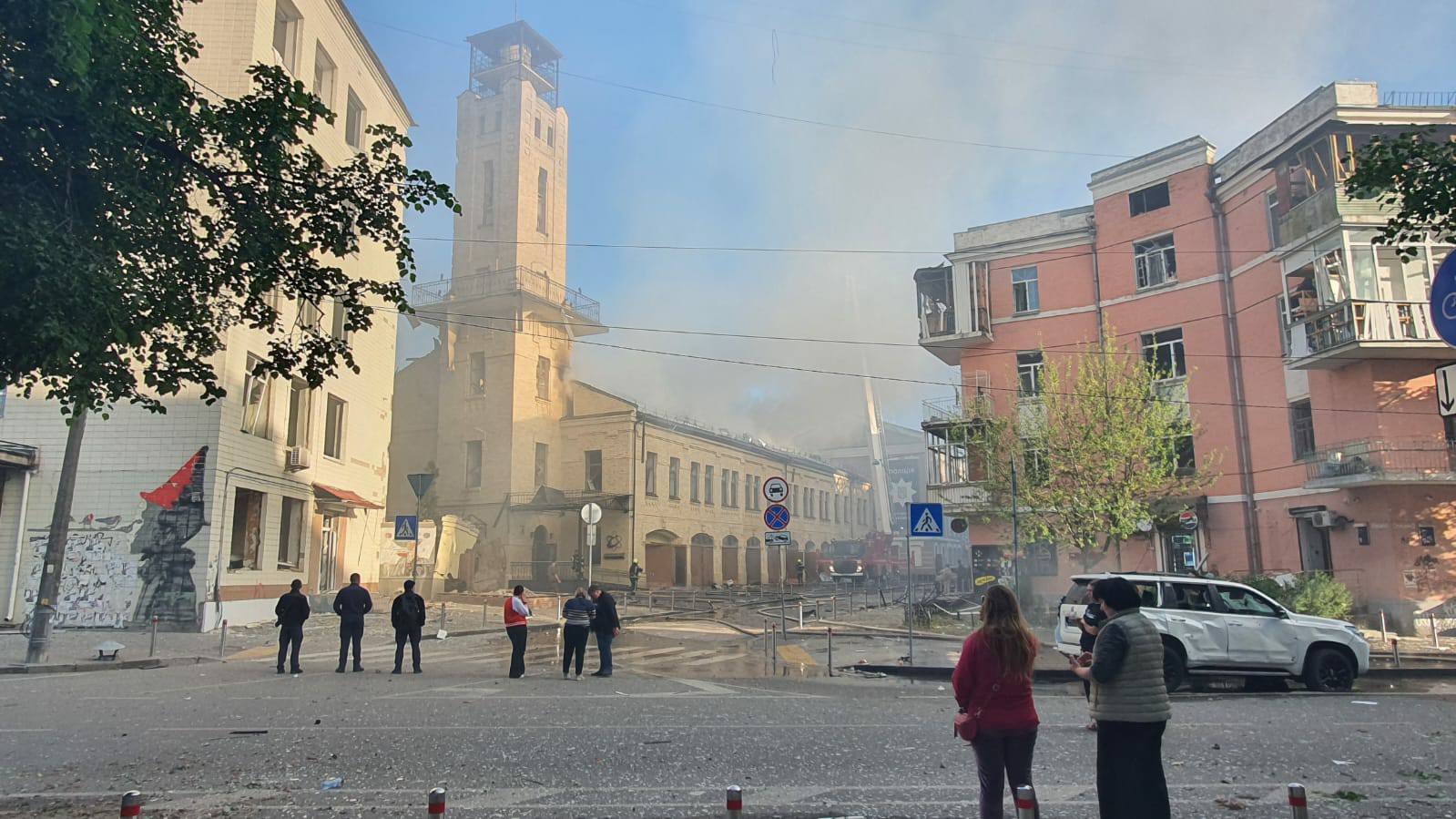
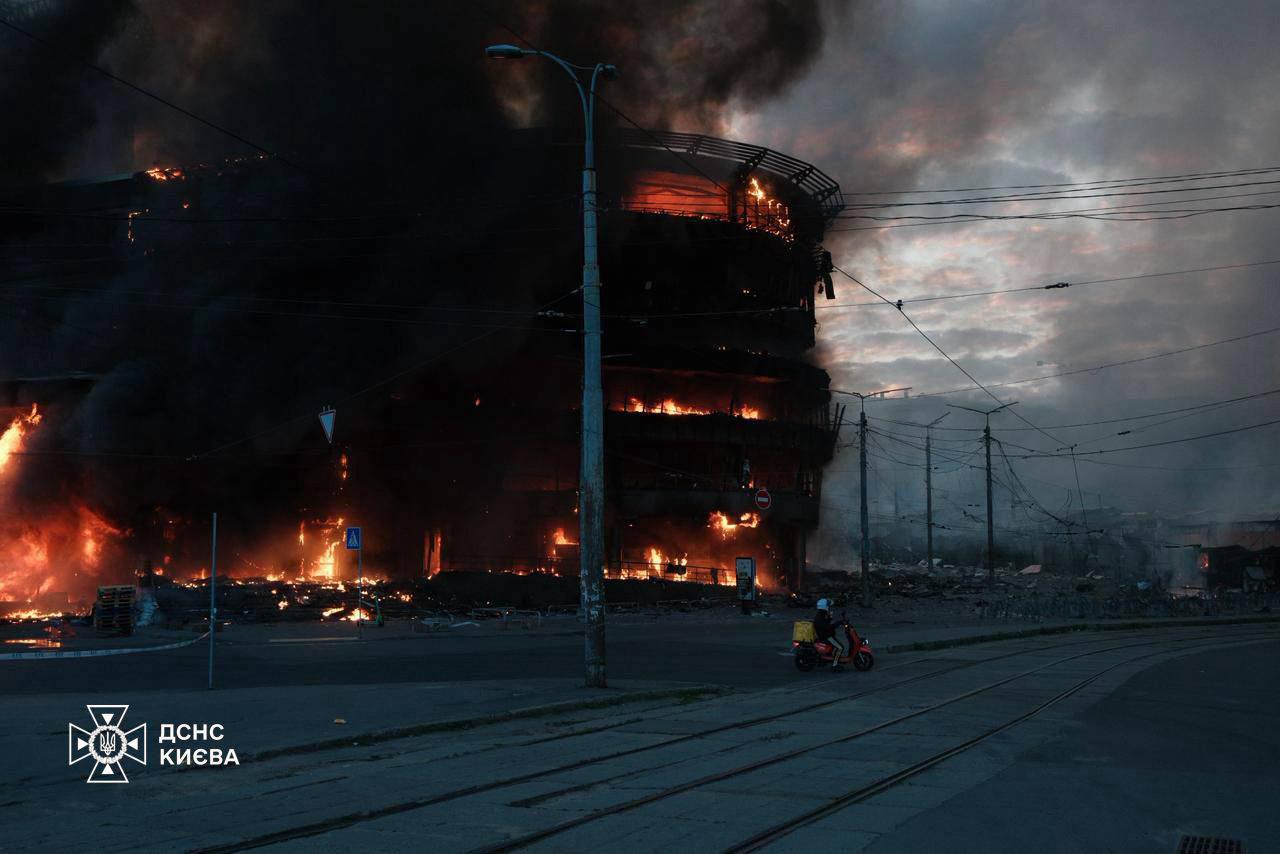
Russia’s mass attack on Ukraine on May 24 damaged cultural institutions, schools, and residential buildings in Kyiv, including the homes of prominent Ukrainian writers and artists. Among the damaged sites were the Ancient Kyiv Historical and Architectural Reserve, the National Chornobyl Museum, and the National Art Museum of Ukraine. The attack took place just one week before Kyiv Day, which overlaps with Ukraine’s largest literary event, the Book Arsenal International Festival.
Residential buildings in Kyiv were also damaged or destroyed, including the homes of Taras Shevchenko National Prize winners – film director Iryna Tsilyk and bestselling writer Tamara Duda. Duda is best known for her award-winning novel Daughter, which won BBC Book of the Year in 2019 and the Taras Shevchenko National Prize in 2022. The homes of award-winning children’s and young adult author Olena Zakharchenko, screenwriter and teacher Alisa Lindeman and artist Yulia Sheket were also damaged in the attack.
Kyiv Mayor Vitali Klitschko reported that two schools in the city’s Shevchenkivskyi district were also damaged.
Established in 1987, The Ancient Kyiv State Historical and Architectural Reserve protects the historic center of the Ukrainian capital. Among its institutions is the National Chornobyl Museum, dedicated to the 1986 Chornobyl nuclear disaster. The museum has recently reopened after renovation.
“The National Chornobyl Museum has been destroyed. It is an architectural landmark. The feeling is the same as when Russia destroyed all of our facilities in the Chornobyl Exclusion Zone in 2022. It’s hard, but the main thing is that everyone is alive,”
said Yaroslav Yemelianenko, head of the Association of Chornobyl Tour Operators.
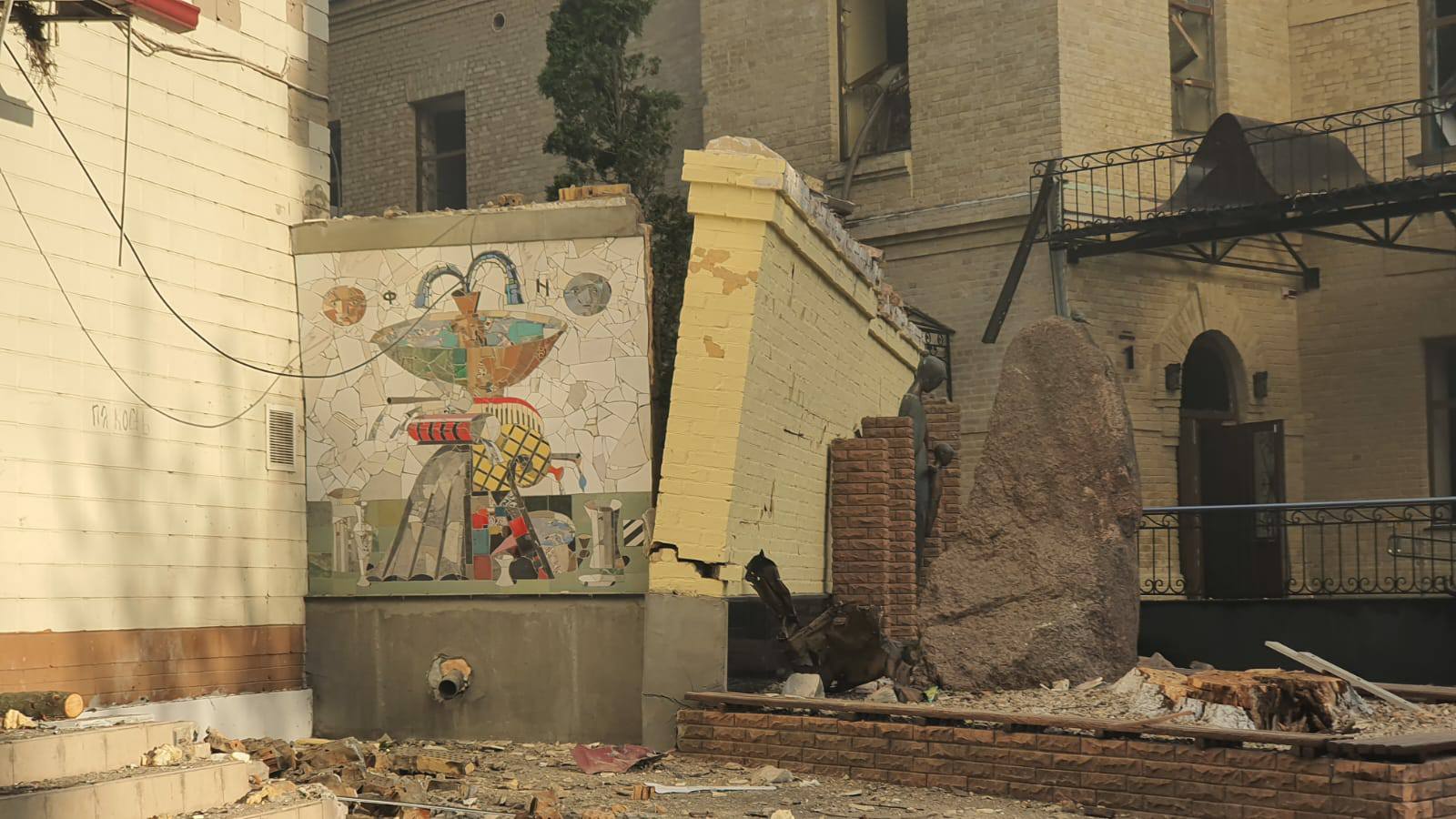
Photo: Maksym Nazarenko
The National Art Museum of Ukraine, one of the country’s largest and oldest art museums, has also been damaged by the attack. Following the strike, the museum announced that it would remain closed indefinitely:
“Museum staff and relevant services are currently inspecting the building, documenting the consequences of the attack, and assessing the extent of the damage. The museum building is a nationally significant monument of architecture, history, and monumental art,” Ukraine’s Ministry of Culture said in a statement.
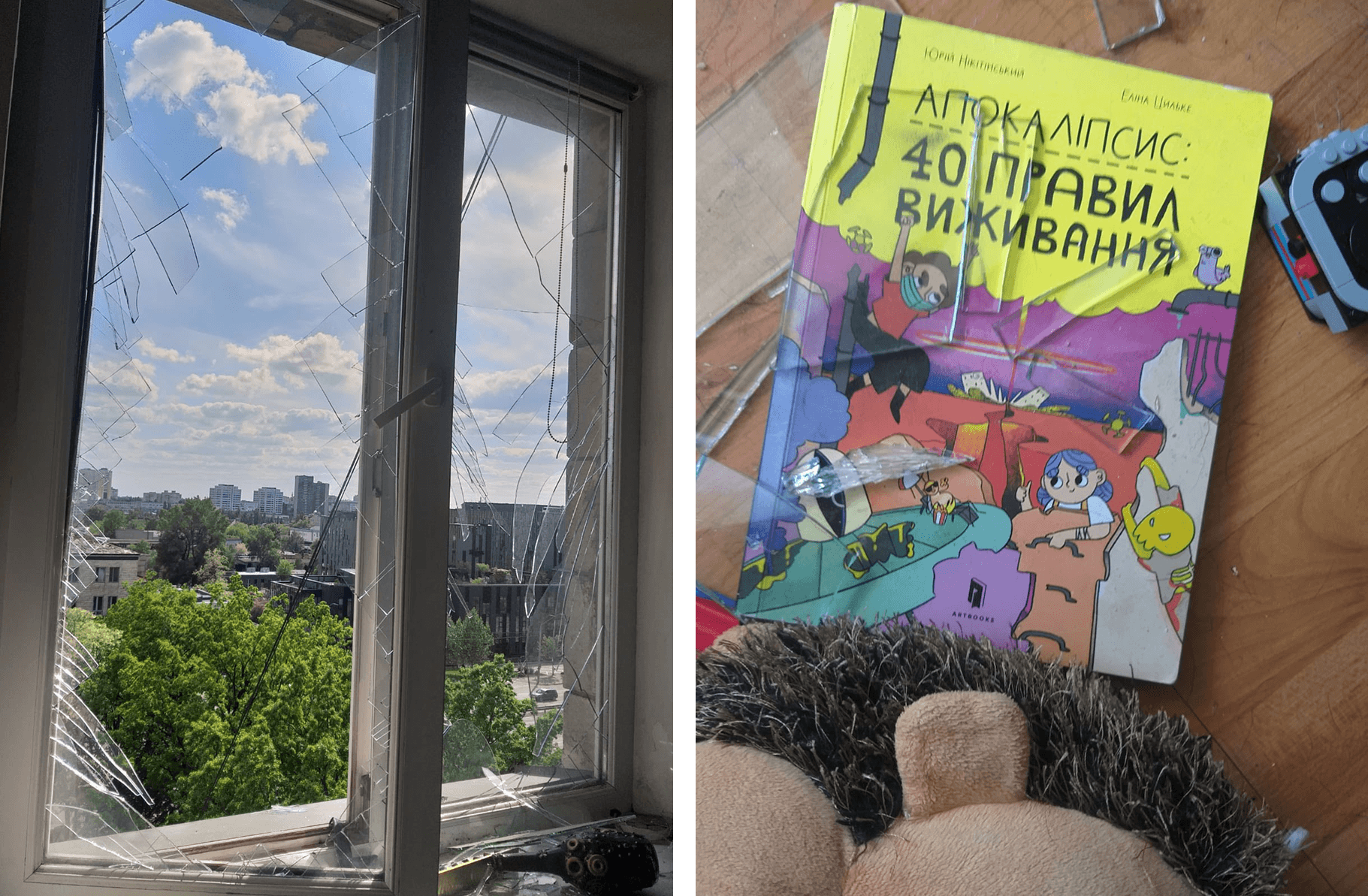
Alisa Lindeman’s apartment. book “Apocalypse: 40 Rules of Survival” / Photo: posted by Iryna Tsilyk
Commenting on the damage of her home in Kyiv, 2020 Sundance Film Festival winner, filmmaker Iryna Tsilyk wrote:
The door to my son’s room was torn off its hinges, windows shattered in neighboring apartments, and the strike hit just across the road. I’m walking through the apartment, smoking right in the rooms, looking around. Calm, but shaking. It’s been a long time since we had to run like that and throw ourselves onto the floor in the hallway.
Ten minutes earlier, I had been watching Andrey Zvyagintsev’s acceptance speech at the Cannes Film Festival, where he received the Grand Prix. ‘Mr. President, please stop this slaughter already,’ the Russian director said. Some critics call his new film anti-war, though others point out that the war is never actually called a war and is instead hidden behind the euphemism ‘special military operation.’ Today, ‘Mr. President’ is actively pressing buttons and launching missiles and drones at my city. Working hard, all by himself.
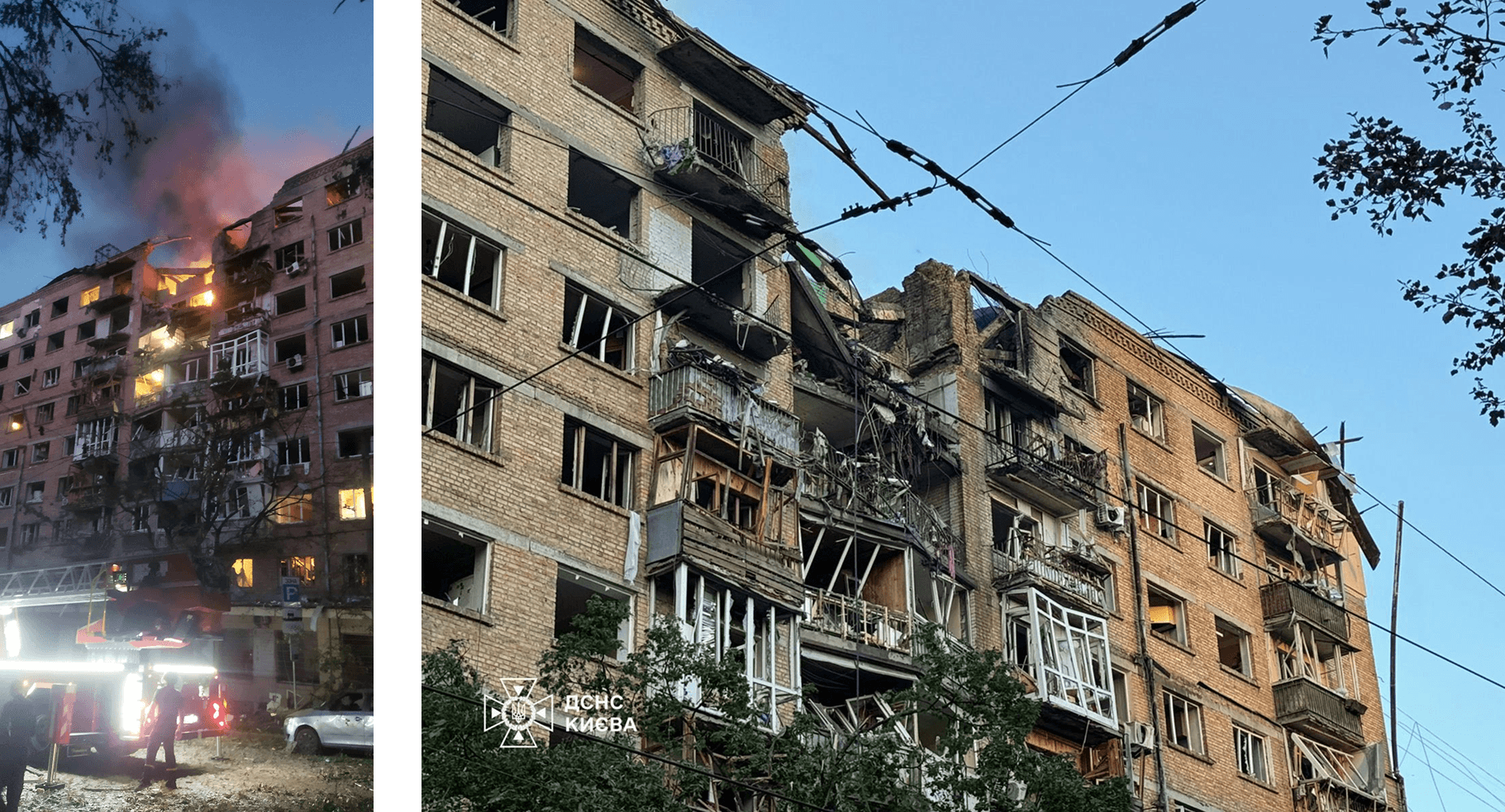
Zakharchenko’s house in Kyiv / Photo: Artem Zakharchenko (left), State Emergency Service of Ukraine (right)
Writer Olena Zakharchenko, whose apartment was completely destroyed, described the night of the attack and how she managed to lie down on the floor in time before the impact:
I no longer have the apartment I loved very much. It feels somehow illogical, like it shouldn’t be this way. In the evening we were sitting with the children, playing a board game, loading the dishwasher, I was worrying about whether to water the flowers outside the window, putting on fresh bed sheets because I had done laundry. The children were washing the floors. And then — everything is gone. There is no apartment, no books, no dishes we were washing, no game we were playing. I have nowhere to live. My home is being taken apart, brick by brick, concrete slabs falling, so that it “doesn’t fall on people’s heads.” And I still cannot believe that I will never sit on the sofa again, never look at the pictures and the old clock, never shout something to my children into their room. Life has burned down, scattered into pieces.
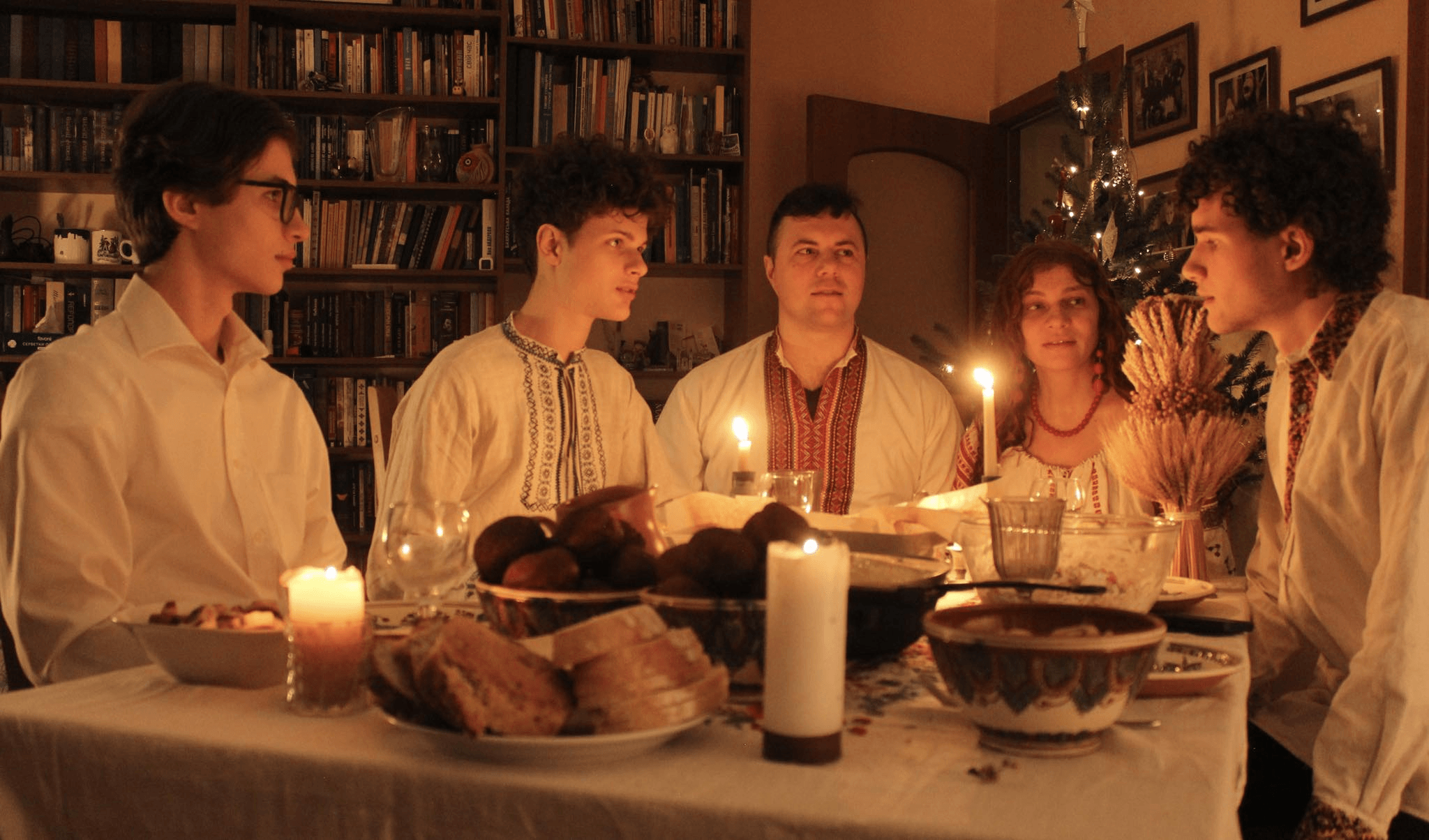
Zakharchenko family celebrates Christmas without electricity (December 24, 2025) / Photo: posted by Olena Zakharchenko
Writer Tamara Duda described the aftermath of the attack:
“The courtyard is covered with shattered glass from blown-out windows. People rushed outside and are inspecting their cars with flashlights.”
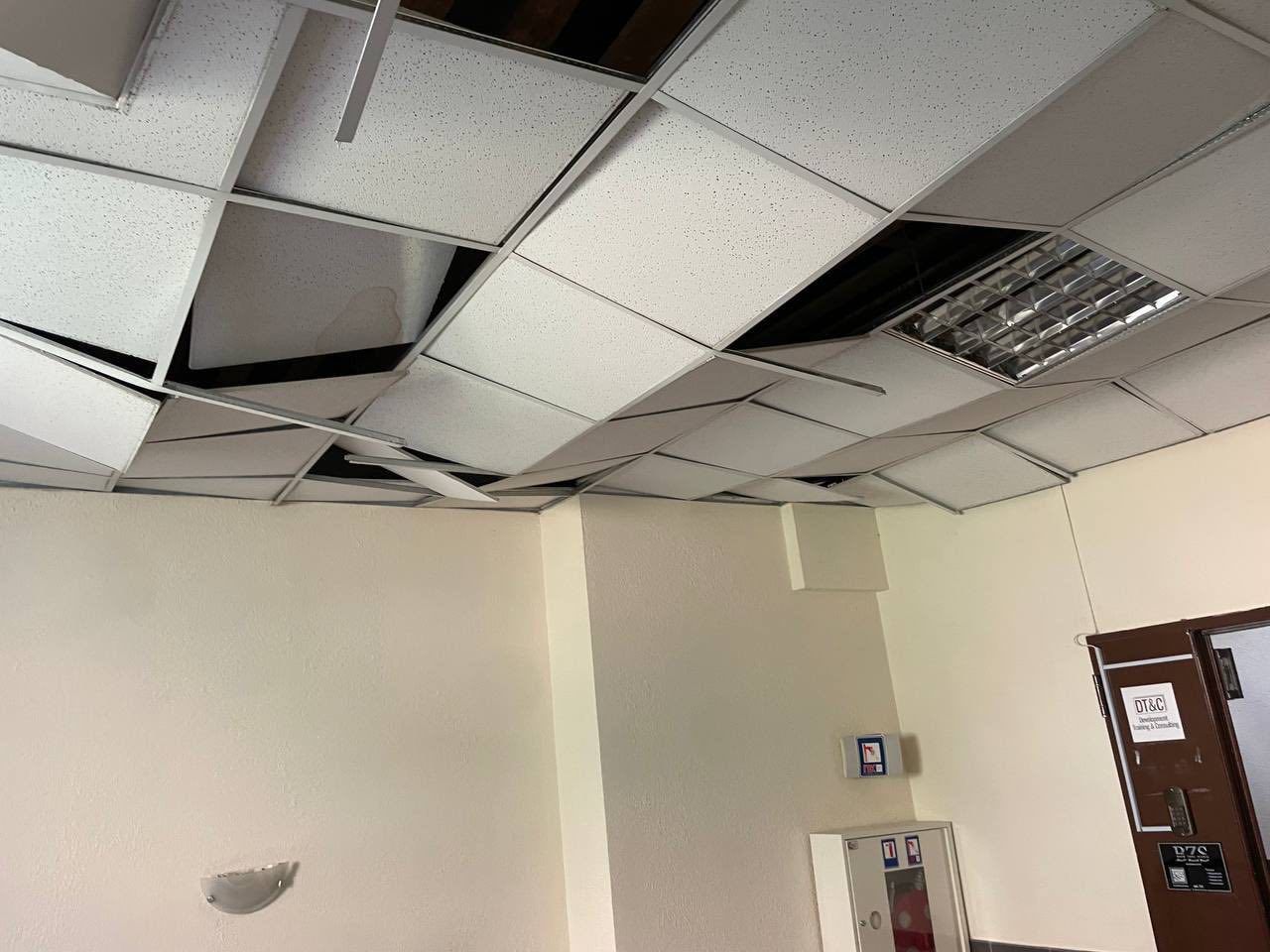
The premises of the Taras Shevchenko Institute of Literature of the National Academy of Sciences of Ukraine were also damaged in the attack. The institute reported damage to its library, book repositories, and most of its research departments.
“The already difficult financial situation of the country’s oldest literary research institution has become even more complicated,” the institute said in a Facebook post.
Founded in 1926, the Taras Shevchenko Institute of Literature is Ukraine’s leading academic institution for literary studies and is celebrating its centenary this year. Its collections include more than 133,000 culturally significant items, including manuscripts dating back to the 14th century and archival materials connected to major figures of Ukrainian literature and culture, among them Taras Shevchenko, Ivan Franko, Lesia Ukrayinka, and Olha Kobylianska.
The institute’s library contains more than 200,000 books, periodicals, and archival materials published between the 18th and 21st centuries, raising renewed concerns about the preservation of Ukraine’s literary and cultural heritage amid ongoing Russian attacks.
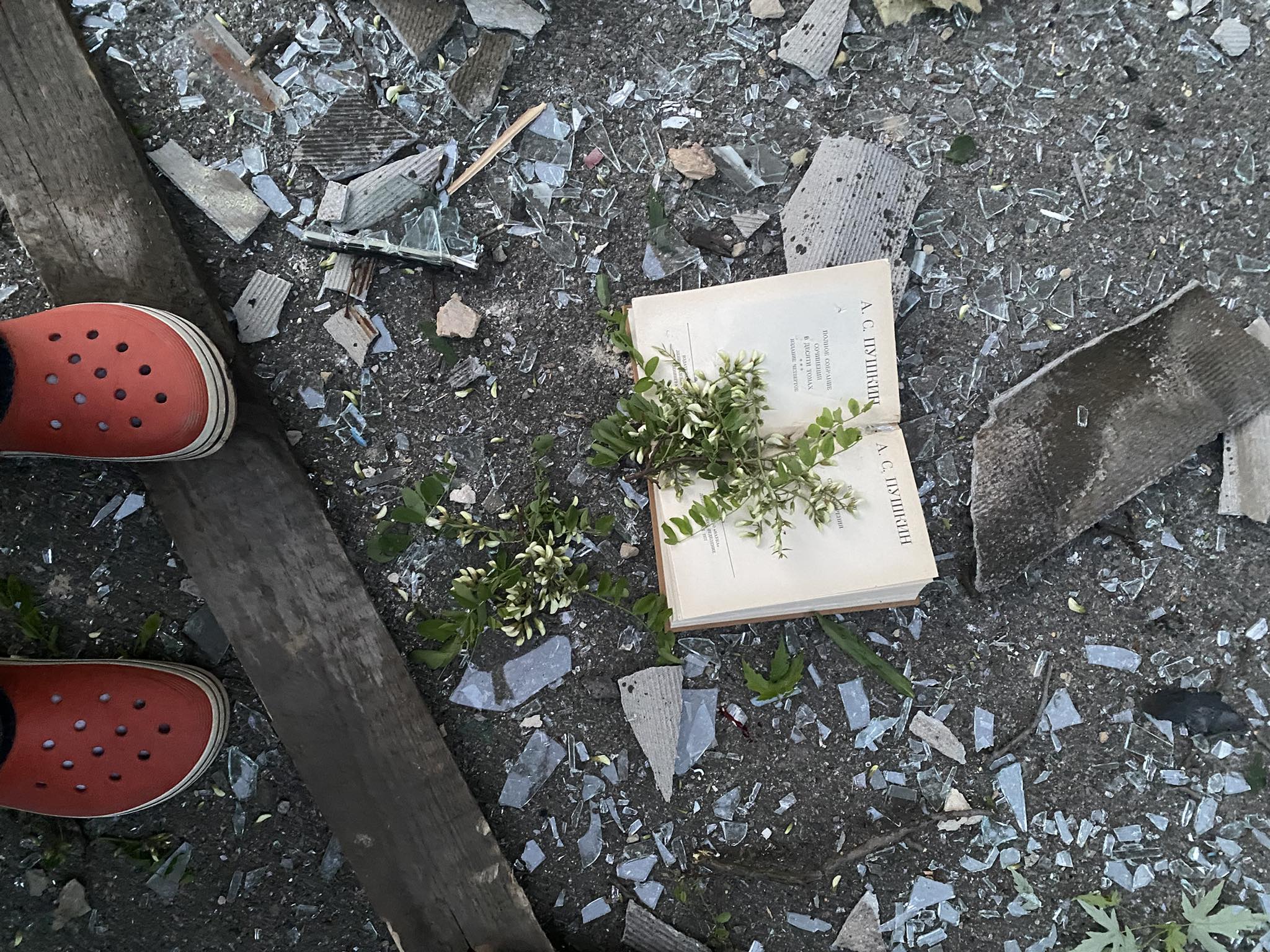
A book by Alexander Pushkin was blown out of someone’s apartment by the blast wave. Photo: Olena Zakharchenko.
The latest damage follows a series of attacks on Ukraine’s cultural infrastructure. As reported earlier, Russian forces once again damaged the Hryhorii Skovoroda Literary Memorial Museum in the Kharkiv region.
During Russia’s overnight attack on Kyiv on May 13–14, one of the logistics centers of Ranok Publishing Corporation and a warehouse belonging to One More Page Publishing (Shche Odnu Storinku) were also damaged.
If you want to help the Zakharchenko family, you can support them via PayPal.
name: Marko Zakharchenko
Читомо» — це медіа про книжки й літературу, що підтримувало українське книговидання задовго до того, як це стало трендом. Ставайте частиною історії — доєднуйтеся до Клубу Читомо!
the more you read, the greater the possibilities
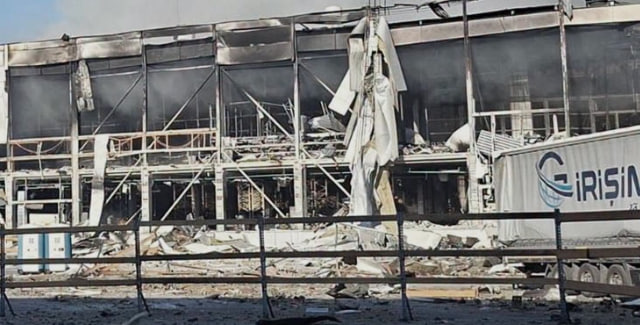
234
book industry in times of war
Russian attack on Kyiv damages publisher’s printer, destroys 800,000 books and impacts cultural figures
03.07.2026 -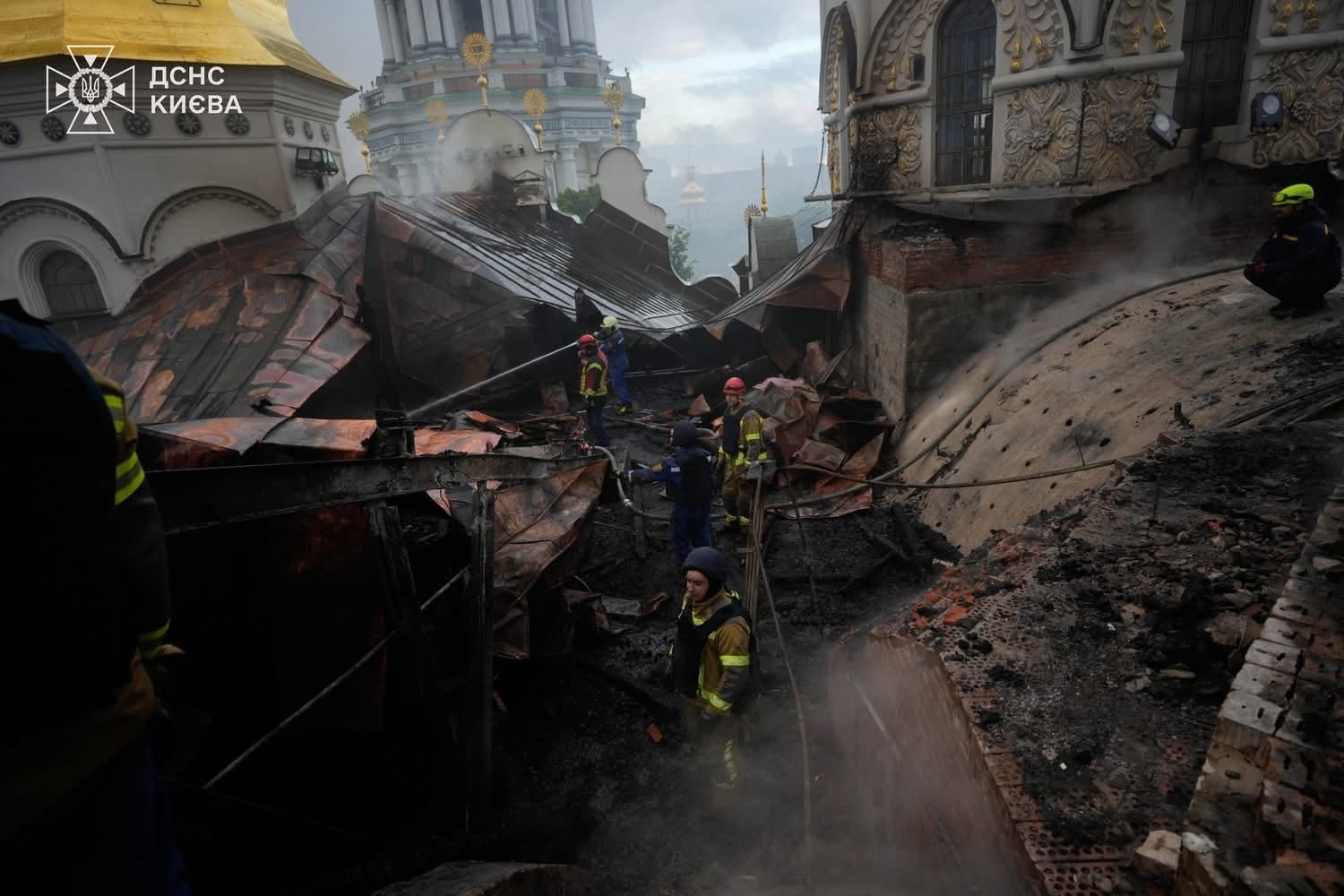
67
Russia's attack
Ukraine’s UNESCO Commission urges international action after attacks on cultural heritage sites
16.06.2026 -