* ESC - close the search window
Hemingway Knows Nothing
Artur Dron: ‘Hemingway Knows Nothing’ is a candid conversation about war
28.08.2026

You see an error in the text - select the fragment and press Ctrl + Enter
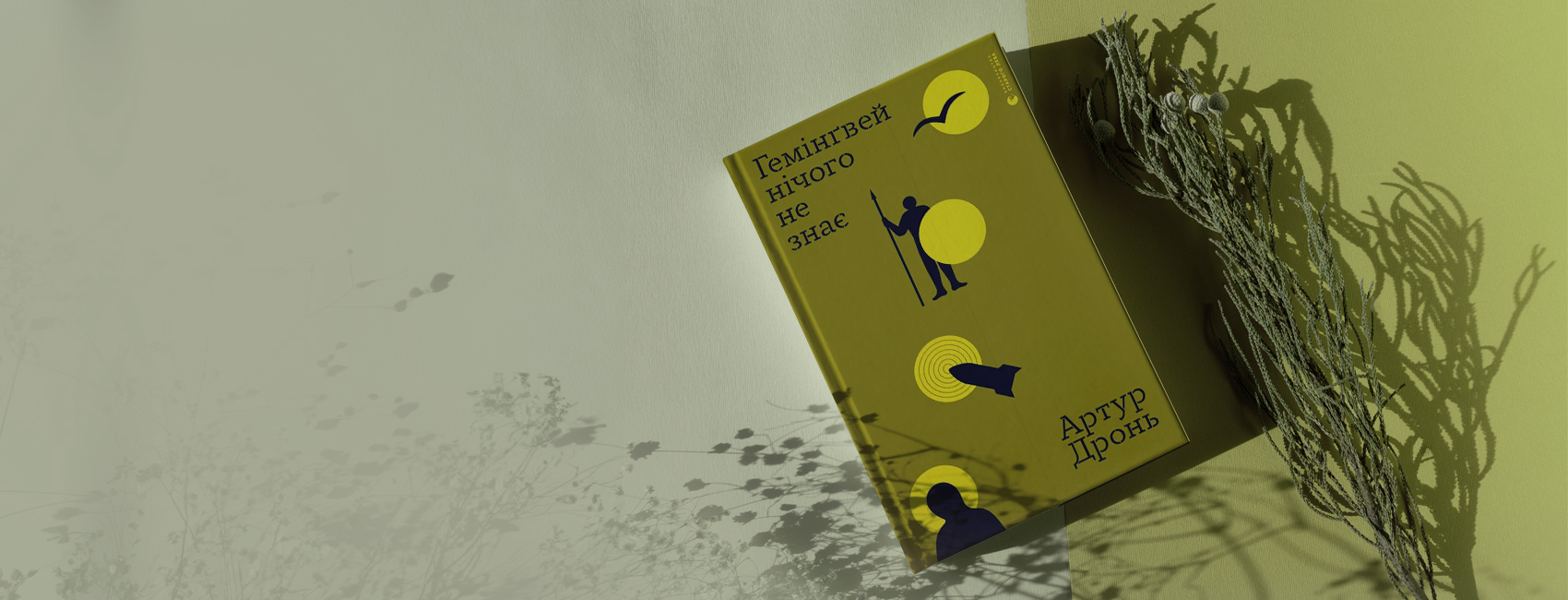
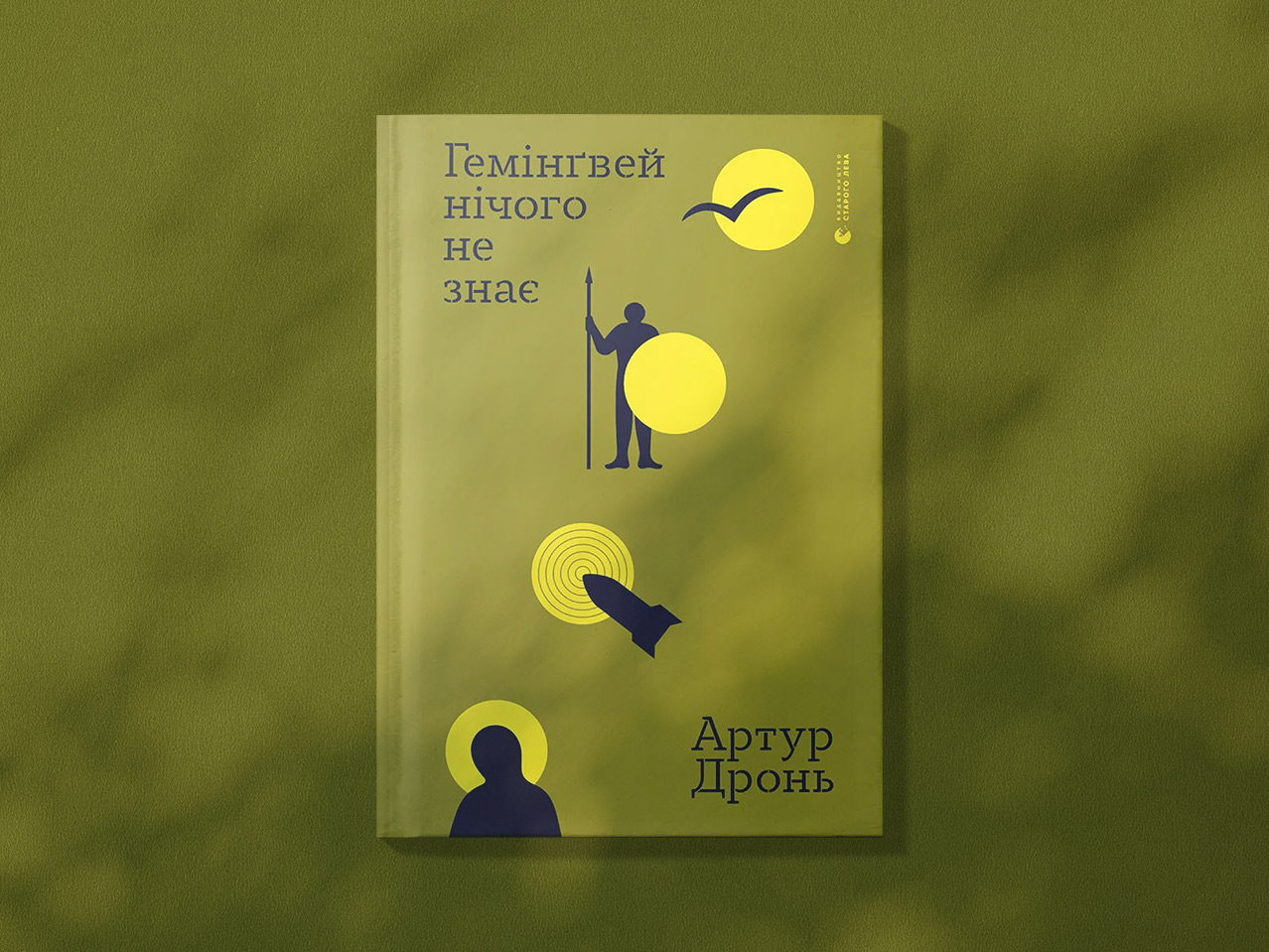
On Sept. 17, 2026, Jantar Publishing is releasing an English translation of “Hemingway Knows Nothing” by a young Ukrainian writer and former soldier, Artur Dron. The book is a collection of autofiction and stories about people whose lives have been drastically transformed by Russia’s full-scale invasion of Ukraine. It invites readers to contemplate humanity, God, love, and emotional wounds that can take a long time to heal without moralizing, sincerely and with the belief that the book’s message will resonate with those who are now far away from a country engaged in an existential battle.
Anastasia Gerasymova: “Hemingway Knows Nothing” is a bit of a provocative title to English-speaking readers, as Ernest Hemingway continues to be an icon of Western war literature. Have you considered changing the title for the English-language edition so as not to turn away readers?
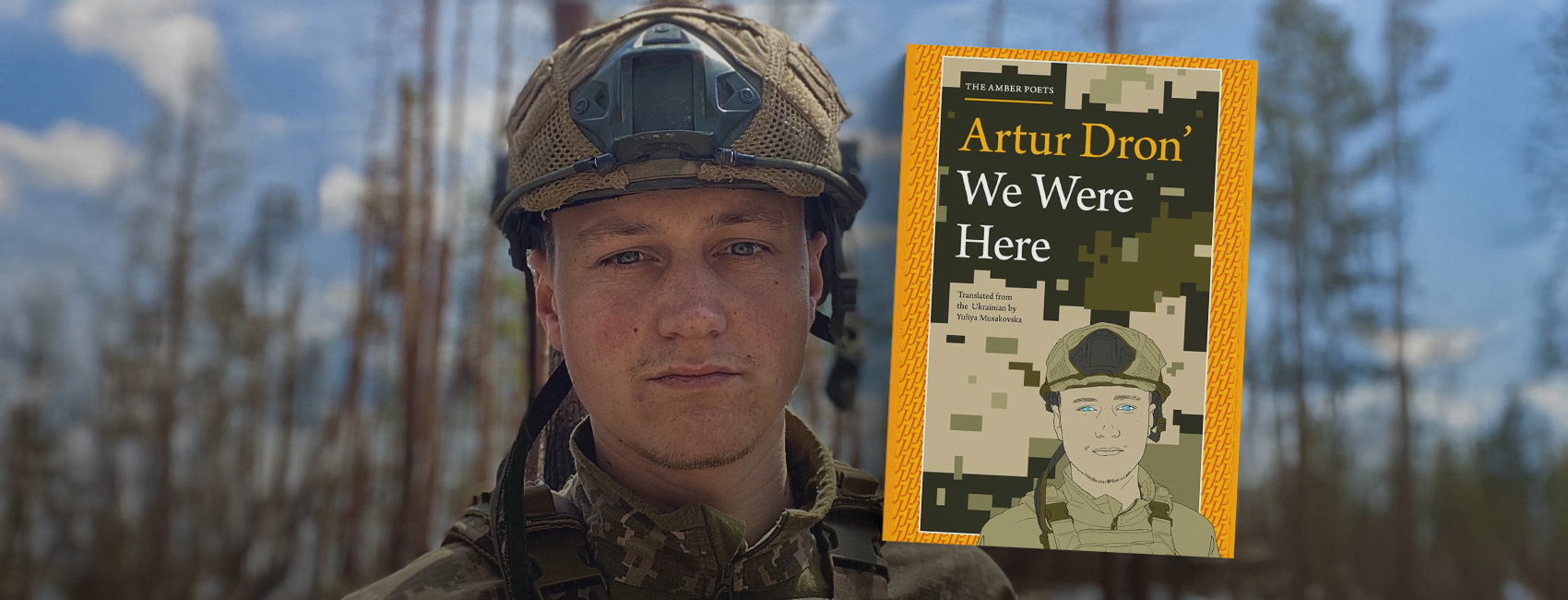
Artur Dron: Let me start by saying that Hemingway has always been a literary icon and an authority figure to me. I found the title to be very important, and it didn’t seem pretentious. And it’s precisely about my relationship with the writer. I couldn’t suggest changing the book’s title because it would have been emotionally difficult. I think such an initiative might have come from the publisher, but fortunately the publisher liked the title. In fact, the English translation rights were the first to be sold. The British independent publisher Jantar, which had previously published my poetry collection “We Were Here” translated by Yuliia Musakovska, acquired them back in 2025.
The publisher bought the rights to “Hemingway Knows Nothing” within a month of the book’s release in Ukrainian, partially because they liked the title. It is difficult to predict how the general reading public might respond. In fact, even in Ukraine, not everyone has a clear-cut reaction to it. Based on my instinct as an author, the book was meant to have this title. Of course, I’d like to thank Hanna Leliv for translating “Hemingway Knows Nothing” and Professor Hugh Roberts of the University of Exeter for his editorial work on both editions.
Anastasia Gerasymova: You write: “We need new literature that is anti-war but not anti-military.” Works by Erich Maria Remarque and Hemingway have shaped Western literature for centuries, and having weapons in one’s hands is automatically interpreted as a tragedy of the “lost generation.” How do you explain to foreigners why Ukrainian war fiction rejects pacifism?
Artur Dron: European culture has become accustomed to condemning weapons, but I say that weapons (or military force in a broader sense) are neither good nor bad. They serve as a means. What matters is how and for what purposes weapons are used. We cannot state that weapons are evil, that the army is evil, or that anything military is evil because they can serve a defensive means. We cannot reject all weapons or disband all armies because, even if you are the most committed pacifist in the world, no one can guarantee that your neighbor will act the same. They might use these means, or weapons, to come and take what belongs to you, to kill your loved ones… That is why we must be armed.
We must treat weapons, the army, and the military with respect. We definitely can’t use the military or weapons for evil purposes, but we must rely on them for protection. This approach makes more sense to us today than, say, to residents of the USA, for obvious reasons and due to objective circumstances. I also believe it is because, throughout Ukraine’s history, our nation has been deeply scarred by these issues many times. For example, a hundred years ago, when the Ukrainian People’s Republic renounced its military capabilities because it had no plans to go to war with anyone. That fatal mistake cost us decades of occupation and millions of lives. Now we understand that such a mistake must not be repeated. That is why contemporary Ukrainian literature is working to capture this idea — to articulate it and to explain it.
Anastasia Gerasymova: In the international information space, the war in Ukraine is often perceived as another news item or a local conflict that will eventually “end with negotiations.” How do we explain that this is an existential war, one aimed at the annihilation of an entire nation?
Artur Dron: I don’t have a clear answer to this question, and I wouldn’t want to become a mouthpiece for a particular viewpoint. I feel more comfortable in the role of “one of us” — someone who understands certain things and speaks. If I were to venture an explanation of what Ukrainian existential war is, I would frame it in terms of two factors. The first is historical continuity: Ukrainian war has been going on for several hundred years. What Ukrainians are experiencing now is just one of its phases. Many generations of Ukrainians have faced the same enemy. Leaders have come and gone, and even the country’s name has changed, but the enemy and its goal have remained the same. The second factor is the human dimension. I can’t draw conclusions about complex geopolitical matters without sufficient information because I’m not an expert in that field and I don’t think such approaches work.
I can explain the war through the painful human dimension of how it’s being waged against Ukrainians. Recently, the whole world saw a video showing a Russian drone chasing an ordinary man in Kherson who had come to the market to sell vegetables. Russians are openly, contemptuously, and so blatantly engaged in the extermination of Ukrainian civilians because we exist. They don’t even bother to pretend that this is about some kind of military objective. This isn’t about the dictator because the drone is piloted by an ordinary Russian, and it is he who, hunting down a Ukrainian civilian, is making the decision.
I think that no geopolitical analysis or expert can say more about this war than this example. I think the book offers a similar explanation through the stories of real people.
Anastasia Gerasymova: If we discuss the book’s style and structure, we see that it includes both first-person narratives — which is autofiction — and stories about other characters. Why did you choose this combination?
Artur Dron: It wasn’t a planned writing strategy. I just tried to write about what was most important to me at that particular time, and to capture the things that I personally felt were essential to articulate and put into words.
While writing, genre or structural choices didn’t seem important. I was trying to figure out the main thing: the same event can be presented in different ways, so how do I tell the story? My goal was to find the most candid and meaningful way to tell the story for myself, and at the very beginning, I didn’t think about anything else.
The second stage began later, when the texts had piled up and I got the feeling that this was indeed the very essence of what mattered most. I looked at what I’d written and saw a kind of a future book, a product. I began working with the existing material, arranging it, searching for a structure, and thinking about how it would resonate with the reader. I didn’t have any initial concept along the lines of “what kind of material to create or what genre to choose.” If it had felt more natural to me at the time to write everything in the first person or in a single style, I would have done exactly that, and only then would I have thought about how to proceed from there. It happened that this was exactly how it felt to me.
Anastasia Gerasymova: Does one’s understanding of God and faith change on the front lines? You often write about this, particularly in the story “Trench God.” How does it feel “being where you belong,” even in the most terrifying circumstances?
Artur Dron: I think we all see differently how one’s relationship with God, or one’s perception of God, changes during war. Ask as many people as you like, and you’ll get just as many different answers.
When it comes to deeply personal things like faith and God, there is no single experience. I wouldn’t even try to identify one pattern or claim that this is how it works for the majority of people. It is all about the fact that you can be accountable only for your personal experience or that of those closest to you.
As for me, my relationship with God didn’t vanish, didn’t end up meaning nothing, and didn’t turn into disbelief or the conviction that God doesn’t exist. That feeling, understanding, and connection have always stayed with me. But, obviously, this relationship has gone through difficult periods, trials, and misunderstandings.
I haven’t stopped believing in God, but there are many things about God that I didn’t understand and still don’t. From my point of view, these things are entirely compatible: the conviction and sense that God exists and that a connection exists between you can coexist with the fact that you don’t understand many processes. This stems from the fact that both you and God are living beings. Not being logical, predictable, and not being fully comprehensible are essential characteristics of a living being. If I can’t fully understand my wife, who is by my side every day, or even fully understand myself, how can I comprehend a transcendent God?
For me, personally, it happened because of a lack of understanding, complaints, and very painful questions I directed at God. For others, it happens in different ways. For some, the experience of war understandably leads to despair, while for others, on the contrary, it is precisely in the midst of this horror that they find faith.
The most important thing, I believe, is to remember that during war, when we’re particularly sensitive, we shouldn’t let such an important and intimate topic become a source of tension, conflict, or hurt feelings. For me, this was a small but very important part of the text “Trench God,” you spoke about earlier. After all, it begins with two people who have completely opposing views and do everything they can to ensure this difference doesn’t provoke a conflict between them.
Anastasia Gerasymova: The book subtly explores how war tears people away from their everyday lives and the sense of time and space. It takes away the chance to see one’s children or parents. Has literature become a way for you to keep that time? Do you think it is possible to reclaim what the war is trying to take away through words?
Artur Dron: I’m sure it’s impossible to fully restore what’s been lost, and I believe we have to accept that fact. Literature can work with this and has an impact on it. In my book, I wrote that literature can be a way to retain a tiny fragment from a fleeting moment and, at the very least, use it to show yourself, this moment, and these circumstances that they cannot take everything away from you. They can’t take away your memories or the experiences you’ve already gone through. They may be terrible, the kind you’d never wish upon yourself, but you’ve already lived through them, and they belong to you only. You have the right to continue reflecting on them and writing about them, drawing conclusions, and transforming them into things that will help you move forward.
Literature can work with this. Writing about people who are no longer with us, for instance, works with this. It is true that no writing can bring back anyone who has died. But it can serve a purpose: to record important things about these people — their thoughts or distinct traits. We can try to name it, to touch it, and it will remain somewhere forever. At least in the form of a book, memory will be saved from desolation and transience.
That’s the reason why literature’s confrontation with time and transience is so important to me. I understand that this isn’t exactly what we might want from literature. It doesn’t bring back the time that has been lost, but it is at least something: a very important process of working on oneself, on one’s understanding of time, and on what you carry forward. It ranges from the simple and immediate act of recording what happened to deep inner work when you recall, write, and rethink. It’s a process that works on multiple levels, and I believe that is important, even if it doesn’t work to its full potential the way we would like it to.
Anastasia Gerasymova: Have you ever thought about writing a book about returning home? About what it’s like when someone who has spent several years on the front lines finds themselves back in a relatively peaceful life?
Artur Dron: You know, there’s a well-known saying that you can’t really come back from war. As for me, I’d rather not use that phrase. In my opinion, this is very unfair to those who are still physically at war. Sitting in my apartment in Lviv under an air conditioner, I can’t say in an interview that I haven’t returned from war. I’m back, and I can use all the benefits of civilian life. Many people are still on the front lines, having been there much longer than I was. It’s clear that, for most people, returning is neither simple nor easy. The physical return, along with the emotional and psychological adjustment to new circumstances, is a complex and painful process. It’s different for everyone, but still difficult.
Would I like to write about this? Well, I’ve shared some thoughts about this in my new book, “The Hospital of Saint Panteleimon,” which is planned to be published in fall. The book will mostly be about helping heal different people and the very different wounds of war. Do I want to write a book about coming home? I don’t think so. I wouldn’t really want to write about myself. It seems that even in “Hemingway Knows Nothing,” I wrote too much about myself. I focus more on others in my new book. There are also many different people in “Hemingway Knows Nothing” because community is of great importance for me. I really love writing about others, and there will be even more of that in the new book. “The Hospital of Saint Panteleimon” will conclude my kind of trilogy about the war, consisting of the poetry collection “We Were Here” and the prose work “Hemingway Knows Nothing.” That’s all for now. My next book won’t be about my military experience.
Fortunately, we have many authors who write during and after their combat experiences. Military literature is incredibly diverse, and the authors are so different, each experiencing these events from their own unique perspective, that we will continue reading widely for many years and constantly gain new insights into what it means to be human at war.
Anastasia Gerasymova: It seems “Hemingway Knows Nothing” has won every major literary award in Ukraine last year. Why do you think it happened, considering war literature has been published in Ukraine since 2014?
Artur Dron: I will not pretend to be shy, so I’ll say that I’m truly flattered by all the attention this book has had. I’m grateful to all the readers, critics, and institutions that have recognized it. I truly appreciate it and feel deeply grateful. I hope this book wins many more awards — I wish it every possible one! I’m really hoping it succeeds. At every stage of the process, before and after writing, I tried to put in as much effort as possible to make it as visible as possible.
But the truth is I don’t know why exactly this book resonated so deeply with the audience. If we look at this success as a phenomenon, it certainly consists of many various factors. The text is the heart, but everything surrounding it is no less important. It’s just that a number of significant factors happened to coincide. We don’t know if things would have turned out the same way if it had been published a year earlier or a year later. Everything turned out to be important: the context, what we’re collectively thinking about right now, and how and what’s happening around this book. All these factors ultimately result in success.
I tried to do my best and wrote without thinking about how many copies would be printed or into which languages it would be translated. I wanted these texts to have an impact on me personally, and only then on anyone else.
Just as I prefer to be “one of us” rather than a kind of “mouthpiece,” I’d like my books to be among the many successful publications that find their audience. I’m sure that’s exactly what will happen.
Anastasia Gerasymova: What do you hope to change in an English-speaking reader’s mindset when they finish reading the last page of “Hemingway Knows Nothing”?
Artur Dron: I’d like to achieve the effect I strive for with every reader, Ukrainian or international: when they finish reading, they feel like someone has simply had a sincere conversation with them. No lecturing or moralizing, just a frank conversation.
For me, this is a book of testimonies. That’s exactly the effect I want to have on international readers. Not to preach or present a treatise, but to share my testimony. To talk and show: look, this is how I see it. One of the most important goals for how this text should resonate with an international audience is to foster a deeper understanding of and sense of connection with people in Ukraine who are experiencing the war. To convey the understanding that the Ukrainian army is not the same as the French or Swedish. It’s not just people who chose this profession, trained for years, and are now doing their jobs because war has broken out. The Ukrainian army consists of ordinary men and women, just like the reader — a journalist, public transit driver, or student. When an enemy arrives with weapons to destroy everything this person loves, they are forced to take up arms because they simply have no other choice but to defend themselves and their families.
I would like this aspect of the book, the stories of people “not born for war” (to borrow a famous phrase from Artem Chapeye), to resonate with international audiences. The same goes for the stories of men and women whose families fall apart while they’re serving. It seems that these are wounds that haven’t yet been fully understood abroad. I mean, it’s easy to associate war with shelling, death, and destruction. But war is also when a person goes off to serve, holds a relatively peaceful position and is supposedly safe, yet remains separated from their loved ones for years because they have to. That, too, is war. That, too, is a deep wound, and we need to talk about it. At the very least, I hope that the book will work toward this end, and I sincerely wish it well.
The publication is a part of the “Chapter Ukraine” project. The materials have been prepared with the assistance of the Ukrainian Book Institute at the expense of the state budget. The author’s opinion may not coincide with the official position of the Ukrainian Book Institute.
RELATED: Hugh Roberts: Often I wonder who is supporting whom
Translation: Iryna Savyuk
Copy editing: Terra King
Читомо» — це медіа про книжки й літературу, що підтримувало українське книговидання задовго до того, як це стало трендом. Ставайте частиною історії — доєднуйтеся до Клубу Читомо!