* ESC - close the search window
conference
Ukrainian designers urge international typography body to review Russian ParaType art director’s conference appearance
16.09.2026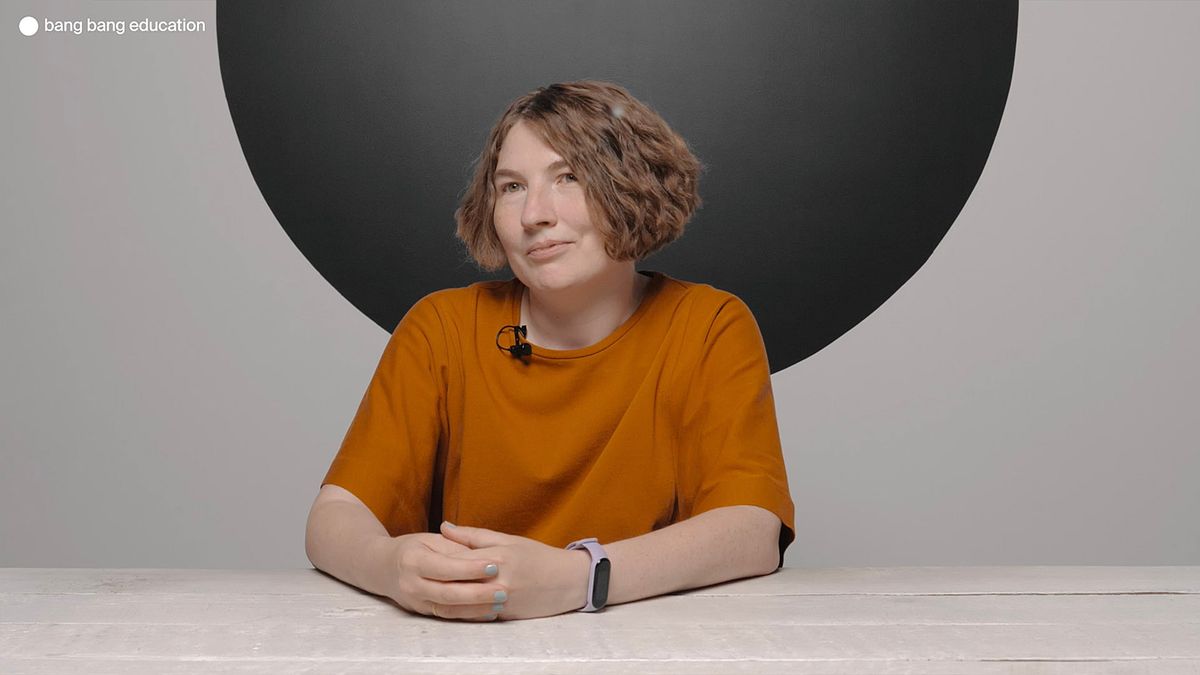
Ukrainian designers are urging the board of the Association Typographique Internationale, or ATypI, to review the participation of Aleksandra Korolkova, art director of the Russian type company ParaType, in the ATypI Sharjah 2026 conference. The open letter has gathered more than 160 signatures from members of the design community in several countries. Two Ukrainian speakers accepted into the program — Oleksandra Korchevska-Tsekhosh and Oleksii Chekal — have decided not to attend under the current circumstances.
As of Sept. 15, Korolkova remains listed in ATypI’s official conference program, which the association notes is subject to change. Her presentation, “Beyond Alternates: Automating Microtypography with OpenType,” is listed for Oct. 29, and ATypI has not published a decision on the appeal on its website.
The letter asks ATypI to remove Korolkova from the program or at least suspend her participation and promotion while the evidence is reviewed. Its authors stress that their objections are not based on her nationality, citizenship, language, or assumptions about her personal political views, but on her professional activity, her continued role as ParaType’s art director, and her 5% stake in the company.
“We did not want to withdraw. We wanted to talk about typography,” Korchevska-Tsekhosh wrote when announcing the appeal. She also asked ATypI to clarify whether the profession has “any threshold of responsibility — and where it lies.”
A central part of the evidence cited in the letter concerns PT Astra Sans and PT Astra Serif, typefaces developed by ParaType for Astra Linux. In 2016, Radio Free Europe/Radio Liberty reported that U.S.-based Monotype had refused to license Times New Roman to RusBitTech, the developer of Astra Linux, because of U.S. sanctions imposed after Russia’s occupation of Crimea. Astra Linux had been developed for Russian state institutions, including the Defense Ministry and Federal Security Service, or FSB. ParaType and RusBitTech subsequently developed PT Astra Sans and PT Astra Serif, designed by Korolkova and Isabella Chaeva.
Astra Linux itself reported in 2015 that its Special Edition had received FSB certification, allowing the system to be used to process information containing Russian state secrets and other restricted data. Later Astra materials also described its use by state and military institutions handling restricted information.
“Typefaces for a system used by Russian state, military and security infrastructure — is that not relevant to participation in an international conference?” Korchevska-Tsekhosh wrote.
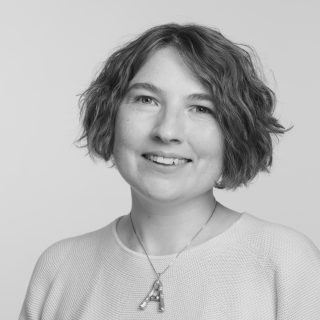
Korolkova’s ATypI profile continues to identify her as ParaType’s art director, as well as a type and book designer, type researcher, and consultant. Her work includes PT Sans, PT Serif, FF Carina, Leksa, Circe, and Golos. The open letter also points to Golos, which was commissioned for Russian government and social-service websites.
The authors acknowledge that ATypI may regard the presentation itself as purely technical. They argue, however, that inviting and promoting a speaker is an institutional decision and that documented professional context should form part of that assessment.
The letter also refers to ParaType director Anna Yakupova’s public support in 2022 for Russia’s attempted annexation of occupied Ukrainian territories following sham referendums organized by Russian occupation authorities. After the statement drew criticism, ParaType said Yakupova’s comments had been taken out of context and maintained that the company and its employees were concerned with “a love of fonts, not political views.” Korolkova remained ParaType’s art director after the controversy.
The appeal also invokes ATypI’s own public statements about the social role of typography. During a 2026 appearance at Stanford, ATypI President Nada Abdalla said that “type is not neutral” and linked typography to people, cultures, and their futures.
“We ask ATypI to apply that principle here,” the letter states.
The signatories are asking ATypI to review Korolkova’s participation, examine the evidence and allow her to respond, confirm within seven days who will conduct the review, and aim to provide a reasoned written response by Sept. 25 — about a month before the conference. They also call for a transparent mechanism for future ethical reviews involving documented professional cooperation with military, security, occupation, propaganda, or sanctioned-state infrastructure.
ATypI Sharjah 2026 is scheduled to take place at the University of the Arts Sharjah in the United Arab Emirates from Oct. 28–31.
The dispute comes amid wider efforts within Ukraine’s design community to reduce reliance on Russian typography. As reported earlier, Ukrainian developers created a browser extension in March 2026 that identifies Russian typefaces, allowing designers and other users to check whether fonts they encounter were produced by Russian companies or designers.
The letter also places the controversy in the context of the damage Russia’s war has inflicted on Ukraine’s publishing sector — one of the professional fields in which typefaces are commissioned and used. Russian attacks destroyed or damaged more than 10 million books (nearly one-third of Ukraine’s annual book print run) over the summer of 2026 and repeatedly hit publishers, warehouses, printing facilities, and bookstores.
As reported earlier, the Ukrainian Book Institute has also called on the international publishing community to stop cooperating with Russian publishers and literary agencies, raise awareness of Russian attacks on Ukrainian cultural infrastructure, and support Ukrainian publishers directly.
Main image: Bang Bang Education
Читомо» — це медіа про книжки й літературу, що підтримувало українське книговидання задовго до того, як це стало трендом. Ставайте частиною історії — доєднуйтеся до Клубу Читомо!
the more you read, the greater the possibilities