* ESC - close the search window
books for libraries
Cafés, e-lending and book lockers: Estonia studies what could draw more people to libraries
16.07.2026
A new study commissioned by the Estonian Ministry of Culture examined why people rarely visit libraries or do not use them at all — and what services could make libraries more relevant to their daily lives.
The study focused primarily on infrequent visitors and non-users of cultural institutions. It therefore does not represent the views of Estonia’s population as a whole. The survey involved 2,508 people aged 15–79, around 2,000 of whom rarely or never visited cultural institutions. At least 1,000 respondents answered questions about barriers in each cultural field. Norstat, a European survey and market research company, conducted the survey in October 2025, while focus groups took place the following month. The research also included spatial analysis and discussions with sector experts.
Among surveyed infrequent visitors and non-users of libraries, 44% said their free time was taken up by other activities, while 35% did not find libraries interesting. Another 32% said information about libraries and their activities did not reach them, and 31% cited work, study, or caregiving responsibilities. Transport was a barrier for only 8% of respondents. The figures are presented in the library section and supporting tables on pages 22–30 and 73–76 of the report. The study also found that 24% of surveyed infrequent visitors and non-users would like to visit libraries more often, while 55% did not want to increase the frequency of their visits. Interest was higher among respondents aged 15–24 and those with lower incomes.
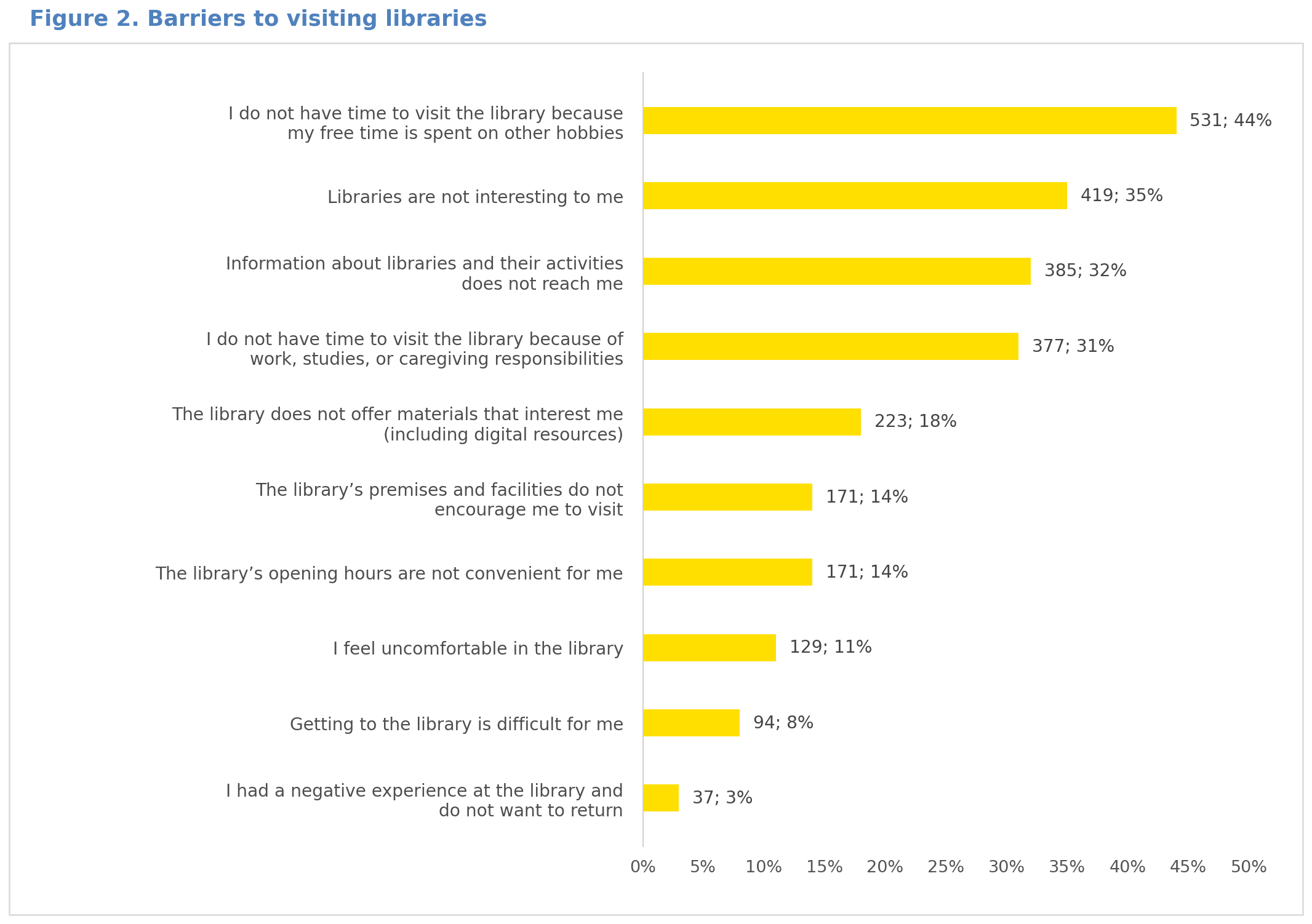
Image: Estonian Ministry of Culture / EY, “Kultuuriasutuste mittekülastajate uuring” (2026).
When respondents were asked an open-ended question about additional library services, they proposed a wide range of options. Eight percent of responses concerned comfort and infrastructure, with cafés or places to eat mentioned most frequently within that category. Respondents also suggested comfortable work and study areas, children’s spaces, community events, book presentations, educational activities, film screenings, and games.
Digital and technological services accounted for 5% of the open-ended responses and included ebooks, audiobooks, computer and internet access, printing, and IT assistance. Another 3% concerned the organisation and delivery of books and other materials, including e-lending, book lockers, home delivery, and collection through parcel machines.
The report’s recommendations include making information about library services easier to find, developing more intuitive digital lending systems, and installing book lockers (automated lockers where readers can collect books ordered from a library at a convenient time) in convenient locations along people’s everyday routes. It also proposes reading lists, comfortable spaces for individual and group work, film and language clubs, children’s areas, and closer cooperation with schools, local businesses, and volunteers.
According to the Estonian Ministry of Culture, work, education, family responsibilities, limited awareness, and lack of interest were recurring barriers to cultural participation. Among surveyed library non-users and infrequent visitors, only 24% wanted to visit more often, compared with 55% who did not. However, interest was notably higher among people aged 15–24 and respondents with lower incomes, suggesting that younger and less affluent groups may be especially responsive to more accessible and relevant library services.
As reported earlier, Estonia’s public libraries are also facing financial pressure. State support for purchasing library materials has remained at 1.9 million euros for five years, despite rising book prices. Libraries have reported difficulties acquiring enough new titles and meeting demand for ebooks and audiobooks. At the same time, library borrowing remains substantial. Estonia allocated more than 1.4 million euros in public lending remuneration based on over four million loans recorded in 2025, and 27 authors received the maximum annual payment.
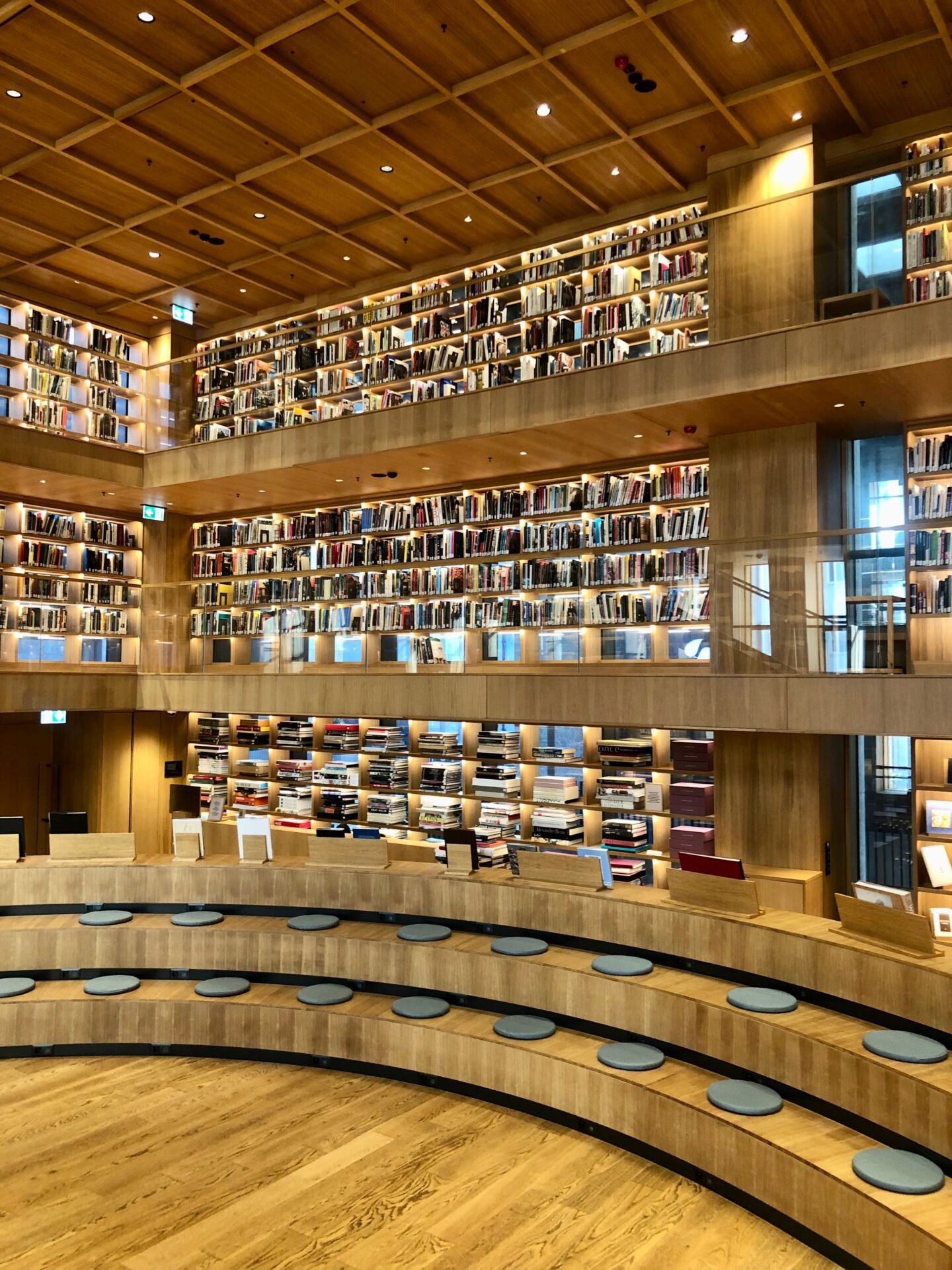
Main image: Estonian Ministry of Culture / EY, “Kultuuriasutuste mittekülastajate uuring” (2026).
Читомо» — це медіа про книжки й літературу, що підтримувало українське книговидання задовго до того, як це стало трендом. Ставайте частиною історії — доєднуйтеся до Клубу Читомо!
the more you read, the greater the possibilities