* ESC - close the search window
2026 London Book Fair
Georgia: The state’s “soft power” can cover 70–100% of your expenses — “if you are willing to cooperate”
17.03.2026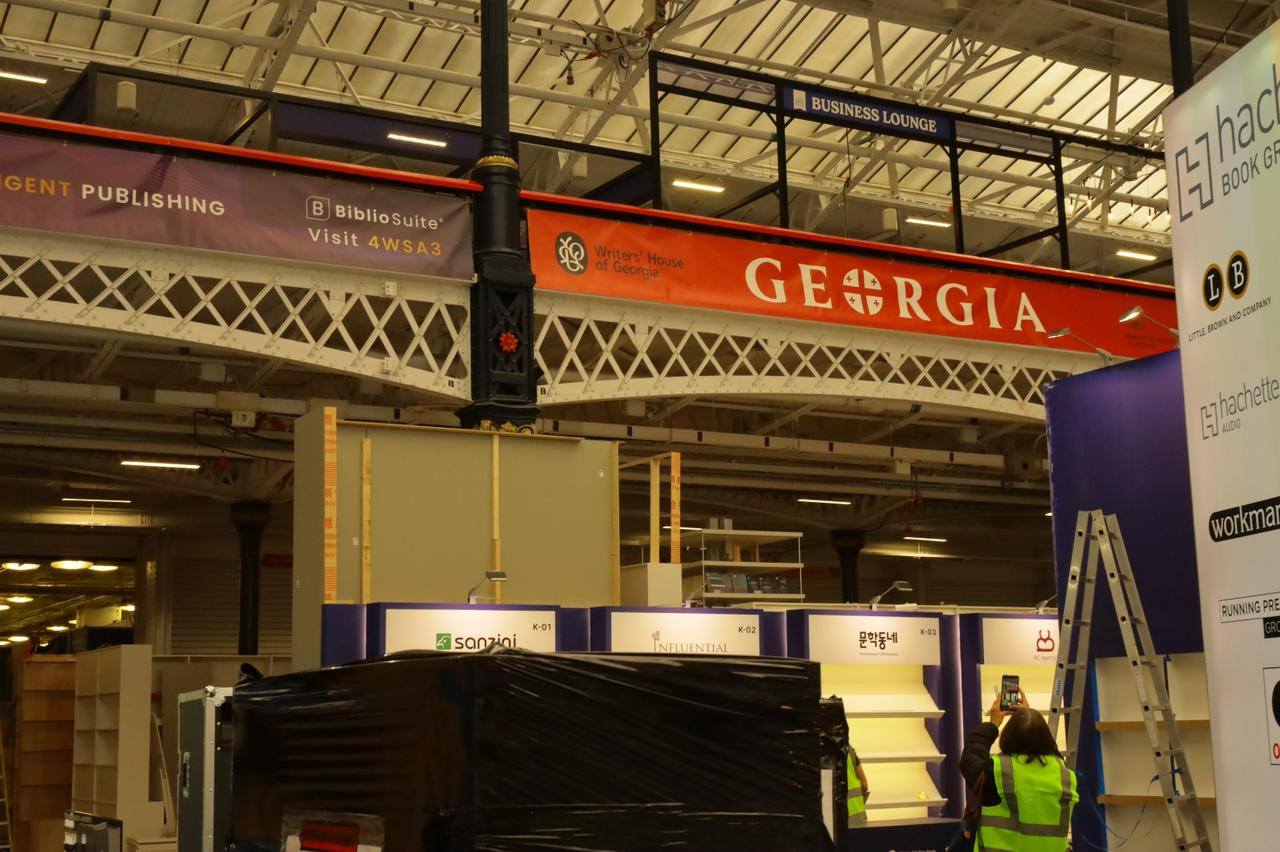

You see an error in the text - select the fragment and press Ctrl + Enter
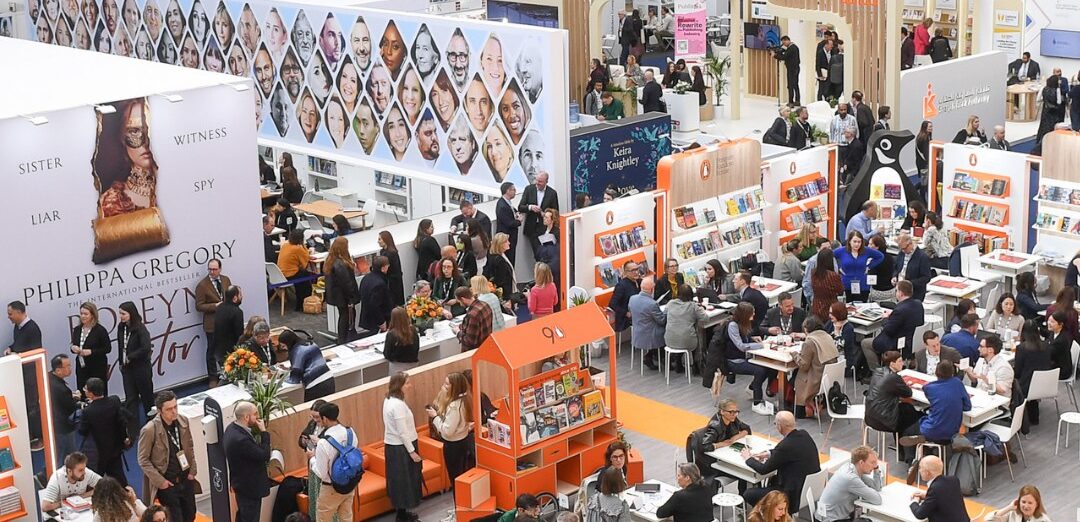
Georgia’s official stand at the London Book Fair is curated by the Writers’ House of Georgia and the Georgian Publishers and Booksellers Association, with support from the Georgian Ministry of Culture. The stand was located in the busiest area, directly opposite the central stage. GEORGIA banners were displayed between floors, and the program, small in scale, is clearly featured at the Literary Translation Centre.
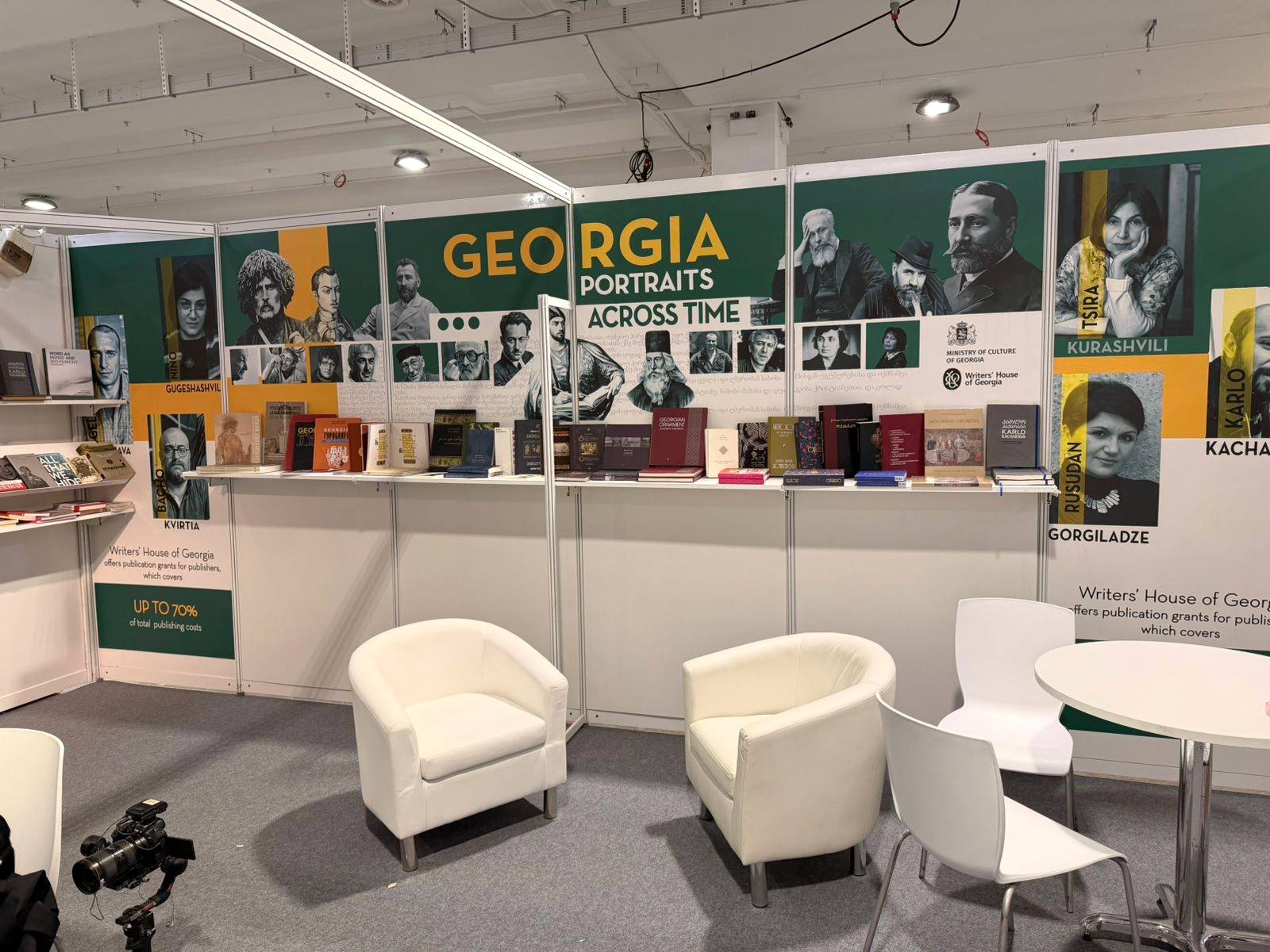
The delegation at the stand was large — at least a dozen people — who spend most of their time there. Handouts and promotional materials were well-designed, and the books have a classic “small language” focus: ornaments, travel notes, encyclopedias of mythology, historical publications on culture and the past, and, to a lesser extent, contemporary prose. The prints decorating the stand are built around “timeless portraits” of writers representing Georgian literature.
The context of the conflict surrounding Writers’ House
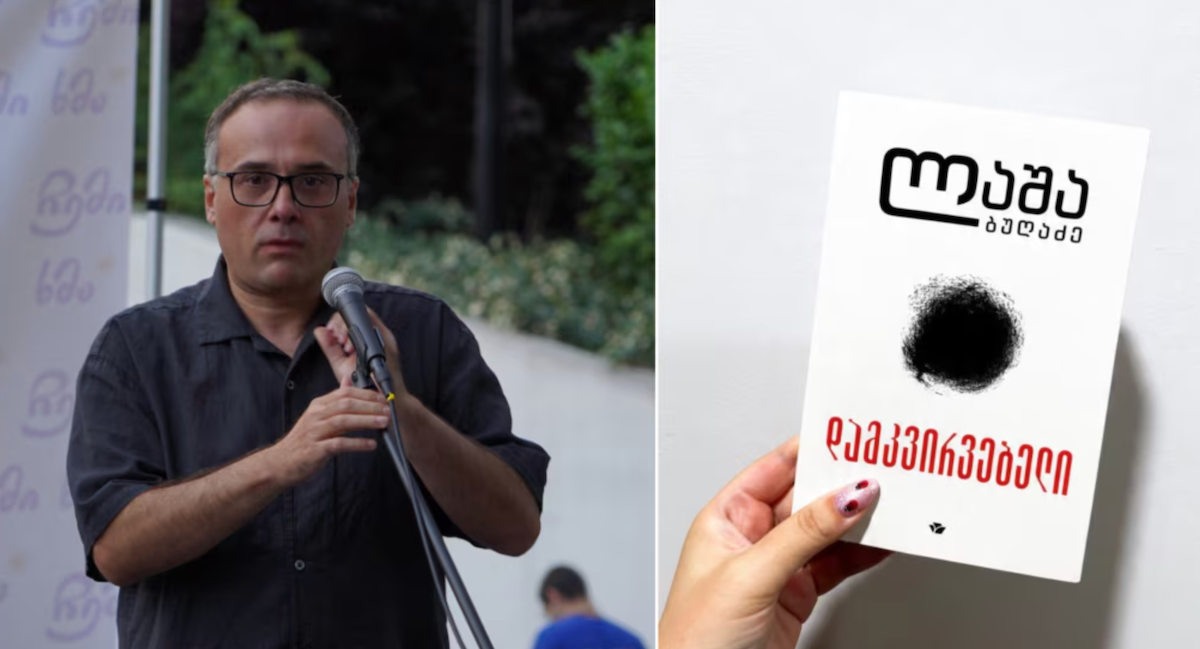
It is important to remember that for several years, the Writers’ House has been at the center of conflict between the authorities and the independent cultural community. Leading publishers, translators, and writers have openly protested against the appointment of a leadership loyal to the current leading party, Georgian Dream, and accuse the government of attempting to use cultural institutions as a tool for political control and propaganda. PEN Georgia, major publishing houses (including Sulakauri and Intelekti), and authors have documented systematic pressure on cultural institutions, a pattern confirmed by international organizations including PEN America and PEN International.
Against the backdrop of mass protests in Georgia, the Writers’ House became one of the symbols of the rift. Peaceful demonstrations by writers and publishers to support the beaten and arrested protesters after the “stolen elections” were already taking place there. During one such action, a scandal occurred involving the aggressive behavior of the director’s son, who physically attacked the protesters. This has led to a pronounced confrontation: on the one hand, Georgian-Dream–controlled institutions that follow official cultural policy; on the other, “rebellious” publishers and authors who avoid the Writers’ House and pursue alternative methods for attending international fairs.
How this manifests itself at international events
Some Georgian publishers have started using an “alternative presence” approach at international fairs, declining to participate in state programs or cooperate with Writers’ House so as not to legitimize Georgian Dream. The official national stand, supervised by an institution controlled by the ruling party, is perceived as an instrument of the government’s “soft power,” while independent publishers are trying to build a separate image of contemporary Georgian culture that is opposed to the authorities and refuse to accept state funds.
One such publisher, with a fully booked schedule of meetings in the literary agents’ sector, nevertheless drops in on one state-sponsored event, “England is Great, Sir!? – Nihilists’ Journey from Dreams to Post-Soviet Realities,” dedicated to Georgian artist, poet, essayist and art critic Karlo Kacharava. She comments unofficially that she does not want her participation in events organized by a structure controlled by Georgian Dream to be interpreted as cooperation; she believes that Kacharava’s name is being exploited, that criticism of the Soviet regime in his texts does not legitimize loyalty to Georgian Dream today. “I prefer not to comment, but it is evident that they are misusing their position and invoking Kacharava’s name as if his criticism of the Soviet regime makes their loyalty to Georgian Dream acceptable. I don’t want to have anything to do with this,” she says. Rather, she prefers to use her time at the fair as pragmatically as possible, as she finances all her trips herself, without state grants: “After all, my schedule is full of meetings, and I have to make the most of my time, because no one is sponsoring my trips.”
The official position of Writers’ House at the fair
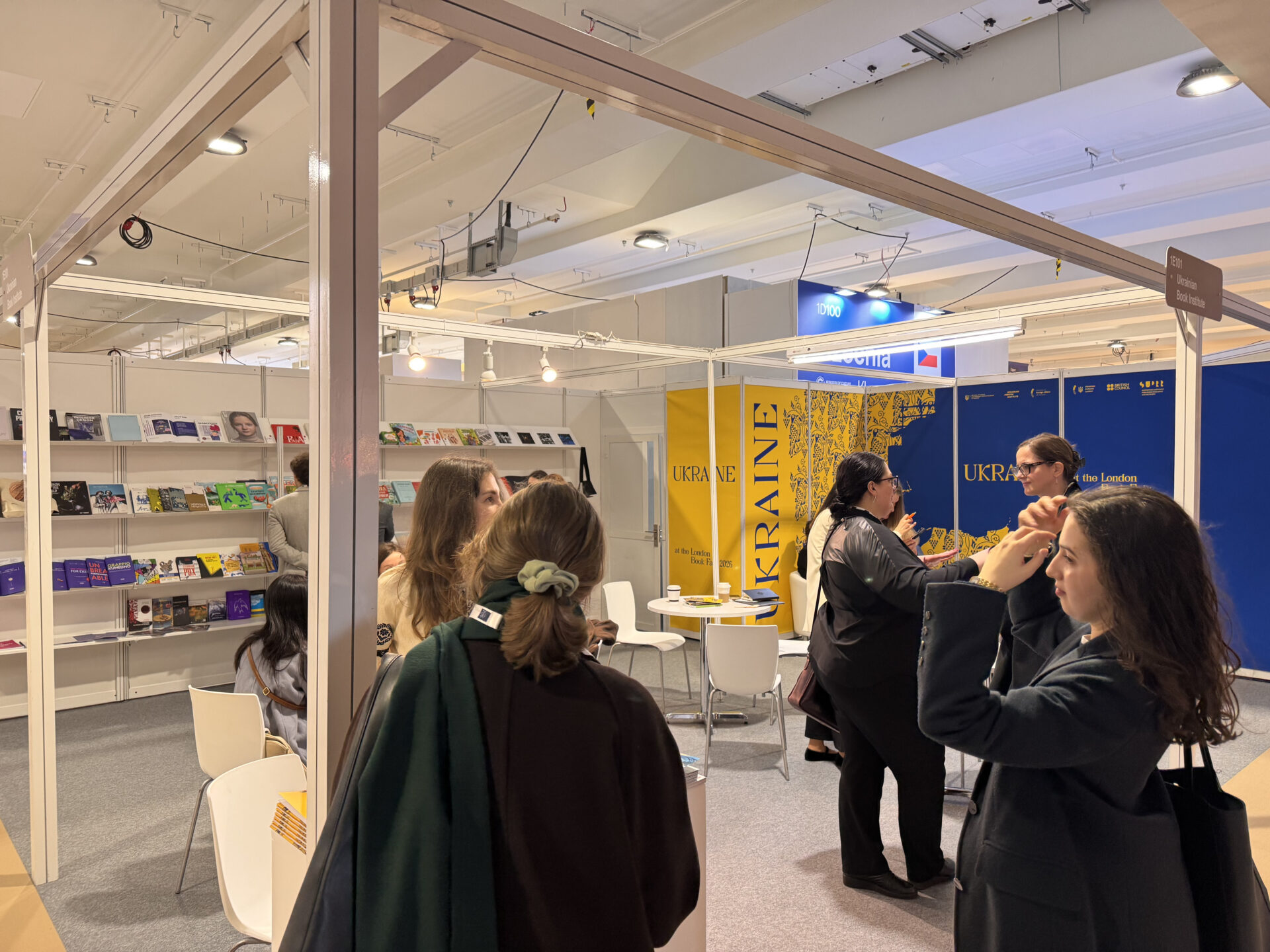
Chytomo’s correspondent spoke with Ketevan Jishiashvili, the official Georgian representative at the stand and international relations manager at Writers’ House. According to Jishiashvili, participation in the London Book Fair is intended to “enhance Georgia’s visibility globally and highlight contemporary Georgian writers,” as well as to create opportunities for publishers, of which there are seven at the stand this year. She emphasizes that the state covers all costs associated with these publishers’ participation and their stay in London.
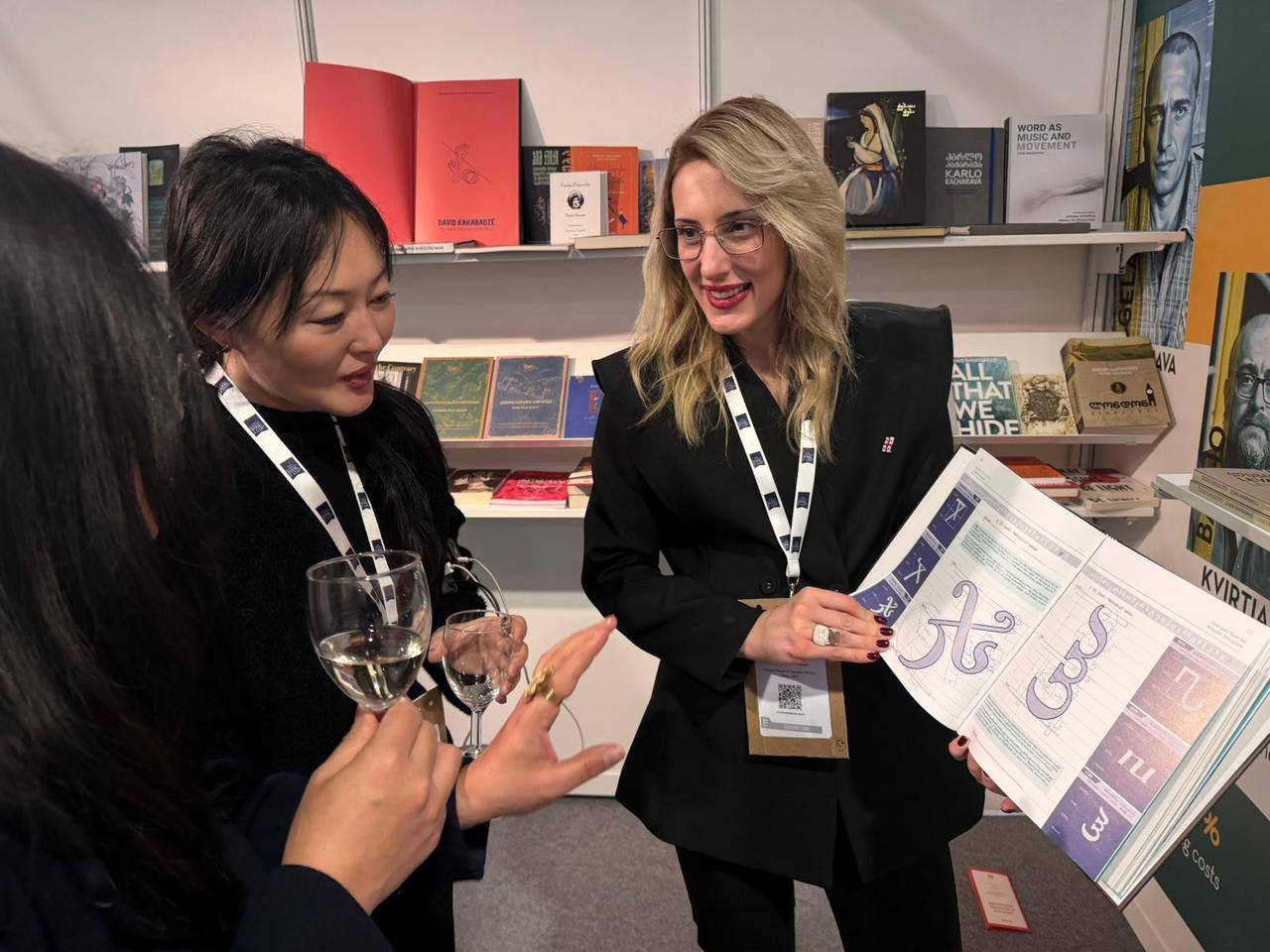
When asked about the selection of participants, Jishiashvili explains that leaders choose those who may be of interest to the international book market. The Ministry of Culture is involved in the procedure and fully finances their participation. When asked how relations are built with opposition authors and publishers who have publicly protested against Georgian Dream’s policies, she replies briefly: “Those willing to cooperate are here.”
It should be noted that Writers’ House administers publishing grant programs that cover up to 70% of printing costs for publishers — obviously, that is, for those ready to “cooperate.”
Copy editing: Joy Tataryn
Photo: Georgian Writer’s House (Facebook page)
Читомо» — це медіа про книжки й літературу, що підтримувало українське книговидання задовго до того, як це стало трендом. Ставайте частиною історії — доєднуйтеся до Клубу Читомо!
the more you read, the greater the possibilities