* ESC - close the search window
Lyuba Yakimchuk
Lyuba Yakimchuk brings Ukraine’s voice to Metropolis Bleu Festival
30.04.2026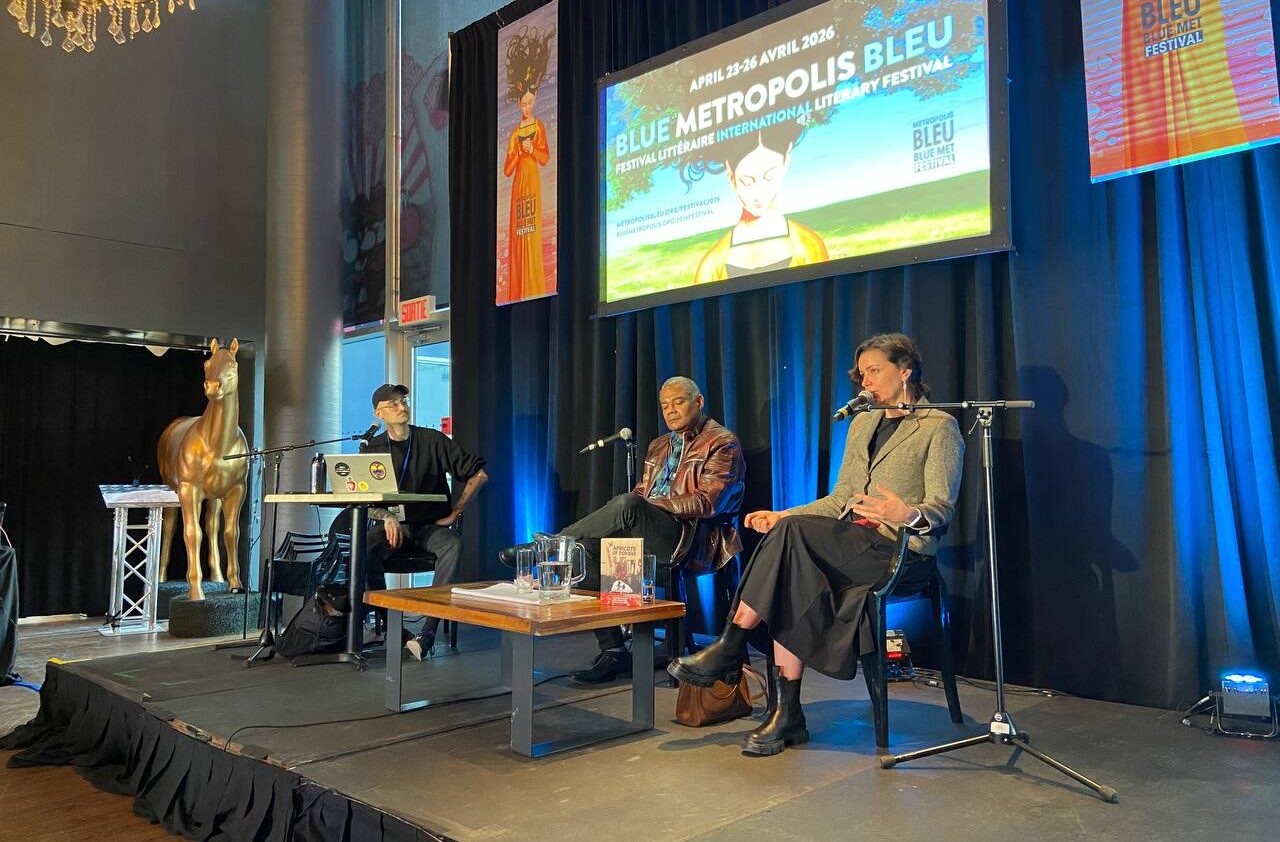
Lyuba Yakimchuk participated on behalf of Ukraine in the 28th Metropolis Bleu International Literary Festival, held in Montreal from April 23 to 26. This appearance marked the beginning of her tour across the Canadian provinces of Quebec and Ontario.
A total of 20 foreign authors participated in the event, including Daniel Tammet (UK/France), Antoinette Rychner (Switzerland), Olivier Ciechelski (France), Ariana Harwicz (Argentina/France), Martine Reid (France), Marcelo Rubens Paiva (Brazil), Daniel Hahn (UK), Luigi Farrauto (Italy), Gwenaëlle Lenoir (France), Jamaica Kincaid (Antigua/USA), and Brandon Taylor (USA).
“At a time when all eyes are turned towards the courageous and tenacious people of Iran and Ukraine, it is more necessary than ever to hear first-hand accounts from Iranian essayist Azar Nafisi and Ukrainian poet Lyuba Yakimchuk, both of whom will be present at the festival,” Blue Metropolis’ Director of Programming Marie-Andrée Lamontagne said in a press release.
The Blue Metropolis International Literary Festival is known for its many prestigious literary prizes.
In 2026, the AZUL Prize goes to Leonardo Padura (Cuba), the Words to Change Prize goes to Azar Nafisi (Iran/USA), the Blue Metropolis First Peoples Prize – International Edition is awarded to Ann-Helén Laestadius (Sweden/Sámi), the Planet Literature Prize goes to Wyl Menmuir (UK), the Violet Prize for LGBTQ+ literary voices to Shani Mootoo (Canada/Trinidad/Ireland), and the Future and Society Prize to graphic novelist Guy Delisle (Québec/France).
Yakimchuk took part in the opening of Metropolis bleu with a speech that resonated with the festival’s central theme, Words for Understanding One Another. Among other things, Yakimchuk noted:
…the meaning of a simple word — “light” — changed completely. From something invisible, to something extremely valuable. This is how language moves together with reality. At the same time, language is very fragile. It can be broken — not only by silence, but also by the wrong use of words. Russia calls occupation “liberation.” It calls deportation “evacuation.” It even calls the abduction of Ukrainian children “evacuation.”
In reality, tens of thousands of children have been taken away from their families. So here, language is not just reflecting reality. It is trying to replace it. And this is extremely dangerous. Because when meanings are substituted, reality itself begins to shift. And if we accept these false words, we accept a false reality. This is why we need to protect language. Understanding one another begins not only with speaking clearly, but with refusing to accept words that hide violence, hide crime. Because words are not harmless. They shape how we see the world — and how we act in it. And sometimes, protecting language, wards means protecting reality itself.
Additionally, Yakimchuk participated in three more events, one of which was a public discussion with Canadian-Ukrainian writer Maria Reva, whose novel “Endling” is set to be released in Ukrainian by Vivat Publishing.
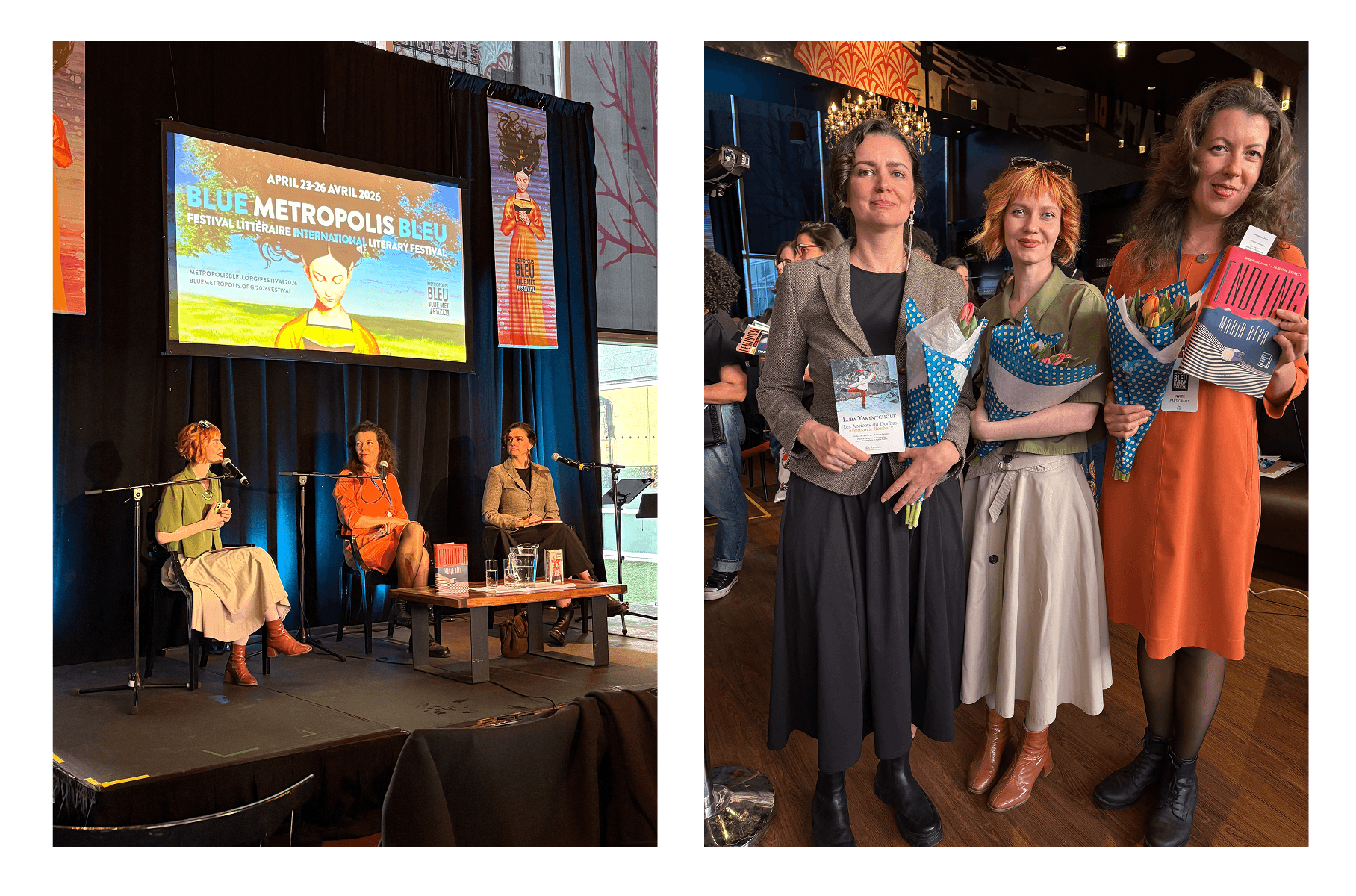
Yakimchuk’s poetry from the collection “Apricots of Donbas” were recited on stage during an open interview and readings in three languages: Ukrainian, English, and French. The French poems were recited by Catherine Deneuve.
In addition, Yakimchuk and Haitian author Henry Kénol took part in a discussion titled “The Face of War.”
The presentation of poetry in various languages was made possible by the translators Svetlana Lavochkina, Oksana Maksymchuk, and Max Rosochinsky (“Apricots of Donbas,” Lost Horse Press); Iryna Dmytryshyn and Agat Bonan (“Les Abricots du Donbas,” Éditions des femmes-Antoinette Fouque).
The Ukrainian presence at the festival was sponsored by Caisse populaire ukrainienne de Montréal and the Ukrainian National Federation of Quebec (Fédération nationale ukrainienne du Québec).
In addition to participating in Metropolis bleu events, Yakimchuk began a charity tour across cities in two Canadian provinces, holding separate events in Montreal, Lévis, and Toronto. In this way, Yakimchuk and volunteers are raising funds for PEN Ukraine to purchase a vehicle for the military. The tour was made possible thanks to the efforts of the Ukrainian Club of Montreal, Kolo, the Association of Ukrainians in Lévis, and the Ukrainian Festival in Toronto. Yakimchuk raised $1,000 CAD during the very first poetry evening.
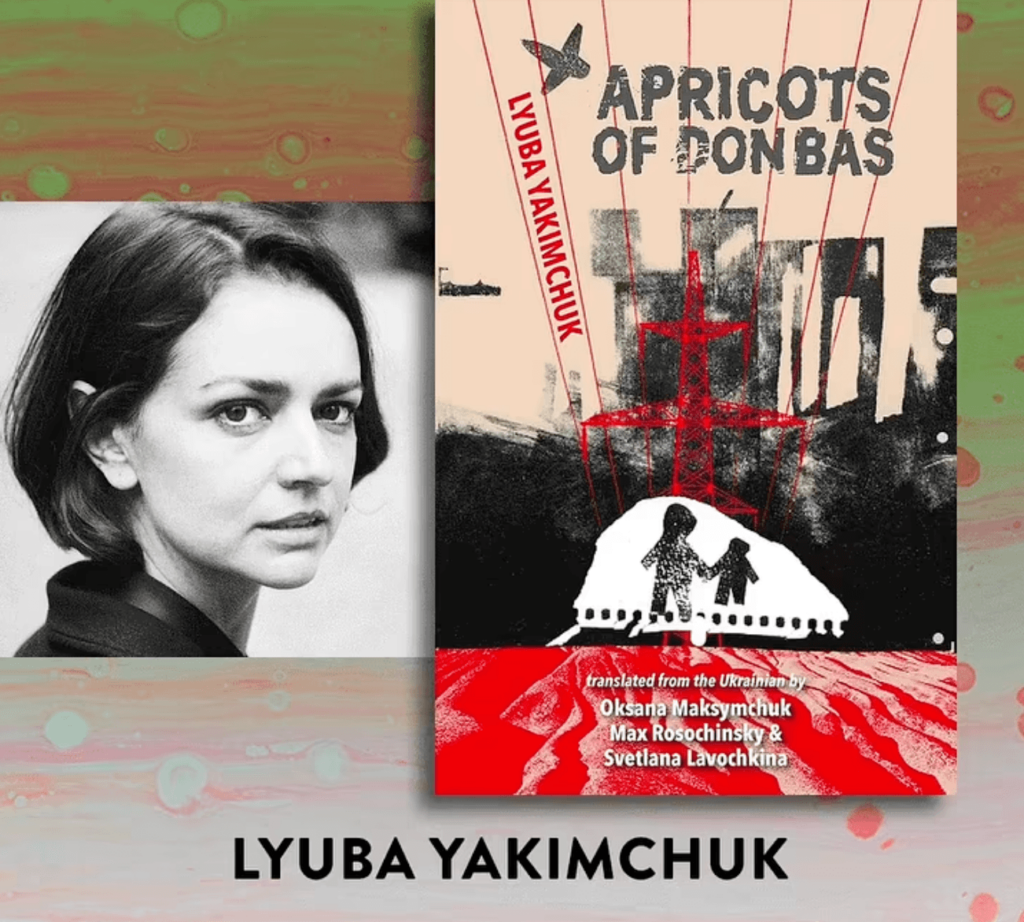
Lyuba Yakimchuk іs an award-winning Ukrainian poet whose work extends across theatre, film, and performance. She is the author of the poetry collections Apricots of Donbas, Making of Tenderness, Like Fashion. Her poetry has been translated into thirty languages and performed internationally, including a musical collaboration with John Legend at the Grammy Awards in 2022. The French edition of Apricots of Donbas was also released as an audiobook narrated by actress Catherine Deneuve. Her work has been featured in The New York Times, BBC, CBC, France 24 and CNN. Born in the Luhansk region of Ukraine, she lives and works in Kyiv.
The Metropolis bleu Festival was established in 1997 by the Blue Metropolis Foundation, a charitable organization whose mission is to bring together people of different languages and cultures around the joy of reading and to foster greater creativity and better mutual understanding between cultures. The foundation hosts the festival annually and also offers a range of educational and social programs. The festival positions itself as multicultural and multilingual—despite the significant predominance of French and English, this year’s readings and discussions took place in nine languages. The festival is open to neurotypical and neurodivergent people, heterosexual and queer communities, and Indigenous and non-Indigenous peoples—from all over the world.
RELATED: Lyuba Yakymchuk reads her poem at the Grammy Awards
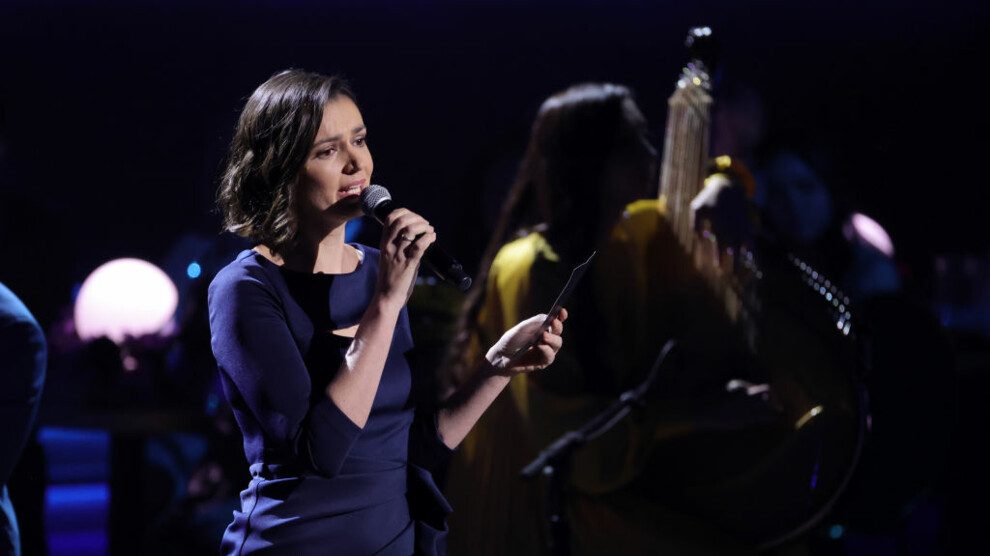
Main image: Club Ukrainien de Montréal
Читомо» — це медіа про книжки й літературу, що підтримувало українське книговидання задовго до того, як це стало трендом. Ставайте частиною історії — доєднуйтеся до Клубу Читомо!
the more you read, the greater the possibilities