* ESC - close the search window
ukrainian classics
Mykola Kulish: playwright destroyed by the system he once joined
03.07.2026

You see an error in the text - select the fragment and press Ctrl + Enter
Ukrainian playwright Mykola Kulish (1892-1937) endured many hardships during the first half of the 20th century: war, thwarted potential, unjust imprisonment, and eventual execution. Yet Kulish did not retreat into himself or become consumed by his troubles. Instead, he transformed the circumstances around him into paradoxical creativity, making room for irony, pathos, phantasmagoria, and sympathy for others.
School setbacks and wartime survival
Kulish was born in 1892 in the village of Chaplynka, southern Ukraine, into a poor peasant family. He managed to enter a four-grade school in Oleshky (at that time in the Russian Empire it wasn’t even a complete secondary education) only after the teachers who admired him had convinced his parents and raised money for his education. Although Kulish often had help during class and in the gymnasium, he was labeled “problematic” and a rebellious student.
Eventually, the gymnasium closed in 1913, and Kulish did not have time to finish his education. When finally in step with all the formalities and he was ready to apply to the university in Odesa, World War I shook the European continent, and Kulish found himself at the front, not in the classroom as a student.
As the war on the Eastern Front gradually came to an end, Ukraine still had no peace. Soldiers returning home in increasing numbers soon found themselves caught up in the events of 1917-21: efforts to defend Ukrainian independence; the struggle for Ukrainian territory by the Russian White Army and the Bolsheviks; the anarchist experiment led by Ukrainian revolutionary Nestor Makhno; uprisings, looting, destruction, and executions; the apolitical defense of families, villages, and cities; and attempts simply to hide from the ongoing violence.
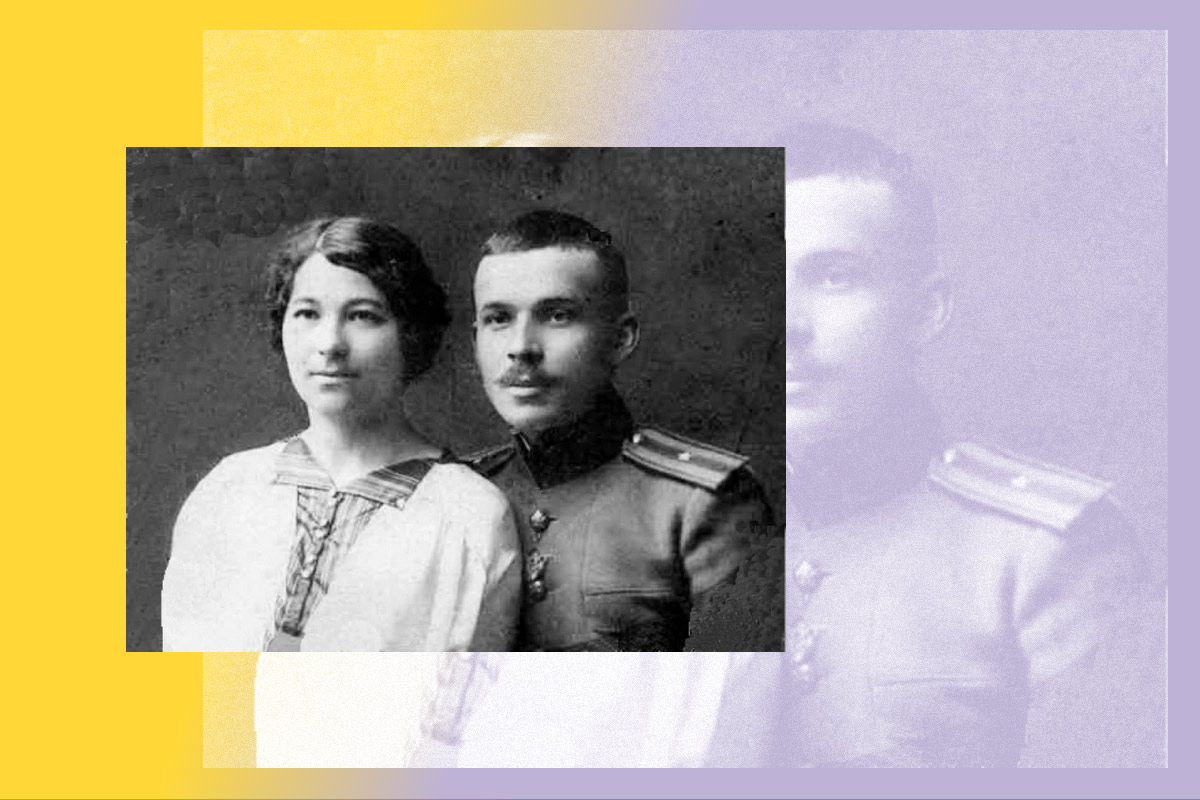
Kulish, not yet a playwright, returned to Oleshky with his family. The area along the strategically important Dnipro River could not escape battles among several armies. Even today, the Ukrainian army continues to fight Russian occupiers near Oleshky. Faced with several forces he could join, Kulish chose the Bolsheviks. Did he see them as supporters of peace, and hope they would quickly carry out radical land redistribution for peasants? Or was he perhaps following the prevailing mood around him? In any case, he had to support and understand one version of socialism or another.
On becoming a playwright
After the long-awaited peace, Kulish worked in public education in southern Soviet Ukraine and settled with his family in Odesa. There, in 1924, he wrote his first serious play, “97.” Set in the early 1920s, during the famine in southern Ukraine, the play follows characters struggling to survive while fighting for the establishment of Soviet rule and its new village policies.
The play is not considered one of Kulish’s greatest creative successes today. First, it is stylistically simple. Second, “97” is ideological, even propagandistic, as was typical of Soviet literature in the 1920s and 1930s. Today’s readers often have to “translate” the language into contemporary terms. Ideological framing and dense sociopolitical language are among the features of the literature from totalitarian times.
But in Soviet Ukraine, “97” was a success, thanks to its vitality, effective dialogue, timely subject matter, and successful staging by the Ivan Franko Theater. With it, Kulish debuted as one of the first playwrights of the post-revolutionary era.
RELATED: Maksym Rylsky: Balancing on the brink of totalitarianism
Kulish had long dreamed of writing. He wanted to write a novel, and had tried his hand at poetry and drama. But an unsettled life, the need to earn enough to eat, and the upheavals of war and revolution kept interfering. Finally, even if only as the author of one play, he had made himself known.
But matters were not so simple. Kulish rarely had the chance to focus on creative work. Difficult, exhausting, mostly administrative work got in the way. His family life was no help: relations with his wife, Antonina, had cooled. He also lacked a literary and theatrical circle of his own, which he could only find in Kharkiv, then the capital of the Ukrainian Soviet Socialist Republic.

Kulish set his sights on Kharkiv, but for a long time he could not get released from work, and organizational obstacles piled up. Finally, in 1925, he reached the capital.
Kharkiv: Literature and daily struggles
In Kharkiv, the housing crisis became acute. Although the city was large, it lacked the infrastructure for capital status, and crowds of newcomers had nowhere to live. Various residential communes formed, people settled in semi-basements and basements, and the poet Pavlo Tychyna, for example, slept on a desk in an editorial office. Another solution was “consolidation”: living spaces were divided into smaller units so more people could move in.
Kulish’s family — he, his wife, and their two children — found themselves in a small room separated from a boarding school for teenagers by a thin, low wall that did not reach the ceiling, researcher Natalya Kuzyakina wrote. The house was filled with commotion, petty crime, thefts, and confrontations. But Kulish still managed to write there, standing in the corridor, and he also connected with troubled children by introducing them to the choir.
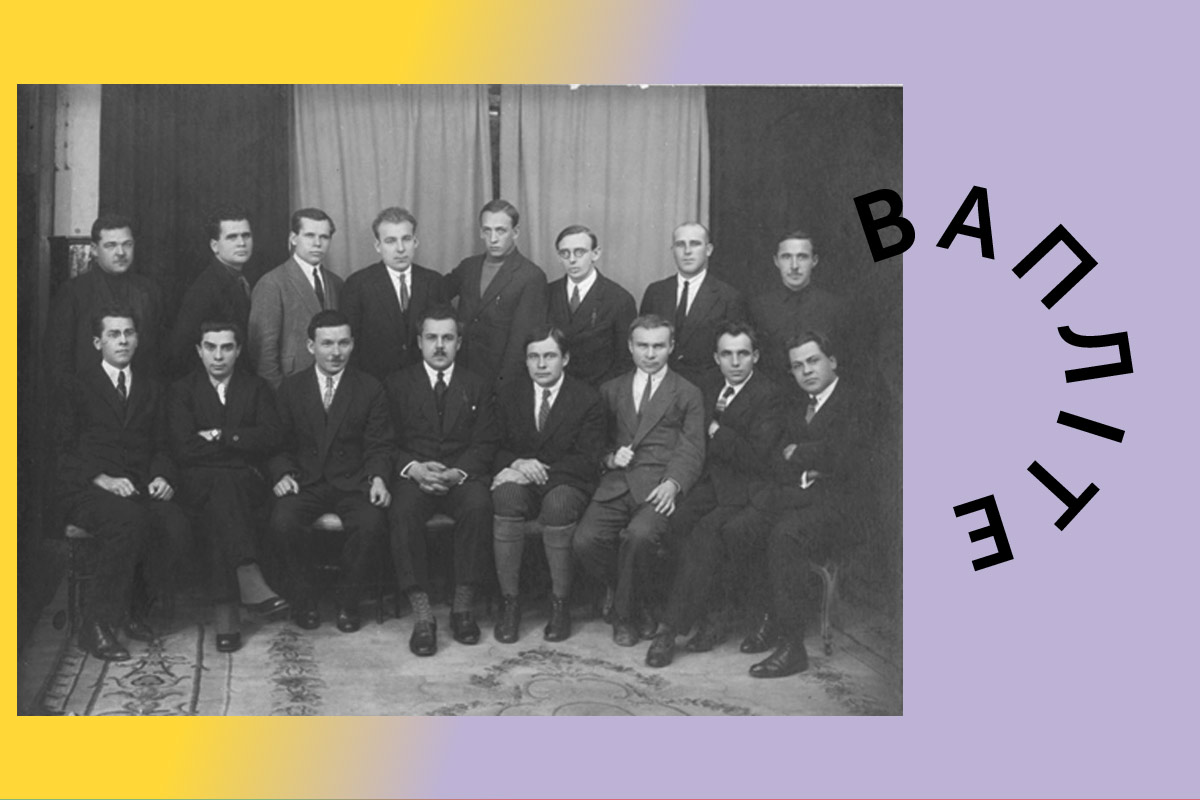
Kulish quickly joined the literary circle that became known as VAPLITE, the Free Academy of Proletarian Literature. Many first-rate authors belonged to the group, including Mykola Khvyliovyi, Pavlo Tychyna, Oleksa Slisarenko, Ostap Vyshnia, Arkady Lyubchenko, Oles Dosvitniy, Mykola Bazhan, Volodymyr Sosiura, and Ivan Dniprovsky.
A circle of like-minded people, city air full of ideas, some measure of stability — what more was needed to finally devote himself properly to literature? Yet Kharkiv offered more than the bright lights of the capital. Once again, Kulish was burdened by mundane, organizational work that consumed much of his time. He was an inspector at the People’s Commissariat of Education, headed the Ukrainian Society of Playwrights and Composers, helped create the magazines “Red Way” and “Literary Fair,” and, for a time, served as president of VAPLITE.
The plays that defined Kulish
Amid this turmoil, Kulish wrote the major plays that formed his style, in which the grotesque and the absurd are unexpectedly combined with sincere attention to each person. Kulish’s magnum opus, his most universal text, is “People’s Malakii,” a story about the pain and ecstasy of utopia and the desire to change an unjust world.
RELATED: ‘Whoever liberates themselves, shall be free’. Lesia Ukrayinka’s life and legacy
The provincial postman Malakii Stakanchyk, deeply shaken by war and revolution and fascinated by radical slogans, decides to undertake the “immediate reform of man.” After developing a comprehensive concept of change that combines communism and Christianity, Stakanchyk moves to the capital to put it into practice. He then declares himself the “People’s Malakhii” and a “people’s commissar,” and begins implementing his reforms on his own. The results are predictable: absurd tragicomic situations, satirical twists, philosophical questions, and the destruction of the lives of those seduced by the pathos of the “prophet.”

The play reflected the realities of its time. The revolution and rapid transformations in the USSR had unleashed all kinds of utopian schemers and reformer-obsessed fanatics. Some of the first readers and viewers of “People’s Malakhii” even recognized themselves in the main character. Researcher Nataliya Kuzyakina says a statement has been preserved from a certain Sava Sokolenko of Odesa, who demanded: “I ask the author to explain how he found out about the content of the letter I wrote to my ‘comrade social parents’ on my birthday … How did the author learn about my desire to be a People’s Commissar?”
But Malakhii’s image also contains self-irony: something of Kulish himself, who ran from office to office, naively trying to improve education or overcome censorship in literature. And something came from a whole generation of revolutionary dreamers with fantasies about “mountain communes” that would solve humanity’s problems.
“People’s Malakhii” was staged by the brilliant director Les Kurbas in the experimental Berezil theater. According to audience responses, the production made a powerful impression, which, logically, ended in a ban. Even so, it went down in history as one of the high points of Berezil and Ukrainian drama.
“Pathetic Sonata” is another key play by Kulish. Once again, revolution is both an elevating and destructive force. Love amid social upheaval. The problem of commitment to ideas and people. Activism versus contemplation. The limits of humanity. Passion and reason. The threat of disappointment after revolutionary fervor. The choise of a political direction for a ruined country. Kulish presents these questions through heightened imagery, interludes, first-person narration, ambiguous and even biblical symbolism, and lyricism.

“Pathetic Sonata” is a highly musical work. Its musical richness seems to resonate with the poetry of Pavlo Tychyna. Kulish himself said he wanted music to be an organic, constructive part of the play, not mere accompaniment.
Among Kulish’s other notable plays are the politically prophetic “The Zone,” the gloomy “Maklena Grasa,” and “Myna Mazailo,” a multilayered comedy about the paradoxes of Soviet “Ukrainization”.
Repression and a strange afterlife
We can only imagine what else Kulish might have written had the ideological restrictions not been followed by the catastrophes of the 1930s. Stalin’s industrialization drive led to the forced collectivization of agriculture. This became a form of terror, culminating in the Holodomor, the man-made famine in Soviet Ukraine in 1932-33. There is evidence that Kulish, unlike some other writers who initially believed in the benefits of collectivization, was skeptical from the start and expected tragic consequences. The 1930s became a dark time for him.
RELATED: The Art of Contemplation: Why is Mykhailo Kotsiubynsky an important literary figure?
Kulish was arrested in December 1934 during a wave of repression that began after the assassination of Sergei Kirov in Leningrad. Compared with the events of 1937, this wave claimed fewer victims and was considered less violent. But that would have been little comfort to those arrested.
He became one of the accused in the “Borobist case.” The defendants were accused of creating an underground organization, preparing a terrorist attack against Stalin, and other baseless offenses. Today, we cannot know exactly how such an investigation took place, or what psychological and physical pressure was applied. But the conditions were obviously terrible. There is information that Kulish even submitted a statement asking to be shot.
In the end, the playwright was sentenced to 10 years of solitary confinement at the notorious Solovki prison camp. In 1937, the case was reviewed, and Kulish was shot Nov. 3 at Sandarmokh, a killing field in Karelia.
Paradox followed Kulish even after death. In 1956, the Soviet authorities who had destroyed the playwright officially “rehabilitated” him. His work was allowed to return to readers and audiences. And in 1963, a high-speed hydrofoil named Mykola Kulish even appeared on the Dnipro River.
RELATED: Franko, but not Franco: Ukrainian writer, record-breaking translator, and Nobel Prize nominee
Translation: Milana Polova
Editing: Sheri Liguori
Читомо» — це медіа про книжки й літературу, що підтримувало українське книговидання задовго до того, як це стало трендом. Ставайте частиною історії — доєднуйтеся до Клубу Читомо!
the more you read, the greater the possibilities

8926
Chytomo Picks
Ulas Samchuk – chronicler of Ukraine through wars, camps, famine, and exile
30.10.2024 - Petro Kraliuk
5916
Chytomo Picks
Vasyl Barka: Conservative modernist and Holodomor survivor
15.10.2024 - Mykhailo Sokulsky