* ESC - close the search window
book publishing industry
Polish publishers oppose fixed book pricing
13.03.2026
The Porozumienie Wydawców Książek (Book Publishers Association, PWK) has issued a statement opposing the introduction of fixed book prices in Poland and questioning the research used to justify such regulation.
The debate over fixed book prices intensified after the Polish Book Chamber (PIK) published a simulation analysis of the possible consequences of such regulation on Feb. 24, 2026. The analysis was prepared by Michał Bernardelli, a professor at the Warsaw School of Economics.
Bernardelli analyzed 2023-2025 information from NielsenIQ BookData, which covers roughly 40% of Polish publishing sales, and concluded that a single price should work. Currently, large book chains and online stores can sell books at a discount, whereas small independent bookstores cannot. Bernardelli believes that fixed prices would eliminate this inequality. Publishers and booksellers would maintain their revenues, and price wars between online and offline stores would cease. According to Bernardelli, regulation will slow down the closure of independent bookstores.
“There is no book market without publishers,” the PWK statement reads. “It is the professional and financial involvement of the publisher that transforms the text written by the author into a finished book.”
PWK also notes that the process involves three stages between the manuscript and the reader: the publisher, the distributor, and the bookseller, and any regulation must take into account the interests of each of these parties.
PWK questions Bernardelli’s research because of insufficient data. Bernardelli, meanwhile, acknowledges that there is no complete picture of the Polish book market. According to PWK, reliable and well-founded conclusions cannot be drawn without this.
Supporters of fixed prices present this change as a way to protect readers and make books more accessible, but PWK believes that “the opposite will happen.”
“The immediate effect of introducing a single price would be fewer books published and higher prices for individual copies.”
They argue that when a publisher cannot control the price, they reduce risks by reducing print runs. Smaller print runs mean higher costs per book and, ultimately, a higher price for the reader.
RELATED: Poland ranked sixth among EU countries in the number of new titles published
Representatives of PWK emphasize that fixed pricing is a “last-century solution” that ignores digital reading. Online platforms already provide unlimited books for a fixed monthly fee, and regulating the offline market would not remove this competition. PWK expressed readiness for dialogue, provided that all market participants are involved in the discussion.
The debate over fixed book prices in Poland has been ongoing for several years. The first draft of the relevant bill was written back in 2017. In 2021, PIK initiated a specific bill: book prices would be fixed for 12 months, and discounts on regular sales could not exceed 5%. At that time, online bookstores opposed the bill, claiming it would restrict access to books for less wealthy readers. Supporters of the regulation, however, highlight international experience: 13 European countries, including Austria, Germany, Italy, and Spain, already have fixed book prices.
In 2023, the Association of Polish Book Distributors published a statement protesting against market monopolization. Publishers pointed out that books for retail customers in the Empik chain were cheaper than wholesale purchases for independent bookstores. The association cited a lack of legislation on the book market that, if instated, would level the playing field between small and large players.
These initiatives were sparked by the 2013 “discount war.” Large chains offered discounts of 25–35%, while independent bookstores could offer a maximum of 15–20%. The number of independent bookstores fell from 2,250 in 2012 to 1,800 in 2017.
Between 2010 and 2020, nearly a third of Polish bookstores closed due to rising costs and access barriers. Chain bookstores get discounts of 50–70%, whereas independent bookstores typically receive only 20–50%. The situation is similar in library procurement: only 15.5% of libraries buy books from local bookstores, while the rest predominantly buy from four large distributors and one leading online store.
RELATED: Paper production in Europe decreased by 1.5% in 2025
Copyediting: Terra King
Читомо» — це медіа про книжки й літературу, що підтримувало українське книговидання задовго до того, як це стало трендом. Ставайте частиною історії — доєднуйтеся до Клубу Читомо!
the more you read, the greater the possibilities
20
Poland
Nearly one in four sales in Poland’s books-and-press retail category are now online
09.10.2026 -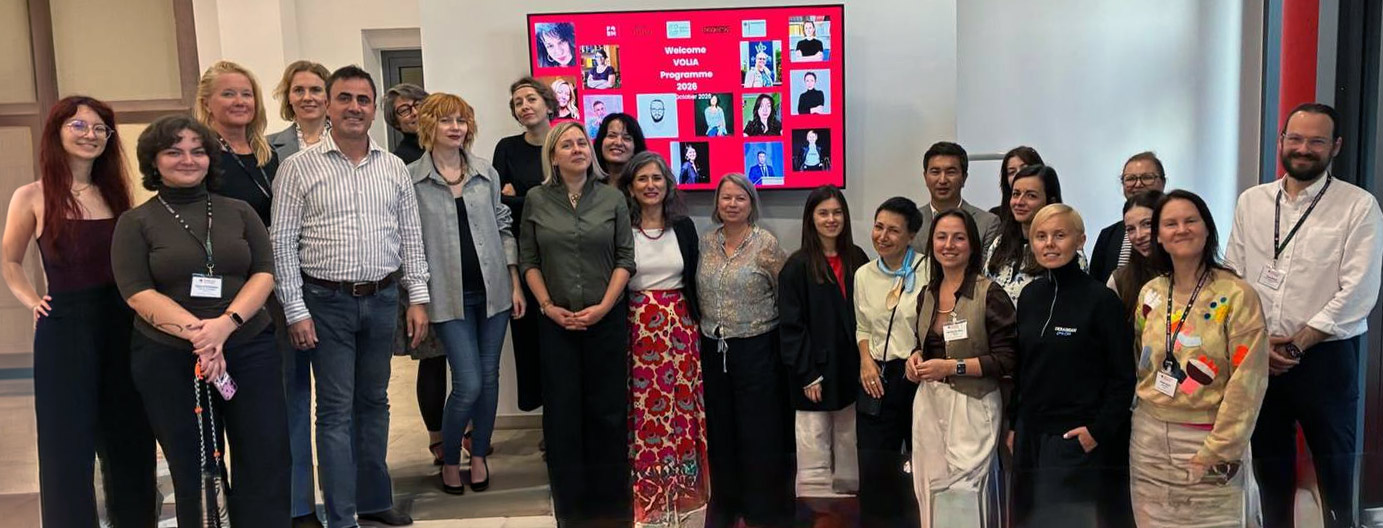
62
2026 Frankfurt Book Fair
How to preserve identity and avoid chasing growth: What publishers are asking at the Volia program in Frankfurt
05.10.2026 -