* ESC - close the search window
Khrystia Vengryniuk
“The Hamlet Called America”: when the margins unexpectedly became the center
20.10.2026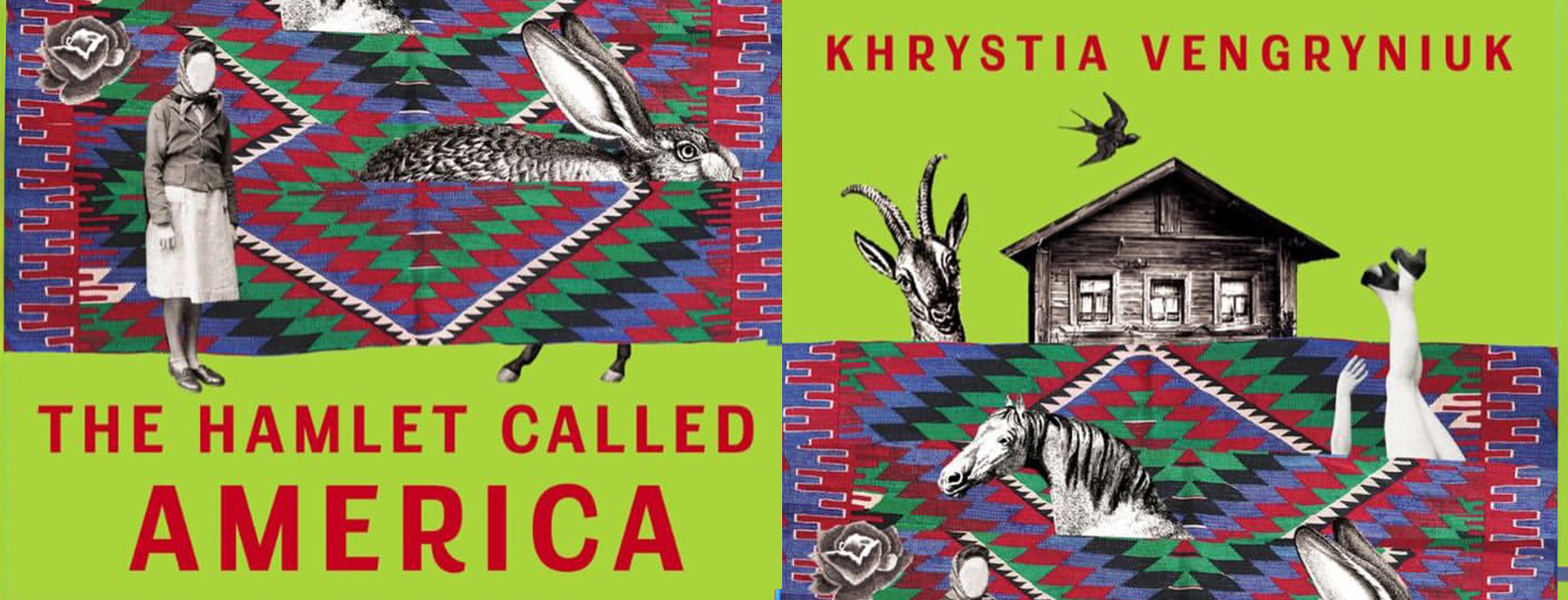
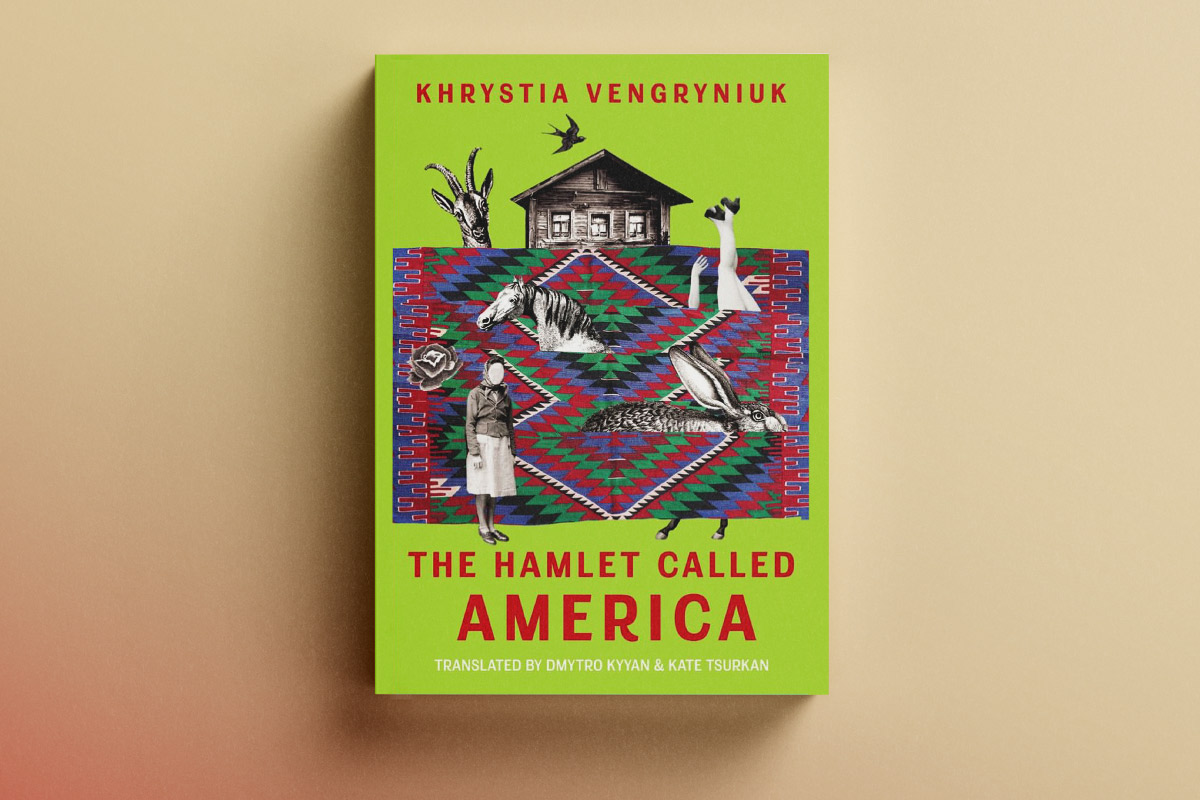
On October 13, 2026, American publishing house Sandorf Passage is expected to release a translation of Khrystia Vengryniuk’s novel “The Hamlet Called America,” translated by Kate Tsurkan and Dmytro Kyyan.
The novel examines themes of alienation and disorientation within a closed community. Several early reviews of the translation compare the text to novels by Colombian author Gabriel García Márquez and Polish writer and poet Olga Tokarczuk. The book is best read with preconceptions and comparisons left behind, allowing the work to unfold on its own terms as a story about a drama of humanness that can be painful, uncomfortable, and confusing.
Sandorf Passage focuses precisely on the areas of conflict, of which “The Hamlet Called America” has in abundance.
Unmet expectations are the first thing the reader has to deal with, and the evocative title is misleading. This book is not about Ukrainians in America (there’s no point in looking for parallels with Askold Melnyczuk’s “What Is Told,” though the name Lastivka (Swallow) for the oldest women in both works is more a coincidence than an implicit connection), but rather about America as something foreign and detached within Ukrainians. Migration will be a theme here too, but only in a very specific way: a hamlet in Bukovyna split off from the village.
Nobody knows what the village thought of this separation and, after all, the book is not about that. It tells a story of existence in isolation from the outside world, from linear time, and from one another. The novel begins by burning a symbolic figure of Grandpa Janush, a legendary figure who initiated the separation and, after he died, became a symbol of freedom and the distinctiveness of Americans. The hamlet earned its name due to its voluntary isolation from the rest of the world. America is the entire world for its inhabitants, a world turned inside out and incomprehensible to an outside observer.
The notion of normality here is built around a play between opposites, where universal categories — love and suffering, the sacred and the profane — coexist within a very closed community that is far from being homogeneous or conventionally normal.
We see better from the margins
Americans possess the unique freedom to stay on the margins while remaining at the center of the narrative, as its main characters live in villages and cities where they could have fallen outside the scope of the story. Vengryniuk envisioned “The Hamlet Called America” as a text about the margins that unexpectedly became the center. America functions as a safe place for characters marked by otherness who are bound together by a fantastical narrative that spirals outward, complicating the understanding of the novel’s already irrational reality.
To find out the story of Nastya, a girl born with a cleft lip, who dreamed of having a baby, you must read all the tangled biographies of other inhabitants of America, including the lovesick and cursed Taras, the mute Uncle Stefan, who turns out not to be mute, and numerous neighbors, including a Roma family, a Jewish and Russian couple, Lastivka’s great-grandmother with her granddaughter Khrystyna, an outsider from the city, and a monk from the monastery located near the village. It becomes evident that a story about a secluded hamlet has ended up being too crowded with characters, but like any outside listener to stories from small places, the reader of Vengryniuk’s is compelled to find out everything about everyone.
“They all are unhappy and indifferent at the same time. They are constantly at odds and love each other madly, gossip, and suffer from gossip. It’s a madhouse! They’ve convinced themselves that they’re one big family, made up their rights and rules and immediately forgot them. They live in complete anarchy, that is, in absolute permissiveness.”
Outsiders notice that Americans are wild and eccentric, and the archaic notion of “us versus them” comes across clearly in the text. The “us” abides by the unspoken truths of the hamlet and embodies a special, self-created sanctity. To be treated as a sinner, one must leave the hamlet and go to the city. Young people and children leave the hamlet. Nastya, the youngest American, desperately dreams of having a baby, but she cannot fulfill her dream because the inhabitants of the hamlet see her cleft lip as her greatest flaw. Taras, Nastya’s neighbor, who is viewed by the people of the hamlet as mentally altered, is in love with the girl and doesn’t notice her flaw. The truth is, Nastya does not see him as a potential father of her baby. Nastya heads to the city to commit a sin, and in a murky backroom of a shady bar she is impregnated by several men. Nastya returns home with a sincere belief that in her womb she is carrying a baby. Instead, something terrifying and dangerous — retribution for sins past and future — takes root inside her.
While Taras’s curse is known and evident to all the Americans, Nastya tries to hide her burden. Her relationship with her uncle Stefan contains a dual nature, the darkness of which weighs even heavier on her. Stefan, unnoticed by the villagers, remains in the shadows, and is believed to be deaf and unable to speak. Yet his voice breaks through where the outsiders cannot hear it. As Nastya discovers a world of sensual and illicit pleasures, and, at the same time, suffers, Stefan’s secret becomes Nastya’s secret, and under his influence she is trapped and obsessed with this relationship, which is sinful even by American standards. Sometimes there is too much sensuality in the hamlet of America. It is often so raw that it becomes repulsive and naturalistic, almost animalistic.
Taras’s despair and madness become literally animalistic when he realizes the truth and cannot bear it. Writing itself is incapable of withstanding the wilderness of America, as Artem Chapeye puts it, highlighting the shifts in narrative perspective from the poetic to the vernacular and the humorous.
A cross to bear
Alongside the dramatic, horror-infused love triangle, the story of Khrystyna’s great-grandmother Lastivka, America’s oldest resident, unfolds. She is the embodiment of history and spirit of the hamlet, and it’s no wonder the Americans saw Lastivka as an eternal figure, remembered by all generations. The woman insists on being called a great-grandmother, not just grandmother. It makes total sense, since being a great-grandmother means being the oldest and most influential person in the hamlet — not just for her great-granddaughter Khrystyna, but for all Americans. Lastivka is not just a character.
She is a symbol of the elderly woman in traditional Ukrainian culture who knows every secret about everyone in the village, hurls insults and curses at everyone around, and knows no boundaries because she sees all of America as her land, and always looks forward to her great-granddaughter’s visit in the summer.
“It seemed to great-grandmother Lastivka that Khrystyna would rather run away, that she was always desperately counting the days left until her return home so the old woman tried to spend as much time with Khrystyna as possible, to hug her, and to shower with kisses. She’d give the girl everything she had to eat, open old jars filled with meat, wring chickens’ necks and make broth: all that so everyone could see what she was doing, since her granddaughter had come to visit. The great-grandmother was running around like insane. She didn’t eat, she was sweating, cursing everything and everyone who crossed her path, and derived some kind of incomprehensible, fanatical pleasure from it.”
Khrystyna, a city girl, is scared of Lastivka and doesn’t understand her. Every visit is felt as if it were a trial, and yet she keeps hoping that her great-grandmother will hand her the earrings with crosses she promised. Lastivka shows no urgency to give the precious gift because it is the only thing that keeps her and her granddaughter together. Lastivka is afraid of losing this fragile bond, held together not by love but a piece of jewelry that was never meant to become a family heirloom. The eternal great-grandmother Lastivka dies of longing in the autumn rain. Only then does the great-granddaughter realize the depth of her loss and finally sees the earrings that were meant to be hers. Lastivka did not pass her cross on. She carries it with her into the afterlife along with the history of the hamlet. Meanwhile, this world continues to exist without her, crumbling further into ruin.
Life is a dream
Life in hamlet America resembles a dream, and not the most pleasant. This reality cannot be compared to the fantasies of the Ukrainian romantic writer Panteleimon Kulish, who developed a philosophical concept of a hamlet life as a kind of utopian model of Ukrainian identity. In contrast to Kulish’s vision of the hamlet as a center of morality, Vengryniuk’s America represents the sinister reverse of this secluded world, a testament to the total failure of the hamlet ideal. America is inhabited not only by people who rely on the sensual, but also by those who are grounded in the spiritual and whose primary task is to contemplate things. Characters who, in fact, do not belong to “us,” such as Levko, who came to the hamlet from the city in search of truth, or Dotsko, who serves in a monastery and acts as a bridge between the hamlet and the village. Levko longs to join Dotsko.
Believing that it is possible to find God in America, he finds love instead. Levko, who has earned a reputation as a philosopher, molds a woman in his own image and likeness. He gives her a name, and to give a name is to bring into being. Maria is symbolically born in America to forget city life and try to rewrite it on the hamlet. Her happiness with Levko is possible precisely because of their alienation in a space cut off from the world. In fact, this is the whole tragedy of America. It seems that everyone got what they wished for, but they never found out what to do with it.
“The Hamlet Called America” has a chance of reaching new readers thanks to its English translation, since its 2013 release in Ukraine went largely unnoticed, a fact that Vengryniuk has mentioned on numerous occasions. Perhaps it is precisely the work’s timelessness and sense of being beyond a specific place (being very real, the hamlet refers to an area near the Stara Zhadova village in Chernivtsi Oblast) that will resonate with a new audience. For Ukrainians, it may be particularly meaningful that the author managed to present the book in Donetsk and Luhansk before the occupation, which Russian propaganda referred to as “voluntary secession.” The plot’s spiral was only just beginning to take shape.
RELATED: Enchanting the ephemeral: A review of Oleksandr Dovzhenko’s ‘The Enchanted Desna’
Translation: Iryna Savyuk
Copy editing: Terra King
Читомо» — це медіа про книжки й літературу, що підтримувало українське книговидання задовго до того, як це стало трендом. Ставайте частиною історії — доєднуйтеся до Клубу Читомо!
the more you read, the greater the possibilities