* ESC - close the search window
The white sorceress and the stealer of souls: A review of Sofia Yablonska’s travel diary ‘From the Land of Rice and Opium’
16.09.2026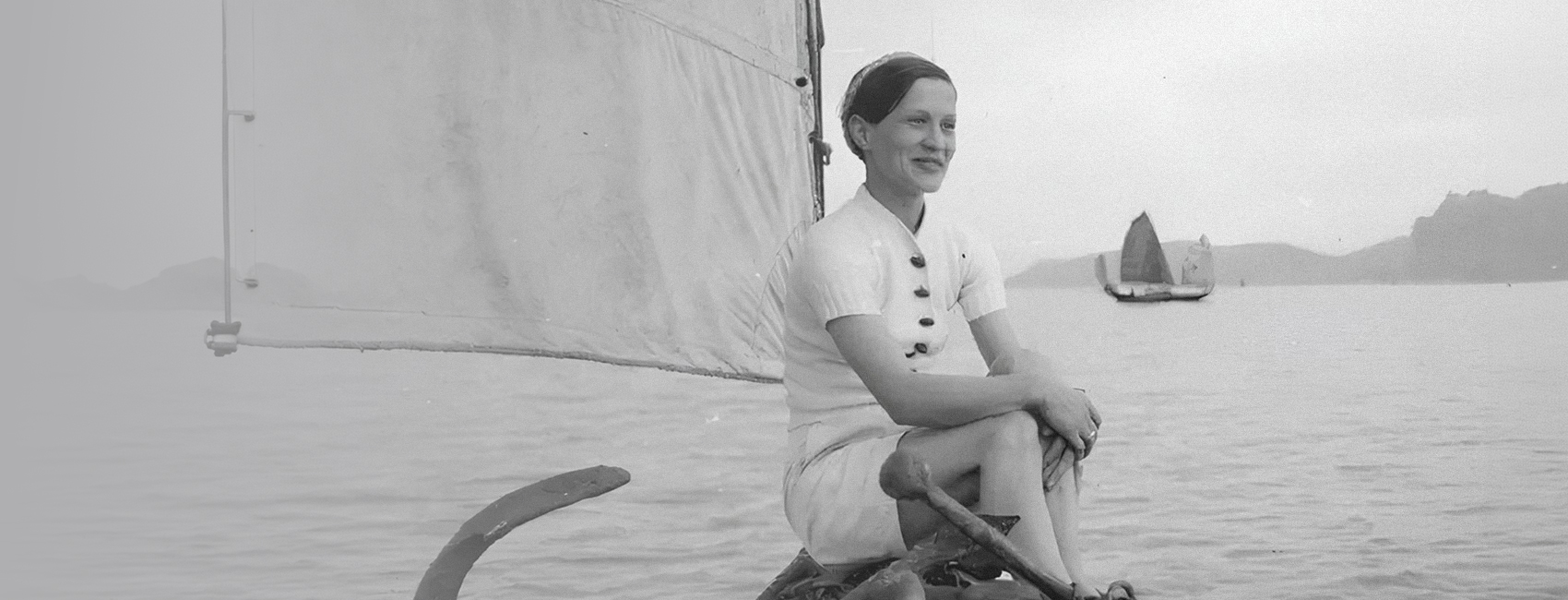

You see an error in the text - select the fragment and press Ctrl + Enter
Ukrainian writer, journalist, and photographer Sofia Yablonska is acknowledged for her photographs and travel diaries or travelogues from unfamiliar places that felt mysterious to Europeans in the first half of the 20th century. Yablonska dreamed of becoming an actress and headed to Paris to pursue her dream. In Paris, she was active in cultural circles and wanted to write. Yablonska independently journeyed to places women of her time could only read about in books, and was also an entrepreneur and ran a guesthouse in the Carpathians with her mother.
Yablonska’s name deserves to stand alongside those of outstanding European female travelers, including Jeanne Baret, Isabella Bird, Mary Kingsley and others. However, she is significant not only as a female traveler, but also as a brilliant author.
Yablonska’s “From the Land of Rice and Opium” will be released in late 2026 by Academic Studies Press in a co-translation by Yulia Lyubka and Kate Tsurkan. Her other works have yet to be fully translated into English.
Exploring for new impressions
Yablonska is known for three travelogues — “The Charm of Morocco,” “From the Land of Rice and Opium,” and “Distant Horizons.” All three remain valuable today, not only for their accounts of life in distant lands, but also as original works of creative writing. Despite having Ukrainian roots and books published in Ukraine, in the part of the country that was then under Austrian rule at the time, Yablonska spent most of her adult life far from her homeland. In Ukrainian periodicals, she was presented primarily as a traveler and the author of accounts from distant lands.
Yablonska’s first trip, described in “The Charm of Morocco,” was a monthslong journey to Marrakesh and the Sahara in search of adventure and new experiences. Vivid and appealing, this book is filled with impressions, but doesn’t have the depth of narration the author would later attain. Such journeys were popular among Yablonska’s friends in Paris, and she followed this travel trend while also taking up writing. Yablonska’s writing benefited from literary guidance. She was in frequent correspondence with renowned Ukrainian author and first chairman of the Directory of the Ukrainian People’s Republic Volodymyr Vynnychenko, as well as sought advice from the editor and literary critic Mykhailo Rudnytskyi, who coordinated the publication of Yablonska’s works in Galicia.
The white sorceress
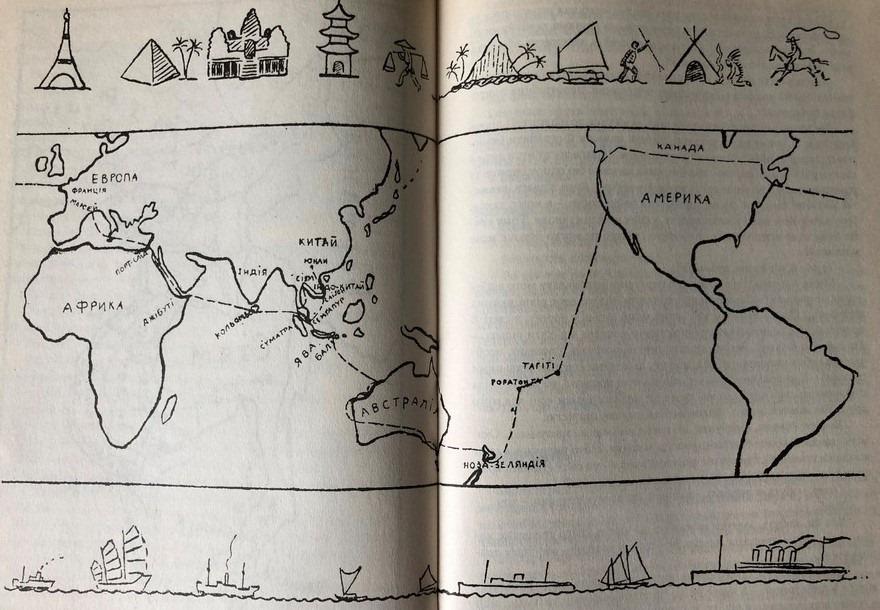
Compared with her Moroccan adventure, Yablonska’s journey to China was considerably longer and more consequential. Her writing style evolved and matured. “From the Land of Rice and Opium” is a novel about a charismatic woman who finds herself in dangerous situations. Today, this travelogue can be read as a series of stories about the adventures of a European woman in China.
Yablonska’s personality plays a central role in this book: a 30-year-old European woman who travels around China and takes pride in her individuality. She is an emancipated woman and a photographer who strives to capture the Chinese people on film, employing various strategies to bypass their superstitions and reluctance to appear in photographs. After all, she carried a revolver. Yablonska willingly, lovingly, and vividly portrayed herself, almost like a fictional female protagonist, whom she admires.
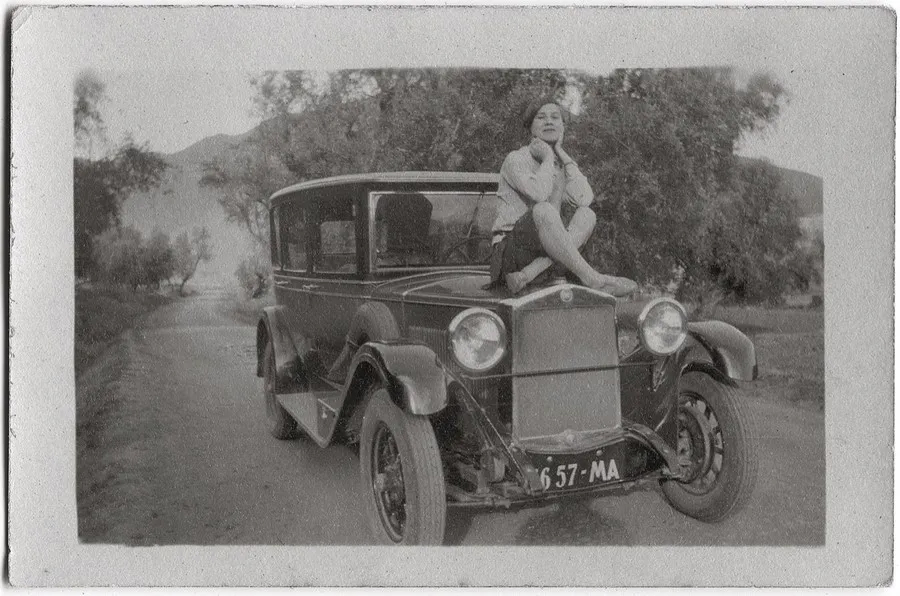
Using all sorts of tricks to photograph the Chinese, Yablonska becomes the model she longs for and repeatedly portrays in her prose.
RELATED: Enchanting the ephemeral: A review of Oleksandr Dovzhenko’s ‘The Enchanted Desna’
Describing attempts to adjust to life in China, Yablonska describes the challenges she faced in arranging a bath, as well as the unexpected, but welcome rain under which she bathed naked. In this scene, she portrays herself as an object of desire for people who might catch a glimpse of her silhouette. She sees herself as a white sorceress in an evening trance — the way she imagines herself through the eyes of the Other.
The image of the white sorceress will remain one of the book’s central themes, since most ordinary Chinese people view photography, Yablonska’s primary occupation, as a form of magic capable of stealing souls. Yablonska took pictures of a young man and when he disappeared, she was blamed. Her camera is seen as a soul stealing tool. Yablonska recounts how the monks at whose monastery she was staying during her travels plan to hand her, the white sorceress, over to an alarmed and enraged crowd of villagers. To heighten the effect, she recounts stories of other white people whom peasant women approached, begging them to break the spell on their children. The women believed their children, who had died of illness, remained imprisoned inside photographs by “white gods.”
The belief that a photograph has the power to steal a soul, like the superstition that stepping on someone else’s shadow is dangerous, characterizes not only Chinese peasants, but people in general, especially people who understand the world through beliefs and superstitions. If Galician peasants had been the subject of her observations, Yablonska could have written a similar story about them. In this case Yablonska is not interested in the nature of superstition or mythological thinking. This episode develops into an adventurous revenge plot in which the white sorceress takes revenge on monks and emerges victorious rather than a reflection on the nature of this worldview. Yablonska, the reporter, gives way to Yablonska, the character.
Dangerous adventures
As we have already noted, Yablonska repeatedly assumes the role of the protagonist of her books. Having noted this tendency toward fictional prose Rudnytskyi, Yablonska’s publisher, advised her to try writing fiction. He suggested not replacing her name with that of a female protagonist, but by fully engaging with the fictional material. In “From the Land of Rice and Opium,” Yablonska assumes two roles: she is both a traveler who records stories about China and the heroine of her story.
In this book, the stories about pirates and criminals whose victim she inadvertently longs to become are particularly alluring to Yablonska as a character. At the beginning of the travelogue, Yablonska describes a walk during which she was followed by Chinese strollers who, she assumes, want to rob and kill her. This is a very dynamic and vividly written scene, which she approaches precisely as a fiction writer. Yablonska as a person doesn’t want to put herself in danger, but Yablonska as the author is eager to present a story of dangerous adventures.
Just like the protagonist of her story, Yablonska faces danger during a flood. As others rush to save their lives and belongings, Yablonska surprises the Chinese with her desire not only to remain calmly in the house, but to venture onto the water to witness the fury of the elements firsthand.
How does Yablonska portray herself? As a brave and daring female protagonist who rushes to save people from a flood or children from mothers who are driven by poverty to sell them. Yablonska would happily present herself as an Indiana Jones- or Lara Croft-like heroine. If a big-budget adventure film were made based on Yablonska’s travel diaries, it would be a perfect fit for both the heroine’s image and author’s ambitions.
A European woman through the eyes of the Other
Yablonska’s view of China is shaped by the mirrors and lenses between her and the people she photographs, and she constantly reminds us that she is the person behind the camera. As she describes Chinese customs and everyday life, she also reveals herself. Her prose is built on moments of surprise, danger, and the clash between Chinese and European cultures. To reveal the extraordinary, Yablonska repeatedly explains what she considers normal. Reflecting on cultural differences, she speaks not so much from a Ukrainian perspective as from a broader European point of view, identifying herself first and foremost as a European.
Yablonska sometimes presents her observations of Chinese cultural phenomena in the form of a unique dialogue featuring Chinese and European perspectives. She represents Yablonska the character. Describing the Other, Yablonska attempts to view herself and the world she represents through the Other’s eyes.
The system of mirrors becomes especially clear in the episode with opium. Yablonska turns her experience with opium into an encounter between two cultures, while representing the West. She portrays the old Chinese opium addict as tempting her with his potion, which she agrees to try while attempting to keep control of herself. From the opium addict’s perspective, the situation is not a seduction. Instead, a curious but uncertain European woman has returned to seek the elixir. In his view, what frightens her is not primarily the possible harm of opium but the possibility of losing control of herself.
Notably, the discussion on opium is preceded by a discussion on death and attitudes toward the death penalty, a phenomenon that Yablonska observes while trying to see it through Chinese eyes. In both cases, she is interested not only in how a foreign culture is structured, but also in how her own culture appears against that backdrop. In this complex system of mirrors, Yablonska positions herself as the voice of the West, constructing the image of a European woman through the eyes of the Other and in dialogue with the Other.
Yablonska does not write about China without showing a sense of European superiority. She describes the country as exotic and refers to its people as “natives.” She also emphasizes her responsibility for the impression she makes as a representative of the European. This attitude reflects her pride in her own “race,” her desire to “uphold the reputation,” and even a certain diplomatic mindset. Yablonska clearly believes that her own behavior can influence how Chinese people view Europeans.
The Chinese opium addict’s argument offers a summary of the entire book. He asserts that the most important thing in Yablonska’s life is what she thinks of herself. As Yablonska writes about the Other, she also examines herself and gradually recognizes the different forms her identity takes. This thesis applies both to Yablonska and to European culture as a whole.
RELATED: Tanja Maljarschuk: ‘Homeland is the place where your wounds come from’
The publication is a part of the “Chapter Ukraine” project. The materials have been prepared with the assistance of the Ukrainian Book Institute at the expense of the state budget. The author’s opinion may not coincide with the official position of the Ukrainian Book Institute.
Translation: Iryna Savyuk
Editing: Ben Angel
Читомо» — це медіа про книжки й літературу, що підтримувало українське книговидання задовго до того, як це стало трендом. Ставайте частиною історії — доєднуйтеся до Клубу Читомо!
the more you read, the greater the possibilities
6
New York Review Books
Sex, escape, and rock ‘n’ roll: A review of ‘Radio Night’ by Yuri Andrukhovych
09.10.2026 - Tetyana Petrenko
208
2026 Frankfurt Book Fair
Losses in the publishing industry, charred, and scorched books: Ukrainian national stand in Frankfurt
09.10.2026 - Chytomo