* ESC - close the search window
ireland
Irish librarian creates virtual Ukrainian reading room with literary classics and memorial shelves
16.11.2026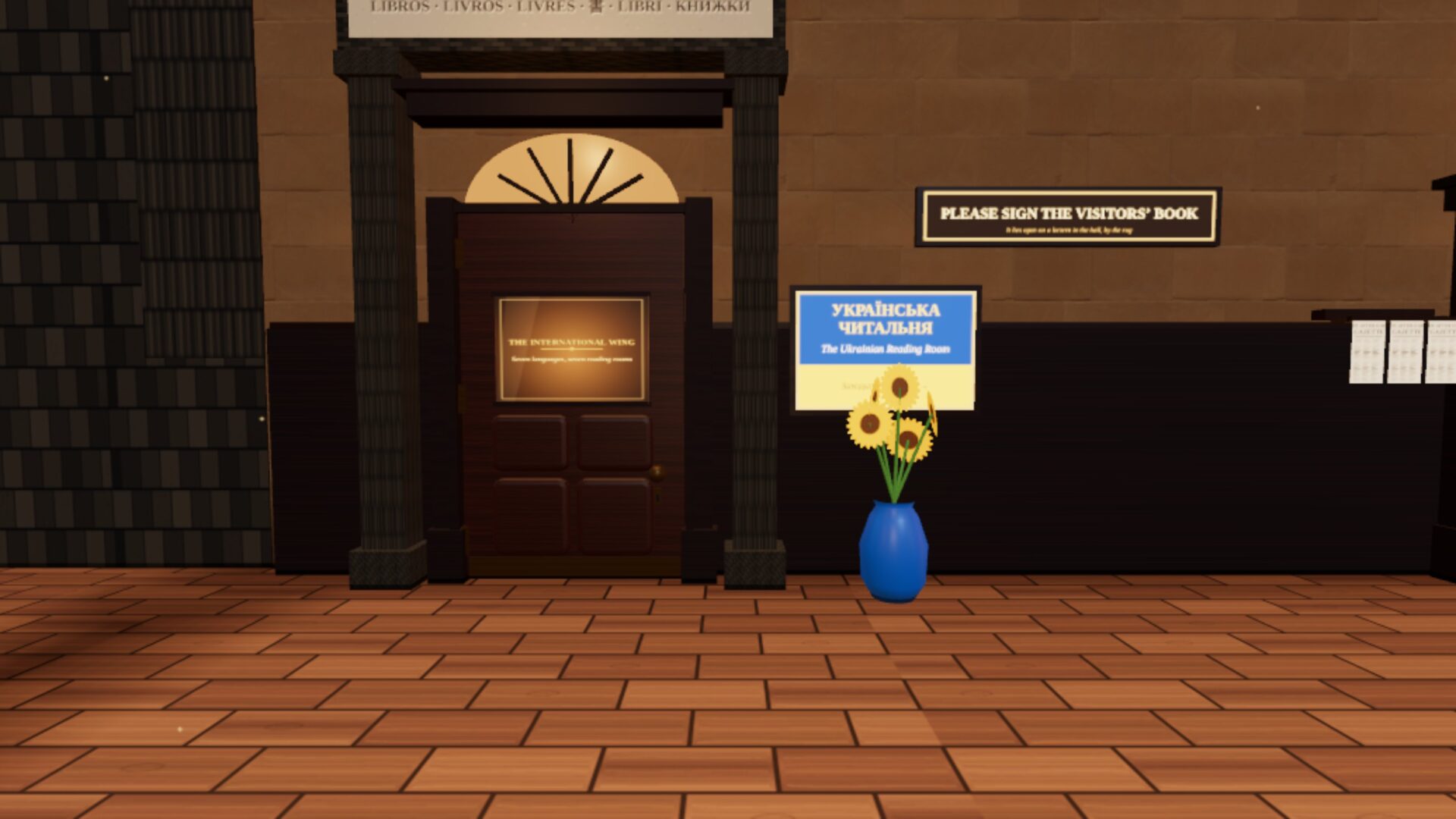

You see an error in the text - select the fragment and press Ctrl + Enter
An online library created by Irish librarian Colm O’Connor allows visitors to discover Ukrainian literature through interactive objects, including a hidden notebook of Taras Shevchenko’s poems and a flute that opens a scene from Lesia Ukrainka’s “The Forest Song.” O’Connor shared details of the project with Chytomo.
The Ukrainian reading room is part of The Library After Dark, an online library that visitors can explore as though it were a physical building: opening doors, entering rooms, and discovering books on shelves. O’Connor began developing the library in early September 2026 and works on it independently in his spare time. Around 2,000 people visited the library during its first two months.
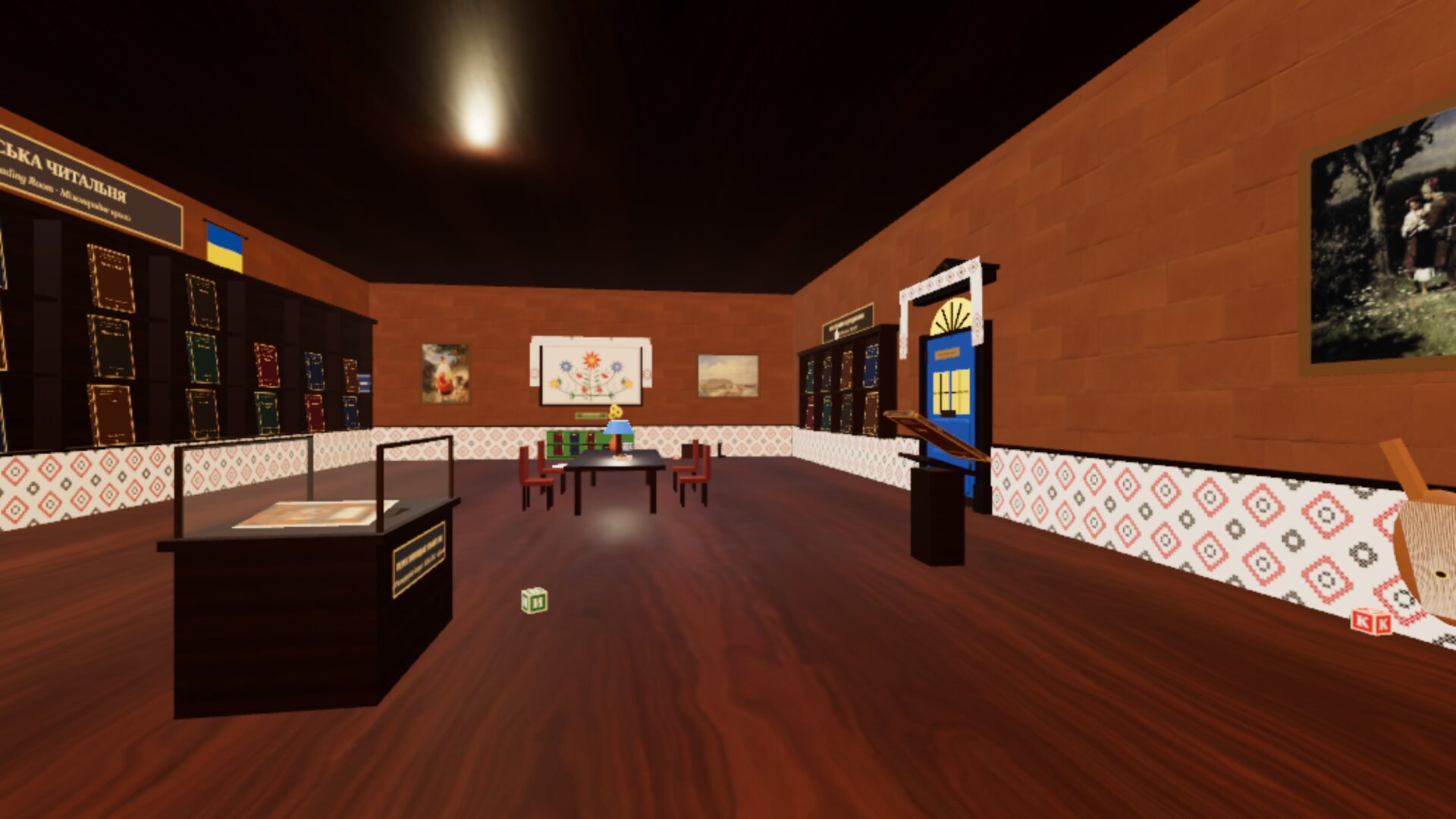
“In almost every digital collection, you either type something into a search box or scroll through a list. That’s useful when you know what you’re looking for. But wandering offers something different: chance, surprise, a book you would never have found on your own,” O’Connor explained.
O’Connor sourced the texts for the Ukrainian reading room from Wikisource. Project Gutenberg, which supplies most of the books in his library, has no Ukrainian-language texts. The room contains works by Ivan Kotliarevsky, Hryhorii Skovoroda, Taras Shevchenko, Ivan Franko, Lesia Ukrainka, and Mykhailo Kotsiubynsky, as well as writers of the Executed Renaissance.
“I would very much like the Ukrainian room to keep growing until it becomes the highlight of the entire library,” he said.
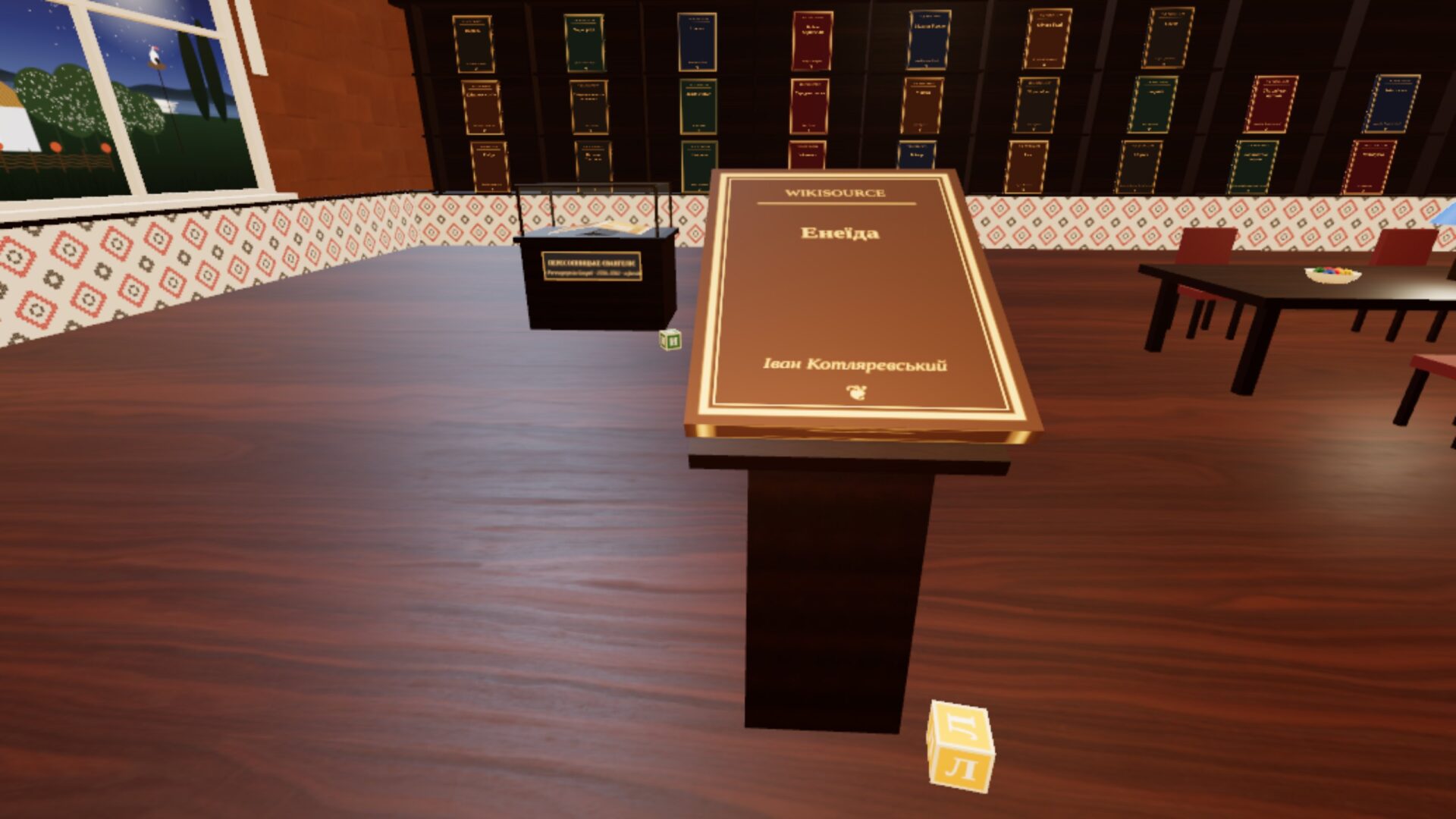
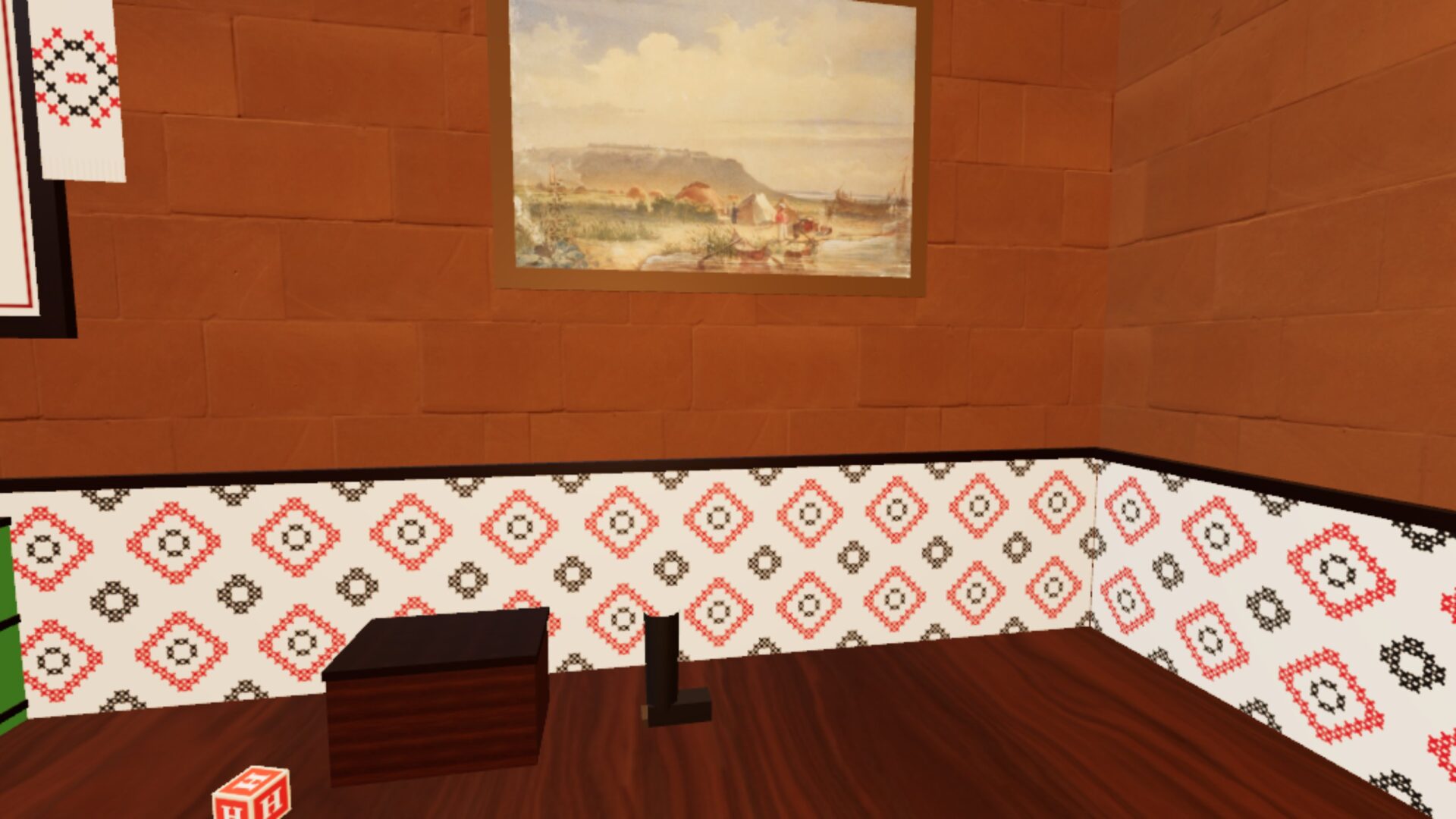
To mark the Day of Ukrainian Writing and Language, Kotliarevsky’s “Eneida” (“Aeneid”) was displayed on a lectern in the room from October 27 to November 9. Beneath Shevchenko’s 1848 drawing “Fort Raim. View from the Shipyard on the Syr Darya” stands a boot containing a small notebook of his poems.
After Chytomo contacted him, O’Connor adjusted the timing of “Eneida”’s appearance to reflect the holiday’s new date and translated into Ukrainian the titles of two sections that had remained in English.
According to O’Connor, every object in the room is designed to be discovered rather than explained on a sign. Playing Lukash’s flute transports visitors into the forest from Lesia Ukrainka’s “The Forest Song,” where Mavka appears beside an old willow tree. A window set into the wall reveals a moonlit night over the Dnipro River, with a white cottage and a cherry orchard inspired by a poem by Shevchenko.
“The bandura plays Leontovych’s ‘Shchedryk’ because the whole world knows this Ukrainian melody, even if people don’t know it’s Ukrainian,” O’Connor said.
When Clio, the library’s cat, falls asleep on a table, the bandura plays the lullaby “Kotyku Sirenkyi” (“Little Grey Cat”).
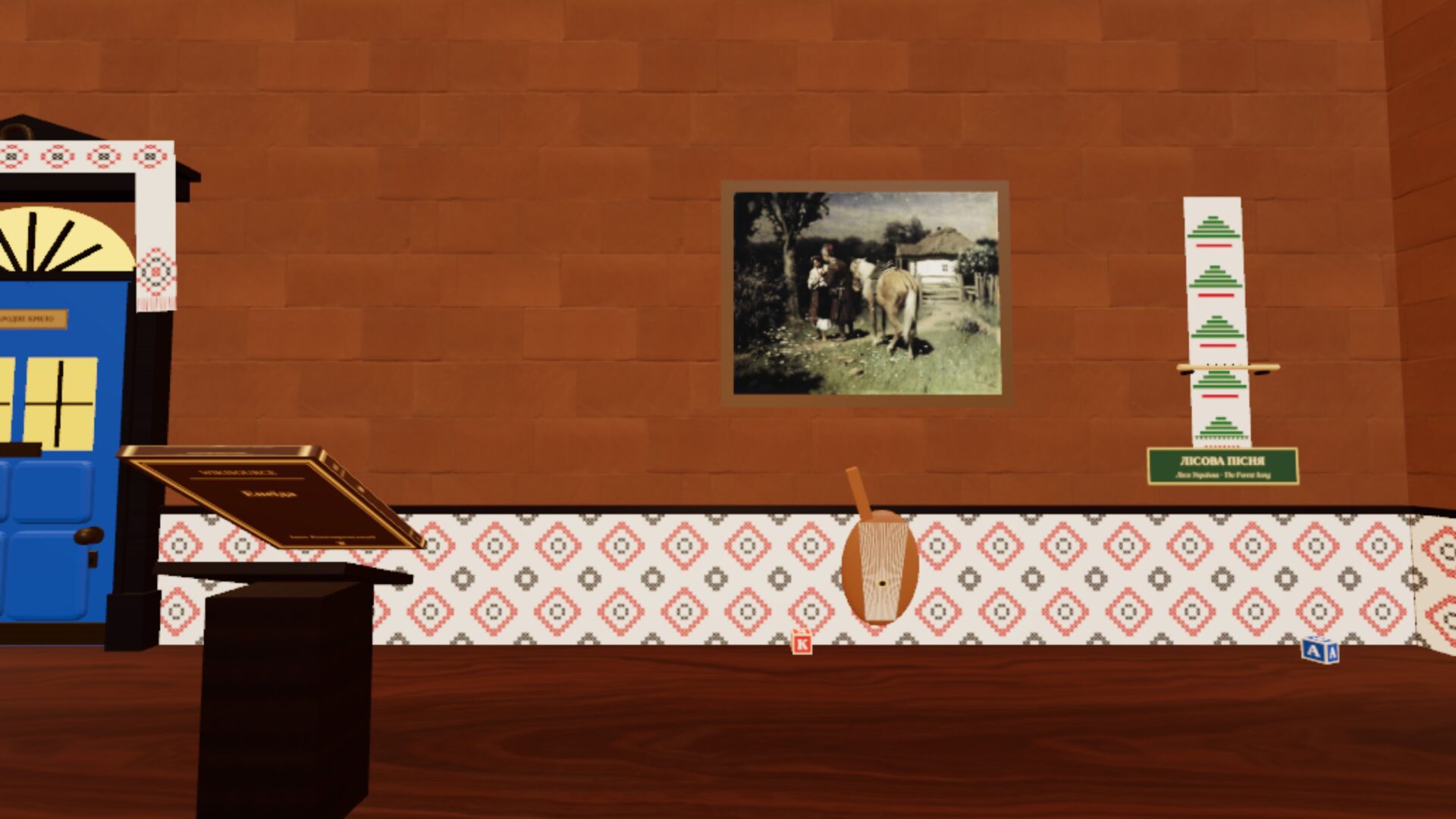
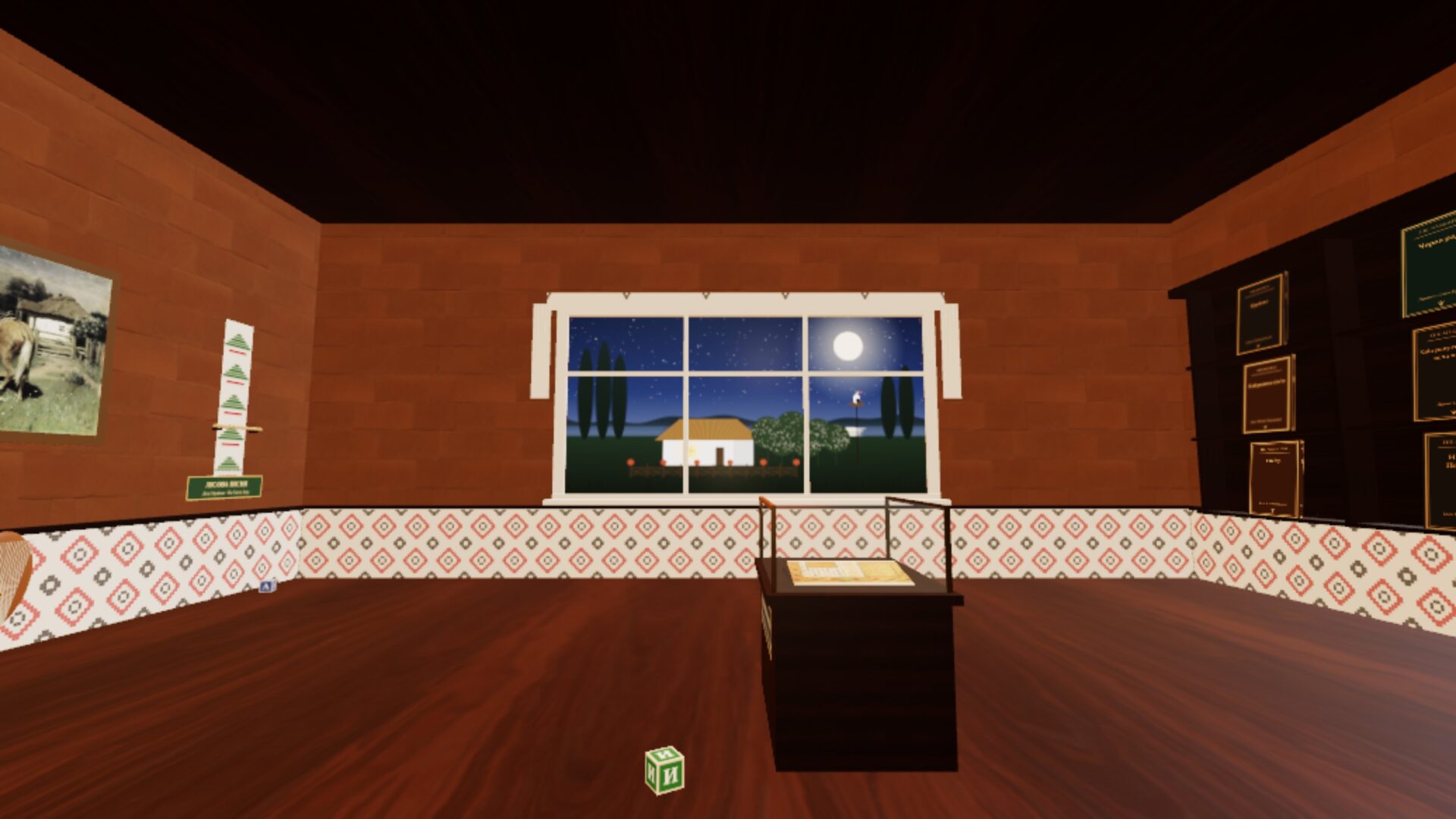
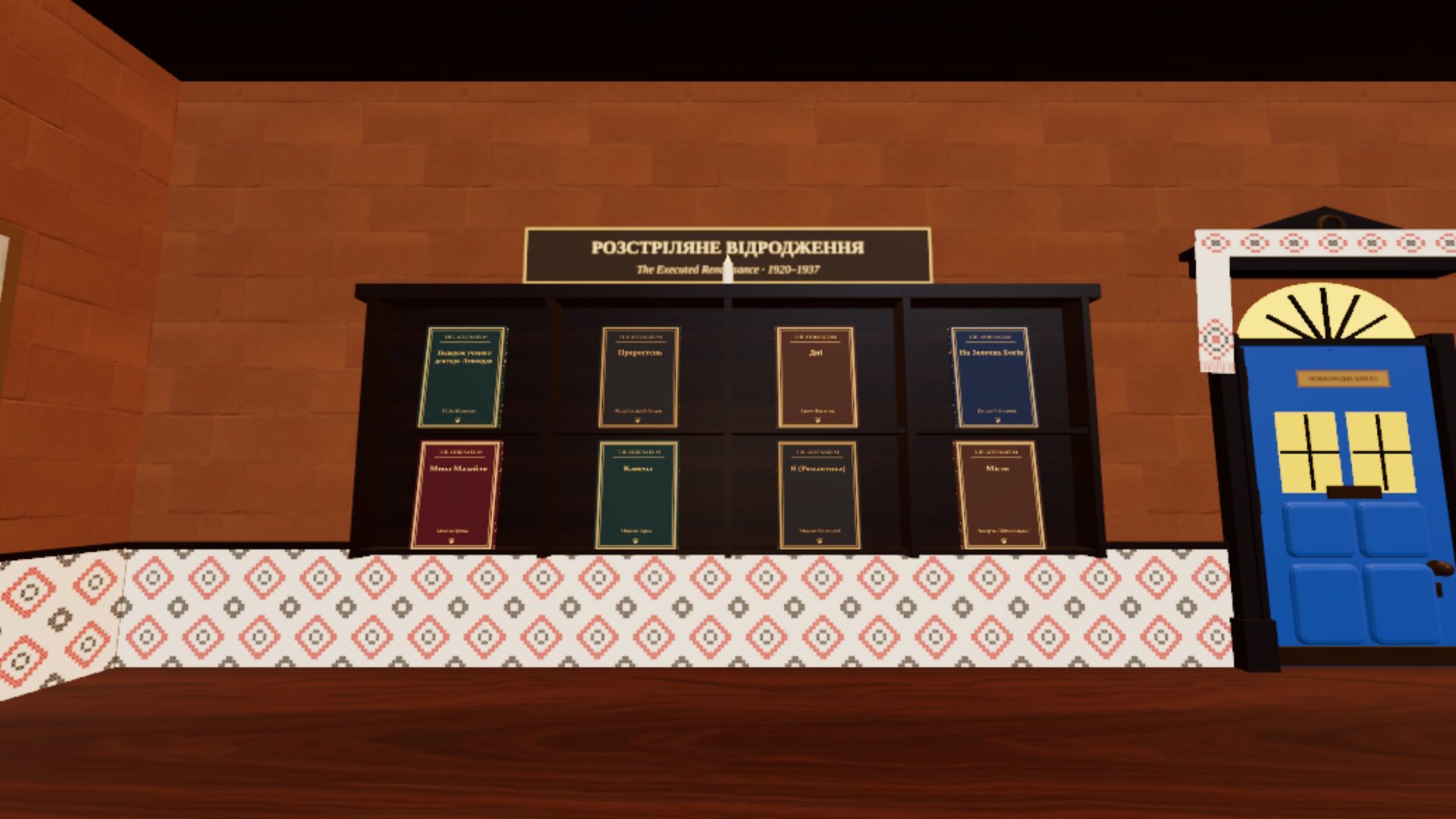
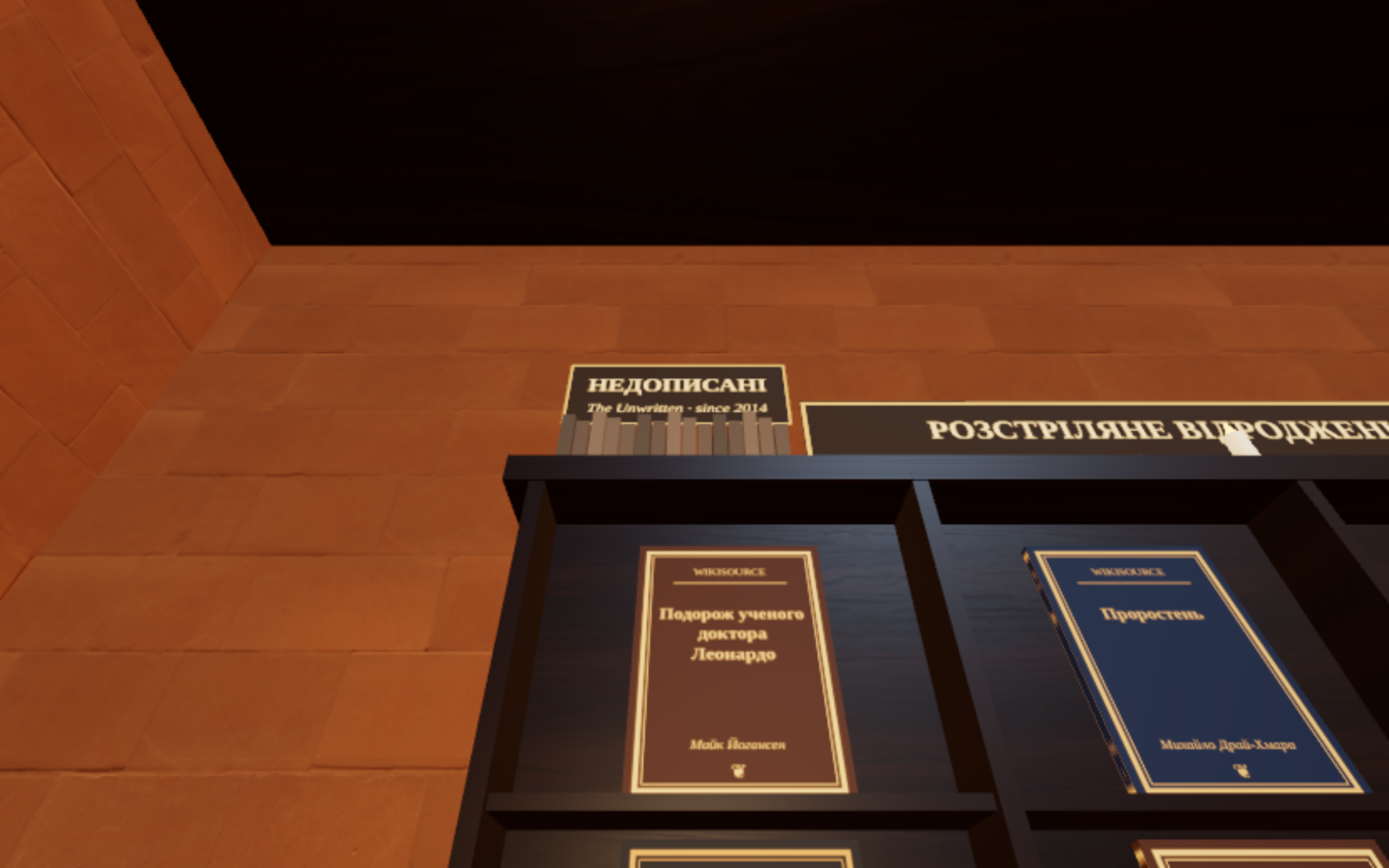
Near the door, a separate shelf commemorates the Executed Renaissance, with a candle above it serving as a memorial. More recently, O’Connor added books with blank spines to a shelf bearing the inscription “Недописані · The Unwritten · від 2014 року” (“The Unwritten · since 2014”).
A card beside the shelf explains that the Executed Renaissance did not end in 1937 and that the Unwritten memorial project has documented more than 300 members of the literary community killed since 2014, including Victoria Amelina and Maksym Kryvtsov. O’Connor learned about the initiative from a Chytomo news article.
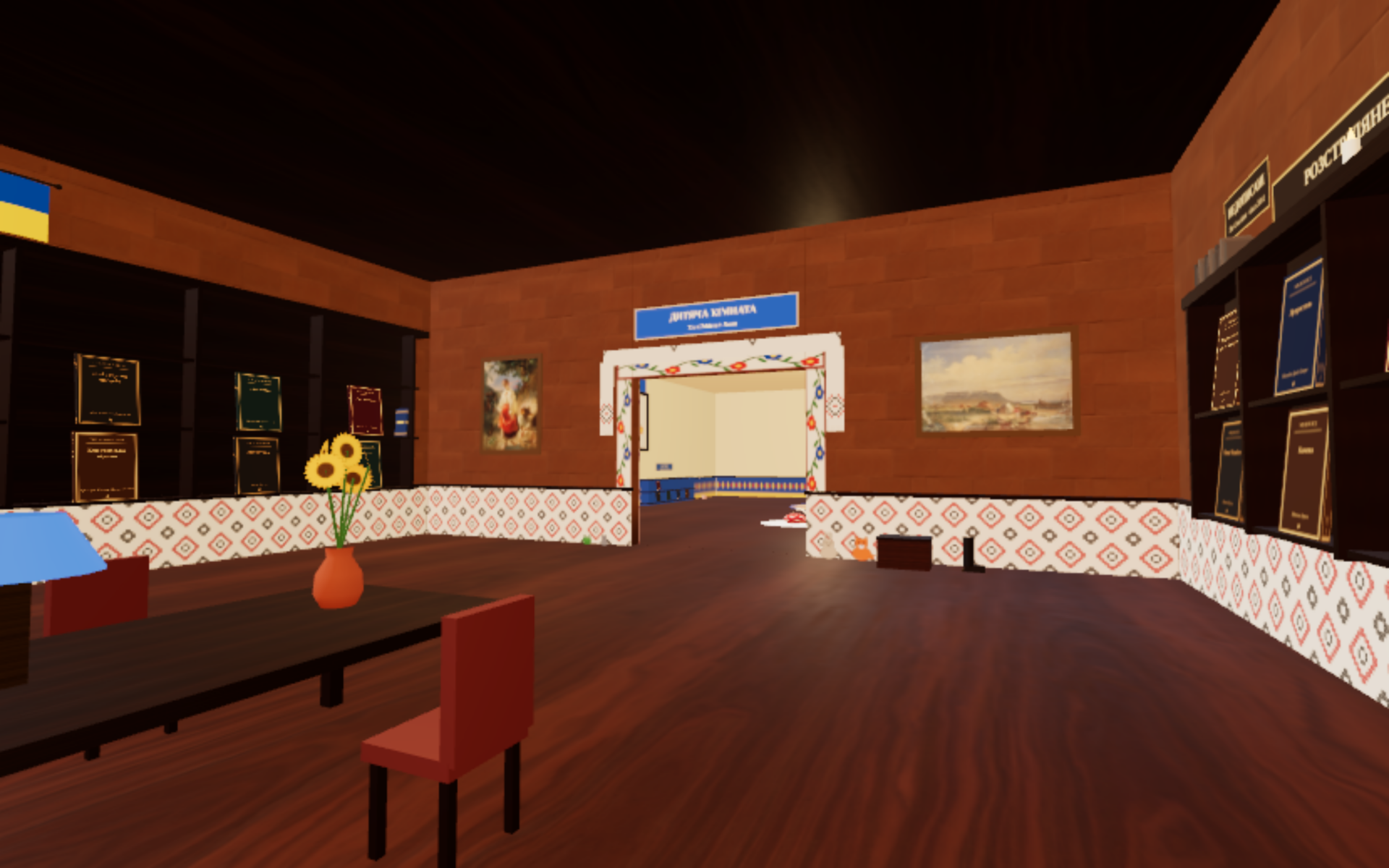
A separate room has been created for children. Visitors can enter through a wide painted archway beneath an embroidered Ukrainian rushnyk on the eastern wall of the reading room, or through a small yellow door in the lobby of the international wing.
The lower shelves hold folk tales and fables by Leonid Hlibov for younger children. Older readers can explore Franko’s collection “When Animals Still Talked” and “Mykyta the Fox,” Borys Hrinchenko’s “Olesia,” Franko’s “Zakhar Berkut,” and Mykhailo Starytsky’s “The Siege of Busha.”
The folk tale “The Mitten” is presented with paper figures arranged around a red mitten. Each time a visitor clicks, another animal appears and speaks its lines from the story.
Six wooden letter blocks are hidden throughout the room, spelling the Ukrainian word kalyna. Visitors can read on a cushioned bench, and in December, St. Nicholas will leave a present beneath a pillow.
The room also contains a secret inspired by the folk tale “Kotygoroshko,” which O’Connor encourages readers to discover for themselves.
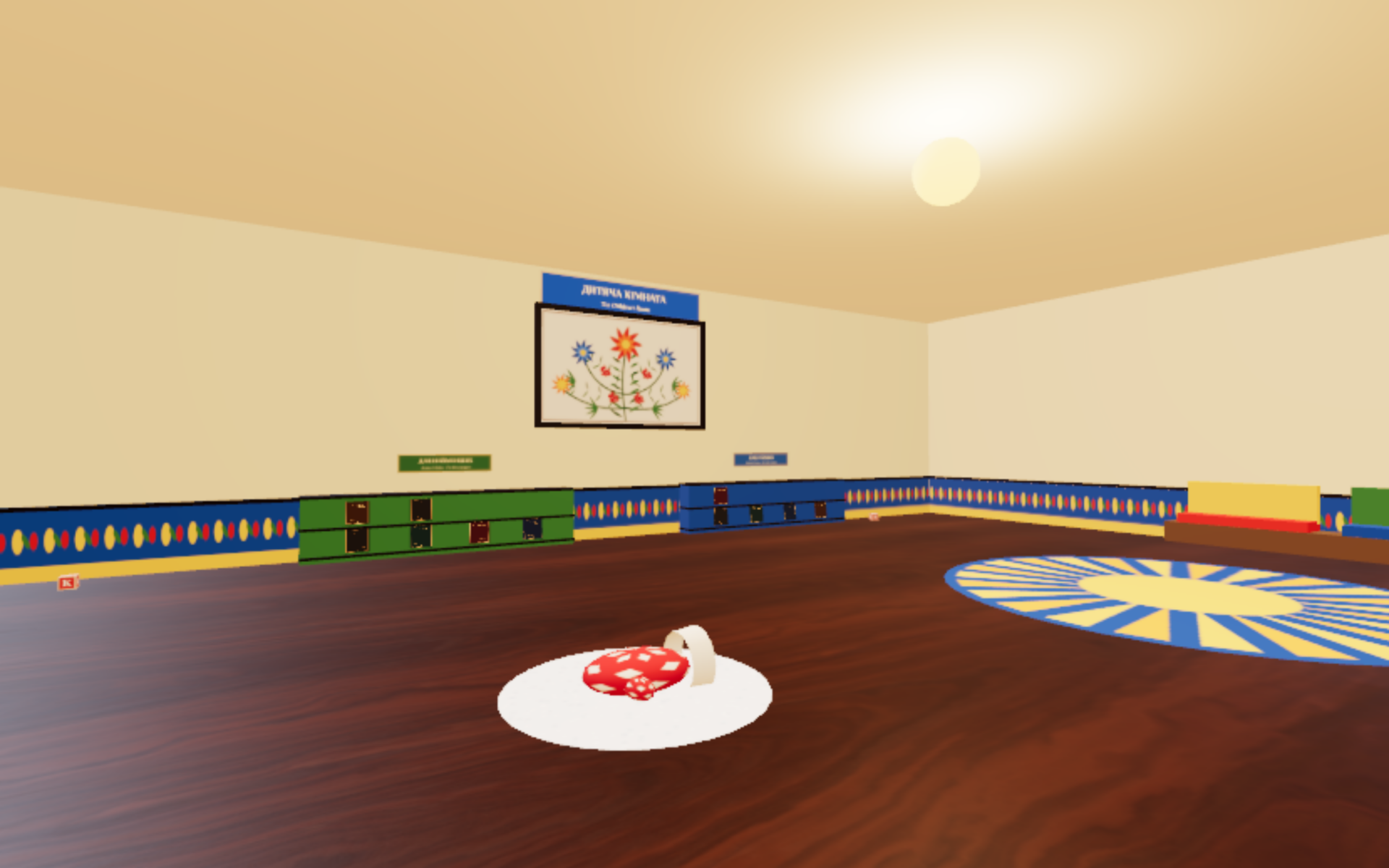
For Holodomor Remembrance Day on November 28, a candle accompanied by ears of wheat will appear in the room for readers to light. At Christmas, a didukh, a traditional Ukrainian ceremonial sheaf, will also be added.
Each work in the room is accompanied by a short note written in the voice of the librarian, a character who welcomes visitors in the Great Hall. AI assistants draft these notes, which O’Connor and knowledgeable readers, including representatives of the Ukrainian Book Institute, then review. Every note in the Ukrainian room now also has an English translation.
AI assistants draft these notes, which O’Connor and knowledgeable readers, including the Ukrainian Book Institute, then review.
“I decide what this library is for, which rooms it has, and what goes on the shelves. The library’s rules and values are recorded in a single file, and the assistants have to follow them: for example, we write Ukrainian notes in Ukrainian and don’t make anything up about a book or an author,” O’Connor said.
The Ukrainian Book Institute helped O’Connor correct two inaccuracies. Shevchenko’s 1848 drawing had mistakenly been labelled a self-portrait, while his poem “Haidamaky” had been displayed as prose. Following the correction, all poems in the library now retain their original line breaks.
O’Connor said he studied international relations and created the Ukrainian room to support Ukrainians.
“Ukrainian literature abroad has so often been overlooked or presented as belonging to someone else that it seemed especially important to me to give it a room of its own. Ukraine feeds the world both literally — with grain — and culturally — with its writers, music, and art. I wanted the library to show the latter just as clearly as everyone knows about the former,” he explained.
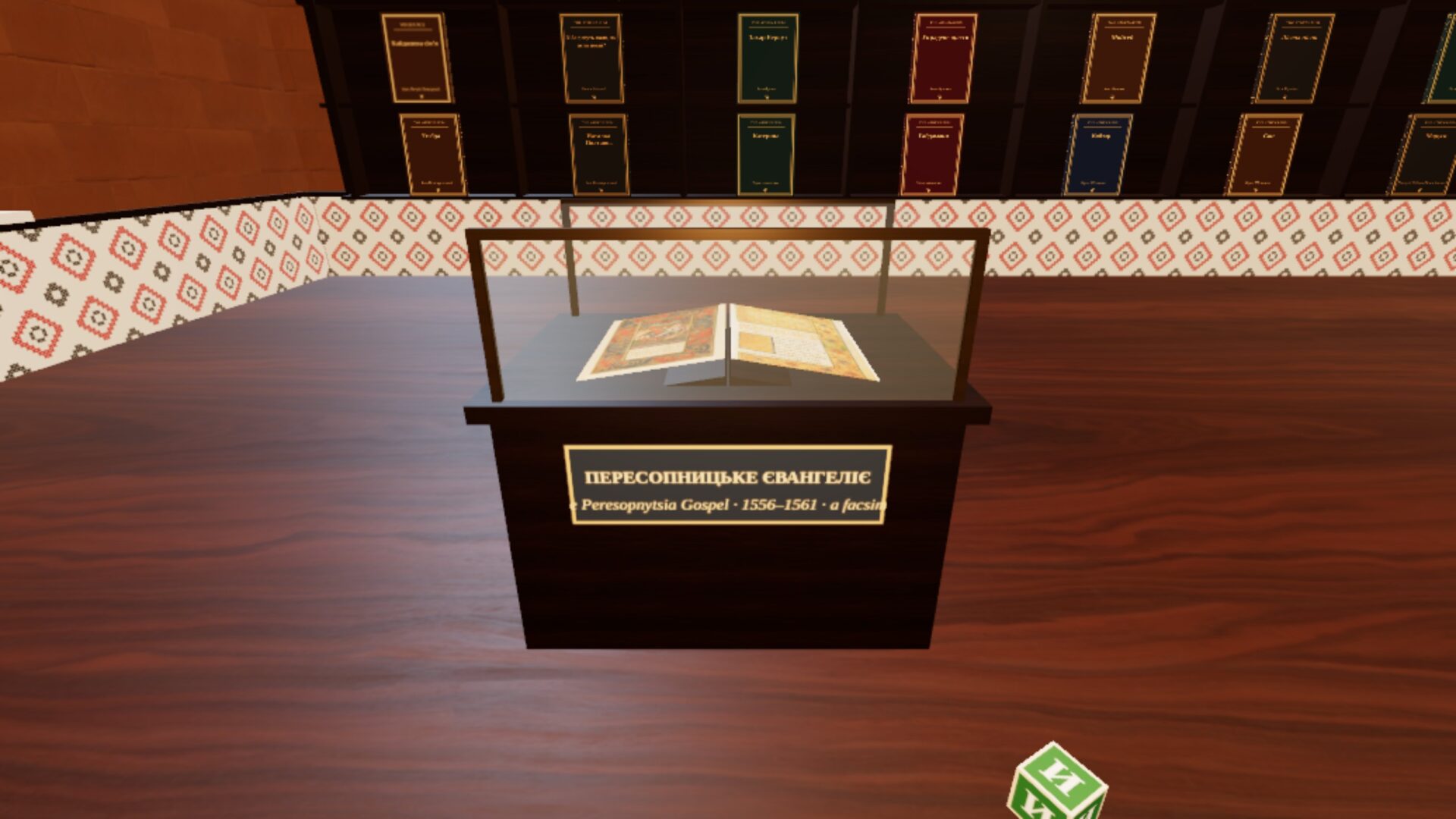
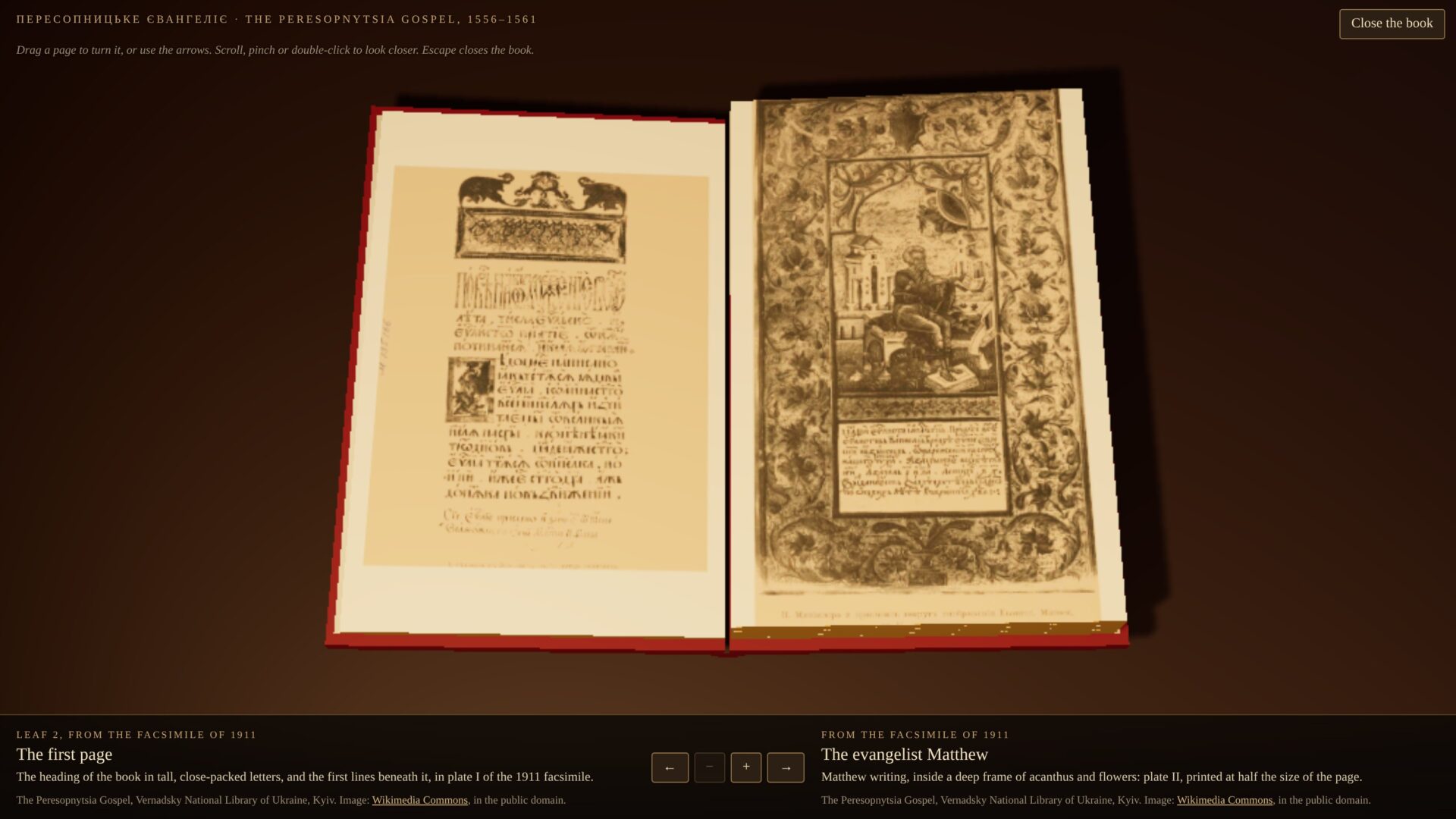
O’Connor draws parallels between Ukrainian and Irish history, noting that both languages were suppressed by empires. The library includes an Irish room displaying the Book of Kells under glass and a Ukrainian reading room featuring the Peresopnytsia Gospels.
“In both Ireland and Ukraine, writers kept their languages alive despite everything. I like to think of these rooms as two rooms for two languages that refused to be silenced,” he said.
Since the beginning of Russia’s full-scale invasion, O’Connor has spoken with many Ukrainians who came to Ireland.
“I admire their strength and their faith in the future. I very much hope to visit Ukraine someday, and as a librarian, the first place I’ll go is Saint Sophia Cathedral in Kyiv — that’s where Yaroslav the Wise gathered the first library of Kyivan Rus almost a thousand years ago,” he shared.
There will be no Russian reading room in the library. O’Connor removed several Russian classical works that had previously been included after the Ukrainian Embassy in the United Kingdom drew attention to Russia’s use of culture as a propaganda tool.
“After the atrocities Russia has committed in Ukraine, I could not in good conscience create a Russian reading room. I created the Ukrainian one because I admire Ukrainians and want to stand with them, and that will not change,” O’Connor emphasised.
He plans to add English translations of Shevchenko’s works that are in the public domain. In addition to Ukrainian, the library’s international wing currently has Spanish, Portuguese, Chinese, French, Latin, and Italian reading rooms. O’Connor hopes to add rooms for Hindi, Urdu, and Bengali in the future.
A new sign now points visitors towards the room. In the Great Hall, near the entrance to the international wing, a blue-and-yellow sign reads “Українська читальня” (“Ukrainian Reading Room”).
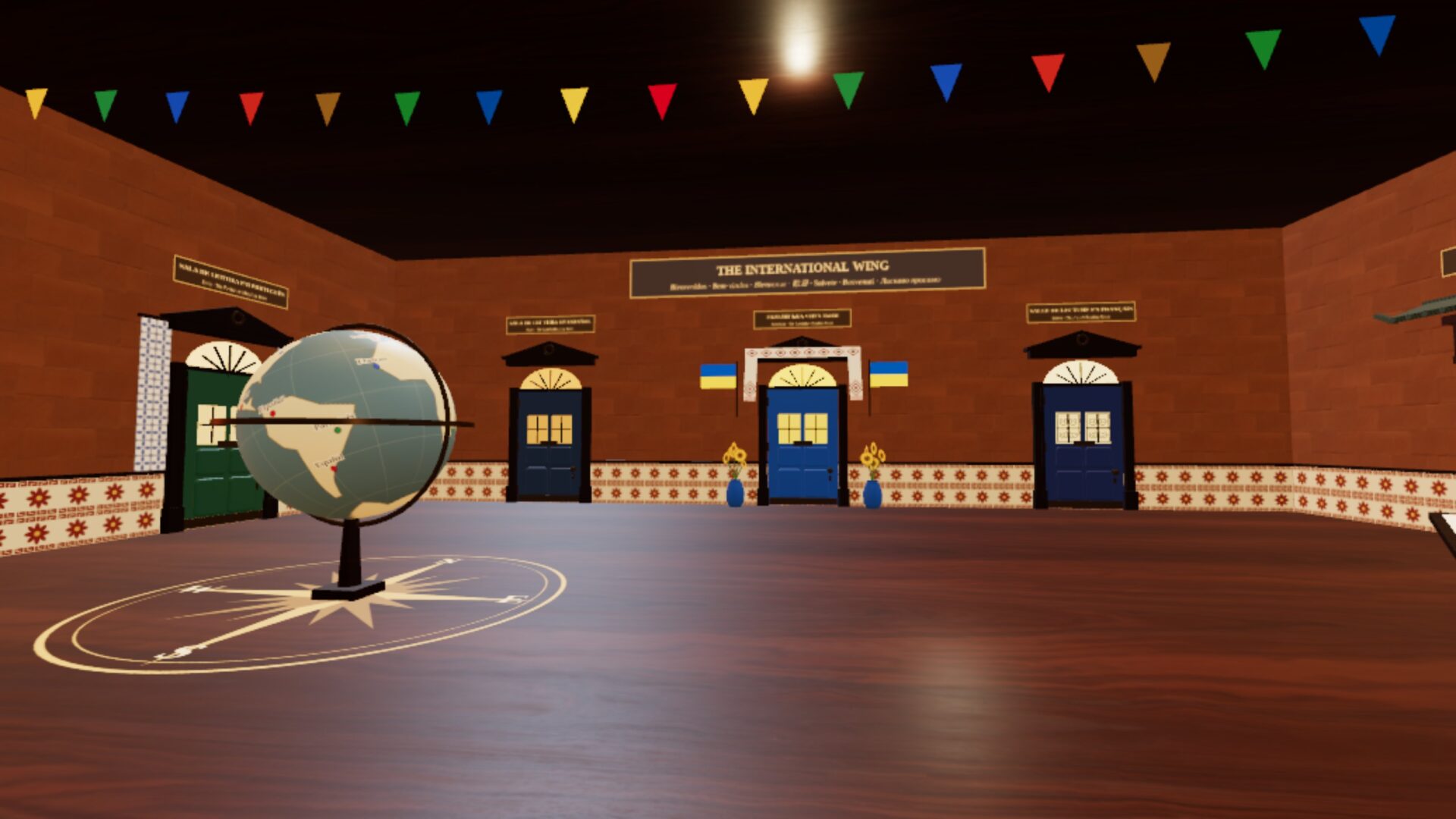
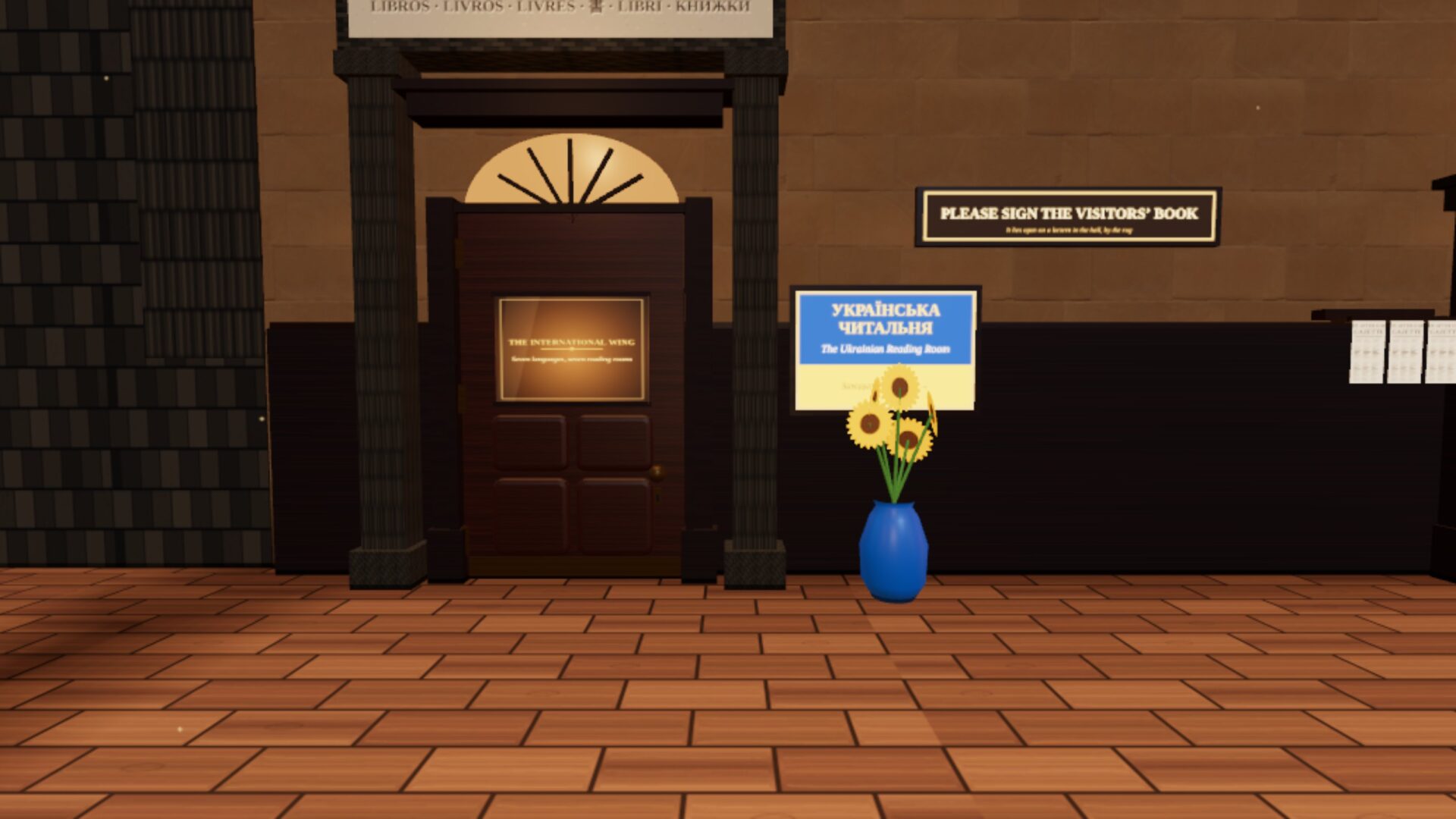
The international wing also has a new lobby with a globe and doors leading to each reading room. The Ukrainian door is directly opposite the entrance, surrounded by sunflowers. The room is also the final stop on the library’s introductory tour for new visitors.
As reported earlier, Ukrainian books became available through public libraries across Ireland in 2022, including folk tales, bilingual editions, contemporary literature, and nonfiction.
The Ukrainian Bookshelves Worldwide project mapped 388 spaces with Ukrainian books across 22 countries in 2023. The project, developed by Chytomo and LitCentr, aimed to improve access to Ukrainian literature abroad.
Images: Website screenshots provided to Chytomo by the developer.
Читомо» — це медіа про книжки й літературу, що підтримувало українське книговидання задовго до того, як це стало трендом. Ставайте частиною історії — доєднуйтеся до Клубу Читомо!
the more you read, the greater the possibilities