* ESC - close the search window
short prose
Ukrainian literature witnesses a renaissance of the short story form
02.11.2025

You see an error in the text - select the fragment and press Ctrl + Enter
It is apparent that modern Ukrainian literature is returning to short prose, with short stories and novellas emerging in Ukraine more than ever before. What drives this shift? Is this process part of a broader trend? What does it say about contemporary Ukrainian literature, if anything?

Why are there so many novels?
The European novel-centered literary system, which defined the global process in the 19th and 20th centuries, has continued to this day. Renowned Ukrainian writers — Serhiy Zhadan, Oksana Zabuzhko, and Yuri Andrukhovych — are primarily novelists. Their novels have achieved the highest number of print runs, reprints, and translations. If we look at the literary debuts of the past few years, some of the most remarkable include Anna Hruver’s “Her Empty Places” (2022), “Fanatic. A Bipolar Story” (2024) by Khrystyna Morozova, “Where the Sun Sets” (2024) by Olena Pshenychna, “Orynyn” (2024) by Sashko Stolovyi, and “Cassandra Smokes Papirosa Cigarettes” (2025) by Anna Bezpala. All of these are novels.
The dominance of the novel in Ukrainian literature does not mean that other genres, in particular short prose, have been completely absent. The stories and novellas of classical authors such as Marko Vovchok, Mykhailo Kotsiubynsky, Hryhir Tyutyunnyk, Vasyl Portyak, and many others are further proof of this. It is noteworthy that some of these writers are once again turning to short prose and appearing in various classic reissue series, including those from publishers like Vikhola and Vivat. Stretovych Publishing has recently released a collection of contemporary classics: stories by authors ranging from poet and playwright Oleh Lysheha to sci-fi and fantasy writer Svitlana Taratorina. In other words, short prose not only remains a part of the literary landscape, but its tradition is also being actively sustained.
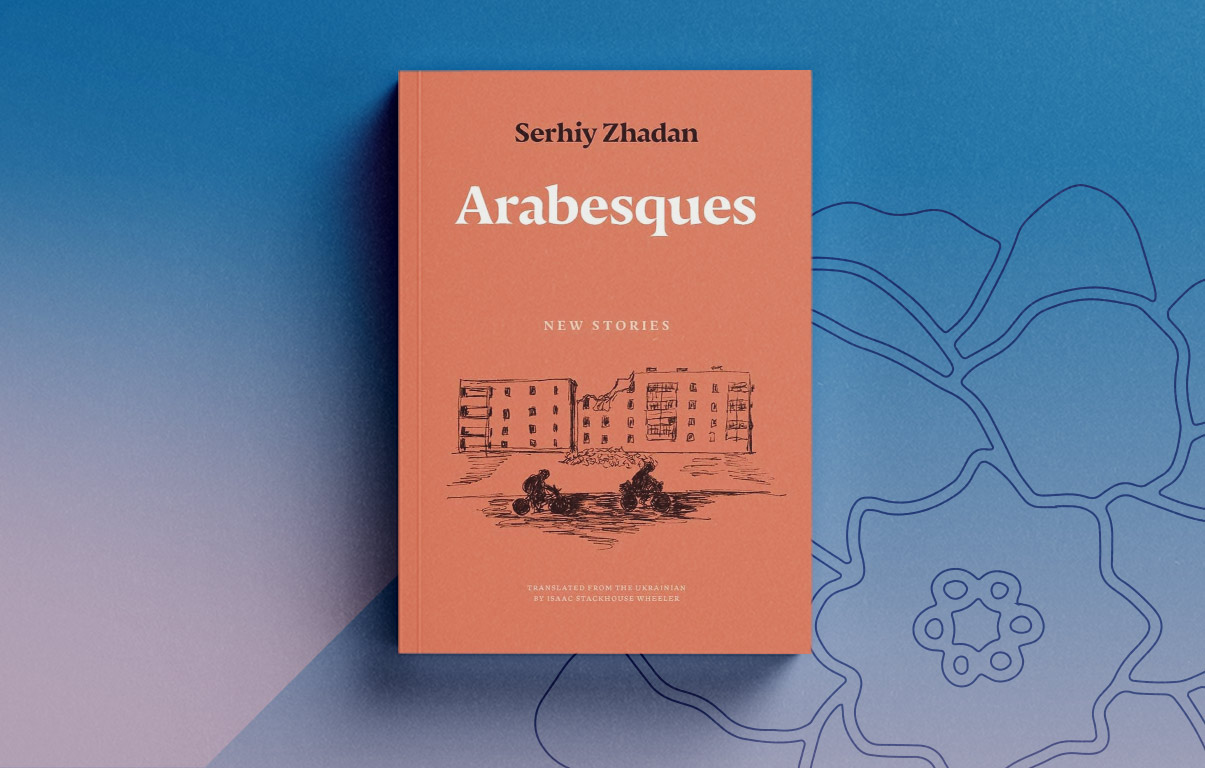
In fact, this continuity is demonstrated by Zhadan’s latest book, “Arabesques” (2024), named after the eponymous work by Mykola Khvyliovyi. It is worth emphasizing that the intertextual link with Khvyliovyi appears not only in the title, but also at the genre level, since Zhadan titles his short story collection after one of Khvyliovyi’s own stories. This is not the first time Zhadan has borrowed a title for a book from a representative of the “Ukrainian 1920s.” In 2001, for instance, his “Ballads on War and Reconstruction: New Poetry” collection was published, named after the collection of the same name by Maik (Mykhailo) Yohansen or Mike Johansen. However, “Arabesques” is perhaps the first clear example in a long time of such an explicit link being drawn between works of short prose, and it is noteworthy that the renewed interest in the tradition of short literary forms is emerging at this particular period of time.
RELATED: Science fiction and fantasy during the war: Escapism or so much more?
The quiet moment before the storm
Until 2022, the emergence of short stories was hindered not only by the novel-centered literary system, but also by the literary scene, which was built with a focus on novels rather than short prose. This is particularly evident in the case of literary awards.
Every rule has its exceptions. In the sphere of marginalized short prose, one notable departure is Roman Holubovsky’s collection “Z nami zhytyme elasmoterii” (Elasmoterii will live with us, 2024), which is one of the most successful literary debuts in recent years. The essence of its success, however, lies in its uniqueness and its divergence from prevailing trends. Holubovsky’s collection is crafted to overturn the reader’s expectations: whereas contemporary literature in turbulent times usually gravitates toward serious themes, he presents light, humorous pieces; while young writers often look for stability in their work amid a menacing reality, he disrupts it all with absurdism; and although debuts are typically novels, he arrives on the literary scene with a short-story collection. In other words, the choice of genre is a reflection of the genre’s own marginality: debuting with short stories is itself a subtle act of literary rebellion, and in this case, that rebellion has been successful.
It seems that such a negligible presence of short prose in the literary process is also an indicator of a lack of readers’ demand. Paradoxically, at a time when psychologists, neurologists, anthropologists, and cultural studies experts are warning about widespread issues with attention span and “clip thinking,” the most popular literary works are long sagas and series — whether fantasy, detective, or historical — demanding from readers significant focus and deep immersion. Needless to say, these series are embodied in novel form, and thanks to this, the novel remains a prominent genre of literature. As a result, publishers are more inclined to release novels than short prose, and in turn, authors are more inclined to write novels than short stories or novellas.
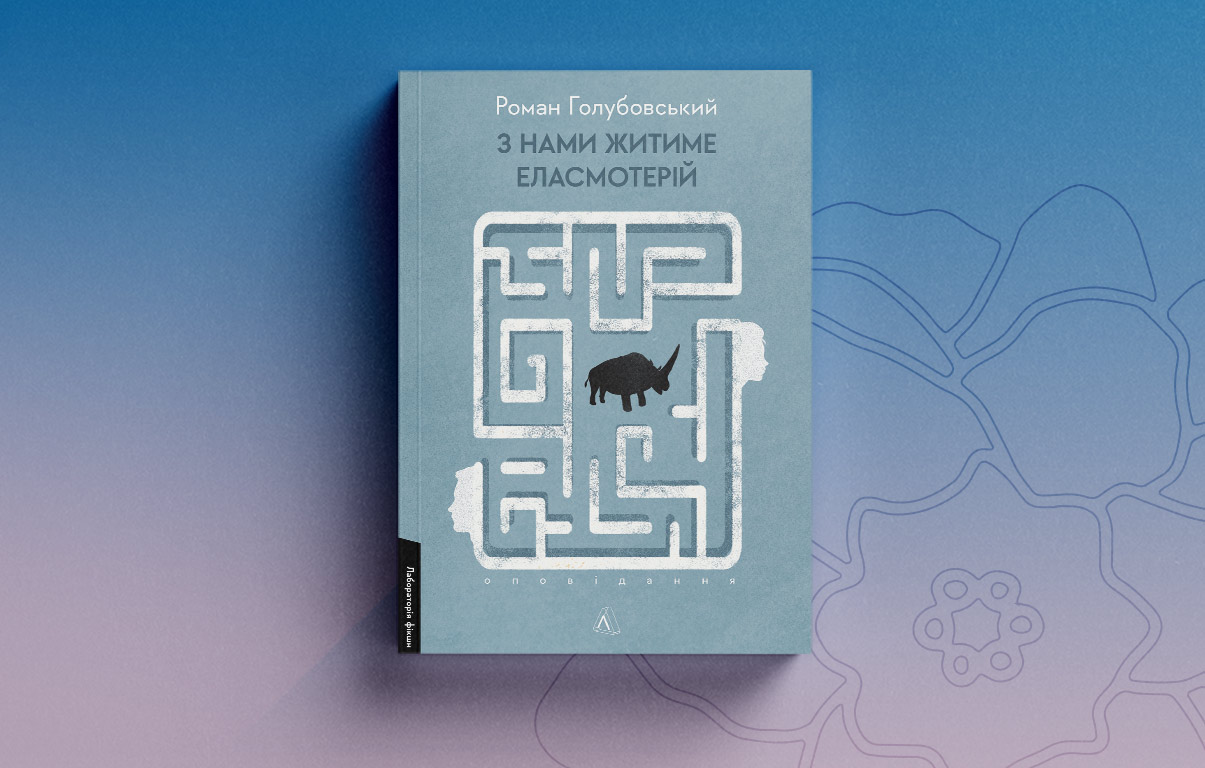
“Z nami zhytyme elasmoterii” by Roman Holubovsky (Ukrainian cook cover)
However, short prose has always been present in our literature. Again: the dominance of the novel does not mean the absence of short stories and novellas, but for a long time, short prose has largely remained on the margins of literature.
So, when did the shift begin to occur?
Collectivity and fragmentation
Perhaps all significant changes in Ukrainian literature in recent years can be explained by the war. After Feb. 24, 2022, the novel, as a genre, found itself out of focus in literature. During the initial period of full-scale invasion, authors couldn’t write anything substantial that was not about the war, and it was impossible for them to write anything substantial about the war, since the novel is a time- and work-consuming genre. Besides, neither writers nor readers were in the mood for novels. Poetry was the first to respond, filling the space vacated by novels, and later short prose caught up, benefiting from its limited length.
Instead of a sequential narrative of a single plot, short prose allows the voices of several people to be contained within a single cover. Less integration, more names instead. This is exactly the idea behind anthologies and almanacs (collections of works by various authors), whose numbers have increased markedly since 2022.
RELATED: Seven must-read books of Ukrainian literature in German
The point is clear: short prose makes it possible to gather the experiences of many people in a single volume, which became especially significant during the full-scale invasion. In this way, one can feel a certain consolidation in the period when it was most needed and see unity in its literary expression. When all the names are listed together in the anthology and the authors’ stories are presented not separately but in the shared space of a single book, it creates a picture of unity even on a compositional level. A sense of belonging to a community, a feeling that your voice is heard and accepted, are what such collections offer, and that is why they have become widespread during the period of full-scale invasion.
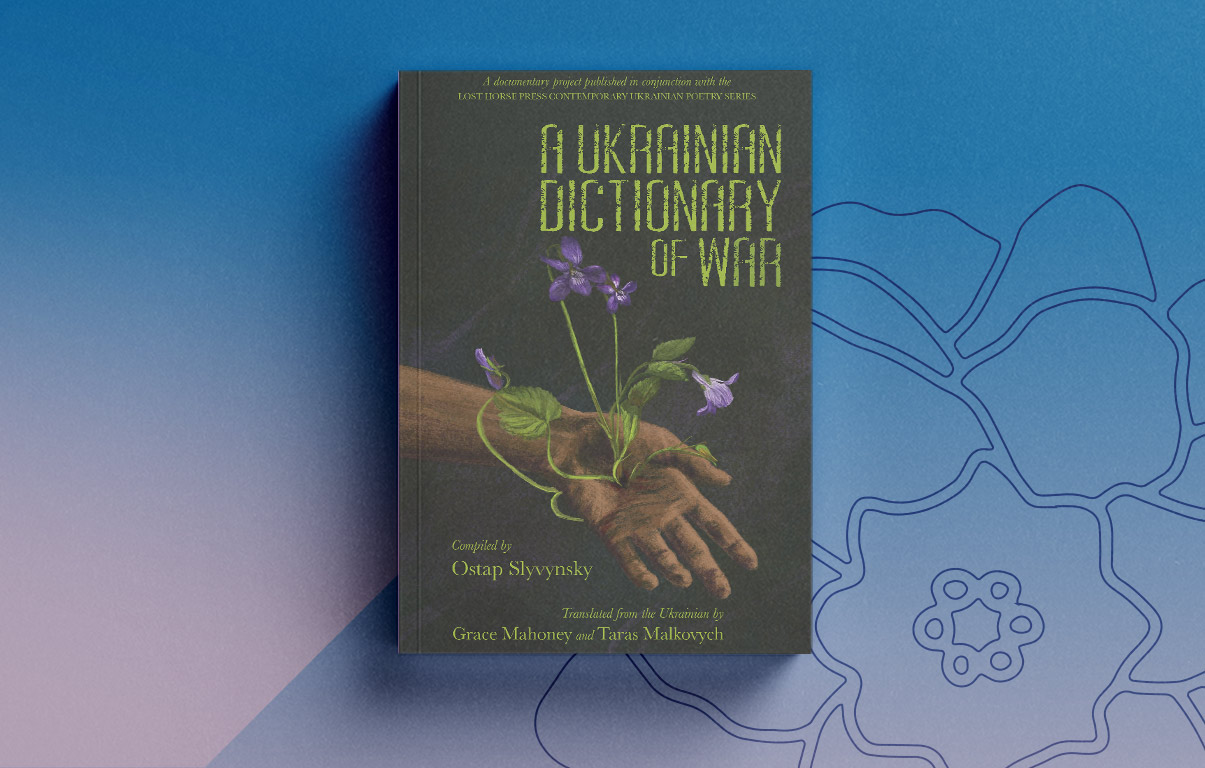
In 2023, Ostap Slyvynsky compiled the “Ukrainian Dictionary of War.” It is a collection of short prose texts that show, through the experiences of lyrical protagonists, how certain words took on new meanings with the onset of the full-scale invasion. It is important to note that Slyvynsky is not the author of these texts: in the preface, the compiler clarifies that the book consists of “fragments of other people’s monologues heard during the days of war,” and that “sometimes these stories have been edited only slightly, just enough for a fragment of a longer story to assume the meaning of a standalone piece.” In other words, we are dealing with the real voices of real people, filtered through the perceptions of the compiler and co-authors of the collection. Those involved in the book appear to step aside, making space for the stories of others to be heard. Doing so, they themselves become a kind of echo chamber, amplifying all the many voices from beyond. In other words, this is precisely the sought-after collectivity that short prose makes it possible to achieve.
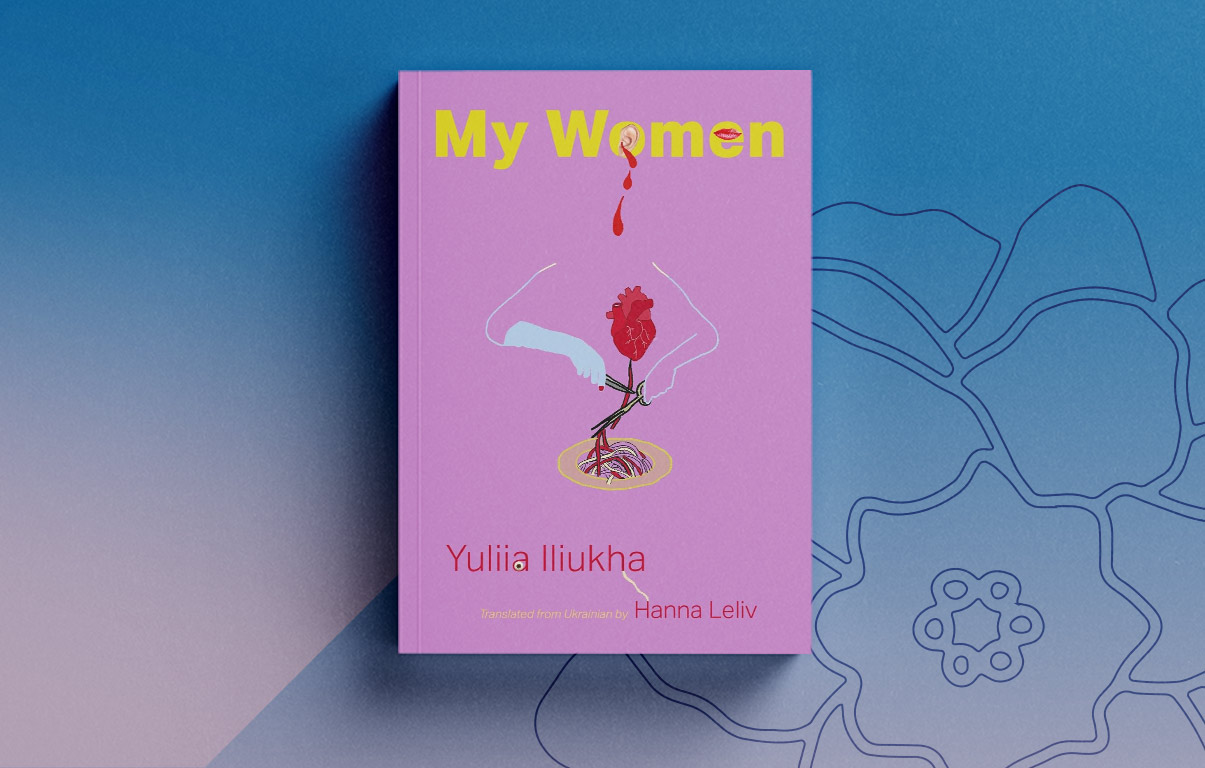
Similarly (but with a greater degree of fictionalization) is Yuliia Iliukha’s collection of short stories, “My Women” (2024). This is a collection of short prose, with each piece depicting the experience of a specific woman during the full-scale invasion. Unlike in the previously mentioned book, here the author does not provide a clear explanation of the origin of these texts. Some, like those in “Ukrainian Dictionary of War,” were likely collected from other writers and artistically shaped for the collection, while others are probably autobiographical. Still, some may be entirely fictional.
Ultimately, the aforementioned sophistication of experience is another reason why short prose has become so relevant in times of the full-scale invasion. It inevitably prompts us to reflect on the fragmentation of our reality — on its brokenness and disjointedness — so it is not surprising that such reflections are reflected in literature at the genre level, giving preference to the fragmentation of the story over the integrity of the narrative. Short prose may be the most effective way to capture this sense of fragmentation.
This is best illustrated by the example of Serhiy Demchuk, an author who previously worked in the short story genre but later switched to longer novellas and novels. Distinctive stylistic features of this writer are impetuosity, spontaneity, and “flamboyance” of plots and presentation. And in his latest book, “The Target Ceased to Exist” (2025), these features are realized even at the genre and compositional level.
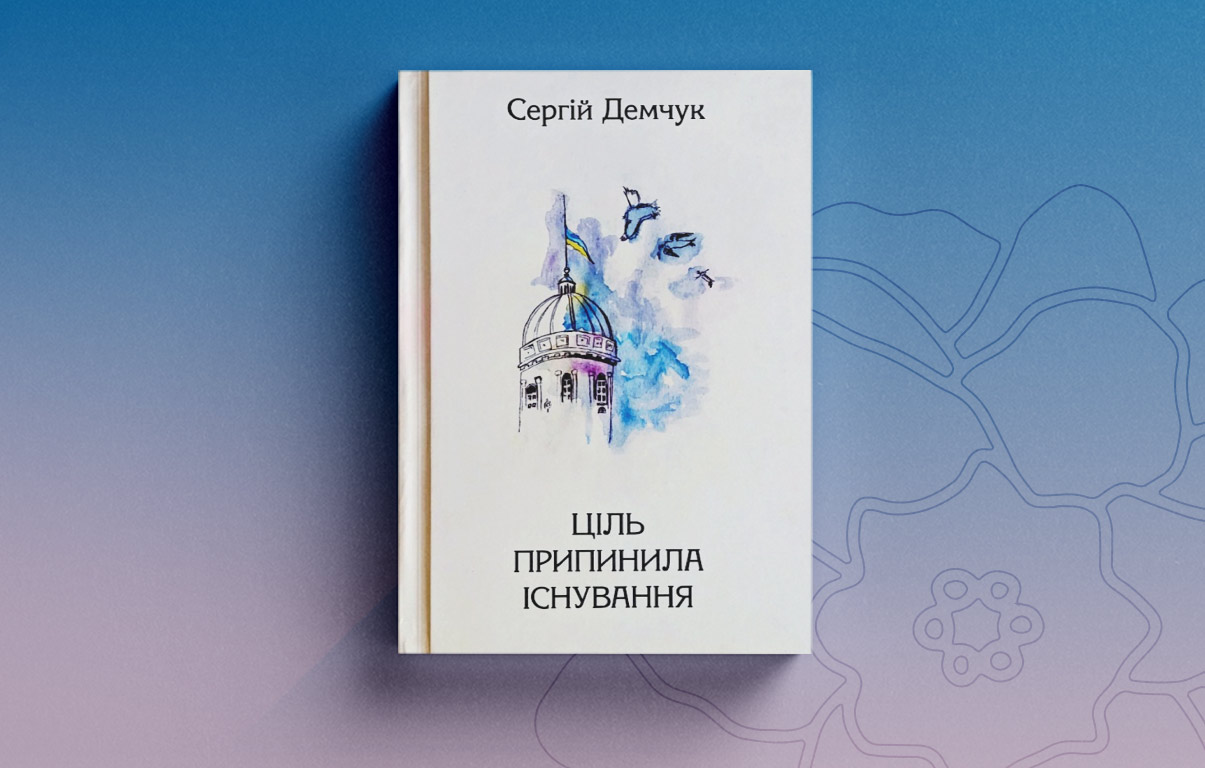
“The Target Ceased to Exist” by Serhiy Demchuk (Ukrainian book cover)
Demchuk returns to short stories and compiles a whole collection of them. These texts can be defined as autofiction in short prose. However, these autofiction stories about the adventures of the main character are constantly interrupted by testimonies of Ukrainian prisoners who were freed from captivity. At first glance, it seems like an unlikely combination: the author’s intriguing adventures alongside interviews about captivity. However, this is a clear example of how war interferes with literature and what the consequences of this process are: war testimonies literally penetrate autofiction here, breaking it down into smaller parts.
Military brevity
All of the above reasons for the revival of short prose also apply to what military men are writing. However, other factors are also important for military short prose. First of all, short prose is more suitable than novels for combining with other genres. For example, it can be integrated with autofiction, as seen in Demchuk’s “The Target Ceased to Exist” and Bohdan Kolomiychuk’s “Good Premonitions” (2025). Or with the essayistic genre, as seen in journalist-and-novelist-turned-soldier Artem Chapeye’s “Not Born for War” (2025), Artem Chekh’s “Dress-Up Game” (2025), and Artur Dron’s “Hemingway Knows Nothing” (2025). In addition, we also have a collection of essays by Dmytro Krapyvenko, “All in Three Letters” (2025), and Valery Puzik’s book “Hunters for Happiness” (2024) can be defined as a collection of sketches, short artistic texts about lived experiences (the term “sketch” takes on a double meaning here, as Puzik is also an artist, and his book deals in particular with the process of his painting).
These texts occupy the space between essays, memoirs, fiction—especially autofiction and flash fiction—and various other genres.
The limited scope plays a significant role. For instance, in the collections of Dron and Kolomiychuk, some of the pieces were written during the events they recount or based on immediate impressions afterward. In this context, short prose is particularly practical; while the urge to write persists in the trenches, it is much easier to create a brief story there than to write a full-length novel.
In his book “Bakhmut,” reporter Myroslav Laiuk came up with a formula that defines his reports and essays: it is “photography with text.” And if we borrow and continue this metaphor, short prose is a compact and convenient camera, unlike a bulky novel. So it is not surprising that in threatening circumstances and with the rapid pace of events, military authors prefer to “photograph.”
It’s hard to predict whether the rise of short prose in contemporary Ukrainian literature will persist. However, it is clear that in recent years, short prose has grown, and the quality of these texts has improved noticeably. Perhaps the short story as a genre deserves much more focus.
Time will show.
RELATED: Dmytro Krapyvenko on the end of anti-war literature
This article was created by a participant of an intensive course in book journalism and literary criticism of Chytomo and Litosvita. The UA/UK Cultural Exchange course is supported by the British Council’s Support for Cultural Activity in Ukraine with UK Involvement programme.
Translation: Iryna Savyuk
Copy editing: Joy Tataryn
This publication is sponsored by the Chytomo’s Patreon community
the more you read, the greater the possibilities
55
top five Ukrainian books for teenagers
Top five new teen books by Ukrainian authors
12.12.2025 - Vitalina Makaryk
33
UK/UA Cultural Journalism Exchange
Suffering hero-victims and alcoholism in the middle of nowhere: 6 stereotypes in writing about Ukraine
12.12.2025 - Chytomo