* ESC - close the search window
BOOK MARKET
Conclusions without optimism: The Ukrainian book market in 2025
14.07.2025

You see an error in the text - select the fragment and press Ctrl + Enter
In the Ukrainian book publishing sphere, the fourth year of the full-scale Russian invasion has been one of the most difficult. The work continued despite the pain of ongoing losses, with little support from Europe or the United States, with even more active drone and missile attacks on civilian infrastructure, and once again facing a shortage of personnel and readers.
You won’t find much good news in this report, but this is an attempt at a realistic assessment of the situation that will help start the discussion we need.
Timeline of destruction of Ukrainian literature over first summer month
During the first six months of 2025, Russia has been particularly aggressive in destroying Ukraine’s book infrastructure. The year began with the destruction of the National Writers’ Union of Ukraine premises, and then we’ve repeatedly reported on damaged literary museums, bookstores, warehouses, and printing houses in Kharkiv, Odesa, and Kyiv. In June and July, the attacks on civilian infrastructure intensified. In just the first 10 days of June, the Ukrainian Air Force reported an average of 256 missiles that were launched at Ukrainian cities every 24 hours.
Damage to the book infrastructure:
- June 3: a Russian strike on Kharkiv resulted in the destruction of books from the Krokus publishing house.
- June 6: Kyiv’s Skovoroda Library was damaged.
- June 16: Russia destroyed the Ukrainsky Priorytet publishing house and its warehouse, the Book.ua bookstore, and the Їzhak publishing house.
- July 3–4: a Russian missile greatly damaged the warehouse of Nash Format publishing house and MaisterKhyh printing house.
What has been published
The Book Chamber of Ukraine is reported to have received 6,680 book titles during the first six months of the year, with a total print run of 13.2 million copies, approximately the same as during the same period last year, but publishers and printers are witnessing a massive decline.
Currently, there is no confirmed evidence of a decrease in the number of books being published, but leading publishers report a sales decline of up to 20%. In spring, traditionally a “low” season for sales, book fairs and price undercutting by chain bookstores influenced the decrease in publishers’ sales. However, the situation did not improve over the summer. Explanations for the drop in book purchases vary, but emotional fatigue and a decrease in readers’ purchasing capability are among the most common reasons.
Despite this, the book market remains more steady than other creative industries. “Compared to the music market, where I’m also actively involved, the book industry appears to be more stable,” Dmytro Feliksov, owner and CEO of the Readeat bookstore and Concert.ua, said. “In 2022–2023, we experienced a renaissance of Ukrainian culture. Demand for anything that was Ukrainian, including books, was emotional and reinforced by government protection of the market from Russian content. In 2024–2025, decision-making has become more rational. Being Ukrainian alone is no longer sufficient. The reasons to choose this or that product are the quality of content, audience engagement, professional communication, and demand creation. This trend is common to both music and books. And this is now a serious game where only those who truly invest in development will win.”
RELATED: Forbes: The most profitable bookstores in 2024
Decrease in print runs isn’t significant so far
The Unisoft printing house is seeing a reduction in the number of weekly orders for book printing. Its director Oleksandr Popov sees this as a rather worrying sign but notes that the average print run of 5,000 copies has “decreased slightly,” by a few hundred copies, in Unisoft’s case, which prints about nine million books annually. The printing house is fully booked for the next two months (in October 2024, its schedule was filled more than three months ahead).
It is still difficult to increase printing orders from abroad even though the printing house continues to upgrade its equipment and purchased new machinery last year, already has established logistics, and can print books according to Forest Stewardship Council (FSC) standards.
“No one will choose a printing house out of solidarity; it’s still cheaper to print in Asian countries.”
Book prices
Globally, the increase in book prices is most often connected to the cost of pulp. A price increase is to be expected, but suppliers are still holding prices steady so far.
The factors of book price increases in Ukraine are:
1.Increase in wages. This is more influenced by the demand for qualified workers than by employers’ offers, and for some, restrictions are also set by “reservation” (temporary postponement of call-up for military service) conditions: publishing houses and printing companies that received reservations for their employees had to ensure a minimum wage level across all positions of 490 USD / 20,500 UAH per month (according to work.ua, as of last July, this was the average salary in Ukraine; in 2025, the average is already 600 USD / 25,000 UAH.
2.Prices for electricity. Book printing is extremely energy-consuming.
Additionally, price increases may occur in logistics and be connected to other associated costs.
According to Feliksov, following a 10% rise in paper prices in 2024, the market still requires an additional 15–20% increase in book prices “to allow proper agents and independent distributors to appear, and to enable growth in bookstores’ margins.” Given the decrease in sales, publishers and bookstore owners are trying to keep prices stable, fearing further losses.
“We understand this, but the choice between stagnation and development is obvious. If prices don’t rise, bookstores will start to disappear,” Feliksov said.
It is not clear how long the industry will be able to keep such an artificial restraint, and it is worth preparing for the next increase in book prices soon.
Will Ukrainians truly start reading in English?
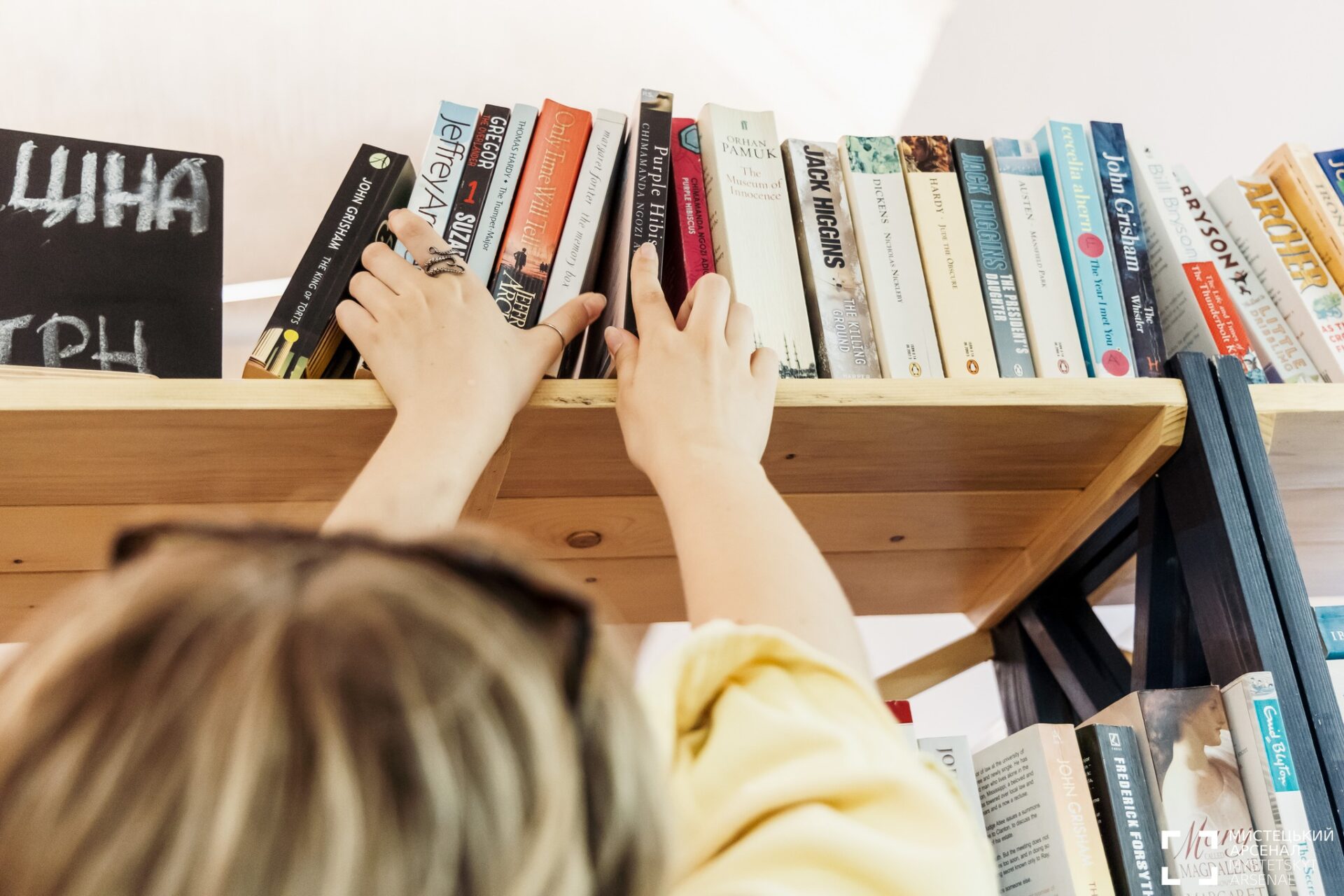
Book Arsenal (2025)
One of the most interesting trends is the growth in the number of English-language books published in Ukraine. Ukrainian publishers printed 923,000 copies in English last year, and that amount is two and a half times more than the number of books published in Russian. The actual interest in English-language books might be understood by analyzing the English-language selection in bookstores, as well as the number of purchased e-books from English-speaking countries, but we do not have such statistics.
This interest is supported at the legislative level because a wide range of public servants, from police officers to university lecturers, are required to be able to speak English.
At the same time, books published in Ukraine are translations of works that are no longer protected by copyright. Ukrainian publisher Folio, for instance, lists “The Little Prince” by French author Antoine de Saint-Exupéry as one of its English-language bestsellers. The book’s “simple language” appeals to those learning English.
Publishers from Slovenia, Greece, and other European countries with comparatively small numbers of language populations state that this is just the beginning of a trend which, over the course of a decade, may evolve into direct purchases of English-language bestsellers even before their translations appear. BookTok trends accelerate this transition, and audience members want to be the first to get announced books and to quote their favorite authors in the original language. As a result, publishers either arrange for simultaneous releases in English and local languages or obtain the rights to publish the English version for their own market with the latter option becoming more common.
“The war isn’t over, but people already want to distance themselves”
Readers choose fiction literature because it helps them relax after a hard day.
“Fiction is chosen far more often. One can see this in the queues for authors who have just started their career and released debut novels. On the other hand, the standards have also risen. If the text is poorly written, no marketing strategy will help,”
Svitlana Stretovych, co-founder of Stretovych Publishing, said.
You can consider “escapism” to be called the word of recent years. The rise of fantasy/romantasy is a global trend that seems to have been partly caused by Ukraine (by the global shock from Russian aggression and instability in the world). Over the past two years, this trend has only strengthened and returned to Ukraine, primarily in the form of foreign authors’ books, mostly through BookTok.
RELATED: For the first time in Ukraine, more books are published in English than in Russian
Among the most popular books in the genre are “A Court of Thorns and Roses” by American author Sarah J. Maas (published in Ukrainian by Vivat with over 15,000 copies sold in 2024) and “Fourth Wing” by another American author Rebecca Yarros (published by KSD with about 30,000 copies sold during 2023–2024). These books already have loyal readership and keep attracting new fans. This trend is reflected not only in constant reprints and redesign of the covers but also in queues in bookstores for the next installment. The growing popularity of romantasy is noticed globally, and it is recognized not only by publishers but by the entire book community.

Book Arsenal (2025)
“From the market’s perspective, romantasy is currently the most published and sold among the genres. The demand is high. This indicates a certain desire of our readers for escapism,” Ilona Zamotsna, co-founder of Vikhola Publishing, said. Additionally, among the reading audience, there are heated discussions about the genre of dark romance, which combines gothic, horror, psychological drama, and romance, and explores the dark side of human nature and blurred moral norms.
The popularity of the genre among teenagers was actively discussed after the publication of the most popular titles within the e-book program for 18-year-olds by the Ukrainian Book Institute (UBI).
Military topics remain a very minor element in the literary landscape against the backdrop of these book sales. We document and publish far more than people are willing to relive and read again. Among the exceptions are books that explore the war through personal stories. “They work better than analytics or documentaries, especially when presented in an emotional or fictional form,” Feliksov notes.
According to information by Ruslana Koropetska, chief editor of UA Comix, interest in military-themed comics, including “Idu na shturm” by Volodymyr Kuznetsov and Dartsia Zironka, and “Symbols of Invincibility” by Bohdan Kordoba and Volodymyr Kuznetsov, has declined.
“This year, we’re observing a significant decline in interest in these comics. Readers approach the stand and ask for ‘something more cheerful.’ For some reason, they don’t seem to be interested in continuing to read about the war. This raises a question and a challenge as to what to do next, how to continue holding readers’ attention. We can’t completely distance ourselves. The war isn’t over, but people already want to distance themselves,”
Koropetska said.
Children’s books disappearing
Almost all publishing houses that were focused on children’s literature have expanded their catalogs beyond this genre because the number of children in Ukraine is declining, and only those who show exceptional creativity in competing for the remaining audience can sustain themselves in this segment. They collaborate with kindergartens and schools, create informational campaigns, form partnerships, and apply for various grants. The list of additional tasks goes on.
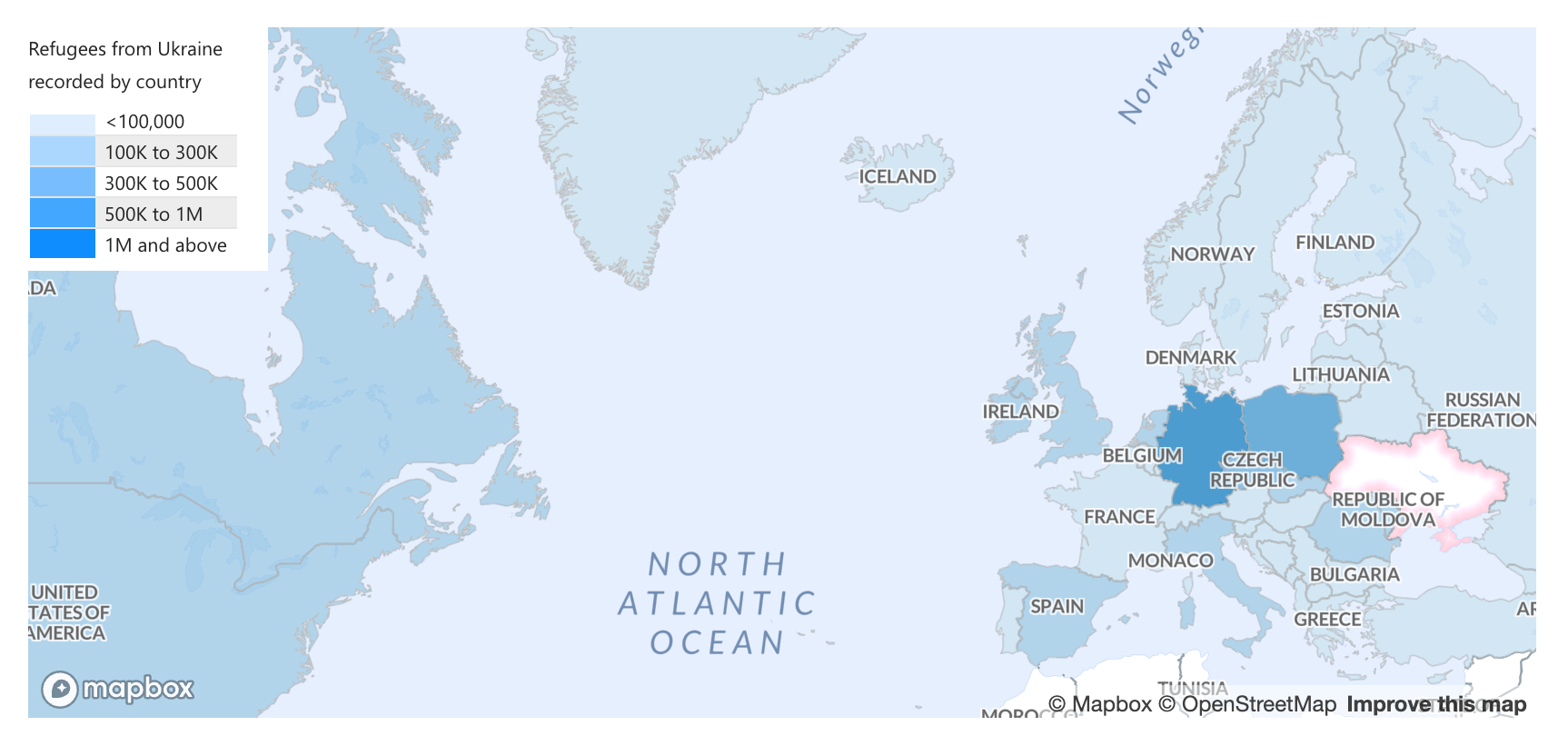
Olha Popovych, director of Kalamar independent publishing house, says that children’s book publishing in Ukraine is experiencing “not just difficult, but very difficult times.” According to UNHCR data as of July 1, 2025, 5.6 million Ukrainians are abroad as refugees (compared to 6.9 million reported six months earlier). As of March 31, 2025, the majority are women (45%) and children (31%).
UNHCR webpage screenshot
The decline is evident in both physical bookstores and online platforms. Attendance at children’s events has also dropped significantly. Victor Kruhlov, director of Ranok Publishing, highlights the growing interest of parents in nonfiction for children.
“It is necessary for our children’s lives, for acquiring specific skills.”
The loss of readers is significant not only because of people leaving the country but also due to a decline in interest in reading.
“Children who don’t read will become adults who don’t read. Establishing modern and progressive school libraries and raising teachers could be one of the possible solutions. The thing is the state program for replenishing library collections is not working now, and I’m not sure if a program for replenishing school libraries ever existed,”
Popovych said.
Ukrainian readers eager to read Ukrainian authors
According to Zamotsna, the demand for Ukrainian authors has risen significantly, and publishers are now competing for Ukrainian writers.
“When we approached authors in 2020 and asked them to write a book for us, they were very surprised and uncertain if they could do it. Today, when we approach an expert in their field to ask if they’re willing to write a book for us, they say, ‘I’ve already had two offers from other publishers.’”
Escaping into fantasy worlds supports mental health. At the same time, the Ukrainian experience is unique. It is about survival under extremely harsh conditions, allowing readers to relate to and work through their own experiences. Moreover, it is a practical experience important for Ukrainian nonfiction. Ultimately, these are Ukrainian texts about the desire to leave something behind while living under constant threat of elimination.
Selling abroad
The Old Lion Publishing House notes that sales abroad have decreased by 40% compared to 2024. Funds, libraries, and European bookstores have reduced programs and grants for purchasing books for people who left Ukraine during the full-scale invasion. A similar situation is observed with foreign book fairs and exhibitions. “Preferential participation” is, in most cases, no longer available to Ukrainian publishers.
Regarding the sale of rights, the situation remains unchanged. Partnerships for purchasing Ukrainian licenses have been maintained, and the Old Lion Publishing House notes that the 2025 figures are even better than the same period last year.
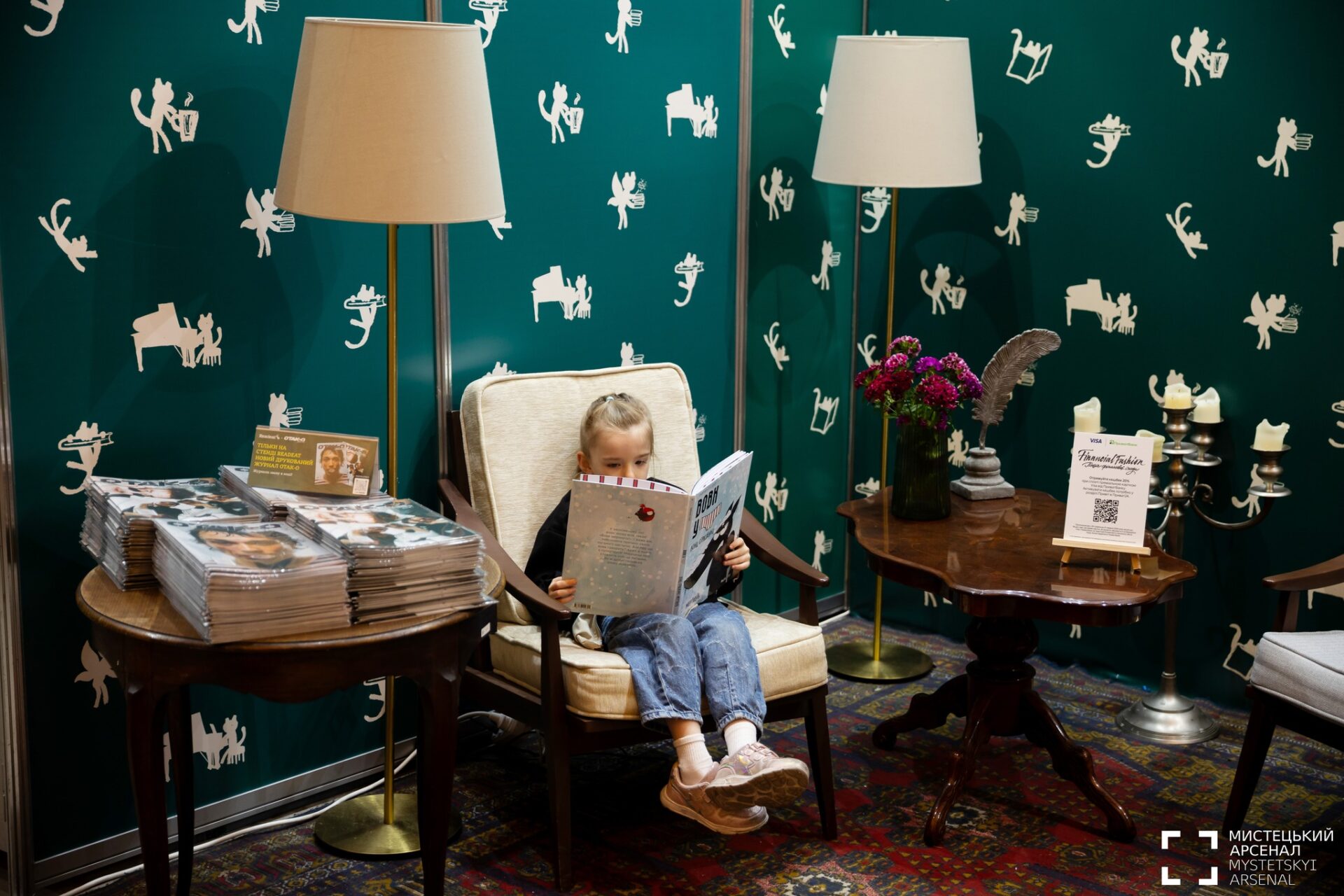
Book Arsenal (2025)
Readers’ demand
Losing an audience of 5.6 million people — though not all of them were readers — is a significant setback for the book publishing industry. Neither blackouts, the availability of books as entertainment, nor interest in exploring Ukrainian literature over Russian has been able to offset this loss in the long run. The competition for readers, which had already grown stronger in 2023, has changed and become a readers’ market.
Before, scandals and negative reviews sparked interest in a book, and, for publishers, “silence was more profitable.” Today, any publisher’s mistake in printed copies will be manually covered at the printing house, print runs destroyed, contracts broken, and heads bowed in remorse — all to avoid losing readers.
“When we listened to readers’ opinion and destroyed one of our print runs and suffered irreparable losses as a publisher, we hoped that those who called for the book’s destruction would support us by purchasing our other books. Never happened. We were simply praised in the comments,” a publisher who wishes to remain anonymous said.
Despite all this, publishers are being recognized in influence and business rankings like never before. The destruction of print runs, or more often the withdrawal of books, is the most common practice. Layoffs of staff almost never happen due to the workforce shortage in the industry.
The most common reasons for accusations that often escalate into harassment of publishers are:
- Collaboration with an actor who cooperates with the Russian Federation
- The author’s or writer’s use of the Russian language
- Inappropriate use of AI
- Violation of labor ethics
- Public communication that may offend readers
It is worth mentioning that scandals rarely lead to solutions. Breaches of labor ethics do not result in better corporate culture or increased transparency in contractual agreements. These scandals do not impact publishers who have operated in the Russian market for decades, are engaged in unethical labor practices with authors and translators, and have been, and continue to be, involved in corruption schemes.
Readers’ demand is constantly increasing, and it is good news for the development of competition. However, is such competition capable of growth on the verge of exhausting all resources in the sleep-deprived cities of Kyiv or Kharkiv, or in other cities of Ukraine? What can the state and industry do? Can we still rely on international cooperation? Publishers and distributors both say there is a lack of trust and long-term rules of the game. The situation calls for discussion, as well as international solidarity and unity, which lately has been very difficult for all of us.
RELATED: Bookstore sales increased by 19%: Summary of Independent Bookstores Week
Text: Iryna Baturevych
Comments: Olesia Boyko, Anastasiia Andrushko
Translation: Iryna Saviuk
Copy editing: Joy Tataryn
This publication was prepared as part of the project Cultural Journalism Exchange (Greece Edition), supported by the European Union through the House of Europe programme.

Читомо» — це медіа про книжки й літературу, що підтримувало українське книговидання задовго до того, як це стало трендом. Ставайте частиною історії — доєднуйтеся до Клубу Читомо!
the more you read, the greater the possibilities
60
access to books
OSDEL study links reading habits in Greece to education, social background and access to books
24.06.2026 -
292
AI
Europe’s book markets benefit from AI but face rising English-language dependence
11.04.2026 -