* ESC - close the search window
ambassadors
Daisy Gibbons: It’s interesting that so many “giants” of Russian literature often worked in Ukraine or came from Ukraine
01.08.2025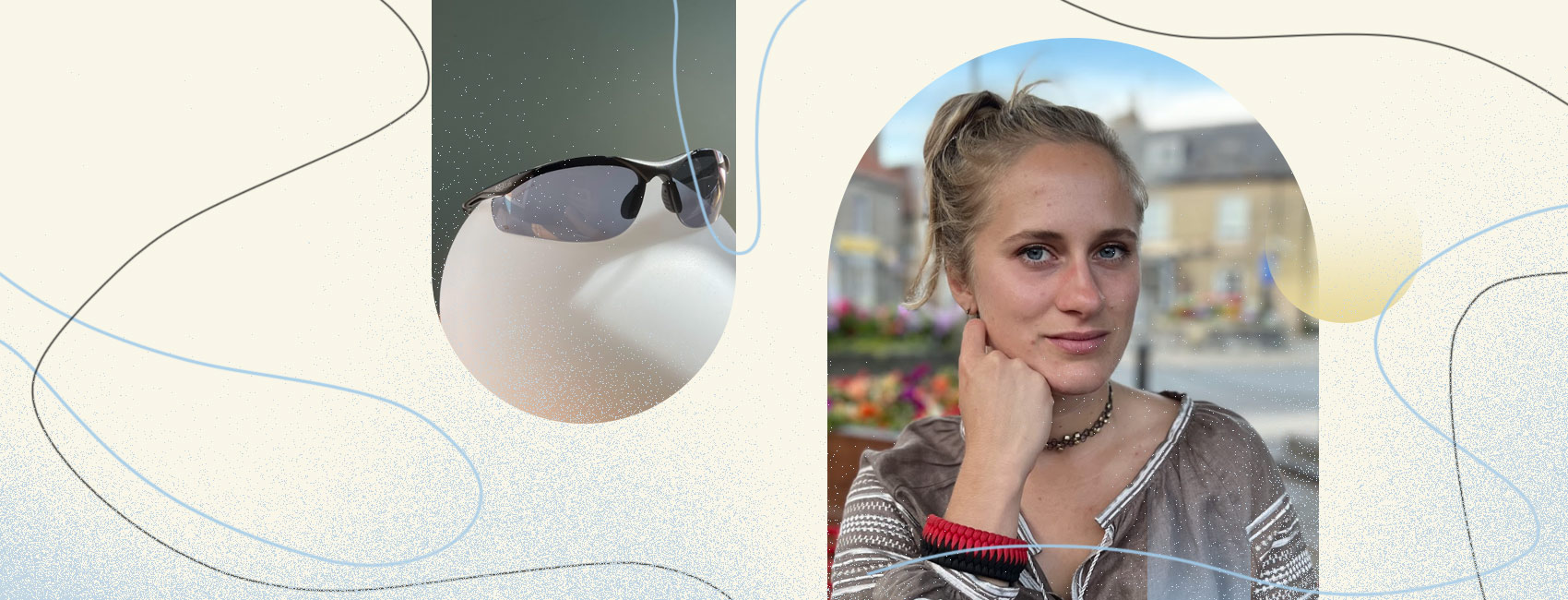

You see an error in the text - select the fragment and press Ctrl + Enter
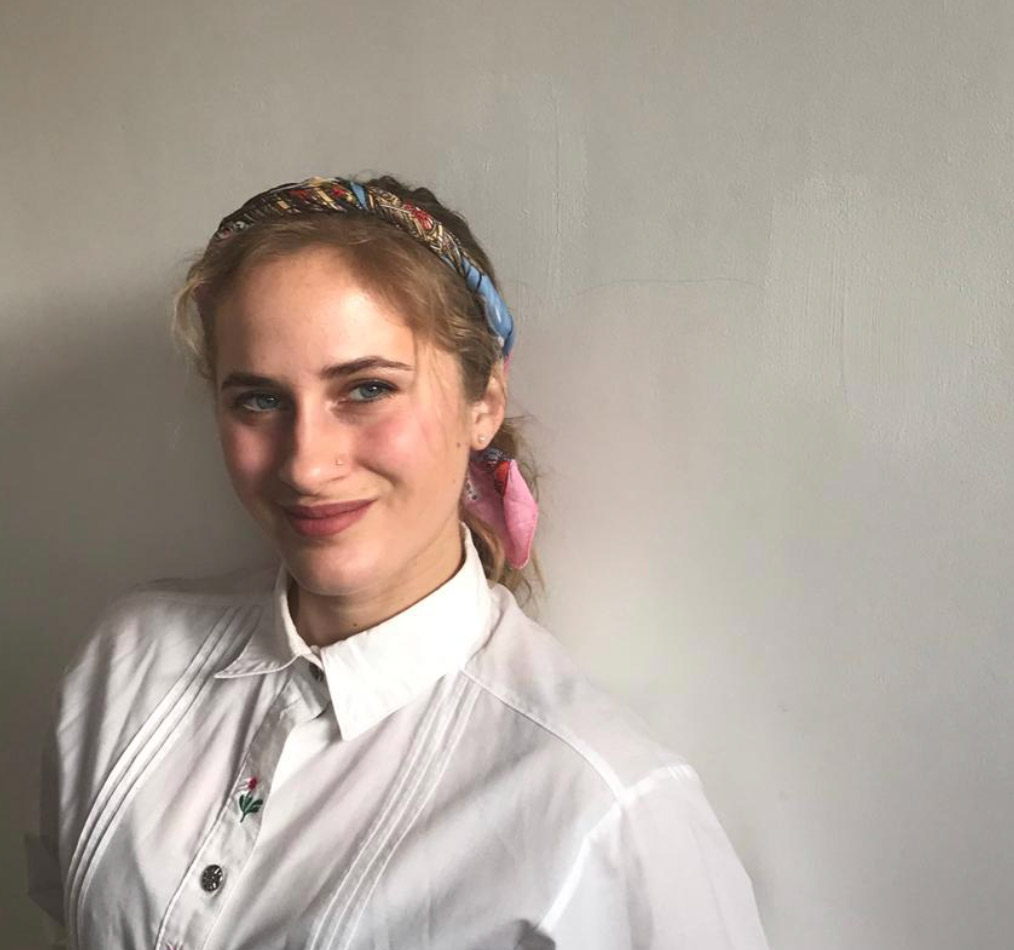
Daisy Gibbons is a British translator from Ukrainian to English and a graduate of Cambridge University’s Slavonic Department. Gibbons is a laureate of the Ukrainian Literature in Translation Award from the Ukrainian Institute in London. Her works are distinguished by a nuanced understanding of cultural context and the emotional complexity of the texts, even though she learned Ukrainian as an adult.
In a conversation with Gibbons, we explore how to present the richness of Ukrainian culture to an English-speaking audience, and emphasize its uniqueness both within the context of the war and beyond it.
Chytomo: How and when did you learn Ukrainian?
Gibbons: My story of learning Ukrainian began by chance. I was a teenager fascinated by Russian classics, and then I enrolled in the Department of Slavic Languages at the University of Cambridge. However, in my second year, during the Revolution of Dignity in Ukraine, I started reading the news and realized that Russian culture wasn’t quite what I had imagined it to be.
There was a great group of Ukrainian studies lecturers at our department, and I began studying Ukrainian philology. The teachers were a very young and dynamic team, and that made the learning process incredibly engaging. I even took part in a student exchange program and spent some time in Ukraine. I fell in love with the country. Later, I met my ex-husband, who was of Ukrainian descent.
Chytomo: Your primary interest grew out of your teenage years when you were fascinated with what’s often called the “mysterious Slavic soul.” What were your favorite books from Russian literature?
Gibbons: Ironically, I love works by Mikhail Bulgakov and Nikolai Gogol. Both authors were born in Ukraine and wrote in Russian. When I read “The Master and Margarita” by Bulgakov, I was thrilled. When you read it for the first time, you think, “Wow, this is incredible literature.” I also really loved Vasily Grossman, who came from the Ukrainian city of Berdychiv.
It’s interesting that so many of these “giants” of Russian literature often worked in Ukraine or came from Ukraine. Who else? I don’t know, I never liked the much praised Fyodor Dostoevsky. He always seemed very strange, even creepy.
Chytomo: You decided to apply to Cambridge to study Slavic Studies, and you begin to study Russian language and literature more deeply. Did it seem to you that something wasn’t right any more after the Revolution of Dignity?
Gibbons: Exactly. It is hard to tell what exactly led me to learning Ukrainian. I somehow started getting interested in Ukrainian Studies, and began talking to lecturers and professors, asking, “Can I take at least one course related to Ukraine?”
Back then, I didn’t speak Ukrainian very well because I was just beginning to learn it. At university, I mostly read Ukrainian literature in the original [language], and I was absolutely amazed by what I was discovering.
Chytomo: When did you realize it was the time to start translating?
Gibbons: After graduation, I moved to Ukraine for a while to work and to stay with my ex-husband. I had a completely different job, and one day, my supervisor, who knew Bohdana Pavlychko [a well-known Ukrainian literary scholar] from Osnovy Publishing, told her, “I know you’re looking for English-speaking editors. Daisy works here and maybe she could help you.” That’s how I started editing various texts.
I was very young back then and, accordingly, didn’t charge much for my work. It was more of a hobby for me. When I look at my early translations now, I feel like covering my face with my hands. Those were my first works (it was seven or eight years ago) and I was very inexperienced. I lacked language skills and practice, but I was always self-critical. What mattered most was that the readers liked what I did.
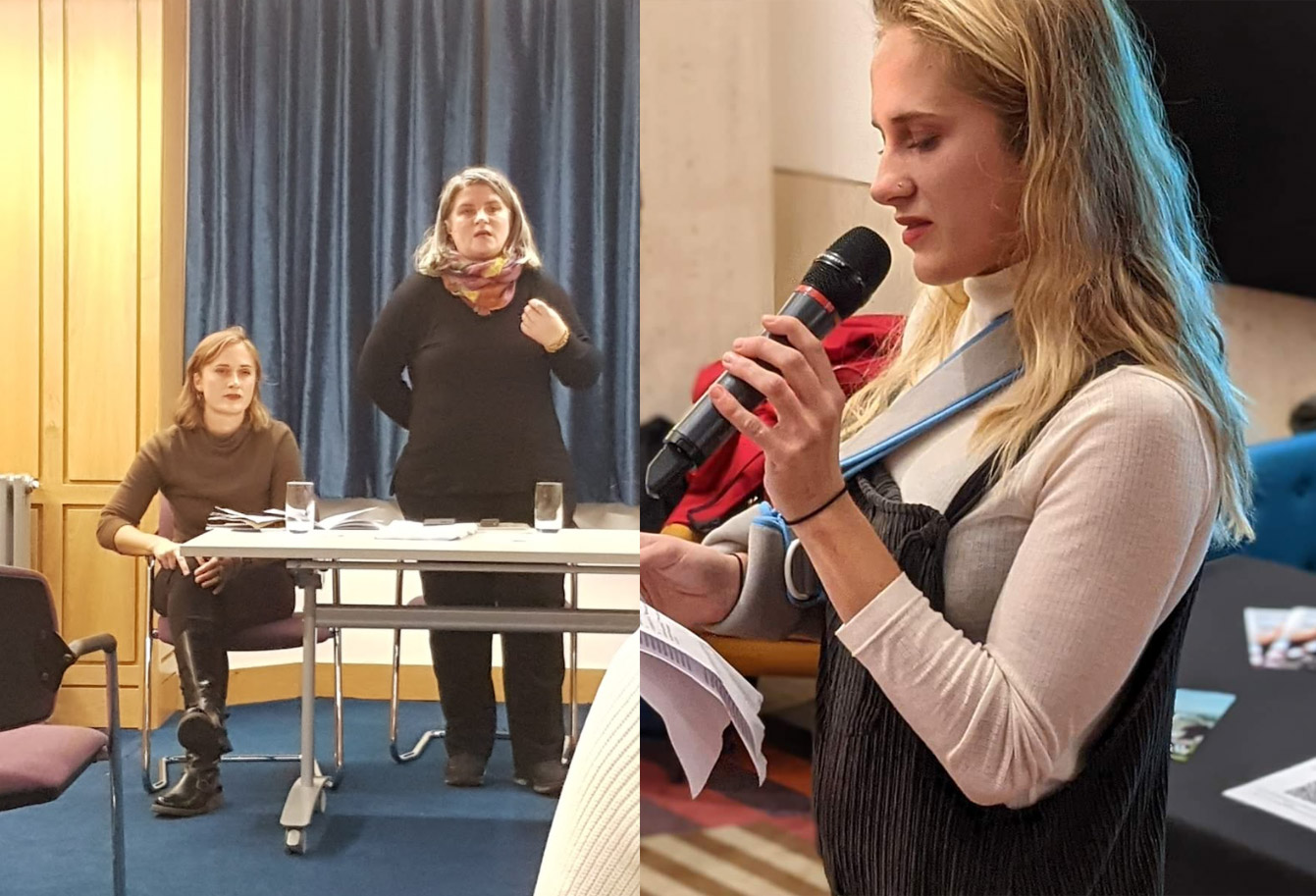
Soon my contact began to be passed on to other publishers. The publishing house Bilka reached out to me and asked me to translate “Daughter” by Tamara Horikha Zernia [a novel about Donetsk that won the BBC Book of the Year award in 2019]. I agreed, even though I had never translated a whole literary work before.
RELATED: Literary translator Daisy Gibbons explains why cultural work is vital for Ukraine now
Chytomo: That is a deeply painful book.
Gibbons: I believe that book was the reason for my gentle radicalization. When you dive deep into the text, in the context of the history of Donbas, Donetsk, and come to understand what happened in 2014 [when Russia launched a war against Ukraine and occupied Crimea and Donbas,] it changes you.
The book shows the daily suffering of regular people, and you start to see that, for some reason, even people in Ukraine have forgotten this story.
“Daughter” is not an easy book to read or to translate. I think it needed more thorough editing before becoming a project. There are unclear passages in the text, and the vocabulary, the context of the war in Donbas, the military terminology and slang, all of it was very difficult to explain to English language readers.
My translation received good feedback, but I’m scared to reread it because of my self-criticism. I didn’t have a professional editor to work on the text. It was weird and very difficult.
I legally assigned my rights to the publishers and now I have no control over the translation or what happens to it. The publishers sold the rights to a Canadian publisher [the English version was released by Mosaic Press], and the book simply disappeared from bookshelves. I found this situation upsetting. If I had had any influence over the marketing or promotion process, I would have done everything I could to help the book succeed, but I can only hope that people won’t judge my abilities based only on that first translation of mine.
Chytomo: As a reader, you stop noticing the details because it’s one of those books that pulls you in with the plot.
Gibbons: All my friends, acquaintances, and even strangers who read “Daughter” in English praised the translation. They told me the book was amazing, which meant a lot to me. It was especially great when people who didn’t usually read foreign literature picked up the book and said, “Wow, this is amazing.”
I deliberately avoided the academic approach often taught at universities where you preserve the “foreignness” of the text. My idea was to translate it in a way that sounded as natural as possible in English.
I don’t translate like that anymore, but back then, people really liked it.
Chytomo: After the outbreak of the full-scale invasion, your work focus shifted. What did you do?
Gibbons: Before the full-scale invasion, I worked at a publishing house that specialized in topics like meditation, chakras, and spiritual practices. It was funny because, at first, I had some interest in that area, but over time I realized it was nonsense. On the other hand, that job gave me a lot of experience as a ghostwriter. I wrote books for women who taught meditation but didn’t have the necessary knowledge on how to express their thoughts clearly. That’s how I gained practical skills in publishing. At that time, I was working in London, and it was a fairly easy job.
Then the full-scale invasion began. Various media outlets and people found out that I knew Ukrainian, and they urgently needed translators. To be honest, at that point my Russian was stronger than my Ukrainian. I often had imposter syndrome, thinking, “Maybe I don’t know Ukrainian well enough and I’m not the best after all.” Literary translation involves sitting with a dictionary and carefully crafting the text, but interpreting is a completely different thing.
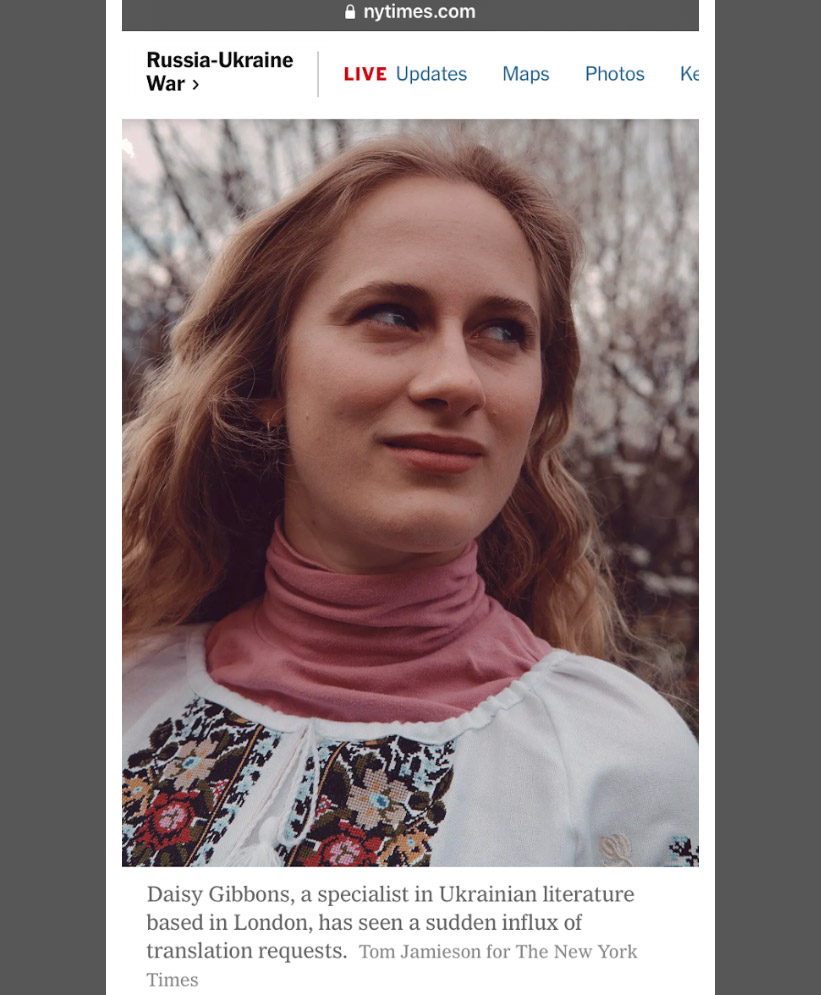
So, as I said, at the outbreak of the full-scale invasion my Ukrainian was far from perfect, but there weren’t enough people. That’s how I started working as an interpreter. Over time, I improved my skills and language knowledge, and everything gradually fell into place. At first, I worked with journalists, mostly translating interviews or editing texts for publications like NBC and The New York Times. Later, some people reached out to me. I don’t even know who gave them my contact. They told me there was an urgent need for interpreters for the military in the U.K. I initially declined, but then an offer came that was closer to my skills — translation and some administrative tasks — and I agreed to give it a try.
I found myself at a military base in Southern England that seemed frozen in time, resembling how it looked during World War II. A manager greeted me there and told me, “We’re short on personnel, and you’ll be out in the field with everyone starting tomorrow.” I was shocked. I was expected to interpret the basic infantry training course for fresh recruits.
It was difficult at first. I had previously been a member of the British cadets, so I knew basic military terminology, which helped me. Over time, people began to appreciate my work, my professional skills developed, and I started working more in the headquarters or handling organizational tasks instead of fieldwork. That role became important.
Chytomo: How long did you work there? How do you assess that experience?
Gibbons: A year, I believe. Then I took a break because I was very exhausted. I worked in similar roles elsewhere, mostly doing translations.
I returned to army work in 2024. So soon it will be three years, with a six-month break, that I’ve been doing this.
As a translator, I often serve as an intermediary between the instructors and the soldiers. Sometimes it’s very challenging, but often it’s also very, very funny.
Guys share terrifying stories about the war, what they have personally experienced and seen. The war feels both close and distant. I haven’t seen it personally, but I hear about it every day firsthand.
This job has really helped me with literary translation because I live among Ukrainians and communicate with them every day. In my work, I meet and talk to people from various corners of Ukraine, which has helped me develop a strong ability to recognize various accents and dialects.
My colleagues help me a lot. Right now, I’m translating “Amadoka” by Sofia Andrukhovych and often turn to them for explanations. (Special thanks to Marianna and Mrs. Buchach!) I’m afraid that Andrukhovych might be a bit worried that I don’t ask her many questions about the text, but I reassure myself knowing that I have a community of people I can turn to for help. So, right now there are two big things in my life: working at the training base and the translation of “Amadoka.”
Chytomo: Who is going to publish the translation?
Gibbons: Simon & Schuster.
By the way, all the other translators of “Amadoka” into different languages worked in pairs, except for one colleague who translated the entire book into Norwegian in about a year or a year and a half. She lives in a village in Norway, and can dedicate up to 12 hours a day to translation. This luxury I do not have.
To be honest, I didn’t want to take on “Amadoka,” and refused to do so five times. But my literary agent, Eliana Kan, is absolutely brilliant. She knows how to encourage and support! She said, “No one if not you.” So I agreed.
RELATED: Nina Murray: Poetry in the US is read by academics and soldiers
Chytomo: As a reader, I’ll selfishly say that the news is amazing! Is “Amadoka” the most difficult of your translations right now?
Gibbons: I haven’t taken on any other major translations recently, but I translated a bit of poetry. When the Ukrainian poet, translator and literary scholar Marianna Kiyanovska came to Oxford for a poetry reading, I translated several of her poetry pieces into English.
I also translated Artem Chekh for a competition at the Ukrainian Institute London. I used his Facebook posts because they are powerful, very relevant, and compelling. It was quite easy and exciting, especially considering my knowledge of military topics. I also translated “The Weathering: A Novel” by Artem Chapeye for Seven Stories Press.
I translated the short story “By the Sea” by Lesia Ukrainka for a competition last year — I received runner-up, that is, second place — and later this text was used at several British universities for teaching Ukrainian literature. Rory Finnin, my former professor at Cambridge, asked me to complete the translation and send it to him. Likewise, my translations of Ukrainka’s letters to Olha Kobylianska were used for teaching a comparative literature course at University College London.
Uilleam [Blacker, a scholar and translator] and I are currently working on the publication of Ukrainian classics in English. No news yet, and I’m hesitant to speak about it. You know this British expression: “Don’t count your chickens before they hatch.”
Chytomo: You translated “I Am Transforming… A Diary of Occupation,” a book by Volodymyr Vakulenko [the Ukrainian writer killed by Russian occupiers]. Am I right?
Gibbons: Yes, I did. Victoria Amelina [a writer and volunteer killed by a Russian missile strike] asked me to. Excerpts of the diaries have already been partially published in English, but I believe the full edition is still in progress. Some excerpts were definitely published in Charlotte Higgins’ article in The Guardian.
There was a quite upsetting situation with my translation: the publisher shared my translation with an American journalist, who used it in an article for The New York Times without my consent. Unfortunately, it happens often that my work is used without any prior communication. I fully understand the importance of raising awareness about the war and about Ukraine, but I believe one can at least send an email or text me. It’s a matter of some respect.
It was especially unpleasant because journalists profit from it, but I have no intention to earn money on this. If I had, I certainly wouldn’t have become a literary translator (laughs). So yes, translations of excerpts from the diary have appeared in various media. It was a very challenging text to translate, since the content had to be conveyed almost word for word. Deciphering Vakulenko’s handwriting wasn’t easy because he hurried when he wrote and often crossed words out.
Chytomo: Did you translate right from the manuscript?
Gibbons: Yes. I translated partly from the manuscript and partly from the transcription made by Amelina and, probably, Tetiana Pylypchuk, director of the Kharkiv Literary Museum and literature researcher.
My story with Amelina began in London when she came here with Ukrainian human rights lawyer and civil society leader Oleksandra Matviichuk. We occasionally met through mutual friends, and then she asked me to translate Vakulenko’s diary. One of the translators was very busy and told her, “Reach out to Daisy, and the text will be handled with care.” That’s how we started working together.
Although our relationship was mainly professional, her death had a great impact on me. Maybe because we had plans and new projects ahead. Her death was a shock and it was painful. It was something you didnn’t anticipate, even during the war.
The beginning of 2023 was very tough as many friends and acquaintances of mine died within the short span of one or two months. I decided to take a break from my military duties after her death. I believe it was the final breaking point for me.
I really have no idea how people live in Ukraine right now. One feels grief not only because of the loss of beloved ones but also because one’s home and land are under constant threat of shelling. I find Ukrainians to be incredibly strong.
Chytomo: How does British society see Ukraine now? What do we do to help people see Ukraine without Russia’s optics?
Gibbons: If only I knew the remedy or had a “silver bullet,” I would say. To be honest, I don’t know. One of the key ways, in my opinion, is translation. “Daughter” had a great influence on me and many acquaintances who read my translation. These were not only educated people or those who usually read literature of this kind. My sister gave the book to her friends and even to her father-in-law, and the story evoked a strong response. These texts, which are accessible, emotional, and well-written, can make a difference.
Movies are another important tool. There needs to be more high-quality, top-level films. Documentaries like “20 Days in Mariupol” are important, but that’s different. We need feature films that can touch people’s hearts and bring the Ukrainian reality to the world.
I think the British people generally support Ukraine even though it often comes across as a kind of “charity” with a hint of condescension, like “We’re letting Ukrainians into our homes.” It’s maybe a bit awkward, but the support is there. Maybe I live in a “bubble,” but it seems that the British are generally positive about Ukraine.
At the level of government, more needs to be done to fight Russian propaganda and misinformation. I know there are departments within the Ministry of Defence and other agencies tackling this issue. Still, a more coordinated effort and additional resources are necessary to make a difference.
Chytomo: In your opinion, what book could become a hit in the U.K. so that an average British person would enjoy reading about Ukraine?
Gibbons: I thought “Daughter” could be that book. But it’s a very traumatic experience for the reader, and it doesn’t bring enjoyment in the traditional sense of reading, although it’s extremely important for understanding the realities of war.
If we’re talking about something more accessible and easier to digest, then perhaps it should be a classic. The works by Mykhailo Kotsiubynsky, for instance. Kotsiubynsky’s writing is very accessible and stylistically close to magical realism, which is quite enjoyed by many people. He used folkloric elements and atmosphere, and that could really resonate with British readers.
Books by V. Domontovych [a classic author of early 20th-century Ukrainian literature] are yet another option. Domontovych himself had this European spirit and was a very interesting personality. His biography resembles a detective story with mystical elements. His novel “Doctor Seraphicus” is a modernist work with subtle themes of homosexuality, refined prose, and numerous references to ancient Greek culture, Latin, and philosophy. I can imagine Oxford students or professors embracing this book as a cult classic.
Another book that should be translated and published is “Garden of Gethsemane” by Ivan Bahriany [a novel exposing the operations of the Soviet NKVD]. It’s an incredibly powerful work that, at one point, changed the way I saw many things. The writing is elegant, and the plot is strong, so it could become a major work for an international audience.
RELATED: Vitaly Chernetsky: Ukraine is a fresh and powerful collocutor with unique expertise
Chytomo: How do the British perceive the “brand” of Ukraine now? What are the first associations or stereotypes that come to mind when they think of Ukraine?
Gibbons: I believe it depends on the person. If we speak about well-off British people who live in nice houses in Oxford or London, they often didn’t know what Ukraine was before the outbreak of the full-scale invasion. Now their perception has changed: they see Ukrainians as brave and strong, but they always have a certain tinge of pity (“Those poor people”). They support Ukraine, but mostly through the optics of war. Because they know almost nothing about Ukrainian culture, creativity, or history, Ukraine is associated exclusively with the war.
Unfortunately, young people are not very interested in Ukraine. On the other hand, I remember the time after the Maidan, when Ukraine became “cool.” Kyiv was called “the new Berlin.” European youth began to take notice as Kyiv saw a rise in techno clubs, fashion labels, music, and skate culture. I knew quite a few hipsters from the U.K. and Berlin who visited the city at the time just to experience the scene for themselves.
Perhaps music and film can help change Ukraine’s image, but for that, time and stability are needed for creative people.
I want to thank Maria Henkin from Razom Literature [a volunteer organization that supports Ukrainian cultural and social projects]. It was them who began funding translations, including “Amadoka,” giving me the opportunity to work on this book.
Chytomo: How do you navigate all these different projects and situations?
Gibbons: This creates a lot of stress, but maybe that’s exactly why I stay working with the army for so long. For me to focus on translation, they give me two weeks off every several months. That is not enough. I realize I need to save money and find a place where I can work on the book in peace and quiet. I’m thinking about moving to Ukraine because living is cheaper there, but it’s dangerous and adds complications.
Despite all the difficulties, I don’t regret my choice. It’s hard, but it’s valuable.
Translation: Iryna Savyuk
Copy editing: Matthew Long
Читомо» — це медіа про книжки й літературу, що підтримувало українське книговидання задовго до того, як це стало трендом. Ставайте частиною історії — доєднуйтеся до Клубу Читомо!
the more you read, the greater the possibilities
1684
ambassadors
Serhii Plokhy: Empires fall and nations rise from their ruins
21.04.2026 - Olha Mukha
564
ambassadors
Nina Murray: Poetry in the US is read by academics and soldiers
07.06.2025 - Olha Mukha