* ESC - close the search window
ambassadors
Serhii Plokhy: Empires fall and nations rise from their ruins
21.04.2026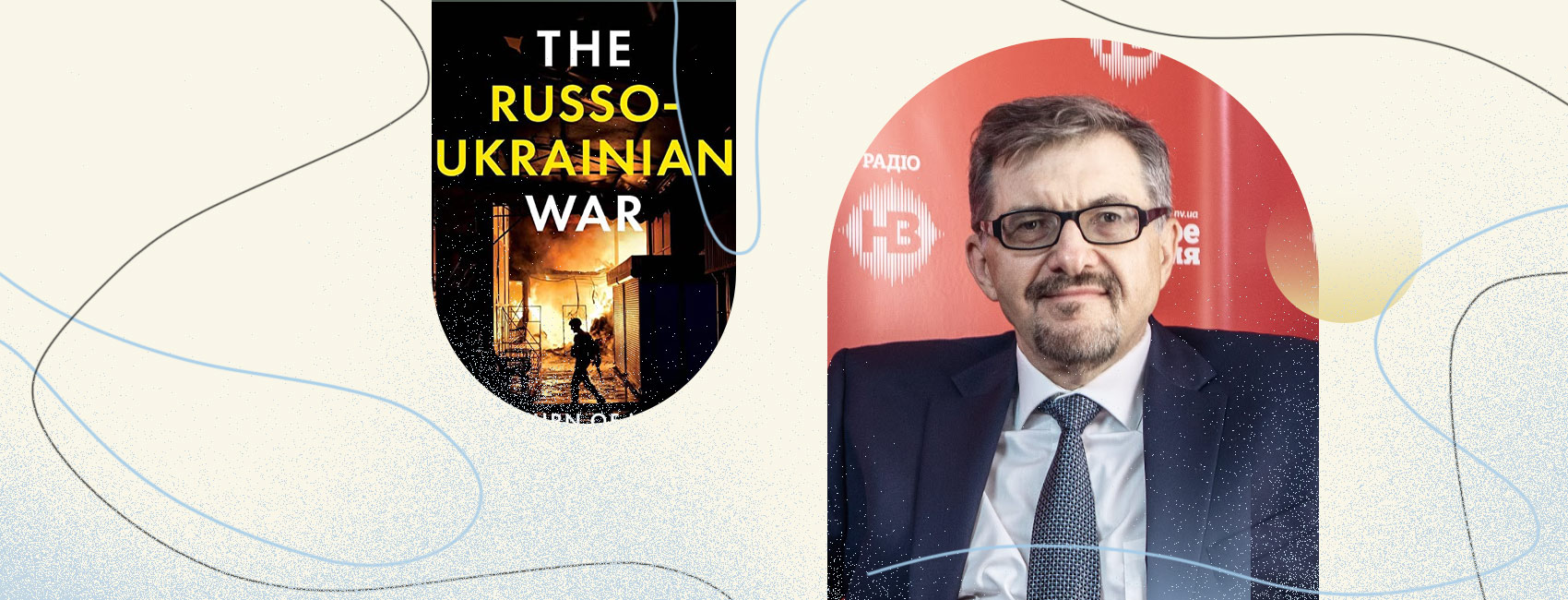

You see an error in the text - select the fragment and press Ctrl + Enter
Russia’s war against Ukraine, says Serhii Plokhy, is not a “historical anomaly,” but the end of an era that we mistakenly believed marked the “end of history,” and, at the same time, yet another chapter of the ongoing collapse of the Russian Empire. Vladimir Putin commits to hostilities with a historical essay as a casus belli, an occasion for war, turning imperial myths into weapons, while Ukrainian society and historians need to learn how to respond to this attack in real time across archives, oral history, and social media.
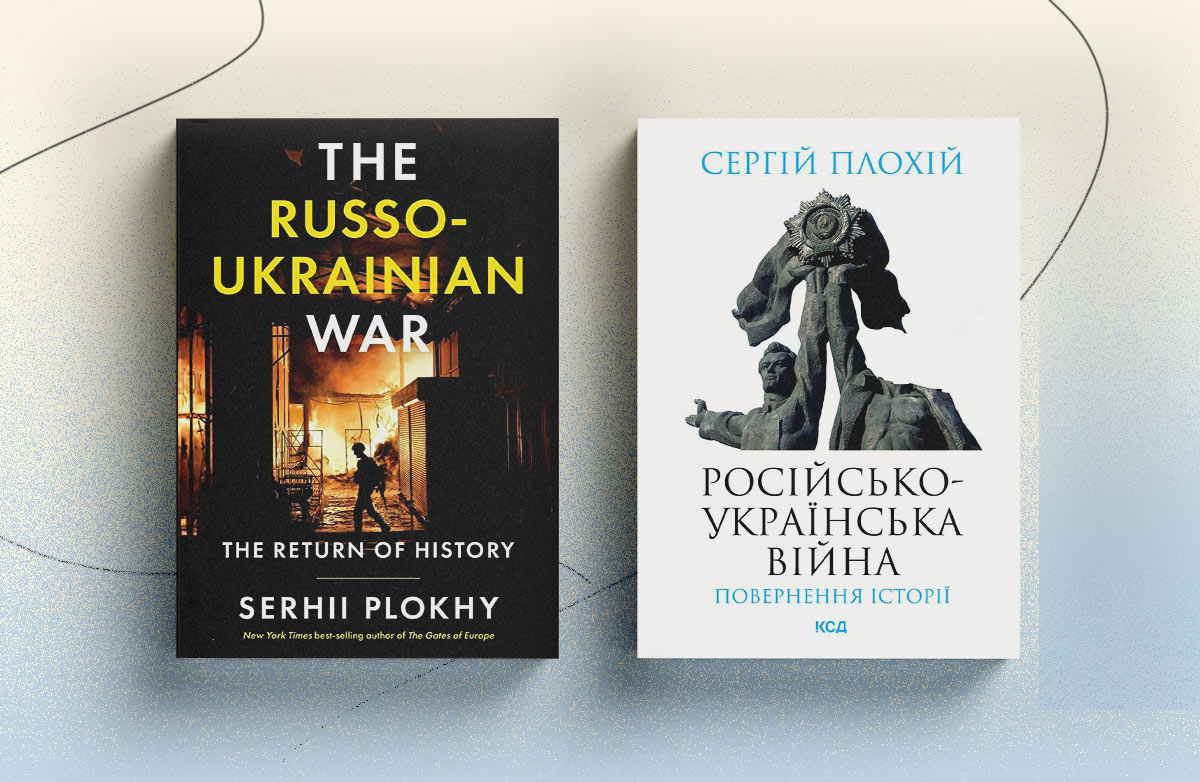
Plokhy is one of the world’s most renowned Ukrainian historians, an alumnus of Dnipro University, a professor at Harvard, and the former director of the Ukrainian Research Institute at Harvard, whose English-language books “The Gates of Europe: A History of Ukraine” and “The Russo-Ukrainian War: The Return of History” have brought Ukrainian history to the attention of audiences worldwide. In this interview, Plokhy explains the way Ukraine transformed from a “late nation-builder” into a test case for Europe and the West, discusses the collapse of the illusion of global peace following the Cold War, explores war as a mirror of the era of social media and ochlocracy, and speaks about the reasons Ukraine lost in the battle of narratives to Russia in 2014, and what has changed since 2022, when the young state with an ancient cultural history finally started to speak in its own voice.
Chytomo: The history of Ukraine, presented in your books and lectures, has become one of the key elements in understanding Europe’s past more broadly. Why do we still seem to be “struggling to emerge” from the shadows of history?
Plokhy: From a historical perspective, as a distinct entity we have only recently emerged on the global map. Ukraine has always existed in our inner mental map, and establishing a place on that map in the minds of others is a long and gradual process.
It began long before Ukraine’s fifth attempt to gain independence in the 20th century succeeded in 1991. Mykhailo Hrushevsky was already writing in Ukrainian, but he had the first volume of “History of Ukraine-Rus” translated into other languages, including German and Russian, so that his voice could be heard. The idea of gaining recognition for the Ukrainian historical narrative dates back to the late 19th century.
However, in this respect, we are not unique. Anthony D. Smith, British historical sociologist and scholar of nationhood and nationalism, emphasized that it is not enough to have one’s own version of history — it must be recognized by the state’s neighbors. After 1991, American military historian Mark von Hagen, a great friend of Ukraine, published an article in Slavic Review titled “Does Ukraine Have a History?” (1995). He answers “yes,” but then continues by asking whether Ukraine has a history that is recognized by its neighbors and the wider world.
This underscores the importance of the recognition process, as well as its length and complexity. Today, many barriers are being overcome, but not from scratch. My colleagues and I stand on the shoulders of giants such as Hrushevsky and several generations of historians who worked before us.
Chytomo: Who else among these giants should one turn to in exploring Ukrainian history?
Plokhy: I’ll name those who are well known outside Ukraine. First and foremost, Ukrainian scientist, historian, essay writer, and teacher Ivan Lysiak-Rudnytsky. His work effectively placed Ukraine on the map for a segment of the Western historiographical establishment because he definitely knew how to discuss Ukrainian topics within a broad intellectual framework.
I would also name Ukrainian-Canadian historian Orest Subtelny. His (1988) book “Ukraine: A History” became a bestseller in Ukraine, and, at the same time, served as the primary gateway to the world of Ukrainian history for an international audience for a long time.
In addition to the aforementioned scholars, it is also worth noting other diaspora historians — in particular, American-Canadian historian of Ukrainian origin Frank Sysyn and Canadian-Ukrainian historian Zenon E. Kohut. Behind these names stand others, less known in the West but key figures for Ukrainians. I have already mentioned Ukrainian academician, politician, historian, and statesman Hrushevsky, who was one of the key figures of the Ukrainian national revival of the early 20th century. A prominent Ukrainian political figure during the revolution of 1917-1918 and a leading Ukrainian émigré historian during the inter-war period, Dmytro Doroshenko, remains significantly underappreciated, even though his works have been translated.
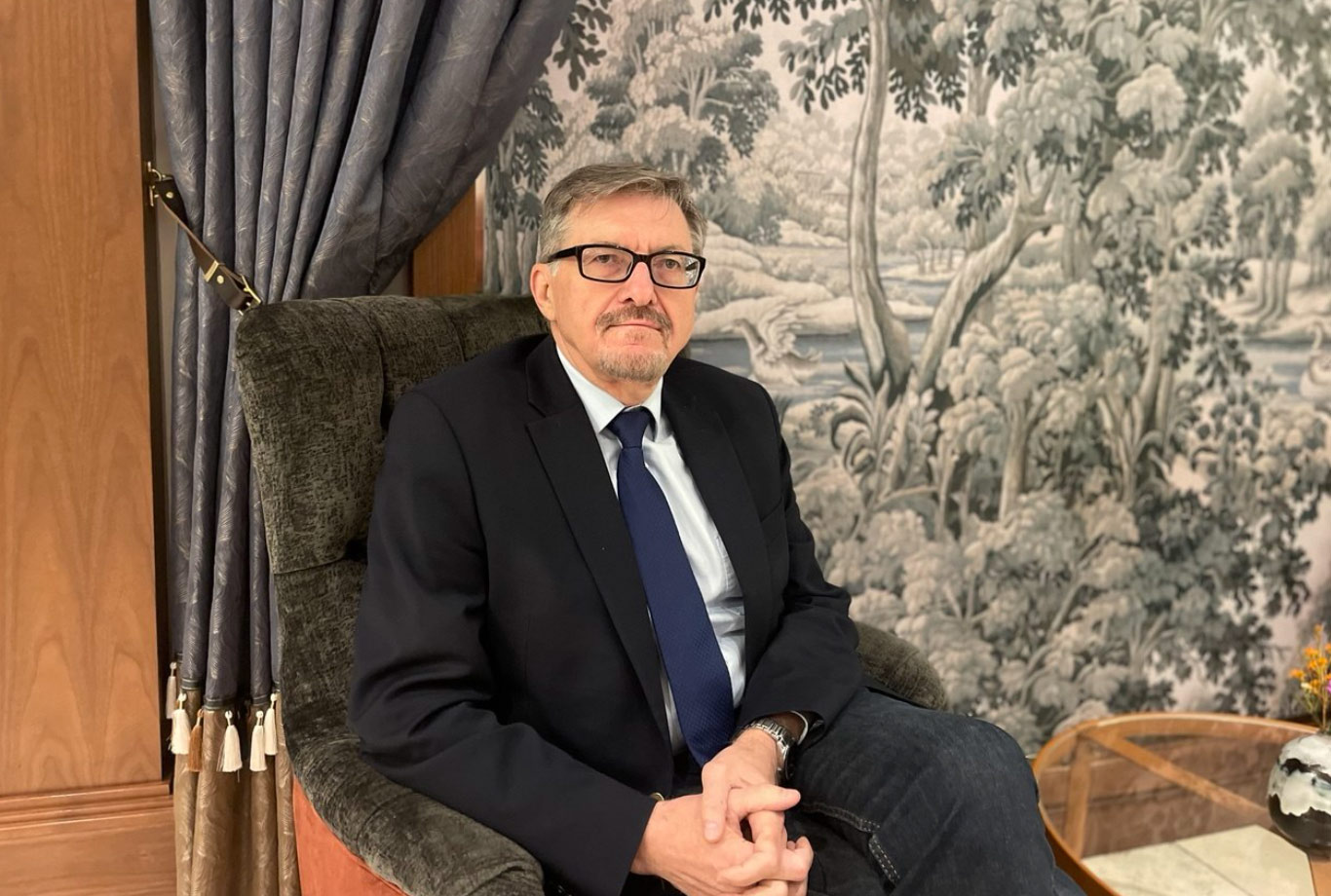
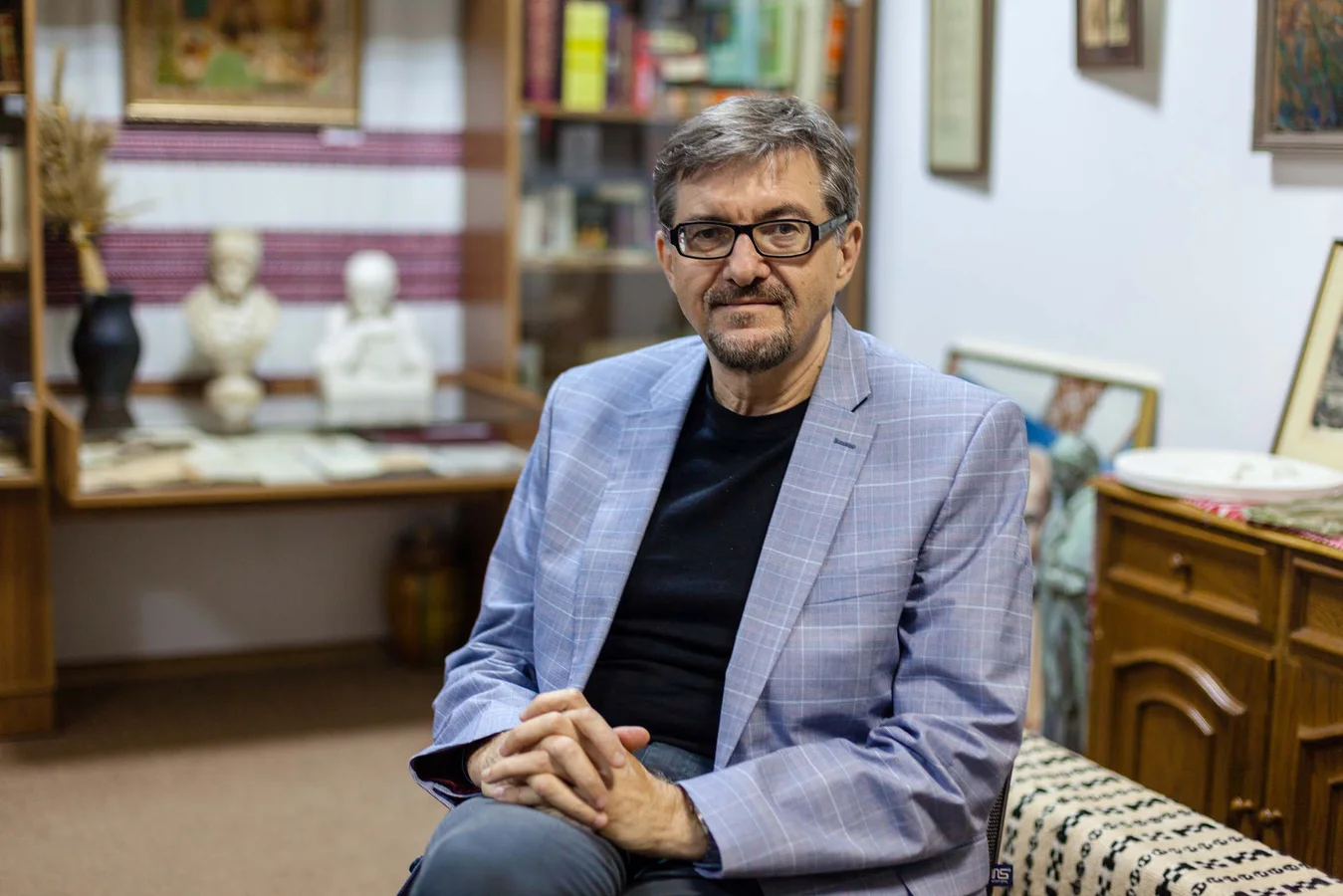
Serhii Plokhy, London, autumn 2025. Photo credit Olha Mukha
Subtelny’s works are often seen as the starting point when it comes to broader recognition. It is not only about the talents and skills of individual historians that matter, but also the context. The publication of his book had perfect timing. A few years before the regaining of independence, interest in Ukraine had begun to grow, and there was a well-written work available to satisfy readers’ interest.
As is often the case, demand arises, but what we have to offer fails to meet the timing or the needs of either the academic community or the broader public. Interest in Ukraine usually intensifies at critical moments, but our task is to work constantly, for years and decades, so that when that surge occurs, we have things to offer.
Chytomo: In your opinion, why is Ukrainian history currently at the heart of the global conversation about war, empire, and freedom? The world knows many stories like these, after all.
Plokhy: Geopolitics is the main reason. Today we are experiencing the largest war in Europe — and perhaps the world — since 1945, and it is impossible to ignore. It is impossible to ignore either Ukraine or its history.
The second reason is the alignment with trends in historical studies that became particularly relevant after 1991. Von Hagen not only asked whether Ukraine had a “recognized” history, but also offered perspectives through which it could be viewed: the history of frontiers, the coexistence of different cultural communities, and borderland imperial spaces. Ukraine matched these parameters exceptionally well, and this attracted even more attention in the 1990s.
We see two factors — a major geopolitical event and the very subject that contemporary historiography is generally interested in — converge. Ukraine, as a country that had risen from the ruins of several empires, had much to contribute to this conversation about war, empires, and freedom. I will return to the topic of empires later, but it is important to note that this convergence proved insufficient in 2014.
Chytomo: Are you saying it took us until 2022 to really appear on the political map?
Plokhy: I believe, if the level of Ukrainian resistance had remained the same, 2022 would have been viewed in the same way as 2014. Ukraine was expected to last two or three weeks. In that case, there would have been a brief surge of interest in Ukraine, but if it had surrendered, the focus would have shifted back to Russia, its politics and history.
The world’s current focus is directly linked to the extent to which Ukraine has demonstrated its strength and political agency. We can help clarify this, but the decisive factor is Ukraine itself and what is happening there.
Chytomo: You said the Russian-Ukrainian war was the final stage of the empire’s collapse. What do you think the post-imperial map will look like in 20 or 30 years?
Plokhy: It’s truly a question that’s difficult to answer with certainty and to claim that “it will be like this.” On the other hand, the more experts we bring into the conversation about the future, the better.
Historians can contribute their own perspective, not by making political or military predictions, but by offering insight into patterns and long-term trends.
As I see it, this war is very clearly a war about the collapse of an empire: empires fall, and nations rise from their ruins.
Ukraine is now fighting for the right to develop — not only for itself, but also for a great quantity of the “post-Soviet space” countries. The model for the future, as I see it, is that independence alongside Russia can only be preserved through economic, political, and military alliances with others.
It’s about finding friends and building long-term relationships with potential allies. I’m very optimistic about Ukraine in the medium and long term. I, like everyone else, have worries as to what will happen tomorrow or the day after. I have a certain sense of historical determinism, and I believe everything will turn out well for Ukraine.
Chytomo: Let’s discuss the topic “everything will turn out well.” Last year, for Chytomo’s Ambassadors series we recorded an interview with German political scientist Andreas Umland. Among other things, he said: “A few years ago, I wouldn’t have considered the breakup of Russia a realistic possibility, but with each passing month of war, it seems more plausible.”
I’ve worked in international organizations for over a decade and have been terribly disappointed: Everything falls apart when it comes to Ukraine. Nothing works the way it’s supposed to, neither the UN nor UNESCO. With whom should Ukraine build alliances?
Plokhy: Former U.S. President George Bush, author of the famous “Chicken Kyiv speech,” once aptly remarked on the limits of politics: You can only dance with those who have stepped onto the dance floor — that is, with those who have shown up on their own.
In the real world, we may dream of the perfect friend or partner, but we always end up working with what’s available to us. Our collaboration is based either on shared fears or shared interests.
RELATED: How to enter the French book market? An interview with Iryna Dmytrychyn, Drahomán Prize laureate
The shared fear is clear. It is Russia. Despite all the significant tension, the Polish political elite ultimately understands what is at stake in Ukraine and that a resilient Ukraine is in their best interest. This is an example of an alliance built on shared fears.
There are also shared economic, safety, and cultural hopes and interests. In all these cases, Ukrainians should have something to offer. Any relationship works both ways. If we simply expect our neighbors to be friends or our allies to help us solely on the basis of shared values, it may work, but only up to a point. That card is not unlimited, and it has its cost.
We are learning. Today, there is talk about the Budapest Memorandum and nuclear weapons. Modern Ukraine would never give up these weapons. As the future president of Pakistan, Zulfikar Ali Bhutto, once said when they were acquiring a nuclear arsenal: “We (Pakistan) will eat grass, even go hungry, but we will get one of our own (atom bomb). We have no other choice!” This sentiment prevails in today’s Ukraine.
But in 1990, 1991, or 1993, it was completely different. Back then, books were written arguing that nuclear weapons guarantee security, but that was the experience of other countries, not ours. Ukrainians are learning from their own experience and, unfortunately, this is the only effective way to learn the lessons of history. In spite of all the losses, today Ukrainians are stronger than they were four years ago.
Chytomo: What can Ukraine bring to the global table today? What is our contribution?
Plokhy: Let me point out the obvious things that everyone has seen in the news. Firstly, the panic that swept the world when Ukrainian grain stopped reaching global markets. What seemed like a “local” problem immediately impacted the food security of dozens of states.
Secondly, drones. Ukraine now has one of the most combat-ready armies in Europe, and it is not only about heroism, but also security expertise, tactics, and unmanned warfare technologies.
We can expand this list. Ukraine plans to export Ukrainian naval drones and other types of weaponry, which means Ukraine is changing from the role of an exclusive buyer to that of a supplier of various systems that were tested in battles. These are IT solutions, military technologies, and engineering innovations that emerged precisely because of the war and that Ukraine can now offer to its partners.
Despite all the challenges, Ukraine serves as a source of expertise from food security to drones and countering missile and drone attacks. We must continue moving in this direction; it is not slogans but interests that drive the world and nations. We must show goodwill toward our friends, and they toward us, but without what we bring to the table, no alliance will last for long.
Chytomo: What can historians bring as a collective? What role do historical narratives play during wartime?
Plokhy: First and foremost, this war is unique in the way history is being misused. I can’t remember another example where an aggressor has justified a war so explicitly through a “historical” essay. In Putin’s case, it is almost a genre in its own right — a “historical” text serving as a casus belli.
This is an actual attempt to impose 19th-century Russian imperial ideology on the 21st century through military force. Russia made very effective use of history in 2014, and at that time, we were soundly defeated on the level of historical narratives. Russia came with a ready-made mythology of the “Great Patriotic War” [1941-1945] and a cult of “Victory” [stating that it is the USSR that won WWII], and we found ourselves deeply divided precisely by World War II as a framework.
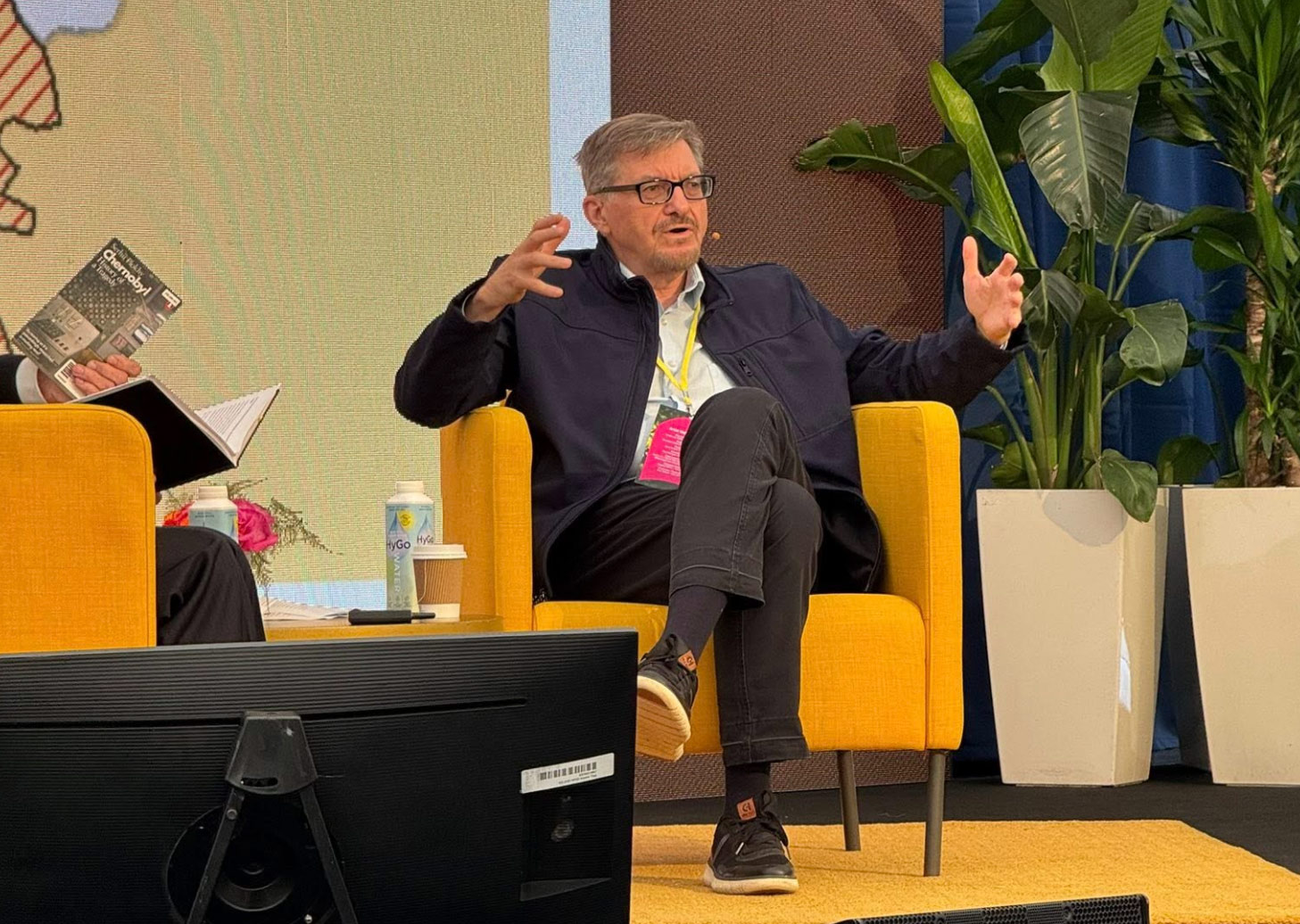
Serhii Plokhy, Dublin, May 2025. Photo credit Olha Mukha
In 2022, this did not occur: Ukraine was far better equipped with its own narratives and collective memory. But it is telling that, according to recent reports, Putin has been “loading” Donald Trump with history as well: He continues to use historical myths as tools of influence and justification.
Chytomo: Poland’s president Karol Nawrocki also loaded Trump, but he achieved nothing.
Plokhy: History has become a battlefield — first in Ukraine, then in the realm of foreign policy. We know well how Russia pressured the former Soviet republics regarding whether or not to recognize the Holodomor as genocide. That is an example of a deliberate manipulation of historical memory.
As a modern state, Russia is older and more experienced than Ukraine, and they have never had a single doubt that history is a weapon. Ukrainians are only now discovering this, in a democratic society — through public debate, not state decrees.
For professional historians, this poses a dual challenge. On the one hand, how to engage with this very real front. On the other hand, how do we ensure that history remains an open academic discipline, rather than turning it into merely a tool of propaganda or counter-propaganda.
Chytomo: In your books, you describe war as a reflection of an era. What aspects of humanity does this war reflect most clearly?
Plokhy: This war has highlighted the moment when the era of “the end of history,” the triumph of liberalism, anti-militarism, and the belief that key issues are resolved through voting, is coming to an end. Ukraine regained its independence through a referendum, not an uprising, and this created the sense that if we could convince the society to vote “correctly,” we would live in a safe world. Then someone from outside comes in with weapons and changes the illusory world in which we lived.
What began as a Ukrainian experience is now becoming a European one. In part, this is happening because of America’s retreat across the ocean. A country that has been the world’s largest economy since the late 19th century is beginning to lose ground rapidly, and this comes as a shock. We are living at a critical turning point: This war has shown that the world that existed after the fall of the Berlin Wall has come to an end.
It is making political forces rethink their fundamental ideas about how societies should function. In 2022, debates are intensifying in the American press: Liberals who genuinely support Ukraine are suddenly realizing that this also means backing the rearmament of the United States. How can you live with this if you have considered armament an absolute evil for years?
Profound fractures are beginning to emerge. We live in a world of social media, where not only the information war is changing, but societies themselves: Suddenly, it turns out that a country without a navy can effectively destroy another country’s navy, thanks to drones and new technologies. So many things are breaking down at once, and this war is making those fractures visible.
Chytomo: When we talk about Francis Fukuyama’s concept of “the end of history,” does it refer to the end of a certain era and the transition to a new phase, or is it something else?
Plokhy: I use the term “the end of history” in a broader sense than Fukuyama did. He was referring to the triumph of liberal democracy. For me, it primarily marks the end of the idea of military power as the decisive factor. It once seemed that the era of large-scale wars of conquest and annexation was over. During the Cold War, there were local conflicts, but there was no global war — nuclear weapons deterred the parties, and this shaped the thinking of several generations.
After the end of the Cold War, a phase began in which wars still occurred, but the world appeared to be becoming more peaceful. “The end of history,” in this sense, signifies not so much the triumph of liberal democracy and liberal values as the belief in a certain kind of world peace, a world where international institutions carry more weight than nation-states and their interests. From a philosophical point of view, this marked the end of an era of tensions without major war and the emergence of the idea that we are living “in the wake of major conflicts.”
The present does not look like the end of history, but rather a return to history as if we had fallen back into the 19th century. It is no coincidence that some people use this return to history to undermine the Ukrainian political project: They argue that nation-states are already a “relic of the past,” and that Ukraine is late to the game. The war shows that the issues of sovereignty, security, and political agency have not disappeared; they have returned in their most cruel form instead.
Chytomo: How do you evaluate Ukraine’s new diplomacy, which has effectively rewritten the rules of the game, particularly in the sphere of memory diplomacy? Have we succeeded in transforming history from trauma into a resource for international trust?
Plokhy: What you refer to as “memory diplomacy” is starting to take effect. The recognition of the Holodomor as genocide by an increasing number of countries [and] the 2022 European Parliament resolution that directly links the memory of the Holodomor with the condemnation of current Russian aggression are no longer simply a commemoration of the past, but a language of politics and security.
Ukraine brings memory into international relations not as an “eternal trauma,” but as an argument: “We know how an empire’s impunity ends, so we are learning not only to talk about it, but also to build alliances based on a shared vision of the past and the future.”
I also see another aspect of the war: the large refugee crisis it has triggered. Among those who have found themselves abroad are a large number of historians, including female historians. This is extremely important for European scholars as well: For the first time, they are encountering real Ukrainian colleagues on a large scale, rather than an abstract image of “Ukrainian history.”
Chytomo: There’s more to this. An ongoing debate in literature discusses who speaks for whom, who writes for whom. Broadly speaking, Black feminists should be the ones writing about Black feminists. In history, it seems to be the opposite: Anyone with Ukrainian roots is automatically accused of being biased — a witness, a participant, an architect, but not an “impartial” historian. Who, then, has the right to speak?
Plokhy: It depends on the national label. There’s no bias against a British historian writing about Britain or a French historian writing about France because the most influential historians in those countries are usually their citizens. But in the context of Ukraine, a different logic applies: Ukrainian origin automatically raises suspicion of bias. In other words, this is not about abstract liberal ideals, but about hierarchy and discrimination, both among countries and within the disciplines.
Chytomo: Isn’t this a very colonial way of thinking? Have you personally experienced this kind of discrimination?
Plokhy: Nobody said it to my face, since it’s a question of political correctness. But the truth is, I’ve seen comments online like: “He’s surprisingly impartial for someone from Ukraine.” This means the question comes up regularly, even if in a veiled form: There’s a “filter” that has to be passed every time, regardless of the quality of one’s work.
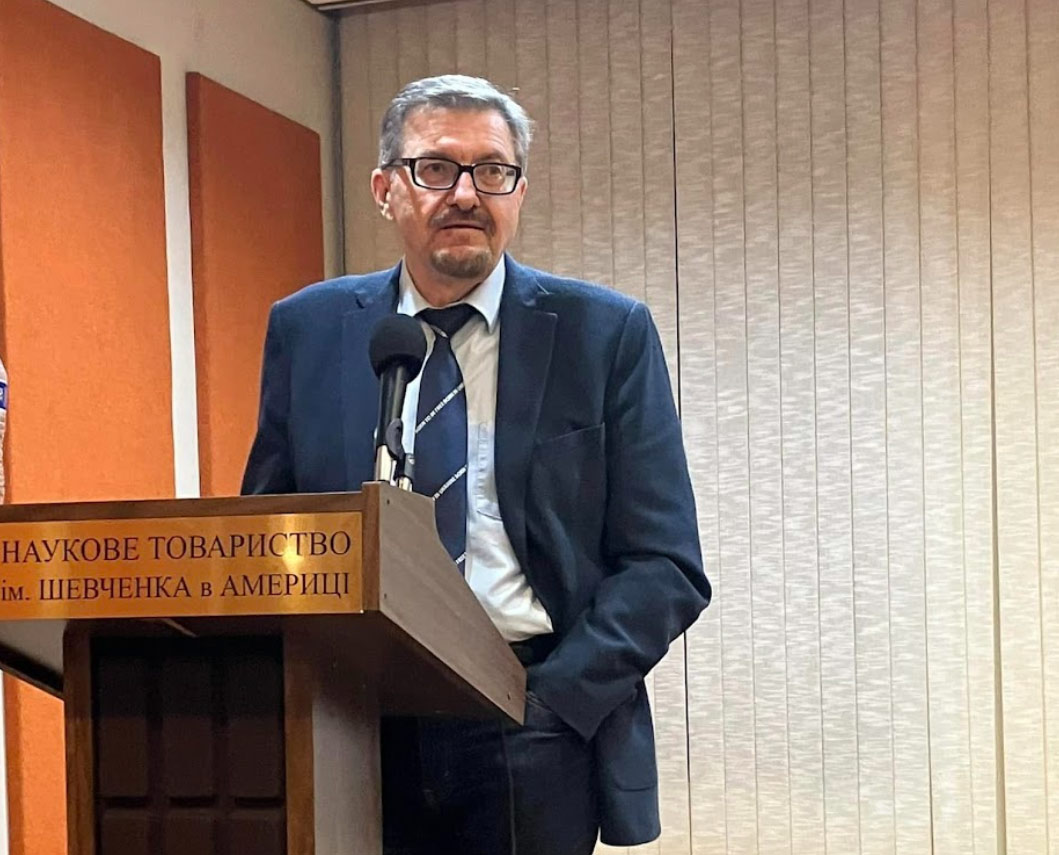
Serhii Plokhy, The Shevchenko Scientific Society, December 2023. Photo credit Olha Mukha
Chytomo: How about writing in English?
Plokhy: I made that decision deliberately. At some point, I realized that unless I made a drastic change in my language habits, I would constantly be tempted to write in Ukrainian. There are critically few Ukrainian historians in the West, and it was a conscious choice to write in English in order to make Ukrainian history visible, especially abroad.
Chytomo: Who would you recommend reading? Is there anyone you definitely wouldn’t recommend?
Plokhy: When it comes to the generation older than me, I’m thinking first and foremost of historians in the diaspora. Among those who are still actively working despite health issues, I would single out Kohut: His new book on the Hetmanate will, in my opinion, become a classic.
From the middle generation, I’ll name at least two: Serhy Yekelchyk — a historian of Ukraine and the USSR who is recognized both in the West and in Ukraine — and Andriy Zayarnyuk, who combines Ukrainian and global perspectives. There are many others, and it is very important that today there are historians not only “in the West” but also in Ukraine who write at a level that is read, discussed, and translated in the academic field. First and foremost among them is Yaroslav Hrytsak.
It seems that the problem isn’t so much about who to read as it is about who not to read.
The situation has changed. Before 2014, interest in history among the Ukrainian public was minimal. There were professional historians, and one either read their work or didn’t. Today we are seeing a very positive trend: Professional historians are entering the public sphere, creating projects that sometimes make a significant contribution to scholarship while also doing serious outreach.
Take, for example, Oleksandr Zinchenko’s films on Ukrainian independence. At least one episode of this series genuinely adds new insight into our understanding of the 1980s and 1990s. Zinchenko is a historian, but comes from journalism and mainly works with contemporary history issues. That is normal, I must say: Historians do not have a monopoly on the study of recent history.
I’m not sure it’s possible to list everyone you shouldn’t read. These lists would be too long to fit even in the Inquisition’s Index of Prohibited Books. It’s much more useful to develop your own system of trust: Find a few authors, institutions, or media outlets you trust, and build your understanding from there. Right now, it’s more important to learn how to navigate an abundance of information rather than a scarcity of it.
Chytomo: How are historians meant to work with sources in today’s information-saturated world?
Plokhy: Late Soviet Ukrainian historians generally worked within a very “narrow” framework: either explicit ideology or the early 20th-century positivist models. The only thing is that this positivism had a very useful aspect, which is source criticism as a separate discipline, encompassing both external and internal analysis of various sources.
My book on the Russian occupation of Chernobyl is largely based on interviews and social media. I used the same skills I had previously developed while working with sources from early modern history. External source criticism: in the classical sense, this involves examining the paper, handwriting, and dating. Today, it involves the time a post was published, the source of distribution, the first reposts, and much more. Internal criticism: comparison with other sources, verification of internal logic, plausibility, and origin.
These are the “old-fashioned” and maybe “outdated” methods of positivist historiography, but modern media literacy, data literacy, or whatever you want to call it, is based on them.
Fact-checking imposes a different approach. It assumes that there is a fact and a certain “gold standard” like an encyclopedia, a database, or a reference point against which to verify it. But when it comes to news that happened this morning, there is no established standard yet. We might assume that the BBC or the Financial Times take a more critical approach to data, but you can’t be sure.
The information should still be cross-checked and verified. This is difficult, requires skill and time, and prevents us from “consuming” only what appeals most. If our political sympathies lie on one side, we inevitably view everything that confirms our point of view and our biases less critically, even if we are well-educated. This is a systemic problem: vast, democratized access to the microphone, which easily slides into ochlocracy, the rule of an enthusiastic but not always informed majority.
Chytomo: Social media, the second aspect of democratization we were discussing, comes into play.
Plokhy: When I began working with materials on the current war, I immediately realized that social media is an absolutely unique source. It allows you to capture emotions and reactions of here and now — a tweet, a post, a comment, something that neither diaries, memoirs, nor interviews recorded a day, a month, or a year after the event can provide. You experience something, write about it, and it stays in the feed. This is a gold mine for a historian, and it has never existed before.
In fact, we are currently in a situation where it is much harder for us to access new, “non-traditional” sources. The question is how to filter the news stream: troll factories, AI-generated comments, and botnets.
Chytomo: If you were to summarize one key lesson the world should take from Ukrainian history, what would it be?
Plokhy: One way to put it might be: Ukraine is a young nation-state with an ancient past.
What is most lacking today is an awareness of just how ancient Ukrainian history is. This past should be understood not so much in terms of dynasties or imperial continuity, but rather as cultural history — the history of communities, practices, and meanings that have taken shape over centuries.
We come from this land. We have been here for a long time; we have created a unique culture, and these deep roots are what keep us here today, amid everything else. Without denying the agency of every individual on the front lines or under bombardment, it can be said that the historical and cultural experience of many generations speaks through them.
RELATED: Hugh Roberts: Often I wonder who is supporting whom
Copyediting: Ben Angel and Joy Tataryn
Читомо» — це медіа про книжки й літературу, що підтримувало українське книговидання задовго до того, як це стало трендом. Ставайте частиною історії — доєднуйтеся до Клубу Читомо!
the more you read, the greater the possibilities