* ESC - close the search window
Kharkiv
Kharkiv Literary Museum reopens after a year of renovations following Russian attack
01.05.2026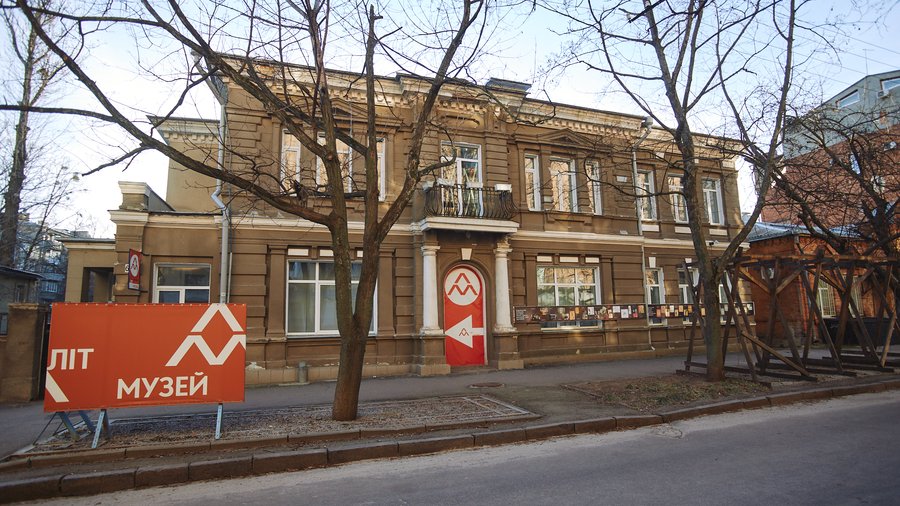

You see an error in the text - select the fragment and press Ctrl + Enter
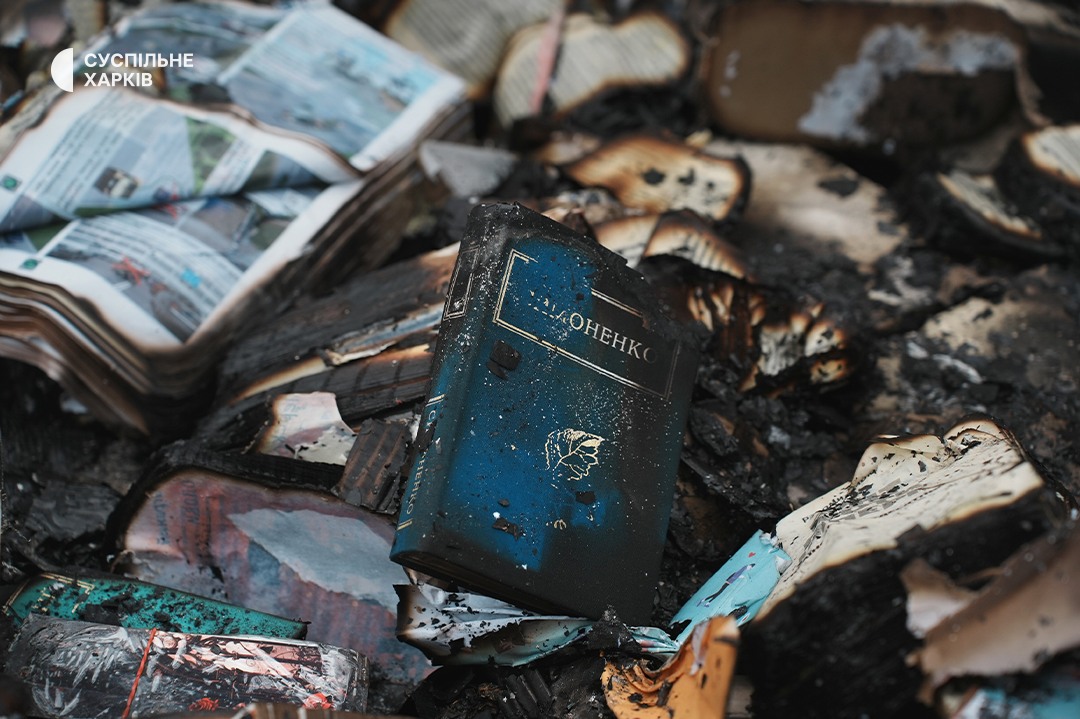
The Kharkiv Literary Museum (unofficially called LitMuseum) reopened on April 25, 2026 after more than a year of renovations. It had been closed following damage caused by a Russian strike on the city center on the night of March 1, 2025.
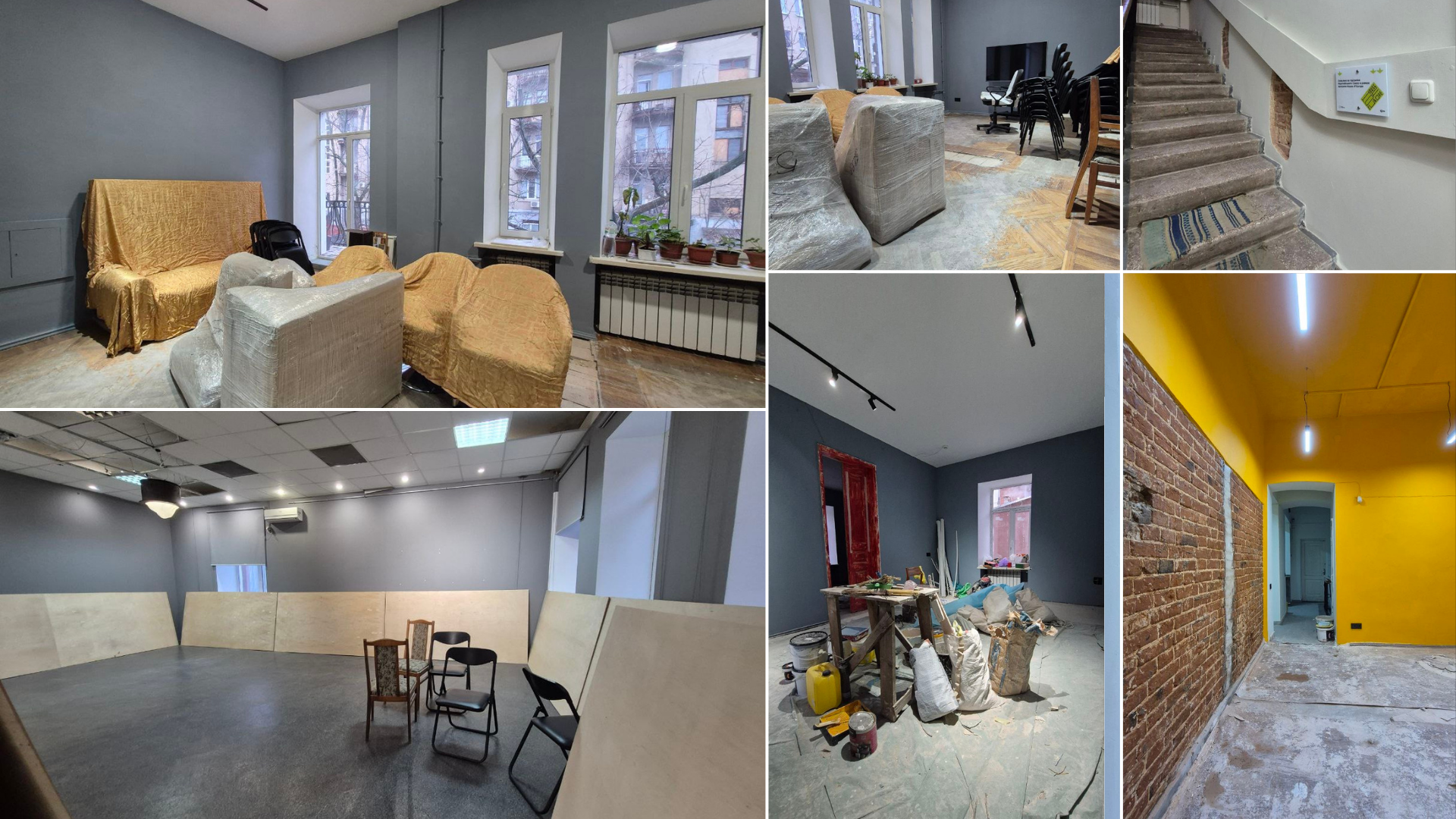
The blast wave shattered six windows, partially damaged seven more, destroyed the plaster on the second-floor ceilings, and caused structural cracks to appear in the walls. The most dangerous situation arose in the western part of the building: a crack had formed between the exterior and interior walls, precisely where the storage facility was located on the first floor and the exhibition hall on the second. There was a risk of further damage.
“We joked that we liked the idea of open collections and funds, but not in this way,” museum director Tetyana Pylypchuk told Chytomo.
What was the cost of the renovation?
Museum administration was able to secure funding from several partners for the restoration — a total of approximately 2.67 million UAH:
- The Ukrainian National Committee of ICOM allocated 510.000 UAH as part of the “Culture Unites: Museums of Japan to Museums of Ukraine” program;
- The House of Europe, through the “Small Infrastructure Grant” program, provided 896.261 UAH;
- The “Partnership for a Strong Ukraine” Foundation provided materials worth 320.552 UAH;
- The organization Cultural Emergency Response, through the NGO Museum for Change, provided 492.721 UAH;
- The Kharkiv City Council provided 128.082 UAH;
- German musicians, at the initiative of Yuriy Gurzhy, donated 6.385 EUR (328,827.50 UAH).
What was restored, and what has been changed?
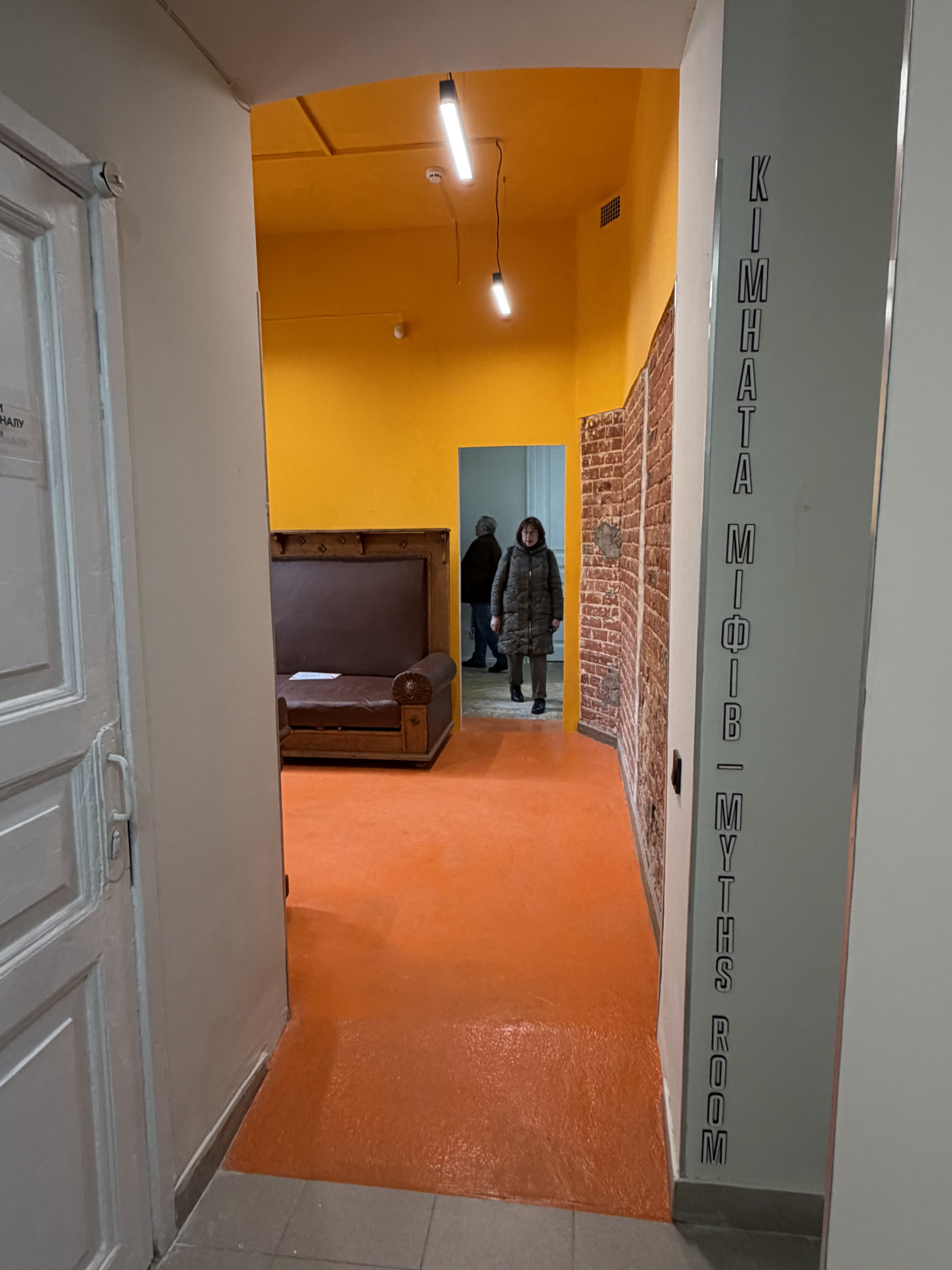
The renovation was led by architect and restorer Viktor Dvornikov. The most expensive and complex task was stabilizing the cracks. During the renovation, they took the opportunity to remove unnecessary partitions — those that had been added back in Soviet times when the building was converted into a hotel for party officials. Floors, doors, tiles, and other elements that could still be used were deliberately left in place to preserve authenticity wherever possible.
“We deliberately chose not to repair what could still be used,” explained Pylypchuk.
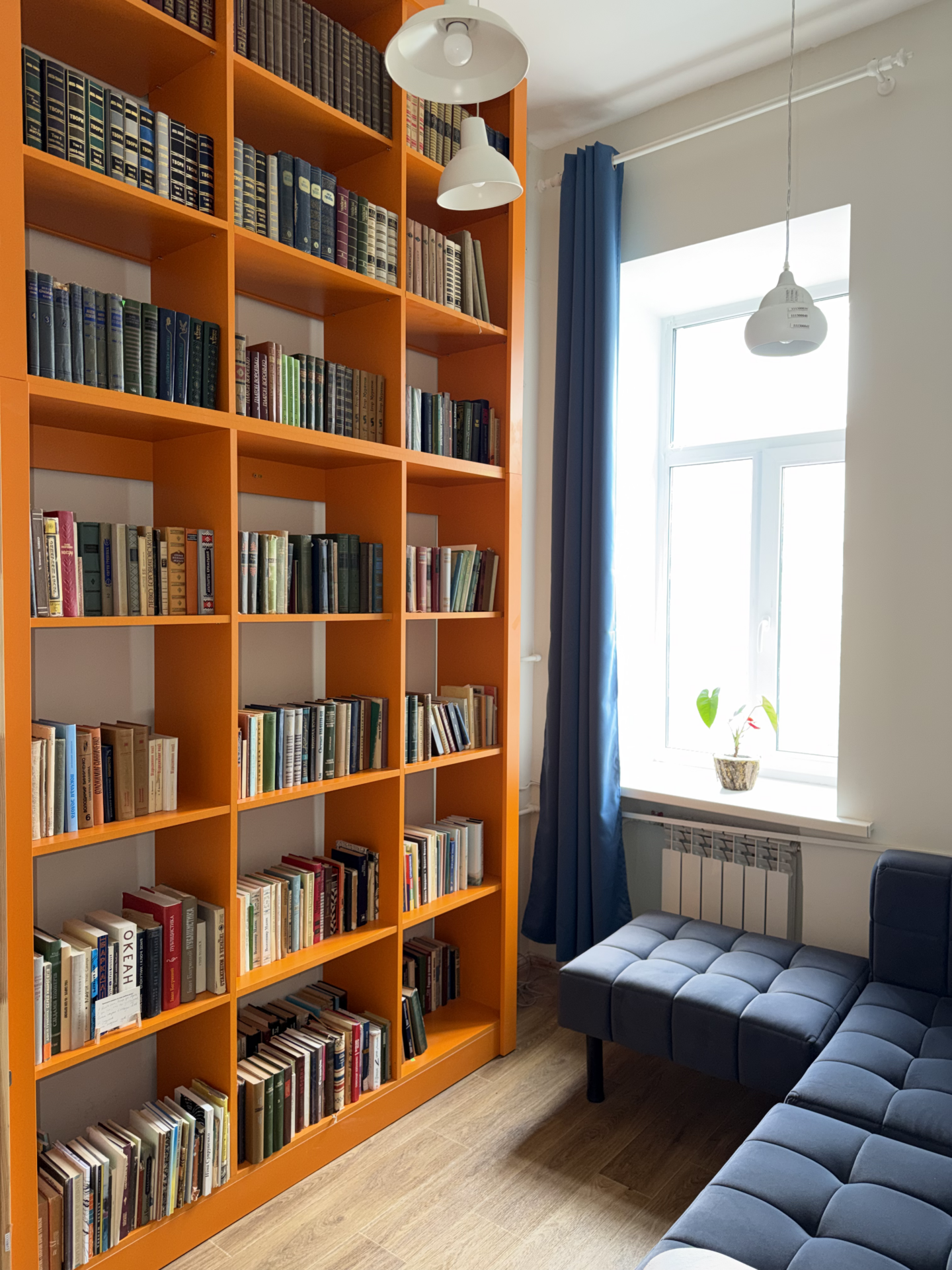
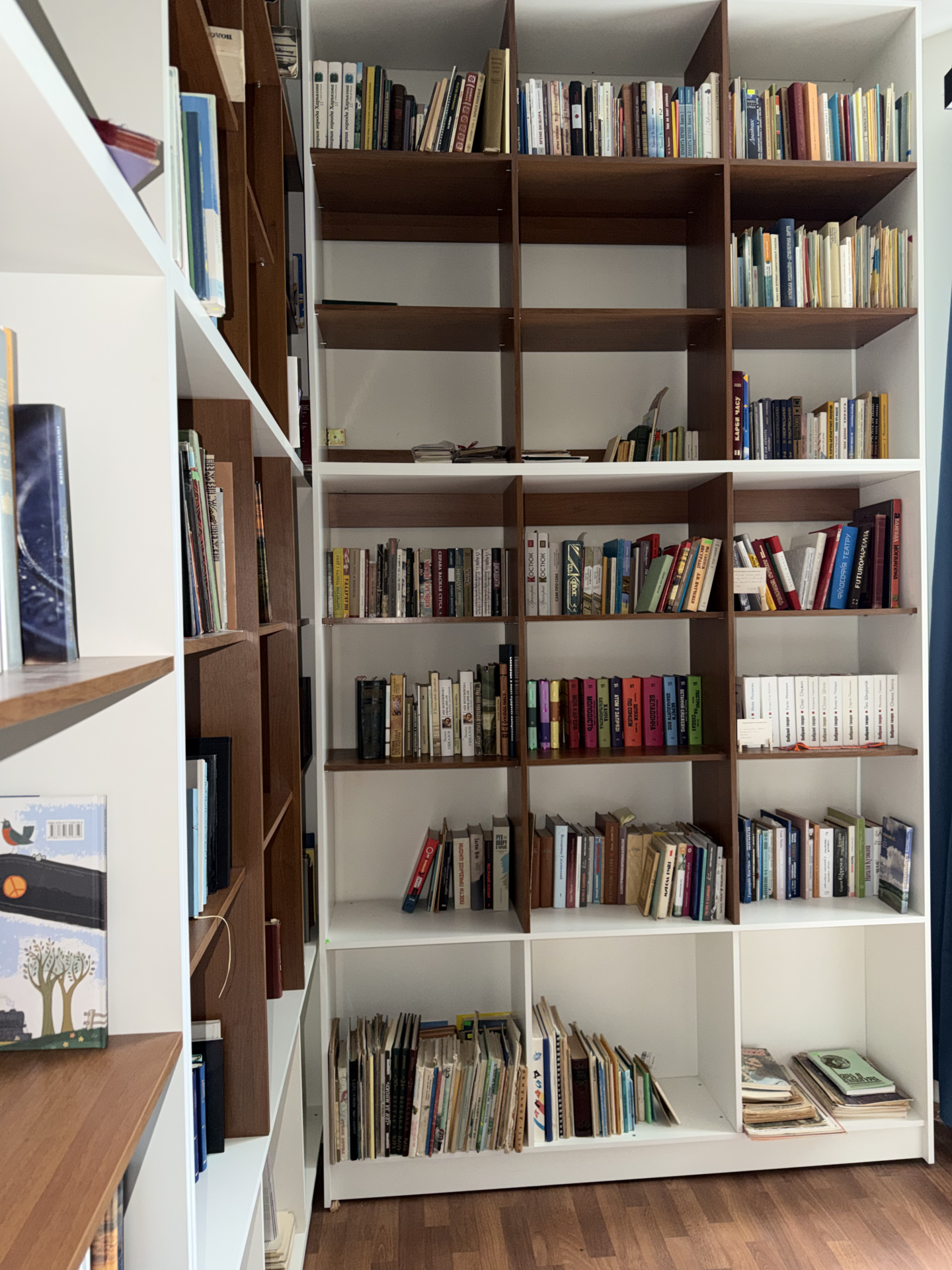
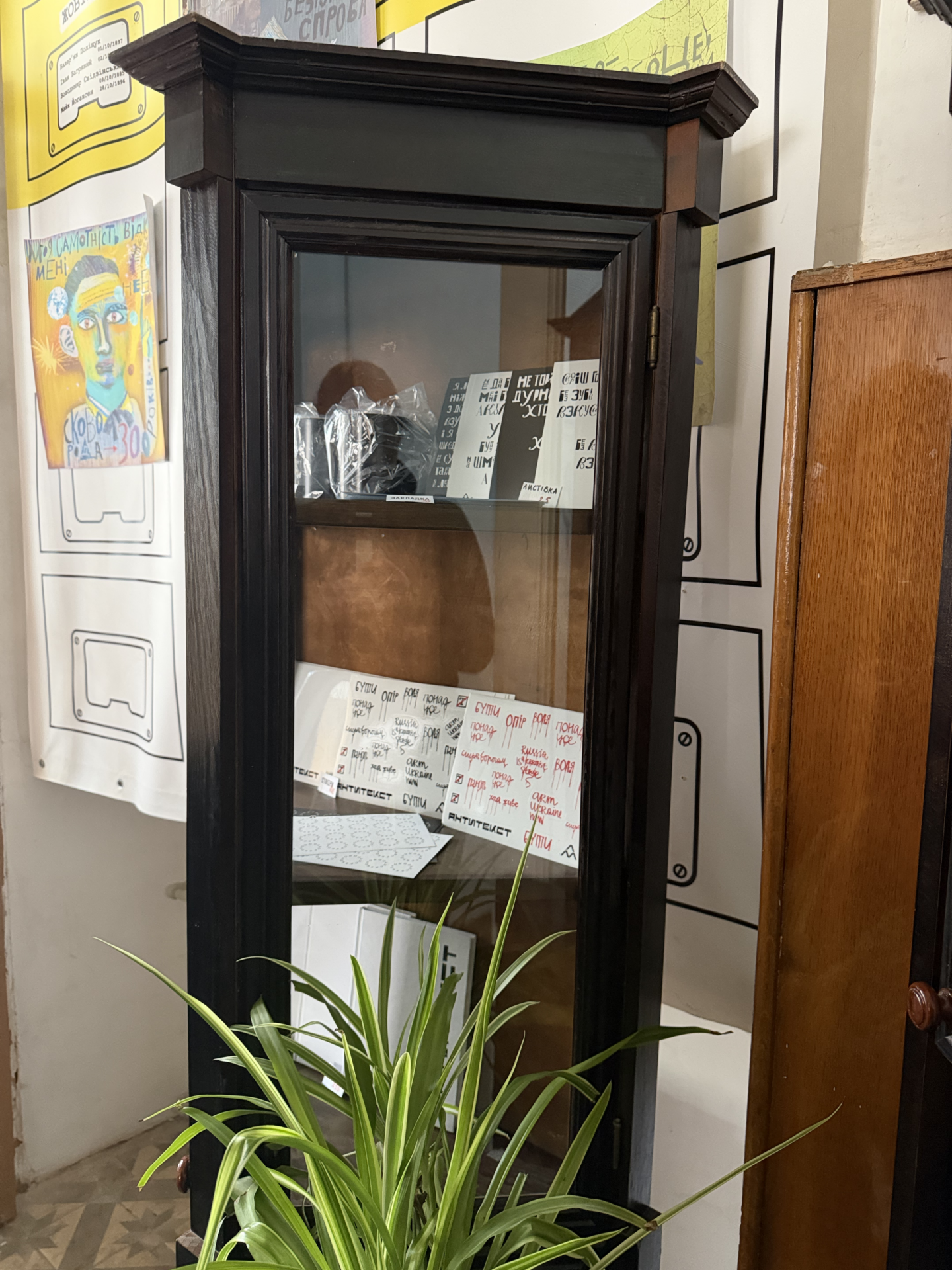
Alongside the restoration, the museum updated most of the furniture and set up a public library with bookshelves.
“Supportive publishers and authors donated many books to the museum, and we decided to make the library public so that the museum would have a comfortable space for reading and research. The space has become more comfortable for both visitors and staff.” Pylypchuk also noted that the museum’s collection was not damaged and the exhibits were safely stored away.
The main issue that remained unresolved was the renovation of the entrance. The building was reconstructed during the Soviet era and architectural standards at the time did not provide for accessibility for all people or barrier-free access. Experts have now completed the necessary measurements and are working on a renovation plan, but the cost estimate is not yet ready. The museum is seeking solutions and resources.
What’s in store for visitors?
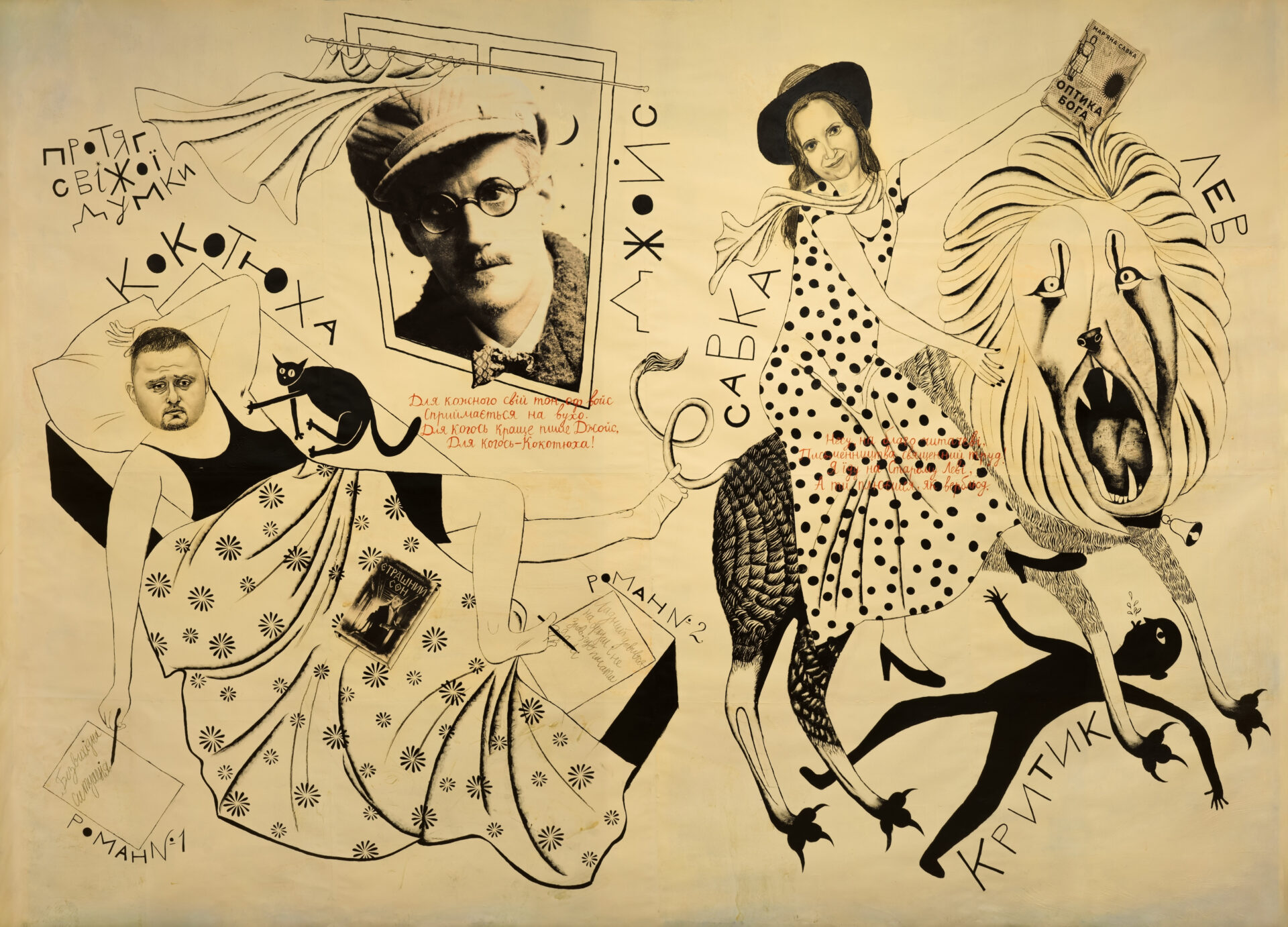
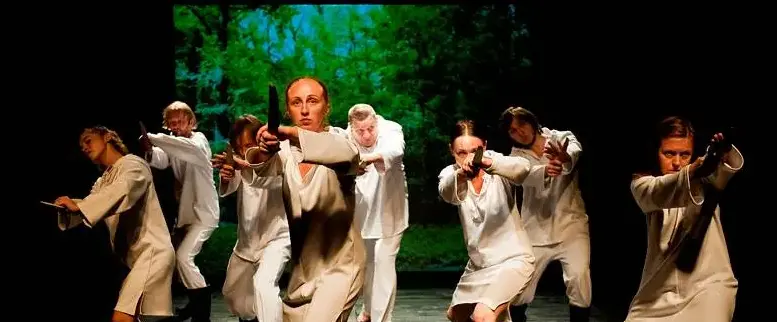
The museum has already put together a program for the coming months. On May 23, the museum will host Museum Night 2026 and open the exhibition “FZK” — which explores how decisions are made about which objects become museum pieces and which end up as trash. This summer, the museum will open the “Room of Myths” and stage performances as part of the “Laboratory of Dreams,” a project exploring how cultural heritage shapes community life. In August, the team will present the final exhibition, “The Formula of the Modern Museum.” At the same time, the museum will traditionally launch “Lytnamet and the Game Library.”
RELATED: Russian forces strike Arabesky Theatre in Kharkiv
Already after World War II, the Kharkiv branch of the Writers’ Union of Ukraine persistently raised the issue of creating a literary museum in Kharkiv. In the late 1980s, another letter from the Writers’ Union on this topic signed by A. Pererva and R. Polonsky, fortunately, fell into the hands of an employee of the historical museum, Iryna Grigorenko (Shumylina). Thanks to her persistent efforts, in 1988 the Kharkiv Literary Museum was finally established. It was located in the former estate of 1894, which belonged to the artist Georgy Shtorkh (and was designed by him), and during Soviet times a closed party hotel operated here. Iryna Grigorenko became the first head of the museum.
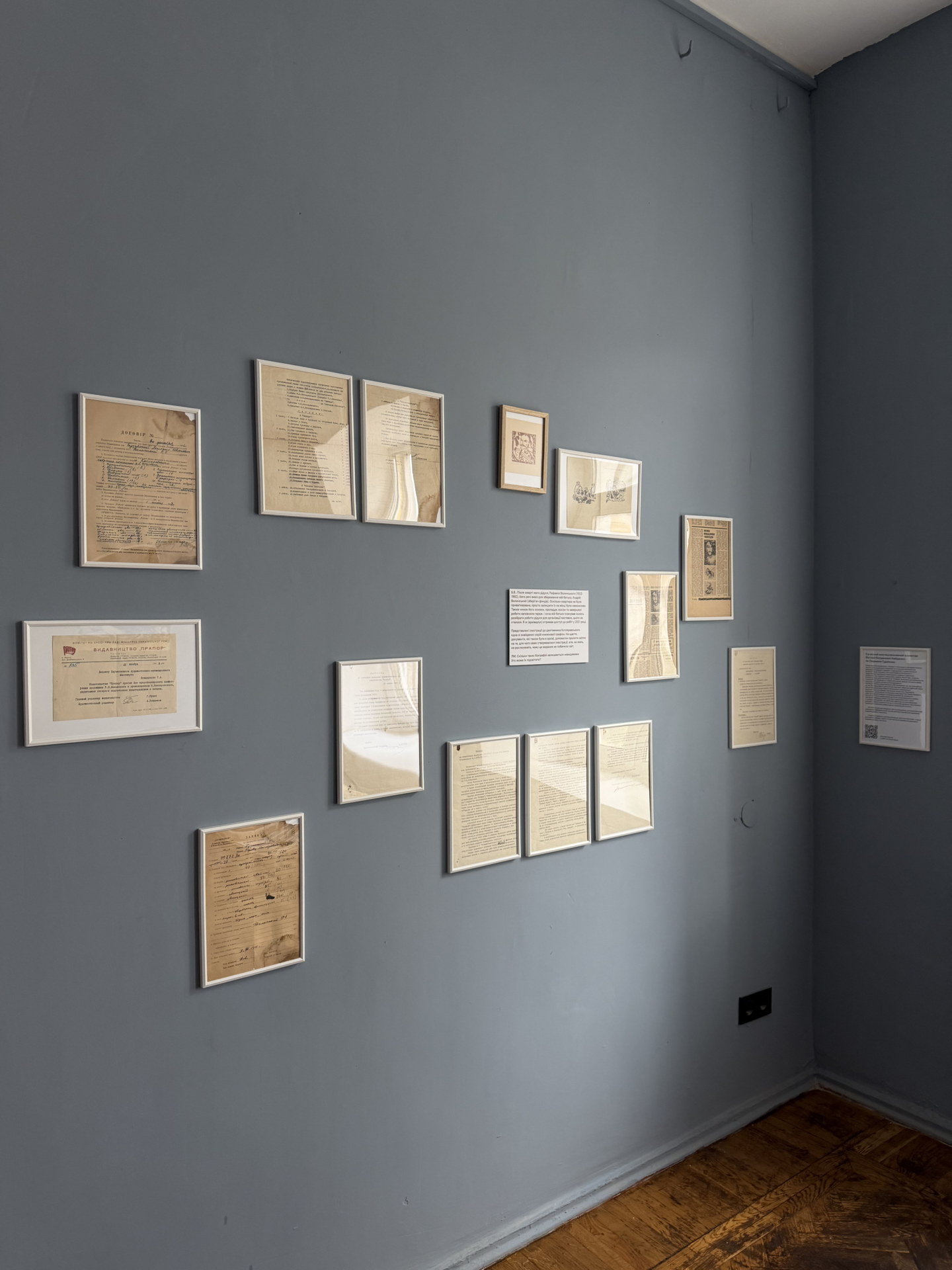
The museum was established by activists with anti-Soviet views in the last years of the USSR. Therefore, it has never been an instrument of propaganda: it has always been the Ukrainian voice of Kharkiv, sensitive to social issues. The museum never shies away from tectonic social shifts and isn’t afraid to stand up to the authorities or mainstream opinions in order to preserve the memories and experiences enshrined in museum artifacts. The most treasured part of our collection are the literary materials of our region that didn’t pass Soviet censorship and only miraculously survived as physical objects and crucial testimonies.
RELATED: Russian rocket attack destroys the museum of philosopher Hryhoriy Skovoroda in Kharkiv
Main image: Victoria Yakymenko
Images: Kharkiv Literary Museum
Читомо» — це медіа про книжки й літературу, що підтримувало українське книговидання задовго до того, як це стало трендом. Ставайте частиною історії — доєднуйтеся до Клубу Читомо!
the more you read, the greater the possibilities