* ESC - close the search window
Artem Chapeye
Confessions of a modern opium-eater: A review of Artem Chapeye’s ‘T-Happiness’
03.08.2026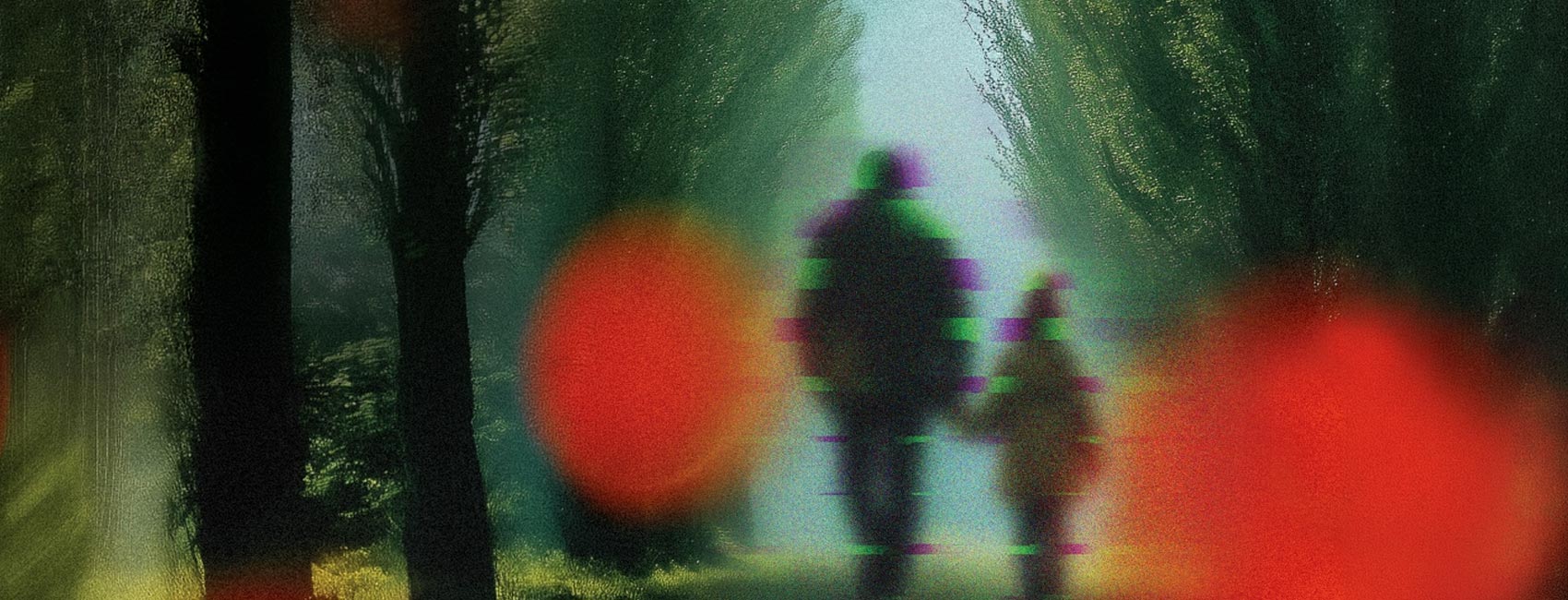

You see an error in the text - select the fragment and press Ctrl + Enter
Post-apocalyptic fiction usually follows a familiar pattern. Here’s the road; here are the obstacles one must overcome. And you, dear protagonist, please survive. Ultimately, it is up to you to show us that the end of the world is not the end after all.
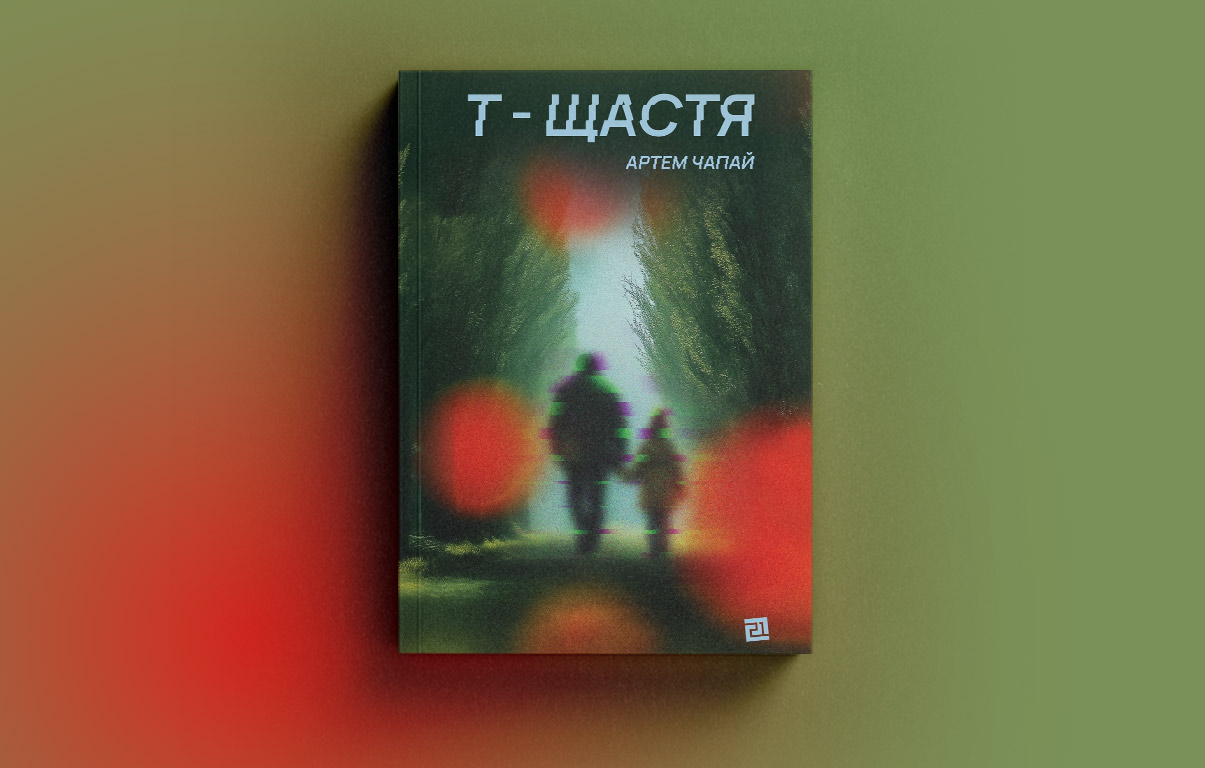
“T-Happiness,” Chapeye’s new novel published by Publisher XXI, is a post-apocalyptic vision that features both the familiar journey and the survival, but also a constant sense of a great explosion. The protagonist has survived and is trying to adapt to this new world, but his mind has been traumatized and fragmented. Chapeye isn’t taking us far away. This vision takes place in the present Russo-Ukrainian war, but differs from reality only in the emergence of new technology.
If Cormac McCarthy had found himself among Ukrainian soldiers, “The Road” from the novel would have fallen apart into a series of fragmented storylines, kept together only by the image of a hopeless journey, one with no certainty of leading anywhere at all. Wait—you know what “The Road” would have turned into. It would have evolved into Kurt Vonnegut’s nonlinear and unreliable narrative, “Slaughterhouse-Five.”
That’s enough about Americans. Let’s talk about the latest post-apocalypse that Ukrainian reality has turned into for over four years.
After the militarized end of the world in “The Weathering,” Chapeye returns to science fiction. The contrast between “The Weathering” and “T-Happiness” appears to reflect the difference between the author’s pre-war and post-war experiences.
Beware of Trigger Happiness
In his new book, Chapeye paints a military panorama in which the development of warfare has advanced significantly. T-Technology, or Trigger Happiness, has been developed, enabling users not only to control objects, but also to merge with them by experiencing their physical sensations and pain. Now you are the eyes. The eyes of the bird you’re piloting feel just as real as your own. You literally become the weapon, feeling every movement and swing as if they were your own—a micro-movement of the tail, a wound on the body, the smell of explosives, or fear. By putting the T-Helmet on, you transform from a human into a wolf or a six-winged angel of the apocalypse. The developers claim that T-Happiness, like piloting a UAV, is safer than infantry combat and firsthand experience, but reality shows that this is not the case.
“T-Happiness” is not a step toward science fiction, but a metaphor. Just like in “The Weathering,” Chapeye creates a fantastical scenario but pays little attention to how it works, focusing instead on the human dimension rather than the technological process.
RELATED: Soldier Artem Chapeye: If I hadn’t gone the first day, I would have gone a week later
“T-Happiness” is 184 pages long, and it’s nothing like what Ukrainian sci-fi author Max Kidruk writes.
Trigger Happiness has an immediate side effect. The T-Helmet enables users to connect with the creature they are guiding; it also allows them to relive their happiest memories. Many people embrace these joyful illusions, leading to the emergence of a new generation of addicts dependent on pure T-Happiness. Everyone has their own pre-war belle époque into which they long to escape, even if for a short while.
I’m pretty sure you’ve already guessed it? Here’s the confession of the newest opium-eater.
You [Romance]: The partial disintegration of the self
If you read Chapeye’s book without close attention, you may not immediately notice that the different sections are organized around different pronouns. The text alternates between narratives told from the perspectives of “he,” “you,” and “I.” The use of pronouns reflects the fragmentation of the self — a dissociation much like that of the American Billy Milligan. Or rather, like that in Mykola Khvyliovyi’s “I [Romance].” Chapeye’s protagonist has no shortage of reasons for this fragmentation.
At first, it is unclear who Victor, the novel’s protagonist, is or where he fits within the timeline. As he explains, “Your life isn’t a chronology. For you, your life is a collection of key episodes and states that you later recall and fill in the gaps for your entire life.” Instead of making this clear from the beginning, he lets readers gradually discover that something is unusual about him.
“He,” a former soldier with an amputation who lives as a recluse under occupation and adheres to the principle of putting maximum focus on his physical sensations. This is a strong personality who has confined himself to a self-imposed “T-Sobering-up period” and allows himself only one hour of T-Happiness a day.
But here, he is replaced by “I,” a beloved husband and a tender father, a person who remained on the other side of the war, but one whom the protagonist longs to become, more than anything else. A person we all hopelessly lost with the outbreak of full-scale invasion, though by no means everyone quickly understood and accepted this.
Interwoven into this are chapters about “you,” stories about Victor the soldier, the pilot with the T-Helmet, who is only just beginning to lose himself on the shores of T-Happiness, and exists somewhere amid all the upheavals he has experienced.
Three identities exist like three rings marking the tree of the hero’s experience, and parallels with Khvyliovyi are unavoidable. As in “I [Romance],” the protagonist’s personality in “T-Happiness” fractures because he cannot reconcile himself with his traumas. His traumas are many, including separation from his family because of the war, the deaths of his comrades, captivity, and the loss of a limb, which he bites off himself during a T-Session to survive.
RELATED: Artem Chapeye on the search for authentic Ukraine: ‘It doesn’t have to be a ‘propaganda’ story’
If you’ve already noticed Chapeye’s pronouns, you might want to pay closer attention to your own. There’s a chance that your “I” doesn’t correspond to your true self here and now either. Sorry for pulling you out of the T-Happiness session.
You are the weapon
Swiss psychiatrist and psychoanalyst Carl Gustav Jung said that we all have a dark side, something like an inner animal nature: the shadow. Victor loses his familiar pre-war “self” in the war, only to almost literally transform into a shadow while wearing the T-Helmet. His shadow takes the form of a wolf, and when it manifests, the pronoun “I” returns to him. This is his primary wartime identity, which sometimes replaces his pre-war “self.”
The technology Chapeye chooses for his protagonist is humanized. The weapons in this fictional world are living beings. Rather than creating distance from military missions, this technology transforms them into experiences driven by pure instinct and a deeply personal understanding of what is happening. This differs completely from the discourse of the Russians, who, like Eichmann in Jerusalem, claimed they were unaware of their actions and simply carried out orders efficiently. And yes, this is a deeply personal story.
Not an epic story
We often turn to Old Testament imagery when articulating our experiences. The pilots of “T-Happiness” resemble archangels. When Chapeye writes that his protagonist carries a bomb under each of his six wings, you can’t help but picture church frescoes. Except that his archangels are neither immortal nor omnipotent.
Sometimes, we place soldiers at a lofty distance from everyday life, transforming them into figures from modern epics or legends. It is easier to give them a beautiful, stereotypical image that feels comfortable to rely on. This happens partly because we, as civilians, also struggle to endure this reality. If soldiers are heroes, we can depend on them. We can assign them the traditional role of defenders while we ourselves hide away in the shelter of other socially significant roles. After all, the epic is a very grandiose and inhumane genre.
One aspect of Chapeye’s character — “he” — does indeed resemble an idealized image. He’s balanced and has iron self-control, but this novel isn’t about a strong personality; it’s about a broken one. About the addictive desire to lose oneself in the past. About the impossibility of connecting with one’s family; in short, about the fragmentation of families whose lives have flowed down different paths. Perhaps this strong, reserved man is also a figment of T-Happiness’s imagination, created specifically for us. Yes, for you and me.
Back in the day, quite a few good fantasy books were written about World War II. “Slaughterhouse-Five” by Vonnegut, “A Canticle for Leibowitz” by American writer Walter M. Miller Jr., “The Moomins” by the Finnish writer and illustrator Tove Jansson, and “The Lord of the Rings” by J.R.R. Tolkien. All of them ventured into the realm of fantastical journeys that distance us from reality and lead us down winding paths through the thickets of our inner selves. Perhaps Hemingway really does know nothing. But the authors of the aforementioned books lived and sought out similar words and ways to convey what our war-torn consciousness cannot bear. This is what Chapeye is searching for in his words and images.
The protagonist, shattered by the experience of the apocalypse, does not necessarily have to reach the end of his journey.
RELATED: Artem Chapeye. Who’s got our back?
The publication is a part of the “Chapter Ukraine” project. The materials have been prepared with the assistance of the Ukrainian Book Institute at the expense of the state budget. The author’s opinion may not coincide with the official position of the Ukrainian Book Institute.
Translation: Iryna Savyuk
Copyediting: Joy Tataryn
Читомо» — це медіа про книжки й літературу, що підтримувало українське книговидання задовго до того, як це стало трендом. Ставайте частиною історії — доєднуйтеся до Клубу Читомо!
the more you read, the greater the possibilities
973
Artem Chapeye
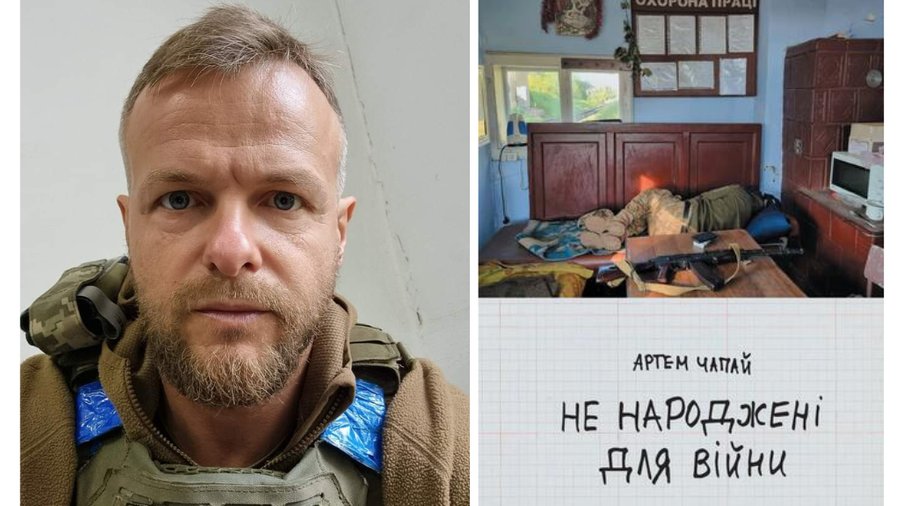
‘Ordinary People Don’t Carry Machine Guns: Thoughts on War’ by Artem Chapeye to be translated into Chinese and Korean
11.04.2026 -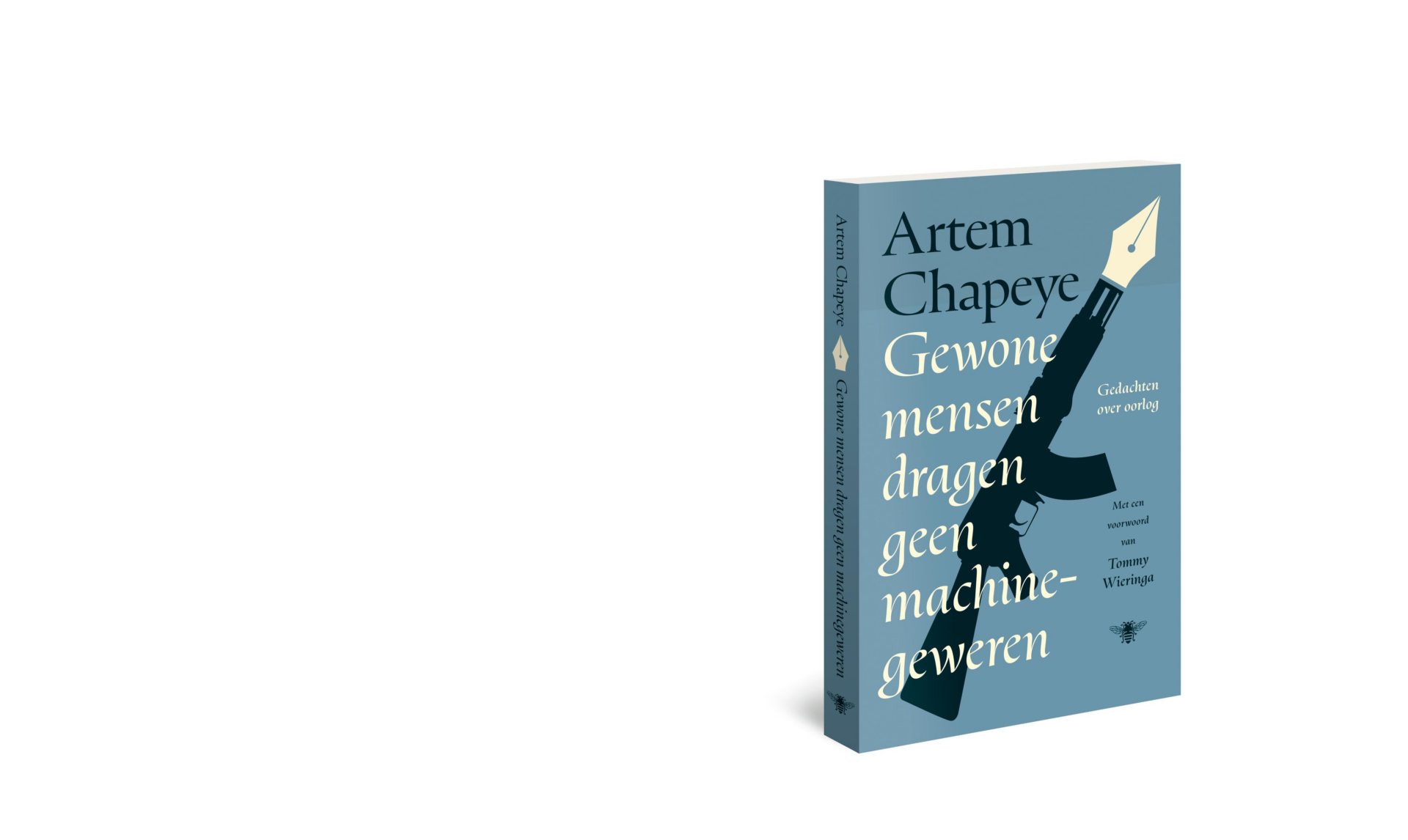
216
Artem Chapeye
Dutch edition of Artem Chapeye’s ‘Ordinary People Don’t Carry Machine Guns’ set for 2026 release
12.12.2025 -