* ESC - close the search window
House of Europe
EU extends House of Europe support program in Ukraine for two more years
07.10.2026

You see an error in the text - select the fragment and press Ctrl + Enter
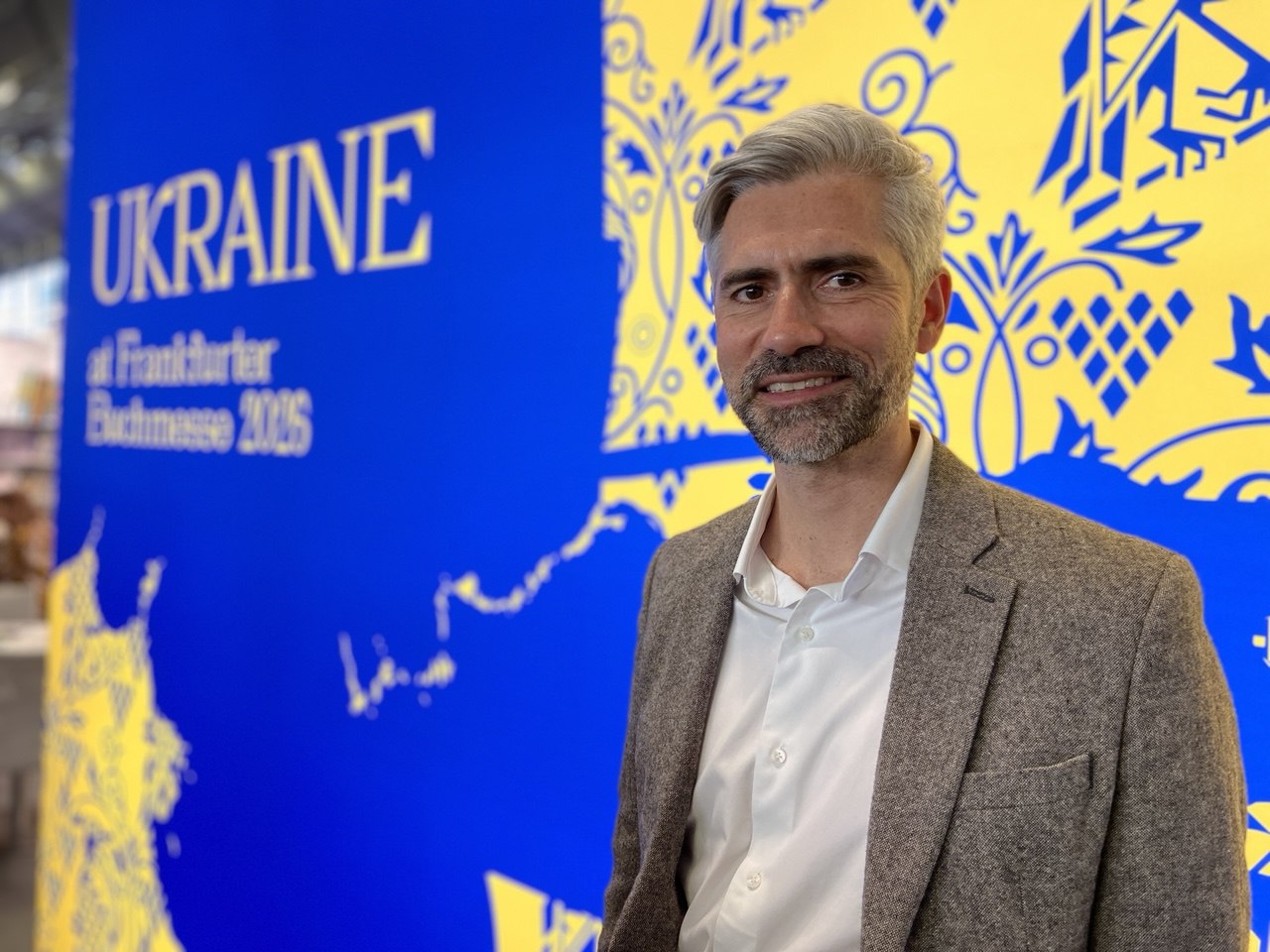
The European Union has extended the House of Europe program for another two years with a budget of 4 million euros. Jakob Racek, Director of Goethe-Institut Ukraine, announced the continuation during the “Unity in Action and Time: Success Story and Future of Cooperation” panel at the Ukrainian national stand at the Frankfurt Book Fair.
The agreement extending the program was signed on Oct. 7, 2026, while the decision itself had been made several weeks earlier. According to Racek, this will be the third phase of House of Europe.
The program’s format has been adjusted slightly, with some of its grant lines aligned, but its overall structure will remain largely unchanged. House of Europe will continue to provide international cooperation grants, emergency grants, cooperation grants, translation grants, mobility grants, and individual stipends.
The previous day, Sebastian Guggolz, President of the German Publishers and Booksellers Association, spoke about significant cuts to cultural and education budgets in Germany, including funding for the Goethe-Institut.
“Well, it makes this program House of Europe even more important and it comes at the right time, I would say, because it also shows that we more and more calibrate different funding structures and funding opportunities, which is a good thing,” Racek said.
He added that multiple funding initiatives sometimes operate in parallel without being sufficiently coordinated.
“Sometimes I have the impression that there is too many parallel things going on and they are not really synchronized well,” Racek said.
Speaking about cultural funding in Germany, Racek said he would describe the current situation as stagnation rather than cuts.
“I would not say it’s cuts, it’s stagnation. They stay on the same level, but of course, we have a lot of additional factors that make the implementation of such programs more and more expensive. Inflation, currency exchange rates, the situation in not just in Ukraine, in many different countries. So, you have to use more resources to have the same output in a way,” Racek said.
House of Europe is a program funded by the European Union and implemented by Goethe-Institut Ukraine. It was created to support professional and creative exchange between Ukrainians and their counterparts in EU countries and the United Kingdom. The program focuses on culture and creative industries, education and youth work, social entrepreneurship, and media.
As reported earlier, House of Europe has supported the international promotion of Ukrainian literature through translation grants for EU and UK publishers. The program offered up to 5,000 euros for translation, editing, copyright, design, printing, and marketing costs.
This year, House of Europe also launched the House of Europe Award for individuals and organizations developing partnerships between Ukraine, the EU, and the United Kingdom. The award includes nine categories.
As reported earlier, “The Melancholy of Resistance” by Nobel Prize laureate László Krasznahorkai, translated into Ukrainian by Oleksandr Vesheleni and published by Komora, won the House of Europe Award in the Best Translated Publication category.
Image: Iryna Baturevych
Читомо» — це медіа про книжки й літературу, що підтримувало українське книговидання задовго до того, як це стало трендом. Ставайте частиною історії — доєднуйтеся до Клубу Читомо!
the more you read, the greater the possibilities
253
House of Europe
House of Europe launches grant program for translation of Ukrainian books
27.06.2024 -
438
House of Europe
How the world is helping a Ukrainian literature reach an international audience
22.06.2023 -