* ESC - close the search window
2026 Frankfurt Book Fair
Opening of the 2026 Frankfurt Book Fair: Czech culture minister booed, solidarity with Ukraine, and AI copyright concerns
07.10.2026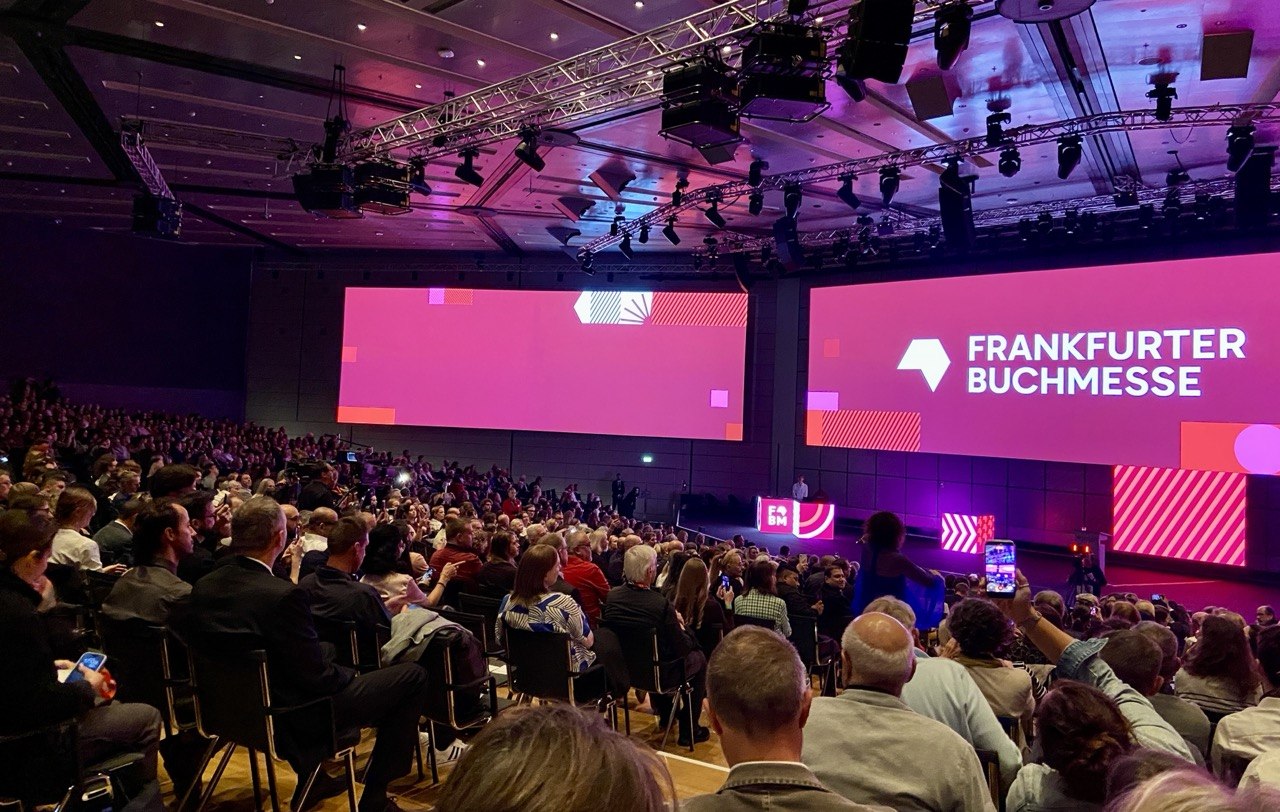


You see an error in the text - select the fragment and press Ctrl + Enter
The grand opening ceremony of the 2026 Frankfurt Book Fair was held on Oct. 6 at the Congress Center Messe Frankfurt, with Czechia as this year’s guest of honor. The ceremony focused on freedom of expression and democracy, the protection of intellectual property in the age of AI, and support for Ukraine and Ukrainian culture, while Czech Culture Minister Oto Klempíř was met with protests and booing from part of the audience.
Speakers at the opening included Jürgen Boos, Director of the Frankfurt Book Fair; Glenn Micallef, European Commissioner for Intergenerational Fairness, Youth, Culture and Sport; Czech Culture Minister Oto Klempíř; Frankfurt Mayor Mike Josef; Timon Gremmels, Hesse’s Minister for Science and Research, Art and Culture; Germany’s Minister of State for Culture and Media Wolfram Weimer; and Sebastian Guggolz, President of the German Publishers and Booksellers Association.
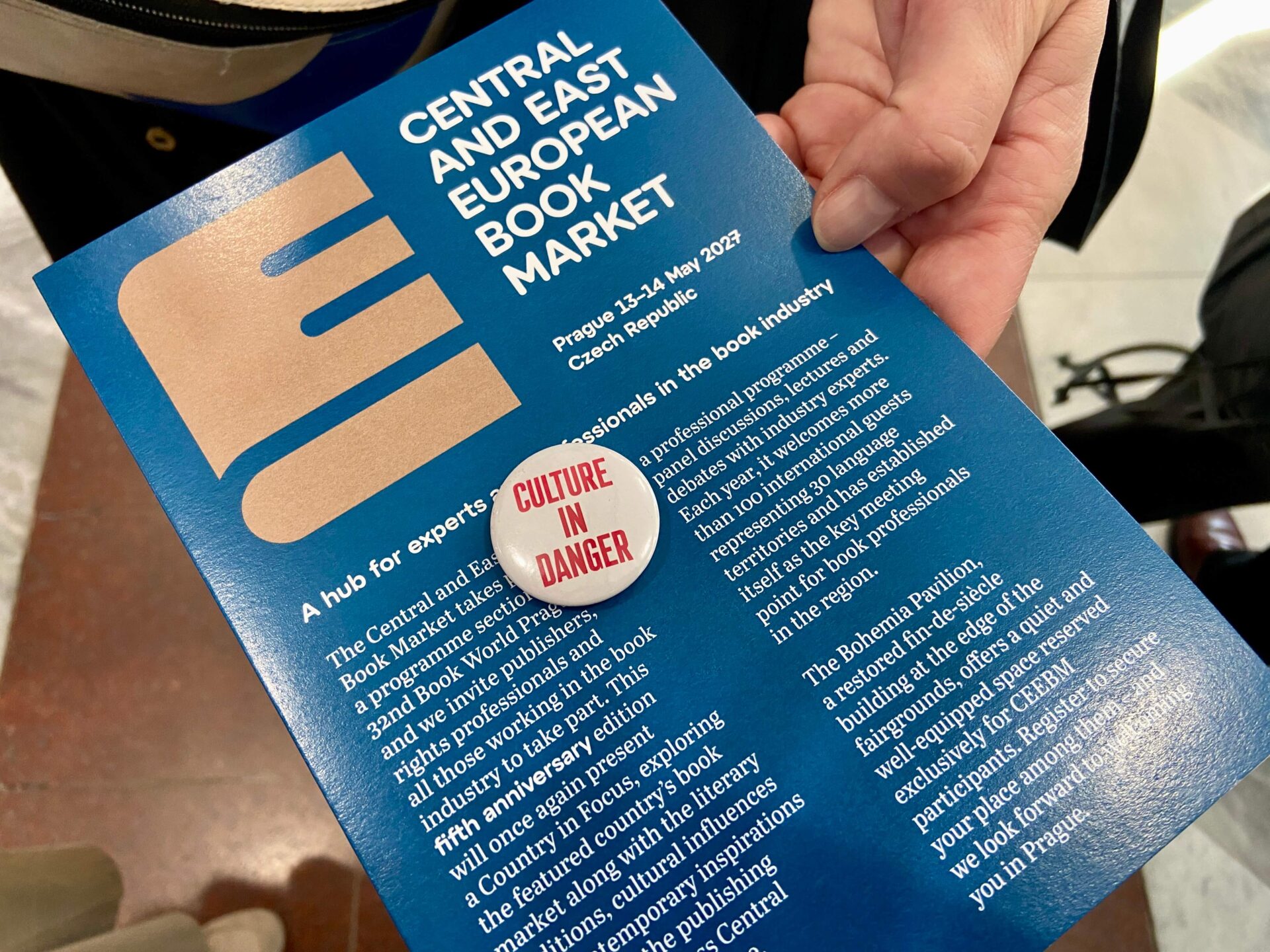
Czech publishers remained uncertain until shortly before the ceremony whether Klempíř, who had been announced in the program, would attend. At the entrance, some wore badges reading “Culture in Danger.” One Czech publisher told Chytomo that the minister often does not appear at public events because he is met with whistles and other expressions of protest.
Czechia’s appearance as guest of honor also comes amid cuts and uncertainty surrounding cultural funding, including delayed and potentially canceled state grants. Publishers and cultural managers have expressed concern that the reductions could undermine the long-term impact of Czechia’s Frankfurt guest of honor project, an agreement for which was signed by former Culture Minister Martin Baxa in 2023 and which has involved significant investment.
Czech singer, violinist, and composer Iva Bittová opened the ceremony. British-German musician Tim Roth also took part in the musical program.
Among the guests introduced from the stage were Ukrainian Deputy Culture Minister Bohdana Laiuk, International Publishers Association President Gvantsa Jobava, and Polish publisher and Federation of European Publishers President Sonia Draga.
During the opening, Boos said that 75 Czech authors and illustrators had come to Frankfurt this year. Czechia’s guest of honor program includes more than 100 literary and cultural events, while more than 40 publishers are represented at the country’s collective stand.
This was also Boos’s final Frankfurt Book Fair opening as director. He has led the organization for more than 20 years and will step down after this year’s fair. Publishing executive Joachim Kaufmann will succeed him.
Frankfurt Mayor Mike Josef thanked Boos and the Frankfurt Book Fair for their role in defending freedom of expression. He recalled that when he first came to Frankfurt, one of his main “conversation partners” was Carlos Ruiz Zafón’s novel “The Shadow of the Wind.” Josef linked the book to the idea that the value of democracy becomes particularly visible when it is lost.
The mayor stressed that democracy and freedom are currently under threat, making the role of books, culture, and freedom of expression especially important. He also welcomed Czechia as this year’s guest of honor and recalled Václav Havel, the Czech playwright, dissident, and former president who defended democracy, freedom, and human rights.
The impact of artificial intelligence on the cultural and creative sectors was another central theme of the ceremony. European Commissioner Glenn Micallef argued that technological development should not come at the expense of human creativity.
“I do not think that our task is to choose between creativity and technology. That is a false choice. Our task is to make sure that technology enables the human voice,” Micallef said.
He stressed that human authorship must remain visible even as AI becomes increasingly integrated into creative processes. “The person’s work must remain visible at all times,” he said. “AI can support research, take over repetitive tasks, help people experiment, but it should never decide what we say or why we say it.”
Micallef also called for effective licensing of creative work and enforcement of creators’ rights, saying companies should bear responsibility for ensuring that creative work used by AI is fairly remunerated and used with the consent of rights holders. He said he expected these principles to be reflected in the upcoming AI strategy for the cultural and creative sectors.
The commissioner addressed Europe’s linguistic and cultural diversity. “Artificial intelligence should help European voices to travel further. But this does not mean that those voices should all sound the same,” he said.
Micallef noted that Europe has never had one voice or one language and described that diversity as one of its strengths. He said European languages carry different histories, humor, memories, and ways of seeing the world, while translators, publishers, editors, and booksellers help those worlds meet.
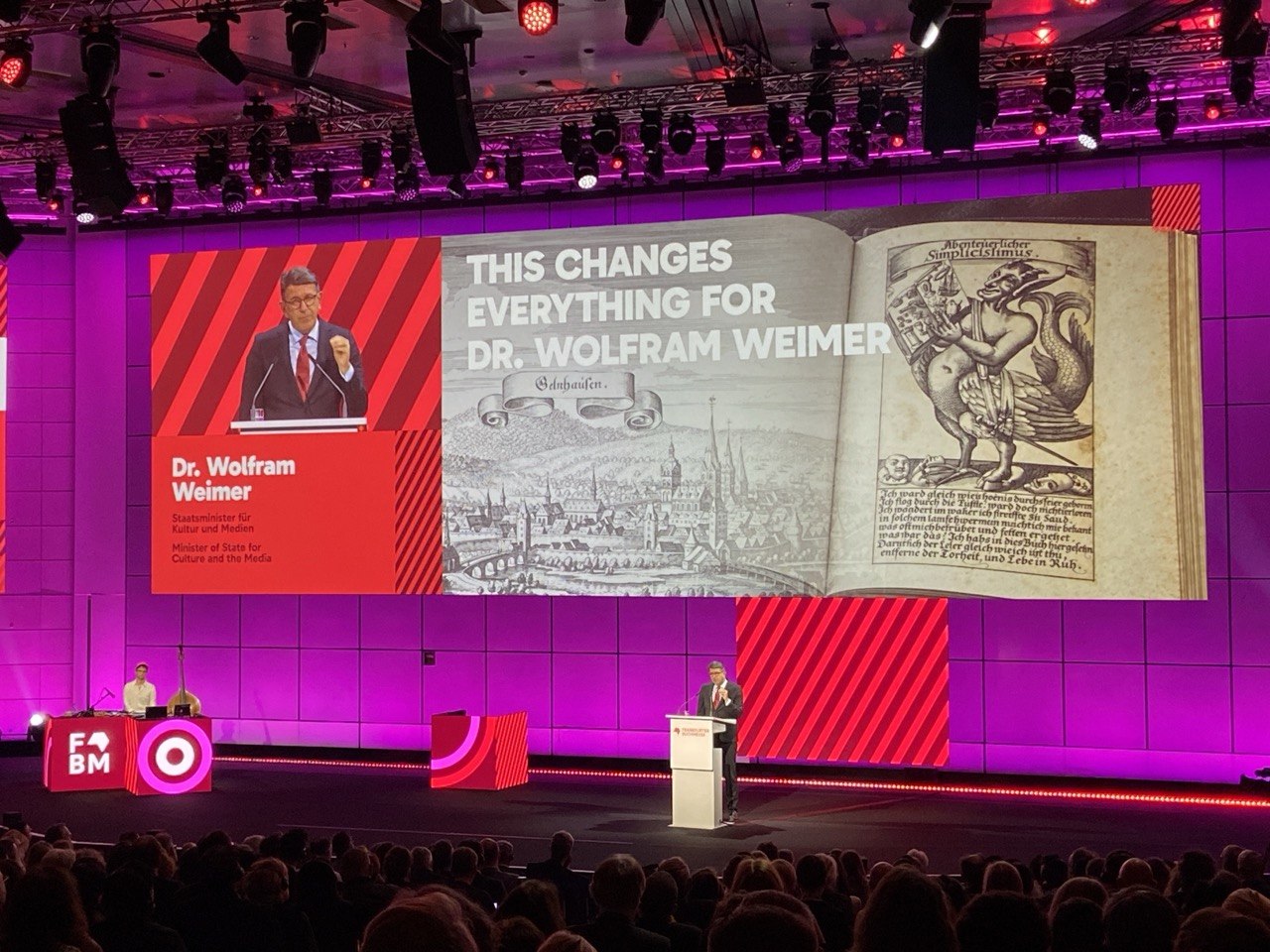
Germany’s Minister of State for Culture and Media Wolfram Weimer also addressed the risks generative AI poses to authors and rights holders. He described the uncompensated use of creative content by AI systems as a form of intellectual vampirism. According to Weimer, intellectual property can be effectively protected only at the European Union level, with countries acting together. He called for a common European approach to copyright protection and argued that coordinated action in Brussels would be necessary.
Sebastian Guggolz, the new president of the German Publishers and Booksellers Association, also criticized Germany’s spending priorities. Citing PISA findings on declining reading skills among 15-year-olds, he contrasted investment in construction, industry, and other material sectors with spending on education and culture. Guggolz also criticized funding cuts affecting cultural institutions, including the Goethe-Institut.
The first Czech writer to appear on stage was poet, writer, and translator Marie Iljašenko, who was born in Kyiv and spent her childhood there. Before reading her poetry, Iljašenko delivered a speech calling for continued support for Ukraine. According to Chytomo correspondents at the ceremony, she referred to recent losses caused by Russian attacks and stressed that culture must remain free.
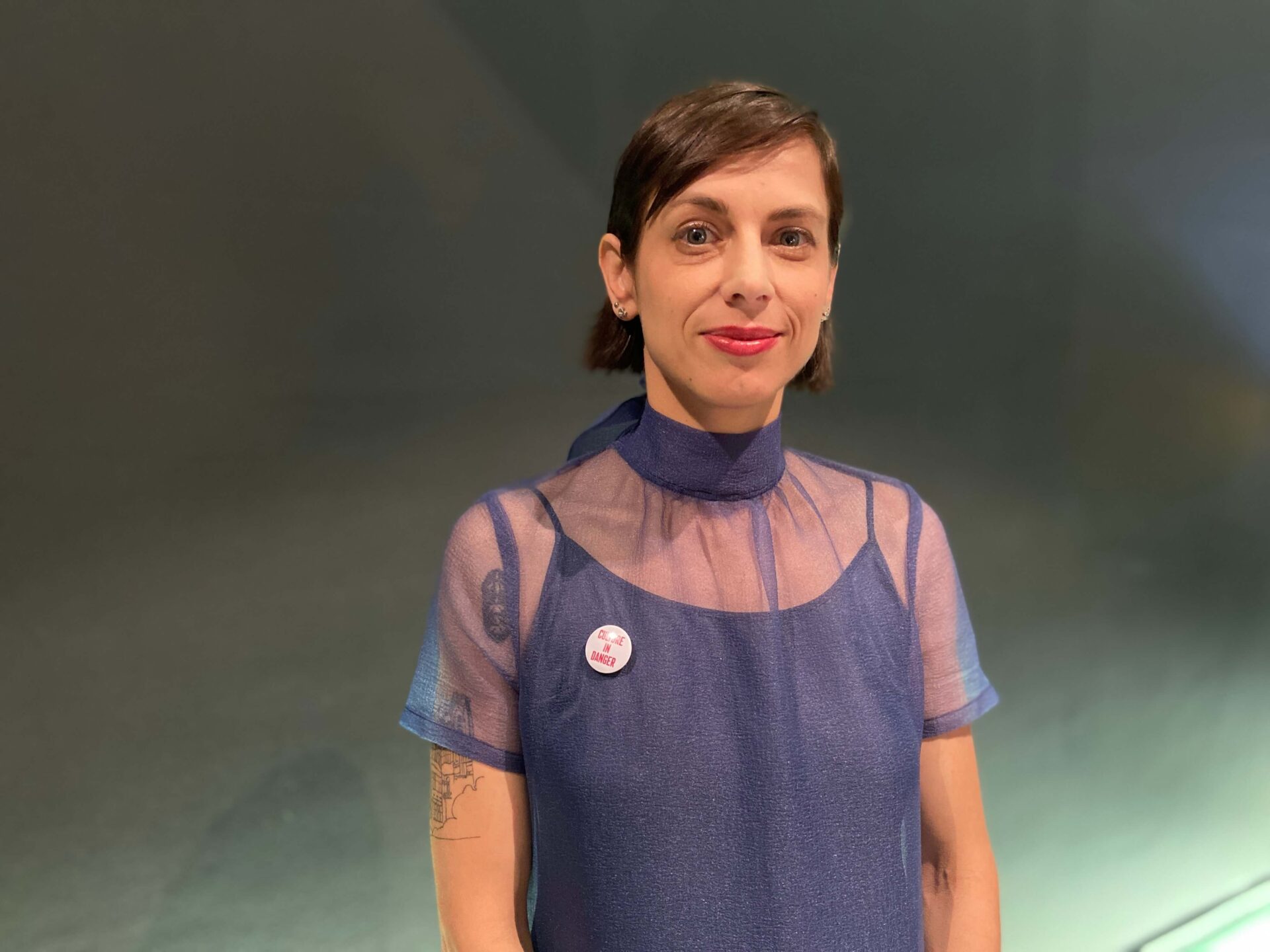
Marie Iljašenko
Part of the audience staged a protest during Czech Culture Minister Oto Klempíř’s speech. According to Chytomo correspondents at the ceremony, some members of the Czech delegation did not applaud at the beginning of his address. Shouts and whistles were later heard from the audience, while one protester raised a sign describing Klempíř as an “ANTI-cultural minister.” As Klempíř spoke about Czech poets in exile who had been persecuted by the secret services, someone in the audience challenged him over his own past links to StB, the state security service of communist Czechoslovakia. By the end of his speech, part of the audience was booing and shouting its disapproval.
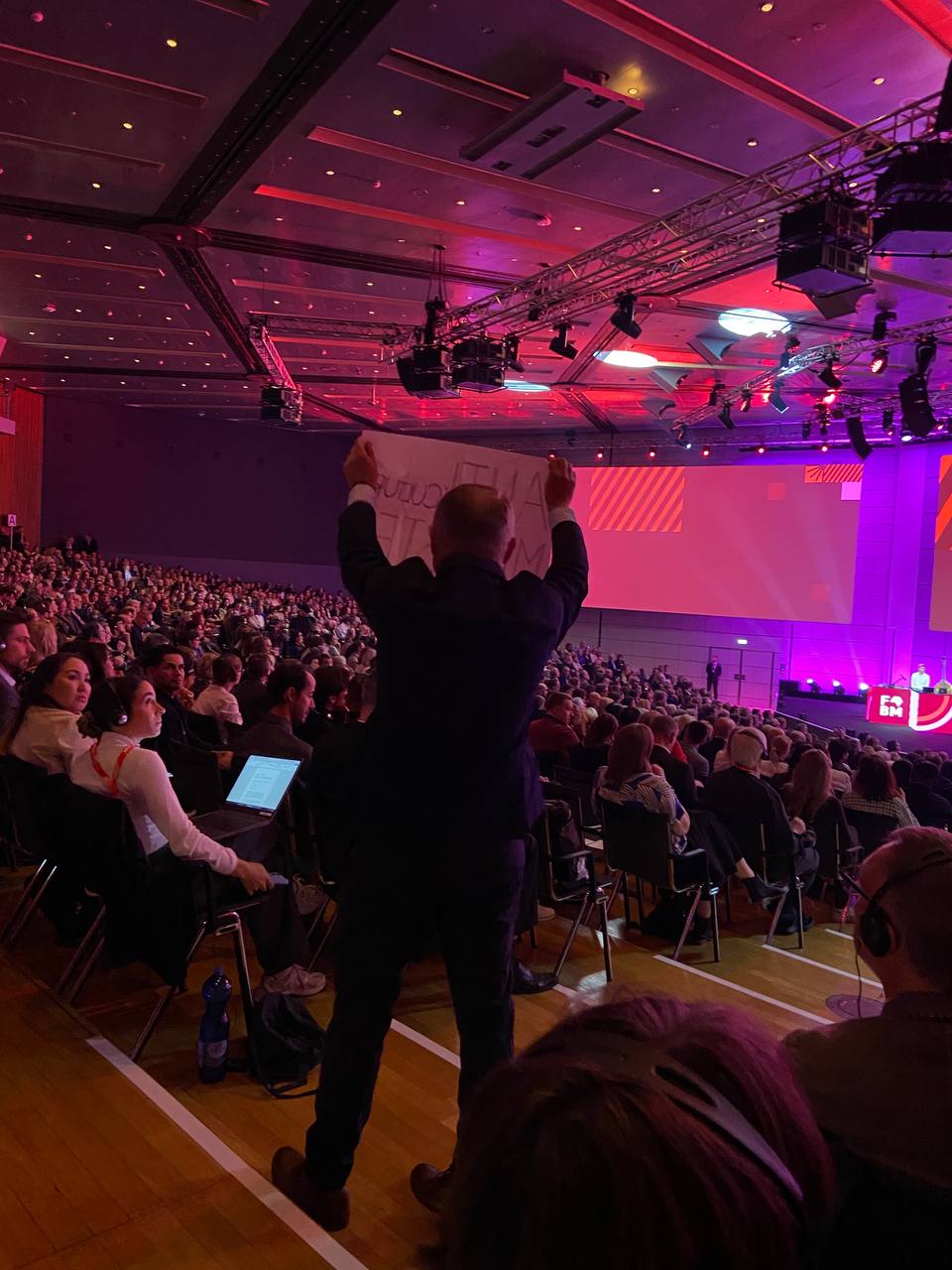
Protester holding a sign reading “ANTI-cultural minister”
Despite the protest, Klempíř continued his speech, emphasizing the international nature of literature and cultural exchange. He said literature was not confined to a single country but represented a shared experience.
Czech writer Radka Denemarková, who followed Klempíř, responded that bad ministers come and go, while literature remains. Her speech received a standing ovation. Denemarková also spoke about political responsibility, populism, lies, and censorship. She described literature as a kind of island amid populism and falsehood. She argued that public figures increasingly avoid responsibility for their words and referred to Russia’s war against Ukraine – which Russian authorities euphemistically call a “special military operation” – as an example of language being used to obscure reality. She also spoke about lies being reframed as alternative points of view.
She contrasted this with literature, presenting it as a space capable of resisting populism and falsehood. Denemarková also addressed book censorship in the United States and stressed that censorship still has to be confronted in the 21st century. She recalled the destruction of books in different historical periods, from ancient Rome to book burnings in Nazi Germany and the destruction of libraries in Bosnia and Herzegovina in the late 20th century. Denemarková drew a parallel with Russia’s ongoing war against Ukraine and the destruction of Ukrainian books and libraries by Russian forces. In her speech, she described the Russian attackers as fascists.
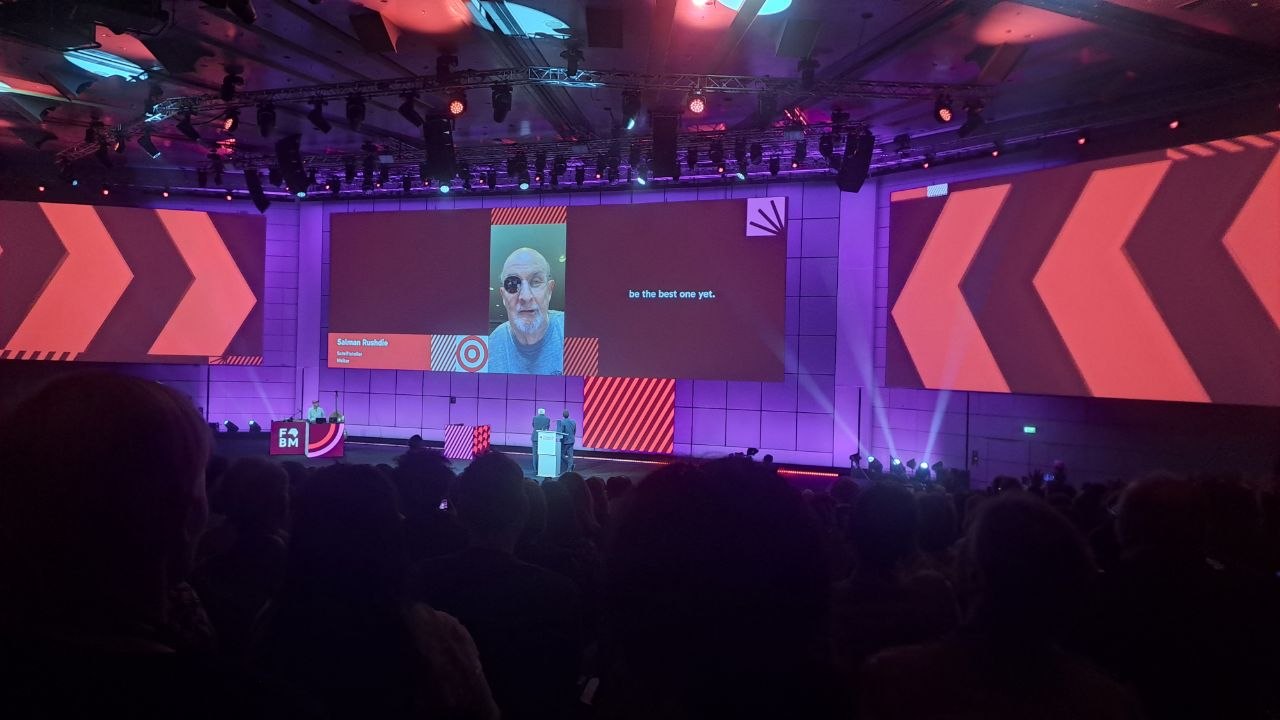
The ceremony concluded with video addresses from Booker Prize-winning writer and longtime advocate for freedom of expression Salman Rushdie and novelist Elif Shafak. Both thanked Boos, saying that the Frankfurt Book Fair was difficult to imagine without him.
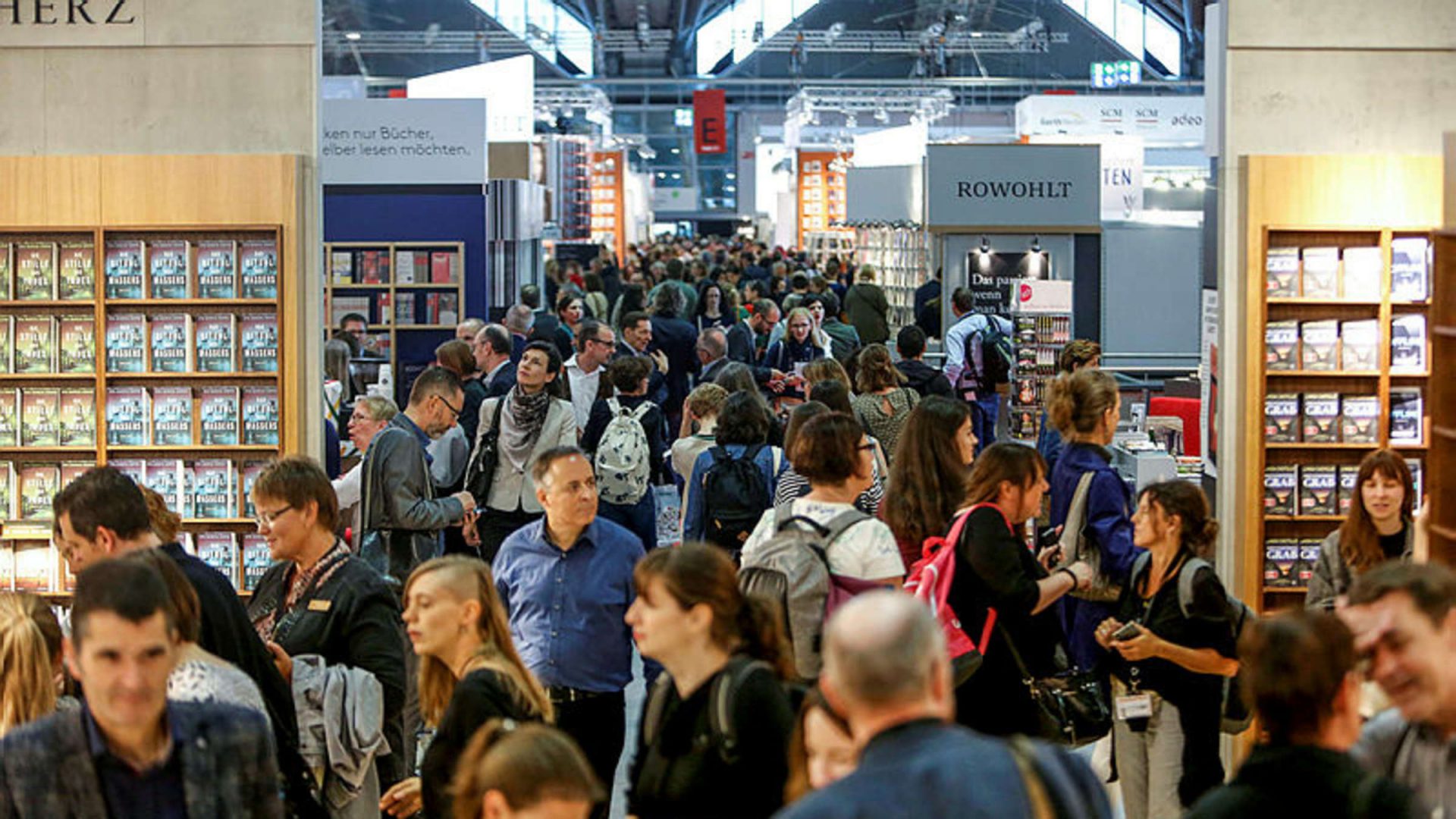
The Frankfurt Book Fair is one of the world’s most important professional exhibitions in the field of book publishing, as well as an important forum of cultural and political significance in Germany and globally. As one of the leading business events in the global book industry, the Frankfurt Book Fair serves as a key platform for presenting and discussing international publishing trends. It is a hub for networking, partnership building, and sharing expertise – especially in exploring innovative business models within the book and media sectors. It will run from Oct. 7–11, 2026.
Czechia’s guest of honor presentation, “Czechia: A Country on the Coast,” refers to William Shakespeare’s “The Winter’s Tale,” in which Bohemia is depicted as having a coastline. The imaginary coastline serves as a metaphor for Czech literature’s connection to the wider world.
As reported earlier, Czechia was presented as the 2026 guest of honor during the 2025 Frankfurt Book Fair. The program seeks to expand the presence of Czech authors in the German-speaking market, increase the visibility of Czech literature in the English-, French-, and Spanish-speaking markets, support translators, and strengthen the international profile of Czech culture. The presentation also marked the launch of the Year of Czech Culture 2025–2026, which runs through December 2026 across Germany, Austria, and Switzerland.
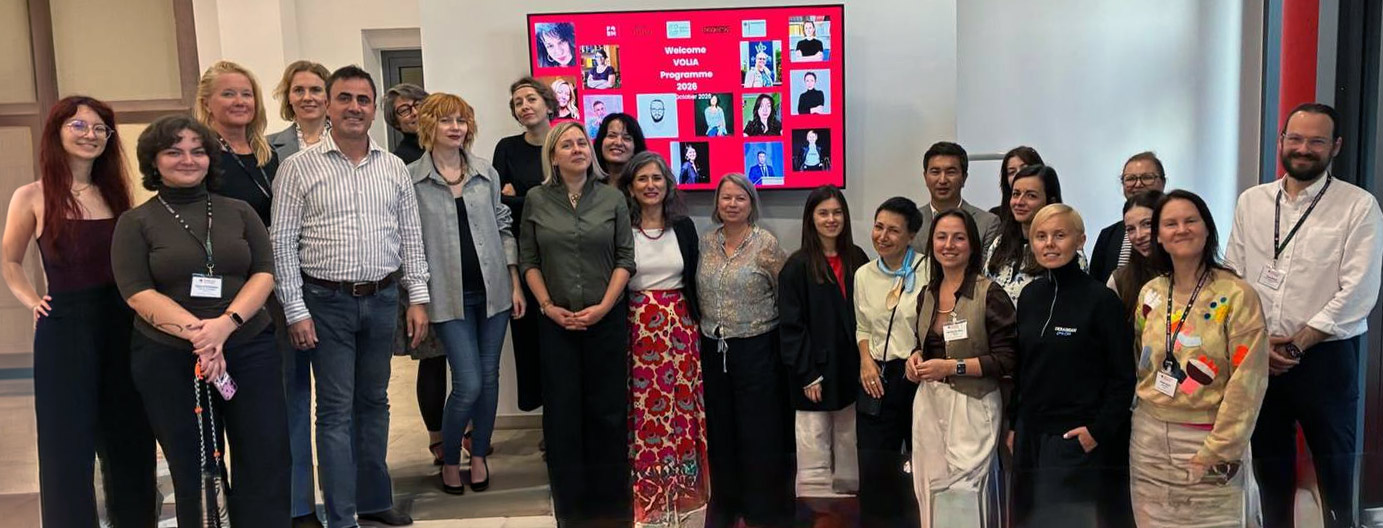
As reported earlier, publishing professionals from Ukraine, Lithuania, Poland, Latvia, Czechia, Estonia, Kazakhstan, Romania, Georgia, Bulgaria, and Hungary gathered in Frankfurt for the fifth edition of Volia – Special Programme for Publishers from Ukraine and Neighbouring Countries. This year’s discussions focus on cultural identity and agency, sustainable publishing, international rights, and the challenge of reaching readers amid the growth of AI-generated content.
Main image: Iryna Baturevych
Читомо» — це медіа про книжки й літературу, що підтримувало українське книговидання задовго до того, як це стало трендом. Ставайте частиною історії — доєднуйтеся до Клубу Читомо!
the more you read, the greater the possibilities