* ESC - close the search window
learning Ukrainian
From solidarity to literature: Why people around the world are learning Ukrainian
02.11.2026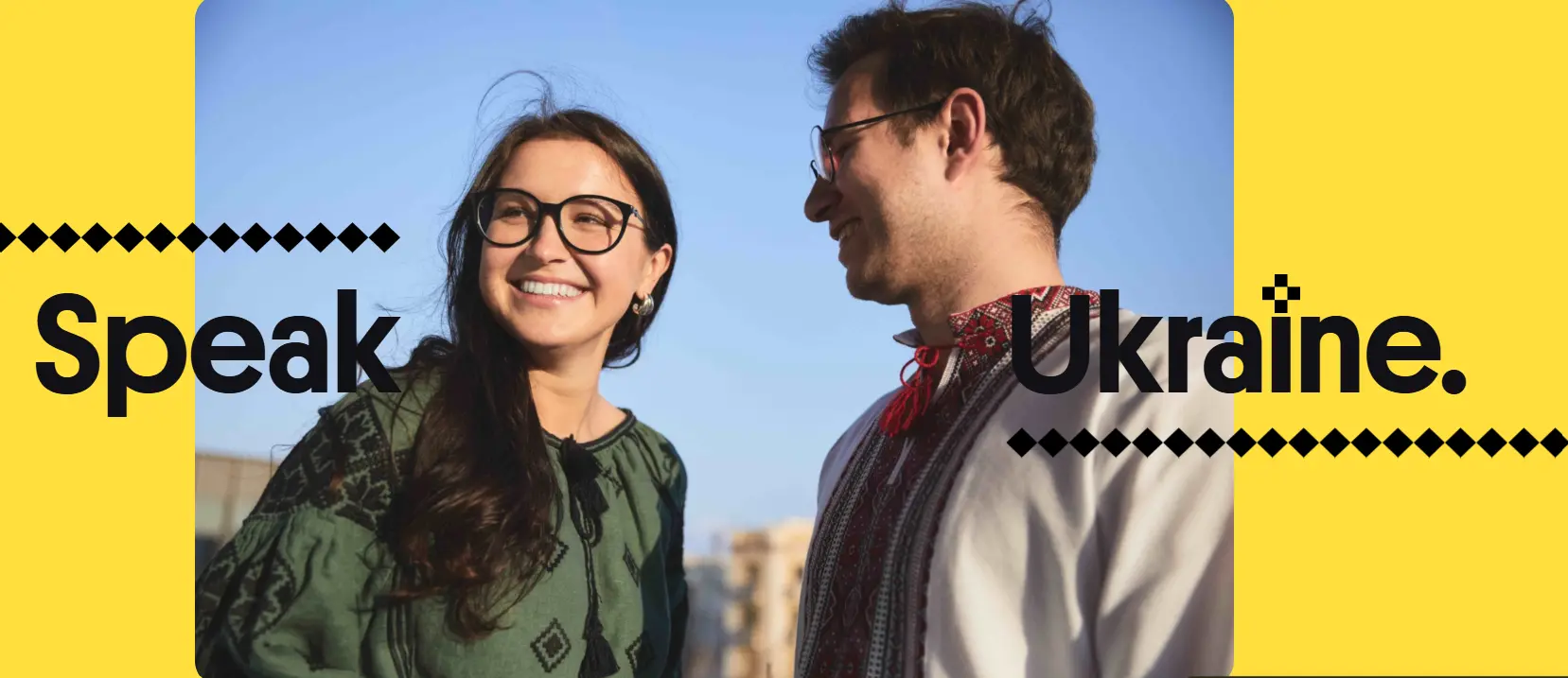
Nearly three-quarters of respondents to an international survey began learning Ukrainian in 2022 or later, according to findings released by the Ukrainian-founded language-learning platform Preply. The survey of 1,038 learners highlights how Russia’s war against Ukraine, personal relationships, family heritage, and an interest in Ukrainian culture have shaped people’s connections to the language.
The findings, shared with Suspilne Culture to mark Ukrainian Language and Literacy Day on Oct. 27, show that 51% of respondents cited personal ties to Ukrainians, including relatives, friends, or partners, as a reason for studying the language. Another 32% mentioned Russia’s war, solidarity with Ukraine, or a desire to help displaced Ukrainians and volunteer, while 18% cited an interest in Ukrainian culture, particularly music and literature. Preply noted that not everyone who began learning Ukrainian in 2022 or later did so directly because of Russia’s full-scale invasion.
For one Canadian respondent, learning Ukrainian meant recovering a language that had gradually disappeared from his family after earlier generations emigrated from Ukraine. His grandfather is now the only relative who still speaks it fluently.
“I want to reconnect with my cultural roots and preserve the language,” he explained.
An American married to a Ukrainian woman began studying the language to better understand his wife’s culture and communicate with her family. For a Polish respondent, the motivation came from meeting Ukrainians who had fled Russia’s invasion. Seeing them make the effort to learn Polish, he wanted to communicate with them in their own language, particularly with older family members who did not speak Polish.
“I thought that if they are learning Polish and speaking to me in Polish, it would only be fair if I could also communicate with them in Ukrainian. Besides, I want to speak with their parents, who don’t know Polish,” he said.
For others, language learning became part of their humanitarian work. A Swiss respondent who helps Ukrainian refugees in his community began studying the language to communicate more easily with refugees who struggle to speak German.
An Australian respondent began studying Ukrainian after joining a community that sends postcards to Ukrainian soldiers. She wanted to write messages to them in their native language. A German participant described learning Ukrainian as a way to support Ukrainians defending themselves against Russian aggression. Some respondents also said they had previously studied Russian, or had intended to, but decided to learn Ukrainian instead after the full-scale invasion began.
Ukrainian culture has also inspired people with no previous personal connection to the country. One German respondent, who had listened to Ukrainian music for years, finally decided to study the language after hearing Jerry Heil’s song “Snih” (“Snow”). He now particularly enjoys exploring Ukrainian song lyrics and poetry, discovering meanings and nuances that translations cannot always fully convey. Another German participant wanted to read Ukrainian books in their original language, especially works that had not yet been translated into other languages.
Despite their different motivations, many learners reported similar difficulties. Grammar was the greatest challenge for 58% of respondents, particularly the Ukrainian case system, changing word endings, and verb forms. Another 25% identified pronunciation as a major difficulty, citing unfamiliar sounds and word stress.
Those unfamiliar with Slavic languages also struggled with Cyrillic, memorizing vocabulary, and finding opportunities to practice. A 75-year-old American volunteer who teaches English to Ukrainians said learning new words and grammar had become more difficult with age, although speaking Ukrainian remained especially rewarding. A Swedish respondent who regularly travels to Ukraine for work described finding satisfaction even in small achievements, such as reading a restaurant menu in Ukrainian without assistance.
The survey also asked learners to name their favorite Ukrainian words and expressions. Among the recurring answers were mriia (“dream”), volia (“freedom” or “will”), kokhannia (“romantic love”), and diakuiu (“thank you”). Other favorites included zatyshok (“coziness”), svitanok (“dawn”), metelyk (“butterfly”), blyskavka (“lightning”), zirochka (“little star”), and bozhevilnyi (“crazy”).
One German respondent particularly liked pereborshchyty, meaning “to overdo it.” The word contains borshch, the name of Ukraine’s traditional beetroot soup. A Swedish participant selected domashnie zavdannia (“homework”), while a Mexican respondent chose a person’s name rather than a word: Marta. He explained that Marta was the Ukrainian woman who had introduced him to the country’s culture, traditions, and history.
For another German learner, however, the most meaningful Ukrainian expression was closely connected to the realities of Russia’s war. He chose “U nas use dobre. My zhyvi, zdorovi” (“We are all right. We are alive and well”) — the message he hopes to receive each morning from friends in Kyiv following overnight Russian attacks.
“Every day, I hope to read this message again,” he wrote. He first began learning Ukrainian in 1991, when he spent a summer in the country, and returned to his studies after Russia launched its full-scale invasion in 2022.
The largest numbers of survey responses came from the United States, Germany, and the United Kingdom. Participants also came from Poland, Sweden, Canada, Australia, France, Japan, and other countries.
As reported earlier, research by the Ukrainian Institute identified more than 160 centers of Ukrainian and Crimean Tatar studies across 30 countries in 2023, reflecting broader international academic interest in Ukraine’s language and culture following Russia’s full-scale invasion.
Chytomo also previously interviewed seven foreigners learning Ukrainian in 2024. Among them was Chilean poet and translator Bastian Pezzopane, who became interested in learning Ukrainian after hearing Ukrainian poetry, and American journalist Alison Rochford, who said studying the language had transformed her understanding of Ukrainian history and culture.
Preply is an international online language-learning platform founded by Ukrainians that connects students with tutors around the world.
Main image: Anna Ohoiko
Читомо» — це медіа про книжки й літературу, що підтримувало українське книговидання задовго до того, як це стало трендом. Ставайте частиною історії — доєднуйтеся до Клубу Читомо!
the more you read, the greater the possibilities

2946
book industry in times of war
Growth that we can’t handle: Results of a survey on human resources in the Ukrainian book market influenced by the war
19.12.2024 - Chytomo