* ESC - close the search window
BOOK AWARD
Myroslav Laiuk’s “Lists” becomes first Ukrainian-language winner of Canada’s Peterson Literary Prize
23.11.2026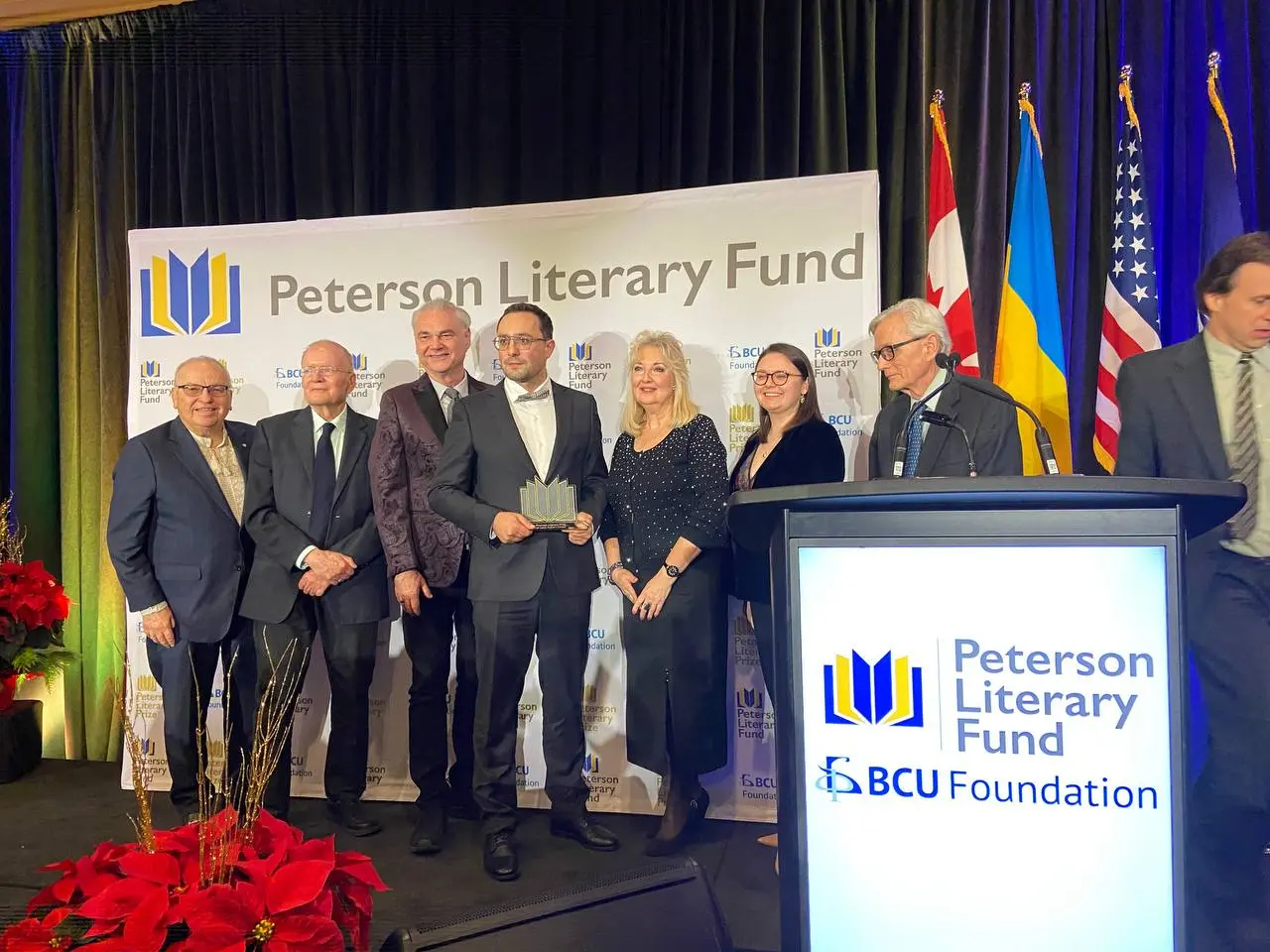
You see an error in the text - select the fragment and press Ctrl + Enter
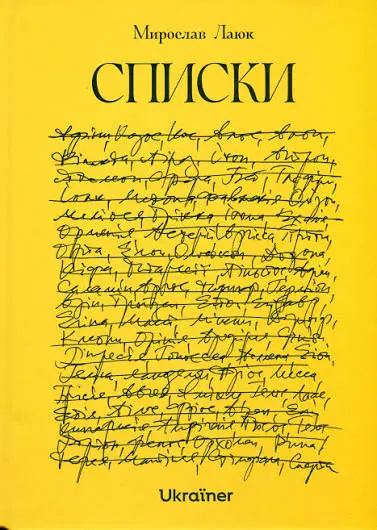
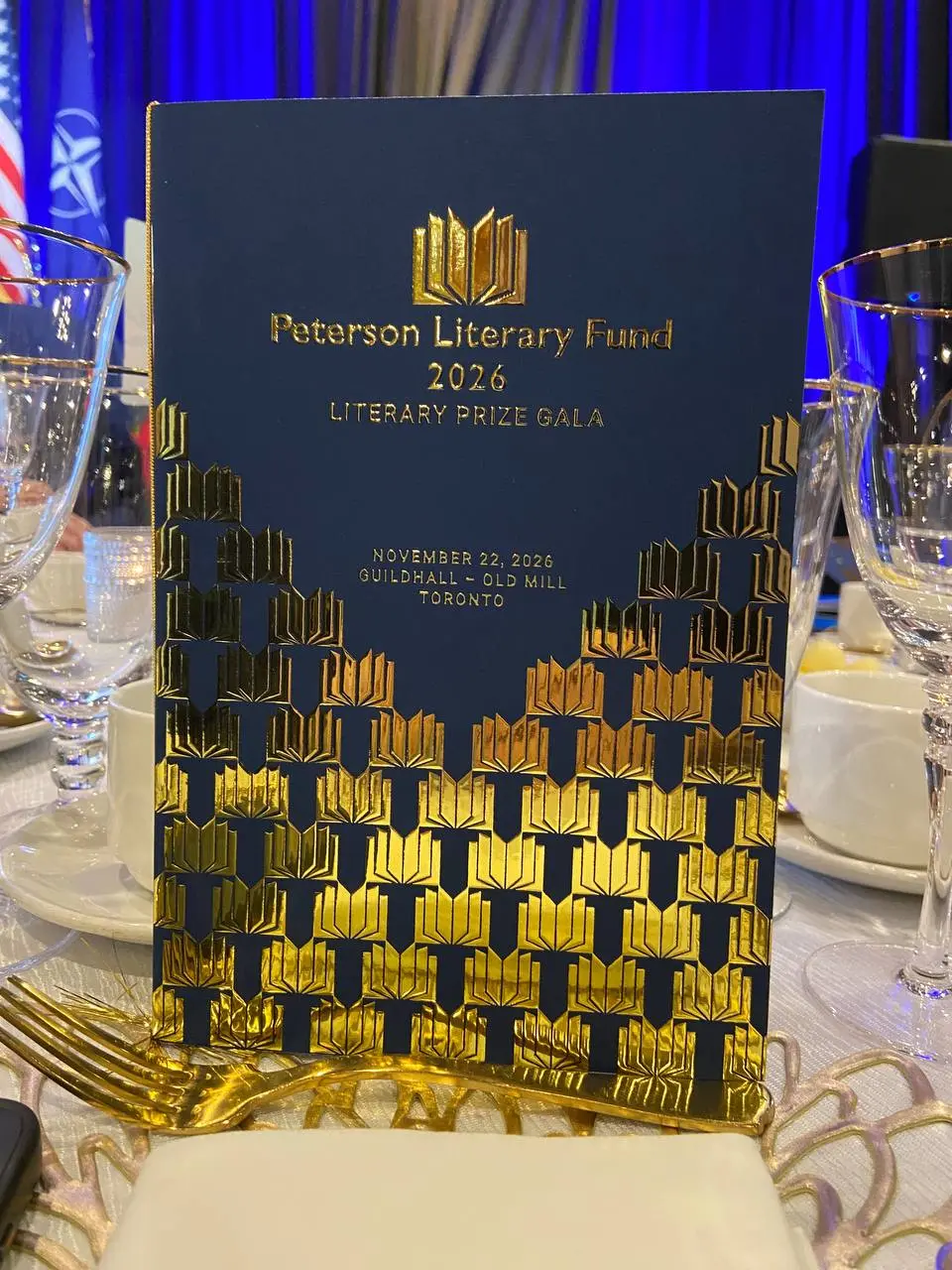
Ukrainian writer and war documentarian Myroslav Laiuk received the 2026 Peterson Literary Prize for “Списки” (“Lists”), published by Ukraїner Publishing House in 2025. The winner was announced Nov. 22 during an awards ceremony in Toronto, Canada, as reported by a Chytomo correspondent attending the event. The Peterson Literary Fund also pledged to support the book’s translation into English and its widest possible distribution.
This marks the first time in the fund’s six-year history that the Peterson Literary Prize has been awarded to a book written in Ukrainian. Following Laiuk’s acceptance speech, a fund representative said the jury considered the book’s message universally relevant.
“Lists” is a collection of reportage and essays about loss during Russia’s war against Ukraine, exploring what people value and why. The book brings together testimonies and reflections on flooded Kherson, devastated Pokrovsk, the Russian attack on Kyiv’s Okhmatdyt children’s hospital, and the damaged Derzhprom building in Kharkiv. It documents the loss of homes, loved ones, childhood, body parts, eyesight, sleep, and memory — experiences that cannot be undone but must be spoken about.
The grand prize is worth 30,000 Canadian dollars (about 20,900 US dollars). Laiuk will receive 25,000 Canadian dollars (about 17,400 US dollars), while Ukraїner Publishing House will receive an additional 5,000 Canadian dollars (about 3,500 US dollars).
In his acceptance speech, Laiuk thanked the Peterson Literary Fund, the jury, his publisher, and the people who had agreed to share their experiences with him during the war. Referring to the Latin saying Inter arma silent Musae, he questioned whether the silence of the muses during war should also mean the silence of those who witness it.
“If the muses have fallen silent, does it mean we have to stop speaking too? Are we supposed to keep our mouths shut?” Laiuk asked.
Before Russia’s full-scale invasion, Laiuk said, he had written poetry because he considered it language at its highest.
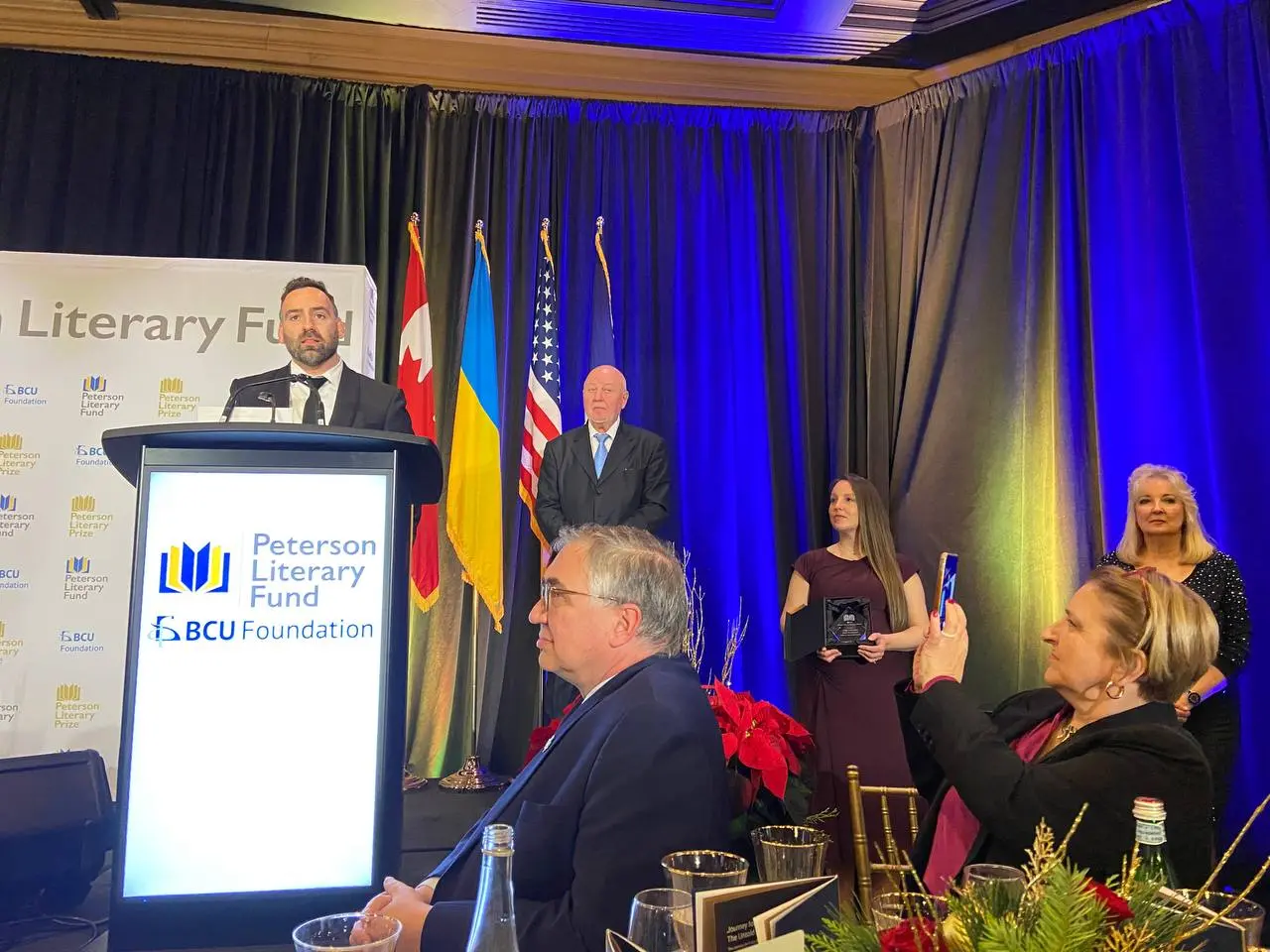
“But these days, what comes close to that height of poetry for me is often a person’s story faithfully told,” Laiuk said.
During a visit to Kramatorsk in the Donetsk region in late summer 2026, Laiuk described a city increasingly covered by anti-drone netting. He recalled a soldier who said he was afraid of the sound of birds beating their wings because it reminded him of a drone. While sheltering from drones, Laiuk met a 23-year-old man named Stepan, who had returned from Kyiv to his hometown for just one day. Stepan had come to say goodbye to Kramatorsk, fearing he might be seeing the city for the last time.
Laiuk also recalled visiting a small cafe in nearby Druzhkivka, where a Ukrainian flag covered with soldiers’ signatures hung on the wall. Five soldiers had stopped for coffee and signed the flag before heading to their positions. A few days later, only one returned.
“He stood in front of the flag for a long time, reading those names. He read the names, and he read the names, and he read the names. That’s where I find poetry now. Those names are what you hear when the muses fall silent,” Laiuk said.
Addressing the Canadian audience, Laiuk also spoke about the challenges Kyiv could face during the coming winter:
“I want to thank Canada for standing by Ukraine. Ukraine is fighting for its life and its freedom, for the right of people like Stepan to live in their own cities. Even in a few days, I will go back to Kyiv. More and more often now I see in Kyiv what I’ve seen in cities along the front. This winter, my city may find itself without heat, without light, without water. But I hope not without your support,” he said.
Laiuk concluded by returning to the theme of language and the responsibility to preserve memory during war. “The muses may fall silent, but not without words,” he said.
American political scientist, Stanford University professor, and former U.S. ambassador to Russia Michael McFaul was the guest of honor at the awards ceremony and delivered the keynote address. McFaul is the author of “Autocrats vs. Democrats: China, Russia, America, and the New Global Disorder.”
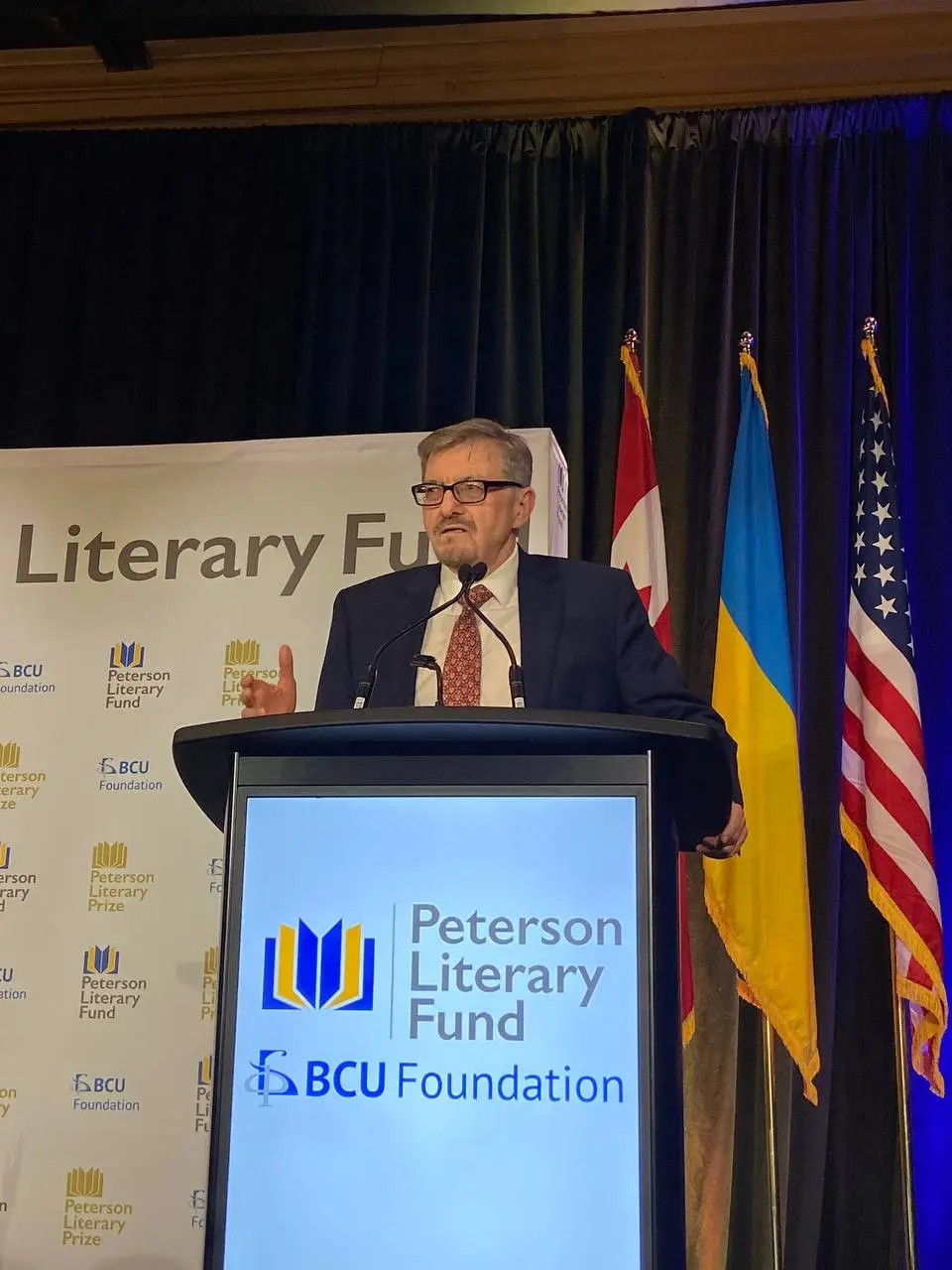
During his speech, McFaul explained that he had come for two reasons: because he believes in the importance of books and because he wanted to apologize. “I’m sorry. As an American, I’m shocked how poorly my president understands the allies,” he said.
McFaul also drew attention to the limited number of university departments dedicated to Ukrainian studies. As a professor of international relations at Stanford University, he said he regarded this shortage as evidence of how little effort was being devoted to researching and understanding the truth.
Lisa Shymko, chief administrator of the Peterson Literary Fund and chair of the awards jury, also addressed Russia’s attacks on Ukrainian cultural institutions and efforts to restrict access to information about the war.
“And inside Russia, Putin has doubled down on blocking access to information that exposes the realities of his unjustified war. Earlier this year, the Russian government even went so far as to block the Peterson Literary Fund website to prevent internet users inside Russia from accessing it and the books and authors we support,” Shymko said.
She also emphasized the importance of supporting writers, journalists, translators, and publishers in countering disinformation and preserving historical memory.
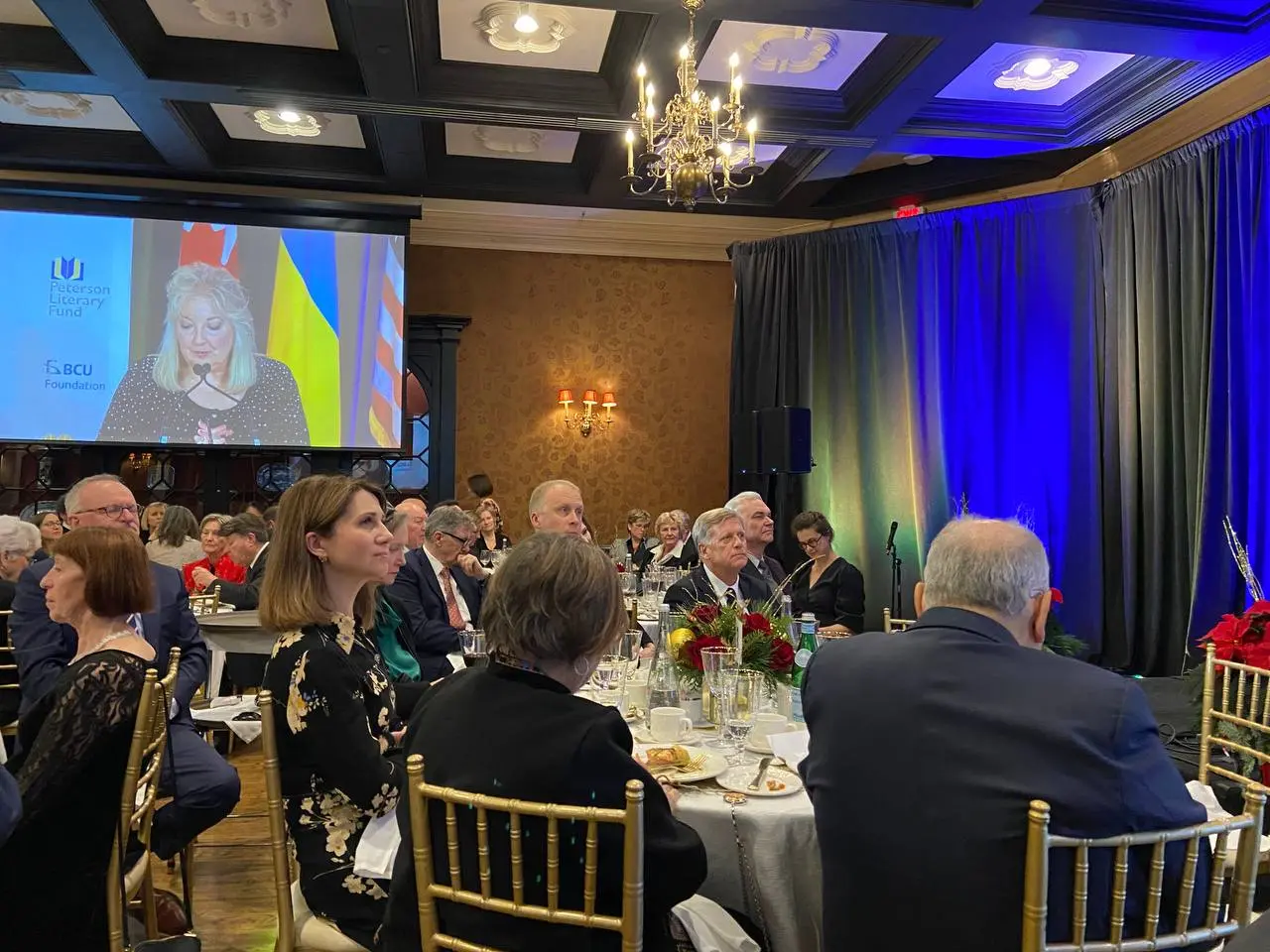
“We believe that the Peterson Literary Fund is particularly relevant in an era when disinformation has become a weapon of war deployed by the Kremlin to erode support for Ukraine and weaken the Euro-Atlantic Alliance. Journalists, writers, translators, and publishers stand on the front lines of this struggle, helping to safeguard truth, preserve historical memory, and foster an informed public discourse,” she said.
Shymko also announced the fund’s new Global Voices program, an initiative supporting authors, translators, publishers, information platforms, and institutions whose projects align with the fund’s mission.
Following the Toronto ceremony, Laiuk is scheduled to travel to Montreal for the 49th Salon du livre de Montréal, which runs Nov. 25–29. As reported earlier, he will hold a signing session on Nov. 26, presenting “Lists” and “Bakhmut” as part of Ukraine’s expanded national program.
Five nonfiction books written in Ukrainian or English were shortlisted for the 2026 Peterson Literary Prize. The finalists were:
- Myroslav Laiuk — “Списки” (“Lists”), published by Ukraїner Publishing House, Ukraine;
- Oleksandr Mykhed and Pavlo Mykhed — “Живі. Зрозуміти українську літературу” (“The Living. Understanding Ukrainian Literature”), published by Old Lion Publishing House, Ukraine;
- Serhii Plokhy — “David and Goliath: Commentaries on the Russo-Ukrainian War,” published by Harvard Ukrainian Research Institute, United States;
- Anton Shekhovtsov (editor) — “Russia against Ukraine: Russian Political Mythology and the War on Ukrainian Identity,” published by Ibidem Press, Germany;
- Filip Slaveski and Yuri Shapoval — “Stalin’s Liquidation Game: The Unlikely Case of Oleksandr Shums’kyi, His Survival in Soviet Prison, and His Subsequent Arcane Assassination,” published by Harvard Ukrainian Research Institute, United States.
Each shortlisted finalist will also receive 5,000 Canadian dollars (about 3,500 US dollars).
The winner was selected by a jury comprising Lisa Shymko, who served as chair, Nadia Gereliouk, John Jaworsky, Alexander Motyl, and Marko R. Stech.
Myroslav Laiuk is a Ukrainian writer, poet, war documentarian, journalist, and lecturer at the National University of Kyiv-Mohyla Academy. His works include the poetry collections “Осоте!” and “Метрофобія,” the novels “Баборня” and “Залізна вода,” and the nonfiction books “Бахмут” (“Bakhmut”) and “Списки” (“Lists”).
Published by Ukraїner in 2023, “Bakhmut” draws on Laiuk’s visits to the city during some of the fiercest fighting of Russia’s war in Ukraine. The book received the Yurii Shevelov Prize in 2024, was shortlisted for the Peterson Literary Prize that year, and was shortlisted for Poland’s Ryszard Kapuściński Award in 2026, which recognizes outstanding literary reportage.
In 2025, “Lists” was included among Ukrainian PEN’s selection of the year’s best Ukrainian books and won the BBC News Ukraine Book of the Year award in the Essays category. In November 2026, Laiuk also received the Joseph Conrad-Korzeniowski Literary Award, established by the Polish Institute in Kyiv.
The Peterson Literary Fund Translated Book Award has been presented every two years since 2021. It recognizes recently published translations of fiction and nonfiction into and from Ukrainian. The program particularly encourages translations from English and French into Ukrainian, as well as translations from Ukrainian into those languages. It supports literary works and translations of interest to Ukrainian communities worldwide, prioritizing projects that appeal to a broad readership. Its awards recognize books that contribute to a better understanding of Ukraine and its people or address subjects relevant to the global Ukrainian community.
The fund operates several programs, including the main Peterson Literary Prize, awards for translated books, and grants for writers and translators. It was established by Canadian philanthropist of Ukrainian descent Stanley Peterson to provide international literary awards and grants. The fund operates under the auspices of the Toronto-based BCU Foundation, a Canadian charitable organization supporting educational and humanitarian initiatives.
In September 2025, the Ukrainian translation of “Failed State: A Guide to Russia’s Rupture” by British-born writer, political scientist, and scholar Janusz Bugajski received a Peterson Literary Fund Translated Book Award. The Ukrainian edition, titled “Неспроможна держава,” was published by ARC.UA in 2024.
Ukrainian writer, political scientist, and Hospitallers paramedic Kateryna Zarembo’s “Ukrainian Sunrise: Stories of the Donetsk and Luhansk Regions from the Early 2000s” also received an award for best translation. The English edition was translated by Tetyana Savchynska and published by Academic Studies Press in 2024.
As reported earlier, the fund also recognized five translated books in 2023. The grand prize went to the Turkish translation of Paul Robert Magocsi’s “Ukraine: An Illustrated History,” translated by Maryna Kravets, Victor Ostapchuk, and Murat Yaşar.
Photos: Iryna Baturevych
Читомо» — це медіа про книжки й літературу, що підтримувало українське книговидання задовго до того, як це стало трендом. Ставайте частиною історії — доєднуйтеся до Клубу Читомо!