* ESC - close the search window
reading habits
Reading declines in Slovakia and Slovenia, reports show
28.07.2026
Two reports published in 2026 point to weakening reading habits in Slovakia and Slovenia. In Slovakia, non-readers now account for 43% of the population, matching the combined share of the groups classified by researchers as “real” readers. In Slovenia, the intensity of book reading is declining, with the same trend also observed among young people.
The Slovak findings appear in the report “Čítanie a knihy na Slovensku v 2026” (“Reading and Books in Slovakia in 2026”), prepared by the research agency 2muse for the Slovak Association of Publishers and Booksellers. The research continues a series of surveys conducted in 2024 and 2025.
In 2026, 43% of the Slovak population were classified as non-readers, while 14% were occasional readers. The remaining 43% belonged to four groups collectively described in the report as “real” readers: sporadic, average, frequent readers, and “bookworms.”
The report defines non-readers as people who read no books during the year and have no interest in reading more. Occasional readers read no more than two books annually and would prefer to spend even less time reading and devote it to other activities.
The three-year comparison shows a continuing decline in the share of “real” readers. In 2024, this category accounted for 53% of the population, while 11% were occasional readers and 36% were non-readers. In 2025, the respective shares were 46%, 17%, and 36%. In 2026, they reached 43%, 14%, and 43%. The report describes the development as a negative trend in reading in Slovakia.
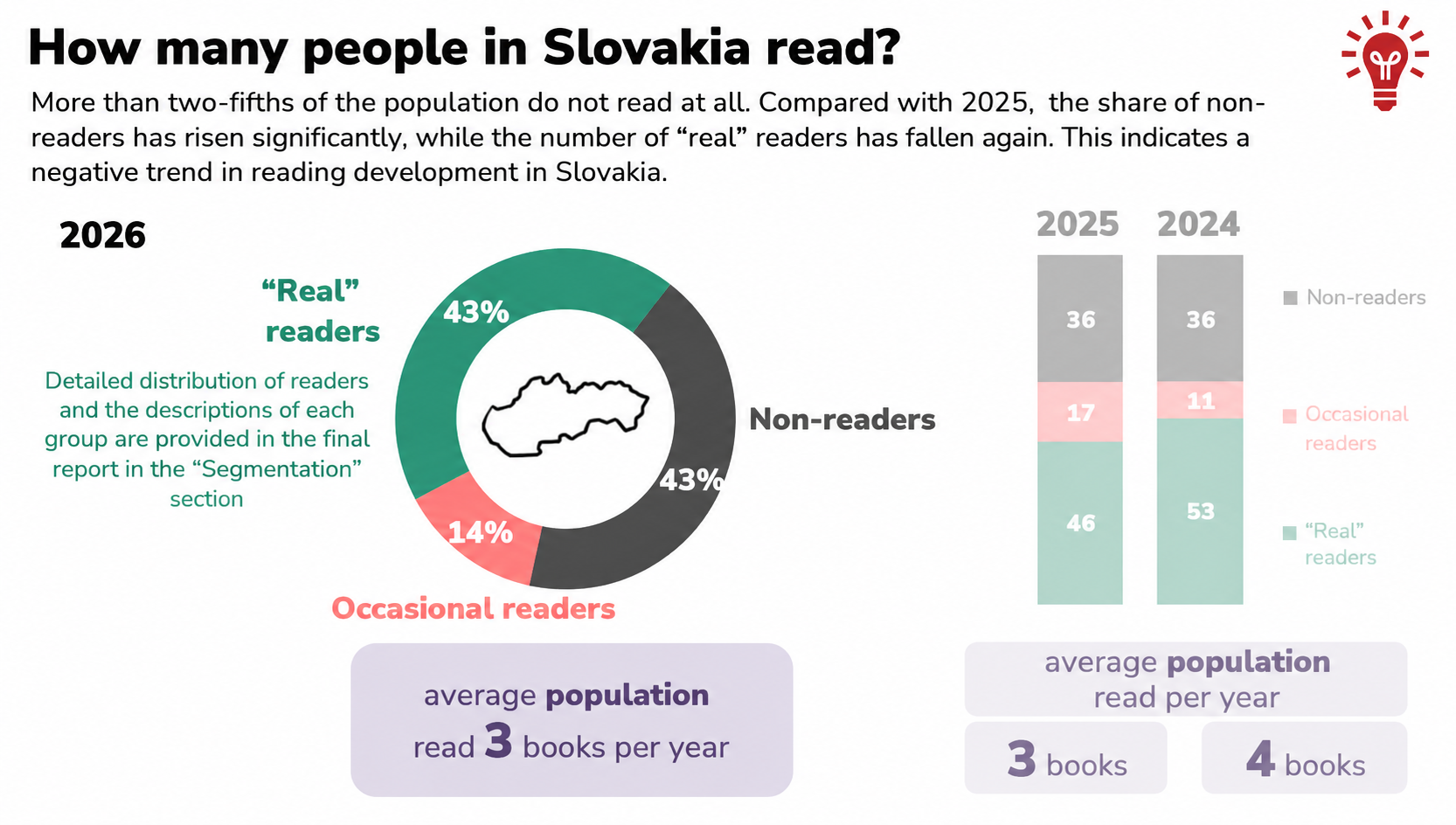
Image: “Reading and Books in Slovakia in 2026” final report, 2muse / Association of Publishers and Booksellers of Slovakia.
The share of “real” readers therefore fell by 10 percentage points between 2024 and 2026, while the proportion of non-readers rose by 7 percentage points. The researchers also recorded a movement of occasional and sporadic readers into the non-reader group.
Slovakia’s population read an average of three books in 2026. The average was also three books in 2025, compared with four in 2024. The report also indicates that people are reading less frequently and becoming less likely to plan to devote more time to books.
Books continue to compete with other leisure activities, particularly listening to music and using social media. Respondents reported spending more time on social networks each day than in the previous survey. According to the researchers, declining interest in reading is reflected both in people’s assessment of their current habits and in their future plans.
Among the 518 respondents who read books at least occasionally, 60% said they read fiction. Educational and professional literature followed at 49%, while 40% read biographical books. Books about health and lifestyle were read by 32%, travel books by 29%, and books about hobbies and leisure by 28%.
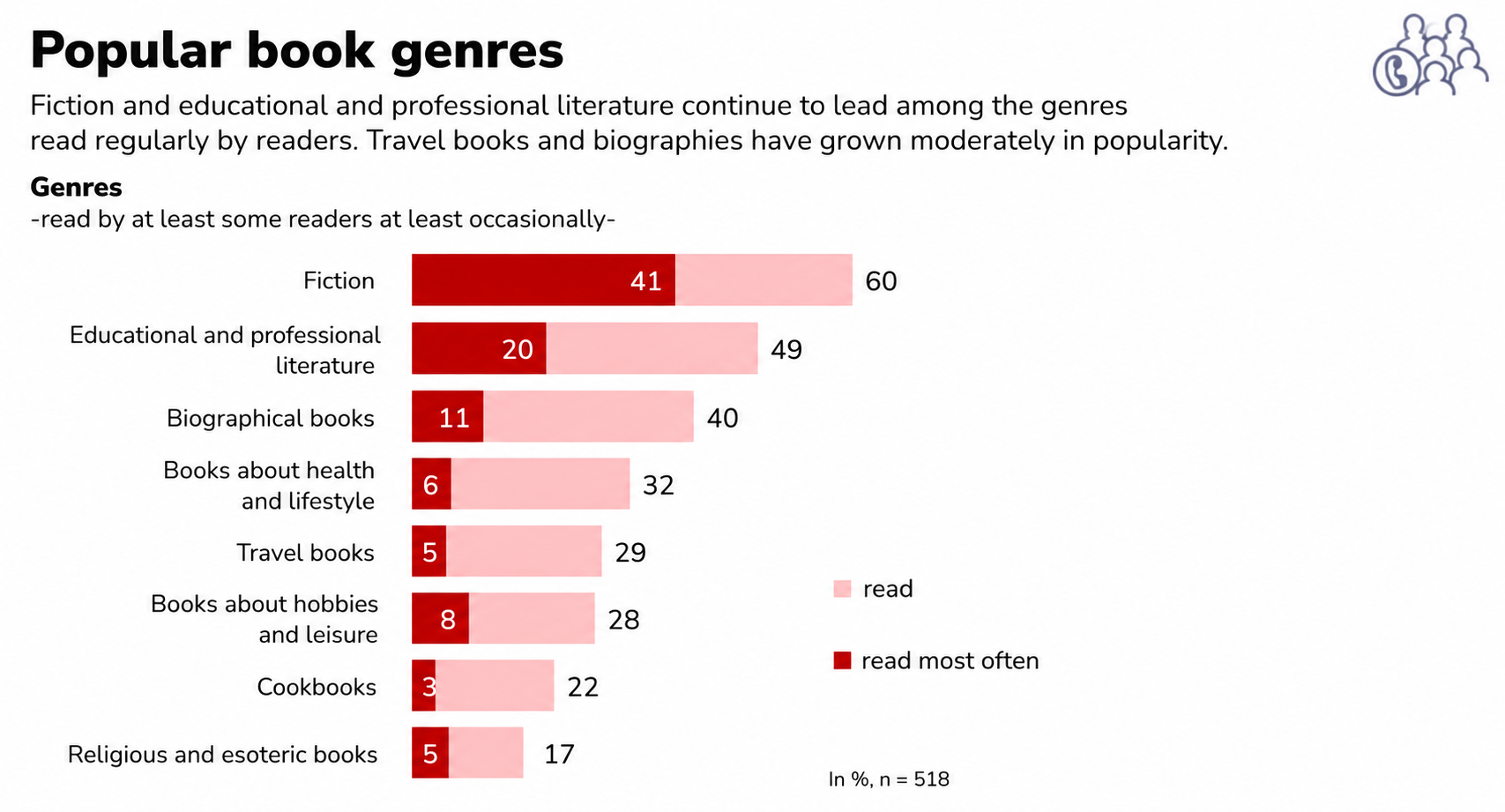
Image: “Reading and Books in Slovakia in 2026” final report, 2muse / Association of Publishers and Booksellers of Slovakia.
Book purchasing also declined. Among respondents who generally buy books, 74% said they had bought at least one during the previous 12 months. The corresponding share was 82% in 2025 and 81% in 2024. The report also recorded declining visits to both physical and online bookstores and a fall in the number of people certain that they would buy books during the following year.
The Slovak study covered residents aged 15 and older and used two separate representative samples. The researchers conducted telephone interviews with 613 respondents from May 6 to June 1, 2026, and surveyed 827 Slovak internet users online from May 12 to 19. The samples used quotas based on gender, age, education, region, and the size of respondents’ place of residence.
A similar trend appears in Slovenia’s “Quality of Life in Slovenia – Development Report 2026,” published by the country’s Institute of Macroeconomic Analysis and Development in May 2026. The report states that the share of people reading books was above the EU average in 2022 and that access to books was relatively good. However, reading intensity has been declining, primarily because of a lack of interest, and the same tendency is visible among young people.
The Slovenian report also notes that people read fewer books on average than in 2019 and that fewer people report reading every day. These findings draw on the 2024 national study “Knjiga in bralci VII” (“Books and Readers VII”).
As reported earlier, declining engagement with reading is also affecting book markets in other countries. In Japan, 39% of bookstores operated at a loss in the 2025 financial year, while the country’s book market contracted by approximately 20% over a decade. Declining interest in reading, particularly among young people, was among the factors identified by researchers.
In Ukraine, a 2026 survey found that four out of five respondents said that they had read at least one book during the previous year. Thirty-five percent claimed to have read one or two books, 20% – three or four, and 25% – five or more. The online survey, conducted by Research.ua from Dec. 22, 2025, to Jan. 7, 2026, involved 2,000 urban residents aged 18–55 from across Ukraine, excluding temporarily occupied territories.
Main image: pexels
Читомо» — це медіа про книжки й літературу, що підтримувало українське книговидання задовго до того, як це стало трендом. Ставайте частиною історії — доєднуйтеся до Клубу Читомо!