* ESC - close the search window
Meridian Czernowitz
The point of no return — A review of Artem Chekh’s ‘We Weren’t Expecting You’
19.11.2026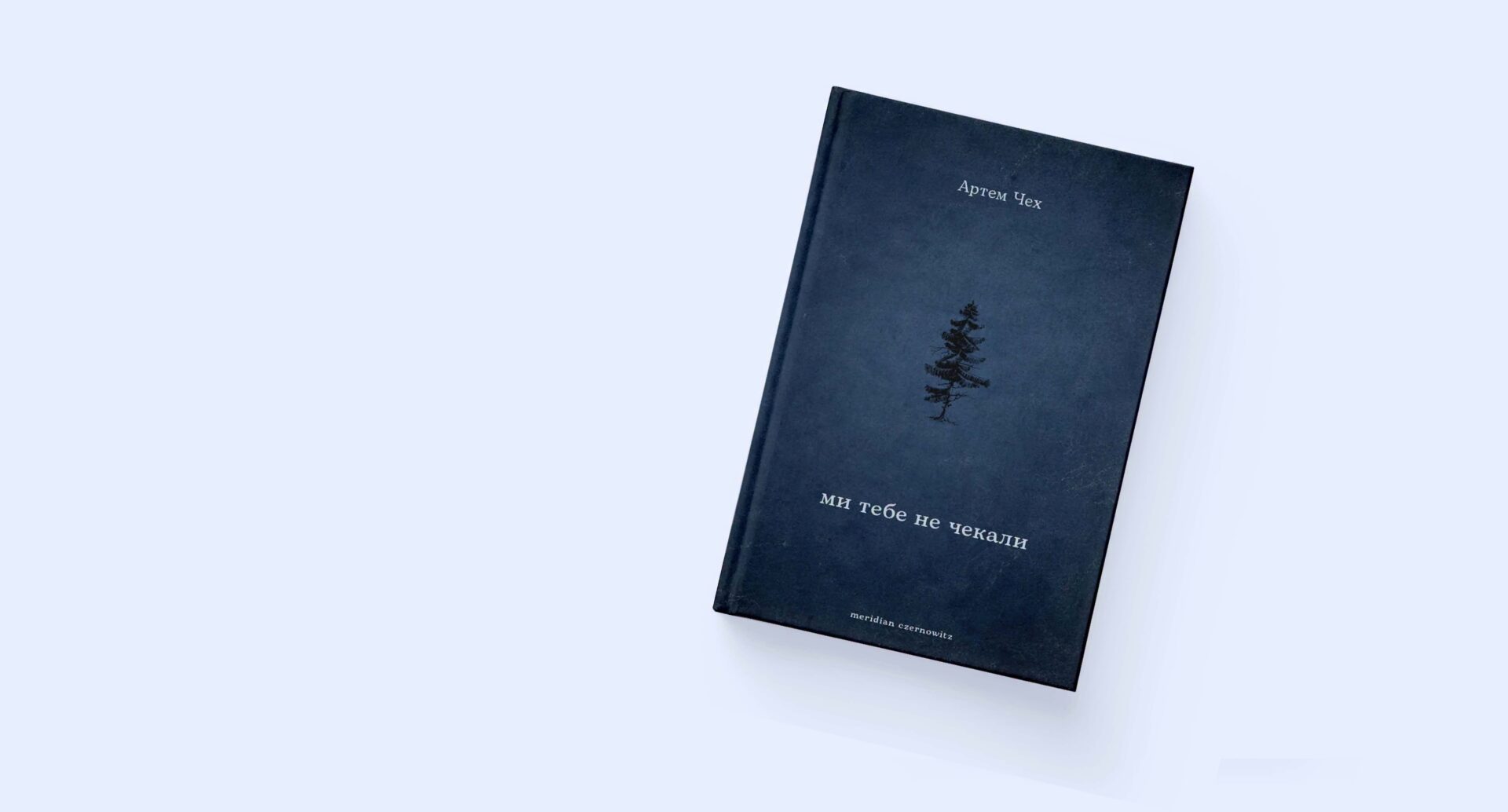

You see an error in the text - select the fragment and press Ctrl + Enter
What if one could attend their own funeral? That is the kind of fantasy that crosses many people’s minds, but there’s hardly anyone who could actually do it. Ivan Trush, not the Lviv-based artist, but a soldier character from Artem Chekh’s new novel, has a serious intention of going to watch his funeral. It is a real temptation to watch who will cry, who will be insincere, and how his wife will act.
But you can’t attend your own funeral without consequences.
“We Weren’t Expecting You” (Meridian Czernowitz, 2026) is the story of a soldier who was a sculptor in his civilian life. After he was wounded and taken captive, Trush returns to Kyiv only to discover that he has been mistakenly declared dead. Rather than proving he is not dead, Trush wanders through Podil like a ghost, visiting places important to him, recalling episodes from his life, and making almost no contact with anyone. Trush and a ghost have more in common than it might seem, and his ghostly existence in a civilian city reveals the chasm between the person who went to war and the one who returned. Trush believes no one is waiting for him.
The point of no return
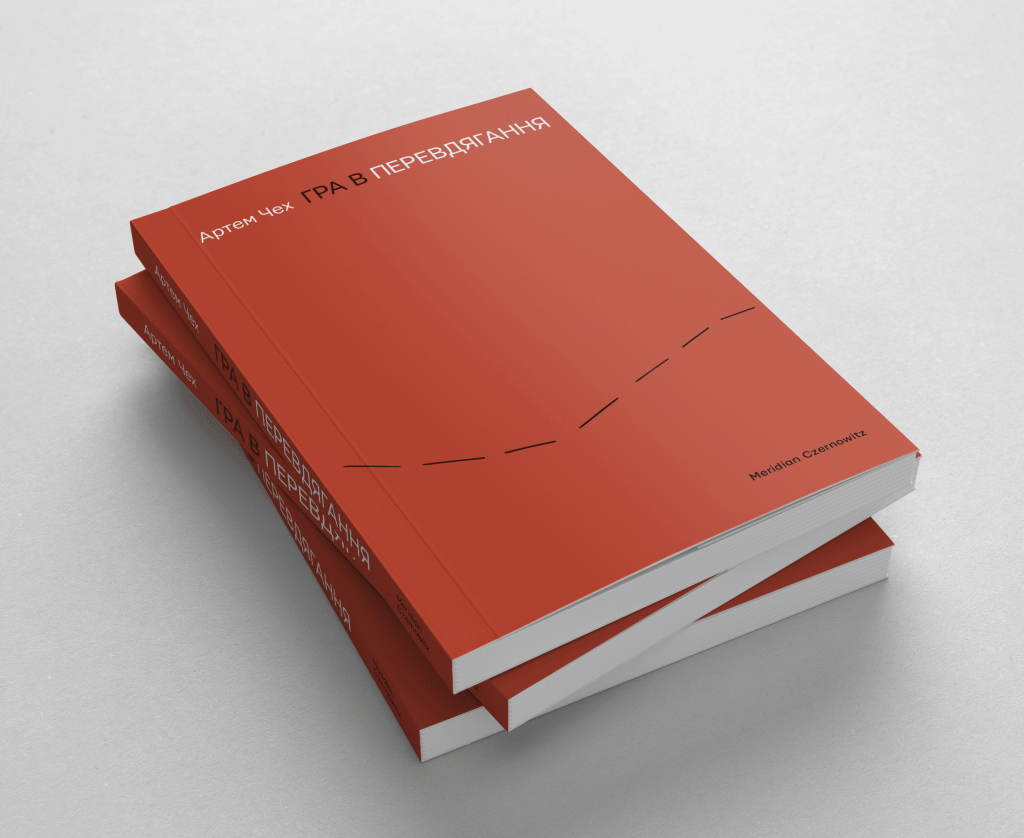
Let’s go back a few years and page through Chekh’s two recent books. Two essay collections, “Absolute Zero” and “Dress-Up Game,” chronicle the author’s wartime experiences and are separated by a gulf that reflects the difference between a life lived in wartime before and after the full-scale invasion. In the same way, this gulf lies between his two other novels, “Rock, Paper, Grenade” (the original Ukrainian title is “Who Are You?”) and “We Weren’t Expecting You,” titles of which make for a pretty good sentence, as Chekh and the book’s editor Oleksandr Boichenko joked at the Book Arsenal. This irony draws a thread between the two main characters. “Rock, Paper, Grenade” looks back on growing up in the 1990s while presenting a fascinating, broken, and deeply complex protagonist, Felix, who is traumatized by the Afghan War. Disoriented by his own experiences, he tries to engage with the world and find his place in it. On the other hand, Trush refuses to return to that world, but not only because nobody was expecting him. Part of him died there, below the front-line city, along with his comrades, his empathy, and his ability to feel.
During an earlier phase of the war, Ukrainian literature began addressing the idea of not returning to life. The image of death as a point of no return echoes Volodymyr Rafeyenko’s novel “The Long Times,” published in 2017, in which Rafeyenko depicts occupied Donetsk, which in the book takes on the characteristics of a phantasmagorical afterlife. To pass between the afterlife and the normal world, one must die. It is a multifaceted and evocative image in which one can see both literal death, which can happen to a person at DNR checkpoints, and, more broadly, the acknowledgment of the death of one’s entire past that was destroyed when Russia first invaded Ukraine in 2014.
Rafeyenko centers attention on his traumatic experience of leaving his hometown and the broader plight of displaced people, but Chekh addresses the theme of soldiers’ mental (non)return from war. As mentioned before, this theme has grown increasingly common in Ukrainian literature. Military service transforms the professional and social circles of hundreds of thousands of people, but also perceptions of reality, ways of communication, sensitivities — and, as Chekh’s protagonist ironically notes, even the hierarchy of needs. They return as strangers, completely different people, and not the ones who were expected.
Chekh’s novel starts at the front, within an altered system of perception of reality and needs:
“Trush dove into the trench, cursed, and shifted the act of defecation higher up in the hierarchy of priorities. It was now somewhere between aesthetic needs and self-actualization.”
Trush, much like a fairy-tale hero, fights his way out of the front lines through the tangled thickets of war. He crosses a minefield, endures captivity, passes the bloated body of a stranger, and says goodbye to his guide. Having closed his eyes, he first opens them on the other side of life: in a life where he has already been declared dead.
Dress-up game
Most of “We Weren’t Expecting You” takes place in Kyiv, within the historic neighborhood of Podil. Trush walks around, drinking and completely neglecting his appearance. It doesn’t occur to him to reach out to his loved ones. At the same time, there’s a hint that Kyiv is a temporary stop and that Trush will return to the war.
The barista at the coffee shop that replaced Trush’s childhood library is the person he interacts with most significantly. Despite the commotion of life in Podil, the coffee shop is never crowded, and Zoya, the barista, is always ready to listen to what Trush has to say. She is not a real person, rather a shadow, just as frozen in time as Trush. Zoya’s husband went missing in the war, and she is caught between two worlds: unable to start a new life, and unable to let go of the old one. To a certain extent, she is doing what Trush’s wife failed to do: she is waiting for her husband.
Perhaps the reason why there are never customers in the café is because they exist in another dimension, in a world with a different pace, different needs, and a different system of symbols. Trush and Zoya are drawn to each other by their traumas and their shared status as people frozen on the threshold between life and death.
She’s Penelope, the legendary wife of Odysseus and queen of Ithaca, who waited patiently. Zoya is also the name of Trush’s wife, who left him in the middle of the war.
“There used to be a library where the coffee shop is now,” Trush tells us.
There’s a certain symbolism to this, since the place he’s drawn to no longer exists. The life he’s returned to is pushing him away. His life wasn’t expecting him either.
Notably, Trush used to borrow books by Hermann Hesse from this library. Hesse’s books feature themes of duality and the transition between worlds, the move beyond the idealistic realm of ideas and intellect to real life in “The Glass Bead Game,” and the duality and loneliness of “Steppenwolf.” These themes reflect Trush’s current state of perpetual purgatorial in-betweenness. In Trush’s civilian life, he was a sculptor. His role was not merely to be an artist, but to shape the very forms of life. There was something in his work reminiscent of an artisan-like or craftsman-like figure responsible for shaping and maintaining the physical universe, a demiurge who creates this world with his own hands.
This is in stark contrast to his role as a soldier, who has no authority at all. As the last groups retreat from the city, Trush recognizes the catastrophic nature of the situation, but never tries to decide for himself to leave his position because no order was given. At war, Trush transforms and puts on a different mask. Here, too, the theme of disguise and the eerie carnival that Chekh began exploring in his essays comes to the fore. Interestingly, in the world of war, Trush would have to lose his name and receive a call sign instead. Yet people continue to address him as Trush. Perhaps in this way, Chekh gives us hope that Trush might return to civilian life?
Afterlife
Trush has often been referred to by book reviewers as an Odysseus who wasn’t seen returning to Ithaca. Judging by the novel’s structure, it is not a story about returning home. It begins and ends with war, a world from which Trush departs and to which he returns. In his frame of reference, Kyiv and civilian life no longer felt like home. They are temporary, desolate lands through which the ghosts of Trush’s former life wander. He no longer belongs to this world. He does not follow its rules, nor lives according to its rhythm.
Trush’s stay in Kyiv resembles the ordeal of a spirit, as it recalls all the difficult and significant stages of its life. Trush looks at the house of his youth, where he was given paintings by Alla Horska, visits the site of the library from his childhood, and, finally, sets out on a journey to the symbolic head of his family — his grandfather. Trush moves from place to place and among people, trying to find where he belongs.
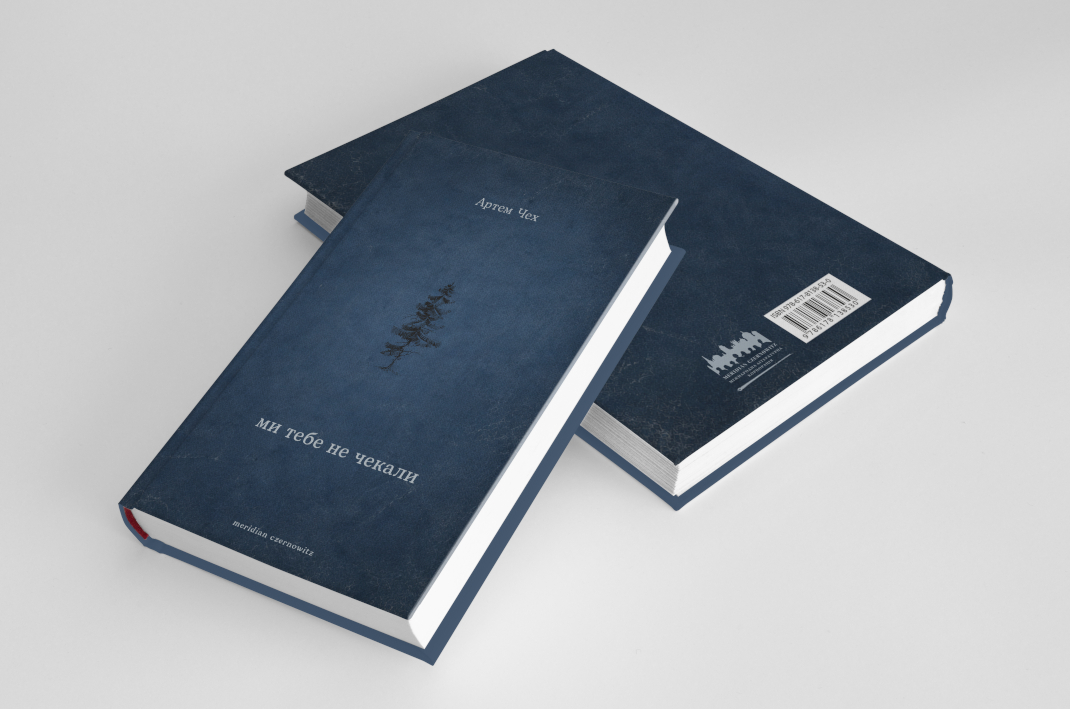
Naturally, we notice an image of the pine tree featured on the book cover. This is a subtle allusion to the connection between the novel’s protagonist and the real-life artist Ivan Trush, who painted solitary pine trees in landscapes where they would not naturally grow. In the novel, Trush resembles that solitary pine in the middle of the steppe on the front lines. They were waiting for him there, but that’s not where he was meant to be. It is interesting that Trush also mentions pines when he visits his grandfather, searching for understanding and a place to belong, while questioning whether he should stay in that space.
“Could it be that my future is here, with my grandfather?” he found himself thinking.
“Amid these forests of pines and endless meadows? Just sit here, keep quiet, drink bitter tea so as not to breach the boundaries of asceticism, perfect yourself in self-denial, and let your entire past go to hell while you savor the moment.”
The encounters and conversations with people in this book can be viewed not so much as dialogues with mere mortals, but rather as conversations with divine guides, symbolic figures, or ghosts just as lost in life as Trush. Who is he talking to after all? With the guard of his workshop, a lonely barista, and his grandfather. That is, Trush addresses the guardian between worlds, Persephone, and the head of the family — like the most iconic folklore hero and traditional painting motif in Ukrainian culture Cossack Mamai — who sits on the fringes of the world and offers words of wisdom to his troubled grandson. Trush moves among lonely characters frozen on the outskirts of life.
Look-alikes
Trush’s arrival at his funeral is the climax point of the novel. He wants to see which friends will turn up, what they’ll wear, who will cry and who won’t, and how his wife will behave.
Attending one’s own funeral depends on personal taste, but such plots have been plentiful in literature. They have often appeared as a companion element to the theme of duality. The most famous example in Ukrainian literature is Ivan Franko’s “The Funeral,” where the protagonist commits a betrayal and then attends the funeral of the hero, who is revealed to be himself. Franko’s character undergoes a split.
In the lead-up to the funeral scene, Trush looks back on every important moment of his life. By way of the funeral, he at last bids farewell to his earlier life, but one question remains: which part of Trush is dying? Trush the soldier or Trush the sculptor? The one who crossed minefields and endured all the hardships of the front lines? The one who shaped the world with his own hands, only to mold it into a miserable place?
RELATED: ‘The Hamlet Called America’: when the margins unexpectedly became the center
Translation: Iryna Savyuk
Copyediting: Terra King
Читомо» — це медіа про книжки й літературу, що підтримувало українське книговидання задовго до того, як це стало трендом. Ставайте частиною історії — доєднуйтеся до Клубу Читомо!
the more you read, the greater the possibilities
1184
The Dress-Up Game
Why does a soldier need music? Review of Artem Chekh’s ‘The Dress-Up Game’
04.11.2025 - Oleksandra Melezhyk
303
Chytomo Picks
Seven Stories Press will publish Artem Chekh’s novel ‘Rock, Paper, Grenade’ in the USA
17.09.2024 -