* ESC - close the search window
literary festival
Underground community: How literary evenings are held in Kramatorsk
14.02.2026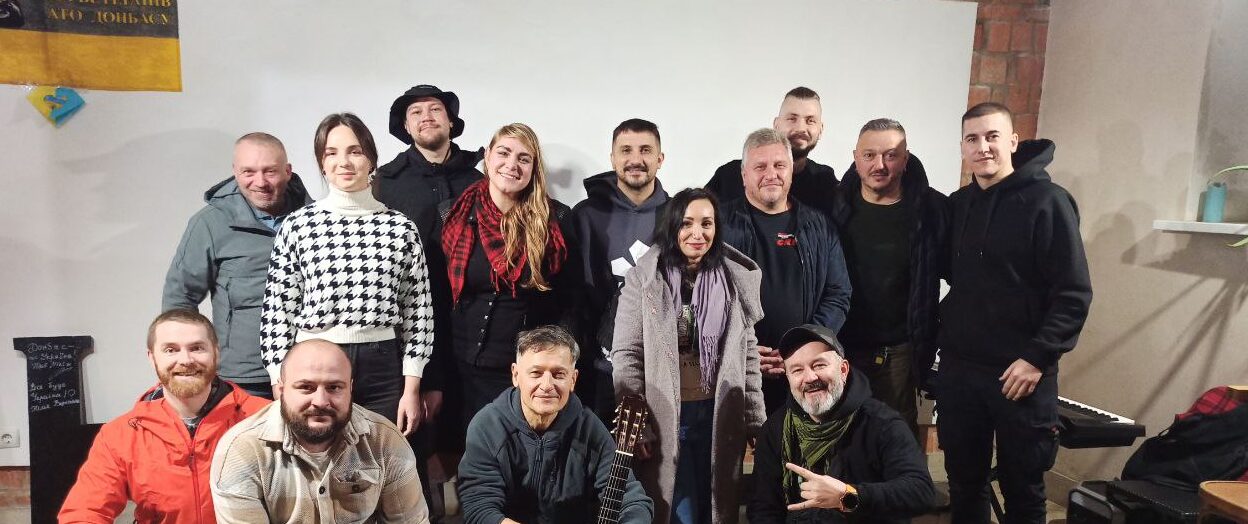
You see an error in the text - select the fragment and press Ctrl + Enter
Kramatorsk is now widely spoken about by all Ukrainians. This town is located extremely close to the front line, and mentions of it in the news feeds have long become familiar to us, for obvious reasons. That doesn’t mean nothing is happening there. Cultural life is in demand everywhere – even in places like Kramatorsk, where people want to see writers and artists and engage themselves in creative processes.
Fedir Rudyi, writer and military officer, recounts how he and his comrades met the cultural needs of Kramatorsk’s residents and military artists by organizing a series of events in the city.
The need to engage in culture
The idea to hold a literary event in Donetsk oblast came up last year when Serhiy Rubnikovych and I were having coffee in Kramatorsk (“Kram”). We were discussing poetry and how military authors face a significant lack of opportunities to engage in cultural and literary life. Festivals, readings, and various book presentations take place at a safe distance from the front line: in Kyiv, Lviv, or Odesa. The nearest is Kharkiv, but what about soldiers in Donbas who can’t attend interesting events? One’s only option might be to take leave, but it is difficult to fit it into a specific time frame, and those few days are so precious, there is so little time, that you have no moral right to take it away from your family and loved ones. It is extremely important for creative people to attend artistic events at least occasionally, so they can exchange energy and be inspired by the creativity of others.
We decided that we needed to gather people somehow, and Kramatorsk was the perfect spot.
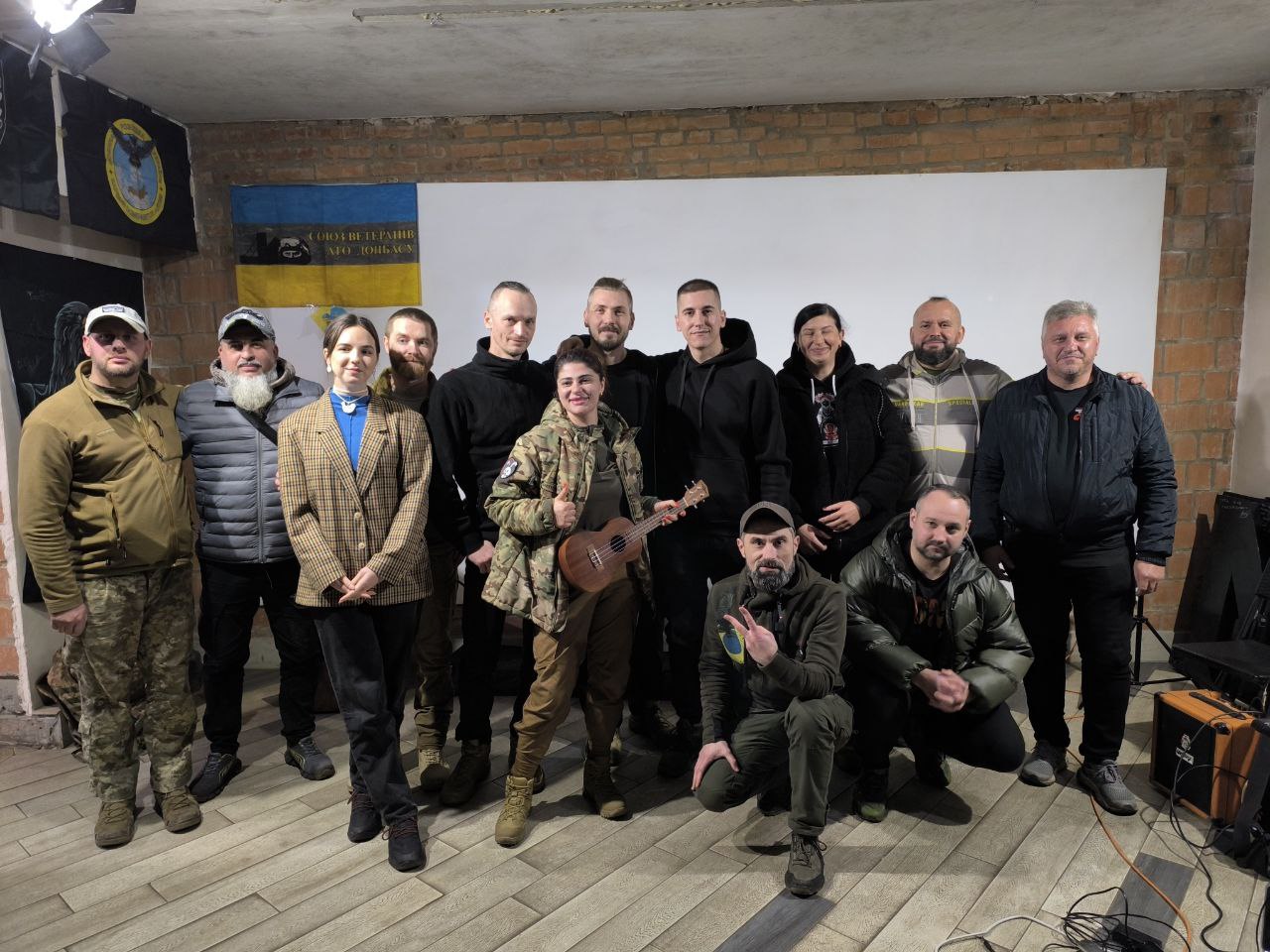
By that time, most poets who had become soldiers already knew each other, even if they had never met in person. It was a great opportunity to bring everyone together in one place, particularly in Donetsk Oblast. It proved impossible to find a time that worked for everyone, and, after several attempts, the idea was put on hold.
RELATED: Poet and soldier Liza Zharikova: Ideally, my collection should be presented while I’m still alive
Towards the end of October 2025, over a cup of coffee, I shared this concept with military officer and volunteer Serhiy Hnezdilov, and it turned out that he had also been planning to start holding cultural meetings in Kram for a long time. It was great, since he had had invaluable experience organizing Videlkafest, the largest cultural festival in southern Ukraine. The problem was that we had no clear understanding of what exactly needed to be done here or how to approach it. Still, after discussion, we chose the format and organized the event. The events unfolded quickly. We created a group chat on WhatsApp for people we knew, agreed on a venue, and came up with a name and logo.
The idea was simple: to use the acronym of the Novokramatorsk Machine-Building Plant – well known in Donetsk Oblast (and in Ukraine) as NKMP – and rephrase it as Informal Kramatorsk Art Meetings.
Serhiy selected the font and created the title design.
The first meeting was scheduled for Friday, November 7, 2025. For security reasons, the location and time were kept private and shared only in the group chat. The location was a surprise even for us, as we met in groups in different parts of the town and walked to the meeting point from there. We had even more guests and participants than we had expected: soldiers from various brigades, volunteers, local media representatives, and two foreign journalists who happened to be in Kram at that time.
From military poetry to music
The evening was planned to be based on readings of military poetry, but we also managed to attract several military personnel who had been professional musicians before joining the army. Among them were Volodymyr Vikarchuk, bandura player, who has traveled half the world with the band Shpylyasti Kobzari; Mykola Bilyk, former soloist of the Zaporizhzhia Regional Philharmonic and leader of Vse Poruch band; Mykola Korol; and others. We chose to begin with music, and it was especially meaningful that the bandura, the national musical instrument and one of the key symbols of Ukrainian culture, could be heard here in Donetsk Oblast – in the Cossack land. Now that the railway connection with Kramatorsk has been suspended, spiritual unity continues. Ukrainian songs and words echo throughout. This event is not as big as the Land of Poets festival, for instance, but it is here, on this land, that poets are fighting for the right of Ukrainian poetry to exist. It is here that every word has the highest value.
Unfortunately, not everyone was able to attend, so the texts by Serhiy Rubnikovych, Vasyl Dukhnovsky, and Max Hrabovsky were in a video recording. Live readings were given by Oleksandr Lysak from the 54th Mechanized Brigade, Maryan Berezdetsky from the 49th Separate Brigade “Carpathian Sich,” Kostyantyn Rakhmaniuk from the 56th Brigade, and Polina Kovalenko, who serves in Kramatorsk.
I recited my poem “Countdown. Hopscotch,” dedicated to fallen comrades – which, a few days earlier, had been expanded and included one more name. Everyone had the chance to read their own poems, so alongside the planned readings, we also heard from several other poets, both military and civilian.
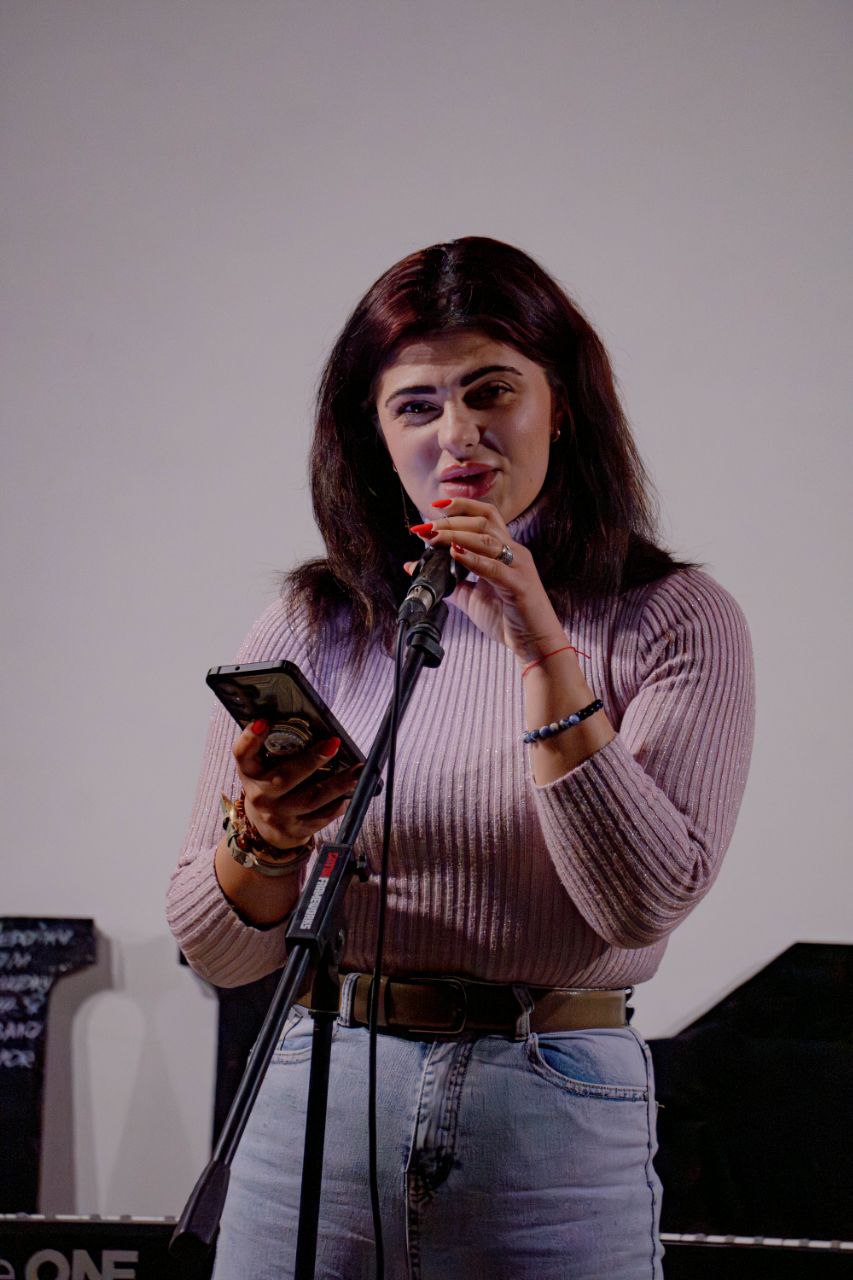
The performance of songs from across Ukraine became the highlight of the evening. People sang together Taras Petrynenko’s “Ukraine,” Volodymyr Ivasiuk’s “The Song Will Be Among Us,” Stepan Hiha’s “This Dream,” and “I Will Not Give Up Without Fighting” by Okean Elzy band. It was nice to see that this event not only brought together many creative people, but also gave everyone a powerful boost of inspiration and energy.
Not a one-night event but a creative hub
We didn’t aim to host one single event. Our goal was to create a space where these gatherings could happen regularly, and not just with poetry and music. We imagined that over time, there would be a space where people could gather on their own, without the need for organizers, since our schedules and days off don’t match up.
The perfect format for our weekly meetings was a screening of the newest Ukrainian movies, followed by a discussion and ending with a poetry session. We had a projector and screen, along with subscriptions to Megogo and Takflix.
Philip Sotnychenko’s “La Palisiada” was the first movie screened at the NKMP, and was followed by Yegor Troyanovsky’s “Cuba and Alaska,” Taras Tomenko’s “Slovo House,” and Maria Kondrakova’s “Second Wind.” There weren’t many viewers, which made the meetings feel especially informal and warm. In the end, they read poetry and listened to live music. One time, several regular participants were unable to get away from missions and tasks, so the small group there simply went to watch the film at a house party.
RELATED: Literary Fair book festival founded in Kharkiv
One day, Dmytro from the 5th Assault Unit happened to come across the film screening. He was passing by and became curious, and he turned out to be a drummer. That same evening, Dmytro was playing the cajon with the guys from Kyiv. “My Kyiv,” “Black Cherries.” Without rehearsals, right away. It’s beautiful to see the joyful sparkle in someone’s eyes when they get the chance to rediscover a long-lost passion, even if just for a brief moment. He is an active member of the community, and attends all meetings we organize.
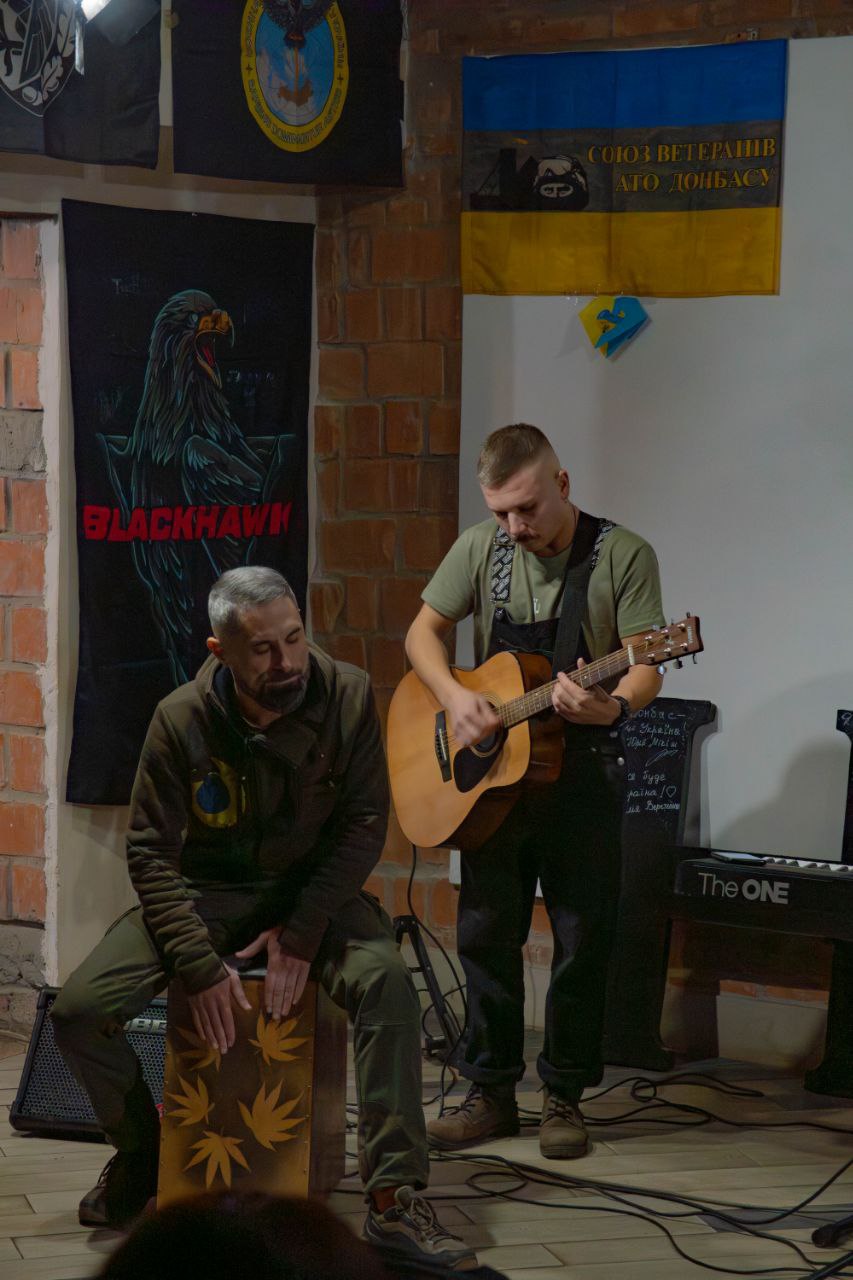
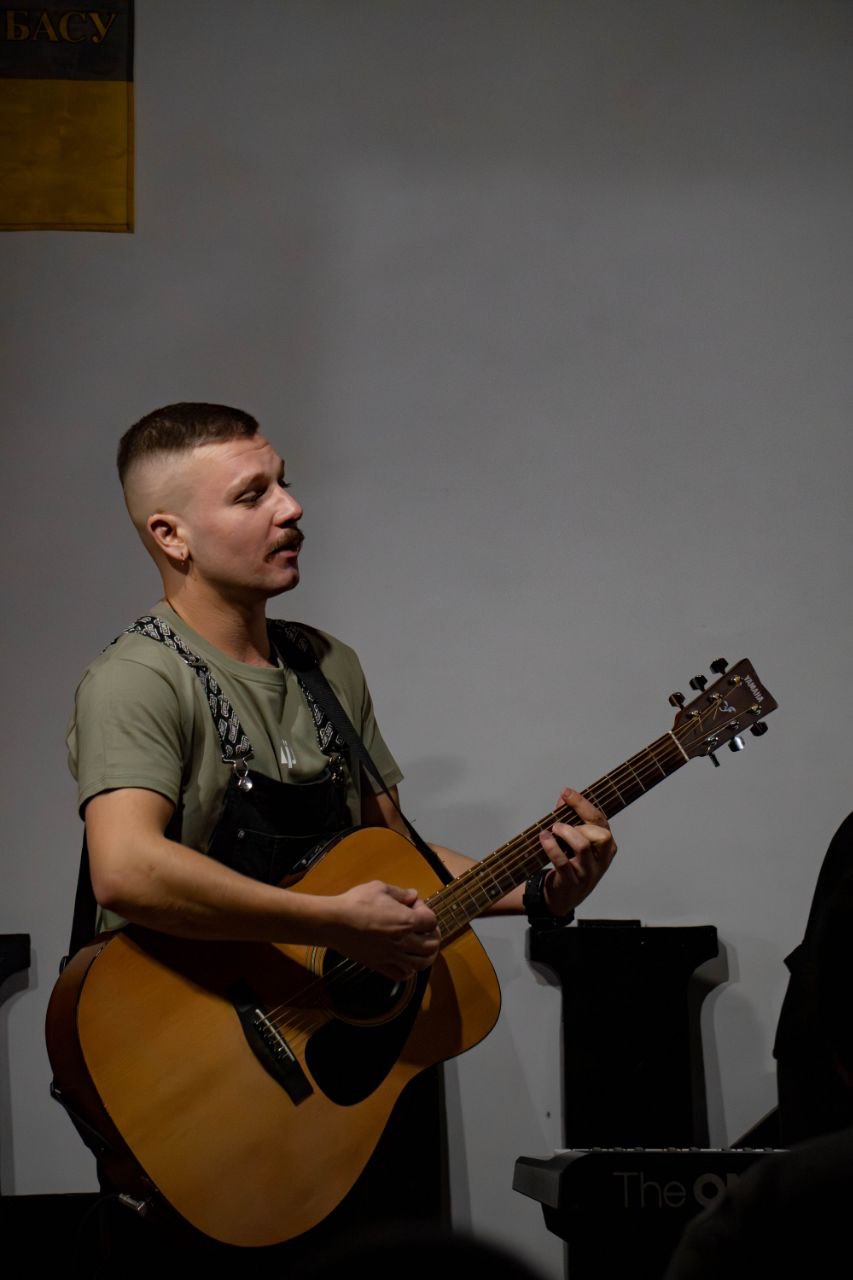
Vitaliy Zhurak came here because someone in our mutual circle told him about us. Zhurak started writing poetry at war, in the trenches, and is still learning to truly feel the word; he has great potential. I would like to discover more authors like him, help them, and support them.
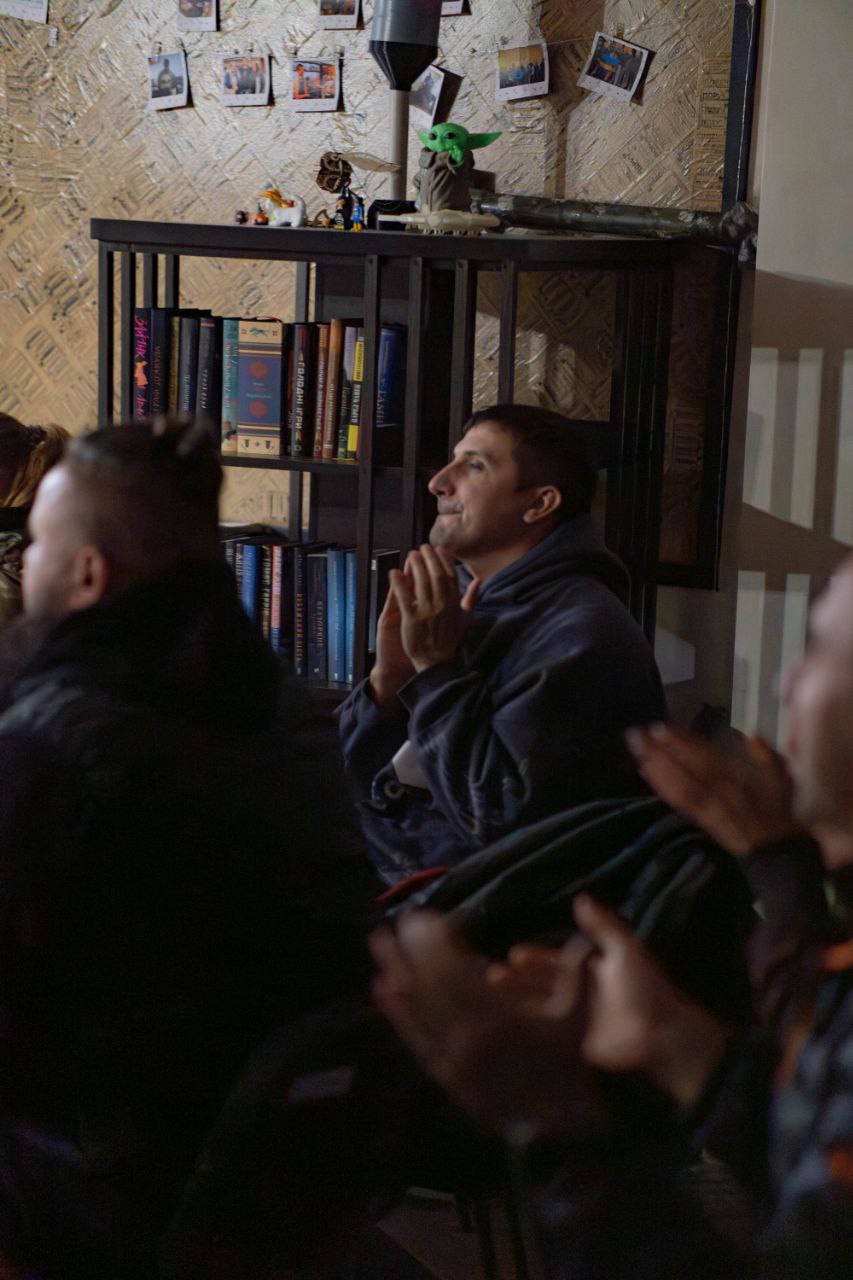
One of the most memorable events was the creative evening of musician, poet, and writer Mykola Bilshevych, call sign “Bard,” from the 100th Mechanized Brigade. Winner of the second prize at the Chervona Ruta festival and many other music competitions, Bilshevych can touch even the most hardened soldiers’ hearts with his songs. Songs about Bakhmut and fallen comrades, love, and home were almost pure poetry accompanied by guitar. The atmosphere was complemented by the lyrical compositions of Bilyk.
Underground community
Rubnikovych, the ideological co-founder of NKMP and my brother-in-arms, managed to make it out of Kharkiv Oblast to attend this meeting. It was especially important to me that his texts be heard here. At that time, the American president’s ultimatum to surrender Donbas was being widely discussed. We even joked that we might not have another opportunity to meet in Kramatorsk. This land has always belonged to us, and will remain such. It is rooted in Ukrainian history and culture and soaked in the blood of its defenders. Right now, the best of us are here, and the fact that Ukrainian art continues to be created in the trenches only confirms this.
More and more people discover NKMP with each event, and it makes me happy. We add newcomers to our group chat, and even if they can’t attend, everyone stays connected by communicating, supporting one another, and sharing their concerns. After the meetings, it’s especially rewarding to hear participants and guests say, “We’ve been missing this for a long time,” or, “We should have started earlier.” That motivates us and confirms that we’re doing the right thing. As I’ve mentioned, military authors are one big family. I hope that one day we’ll be able to gather them all together at one of our meetings.
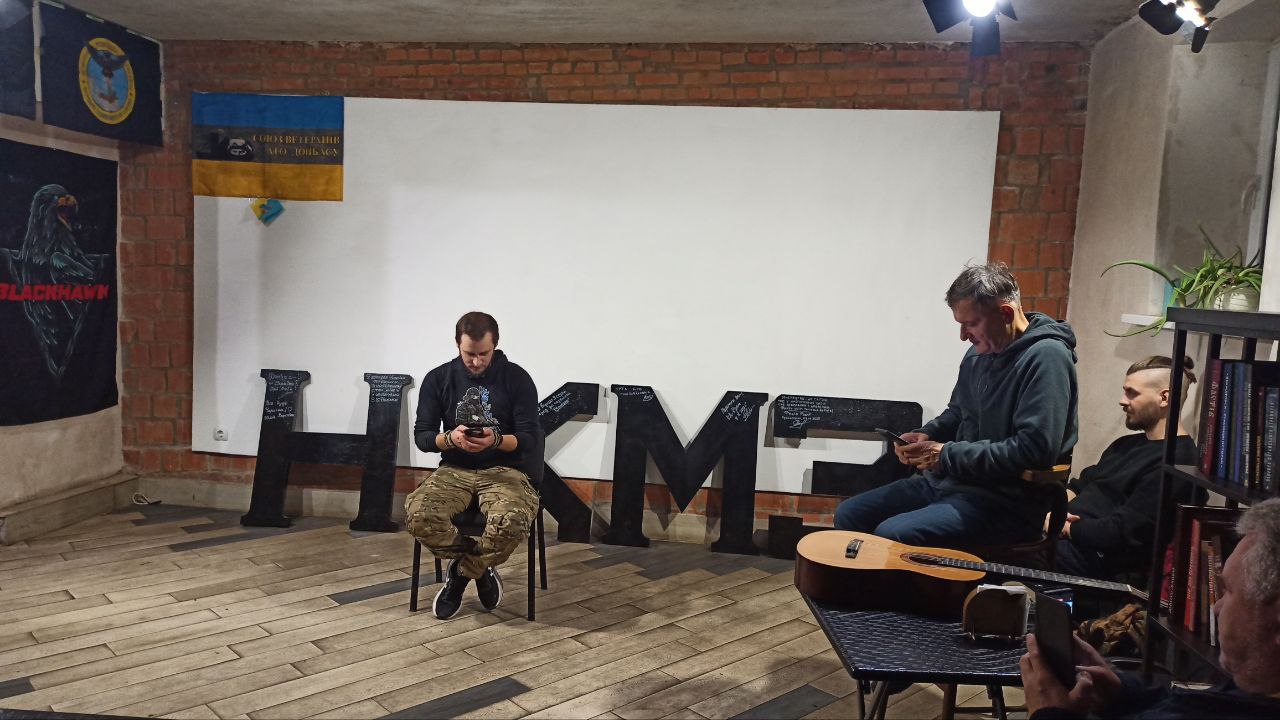
Perhaps this is the beginning of a major military cultural festival in Donetsk Oblast, with readings that will continue regularly even after the war ends.
I would like to launch a military poetry competition to support veteran authors in developing their skills, especially beginners who don’t have a literary background but feel compelled to share their experiences and emotions. There are many such people, and this war, in spite of all the pain, destruction, and loss, is also giving a powerful impulse to our literature and art.
That will happen later, if later ever comes. For now, it is a cozy underground community where one can listen to live Ukrainian music and poetry, share one’s own, watch a movie, or simply talk and exchange energy. It is a place where you’re among friends.
RELATED: Three writers in the war zone: ‘Three and a half years later, we are still here’
Translation: Iryna Savyuk
Copy editing: Joy Tataryn
Читомо» — це медіа про книжки й літературу, що підтримувало українське книговидання задовго до того, як це стало трендом. Ставайте частиною історії — доєднуйтеся до Клубу Читомо!
the more you read, the greater the possibilities