* ESC - close the search window
PlayStation
We play, but don’t possess: What the PlayStation case can teach the publishing industry
02.10.2026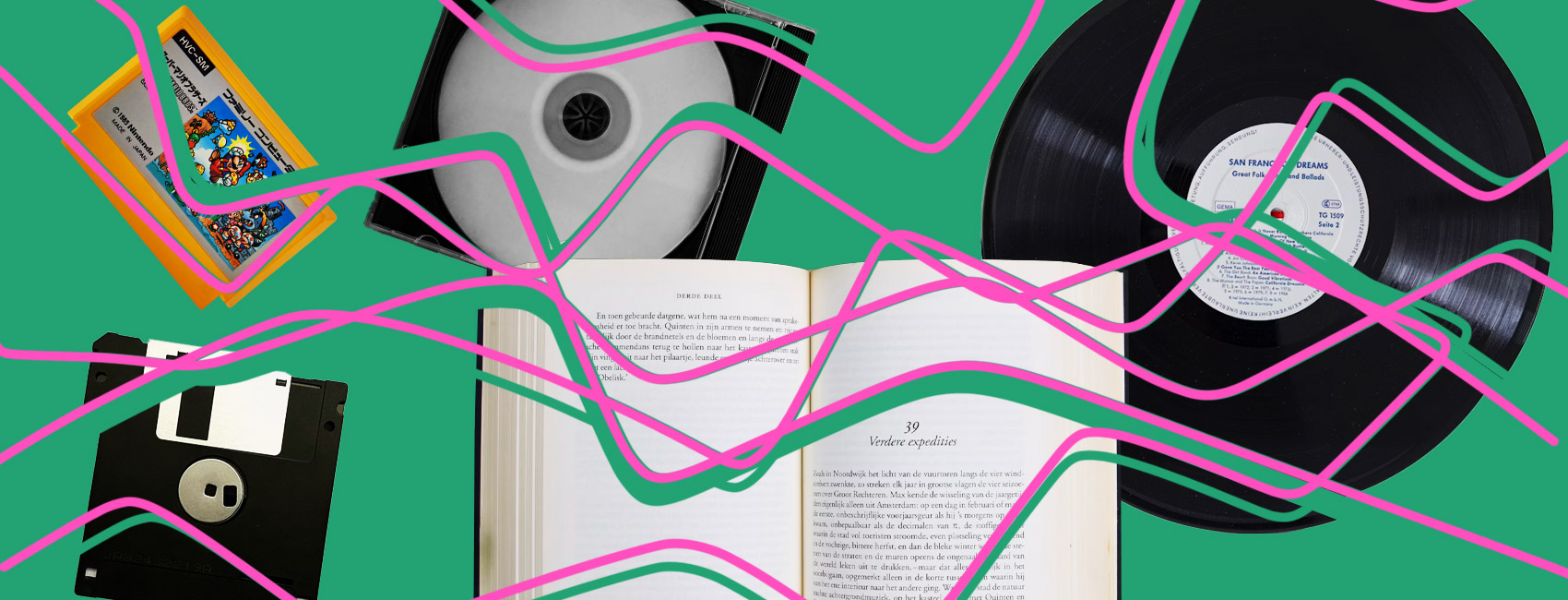

You see an error in the text - select the fragment and press Ctrl + Enter
The gaming community and the entire industry are actively engaged in discussions about the latest announcements from major market players. Sony is getting ready to stop the production of game discs for the next generation of PlayStation consoles. The Stop Killing Games campaign is calling for producers to not turn their games into titles with a compressed market relevance.
There lies a much broader question behind the debate over physical media and the prospect of shutting down content servers. What exactly are we buying when we pay for a cultural product? For the publishing industry, the answer could determine the future of reading, the future of libraries as institutions, and the formats in which what we call cultural memory will continue to exist.
Without losing sight of our favorite medium — paper books — Chytomo set out to find out what’s happening in the video game industry.
Discs are holding their ground
In July 2026, Sony Interactive Entertainment announced that, starting in January 2028, it would stop producing physical discs for all new PlayStation console games. This decision will not influence titles that have been or are scheduled for release on disc, but all subsequent releases will be sold exclusively in digital format on the PlayStation Store or by sale of download codes at retail stores. It is not yet known whether other online platforms will be allowed to distribute PlayStation products digitally or if Sony will maintain a monopoly.
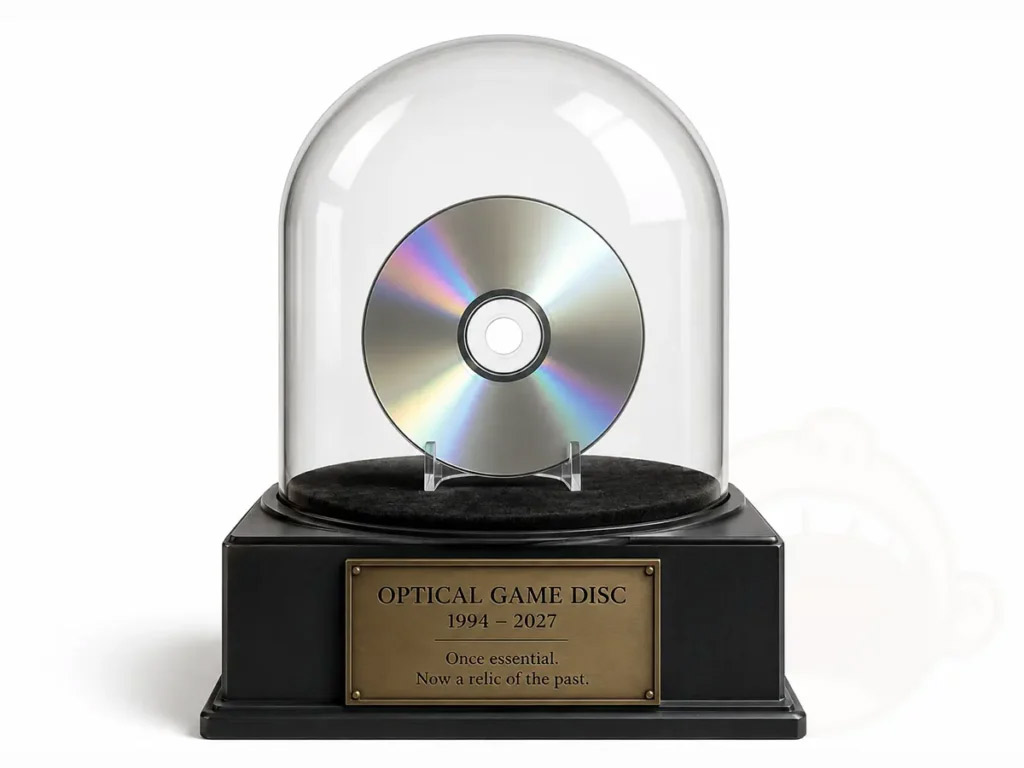
This didn’t come as a surprise. The video games industry has been moving toward digital distribution for at least two decades. DVDs and Blu-rays have steadily yielded to streaming in the movie industry. It seemed that consumers had accepted that change, or were at least ready to accept that the day would come when boxes of discs would no longer occupy room on their shelves. Digitization was perceived as convenient to only a certain extent, as long as it remained one of several consumer options. When the industry moved closer to eliminating the physical alternative, it turned out that a willingness to download content was not the same as a willingness to abandon physical copies.
Sony described the change in its approach to content as a response to changes in consumer habits because digital downloads accounted for about 80% of full-game sales in fiscal year 2025. Cutting disc manufacturing and logistics also reduces costs and gives the platform more control over sales.
Simultaneously, the fact that 80% of sales are digital does not mean absolute agreement with the disappearance of alternative distribution channels for video games. After 2028, people who have PlayStation will no longer be able to choose a disc. Along with this announcement, Sony reported the upcoming closure of online stores for its previous-generation gaming platforms — the PlayStation 3 and PS Vita — promising to keep purchased content available “indefinitely.” The limits of “indefinitely” will not be determined by the buyer, even though official support for the PlayStation 3 lasted nearly 20 years. The platform was launched way back in 2006, and, from Sony’s perspective, there was “enough” time to download games.
RELATED: Ukrainian game based on Oksana Bula’s Tukoni universe released
Numerous contemporary titles, even when released on physical media, require online verification or a persistent internet connection. There are also titles that store only a part of their content on physical media, while the rest of the critical content is downloaded from the internet. But it would be a mistake to say that a modern disc is just an empty key for downloading. The database of DoesItPlay? project, whose participants test physical editions without an internet connection, currently contains over 3,500 entries. Of the games tested, 94% have a full-fledged offline mode, and 73% do not require mandatory downloads. However, a disc does not guarantee permanence; the medium can deteriorate, the console can break, and the game may depend on a server. Still, in many cases it provides a standalone copy users can share, resell, or play without permission from a digital distributor.
Physical copies of video games have a developed culture. Users search for and collect rare cartridges and discs and preserve boxes, manuals, maps, and art books. A collection that can easily be compared to a home library has become one’s material possession. This offers a distinct advantage over a standard list within a browser or app, which you can’t display on a shelf or pass down to the next generation, no matter the platform.
A game you can turn off any time
The situation with The Crew, Ubisoft’s driving simulator, released back in 2014, might be the best explanation for the gaming community’s concerns. The simulator required a persistent connection to the server even in single-player mode. The servers were shut down in March 2024, and legally purchased copies stopped working. The physical disc could not help solve the issue because it had essentially become a physical medium for a software product lacking the necessary infrastructure.
This case was the reason for video blogger Ross Scott to launch the Stop Killing Games campaign. The demand is reasonable: Manufacturers shouldn’t have to maintain servers forever, but once commercial support for a game ends, they should ensure the game remains functional. Any option is acceptable. This could be an offline mode, the ability to create private servers, or another technical solution. The product’s ability to function independently after support ends should be built in during development.
Stop Destroying Videogames is the official European citizens’ initiative. After verification, it gathered 1,294,188 valid signatures and met the required thresholds in 24 countries in the EU. The European Parliament held a hearing on the initiative.
In June 2026, the European Commission chose not to impose a legal obligation on platform operators and developers to keep games available. Instead, by the end of the year, it plans to bring together industry representatives and consumers to develop a code of conduct regarding the “end of life” of games.
The Video Games Europe Association has concerns that private servers will present risks to personal information and the liability of rights holders, and that the “post-release regime” will drive up development costs, even though in the past, in the era before digital distribution, the majority of games with online modes supported private servers and other forms of interaction. A study by the Video Game History Foundation demonstrates how threatening the current status quo is. According to its findings, 87% of classic video games released in the U.S. before 2010 are no longer available through commercial distribution, which deprives users of a legitimate method to play them.
Stop Killing Games also addresses how the meaning of the word “purchase” is changing. If a company can remotely make a product unavailable, the buyer is granted restricted access to the service. Starting in 2025, sellers of digital games, movies, music, and e-books in California must disclose when a “purchase” constitutes a revocable license. Permanent offline downloads are an exception.
A book is not a game (so far)
All discussions of the death of physical media sound familiar to the publishing industry. People have been predicting the imminent demise of the paper book for decades: first, due to the emergence of home computers, which allow people to read on screens, and then with the advent of e-readers, smartphones, and tablets. Instead, we’ve witnessed the book industry avoid the rapid shift to streaming that the music industry experienced, and e-books have not replaced paper books but have carved out their own, alternative niche. For example, in the United Kingdom in 2024, print publications accounted for £2 billion of the £2.5 billion in total revenue from consumer book publishing. Digital formats generated £566 million, with audiobooks showing the most dynamic growth: Their revenue increased by 31%, reaching a record £268 million. According to Eurostat, in 2024, 14.7% of European Union residents purchased printed books, magazines, or newspapers online, while 6.8% purchased e-books and audiobooks. In other words, the market has opted for the coexistence of different formats.
The popularity of paper books reflects a broader resurgence of physical and analog media. Vinyl records, audiocassettes, film photography, collectible Blu-rays, and special editions of video games have made a comeback, even though streaming remains the primary way people consume content.
Vinyl revenue rose 7% in 2024 to $1.4 billion in the United States, and this marked the 18th consecutive year of growth.
RELATED: Bitmap Books delivers rich visuals for retro game fans
The trend underscores nostalgia or the desire of new generations to reinterpret their experience of interacting with formats they’ve never encountered before, and, in fact, we’re seeing a new division of functions. The digital format offers speed and accessibility, while the physical one is becoming a collectible object, tied to ritual and emotional attachment. The cover, paper, typeface, illustrations, an autograph, or marks left by a previous reader make a book a unique object. A home library becomes an element of arrangement of physical places, demonstrates interests, and allows one to see their reading history.
An infinite library that isn’t yours
None of this diminishes the significance of digital formats. They expand access to reading, instantly cross borders, and allow you to change the font, use the search function, and even listen to the text. The book market retains what the video game market is losing, and that is a physical form and the ability to choose. As a reader, one does not acquire copyright to the text, but still becomes the owner of a specific copy that can be gifted, lent, resold, bequeathed, or donated to a library. None of these actions requires an account, a compatible device, or a valid agreement between the platform and the publisher.
According to Amazon’s terms of use, Kindle content is “licensed, not sold.” Such a license generally cannot be resold or transferred. Specifically, in 2019, the Court of Justice of the European Union held that the secondary sale of e-books is subject to the author’s authorization. In other words, the rule that enables a secondary market for physical copies remains exclusive to physical objects.
How about streaming services? They execute this strategy to its ultimate conclusion. A subscriber to Storytel, Audible, Spotify, or any other platform doesn’t expect to own every book they listen to. They pay for access to a catalog — one that’s vast, convenient, and constantly updated, but just as fleeting. Books disappear once the licensing agreement ends, and all the content you’ve accumulated disappears when your subscription ends.
The convenience of such platforms for market participants is obvious. On the one hand, there’s a low barrier to entry for authors and publishers. On the other, there’s a new audience and a steady stream of revenue through paid subscriptions. At the same time, the platform determines a work’s visibility and availability in a given country. An algorithm or a contract change can affect a book’s circulation just as much as its print run or placement in a bookstore. This ecosystem is virtual and seems to mirror the real-life world of books. Our attitude toward it is determined largely by how important the physical reality surrounding book culture actually is to us. When it comes to the format of the medium, the line is drawn not between the physical and the digital, but between an autonomous copy and controlled access.
The consumer shapes the future
The war in Ukraine offers a stark reminder that no individual medium guarantees uninterrupted access to or interaction with content. During the Russian strike on the Faktor-Druk printing house in Kharkiv on May 23, 2024, seven employees were killed, equipment was destroyed, and nearly 50,000 books were lost. As of February 2026, Russia had damaged or destroyed 858 Ukrainian libraries. At the same time, Ukrainian publishers continue to focus on physical books. According to information from Ukrainian Book Institute, over 33 million copies were published in 2025, and the number of active publishers totaled about 400.
In this situation, digital publications make it possible to store and duplicate texts and deliver them to places where physical distribution is difficult — in particular, to Ukrainians in at-risk territories where logistics are problematic, as well as abroad. It’s also worth remembering that a bookstore or library fosters a sense of community, and its very presence in public or private spaces makes Ukrainian culture physically visible, which is especially important during a war targeting the physical erasure of Ukrainian cultural identity. A paper book works without electricity, the internet, or authorization, unlike a digital file that is locked within a foreign ecosystem. Cultural resilience here is ensured by the multiplicity of copies, channels, and means of access.
It should be noted that the lesson for publishers from the video game industry is not to defend print books against inevitable digitization. This experience highlights the need to distinguish between — and not confuse — the concepts of convenience and addiction.
Subscriptions can coexist with the sale of downloadable files, e-books can coexist with print editions, copyright protection can coexist with the reader’s right to long-term offline use, and a commercial catalog can coexist with an archival copy that will outlive the platform. Each of these points constitutes part of a single, multifaceted world of modern cultural consumption, where every tool is in place.
After several weeks of heated debate, Sony has yet to issue an official response or any other statement regarding the phase-out of disc production. Many gamers and analysts have already interpreted this silence as confusion and the company’s inability to find a compromise solution to the crisis. However, this silence conveys a powerful message to the community. It appears that Sony continues to stand its ground, backing up its position with metrics. For the corporation, the full transition to digital is a response to the majority’s choice, a choice that, despite everything, may change as the realization sets in that digital dependence leaves no alternative. The publishing industry still has time to avoid following this path to the letter. The book of the future could be in print, digital, or audio format, and purchased individually or accessed via a subscription. None of that necessarily matters.
The question of what exactly a digital product buyer receives has become the subject of a lawsuit in California. Users there are challenging the “Buy and Confirm Purchase” labels in the PlayStation Store, stating that these terms create the illusion of owning a game, whereas the platform merely grants a limited, revocable license. Sony denied misleading consumers in an August 21 motion, referring to terms of service that define purchases as limited licenses. The unresolved court dispute poses a practical question for the publishing industry: What does a “Buy Book” button actually guarantee readers? Digital platforms need to make it clear before checkout whether consumers can retain and read their copies if the platform closes.
The pivotal question is: Will it truly remain the reader’s possession?
RELATED: Conclusions without optimism: The Ukrainian book market in 2025
Translation: Iryna Savyuk
Copyediting: Joy Tataryn
Читомо» — це медіа про книжки й літературу, що підтримувало українське книговидання задовго до того, як це стало трендом. Ставайте частиною історії — доєднуйтеся до Клубу Читомо!
the more you read, the greater the possibilities