* ESC - close the search window
Book Chamber
Russian attack on Kyiv damaged Book Chamber of Ukraine premises
22.10.2026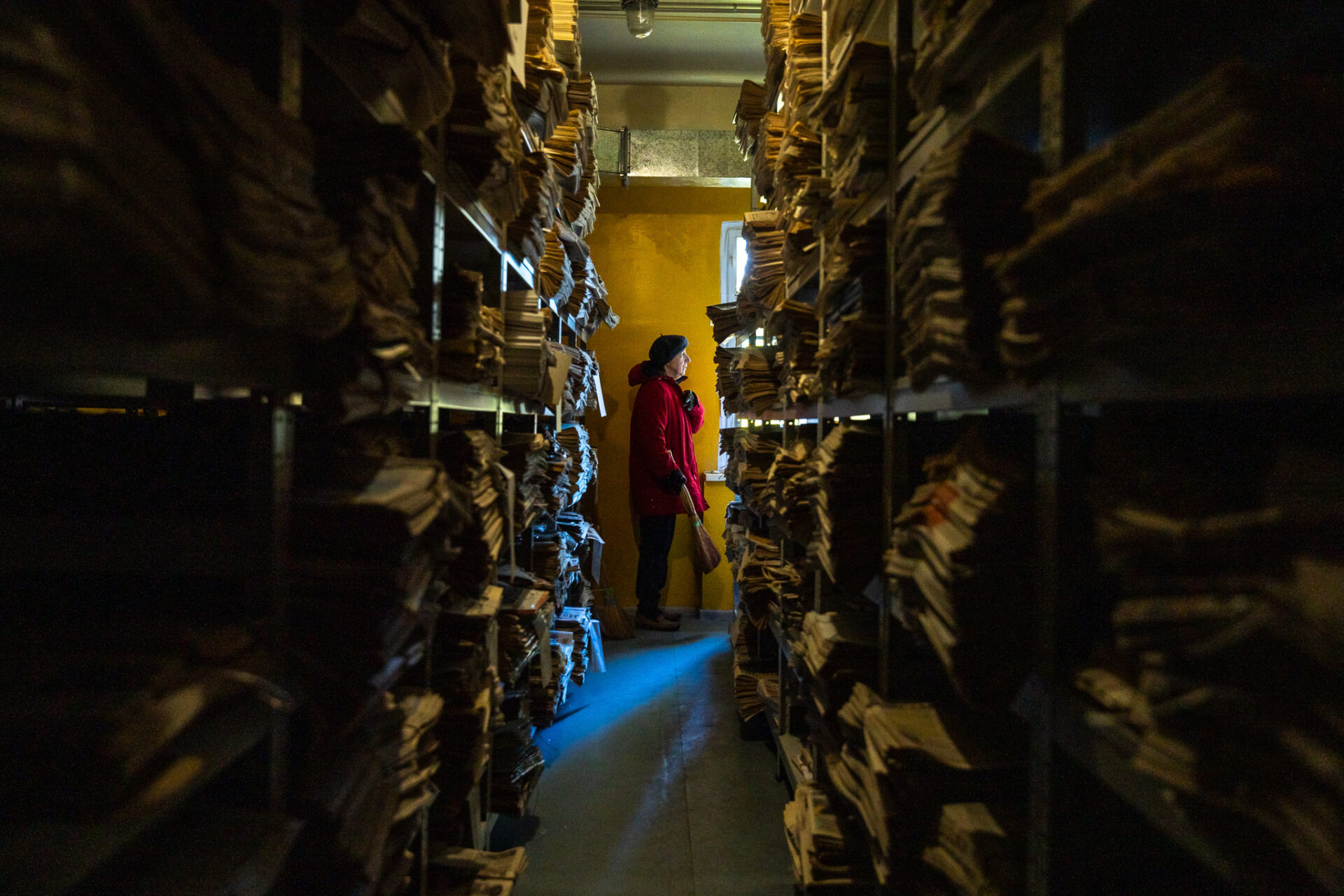

You see an error in the text - select the fragment and press Ctrl + Enter
Two Russian ballistic missiles struck near the Ivan Fedorov Ukrainian Book Chamber building at about 11 p.m. Oct. 18, 2026, damaging windows, walls and utility systems and exposing the institution’s archival collections to potential moisture damage. The Book Chamber preserves more than 15 million titles released in Ukraine since 1917, ranging from world classics and modern works to periodicals and books banned under Soviet rule, including rare publications that have survived in only a single copy.
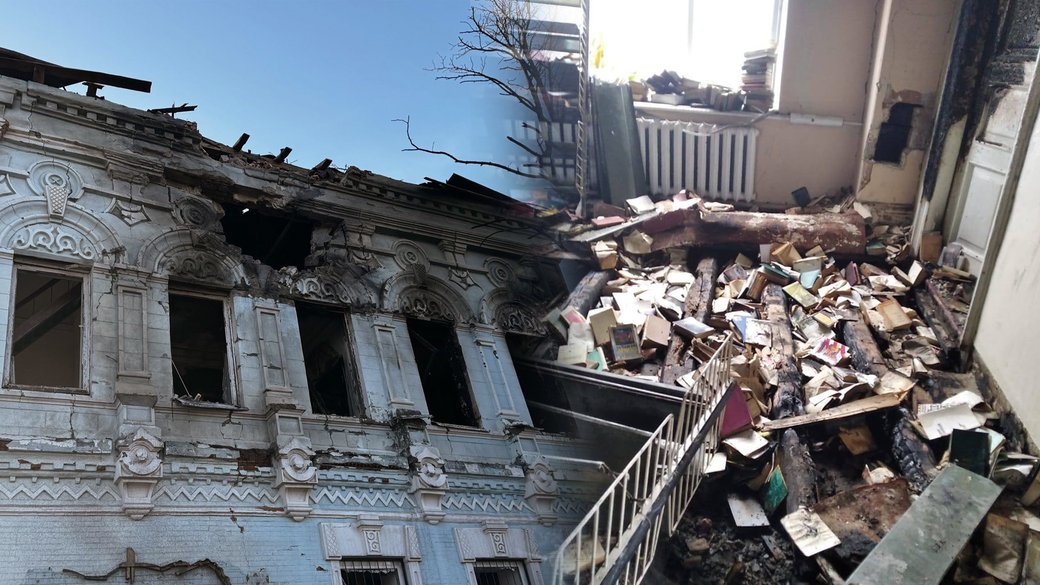
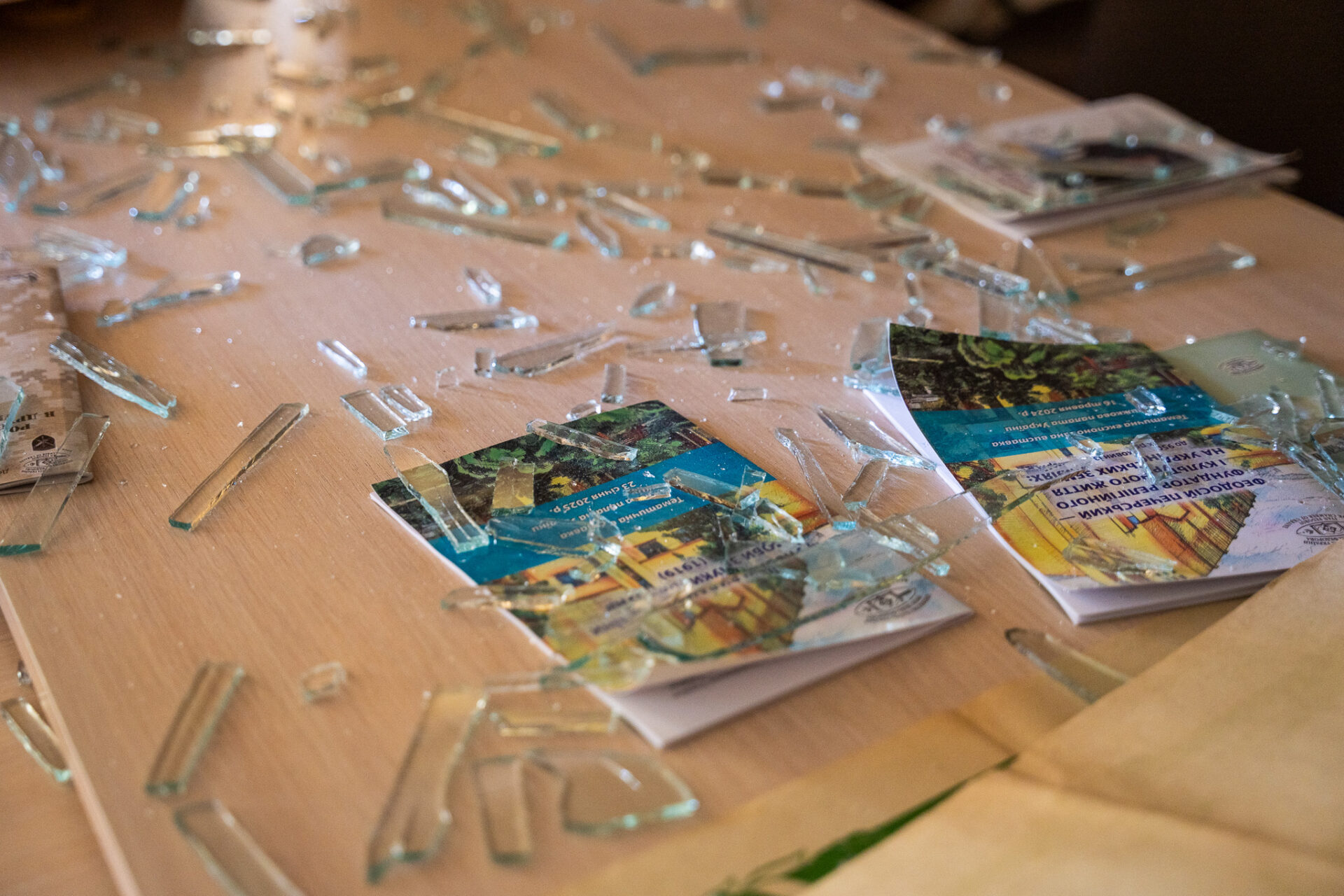
One missile landed about 20 meters from the book storage facility, while the other struck 60 to 100 meters away. The resulting shock waves shattered nearly all the windows in the administrative building and repository, from the second through the ninth floors. Rain the following day left the books damp.
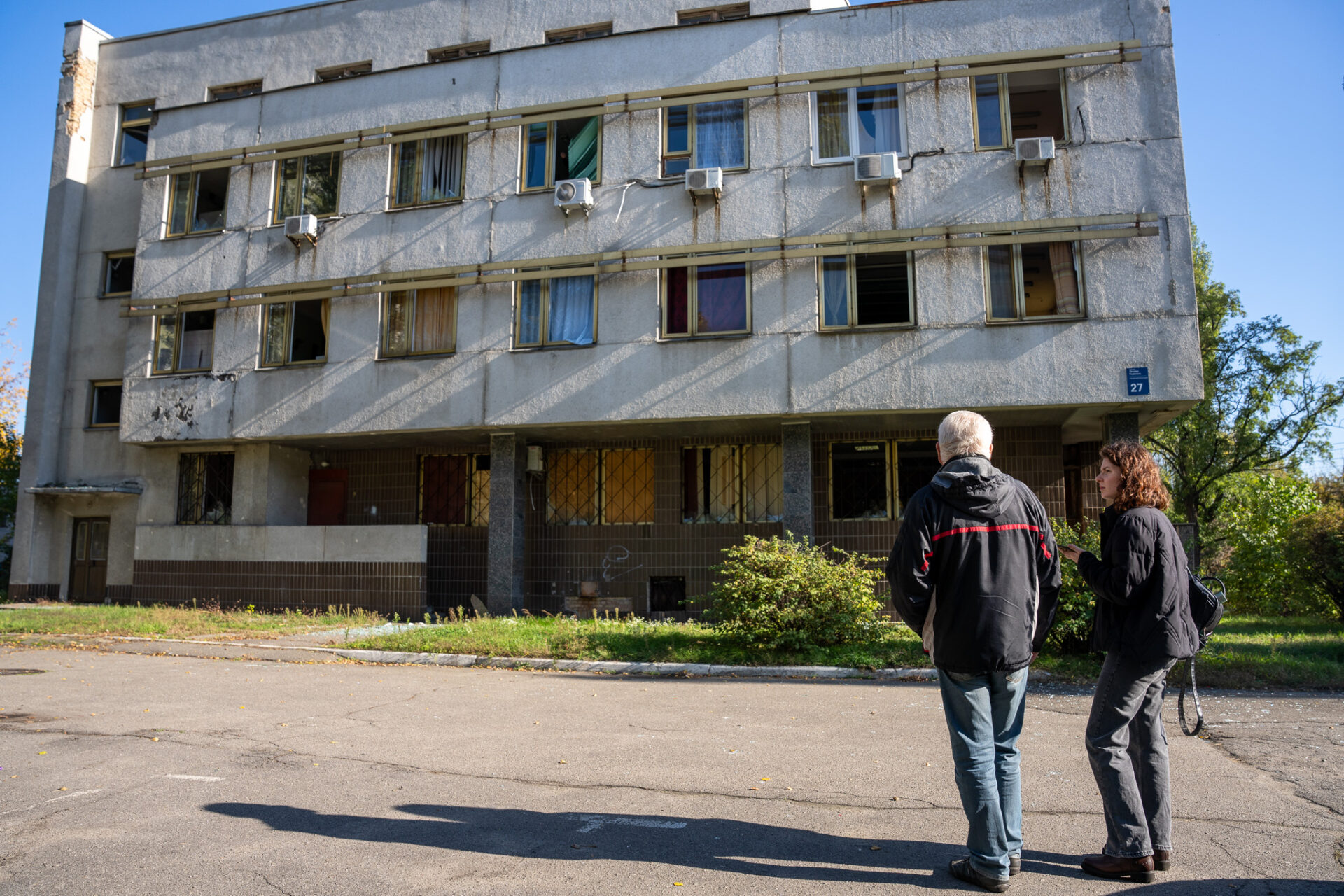
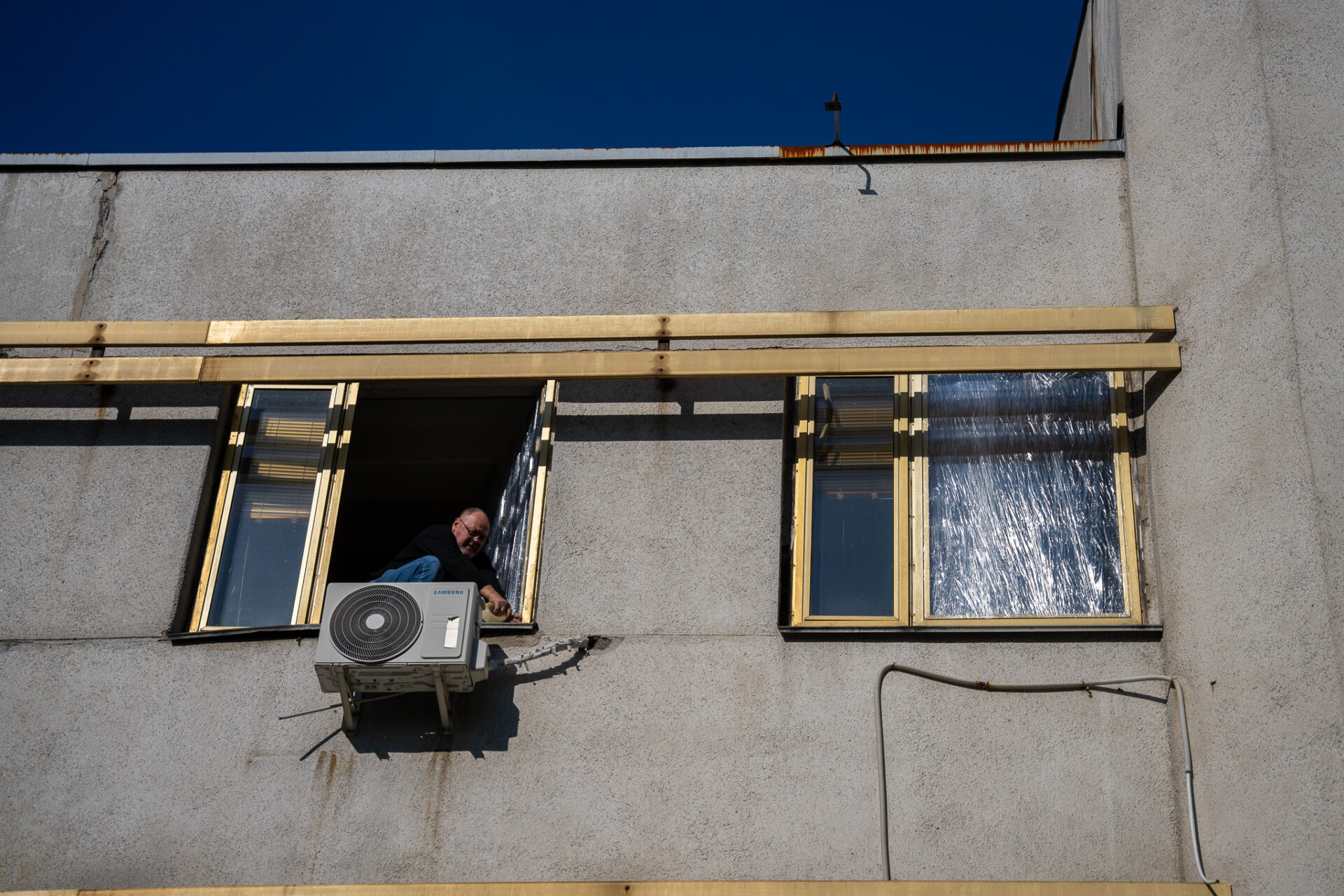
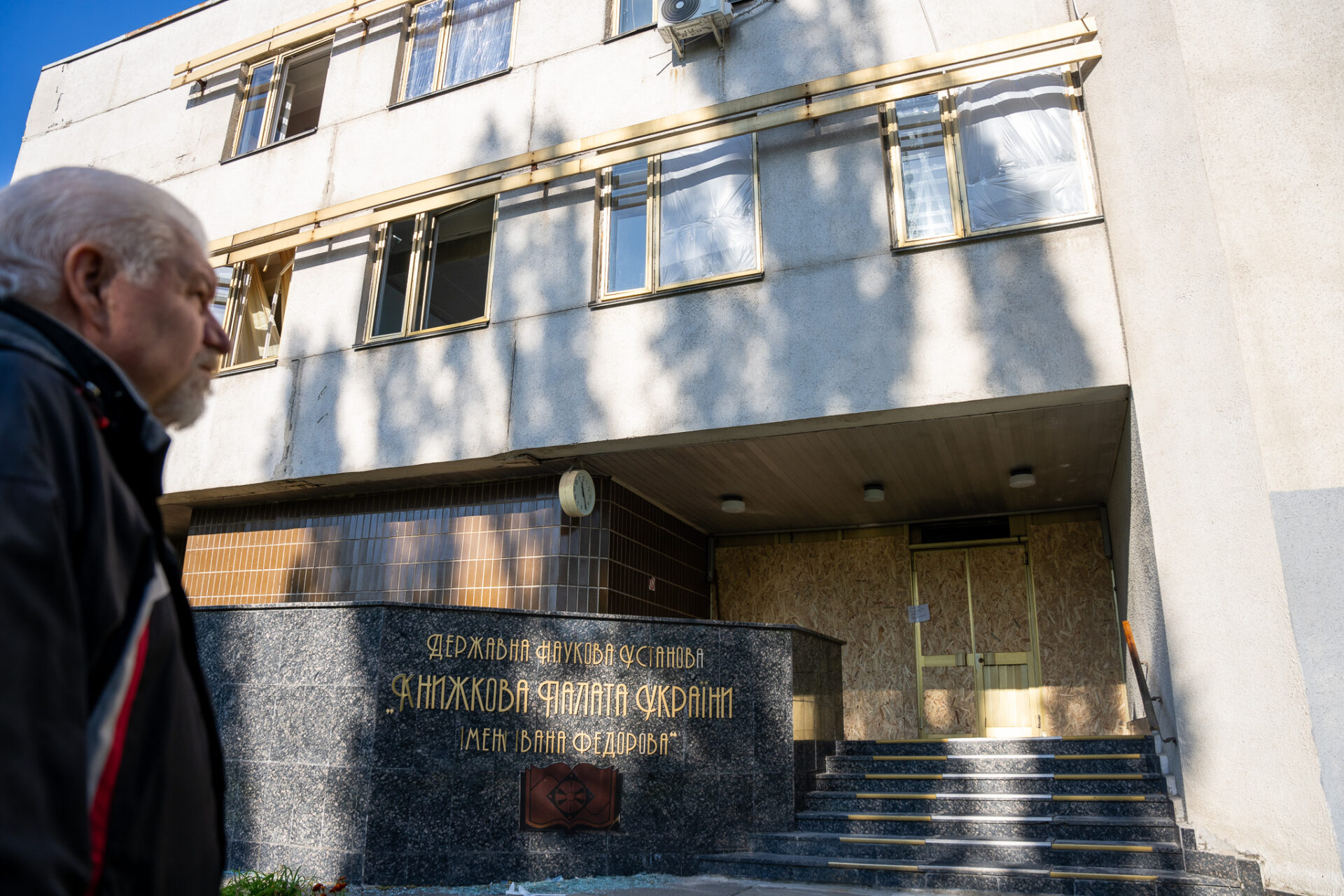
The damage put the institution’s archival collections at risk, Detector Media reported, citing Book Chamber director Olha Vaskivska.
“Everything has fallen apart. All the windows are damaged, glass is scattered everywhere, doors have been blown out, walls are damaged, and the ceiling is collapsing,” Vaskivska said.
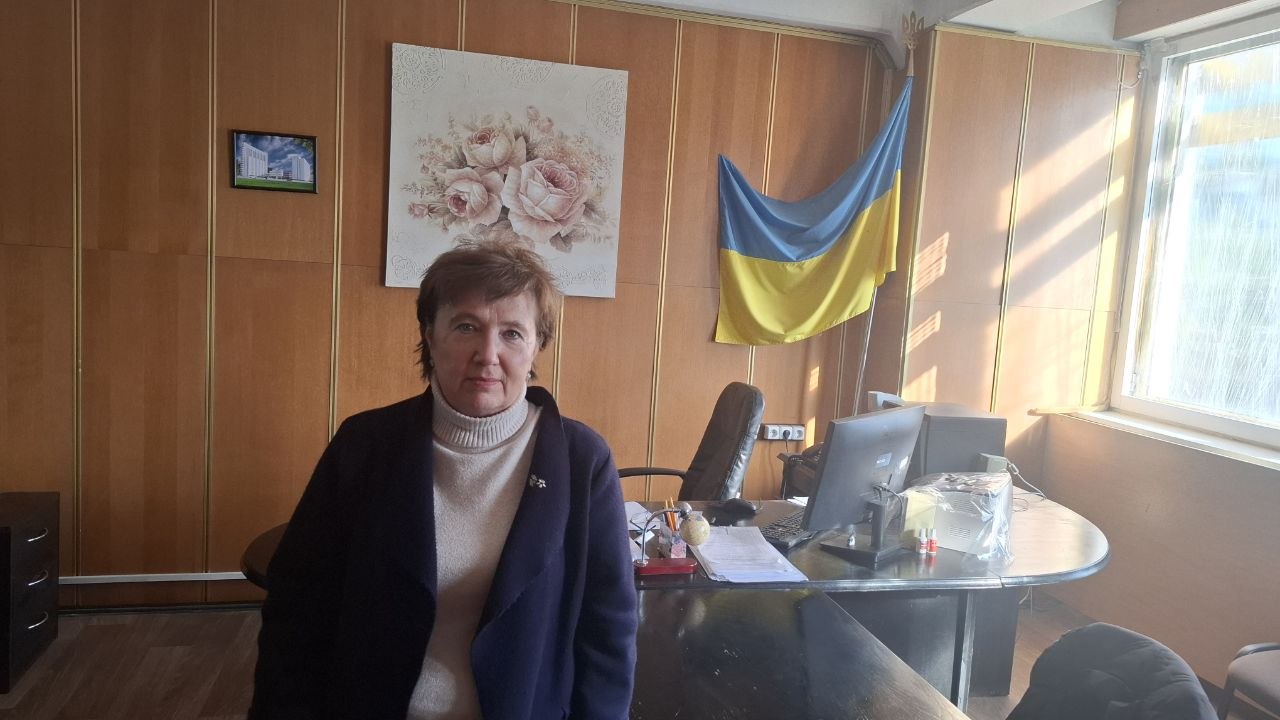
The most urgent concern is the damage to the book storage rooms. Broken windows leave the rooms exposed to rain and moisture, threatening the preservation of archival records. Staff members are currently unable to move the publications to another location.
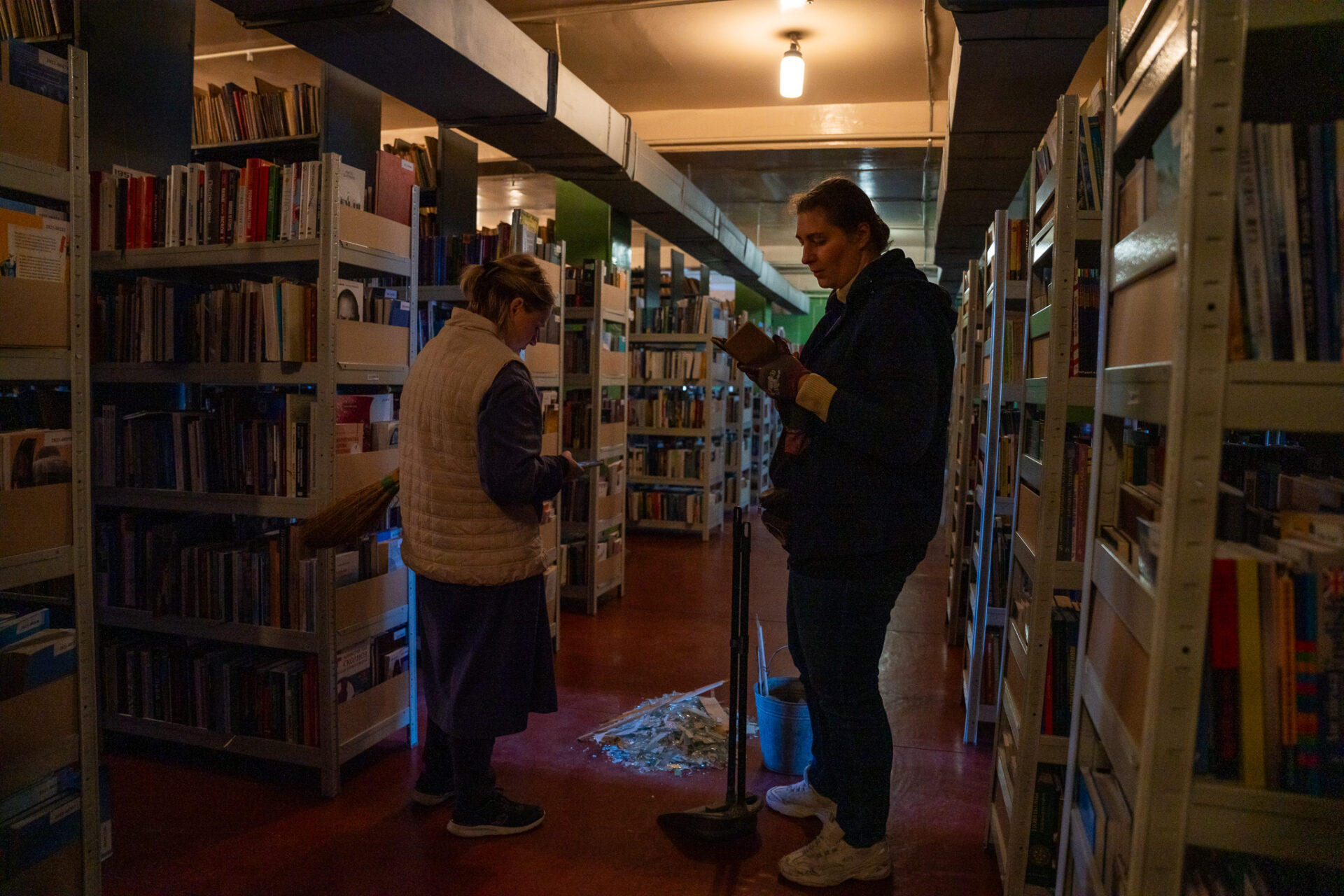
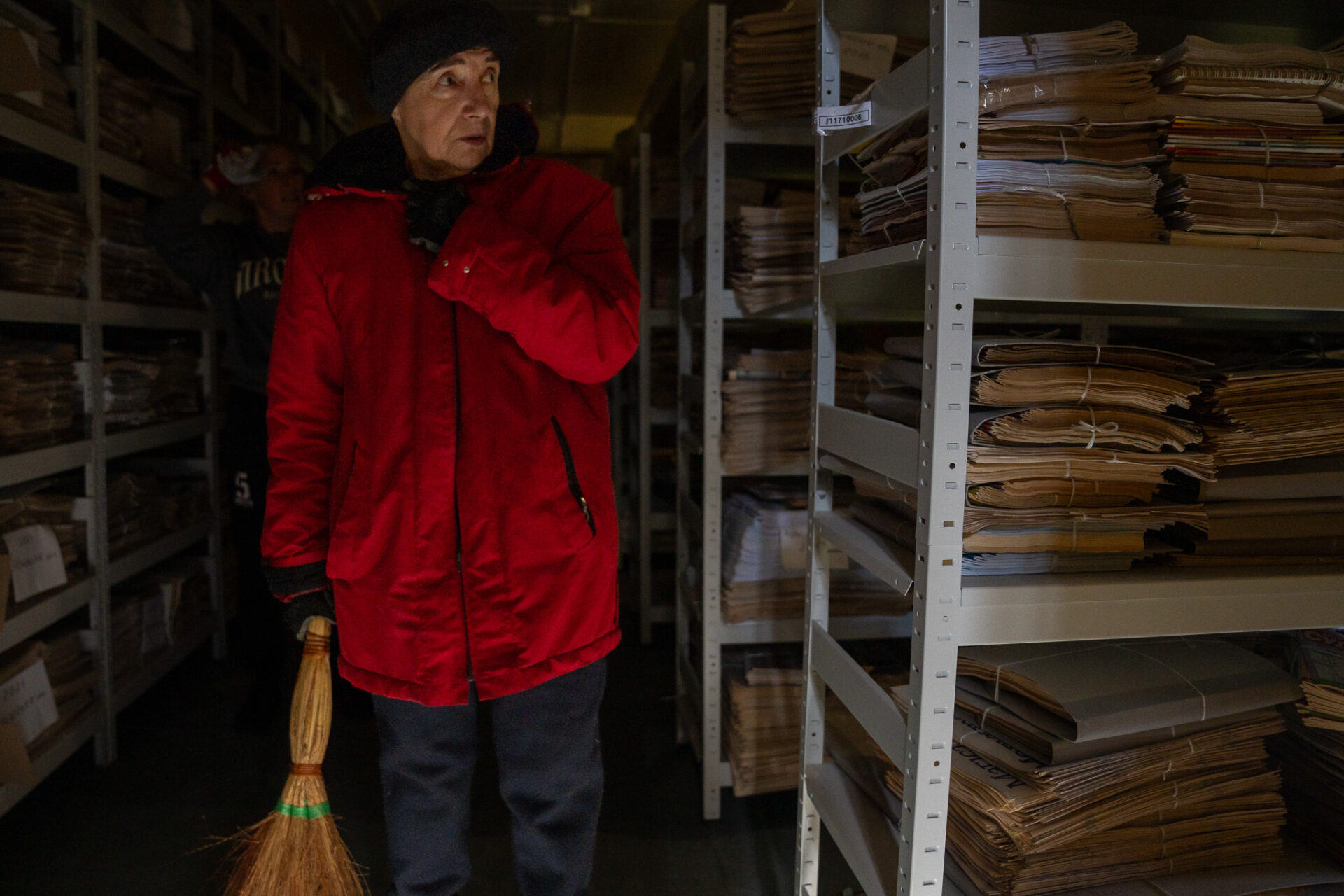
“If it had struck the foundation, we might have had to search throughout Kyiv for our documents,” said Anatoliy Murakhovsky, the deputy director for research, pointing to the site of the first impact.
The second impact site, in the park opposite the building, has been cordoned off with barrier tape. Municipal workers were working nearby.
According to Vaskivska, the facility urgently needs protection from the rain. However, law enforcement officers have asked staff not to touch anything until investigators can inspect the scene.
Once the damage has been documented, the institution’s accounting staff must assess the losses. It remains unclear whether archival publications were directly affected and how many copies may have been damaged. Chytomo has contacted the Book Chamber and is awaiting a response.
No Book Chamber employees were injured in the attack. A security guard was inside the building at the time but was unharmed.
The Ivan Fedorov Ukrainian Book Chamber is a state research institution responsible for maintaining the bibliographic record of Ukrainian publications, compiling book publishing statistics and preserving mandatory copies of books, newspapers, magazines and other printed materials.
According to official Book Chamber data, its archive contained 15,062,890 items as of Jan. 1, 2026.
A separate section holds a special collection of more than 17,000 books published between 1917 and 1976 that Soviet censorship authorities removed from circulation for ideological reasons. The collection includes Ukrainian fiction, dictionaries, textbooks, historical and religious publications, and works by repressed writers.
“These books have been preserved as single copies at the Book Chamber. This collection also needs to be researched, and we are trying to uncover new authors whose works, if necessary, will need to be reproduced so that we can make them available to our readers,” Murakhovsky said.
The institution maintains the state bibliographic registration and cataloging of all publications released in Ukraine, collects publishing statistics, studies the book market and builds the collection of the State Archive of Print, the main repository for all types of publications released in the country.
It also serves as Ukraine’s national agency for ISBN, ISSN, which covers periodicals and serial publications, and ISMN, which covers music publications. In addition, it provides methodological support for implementing the Universal Decimal Classification (UDC).
The Book Chamber’s data provides an annual record of how many books are published in Ukraine, which publishers produce the most titles and which books have the largest print runs.
In 2008, the institution’s facilities were designated as part of the nation’s scientific heritage.
The latest attack marks the third incident involving the facility in less than a year.
Following an earlier incident in early 2026, pipes and radiators burst in the building when temperatures fell to 20 degrees below zero. The building still has no heating. Funding for restoration was allocated only in the 2027 state budget, meaning the institution will most likely face another winter without heat.
The missile strikes also damaged the building’s windows, roof and utility systems.
Despite the destruction, the Book Chamber continues to receive mandatory copies of newly published materials.
“Yesterday, the Book Chamber was shattered, with glass scattered all around, but a Nova Poshta truck arrived, and the workers carried our mandatory copies in bags right across the broken glass,” Murakhovsky said.
According to him, the institution receives 100 to 200 copies daily. Before Russia’s full-scale invasion, the Book Chamber received an average of about 150,000 copies annually. The total fell to 37,700 in 2022 and reached 41,200 in 2025.
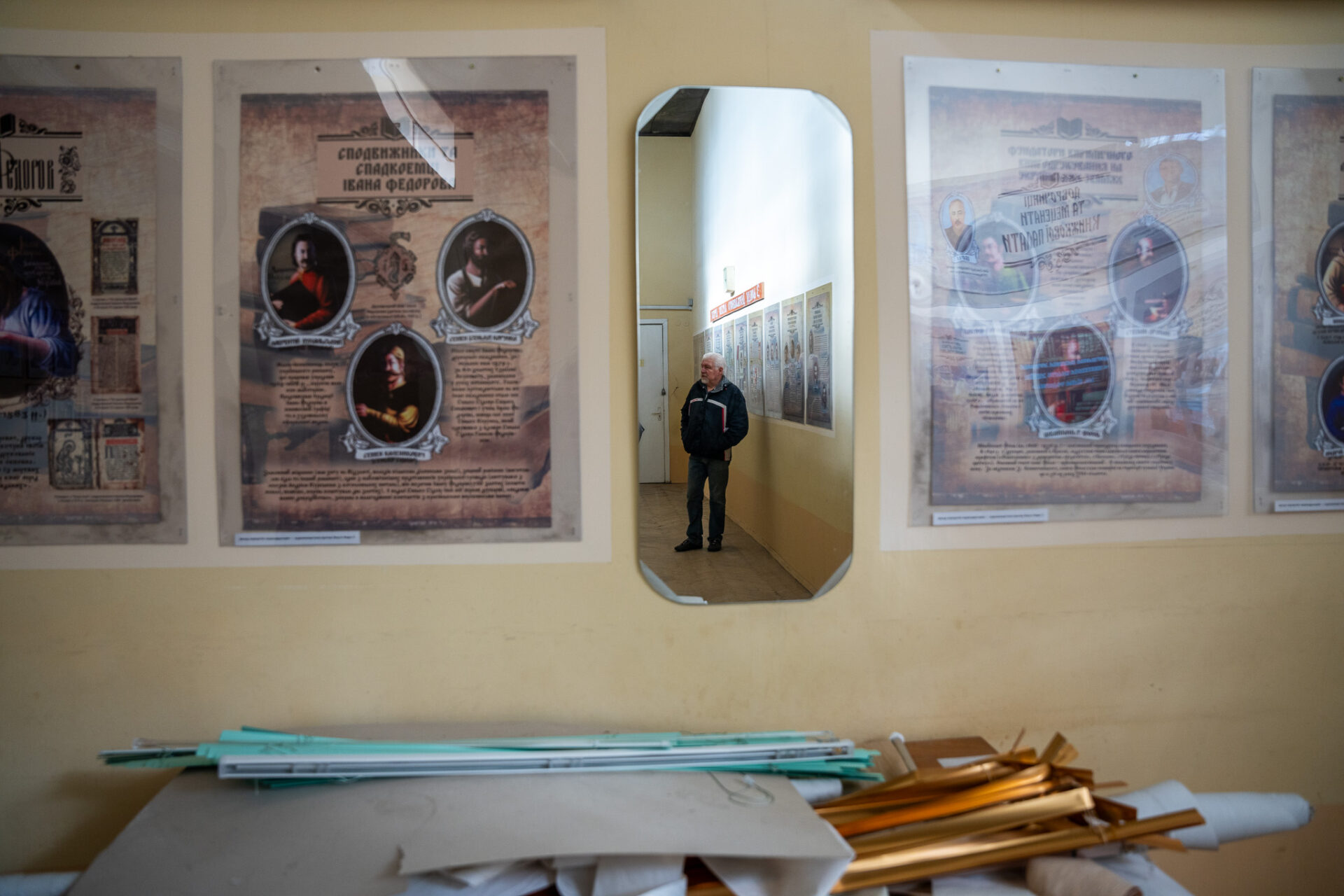
An exhibition on Ukrainian-Polish relations, titled “Ukrainian-Polish Relations as Reflected in Ukrainian Publications,” was scheduled to open on the building’s first floor in October.
Prepared in cooperation with the Ukrainian Institute of National Remembrance, the exhibition included a 1920 poster signed by Józef Piłsudski and addressed to the people of Ukraine, as well as Polish-language books published in Ukraine. The books were removed from the display cases after the strike.
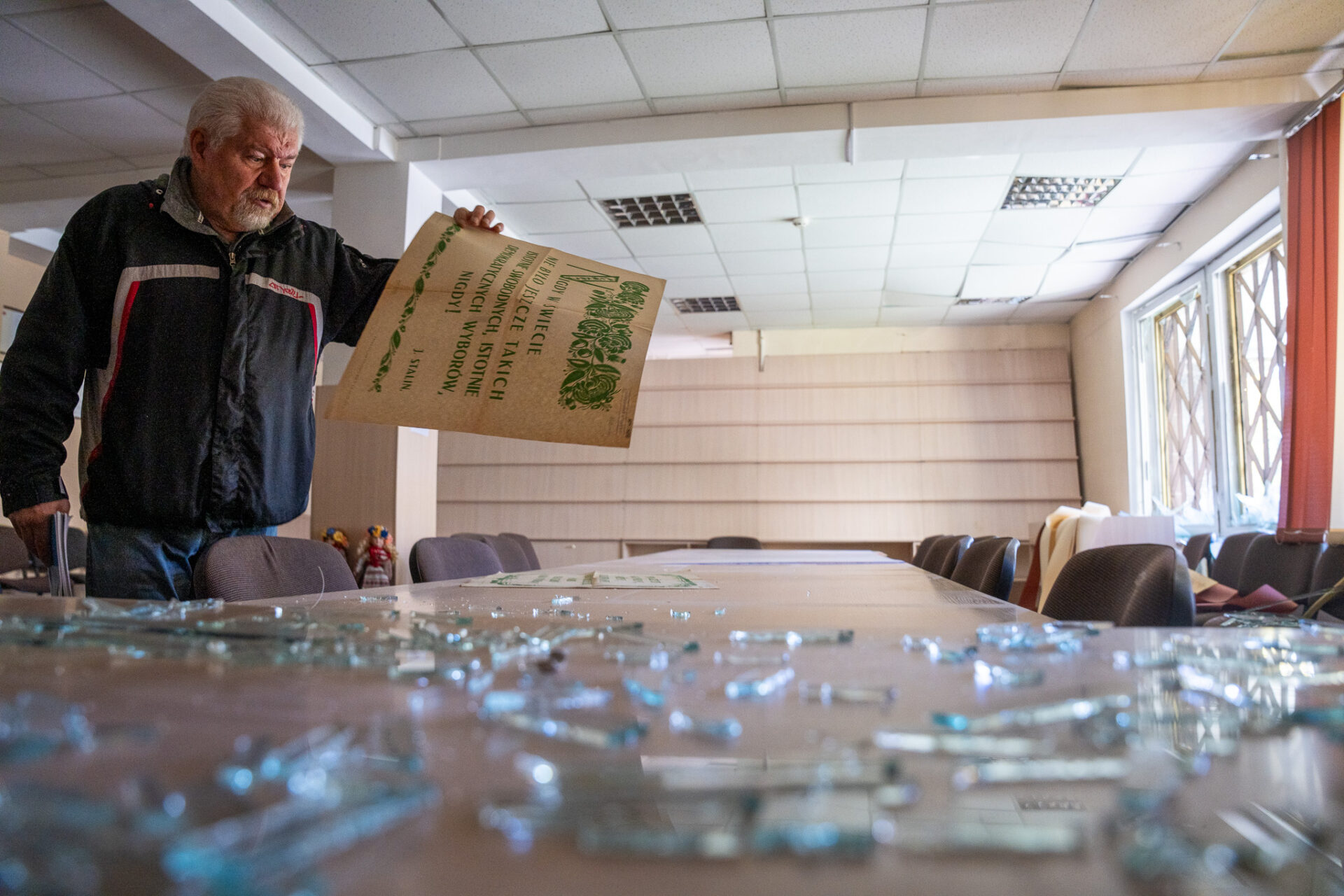
During the conversation, a report of a ballistic threat interrupts the discussion.
“God willing, our people will survive. And we’ll write more books for them,” Murakhovsky said.
In April 2026, the Book Chamber requested financial assistance to renovate its premises and utility systems. At the time, the estimated cost of the necessary work exceeded UAH 10 million. The funds were intended to repair the building, restore heating and water supply, upgrade technical infrastructure and ensure appropriate conditions for storing the archives.
In July 2026, the Verkhovna Rada Committee on Humanitarian and Information Policy held an off-site meeting at the Book Chamber.
Photos: Dzvinka Pinchuk
Читомо» — це медіа про книжки й літературу, що підтримувало українське книговидання задовго до того, як це стало трендом. Ставайте частиною історії — доєднуйтеся до Клубу Читомо!
the more you read, the greater the possibilities
324
Russia's attack
Russian drone strikes Ukraine’s National Academy of Sciences in Kyiv, killing two and damaging historic headquarters
30.09.2026 -