* ESC - close the search window
New York Review Books
Sex, escape, and rock ‘n’ roll: A review of ‘Radio Night’ by Yuri Andrukhovych
09.10.2026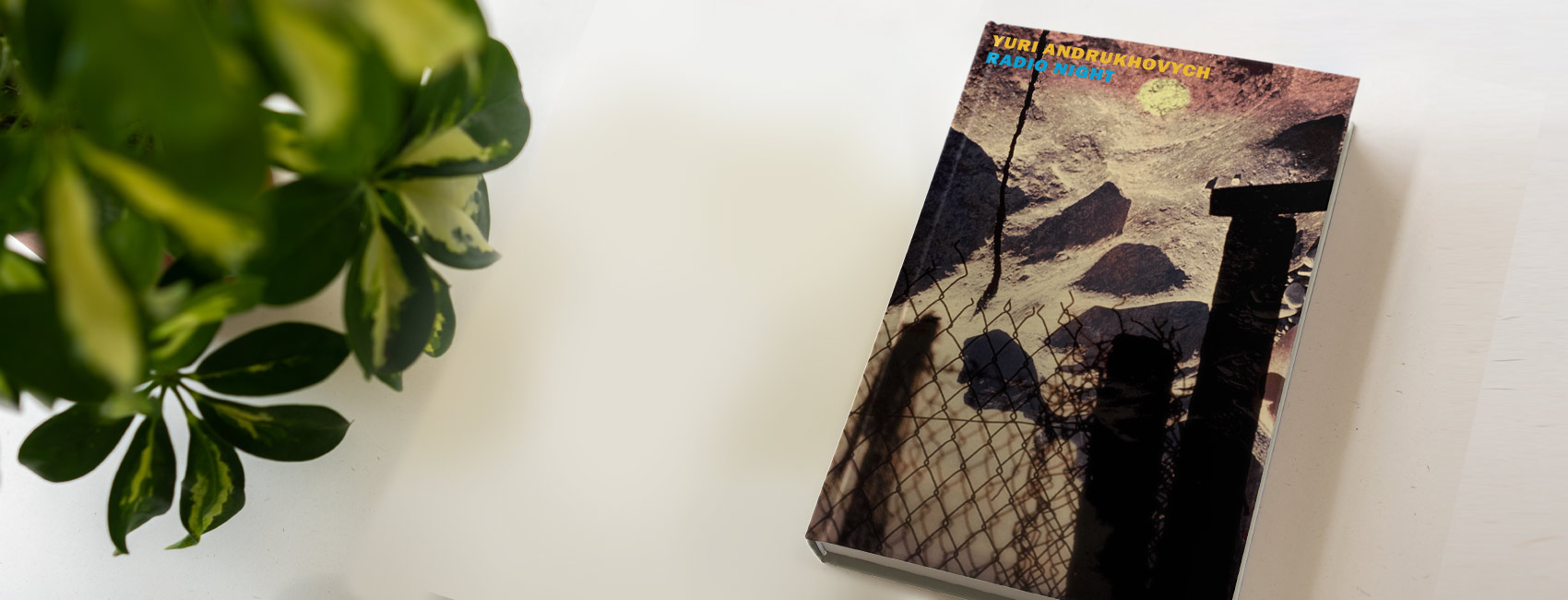

You see an error in the text - select the fragment and press Ctrl + Enter
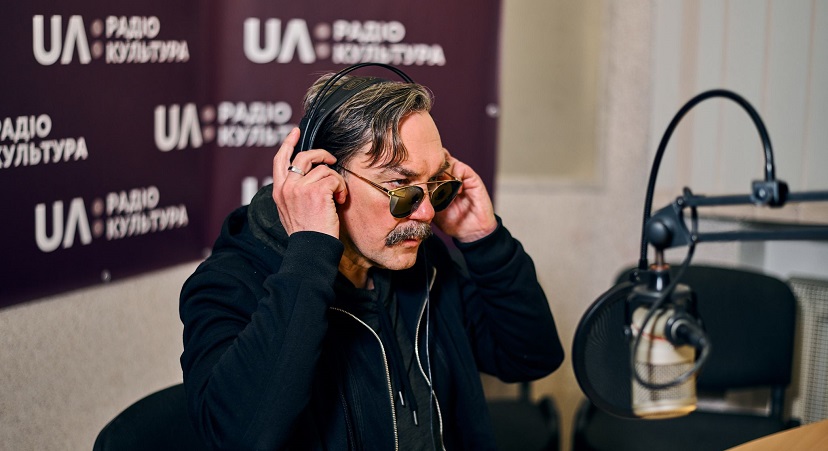
The city falls asleep, and the radio wakes up. Radio Night, where pianist Yosyp Rotsky shares stories from his life of adventure and persecution, plays music for listeners who stay awake, and disappears just as mysteriously as he appeared. One of the heroes of the revolution in his country, he is still being persecuted by the regime.
“Radio Night” is a novel by Yuri Andrukhovych, a widely acclaimed figure of Ukrainian literature whose name is closely associated with Ukrainian prose from the early years of independence. Andrukhovych has become one of the leading figures of Ukrainian postmodernism. His books brim with satire, literary playfulness, and a sense of impending catastrophe, and his characters are trying to dodge its approaching wave.
This year, the English translation of “Radio Night,” performed by Mark Andryczyk, an American scholar, translator, and director of the Ukrainian Studies Program at the Harriman Institute at Columbia University, widely recognized for translating contemporary Ukrainian literature into English, was published by New York Review Books.
Andrukhovych’s novel resembles a grotesque, even theatrical canvas in which an unknown biographer is trying to sew together fragments of Yosyp Rotsky’s life, who is a member of the band Doctor Tagabat and one of the most renowned figures of the Ukrainian Revolution, during which he was also known as The Aggressor. Knowing that Andrukhovych has deep interest in hoaxes, we see right away that the character is entirely fictional. This inspires taking a closer look at the biographer himself. He knows far too much about the life of his subject and is all too fond of switching from third to first person, exchanging “he” for “I.”
Excerpts from a radio broadcast that Rotsky airs out of nowhere, beginning at midnight and ending at dawn, interrupt the biographical line. His broadcast resembles a long and veiled confession by a doomed man imprisoned in a tower and awaiting his sentence.
Reality in “Radio Night” is blurred, and an interlude about Rotsky’s assassination attempt on the dictator, as well as a dream set in a medieval setting that Rotsky and his lover share, is woven into the text. After all, the protagonist dwells in a whimsical town Nosorohy (“Rhinoceros”) that is clearly a reference to a Romanian-French playwright, one of the foremost figures of the French avant-garde theatre in the 20th century, Eugène Ionesco, who wrote a play with the same name. All of this leaves the reader asking, “What is happening, and why?”
Cultural references do not just pepper the text of “Radio Night.” Wordplay, characters, and quotations emerge in nearly every sentence, the translation of which must have been a demanding and complex task. Andrukhovych doesn’t directly say that he’s referring to the Maidan, the Revolution of Dignity, or the events of 2013-2014. In fact, he doesn’t provide names, neither does he give direct references, but the mood and historical context can be easily recognized. “Doctor Tagabat” is also a reference to a character in Mykola Khvyliovyi’s novella “I (Romance),” a key text of the 1920s.
Its protagonist is a zealous communist who must execute his own mother and whose mind splits apart from the impossibility of reconciling his ideological convictions with his human emotions. In this novella, Doctor Tagabat is the embodiment of sadism. He lacks compassion, and embraces his role as the cold-blooded executor of orders given to him. Isn’t it an interesting choice for a name?
Escape
Rotsky, a brilliant pianist and member of the iconic band, arrives at where the Revolution takes place and plays piano while wearing a balaclava. Needless to say, he becomes highly recognizable both as a musician and as a person implicated in the dictator’s death. In exile, Rotsky is trapped between representatives of the regime and the Mob, an organization pursuing money, the key to a large amount of which is guarded by Rotsky.
A feeling of being persecuted and a plot line building toward catastrophe are generally characteristic of Andrukhovych’s books. In “Moscoviad,” we follow the protagonist’s frantic dash through Moscow that leads him to the final banquet of imperial leaders who are planning the empire’s return while the USSR is collapsing. A sense of catastrophe is also present in “Recreations.” The Celebration of the Resurrected Spirit holiday (interpreted as a declaration of Ukraine’s independence) ends with a staged coup d’état and the execution of cultural figures.
“Radio Night” is a novel about persecution and escape. Rotsky, the protagonist, has something that evokes the image of the Wandering Jew (occasionally referred to as the Eternal Jew), roaming across Europe, always on the run. Rotsky dwells abroad, far from home, but keeps a close eye on the execution lists and sees how people are crossed off one by one. The list is steadily closing in on Rotsky’s name.
Escape, traces of which we find in this book as well, is a significant theme in 20th-century Ukrainian culture. That was when Ukrainian intelligentsia tried to break free from the clutches of empire again and again. After the defeat of the independent 1917-1921 Ukrainian People’s Republic (UPR), many of its political and cultural figures found themselves in exile. In the aftermath of World War II, another wave of emigrants from Ukraine found themselves in DP camps and scattered across the globe because returning to the Soviet Union likely meant detention camps, repression, and death.
“Radio Night” is definitely not set in the 20th century. And yet when Rotsky plays at the Morgana House club on Thursdays — not only an allusion to “fata morgana,” a mirage, but also a reference to Mykhailo Kotsiubynsky’s novella “Fata Morgana,” featuring a phantom dream of his own land — the play is also for those who have found themselves in exile, just like numerous figures of the Ukrainian cultural diaspora of the 20th century who lacked a Moses to lead them to their statehood (or at least, like Rotsky, of uniting them and giving them a sense of purpose and cultural kinship).
À la Faust
“Faust” by Johann Wolfgang von Goethe is the text “Radio Night” engages in dialogue with, if you were to look for one. Rotsky encounters devils and makes deals with them throughout the novel. At the very beginning of the book, a man who introduces himself as Meph (diminutive of Mephistopheles) approaches Rotsky and offers him a deal to play on Thursdays. “Your compatriots in exile,” he says, “need someone who will give them unity and purpose.” Prior to that, Jeffrey Subbotnik approaches Rotsky in prison and offers to become his treasurer. He would need to learn the access code to his account and manage the money if Subbotnik dies.
Later, there is another deal with the devil, one who is older and native to his country. Rotsky will be tortured in an attempt to force him to record a video that suits the regime’s needs. In the Ukrainian cultural narrative, collaboration with the regime is always perceived as a deal with the devil. Similarities go far beyond these deals.
If we recall the beginning of Goethe’s tragedy, Mephistopheles makes a bet with God over Faust’s soul. In “Radio Night,” we’ll see a lot of the devil and little of God, but we’ll sense that the struggle for Rotsky’s soul goes on. This divine wager reduces the musician to the role of a pawn on the chessboard of fate. Despite the ironic jabs, Rotsky is a Faust-like figure in the book, a plaything and the subject of a wager between God and the devil, but Rotsky sees himself as someone who tips the scales in any matter (an allusion to the Revolution of Dignity motto: “I am a drop in the ocean”).
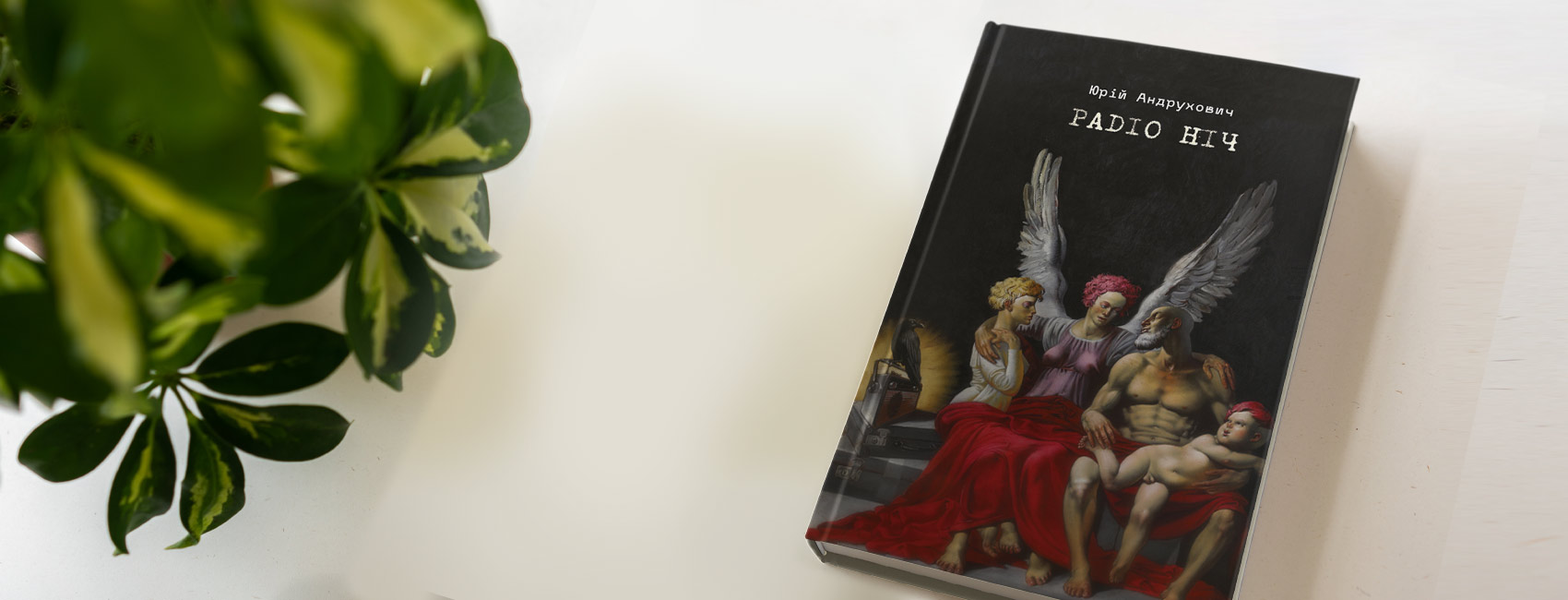
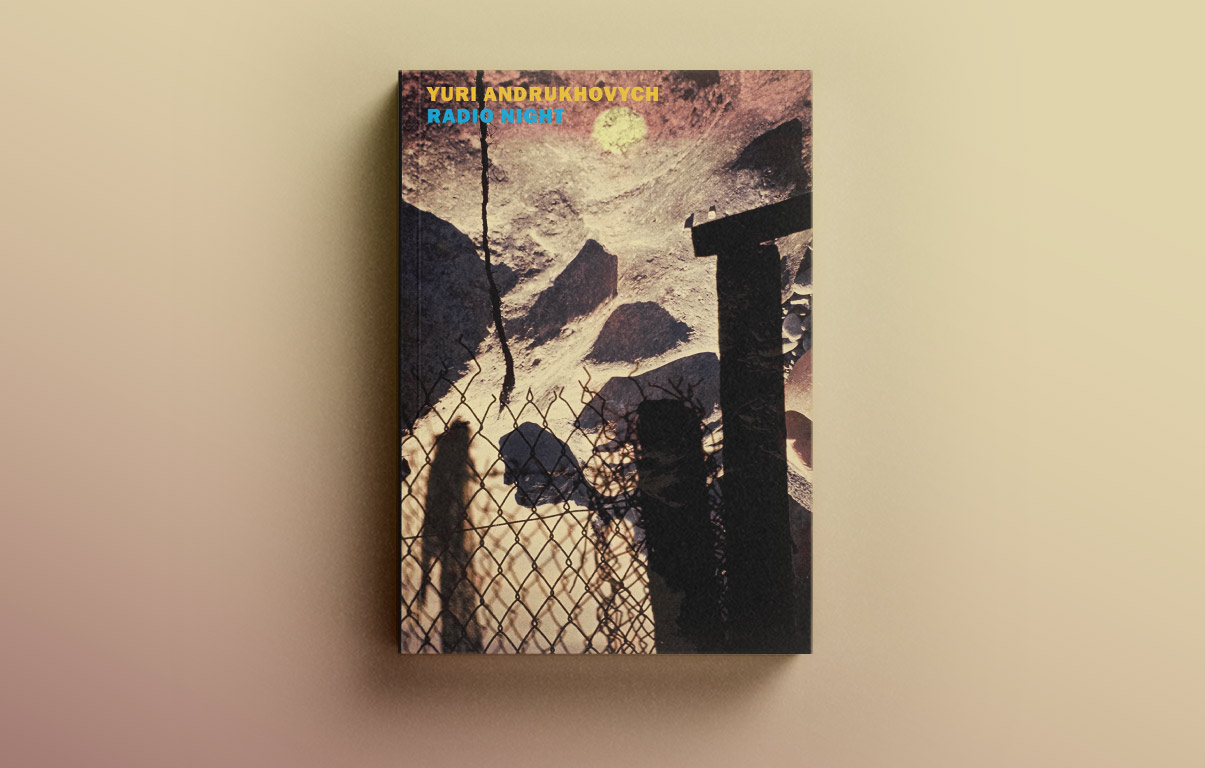
“Radio Night” by Yuri Andrukhovych (Ukrainian edition c)
Rotsky and Faust both have pure souls. Despite all the twists and turns of life, numerous lovers, and flaws of his character, Rotsky’s roaming and escapes are not rebellious. Having a naive and frivolous nature, Rotsky is rarely grounded. Even his raven, Edgar, struggles to act as his constant voice of reason.
It is interesting that Andrukhovych chooses music for his protagonist among all of the arts. Beyond the author’s personal preferences, this links the character to Leverkühn from Thomas Mann’s “Doctor Faustus,” a composer who, like Rotsky, struggles with love. Under the terms of his pact with the Devil, it was forbidden for Leverkühn to love. Rotsky’s philosophy of love is more complex, yet we see the consequences of relationships with women: loving them is dangerous, as they either betray him or become his weak point. In the context of the nets cast by a totalitarian regime, both scenarios pose a fatal threat.
Night before execution
“Radio Night” is structured as a countdown from midnight to morning. It resembles the confession of a man who is waiting to be executed at dawn. This anticipation links Rotsky to other characters in Andrukhovych’s books, like Albert from “Lovers of Justice.” That work also features a pact with the Devil, and Albert, a rogue and a swindler, hopes for release from imprisonment on the eve of his execution. The narrative of “Radio Night” suggests that this intuition is close to the mark.
Despite the historical significance of the Revolution of Dignity, no seminal book about it has emerged in Ukrainian literature. Andrukhovych’s novel is not perceived as a definitive work on the Maidan and the Revolution of Dignity, even though these events are almost transparently woven into the plot of “Radio Night.” Instead, the novel serves as a continuation of the apocalyptic prophecies found in the author’s earlier books. For over 30 years, his characters have been trying to escape the grasp of an empire that never stops reaching for them.
In closing, it is fitting to recall a line that once served as the epigraph to Andrukhovych’s “Moscoviad,” taken from a seminal poem and the title of the first posthumous collection “To Speak, to Be Silent, and to Speak Again” by Hrytsko Chubai, one of the most brilliant and tragic figures of the Ukrainian cultural underground of the 1960s–1970s:
“May they hunt for nothing among us this time either.”
RELATED: Confessions of a modern opium-eater: A review of Artem Chapeye’s ‘T-Happiness’
The publication is a part of the “Chapter Ukraine” project. The materials have been prepared with the assistance of the Ukrainian Book Institute at the expense of the state budget. The author’s opinion may not coincide with the official position of the Ukrainian Book Institute.
Copyediting: Ben Angel, Terra King
Читомо» — це медіа про книжки й літературу, що підтримувало українське книговидання задовго до того, як це стало трендом. Ставайте частиною історії — доєднуйтеся до Клубу Читомо!
the more you read, the greater the possibilities