* ESC - close the search window
protests
The Fico government’s cultural crackdown and why it matters
09.05.2026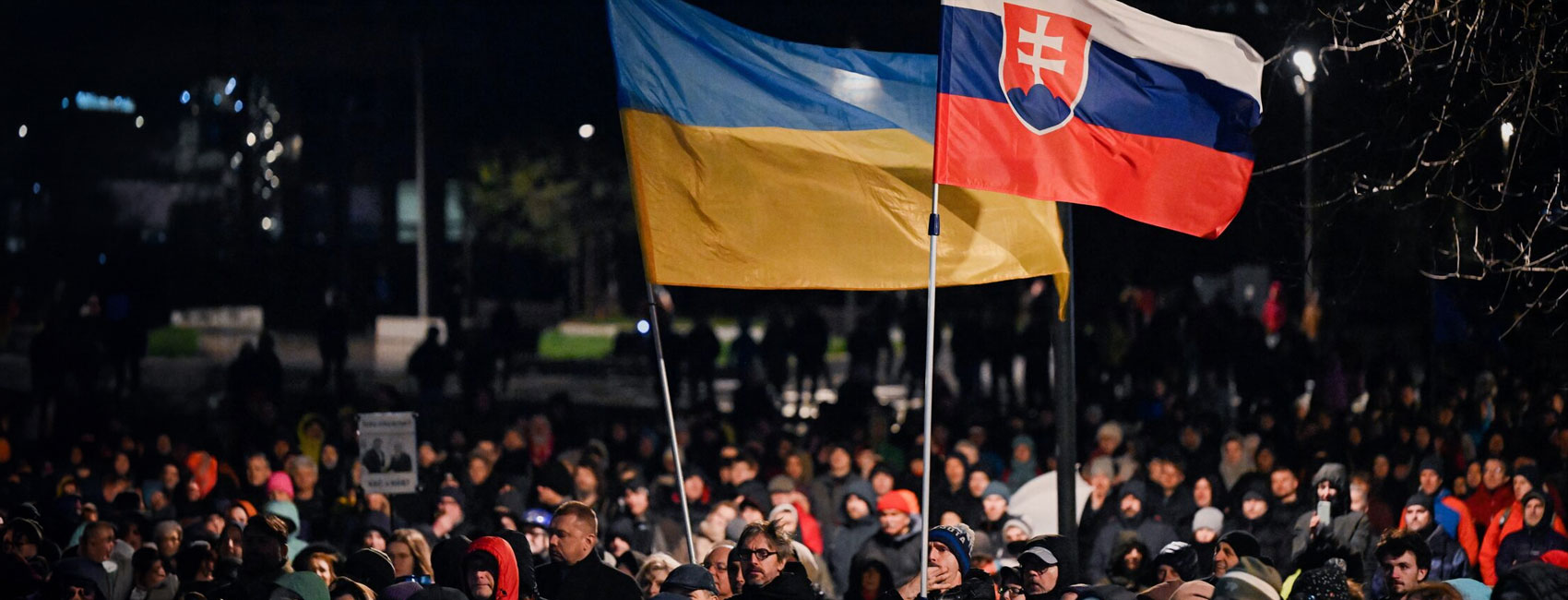
At the end of April, Tranz, a festival of translated literature, took place in Banská Bystrica, a Slovak city nestled among the mountains. Two years ago, Ukrainian author Sofia Andrukhovych was among the featured festival guests. This year, the festival did not receive funding from the Slovak Arts Support Fund (Fond na podporu umenia), which, despite the team’s dedication and enthusiasm, forced the program to be reduced. The festival’s guests were limited to Slovak writers, translators, radio hosts, and publishers. When talking to them, it becomes clear that they share one concern: What’s next? Some have already lost their jobs, while others are finding it difficult to make ends meet.
Poet, translator, and cultural manager Anna Sedykh spoke with Slovak publishers and organizers of cultural events to gain a better understanding of the situation in the country and how cultural figures are trying to counter it.
Where are Ukrainian books?
In recent years, Slovakia has seen a record number of published Ukrainian literature translations. This is partially due to Translate Ukraine, the Ukrainian Book Institute’s grant program, which has brought 18 titles to shelves across Slovakia. Before the outbreak of the full-scale invasion, the situation was different, and the war has served as a catalyst for bringing people together.
In 2022, Marek Vadas, a Slovak writer and editor-in-chief of the literary magazine Knižná review, wrote an article titled, “Where are Ukrainian books?” After his commentary was published, the Slovak independent media outlet Denník N launched a fundraising campaign among readers and managed to raise EUR 12,000 for publishing books by Ukrainian authors Ostap Slyvynsky, Yuri Andrukhovych, and Andriy Lyubka. Since the outbreak of the full-scale invasion, Ukrainian writers have been featured as honored guests at nearly every literary event in the country. Now, the cultural dialogue that started to take hold is under threat, particularly due to the systematic bullying and baiting of cultural workers by political elites, budget cuts imposed by the Slovak Ministry of Culture, and the dissolution of the independent Arts Support Fund.
Culture on hold
On March 31, “The Great Cultural Mobilization” mass protest took place in Bratislava. Fourteen thousand people stood up against Slovakia’s Minister of Culture, Martina Šimkovičová. The protest was sparked by a decision by the Council of the Fund for the Support of the Arts to cancel financial support for cultural institutions that already had signed three-year contracts. This put their operations at risk. Two months before the event, 70 percent of the funding for the BRaK Literary Festival, the largest in Slovakia, was cut. František Malik, the founder of the festival, said that such uncertainty makes it impossible to plan a literary event on that scale. This year, they decided to hold the festival anyway. To do so, they launched a campaign on a crowdfunding platform, where, at the time of writing this article, they had managed to raise over EUR 15,500 of the EUR 75,000 needed.
“The festival will take place, but we’ll see what it will look like,” said Malik.
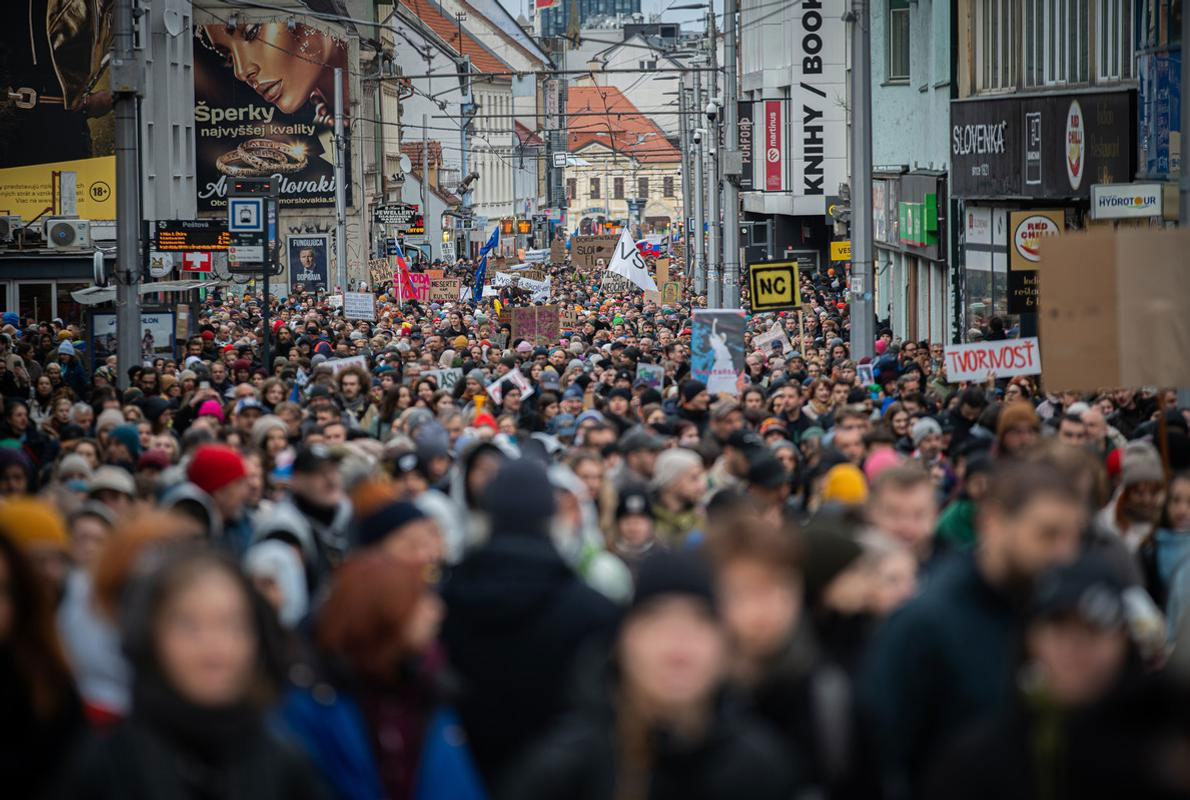
Protests in Slovakia
In addition to the festival, Malik founded the BRaK publishing house, which has published books by Taras Prokhasko, Volodymyr Rafeyenko, and Serhiy Zhadan, and others. The first book they published was “The War That Changed Rondo” by Romana Romanyshyn and Andriy Lesiv. When I asked how the loss of financial support would affect the publishing house, Malik said they would need to reconsider their approach and become more selective in choosing which books to publish. He noted the strain of publishing Slovak literature because of its high resource demands.
“We may have to publish smaller print runs, or use a different type of paper and binding. It often occurs that crises compel us to reconsider our approach to get closer to our readers,” said Malik.
Instead of subsidies from the arts fund, they will have to focus on pursuing various European grants. In this context, Malik has also mentioned the Translate Ukraine program. This year, they received a grant to publish “A Brief History of Ukrainian Borshch” by Eugenia Kuznetsova and Sophia Suliy.
“We prepare every issue as if it were our last”
Since the outbreak of the full-scale invasion, Vadas has not only organized a fundraising campaign to publish Ukrainian books, but has also begun publishing essays by Ukrainian intellectuals in Knižná revue literary magazine. The magazine is produced by the Slovak Literary Center (Slovenské literárne centrum), to promote Slovak literature both at home and internationally.
Vadas explained that they, just like other institutions, are confronted with an existential threat. The Literary Center still does not have a confirmed budget for this year, which is why they had to skip the London Book Fair, and are presently operating in crisis mode.
I asked whether the situation would affect the publication of Ukrainian essays in the magazine.
RELATED: A choice we need to make: Michal Hvorecký on opposition culture and Slovak authorities
“At Knižná revue, we prepare every issue as if it were our last, but we don’t intend to change anything in terms of content. We’ve received positive feedback on the essays from Ukraine, and they will continue to be published. We owe this to our readers and to Ukrainian literature, which until recently was only superficially known in Slovakia,” said Vadas.
He added that the current situation with the Arts Support Fund will have a profound impact on the entire Slovak market. Its limited size makes it impossible for quality literature to survive without public funding. The withdrawal of subsidies will limit the international release of critically acclaimed authors to major market players. Book publishing risks becoming a luxury as a result of price increases that will have to be passed on to ordinary readers. The crisis will affect both contemporary domestic literature and translations.
Propaganda instead of art
Why is the Slovak Minister of Culture implementing this kind of policy? Dominik Želinský, a sociologist at the Slovak Academy of Sciences (Slovenská akadémia vied), explains that Šimkovičová is acting on her impulses as a far-right politician. Her career is built on criticizing EU migration policy, skepticism toward Covid-19 vaccination, and promoting pro-Russian narratives. Using media resources and her social media presence, she successfully campaigned as a candidate for the ultranationalist SNS party. Although the party became part of the coalition, it was not popular among Slovak citizens and received only 5.6%. Fico’s current coalition relies on a fragile majority in parliament, holding only 79 of 150 seats. As a result, the SMER party is dependent on every vote, including those of the most pro-Russian radicals.
Šimkovičová began systematically dismantling independent institutions after becoming Minister of Culture. She dismissed the heads of state cultural institutions without clear justification, shut down public television and radio (RTVS), and established STVR in its place, which allows the government to influence editorial policy.
The Ministry also oversees the decisions of the Arts Support Fund. Previously, the Fund was independent, and funding decisions were made by expert committees that supported not only institutions and festivals, but also writers, translators, scholars, directors, artists, and other cultural figures. Now, the final say on the allocation of funds rests with the Fund’s Board, whose members are appointed by the minister.
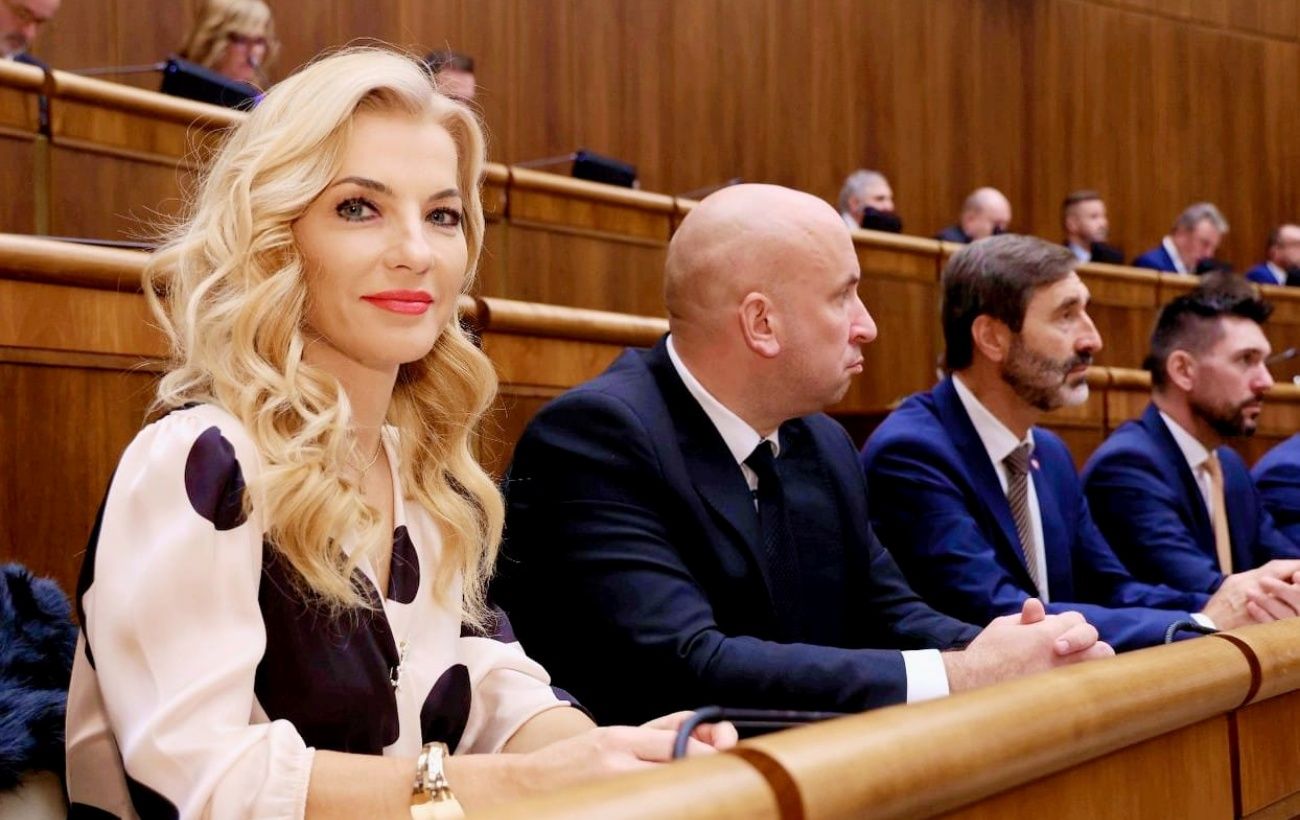
Slovakia’s Minister of Culture, Martina Šimkovičová
Paradoxically, the Arts Support Foundation was created in 2014 through an initiative by Marek Maďarič of the SMER party. Currently, they form a coalition with the radical SNS party, under which Šimkovičová ran. This shift demonstrates how not only SMER but all of Slovak politics has become increasingly radical. To stay in power, Fico must keep even the most radical and pro-Russian voices from the fringes of Slovak society within his governing coalition. Something like this would have been hard to imagine in Slovakia just a few years ago.
When asked why the Fund’s independence is being undermined, Želinský responded that this was undoubtedly a matter of rejection of what might be called “liberal-oriented cultural organizations.” However, in his opinion, it is mainly about “the desire to redirect resources toward a different network of recipients, likely a group of authors or affiliated organizations and entrepreneurs who feel overlooked by the current system.” Consequently, the Foundation for the Support of the Arts recently provided EUR 25,000 to the pro-Russian propaganda outlet Hlavné správy instead of cultural magazines, and a café in a Bratislava shopping center received EUR 140,000 in subsidies instead of independent cultural institutions.
From street slogans to actual lawsuits
Publishers, festivals, and cultural centers are seeking alternative sources of funding and are increasingly turning to crowdfunding. However, it is more complicated than that. According to Tomáš Hučko, the publisher, event organizer, and editor-in-chief of Kapitál media outlet, the information space is flooded with cultural fundraising efforts, which is not a sustainable long-term solution.
Protests calling for the culture minister’s resignation have also been ongoing for over two years. Hučko said that at the most recent protest, it appeared that even the organizers no longer expected any response. “It was almost as if you could read between the lines, although certain demands were made at the end, I don’t know if anyone in the crowd actually believed those demands could be met.”
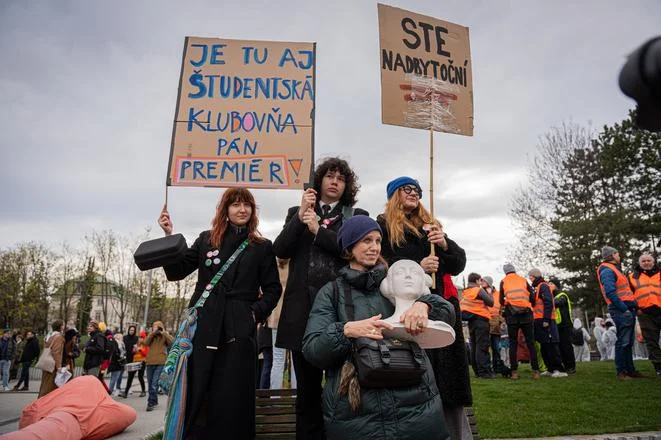
Protests in Slovakia
Despite this, according to Hučko, the protests are of great significance. First, they bring attention to issues in the media and shed light on what is happening. Second, people can come together and feel that they are not alone. And, most importantly, there are the legal measures. A few days after the protest, cultural organizations that had lost their funding filed a lawsuit with the Prosecutor General’s Office against the Fund’s Board for the unlawful withdrawal of funding. “I believe that these legal measures ultimately make the most sense,” said Hučko. “In some cases, it has already become apparent that politicians were forced to at least minimally adjust their behavior.”
The point is that following the lawsuit, the Ministry of Culture stated that it would consider returning the lost funds to state institutions. However, this does not apply to independent cultural initiatives or civil society organizations.
Alongside protests and legal action, cultural figures have united to create the “Open Culture” movement, which is working on a plan to reestablish the institutional functioning of the cultural sector should the country’s political situation change.
“In my opinion, this is a very wise move, and I believe that other countries facing similar situations should give this some thought,” said Hučko. “If we fail to develop a vision for the future — even when better times arrive — we will once again allow others to make decisions for us.”
The main risk lies in the lack of a “Plan B” in case a future government turns out to be hostile to culture as well. Such a scenario would require preparing for more radical measures and even more difficult times.
RELATED: The VAT on books reduced in Slovakia: What effect will this have?
Translation: Iryna Savyuk
Copyediting: Terra King and Ben Angel
Читомо» — це медіа про книжки й літературу, що підтримувало українське книговидання задовго до того, як це стало трендом. Ставайте частиною історії — доєднуйтеся до Клубу Читомо!
the more you read, the greater the possibilities