* ESC - close the search window
CZECH REPUBLIC
Up to 450,000 people protest in Prague over public media funding
19.11.2026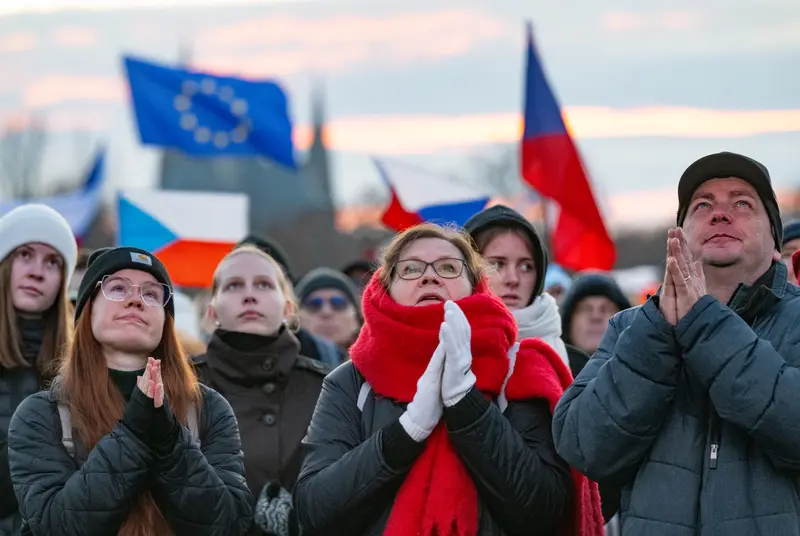
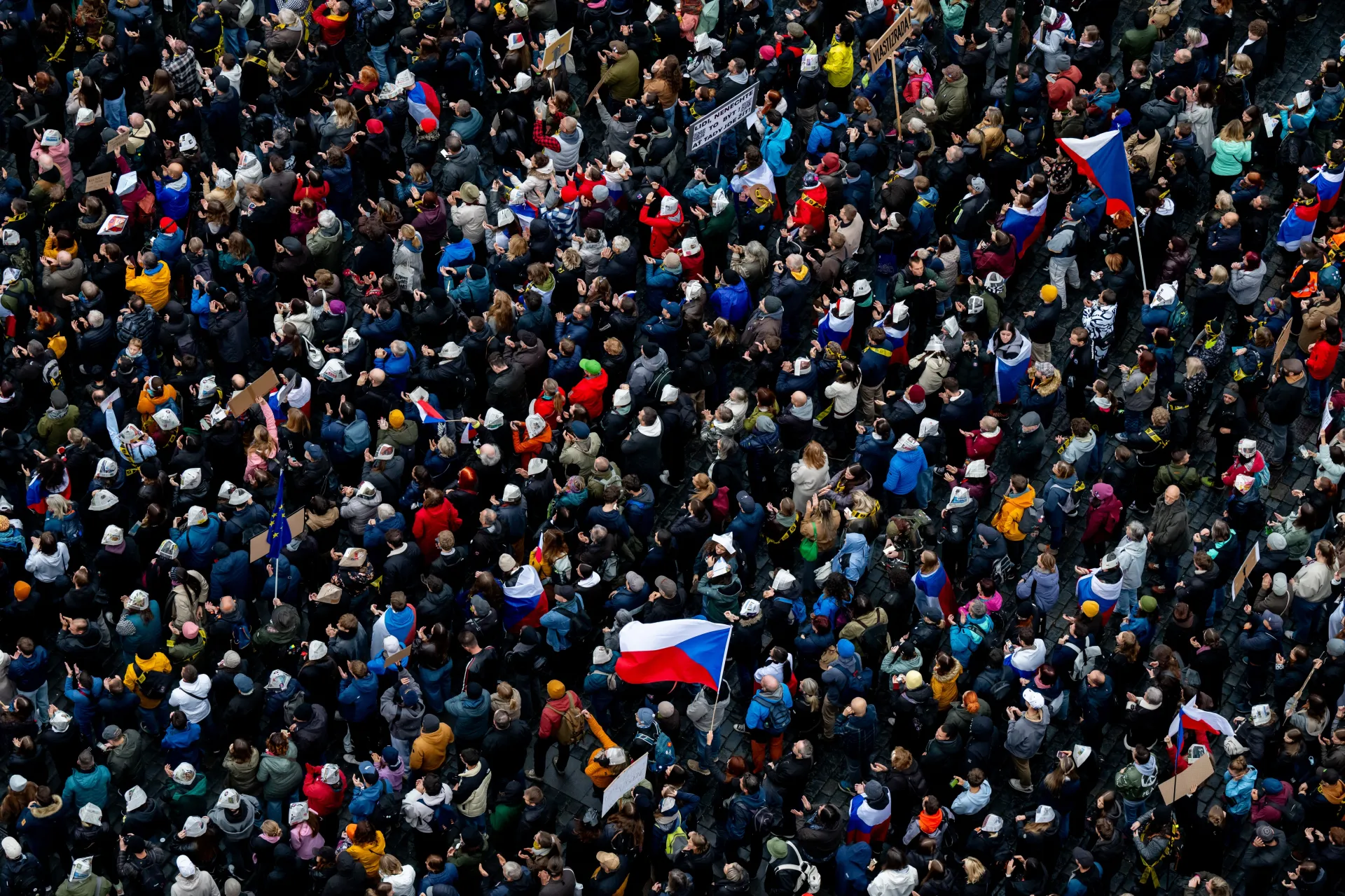
Hundreds of thousands of people gathered in Prague on Nov. 15 to protest a government proposal to abolish licence fees for Czech Television and Czech Radio, replacing them with direct state funding. The proposed changes have raised concerns about the independence of public service media.
The rally, held at Prague’s Letná Plain, was organised by the civic movement Million Moments for Democracy (Milion chvilek pro demokracii). According to the Czech News Agency (ČTK), organisers estimated attendance at between 350,000 and 450,000 people. Police did not release an official estimate. If confirmed, the turnout would make it one of the largest demonstrations in Czechia since the fall of communism.
The protest, titled “Letná Against 4:36,” referred to the time when the Czech Chamber of Deputies advanced the government’s public media funding bill on Oct. 24. The vote took place at 4:36 a.m. after the parliamentary majority restricted the opposition’s speaking time.
The proposed legislation would abolish the existing licence fees for Czech Television (ČT) and Czech Radio (ČRo), replacing them with direct financing from the state budget.
According to a joint statement by the European Broadcasting Union, the European Federation of Journalists, and other media organisations, the proposal would reduce the broadcasters’ combined annual funding by approximately 15%, or approximately 63 million US dollars, to around 351 million US dollars.
The organisations warned that the changes could weaken editorial independence and undermine the broadcasters’ ability to provide public-interest journalism and other services.
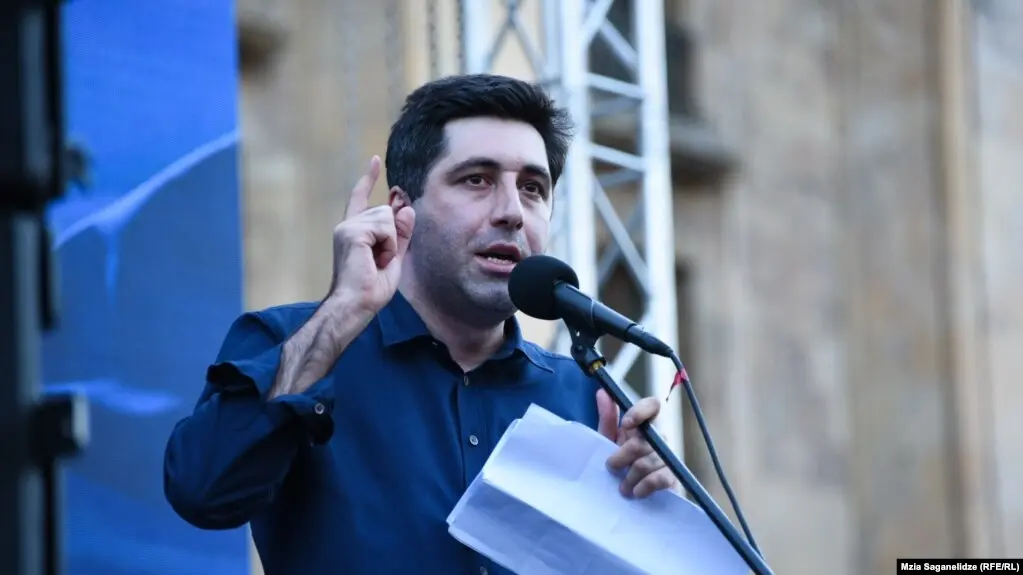
At the demonstration, Million Moments for Democracy chairman Mikuláš Minář called on the government to withdraw the bill, begin an open public debate, and abandon the practice of pushing through important legislation without sufficient scrutiny. Organisers also demanded the removal of Tomio Okamura, leader of the Freedom and Direct Democracy (SPD) party, as speaker of the Chamber of Deputies.
Minář also announced a nationwide protest action for Dec. 2 and invited government representatives to a public debate with experts and citizens at Prague’s Švanda Theatre later that day.
Several prominent cultural figures took part in the demonstration, including writer Radka Denemarková, actor and screenwriter Zdeněk Svěrák, actors Ivan Trojan and Barbora Hrzánová, musician David Koller, singer-songwriter Karel Plíhal, and Slovak filmmaker Tereza Nvotová.
Denemarková said that independent culture could not be silenced and described the situation in Czechia as the country’s worst since 1989. Nvotová warned about developments in neighbouring Slovakia, where changes to public broadcasting have raised concerns about government influence over independent media.
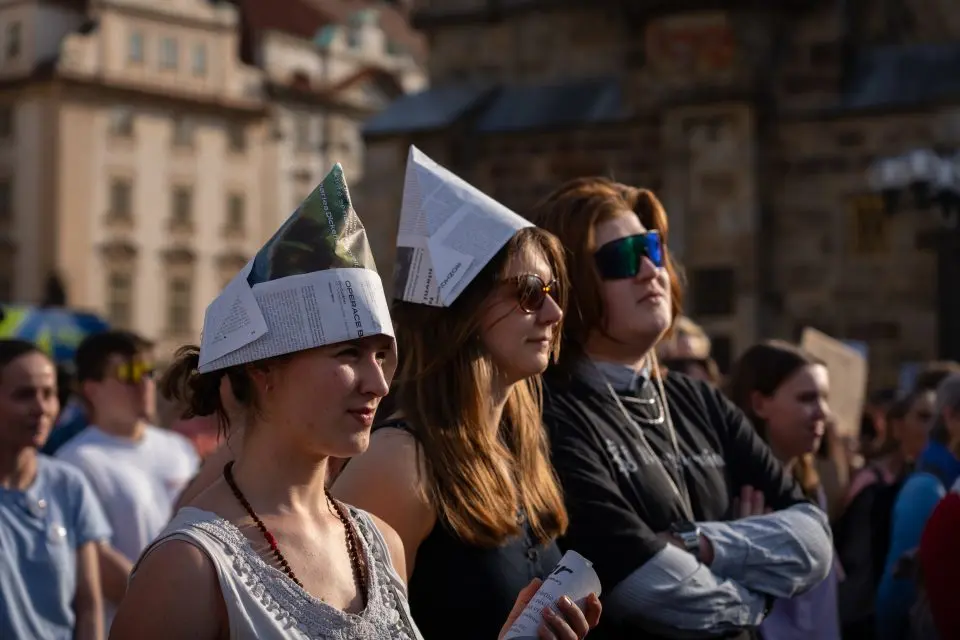
European Federation of Journalists President Maja Sever also addressed the rally. In a statement published on Nov. 17, the federation said it would continue working with Czech journalists and public broadcasting employees to defend the institutions’ independence.
Prime Minister Andrej Babiš rejected claims that the proposed reform would threaten media freedom. He said he respected the right to protest but disagreed with the demonstrators’ arguments, insisting that the government would proceed with abolishing licence fees. Babiš maintained that the reform concerned the funding system rather than editorial control.
On Nov. 16, however, Culture Minister Klempíř called for postponing further parliamentary consideration of the funding bill until lawmakers begin debating national legislation implementing the European Media Freedom Act (EMFA).
The parliamentary committee responsible for media and culture had already suspended consideration of the bill on Oct. 29, with discussions scheduled to resume on Dec. 10. A public hearing on the proposed funding changes is also planned for late November.
His announcement followed a meeting with European Commissioner Michael McGrath on safeguarding the independence of public service media. The ministry said the European framework should provide important protections for Czech Television and Czech Radio. The proposal to postpone consideration does not amount to a withdrawal of the reform.
The demonstration followed several weeks of protests and industrial action. As reported earlier, thousands gathered in Prague’s Old Town Square on Oct. 25 after the legislation passed its initial parliamentary stage. Employees of Czech Television and Czech Radio subsequently held a one-day strike on Nov. 3, affecting broadcasts.
The dispute comes amid broader concerns about cultural funding in Czechia. As reported earlier, the government’s adoption of a contested cultural policy framework in October coincided with reductions and restrictions in funding for literature, publishing, and cultural programmes. Support for literary periodicals and events declined to approximately 1.19 million US dollars in 2026, compared with 1.53 million US dollars in 2025.
Main photo: ČTK/Vondrouš Roman
Читомо» — це медіа про книжки й літературу, що підтримувало українське книговидання задовго до того, як це стало трендом. Ставайте частиною історії — доєднуйтеся до Клубу Читомо!
the more you read, the greater the possibilities
87
2026 Memory of Nations Awards
Stanislav Aseyev receives the Czech Memory of Nations Award
19.11.2026 -
42
Czechia
Czechia opens new national library facility with capacity for three million items
12.11.2026 -