* ESC - close the search window
book industry
From trenches to books: How veterans are entering the publishing industry
01.05.2026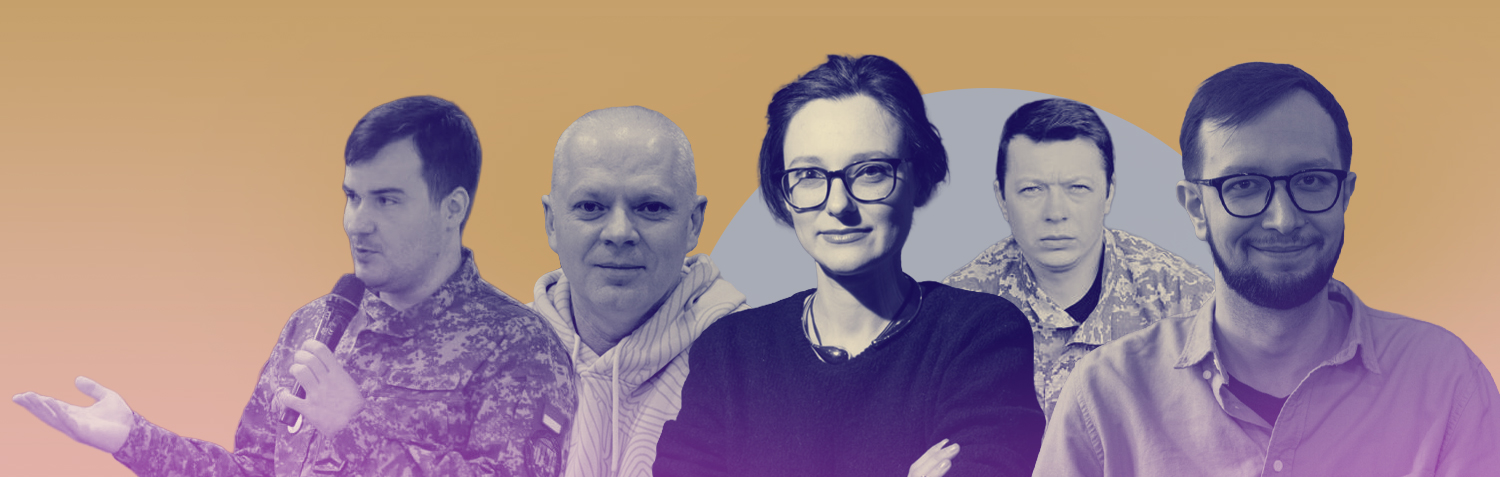
You see an error in the text - select the fragment and press Ctrl + Enter
In his publication “The Book at War: Libraries and Readers in an Age of Conflict,” Andrew Pettegree shows how the role of literature and interest in reading grew during the two world wars. In trenches, hospitals, prisoner-of-war camps, and bomb shelters, books became pure treasures. Ukrainian society is experiencing this trend firsthand. The war has boosted the industry’s development: long queues at the International Book Arsenal festival, the rise of new bookstores and publishing houses, including those run by veterans, and participation of Ukrainian authors and publishers in international events at a level never seen before. Chytomo spoke with veterans who have immersed themselves in this field. For some, it has been a return to a beloved profession. For others — a chance to make a dream come true.
High-book shelves do not exist
Owner of the Kyiv Zbirka bookstore Natalia Kuzmenko doesn’t like the term “female veteran.” She identifies herself as a war participant and a reservist. “Life was wonderful and carefree,” Kuzmenko recalls of the time before the full-scale invasion. “I worked as a creative advertising manager at The Village magazine, and before that at Bird In Flight. My life resembled that of a typical Kyiv hipster. It was full of coffee breaks, brainstorming sessions, Zoom meetings, and coming up with fresh, trendy ideas and promotional content for brands. Alongside the responsibility, there was still a certain childlike quality, room for imagination, lightheartedness, and the understanding that ahead was a bright future, nothing was impossible, and it would all be good.
“Everything came crashing down on Feb. 24, 2022. I had to find my place in this new world.”
Kuzmenko’s ex-husband was drafted, and she stepped in to help the military. “I volunteered and worked at the same time. I wasn’t just a volunteer sorting or packing humanitarian aid. Various advertising agencies formed groups that focused on crafting specific messages and supporting the creation or promotion of content, and I participated through volunteer organizations. It was when I learned that I could work on this more seriously while serving in the military.”
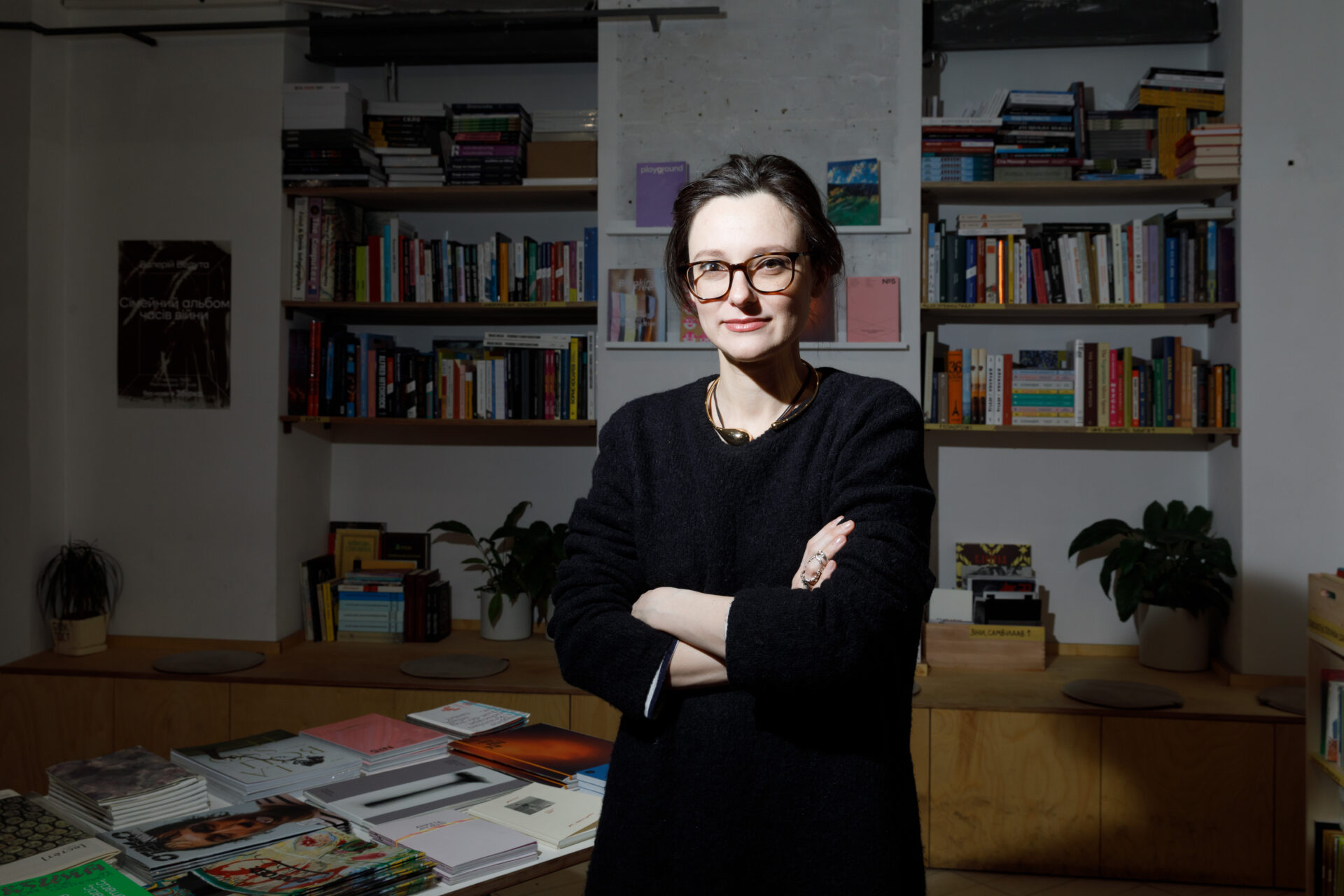
Kuzmenko was in the military for over a year and a half. The hardest part for her was becoming part of the system. “I’m a very disorganized and unstructured person. I knew how to work 12 to 14 hours a day, but remaining in that state all the time, being disciplined, strict, and obedient, was likely one of the most difficult challenges for anyone who, until then, had been lucky enough to be allowed to be a creative person — or, in other words, a boho type.”
It was precisely these difficulties that inspired Kuzmenko’s dream. If it weren’t for her service, she would hardly have dared to open a bookstore. “The army takes away simple, seemingly unimportant things, like choosing what you eat, where you are, what you wear, and what you’ll be doing today. You don’t belong to yourself — you belong to the state. The state, actually your commander, tells you when to do things. The army highlighted the importance of making decisions on my own and taking control of my life by choosing what I wanted to do.
“For me, reading a book is a meditative process where I can spend time with myself and have a conversation with an interesting person, the author, learn something new, use my imagination when reading fiction, and deepen my knowledge when it comes to philosophy. The profession of a literary scholar helps uncover additional layers of understanding, not just by reading the surface-level plot, but by placing the book within a specific context,” said Kuzmenko.
You don’t really have personal space and free time in the army, but Kuzmenko managed to immerse herself in reading. After her service, her need for solitude grew considerably. She also realized that a poorly chosen book can put someone off reading altogether. “We might pick up a bad nonfiction book about ‘successful success’ and stop reading in that genre. It seemed to me that there was a rather high reverence for books, and some people say: I’m not ready for this book, not ready to read Timothy Snyder, or Serhii Plokhy, or Tony Judt, or Vira Ageeva, because you have to read a lot of other things first … I’ll read something simpler, posts in social media or articles. The whole ‘high shelf’ thing plays a cruel joke on literature and on the book as such.”
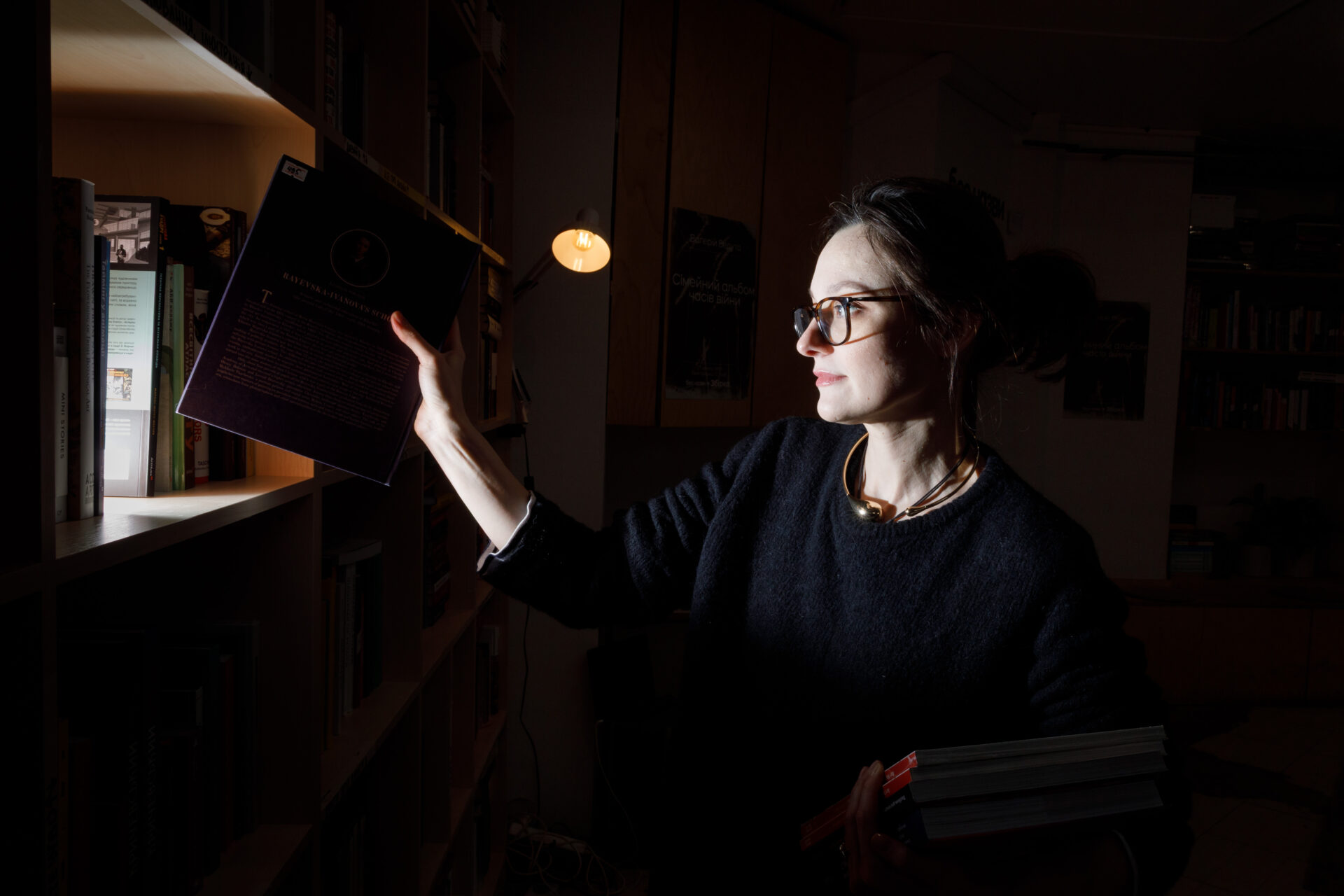
The Zbirka bookstore sells exclusively nonfiction. There is no coffee or food here. In a separate room, there is a small gallery known as “Untitled.” This approach, first of all, allowed Zbirka to stand out in the common environment, and allowed Kuzmenko to minimize the amount of work she didn’t want to do. She explained that she wanted to create something unique, simply selling books: “The emphasis on nonfiction is driven by financial limitations; that is, if fiction were to be properly showcased, the bookstore would need three entire floors, and that would still only cover 20th-century Ukrainian literature. After figuring it out, I realized that nonfiction also requires three floors. So, we’re narrowing our focus even further to art, to photobooks, to books on history and cinema, trying to curate a selection that’s deeper but of higher quality, so that someone who wants to learn about art knows they can come to Zbirka, get great advice, and find a selection of books where art isn’t just a single shelf.”
Events that aren’t directly related to books take place here. The bookstore hosts techno parties, for instance, and they present books or zines about electronic music. There’s a photobook reading club. “Oleksandr Lyapin teaches people to read these books through visual imagery,” Kuzmenko explained. “We had Peter Pomerantsev as a guest, and talked about his new book ‘How to Win an Information War: The Propagandist Who Outwitted Hitler.’ We discussed how to defeat Russia. In other words, we organize boundary-pushing events that make books more accessible to people. They are not scared of books, and books transform from a textbook into a means of obtaining information. In this way, we attract an audience that generally isn’t very into books but isn’t opposed to learning something new. In my opinion, by striking this balance, we try to promote a culture of reading, not because people ‘have to’ read, but because books hold a vast amount of knowledge that you can’t always find on the internet. If you’re interested in a particular topic, you need to delve into some research and books.”
RELATED: “The Mountain Is You”, Zaluzhnyi, and Illarion Pavliuk: Bestsellers in Ukraine 2025
Kuzmenko described regular customers of the Zbirka bookstore: “They’re curious and eager to learn something new, and they have an inquisitive spirit. They’re genuinely interested. Art books are bought by art historians, but doctors, lawyers, and military personnel buy them too because they want to learn something new.”
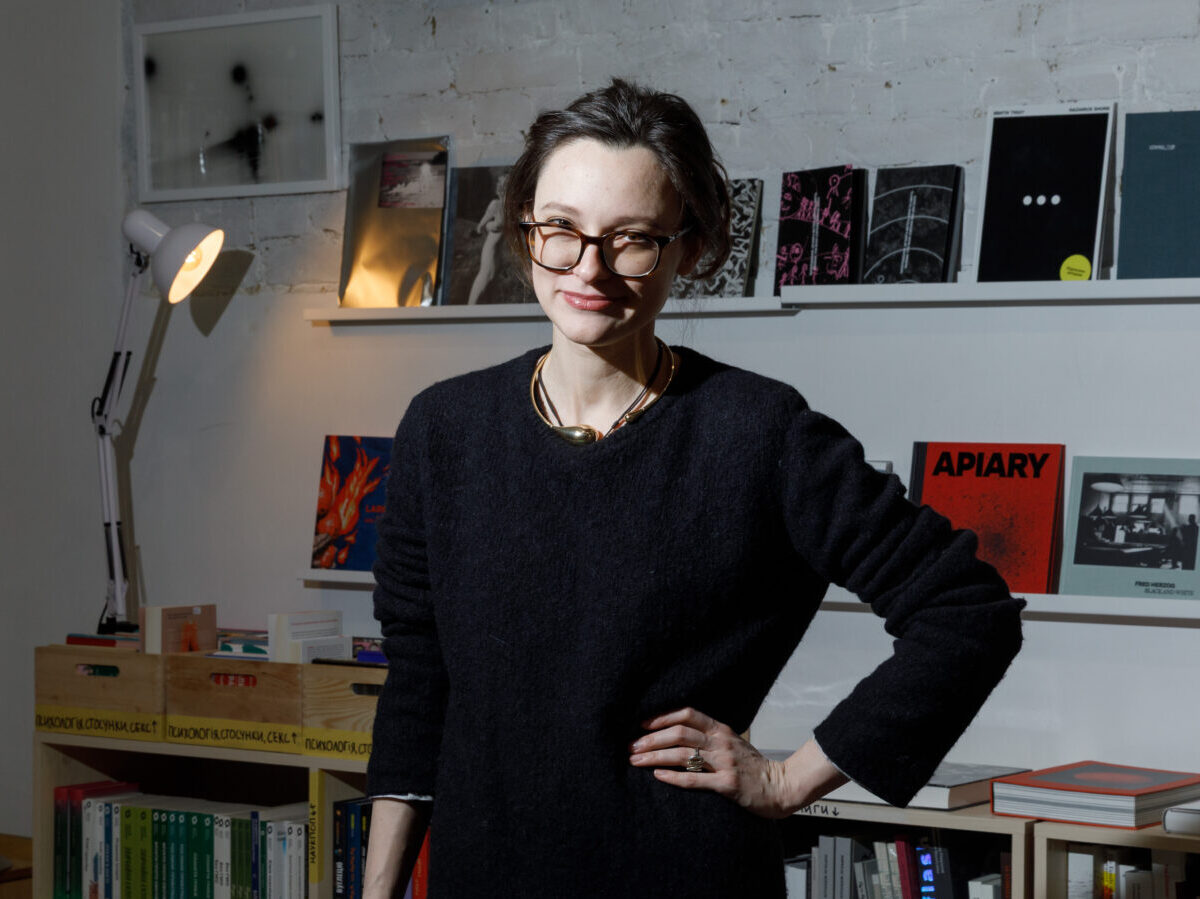
Kuzmenko said she wanted to challenge the cliché and sense of reverence for art books suggesting they are only for art historians, and her aim is to show that foundational books on art can be accessible and easy to understand. “Sometimes people have this mindset: ‘I don’t know who Oleksandra Exter is, so I won’t read this book.’ I’m so glad that Projector Publishing is putting out this series of books. It’s important popular science that talks about Exter not as some embalmed, monumental figure described in complicated terms through context and discourse where it’s no longer clear what the author actually meant. Instead, it tells her story as a woman who returned to Kyiv after World War II, searching for herself, struggling with work, and trying to balance art with commercial endeavors. Here, it seems, everyone recognizes themselves. And then this book and this artist reveal themselves on entirely different levels of understanding and become more accessible, and after reading the book, people go to the exhibition and watch the film.”
From the final audit to Ukrainian fantasy
Andriy Kaspshyshak entered the publishing industry with the aim of paying tribute to his fallen comrades. Founder of the Mrielov (Dream chaser) publishing house, writer, and head of the Veterans’ Office at the Ukrainian Catholic University, until 2022 he was a graduate student and had a successful career as a financial auditor at the international company PricewaterhouseCoopers.
“We audited the finances of large companies. It was quite interesting, and from the inside we could see how different businesses operate. I worked on international projects with Eastern Europe, Brazil, Colombia, and Japan.”
Kaspshyshak joined the 103rd Territorial Defense Brigade named after Metropolitan Andrey Sheptytsky and was 25 years old at the time. Kaspshyshak was a rifleman at first; his unit was assigned to guard various facilities in Lviv. In late April, the unit was sent to the Luhansk Oblast. “At the time, there was an offensive on Bilohorivka, and that was our first real combat experience. By autumn, I had been reassigned. Drones started appearing, and we were transferred to a separate reconnaissance company. And we, in particular, trained all the battalions to fly. And then we had drones, so we focused more on reconnaissance.”
Next came the counteroffensive on Lyman. Kreminna, Izium, Kupiansk, Svatove. In May 2023, Kaspshyshak returned home after being discharged for family reasons. He recalls that the hardest part was during the fighting in Bilohorivka. It was May. The enemy had stepped up its activity ahead of Victory Day, and the shelling didn’t let up. Under fire, he started to reevaluate his whole life and things he had done.
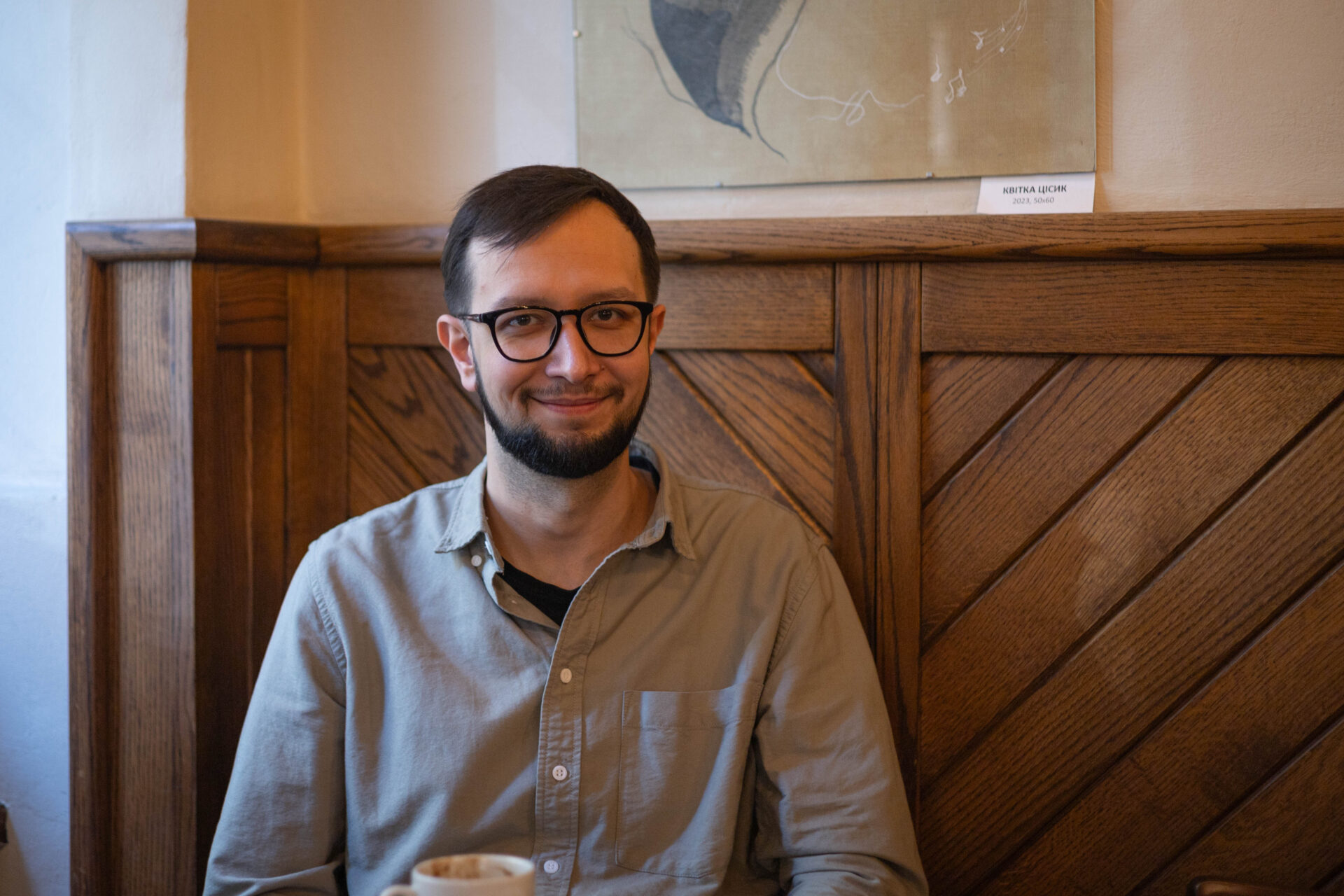
“Since Feb. 2022, I think we’ve all changed a lot. Everyone’s starting to forget that. Back then, everyone’s values shifted, and we realized what really mattered and what didn’t. In the blink of an eye, people were losing their apartments, houses, and cars. A friend of mine had a brand-new Volkswagen T-Roc, bought straight from the dealership. We had no other car, so he took it to the front line, and he was okay with that. That wasn’t the most important thing. I wondered what would happen if I died. Had I lived a life that was truly worth living? When I was a schoolboy in 11th grade and it was time to choose where to apply, teachers and parents gave advice, wanting what was best. They said you have to grow up, sit at a laptop, make money, feed your family, and so on. So, I followed the path I had chosen. Then I came to understand that it wasn’t really about the money I had made — though I suppose it might be enough for a monument, I’m not sure. I realized that the government pays for it!” said Kaspshyshak, laughing.
That’s when he got the feeling that his life had taken a wrong turn. He promised himself that if he survived, he would write and devote himself to books: “On Dec. 31, 2022, right on New Year’s Eve, I ended up in a hospital in Kharkiv. Russia was already bombing the city, and there was no electricity, and communication was almost gone. It was impossible to go online. I realized it was peace: No one was bothering me. I wasn’t in a hurry to go anywhere. I started writing. It was a fantasy in memory of my fallen friends, who had become knights fighting evil in a fictional world. I’ve lost so many friends. When I go to the cemetery in Lviv, there are about 30 graves I need to visit. I wanted my friends to live on, so I decided I’d try to write a book, but I didn’t want to write a memoir.”
After leaving the military, Kaspshyshak set out to fulfill his promise. He admitted it was not very original, since most veterans switched careers. At first, Kaspshyshak returned to his old job but continued working on the book. He finished it in Sept. 2023. It was a warm autumn evening. He was downtown with his wife drinking coffee and discussing what to do with the manuscript. His wife suggested starting their own publishing house.
“Sometimes I regret not submitting my work to a publisher — it would have been interesting to know their opinion,” said Kaspshyshak. “Anyway, we started our own press, beginning with my book, and then things really took off.”
It was difficult to arrange things without experience or connections. The couple paid editors, illustrators, and layout designers out of their own pockets, and tried to cover printing costs with grants. In April 2025, Kaspshyshak quit his job because Mrielov was growing and needed more and more attention. “If we’d had more experience, we wouldn’t have started with just one book. We should have started with several. I was unemployed for a month and a half. It was a wonderful time. I enjoyed focusing on the publishing house. Then a position opened up for the head of the Veterans’ Office. My friends told me: ‘You can do good work here.’ It was important to know English, since veterans often struggle with it. So I went to UCU, and my wife had to quit her job. As it turned out, my wife is doing most of the work now. I really want to return to publishing, but honestly, I see that I’m doing useful things. For now, I’m juggling both.”
RELATED: Underground community: How literary evenings are held in Kramatorsk
The concept behind Mrielov is to publish fantasy with a focus on Ukrainian mythology, folklore, and culture. Other genres began to appear as well at some point.
“There will be a novel written in a mixed-language phenomenon in Ukraine — blending Ukrainian and Russian, typically using Ukrainian grammar with Russian vocabulary, or vice versa — that is a colloquial, spoken hybrid resulting from long-term bilingualism and Russification, surzhyk,” Kaspshyshak says. “It begins with a grandmother and a child mocking the Ukrainian language. It’s about a girl in the Khmelnytsky Oblast who grows up in a family where they constantly reminisce that ‘life was good when Lenin was in charge’ and her grandfather worked as a factory director. The girl gradually ventures into the outside world, and it all ends on the Maidan. Throughout the book, she transforms, and the surzhyk becomes less and less prominent. A tragicomedy that starts off quite funny, but in the end … the Maidan. There will also be a detective story set in the Carpathian Mountains, where there’s a boarding school, and mysterious murders take place there. There will be ‘Icarus,’ a detective story set in Kharkiv as if Valerian Pidmohylnyi had another novel he didn’t get a chance to publish. As if one of the author’s sons returns to Kharkiv from Germany in the 1960s to find the manuscript. There will also be a nine-book series on the history of Ukraine featuring the cat Hryhorii, where the cat, a pug, and the girl named Solomka travel through the space-time continuum to the past, to Kyivan Rus’, and they’ll be jumping around — there will be nine parts where they’ll study history.”
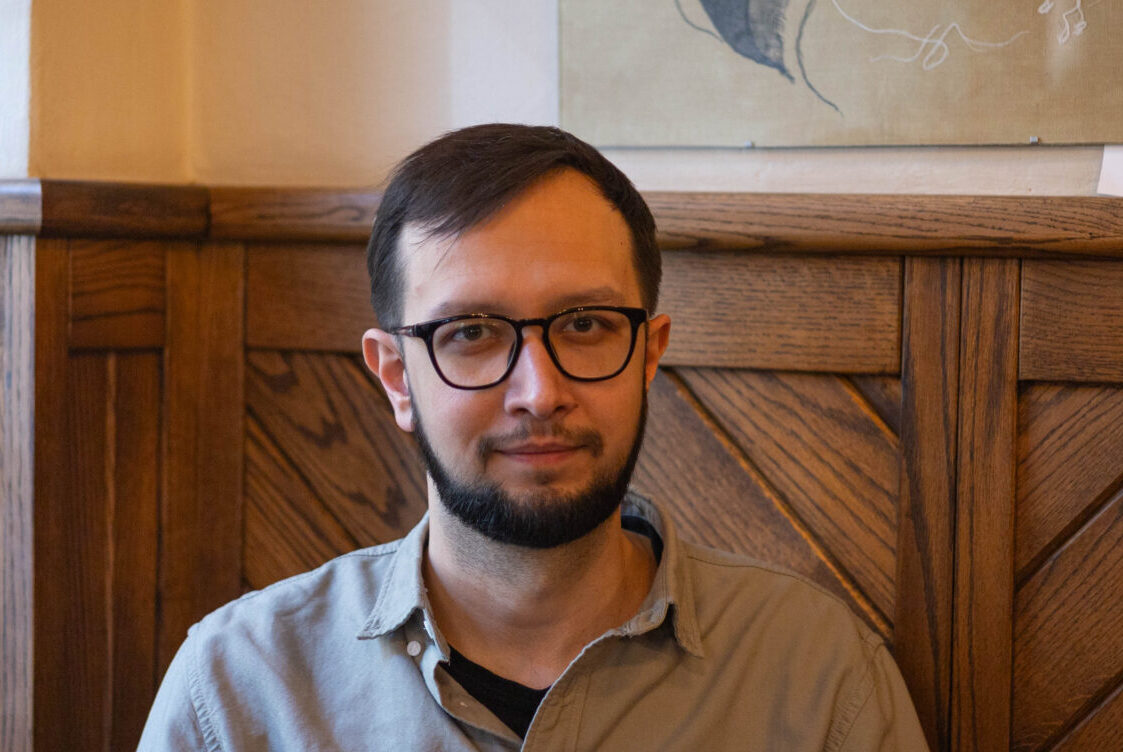
The publisher laughed and said that any business venture can serve as a kind of rehabilitation for a veteran, because in the army there was no time to think about anything beyond solving problems. After all, business itself is one continuous problem to deal with: “I feel that I’m making a real difference at the university. I’m building a community of veterans there; 1,015 people have taken certification courses at UCU. I’ve already come a long way here, and I can help other veterans return to civilian life. But publishing is a very interesting thing for me! First, you see people’s reactions to this product when they pick it up at festivals. Second, it’s very dynamic: constant challenges, problems every day, someone did something wrong, something needs to be done yesterday, the printer messed up, Nova Poshta lost the books. But it’s cool, I don’t know why. We like it.”
Design as a source of comfort
Work was a kind of physical rehabilitation for Volodymyr Shostak: design and layout helped him to relearn how to use his hand after the injury. We’re talking with Shostak at the Nash Format bookstore. Nash Format is the publishing house where Volodymyr worked for a year before his military service; now, he’s registered as a sole proprietor and collaborates with various publishers. Shostak decided to start his own business after he was discharged from the Armed Forces. “I started looking for an office job, but couldn’t find one for quite a long time. I guess subconsciously, I didn’t want to go to an office because I needed rehabilitation that included exercises in the gym and the pool. At that point, I realized I really needed to start my own business.”
Before the war, Shostak also worked at a printing company. After the annexation of Crimea in 2014, half of the clients dropped out because the company had been producing travel brochures for the peninsula. “Back then, I didn’t feel it was my war. I couldn’t accept it. It wasn’t mine, and that settled it. But in 2022, it suddenly became mine.”
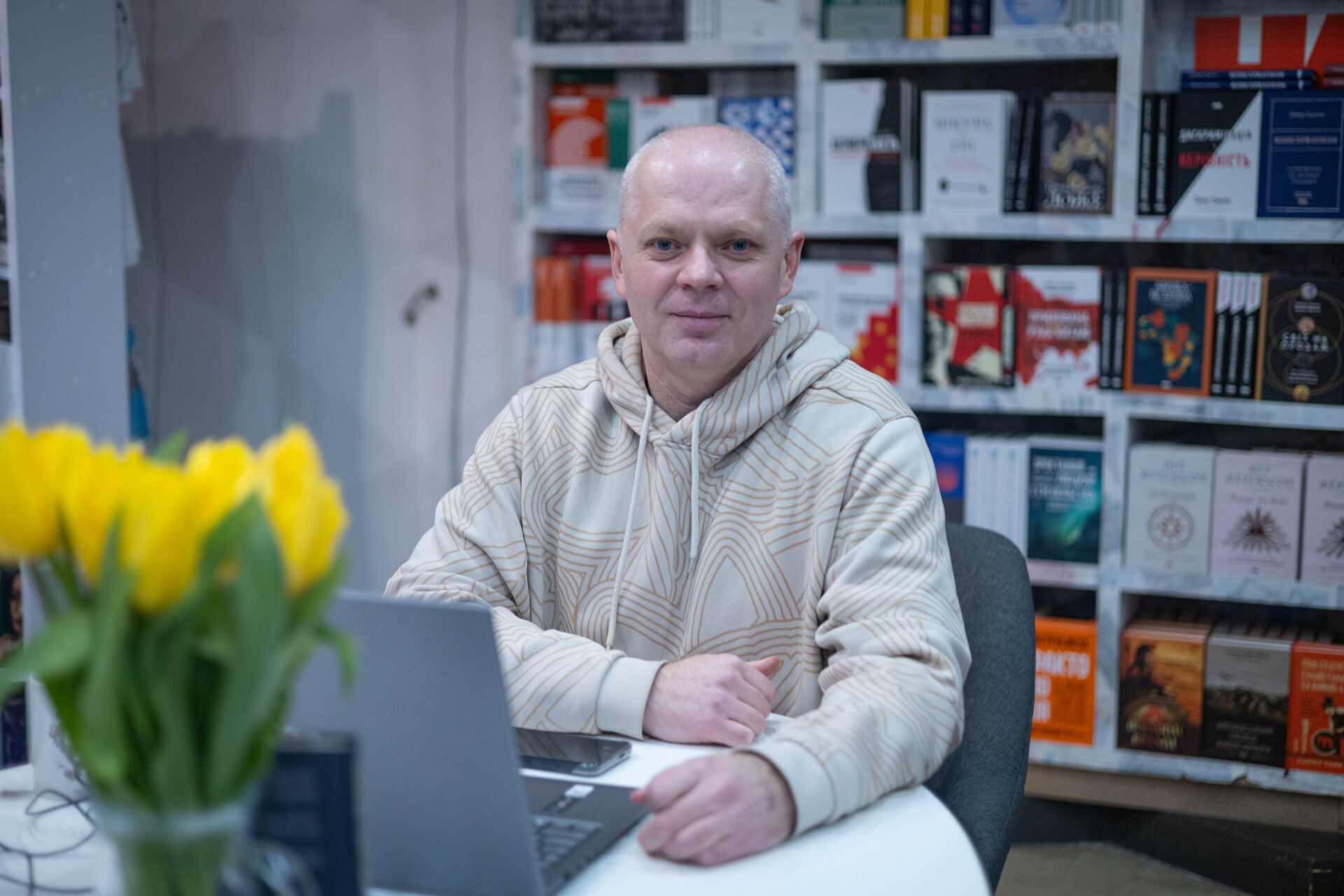
Shostak, a reserve officer, was mobilized into the 241st Territorial Defense Brigade on the fourth day of the full-scale invasion. Shostak was initially assigned as a platoon commander and then transferred to headquarters. He spent the first six months of his service in the capital. Having a good command of Polish, Shostak ordered books related to his field through the Nova Poshta post. In fact, he mostly skimmed them because didn’t really have time to read.
At headquarters, Shostak served as the duty officer. Later, his unit was deployed to the front lines. When he wasn’t on duty, Shostak continued to work. His work served as a source of comfort. For Publishing House XXI in Chernivtsi, Shostak digitized printed books, converting them into electronic formats. They sent him their entire archive of around 200 titles.
There was a shortage of manpower, so eventually staff officers were assigned to work at the front lines. They dug trenches and sawed logs to make roof beams for the dugouts. “I’d be on duty for a day, rest, then return to headquarters, where I’d update the combat log,” Shostak recalled. “If I had time, I’d take care of some personal business. Then the next day we’d go out to dig. We reached the destination safely twice, but on the third attempt, we were hit by a drone strike. Two of the men I was with were killed, and I was injured. I had a wound on my left arm, shoulder, and left shoulder blade. The left side of my head was also covered in shrapnel.”
Shostak woke up in a hospital in Kharkiv. Three days later, he was transferred to Lviv, where more shrapnel was removed and his wounds were stitched. After that, Shostak was sent to Chernivtsi.
Before his military service, Shostak used to read five or six books a month, and he had a habit of reading on the subway and on weekends. During his service, he wasn’t in the mood to read. He’d pick up a book, flip through it, and put it down. The only book that “stuck” was Sebastian Junger’s “Tribe: On Homecoming and Belonging.” “When I began treatment, I kept working—I needed something to stay occupied. I even went on tours around Chernivtsi. My arm was naturally limp for a while, but now it’s more or less normal. I got used to it and worked faster and faster.”
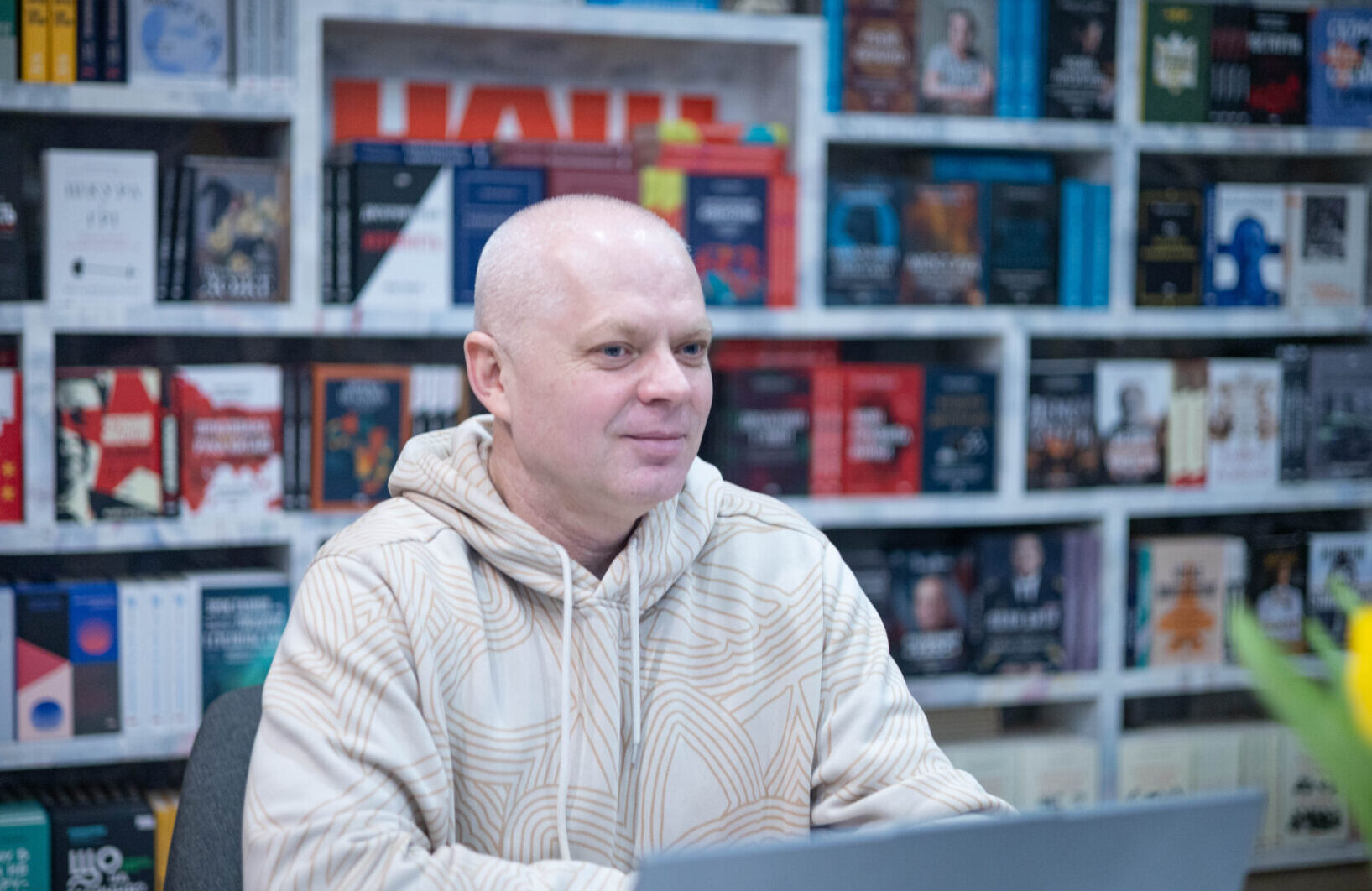
During the rehabilitation period, Shostak took several courses with Litosvita. “After that, I came to Kyiv and had a month of leave. The doctor prescribed two weeks at a health resort.” Then came the medical examination and waiting for the results. At that time, the warehouse of the Nash Format publishing house was damaged by shelling. Shostak helped move the warehouse as best he could, with one hand. He was asked to work night shifts at the publishing house’s bookstore, which is located in an underground space and also serves as a bomb shelter.
RELATED: Escaping reality: Books Ukrainian military turn to
“Starting around mid-summer,” Shostak recalled of the end of the rehabilitation, “I worked once, twice, maybe three times a week until the end of February. These were night shifts surrounded by books and everything one might need. Sometimes people would come in during air raid alerts, which made the experience even more unusual. I tried to read something and kept myself busy with work. Being on duty in the bookstore’s bomb shelter was an important part of adapting. Because, honestly, civilian life was driving me crazy.”
When Volodymyr decided to go freelance, the first publishing house to approach him was Bilka. He worked on a book about a Chechen battalion and on Svitlana Talan’s book about Severodonetsk for them. He is currently working on a collection of horror stories.
Next to Shostak is an open laptop. He worked on educational books about programming languages and is grateful to the publishing house and the bookstore for giving him the opportunity to do so. Shostak points to a wall of books: a collection of favorite books by the founder of Nash Format, Vladyslav Kyrychenko, who recently passed away.
For the past six months, Shostak has been working on the layout of a collection of poems by a female soldier serving in the National Guard. The battalion where he served was attached to this unit. In the author’s poems, Shostak recognizes familiar places: Chasiv Yar (though, admittedly, he has never been there), Raihorodok, Kupiansk … The author serves in exactly the same places where he once served.
Seriousness expressed through metaphor
Comic book writer, author, and translator Denys Skorbatyuk has returned to his work he loved after the war. Even before the military service, Skorbatyuk had an impressive creative resume. He has been working as a translator since 2018 and made his debut as an author in 2017. “During this time, I’ve worked with publishers MAL’OPUS, The Will Production, and UA Comics, collaborated with ArtHuss, Baiky, and the board game publisher Geekach. I’ve worked very productively and continue to do so with the publisher Molfar. Mriya is a comic book publisher. I also worked with Tuz, but they’ve since closed down.”
Skorbatyuk signed his reservist contract on the eve of the full-scale invasion with the 9th Regiment of Operational Assignment of the National Guard of Ukraine. Today, it is the 15th Brigade of Operational Assignment, also known as the “Kara-Dag” Brigade. For the first three months, he carried out missions in Zaporizhzhia, then transferred to a special-purpose reconnaissance company, where he learned to fly quadcopter-type UAVs.
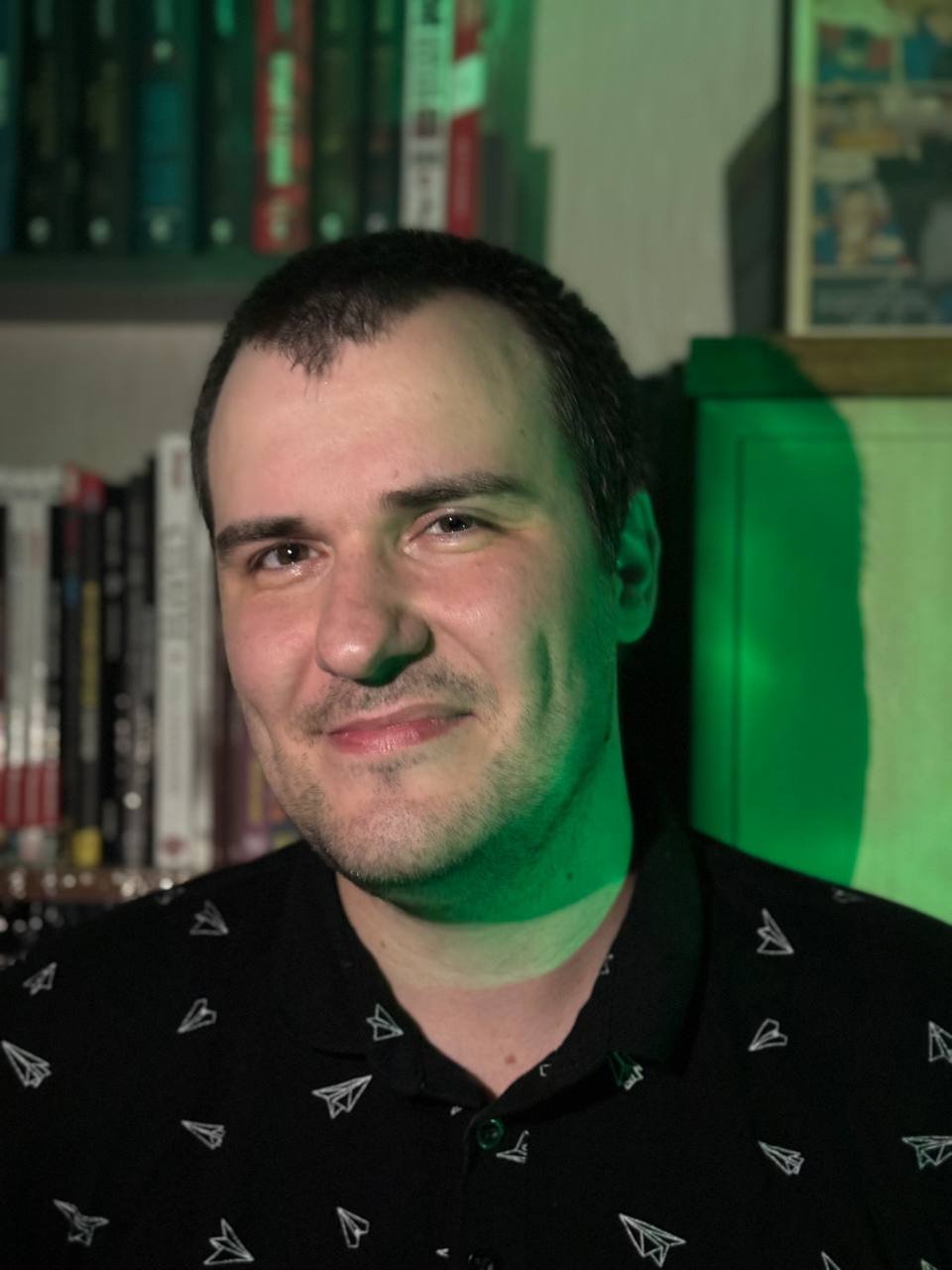
“Starting in June 2022, I was carrying out combat missions directly on the front line in the Zaporizhzhia region, near Kamyanske, Stepne, and Stepove,” Skorbatyuk recalled. “I was stationed there until March 2023, when I was seriously wounded. I spent nine months in treatment and rehabilitation. I went through the medical board, and it took me two or three months because the queues to various doctors were enormous. After that, I waited four months for the results. While I was waiting, a friend of mine took me into the unit he had formed. I was in a rear-echelon position, doing analytics in the radio intelligence unit.”
While working in radio intelligence, Skorbatyuk listened in on the enemy’s communications. He recalls that the scariest part was that when they spoke among themselves, they seemed perfectly normal.
“They dealt with the same problems and challenges as everyone. When it came to Ukrainians, a very dark part of the human soul stirred within them. It’s probably similar to serial killers, when no one could have ever suspected that this person was capable of such things. It’s the same with many Russians. They seem to be normal on the outside, but in reality, there’s a lot wrong with them. They laugh about how they just mowed us down or bombed us. When I was wounded, they kept shelling us for another 40 minutes, and wanted to finish us off. And then my guys told me that they were really furious that they let us go,” said Skorbatyuk.
Eventually, the results of the medical examination came back: unfit for service.
Skorbatyuk is currently working on a collection of his short stories, but spends most of his time translating.
Above all, Skorbatyuk loves fantasy and science fiction as a reader, an author, and a translator. “That’s just my taste. Maybe it’s because fantasy and science fiction are metaphors. Through them, through their entertaining packaging, you can talk about serious things. Maybe we feel that this is much more interesting than saying things directly. Right now, I’m working on a collection of short stories. It’s fantasy and science fiction, where I often explore themes of imperialism and propaganda, reworking my own combat experience in the process. That feels more compelling to me than writing straightforward memoirs.”
Skorbatyuk took Robert Salvatore’s series about the Dark Elf with him to the front lines. He had hoped that reading would help him take his mind off things, but it turned out differently. “I couldn’t take my mind off things, couldn’t concentrate. Sometimes there was no time. There were times when I’d leave for my flying duties at six in the morning, get back at six in the evening, and basically have a few hours to rest. I didn’t feel like reading. What I wanted to do was to translate.
“I had a laptop, and an hour, maybe two at most. Just before the outbreak of the full-scale invasion, Molfar publishing made me a curator for the Blizzard project. We were translating books on World of Warcraft and Diablo. I’ve always been a huge Warcraft fan.
“Being taken off that project really affected me. Molfar adapted to my schedule and understood that I work whenever I can. Sometimes, while on night duty, I would proofread other translators’ work on my phone, and when I had an hour or two at a computer, I would translate.”
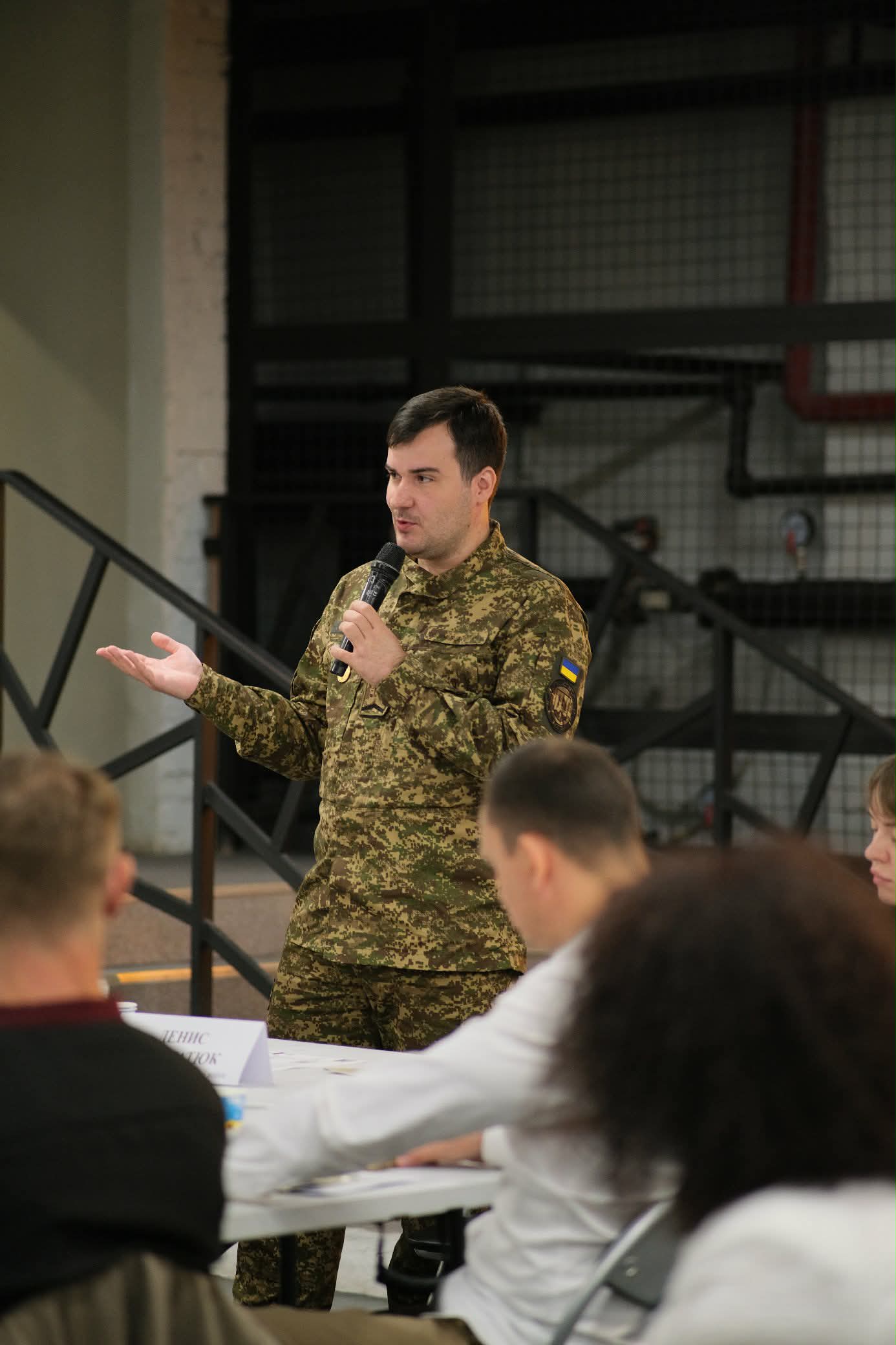
Skorbatyuk recalled his outrage in 2022 when he saw a photo of a Russian man sitting in a basement reading a Warcraft-themed book “The Revenge of the Orcs.” “That’s actually quite amusing — for starters, that’s not the correct title of the book. Russians totally messed up the translation. It’s supposed to be ‘Day of the Dragon.’ This really shows the quality of their translations, but it has always been this way. The way Russians translate books and movies is a meme in itself. When I saw that photo, it really hurt me! Like, this Russian guy was sitting there reading Warcraft, and I’m the one who has to translate this book! I’m here because of you!”
RELATED: It could have been different: An alternative history of Ukraine in five books
Work eventually became the driving force behind the process of recovery. Skorbatyuk translated the first four chapters of the “World of Warcraft: Beyond the Dark Portal” while still in the hospital. Then he had an injury. “For me, this book became part of my rehabilitation. One of my eyes wasn’t working, nor was my left arm or my right leg. You don’t really need your leg for translating, but I was working with one eye and using my right hand, while with my left I first managed with a single finger, then two, and by the time I finished the book, all my fingers were functioning, more or less. I still need to work on it a bit, even though it’s been three years now. I’m still undergoing rehabilitation. It’s a very long process.”
Skorbatyuk is sure that the work has helped him recover mentally as well. After all, many veterans find it difficult to return to civilian life, and some of his comrades are in no hurry to return for precisely these reasons. “For me, it was quite the opposite. I think I’ve really settled in for two reasons: my wife, who helped me a lot, and my job, which I love. I truly believed that we had to defend our homeland, but psychologically it was very, very difficult to tear myself away from the life I love and the work I love. Working in the field of literature and book publishing is what I’ve always wanted and dreamed of. And I think that, psychologically, it really helped me; I didn’t have time to dwell on what to do next. I adapted very quickly and kept on translating.”
To give oneself completely
Valerii Andrushchenko works with the Vivat publishing house. His job is to develop a network of bookstores and expand the company’s retail footprint across Ukraine. Before joining the military, he gained experience expanding the Dnipro-M chain of hardware stores. Andrushchenko served in one of the most demanding roles. He was an assault soldier in a Marine Corps unit. “For me, the Marine Corps is the elite, an example of courage, resilience, and effectiveness,” said Andrushchenko.
“They — and we — have the motto ‘always faithful.’ In my view, this is not just a motto, but a symbol of indomitability and self-sacrifice. This isn’t important only in a military context. For me, it extends to everyday life, society, and how any task is carried out. For about two and a half years, I carried out various missions both on the front lines and in the rear. In the hottest spots as well.”
Andrushchenko is a father of many children (“A happy father of many children!” he emphasized) and has two daughters and a son. At a certain point, Andrushchenko realized it was time to return to society and his family, and he used his right to be discharged. He admits that the most difficult part of the war was holding himself together mentally: “Actually, the hardest part is when you come back, and not in the condition you’d like to be in, unfortunately.”
His family was waiting for him at home, and that helped him to keep going. Thinking about his loved ones gave him a new lease on life.
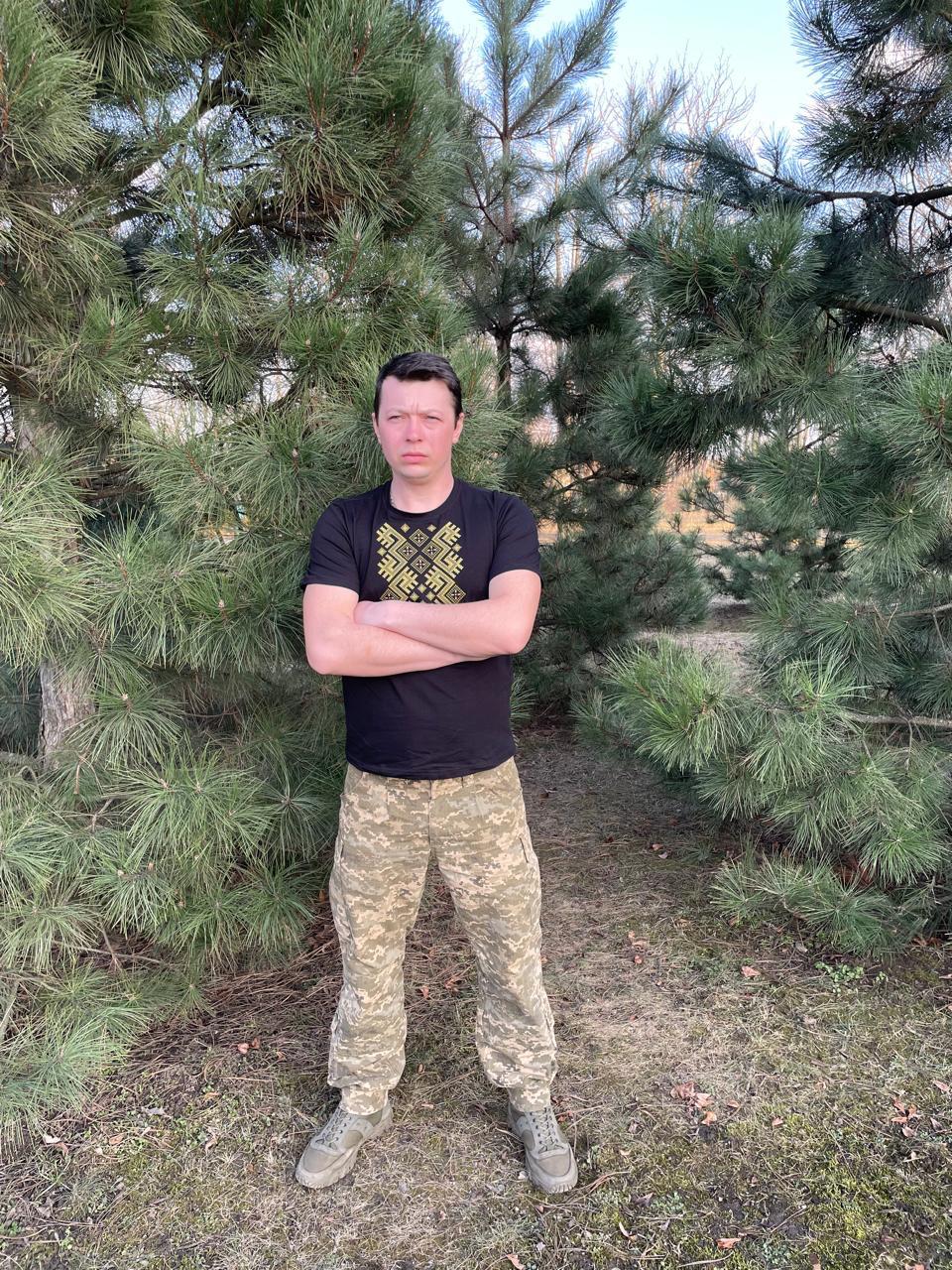
Andrushchenko began collaborating with Vivat publishing house. First, because of his experience and expertise in opening new retail locations and developing the network, and second, because of his deep appreciation for books. “It was an opportunity to immerse oneself in a particular story, one that resonates with many people’s lives. It’s an opportunity to retreat, to escape from the whole world, and to enjoy reading books. I’ve been working at Vivat for less than six months, but overall I see how people are now either returning to reading or discovering books for themselves. When I started working here, it was surprising to me. I didn’t believe that such a thing was possible.”
Nevertheless, Andrushchenko admits that he has never been an avid reader and didn’t have much free time between work and family. In the military, there was no time for books, and even now his life is incredibly busy. He manages to flip through books now and then, but he definitely plans to read Pavlo Belianskyi’s “To Fight Cannot Retreat.” “The book has won the Taras Shevchenko National Prize, everyone is talking about it, and since it describes everyday life in the war, I’d like to compare my reading impressions with my own experience.”
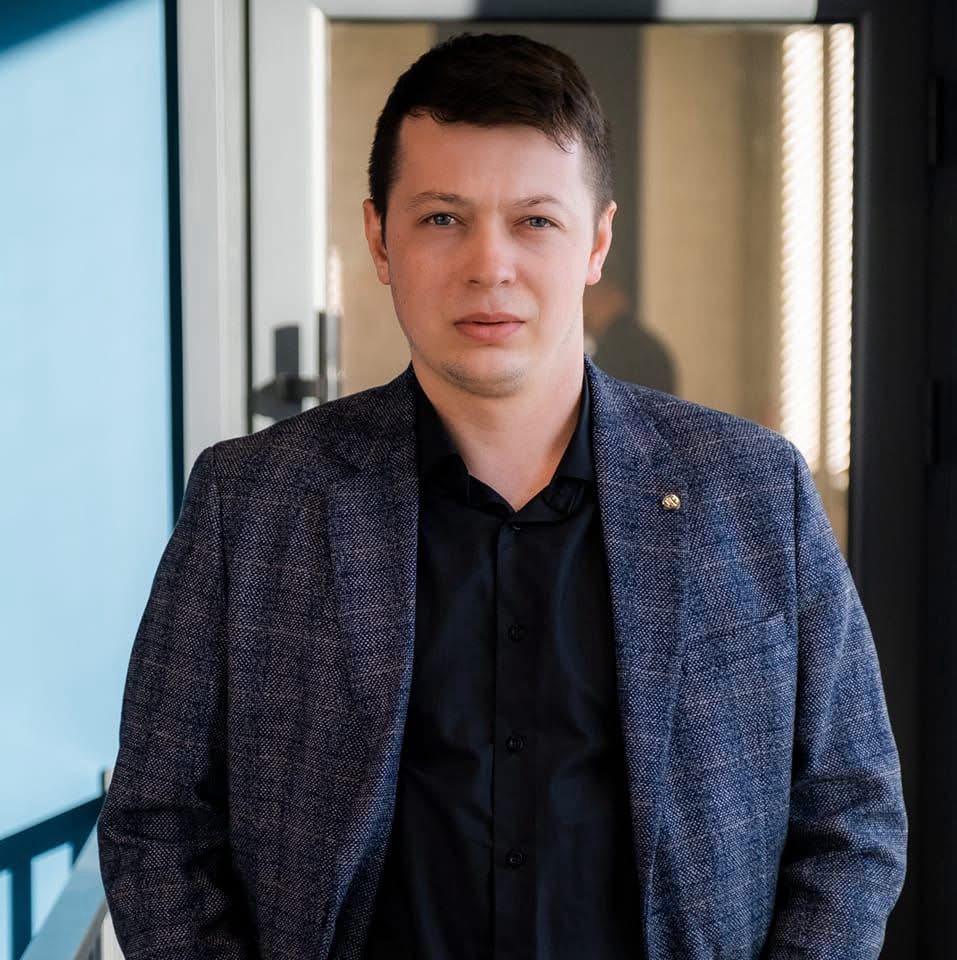
Besides, as a father, Andrushchenko understands that books have a hard time competing with gadgets, so any impulse, any choice a person makes in favor of a book, should be encouraged in every way: “Some people read, some just flip through the pages, and for others, looking at the illustrations is what matters. And as is often the case with adults, when you’re always rushing somewhere, there’s not enough time—not just to step away from the world and pick up something to read yourself, but also to set an example that here is a book, and this is how you can learn about the world.
“When you open even a small store in a small town, you see that people respond. A new bookstore is like a new space. A place where you can find peace of mind and discover a book. And it’s nice to be a part of that. Plus, you see how those same soldiers are writing books. It gives you strength again, some kind of emotion, the energy to keep moving forward,” said Andrushchenko.
Andrushchenko’s work offers soldiers, veterans, and civilians the opportunity to join the cultural resistance through reading. He admits that collaborating with the publishing house is a challenge for him.
“Above all, it’s a matter of pride and respect for those who, in such difficult times, are promoting Ukrainian books. Because a book is an opportunity to understand how people who were on the front lines express their thoughts. What they went through, what they experienced, and for those for whom this war may not feel so close. And while we’re talking here, for example, my colleagues are in London at a book festival selling the rights to books that tell the whole world how to understand Ukrainians. Books about the war — Valeriy Puzik’s ‘Who We Were’ and ‘Hunters of Happiness,’ books by Belianskyi, Pavlo Kazarin … The team here is brimming with trust and support; everyone really needs that right now. That’s why working here means giving yourself completely, with love and sincere dedication.”
RELATED: Review of Artur Dron’s book ‘Hemingway Knows Nothing’
Images: Mykhail Palinchak, Olena Maksymenko, archives by Valerii Andrushchenko and Denys Skorbatyuk
Main image: Books to the Front initiative
Copyediting: Joy Tataryn
Читомо» — це медіа про книжки й літературу, що підтримувало українське книговидання задовго до того, як це стало трендом. Ставайте частиною історії — доєднуйтеся до Клубу Читомо!
the more you read, the greater the possibilities
578
ireland
Ukrainian war writers to mentor emerging authors in Dublin literary project
08.09.2026 -
691
book industry in the times of war
Russian drone attack hit book warehouses amid losses for Ukraine’s publishing industry surpassing 10 million copies
31.08.2026 -