* ESC - close the search window
Gradus Research
10 + 1 ways to get non-readers interested in books: A study by Gradus and the Ministry of Culture
25.06.2026

You see an error in the text - select the fragment and press Ctrl + Enter
In June 2026, Gradus Research, in partnership with the Ministry of Culture of Ukraine and the Believe in Yourself Foundation, released a report “A Study of Tools for Engaging Book Readers in Ukraine.” The study, the first qualitative research of its kind, examined two target groups simultaneously: 26 book industry professionals, including publishers, librarians, festival organizers, book bloggers, and 15 “new readers,” or people who returned to regular reading after a long break. Chytomo co-founder Iryna Baturevych was among the members of the small working group.
Researchers set out to discover what motivates a non-reader to pick up a book and not put it aside immediately. The findings turned out to be somewhat unexpected.
Change the environment, not try to convince people to read
The first and most consistently reiterated conclusion is that communication campaigns alone do not turn non-readers into readers. “Communication campaigns alone do not change people’s reading behavior. It is changed by the physical presence of books along a person’s usual route, early, non-judgmental exposure to books in childhood, and a social environment where reading is part of everyday life,” stated the report’s authors.
Analysis of successful international programs confirms that the necessary changes are structural, as they improve access to books rather than relying solely on informational promotional campaigns.
This is not merely a theoretical principle. The study notes that Ukraine has six to seven times fewer bookstores per capita than Poland. This means that a significant portion of the population simply never finds themselves in a situation where they could pick up a book.
“The key barrier is the lack of a book infrastructure in Ukraine. Bookstores help promote books by encouraging impulse purchases. Libraries, too, receive almost no funding and are not stocked with new books,” said Victor Kruglov, founder of the Ranok publishing group and the Knyholand bookstore chain.
The same principle applies in the digital space. Social media algorithms are unlikely to recommend book-related content to users who have never interacted with it. “If there are no books in libraries or no books in bookstores within reach, it’s hard to expect any reading promotion initiatives to have an impact. First, you need to have something to read, and then you need to get the message that it’s worth reading and buying,” said Oleksandra Koval, director of the Ukrainian Book Institute.
RELATED: OSDEL study links reading habits in Greece to education, social background and access to books
This trend is particularly evident in the regions. “Book events are well known within their own circles, but they don’t extend beyond those circles. In small towns, you can capitalize on the lack of alternatives. I was in Khoroshev in the Zhytomyr region, and people gathered there to attend because no one else came to their town. They listened intently to every word. You have to go there so people can meet the authors in person,” said Artur Proidakov, executive director of the MriyDiy educational foundation, named one of the world’s top 10 teachers by the Global Teacher Prize 2023.
Place the book where the person is
The conclusion drawn from the previous recommendation is that books must be present in spaces and contexts where they are not typically found.
The study identifies two types of occasional readers, each requiring a separate approach:
- The first type are those who have never had any real contact with book culture. “For them, reading is not something expensive or something they don’t have time for. It simply does not exist in their information space. Books are not part of their behavioral repertoire, and taking the first step toward reading requires significant effort. For this type, books need to be widely present in non-reading spaces and contexts — places where people already spend their time,” read the study.
- The second type are those who used to read or could read but have fallen out of the habit due to circumstances, such as work, care for children, or exhaustion. For them, “I have no time” or “It is too expensive” are partly valid explanations and partly rationalizations for not prioritizing reading.
Most of the readers who participated in this study fall into the second category: it was not a change in price but rather the emergence of an external stimulus or change in circumstance that prompted them to return to reading.
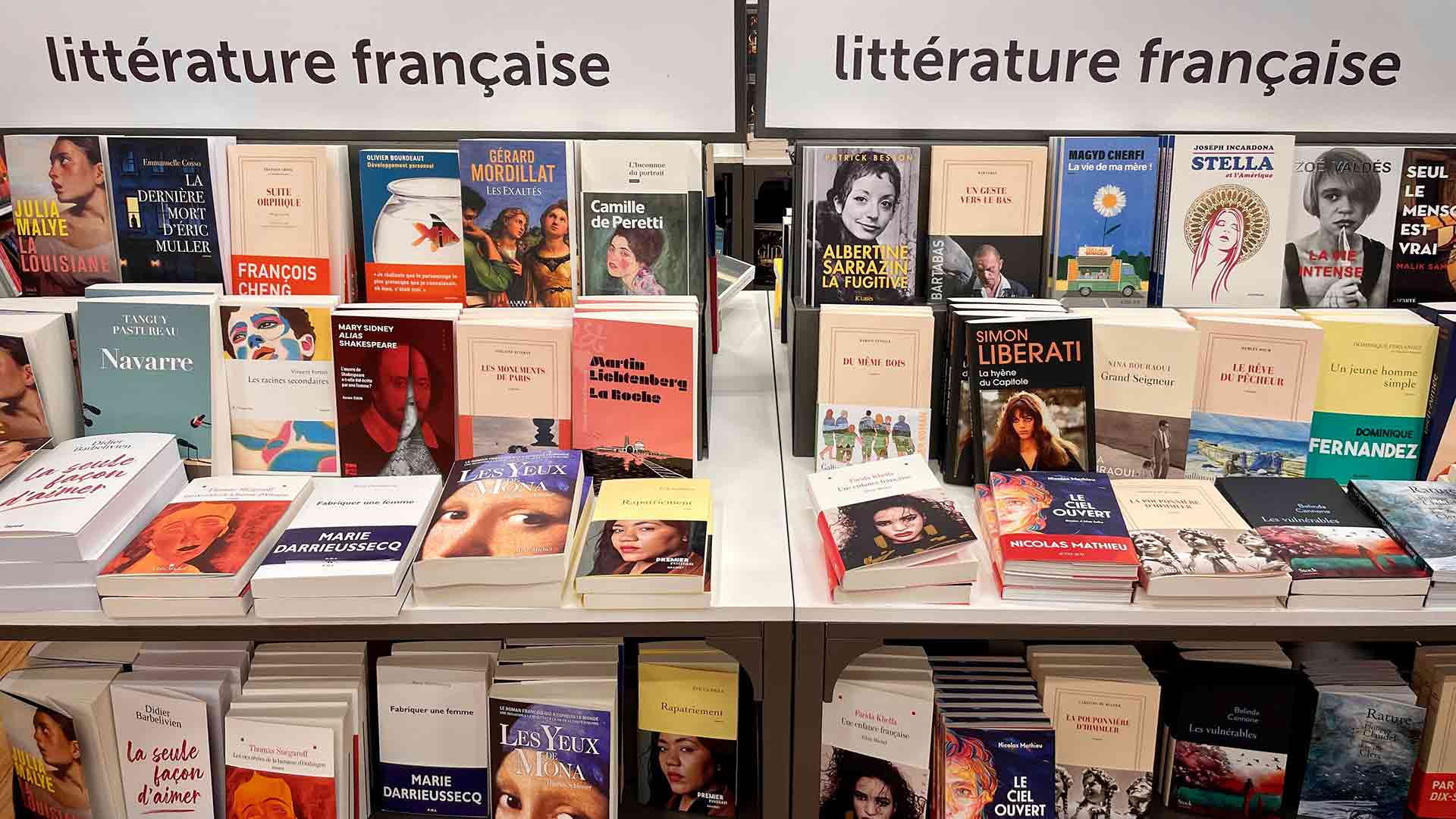
The specific model described in the study for turning occasional readers into regulars is the bookstore-café format: “A bookstore-café in Vorokhta, a small village in the Carpathian mountains with a lively flow of tourists during peak seasons, demonstrates that this format works not only in big cities. People buy books while waiting for their coffee because they find themselves in the right environment. This replicates the “books in first grade” principle: contact comes before choice, and that contact is simple and unobtrusive.”
Online retail confirms the same principle. “The introduction of delivery through national postal operators as a distribution service revealed hidden demand in small towns where people ordered books that had previously been physically inaccessible. This confirms that demand exists in the regions but is not being met to a sufficient extent due to infrastructure barriers,” read the report. Among the non-reading spaces the study identified for placing books are coffee shops, sports clubs, hospitals, pharmacies, supermarkets, banks, music festivals.
The “new readers” confirmed the importance of a book’s physical contact. For several of them, a visit to a bookstore, whether spontaneous, with friends, or while traveling, became the immediate trigger for returning to reading. “Going to a bookstore and holding a book in your hands. If you’re already standing there reading and can’t put it down, then you’ll buy it and keep reading,” said a 40-year-old participant. “I went to a bookstore with a friend, felt inspired, and bought several books,” said a 35-year-old participant from Kyiv.
Use a personal recommendation
Among the three main clusters of triggers for returning to reading identified in the study, the influence of the social environment is one of the most consistent and powerful. The other two are a change in circumstances and resources, and the influence of the information environment.
“A recommendation from a specific person in one’s circle — a friend, colleague, or acquaintance — is one of the most effective triggers. A book that is passed on or given as a gift in person has a different effect than any external advertisement,” read the report.
RELATED: Helsinki takes action to reverse the reading decline
That said, a person’s social circle does not necessarily determine what they read, but it does significantly influence whether they begin reading in the first place. A recommendation sparks an interest in spending free time with a book, and the subsequent choice of titles becomes a personal one. “I started spending time with people who read quite often, and they began recommending books to me. One thing led to another and I can’t stop now,” said a 19-year-old participant from Kremenchuk. “I was in Kyiv at a book presentation, where they gave me a book as a gift and got me interested in reading a paper book,” said a 42-year-old participant from Chernihiv.
In the case of Pavlo Derevianko’s trilogy, “Chronicle of the Grey Order,” word-of-mouth marketing went far beyond the bounds of traditional marketing. It reached a wide audience not only through digital campaigns and traditional publishing advertising, but also because readers in the armed forces passed the books to one another with the recommendation, “Read this, it’s about us.” People who had never been interested in fantasy took the book from their comrades and became a new audience for the genre, then active promoters among their circle. “The best recommendation is one from a friend. When someone says to you, ‘Take this and read it,’ and hands you the book. People who enjoyed it become ambassadors for that book and provide free advertising,” said Derevianko.
Changing circumstances as a window of opportunity
The second major cluster of triggers for returning to reading is a change in circumstances and the freeing up of resources. “Moving, changing jobs, a forced break in activity — any event that disrupts one’s usual routine and frees up time or creates a desire for new ways to spend one’s time,” stated the report.
In the context of the war, power outages, long waits, and forced changes to daily routines became such triggers. “I spent a lot of time in bed, and that’s when I started reading books,” said a 25-year-old participant from Nizhyn. “I wanted to take my mind off things and find something to do while the power was out,” said a 40-year-old reader from Kharkiv. “My reasons are remote work and more free time,” said a 38-year-old man from Ivano-Frankivsk.
However, a return to reading does not happen automatically when free time becomes available, but it requires an additional impulse. Most study participants described their return to reading not as a deliberate choice, but as a situation in which reading entered their lives by chance. This finding has practical significance for understanding engagement mechanisms, showing that creating the right conditions and points of contact with books is more effective than persuasion.
The price of books also means a lot. It turns out that the decline in sales of both print and e-books during the economic crisis has been uniform. This means that when people stop reading due to external circumstances, they don’t switch to cheaper formats. They simply stop reading altogether. “There are people who have never read and don’t understand the point of it. And there are people, and I think their share is overestimated, who say they can’t afford books. First of all, no one has shut down the libraries. Second, if price were the real reason, people would switch to cheaper formats. But they don’t. They just stop reading,” emphasized Glib Vyshlinsky, director of the Center for Economic Strategy.
Focus on BookTok and book-related content on social media
The third cluster of triggers for reading is the influence of the information environment. Book-related content on social media, video reviews, book lists, and film adaptations can serve as entry points into reading.
For the younger age group, social media is the main channel for discovering new content — not through targeted searches, but through posts that appear in their social media feeds. “I was scrolling through social media, saw a video or something like that about books, and it reminded me of them again,” said a 19-year-old participant. “I think what first got me into reading was probably ‘Dune,’ the movie. I wanted to escape into a fantasy world,” said a 38-year-old participant from Ivano-Frankivsk.
RELATED: Mykola Riabchuk: Reading demands a cosmopolitan mindset
The data underlying the report confirms the scale of the phenomenon: according to NielsenIQ BookData/Media Control, more than half of readers aged 16 to 39 say that BookTok has motivated them to read more or buy books. In 2025, more than 50 million books worth 800 million euros were sold in Europe thanks to BookTok recommendations. Books that gain popularity through BookTok show significantly faster sales growth compared to traditional marketing channels. According to Nielsen BookData, in 2022 in the United Kingdom, readers discovered about 28% of Colleen Hoover’s books through social media and video platforms.
In Ukraine, the potential of these platforms is not yet being fully used. “There is no mass Ukrainian-language book media resource for a broad, rather than narrowly specialized, audience. The vast majority of book content is created for those who already read,” stated the research.
“The world of books should not remain isolated. Every media outlet — all national or niche ones — should have a place for literary content aimed at a broad audience. Books and reading should become part of people’s lifestyles. The media, as well as bloggers and influencers, can help make this happen,” said Oksana Pavlenko, founder of Divoche.media.
Among specific practices, the report highlights adding the question, “What are you reading right now?” to standard interview lists for public figures, including athletes, actors, bloggers, and entrepreneurs. Public figures are beginning to share their reading experiences, and their influence helps normalize reading for a broad audience.
Start a book club

Book clubs are a tool for encouraging reading that relies not on individual motivation but on social rituals.
The study describes three distinct mechanisms by which they work:
- An external structure that supports reading behavior where personal habits are still unstable or nonexistent. Participants do not read at their own discretion, but by a specific deadline and for later discussion with others. Accountability to the group compensates for a lack of intrinsic motivation, especially for someone who is just returning to reading after a long break.
- Broadening one’s reading horizons. The club often selects books that a participant would not have chosen on their own: a different genre, a different culture, or a more complex text. Participants who had avoided a certain genre often reconsidered their attitude toward it after the experience of reading in the club.
- The social and psychological dimension: book clubs function as spaces for people to process difficult experiences through text and conversation with others who have had similar experiences. “The book club serves not only an intellectual purpose but also a psychotherapeutic one. In the context of 2022–2023, it became clear that the club serves as a space for spiritual and emotional healing, and for processing certain experiences through books,” said Tetiana Lukinyuk, founder and moderator of the Kyiv Bookworms Club, which has more than 7,500 members.
Corporate book clubs are a distinct and growing segment. The group setting and set deadlines compensate for the lack of personal motivation, as people attend the club as part of a group rather than as a personal commitment. In times of war, the club also serves as an opportunity for face-to-face interaction outside of work and daily life.
At the same time, there is a barrier to entry. Most of the readers surveyed are aware of book clubs, but most are not members. “I’ve heard of book clubs, but I didn’t feel like going to one. It would be hard for me to discuss books with people I don’t know,” said a 21-year-old participant.
This leads to the conclusion that formats with a lower barrier to entry have great potential: small groups within a familiar social circle, corporate clubs, and online communities, where participation does not require stepping out of one’s comfort zone in public. The Reading Well program (The Reading Agency/NHS England), cited in the study, shows that 92% of participants subjectively rate reading as beneficial for their mental health and well-being.
Creating libraries as spaces for therapy, and implementing the “books on prescription” approach
One of the most unconventional tools for encouraging reading is the Book by Prescription program run by the Library Country Foundation. Its approach is fundamentally different from most promotional tools. Instead of offering a book and waiting for an interested reader, it reaches out to people based on their current needs. A librarian, trained in the basics of psychosocial support, engages in a brief conversation with a visitor and recommends a book based on the person’s situation and needs.
RELATED: Leipzig Fair: Stories of different reading realities
The book list is organized into 30 thematic categories by human needs, not by genre:
- Escaping reality
- Loneliness
- Understanding war
- Taking care of one’s health
- Adoption
- Toxic relationships
- Forced displacement
- Mental resilience
- Reproductive health
- National identity
“A person facing certain life challenges often lacks the resources to choose a book off the shelf on their own, but is able to answer questions such as ‘How are you feeling? What topics interest you?’ The book is chosen based on the answers to these questions rather than on a prior intention to read,” stated the study.
Tamara Sukhenko, a co-founder of the foundation, explains: “When we provided librarians with lists covering 30 topics organized by human needs rather than genre, and offered training in basic psychosocial support, they said they now had an effective tool for promoting reading. Now they know how to engage in conversation with people belonging to vulnerable groups. They aren’t afraid to ask questions, and they aren’t afraid of not knowing certain books or topics. It has also become easier for them to understand visitors’ needs through dialogue and recommend books.”
This approach is particularly effective when working with internally displaced persons (IDPs) and people experiencing the effects of a prolonged psychological crisis — audiences for whom a book as a cultural object may seem distant, but a book as a tool for recovery is accessible and in high demand. Oksana Brui, director of the Ukrainian Library Association, confirms the scale of this pressing need: “70 percent of those who visit libraries for books do so to relieve psychological stress.” The researchers support these observations with data from international studies. Mindlab International and the University of Sussex (2009) found that reading reduces stress levels by 68%, a greater effect than walking or listening to music, and that even six minutes of reading a day lowers stress levels.
Introduce effective government incentives for book purchases
The eSupport program, launched in 2021, is the most frequently cited example of government support for the book market among all survey participants. Under this program, government funds were provided to citizens to spend on cultural services, and books proved to be one of the most popular spending categories.
The specific mechanisms behind the program’s effectiveness included:
- Lowering the price barrier for people who had not been buying books because of the cost or did not consider them a priority expense.
- Creating an opportunity for initial engagement: people without an established reading habit made their first purchase, and some returned. The impact extended beyond a single season: the book market entered 2022 with accumulated reserves, which contributed to the industry’s resilience during the first year of full-scale invasion.
“It was a boost the industry had never seen before, neither before nor since. That boost allowed us to get through the difficult year of 2022 and remain in the industry,” said Anton Martynov, founder of the Laboratoria publishing house and the Librarius digital library.
Following the launch of eSupport, a permanent program called eBook was introduced for 18-year-old Ukrainians. Books were also included in the list of goods covered by the Winter Support programs during the winters of 2024 to 2025 and 2025 to 2026.
Study participants point to the potential of an updated model for future versions of the study:
- Expanding the study’s format beyond paper to include electronic books and audiobooks.
- Developing a separate track for internally displaced people and demobilized service members as target audiences, for whom reading can serve a rehabilitative function.
- Earmarking a portion of the funds for underrepresented niches, so that the incentive supports not only what is already being sold but also what has not been published due to a lack of sufficient demand.
It is worth noting that government subsidy programs for book purchases exist in Italy, Germany, Spain, France, and other countries. All of these countries experienced steady market growth after implementing such programs, although there were also cases in which the expected effect did not materialize.
Turn the library into a community cultural center

Ukraine’s library network is formally the country’s most extensive system for accessing books, yet it is also the least effective at attracting new readers. Chronic underfunding has led to a series of interconnected problems, including outdated collections, staff shortages, a lack of Wi-Fi and comfortable spaces for extended visits, and operating hours that do not accommodate traditional work schedules. “The result is a vicious cycle: a library without an up-to-date collection cannot attract new visitors, and without enough visitors, it does not receive funding for updates,” stated the study.
The study’s participants describe libraries primarily through their school memories. “It is somewhat like a remote place that has fallen behind the times,” said a 40-year-old participant. “Sitting in a library where there might be two or three people, and the chairs are so uncomfortable. Here, I sprawled out on a little couch, and that’s pure bliss,” compared a 30-year-old participant. At the same time, some participants mention changes: libraries are gradually becoming more pleasant and expanding their offerings. This is a sign that the transformation is noticeable even to an audience that doesn’t regularly visit libraries.
The Lviv Municipal Library serves as a positive example. It operates 49 thematically specialized branches, each with its own focus, including an art branch with a collection of art books, books on sewing and sewing machines, and a children’s branch in a residential neighborhood. “The model of ongoing partnerships with civil society organizations attracts people who would not have come for a book but attended an event and were introduced to books,” the study stated.
“A modern library is a place you want to visit and keep coming back to. You walk into the library, and it’s a nice place to stay. Everyone can find what they need there. New books and Wi-Fi… what more could you want? The Yaroslav the Wise National Library is located in the city center. Pay UAH 50 for a library card, and you get practically free coworking space for a whole year,” said Brui.
Therefore, transforming libraries begins with changing their role within the community. A strong collection and physical space are necessary, but without a shift in the library’s function, they will not increase attendance.
Encourage reading through school, but do not make it compulsory
The biggest barrier identified by the study is not price or a lack of time, but the absence of a reading habit as an established behavioral pattern. “A habit is an automatic behavior that does not require a conscious decision each time. Without that habit, a person must choose to read each time, competing with alternatives that require less effort. In the absence of a habit, even having free time and access to books doesn’t automatically lead to reading,” the researchers explain.
Habits are formed primarily through two channels: the family and school. Within the family, a child learns behavior through observation and imitation, rather than through verbal instructions. A child who sees their parents reading a book in their free time receives a signal about what is considered normal behavior; a child who sees their parents on their smartphones receives a different signal, even if the parents are simultaneously encouraging the child to read. “There is no habit. It is not formed at school, it is not formed in childhood, and it is not formed because parents do not read. Parents sit down to watch TV in the evening but send their child away, saying, ‘Go read.’ It does not work that way. Parents need to lead by example,” emphasized Ilona Zamotsna, director of the Vikhola publishing house.
School is the second most important channel for fostering reading habits, and this is precisely where Ukraine faces the most problems. Literature classes are traditionally structured as follows: there is a “correct” interpretation of the text that students must reproduce, while their own opinions and reactions to the book are not a priority. Reading becomes a task to be completed rather than a pleasure.
Most participants in the study describe their school experience exactly this way and say it made them put books aside for years. “Honestly, I think I did not like reading because school sometimes required us to read things we did not want to read at all,” said a 38-year-old participant. “For many students, their perception of reading was and still is shaped by negative experiences in school literature classes, including reading material that was uninteresting, of little use, and not appropriate for their age. This entrenched pattern of rejection is difficult to break,” noted Tetiana Stus, director of the BaraBooka Children’s Reading Lab.
One possible alternative is to set aside structured time for independent reading in the school schedule — not as homework, but as part of school activities. “Reading isn’t built into the schedule; it’s built into homework. In American schools, there are periods when students go to the library and read. It’s part of the curriculum. Even if it’s just one hour a week, on a regular basis, a habit can form,” said Sukhenko.
It is important to note that the critical age for developing a reading habit is 13 to 14 years old. By the time a person is 17 or 18, this process becomes more difficult, as they already have established leisure activities that compete with reading. “It is precisely 13-to-14-year-olds who we need to work with the most in order to instill the right values, help them develop skills, and guide them in a certain direction. With 17-to-18-year-olds, you already run the risk of losing them. But if we instill the habit of reading and analyzing texts at a younger age, in five or more years we’ll be able to measure the results,” said Ella Yatsuta, founder of the Frontera literary platform in Lutsk.
No to genre snobbery
From a market perspective, genre fiction, detective stories, thrillers, romance, and fantasy are legitimate and important channels for attracting readers: someone who reads romance novels is a reader.
Among the study participants, most returned to reading because of “light” genres. “From the perspective of developing a reading culture, the act of reading itself is what matters. Genres may vary, but each can help build a reading habit. For many readers, genre fiction is the starting point of a long journey as a reader,” said Anastasia Strelnikova, director of marketing communications at Readeat.
The study covers the first qualitative phase: 15 in-depth interviews with “new readers” and 26 semi-structured interviews with experts in the book ecosystem, conducted in March-May 2026. A second quantitative phase was also announced, which aims to determine the actual ratio of regular readers, occasional readers, and consistent non-readers in Ukraine, as well as to test hypotheses regarding effective and ineffective promotional tools.
Copyediting: Terra King
Читомо» — це медіа про книжки й літературу, що підтримувало українське книговидання задовго до того, як це стало трендом. Ставайте частиною історії — доєднуйтеся до Клубу Читомо!
the more you read, the greater the possibilities